|
|
October 13th, 2013
 Get Official Targets, Target Centers, Pasters, Pit Supplies, and Training Targets Get Official Targets, Target Centers, Pasters, Pit Supplies, and Training Targets
Looking for training targets, competition targets, or fun targets? Well Creedmoor Sports has what you need for NRA smallbore and centerfire competition (including target pasters). Creedmoor has the official targets for most popular NRA disciplines along with the “Target Repair Centers” (Bullseye overlays that save money compared to full-size targets). In stock now are official F-Class targets, High Power rifle targets, smallbore targets, pistol targets, and air rifle targets. Creedmoor also now carries Birchwood Casey Shoot-N-C targets and Hi-Viz Orange Target Spots®. When practicing with scoped rifles, we use the 1″ Target Spots at 200 yards, and the 3″ Target Spots at 600.
August 19th, 2013
Story by Lars Dalseide for NRABlog
It was a close one for SSG Tyrel Cooper. He’s been close before at NRA’s National Long Range High Power Rifle Championships in Camp Perry, but not as close as this. Not so close that his overall point total of 1243, while impressive, was not good enough to win. It was only good enough for a tie. Thank god for the X count. With an X count of of 71, Cooper inched by fellow U.S. Army Marksmanship Unit (AMU) teammate Brandon Keith Green by seven whole points. Talk about the skin of your teeth. “It’s been a long time coming,” said Cooper — Fourteen years to be exact.

Falling in love with High Powered Rifles
Cooper wasn’t raised on rifles. No, he was just your typical California kid on the streets of Sacramento. It wasn’t until a 14 year-old Ty accompanied his father to the Police and Fire Games that he discovered a passion for firearms.
 “I tagged along with Dad to a high power rifle match. We ran into Jim O’Connell at the practice range. He asked if I wanted to shoot one of his ARs. After a little prodding, I did and instantly fell in love. I ended up pulling targets for the rest of the match. That’s when I decided it was better to be pulling triggers than pulling targets.” “I tagged along with Dad to a high power rifle match. We ran into Jim O’Connell at the practice range. He asked if I wanted to shoot one of his ARs. After a little prodding, I did and instantly fell in love. I ended up pulling targets for the rest of the match. That’s when I decided it was better to be pulling triggers than pulling targets.”
Working odd jobs and hoarding the cash, Cooper eventually saved enough for an AR of his own. Now all he needed was a place to shoot. California, contrary to popular opinion, would provide.
“There are a lot of real good shooters who come out of California,” said Cooper. “They have one of the best high power teams in the country right now. Norman Mayo, Tom Whittaker, and Bob Gustin (3rd in this year’s Long Range High Power Championships) all came out of California. We use to shoot at the same club in Sacramento. “I grew up watching him (Gustin) shoot, wishing one day I’d be like him.”
A path to the U.S. Army Marksmanship Unit’s Long Range Rifle Team
The rest of Cooper’s teenage years were spent competing. With his father and sister in tow, they went from competition to competition throughout the state. It was a family affair.
“We only had one gun,” he said with a snicker. “I would shoot, she would shoot, then dad would shoot. After a while, he backed off and just supported us. “My sister was pretty good. I was actually her coach on the Junior Team in 2007 at the World Championships up in Canada. But that’s the last time we shot together. She went and got married, had two kids. Life got in the way.”
Cooper was working on a life of his own. Out of high school, he was searching for a place to put those rifle talents to use. That place would be with the U.S. Army. Joining at the age of 19, he spent the next few years honing skills. Reading wind, playing with ballistics, shooting whenever possible. Four years later, as a member of the USA Young Eagles Rifle Team (America’s under 21 and under 25 long range rifle team), he met with AMU Coach Emil Praslick.
“We head a real good talk. I got the letter and was off to basic training.”
It’s been a whirlwind ever since. Learning from the best in the business, Cooper utilizes his refined skills to be the best in competition and valuable resource in training. As any member of the AMU will tell you, one of their primary goals is to serve as a force multiplier. They do this by sending members of the Unit to army bases throughout the world. There they teach the troops the finer points of marksmanship.
But the travel doesn’t end there. There’s also a great deal required for the competitions. Ty explained: “For Long Range I’ve been to Canada, England, Australia, South Africa. In the states I’ve shot in California, Louisiana, Tennesee, Virginia, Georgia and Ohio. Long Range has taken me around the world, High Power has only taken me up and down the east coast.” Now, no matter where he goes, he will always be known as NRA’s 2013 National Long Range High Power Rifle Champion.

“When he was a kid growing up, he had a lot of help from a lot a good shooters,” said Robert Gustin, one of Cooper’s early mentors at the Sacramento shooting club. “One thing you can count on is that he’s always been good and will get nothing but better.” Photo above shows SSG Brandon Green, SSG Tyrel Cooper, and Bob Gustin on stage at the NRA Long Range High Power Rifle Championships in Camp Perry.
August 13th, 2013
 SSG Ty (Tyrel) Cooper of the USAMU won the 2013 NRA National High Power Rifle Long Range Championships with a final score of 1243-71X. Ty grabbed the lead from fellow USAMU shooter Shane Barnhart on the final day of competition, shooting superbly to take the Long Range title. Also moving up in the standings today was SSG Brandon Green, who won the NRA High Power Championships last week. Green was a close second. Though both soldiers finished with a total score of 1243 points, Cooper’s X count topped Green’s by seven (71 to 64). On his Facebook page, Green praised his USAMU team-mate: “Congrats to Ty Cooper, he is the 2013 Long Range National Champion! And I’m the first loser! … Stupid Xs.” (Photo courtesy NRA Blog.) SSG Ty (Tyrel) Cooper of the USAMU won the 2013 NRA National High Power Rifle Long Range Championships with a final score of 1243-71X. Ty grabbed the lead from fellow USAMU shooter Shane Barnhart on the final day of competition, shooting superbly to take the Long Range title. Also moving up in the standings today was SSG Brandon Green, who won the NRA High Power Championships last week. Green was a close second. Though both soldiers finished with a total score of 1243 points, Cooper’s X count topped Green’s by seven (71 to 64). On his Facebook page, Green praised his USAMU team-mate: “Congrats to Ty Cooper, he is the 2013 Long Range National Champion! And I’m the first loser! … Stupid Xs.” (Photo courtesy NRA Blog.)
Below is a file photo of SSG Ty Cooper at 2012 High Power Championship. In the Long Range Championships, Cooper used a Nesika-actioned bolt gun with long barrel chambered in 7mm SAUM.

NRA Blog editor Lars Dalseide interviewed Ty Cooper shortly after he won the 2013 Long Range title. “It’s a long time coming,” said Cooper with a smile. “Years of shooting and now here it is. It’s overdue — that much is true.”
Cooper edged out USAMU teammate Brandon Keith Green for the win by seven Xs, after four days of long-range competition. “You don’t get much closer than that,” said Russ, a competitor from Georgia. “Winning by an X count. Boy that is something.”
Rounding out the top five in the overall Long Range Championships are Bob Gustin with 1239-76X, Shirley Mcgee with a 1238-65X, and Eric Smith with a 1236-55X.
Complete Results from the Long Range Championships will be posted on the NRA Competitive Shooting Championships Results Webpage later today.
August 8th, 2013
Story by Kyle Jillson for NRABlog
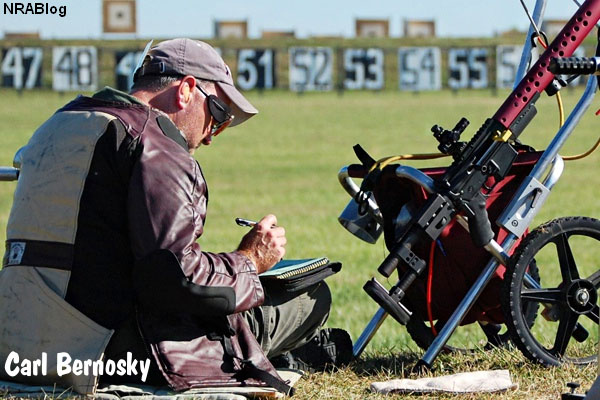
(Camp Perry – August 7, 2013) Half way through the hunt for the 2013 NRA National High Power Rifle title, defending champion Carl Bernosky is in the lead with a 1193-69X. It is a narrow lead, but a lead nonetheless. One point behind Bernosky is 2009 champion Norman Houle at 1192-49X who himself holds off three very capable shooters by just one point.

With six matches completed and six more to go, the Championships are at the official half-way point. The High Power Championship involves a 12-match cycle, with 480 total shots for record. Two full days of shooting remain for competitors, who have already been thoroughly pummeled by Camp Perry’s notorious heat and rain. Whoever wins the High Power title will have earned it — the hard way.

Bernosky has been in this position before. The winner of ten national championships, he is more than aware of how close the race can get. All of the top shooters are veterans and capable of winning it all. At this point, with these scores, it’s nearly a blank slate when shooting begins again tomorrow morning. Will Bernosky hold on for number eleven, could Houle claim his fourth Mumma Trophy, or will a new champion step up on the podium?

August 7th, 2013
 We want to say “Happy Birthday” to Bryan Litz of Applied Ballistics LLC. Bryan came to earth from Planet Krypton on August 7, 1979, making him a ripe old 34 years of age today. (One more year and he’s over the hill). We want to say “Happy Birthday” to Bryan Litz of Applied Ballistics LLC. Bryan came to earth from Planet Krypton on August 7, 1979, making him a ripe old 34 years of age today. (One more year and he’s over the hill).
In an industry where many products are conceived and marketed by folks who spend more time on the golf course than the shooting range, it’s reassuring to know that there are still guys like Bryan who shoot what they sell, and who put in the trigger-time to acquire (and maintain) world-class shooting skills. Bryan, who actually worked as a rocket scientist before founding Applied Ballistics, is one of the nation’s leading long-range sling shooters — with the trophies to prove it. As well, the bullets Bryan designed for Berger bullets, particularly the Berger Hybrids, are helping competitive shooters around the world shoot higher scores and win more matches.

Palma Match from a Shooter’s Perspective
For those of you who haven’t seen it before, here is a “shooter’s POV” video of Bryan shooting an 800-yard Palma match. In the video Bryan shoots a 149-12X over a 15-shot string. NOTE: This video was speeded up in editing to keep it to a reasonable length.
June 30th, 2013
by Kelly Bachand
 [Editor: If you have been watching the Top Shot All-Stars TV series this season you’ve noticed that our Buddy Kelly Bachand has been “kicking a** and taking names”. On last week’s episode Kelly was the only shooter to place multiple rimfire rounds through the center of a CD without touching the plastic. Most of the other Aall-stars in this challenge couldn’t send even one shot through the CD without breaking plastic. Shooting offhand, Kelly went three-for-three. That’s impressive. Though you know him best from Top Shot, Kelly is one of America’s leading young long-range prone shooters. Bachand has been a Top Five finisher in many major matches, and he has won the Canadian Open Target Rifle Championship, shooting his Barnard-actioned Palma Rifle.] [Editor: If you have been watching the Top Shot All-Stars TV series this season you’ve noticed that our Buddy Kelly Bachand has been “kicking a** and taking names”. On last week’s episode Kelly was the only shooter to place multiple rimfire rounds through the center of a CD without touching the plastic. Most of the other Aall-stars in this challenge couldn’t send even one shot through the CD without breaking plastic. Shooting offhand, Kelly went three-for-three. That’s impressive. Though you know him best from Top Shot, Kelly is one of America’s leading young long-range prone shooters. Bachand has been a Top Five finisher in many major matches, and he has won the Canadian Open Target Rifle Championship, shooting his Barnard-actioned Palma Rifle.]
In this article, I’ll share what works for me in the prone shooting game. However, I recognize that every shooter/rifle combination is unique. So, the best way to find out what will really work best is by practicing and putting some rounds down range. But hopefully you’ll find some suggestions in this story that prove helpful.
The Rifle, Sling, Arms, and Hands
I keep my sling high on the pulse pad of my Creedmoor Sports shooting jacket which turns out to be at the top of my bicep muscle. The sling is tight enough that, with my forward hand against the hand stop and the stock firmly in my shoulder, the rifle is fully supported without any noticeable muscle use. As my coaches have recommended, placing my forward elbow as close to directly under the rifle as possible often yields a more stable position. My trigger hand does not support the rifle but rather grips it without disturbing its aim. If the rifle can be held level and stable with just the forward hand and sling, then one knows a good prone position has been found.
Head, Torso, Hips, and Legs
As with shooting off hand, when shooting prone, I find it best to keep my head as close to perfectly vertical as possible. While swaying is not a typical problem in the prone position, if a vertical head position grants me more stability, I will work to have one. My torso in particular bends in a way that may be uncomfortable for other prone shooters. My left hip and some of the left side of my stomach touch the ground but the majority of my chest and diaphragm are off the ground while I shoot prone. By minimizing the contact my stomach and chest have with the ground I can also minimize the effect my breathing has on my hold. (Also breathing is much easier when each breath isn’t lifting one’s torso weight). Below my waist my left leg extends almost perfectly straight out and sometimes falls asleep while shooting. My right leg is cocked and my right knee is brought up almost even with my right hip. This is what allows me to get so much of my torso off the ground.

The Finished Product
In the prone shooting game we shoot at distances from 300 to 1000 yards using iron sights (and sometimes scopes). When I have a good prone position, and my breathing is correct, there are a few seconds right before I take a shot when I feel as if my rifle is being supported on a bench. This sort of stability is only needed for the few seconds it takes to squeeze the trigger. It can, however, very consistently produce sub-minute groups with iron sights from the prone position at any range from 100-1000 yards.
June 20th, 2013

In an article for the CMP Online Magazine, SSG Tobie Tomlinson of the USAMU Service Rifle Team explains the various sight alignments employed by iron sights shooters. Tobie writes: “There are a myriad of sight picture options that shooters have used to great effect over the years. The sight picture that allows you to consistently shoot the smallest group, with a minimal shift in zeros, is the correct one. Remember, for any shooter to be successful, consistent sight picture must be complemented by front sight focus and sight alignment.”
CLICK HERE to read FULL ARTICLE
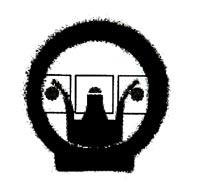 Center Hold Center Hold
The front sight is placed directly in the center of the target. A center hold is great in different light conditions. On a bright day the target appears small. On a dark day the target appears large. In [any] light conditions the center of the target is always in the center. A shooter who has problems with elevation shots in various light conditions may benefit from a center hold.
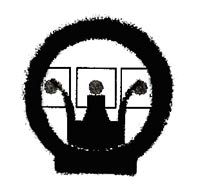 6 O’Clock Hold 6 O’Clock Hold
With the 6 O’Clock hold the front sight is placed at the bottom of the aiming black. For many shooters, this hold allows precision placement of the front sight. The ability to accurately call your shots will come with time and experience. Light changes, which alter the appearance of the target, may affect shooters who utilize the 6 O’Clock hold.
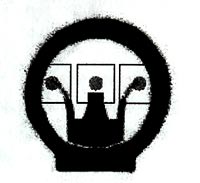 Sub 6 Hold Sub 6 Hold
The sub 6 is just like the 6 O’Clock hold, only there is a small line of white between the front sight and the aiming black. Many shooters have a problem determining the exact 6 O’Clock position with their front sight, but by using a sub 6 or line of white they may be able to better estimate their hold.
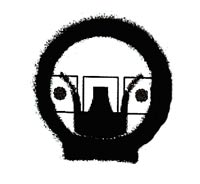 Frame Hold Frame Hold
With the frame hold, just like with the other holds, the front sight is in the center of the rear sight. The front sight can then be placed at the 6 or 12 O’Clock position on the frame when there is no visible aiming point. This hold is typically reserved for foul weather and poor light conditions. By placing the front sight at the top or bottom of the frame, a shooter may hold better when there is little target to see. It can be difficult to hold a tight group this way, but it may add more hits in bad conditions. This technique is normally applied when shooting longer ranges such 600 or 1000 yards.
CLICK HERE for more articles from The FIRST SHOT, CMP Online Magazine.
May 30th, 2013
 For those of use who have sweated through fire-forming and load development, it’s nice to see things coming together right out of the gate. With the 6mmBR improved wildcats such as the BRX, BRDX, and Dasher, it’s not unusual to see outstanding accuracy even while blowing out cases. In fact the accuracy is usually good enough that you might as well do your fire-forming during competition (once you’ve confirmed that everything is working with a 10-round function test). We’ve seen Dashers shoot in the low twos and even ones during fire-forming — so long as you load carefully and use good bullets, powder, and primers. Here’s a report from Forum member Chris W. (aka “baydawg”) on his new 6mm BRX tube gun: For those of use who have sweated through fire-forming and load development, it’s nice to see things coming together right out of the gate. With the 6mmBR improved wildcats such as the BRX, BRDX, and Dasher, it’s not unusual to see outstanding accuracy even while blowing out cases. In fact the accuracy is usually good enough that you might as well do your fire-forming during competition (once you’ve confirmed that everything is working with a 10-round function test). We’ve seen Dashers shoot in the low twos and even ones during fire-forming — so long as you load carefully and use good bullets, powder, and primers. Here’s a report from Forum member Chris W. (aka “baydawg”) on his new 6mm BRX tube gun:
Shot my 6 BRX last night for the first time at 600 yards last night. The result was a 199-11X. Not bad for fire-forming brass with thrown loads… LOL. Thanks Gary Eliseo and Competition Machine for a kick-ass chassis!”

Gun Specs: Competition Machine R1 in Granny Smith green. Pierce repeater tube gun action. 32″ Bartlien 6mm barrel, chambered in 6mm BRX. Smithed by Pierce Engineering in Lansing, Michigan.
May 9th, 2013
 If you plan to compete at the 2013 NRA National Rifle and Pistol Championships, you can now register online. To sign up, visit www.NMEntry.com. Returning shooters should enter their Camp Perry Competition ID (from a previous year). New shooters should enter NRA member ID, if available. Choose one (or more) of the five championship events: Pistol Championship, Smallbore Rifle Championship, High Power Rifle Championship, Mid-Range Rifle Championship, Long Range Championship. If you plan to compete at the 2013 NRA National Rifle and Pistol Championships, you can now register online. To sign up, visit www.NMEntry.com. Returning shooters should enter their Camp Perry Competition ID (from a previous year). New shooters should enter NRA member ID, if available. Choose one (or more) of the five championship events: Pistol Championship, Smallbore Rifle Championship, High Power Rifle Championship, Mid-Range Rifle Championship, Long Range Championship.
VIEW 2013 NRA National Matches Program
Competing at Perry is special: “For over 100 years, shooters in the United States have made the pilgrimage to Camp Perry for the NRA National Matches, and the honor to shoot shoulder-to-shoulder with the best.” (NRABlog)

Watch Slide Show from 2012 NRA Long Range Championship
May 8th, 2013
Gary Eliseo of Competition Machine is now (again) manufacturing adjustable heads for spotting scopes. These work great for High Power, Three Position, Across-the-Course, Prone, and F-Class shooting. The head fits on a scope stand, so it can adjust to any height you need. This is a super-high quality unit according to our buddy Dennis Santiago: “They’re back — the best scope head on the planet is back in production. Direct from Gary Eliseo this time. Uses any 3/4″- or 1″-diameter shaft stand.”

Gary tells us: “I had so many people ask me to bring my scope head back into production I thought I’d try a trial run to see how they were received. Well, the first run nearly sold out just by word of mouth! I do have some still available from the first run, and we’ll do another run. Price is $185.00 plus shipping. You can choose from 12 Cerakote colors.”
Eliseo Universal Scope Head Features
- Scope Head can be mounted above or below scope body.
- Scope Head works for both right-handed and left-handed shooters. 6.25″ Offset.
- Scope Head works with 3/4″-diameter and 1″-diameter uprights.
- Integral dovetail mount (saves wear and tear on spotting scope base threads).
- Coarse and fine elevation settings require no tools to adjust.
- Adjustable windage disc brake friction.
The Competition Machine Universal Scope Head is available right now — a few units are left from the first production run. To order, call 714-630-5734. To see other Competition Machine products, including tube gun chassis kits, visit www.GotXring.com.


|


