|
|
May 19th, 2015

 The Fullbore (Palma) World Championships will be held at Camp Perry, Ohio this summer. The American squad arrived a bit early — for a few days of team practice. Our friend Anette Wachter (aka 30 Cal Gal) is in Ohio with Team USA and she posted some photos on Facebook. Skies were gray, but that didn’t deter the American shooters who practiced their shooting under the watchful eyes of top wind coaches. The Fullbore (Palma) World Championships will be held at Camp Perry, Ohio this summer. The American squad arrived a bit early — for a few days of team practice. Our friend Anette Wachter (aka 30 Cal Gal) is in Ohio with Team USA and she posted some photos on Facebook. Skies were gray, but that didn’t deter the American shooters who practiced their shooting under the watchful eyes of top wind coaches.
Take a look at the photo above. How many ace American shooters can you spot? Here’s one hint — pulling the black wheeled case is John Whidden, past U.S. Long-Range National Champion.
At right is the first bit of Team USA swag. Anette says there is more to come — team shirts and jackets were sized and ordered for all the U.S.A. shooters and coaches.
November 14th, 2014
Gear Review by GS Arizona
This article originally appeared in the Rifleman’s Journal website.
Many of you have doubtlessly read Bryan Litz’s articles in our Daily Bulletin and on his Applied Ballistics website about various current long-range bullets. Bryan’s work carries a great deal of weight in the world of ballistics, so his comments (and mathematical proofs) regarding the benefits of bullet pointing certainly caught my attention. Bullet pointing, like meplat trimming, is an effort to reduce the ballistic inconsistency created by the somewhat jagged tip of the jacket where the bullet forming dies bring it to a point in the manufacturing process. Of course, we could eliminate this problem altogether by shooting closed-tip, open-base bullets like the Lapua D46, but that merely shifts the jacket problem to the other end of the bullet.

In any event, hollow point bullets rule the accuracy world today, so John Whidden, multi-time National Long Range Champion at Camp Perry and a talented gunsmith and designer to boot, came up with a very handy tool to let us make those hollow points pointier. Let’s have a look at John’s tool and see how it works.

The Whidden Bullet Pointing Die System uses a Forster bullet seating die body as its basic structure and that’s a good choice given the quality machining Forster does on these. The real heart of the tool comes in two parts: the caliber sleeve and the pointing die that fits inside the sleeve. In fact, to point up different caliber bullets, you only need to change the caliber sleeve, everything else remains the same. The last item is the bullet base that slips into a standard .308 shellholder and supports the bullet as it goes into the die body.
 It took me less than five minutes to get everything set up, including changing the caliber sleeve from 6mm to .30 caliber. John’s instruction sheets are well illustrated and clearly written; you should have no problem getting up and running. It took me less than five minutes to get everything set up, including changing the caliber sleeve from 6mm to .30 caliber. John’s instruction sheets are well illustrated and clearly written; you should have no problem getting up and running.
Pointing the bullets is as easy as sizing a piece of brass. You can see in the top photo the difference between a few pointed bullets and a few un-pointed ones. The innermost pointed bullet in the picture was my first attempt and I adjusted the die a little after that, you can see that the others are closed a little more. John even includes a couple of sample bullets so that you can see one done right and one done wrong. That is a nice addition that can help you achieve the desired results.
I think Bryan’s work supports the validity of this concept and John’s tool puts it into practice in a simple-to-use manner that makes it just about impossible to do any damage to the bullet. I have shot pointed bullets in various calibers at many matches now. Pointing is not a “miracle cure”, but I believe that pointing bullet tips can produce long-range accuracy gains, through reduced vertical dispersion, for many popular types of match bullets. The Whidden Bullet Pointing Die System retails for $220.00 (with one insert). Additional die inserts are $42.00 each. Extra caliber sleeves are also $42.00. You can purchase directly from Whidden Gunworks, or from Sinclair International.

August 20th, 2014
The Canadian National Fullbore Rifle Championships (CFRC) are underway this week at the Connaught Range near Ottawa, Ontario. Following on the Canadian F-Class Championships held last week, this event is for “Target Rifles”, shot with slings. So far, a British Lady, Jane Messer, is leading the pack, but two Americans, Kent Reeve and Bryan Litz, are close behind.

Bryan Litz provides this report from Canada: “Had a great time shooting today! I won the Letson sub-Aggregate and moved up to Third Place in the overall. We (Team USA Hardin) also tied for winning the coaches two-man team match with USA Praslick at 900 meters. Here’s how the leader board stacks up: Jane Messer from the UK is still leading at 1 down, Kent Reeve moved into second at 2 down, and I’m in third with 3 down. There will be two more days of individual matches and then a lot of team matches leading up to the America Match on Sunday.”
Team USA Hardin: John Whidden (L), Coach Steve Hardin, and Bryan Litz (R).

August 6th, 2014
Michelle Gallagher is now the 2014 NRA Long Range High Power Rifle Champion. Michelle shot a perfect Palma score to win the multi-match championship. When the dust settled, Michelle edged out her mom, Nancy Tompkins, by a single X. Readers asked about Michelle’s choice of bullets. In the Long Range Championships, Michelle used the Berger .30-caliber 155.5gr Match Fullbore Target bullet (for Palma), as well as the 6.5mm 140gr Match Hybrid Target bullet.
Here are some photos from the Long Range championships, courtesy GONRAMedia.
CLICK HERE to see more GONRAMedia photos from Camp Perry.
John Whidden, a three-time NRA Long Range Champion, had a pair of long-range rifles built on modified Anschutz aluminum small-bore stocks. John’s scoped rig (first photo) features a Kelbly Panda Action. The iron sight version (second photo below) has a Winchester action. John has done these conversions for other shooters.


Long Range is not a man’s world by any means. The top two LR places at Perry were claimed by ladies.

Tubeguns built with Gary Eliseo chassis systems were popular on the firing line.

Yes, that is a John Deere Mirage Band shielding this shooter’s barrel.

This service rifle shooter found a way to shield his sights and remember his loved ones.

This competitor transformed a Sinclair loading block into an elevated ammo caddy. Clever piece of kit!

“Wagons HO!”. Shooters await the long ride to the pits for target duties.


February 1st, 2013
There is a new player in the field of elite die-makers: Whidden Gunworks. John Whidden’s Georgia-based company is producing outstanding full-length sizing dies and micrometer-top seater dies for 7/8-14 thread presses. The dies look great, work great, and produce very straight and accurate ammo. The Whidden dies are finished beautifully inside and out. They are priced competitively and they are available for popular “extreme accuracy” cartridges such as the 6PPC, 6mmBR, 6mmBRX, 6 Dasher, 6XC, 6.5×47, .260 Rem, .284 Win, and .308 Win (and more). If you are looking for a die set for your new precision rifle, you should definitely check out the Whidden dies. Two-die set, FL Sizer and Micrometer-top Seater, costs $184.99. Sizer die alone is $74.99, while Seater die alone is $109.99.
Many of our Forum members have started using Whidden dies — and they are reporting very positive results. I personally own and use a set of Whidden dies, and I am very, very impressed with them. Here’s my report:
Editor’s Report on Whidden Dies
 I have a set of Whidden Gunworks dies for my personal 6BRDX (a chambering similar to 6 Dasher but with longer neck). The dies are excellent and they produce very straight ammo. My loaded rounds (made with a Whidden bushing-type FL sizer and Whidden micrometer-top seater) are showing less than .0015″ run-out measured on the bullet, with the majority closer to .001″ run-out. (This is with Lapua Scenar L bullets, which have great jacket uniformity and concentricity.) I have a set of Whidden Gunworks dies for my personal 6BRDX (a chambering similar to 6 Dasher but with longer neck). The dies are excellent and they produce very straight ammo. My loaded rounds (made with a Whidden bushing-type FL sizer and Whidden micrometer-top seater) are showing less than .0015″ run-out measured on the bullet, with the majority closer to .001″ run-out. (This is with Lapua Scenar L bullets, which have great jacket uniformity and concentricity.)
One thing I immediately noticed about the Whidden seater die is that there is a very close correspondence between the seater “hash marks” and true changes in seating depth. By this I mean when you dial a value change of 10 on the micrometer scale, you get very close to a .010″ change in seating depth. It is not perfect, but it is definitely more precise than most other micrometer-top seater dies I’ve used (both hand dies and 7/8-14 thread screw-in types).
 Cartridges loaded with my Whidden sizer and seater dies have proved very accurate. My 6BRDX is shooting in the mid-ones for five shots at 100 yards. I also have a micrometer-top Wilson inline seater die that was custom-bored with my chamber reamer. As far as I can tell, the ammo loaded with the screw-in Whidden seater is every bit as accurate as rounds loaded with the Wilson die using an arbor press. Additionally, with the Whidden micrometer die, I can hold extremely tight tolerances on base-to-bullet-ogive lengths. Cartridges loaded with my Whidden sizer and seater dies have proved very accurate. My 6BRDX is shooting in the mid-ones for five shots at 100 yards. I also have a micrometer-top Wilson inline seater die that was custom-bored with my chamber reamer. As far as I can tell, the ammo loaded with the screw-in Whidden seater is every bit as accurate as rounds loaded with the Wilson die using an arbor press. Additionally, with the Whidden micrometer die, I can hold extremely tight tolerances on base-to-bullet-ogive lengths.
In the past, with my 6mmBR, I favored an inline die because I thought it offered better control over seating depth. But given how well the Whidden seater works, I’m not sure I’d gain anything with my Wilson hand die. At least when used with a quality Harrell’s benchrest press, the Whidden seater gives up little or nothing to the hand die, and that’s big news in my experience.

You will like the look and feel of these Whidden dies. The finish inside and out is very, very good — the dies have a quality feel and run very smoothly. Both the sizer and seater have a fluted section — this offers a better “grip” when you’re screwing in the dies. The outside of the seater has a smooth, gloss-anodized finish — it exudes quality. The markings on the seater’s micrometer ring are crisp and very legible, with large, high-contrast white-on-black lines and numbers.
One other very cool feature of the Whidden sizing dies is that custom-sized tapered expanders will soon be offered. Whidden plans to offer expanders in .0005″ (one-half thousandth) increments. This is great if you have, say, a .265 bushing and a .266 bushing but you want just a little less neck tension than the .265 offers. With the tapered expander, I can use a 0.265 bushing followed by an 0.2655 expander — allowing more precise control of neck “grip”.

Whidden Die Features
- Die Dimensions well-matched to PT&G reamers used for match chambers.
- Sizing dies spec’d for easy chambering and extraction without overworking brass.
- All sizers include shoulder datum collar to measure shoulder “bump” and headspace.
- Neck bushing or no-neck bushing configurations.
- Bushing dies use standard Redding/Wilson type bushings.
- Neck diameter of non-bushing FL sizers can be set to customer specification.
- Extended threads on short cartridge sizer dies such as BRs.
- Coming soon: custom expander balls (in half-thousandth increments) to adjust neck tension and provide minimum working of the case neck.
- Seater: Floating sleeve on micrometer seater enhances concentricity of loaded rounds.
- Seater: Large, high-contrast markings for easy adjustment.
Custom Dies for Wildcats or Your Cartridge
- Custom-made for your wildcat or standard cartridge.
- Can work from fired brass or a chamber drawing to match your chamber exactly.
- Neck-bushing die, or no-bushing die with neck diameter bored to customer specification.
 Available Die Sets Available Die Sets
Here is the current caliber list. Micrometer seaters are available in all calibers listed below except 22BR and 22 BRX.
Full-Length Sizer with Bushings
22 BR (No Seater Die)
22 BRX (No Seater Die)
6mm PPC
6mm BR
6mm BRDX
6mm BRX
6mm Dasher
6mm SLR
6mm XC
6×47 Lapua
.243 Win
6.5×47 Lapua
.260 Rem
6.5-284
.284 Win
7mm Shehane
.308 Win
.338 Edge
Full-Length Sizer (Non-Bushing)
22 BR
6MM BR
.243 Win
6×47 Lapua
.260 Rem
6.5 Creedmoor
6.5×47 Lapua
.308 Win

John Whidden Talks about Sizers, Seaters, and Expanders
 There are two sides to our die business. First we are stocking dies in many calibers that are of interest to those who visit this website (such as the 6PPC, 6mm Dasher, 6.5×47 Lapua, .260 Rem, 7mm Shehane, .308 Winchester). These dies are a good fit to the “match chamber” reamers and very few people with these calibers should have to have “Pure Custom” dies made. We have both sizers and micrometer-top seaters ready to go for the many cartridge types listed above. The sizer dies will include a shoulder datum collar that makes it easy to measure shoulder “bump” during the full-length sizing process. This is important to control headspace precisely. There are two sides to our die business. First we are stocking dies in many calibers that are of interest to those who visit this website (such as the 6PPC, 6mm Dasher, 6.5×47 Lapua, .260 Rem, 7mm Shehane, .308 Winchester). These dies are a good fit to the “match chamber” reamers and very few people with these calibers should have to have “Pure Custom” dies made. We have both sizers and micrometer-top seaters ready to go for the many cartridge types listed above. The sizer dies will include a shoulder datum collar that makes it easy to measure shoulder “bump” during the full-length sizing process. This is important to control headspace precisely.
On the “Pure Custom” side, we have a huge amount of flexibility. We can make one-of-a-kind sizers and seaters for wildcats in a short period of time and at an excellent price. We can work with the customer to make full-length sizers, neck sizers, shoulder bump dies, small base dies, or most anything else they can need. We can of course provide micrometer-top seaters for these cartridges as well. We can make non-bushing sizers with specific neck inside diameters tailored to customer specifications.
We will also be offering custom-sized expanders. These expanders will fit our dies as well as Redding dies. Our tapered expanders will be available in .0005” (one-half thousandth) increments for the common calibers. In our shop we have had excellent results using expanders in the dies as long as the expanders provided the correct amount of neck tension and didn’t overwork the brass. Expanders have gotten a bad reputation in recent years but we find them to be excellent tools when the same precision is applied to their use that careful handloaders apply to the rest of their process. Expanders can be most valuable for those who choose not to neck-turn their brass (because the expander pushes neckwall variations to the outside).
One last thing — many gunsmiths with their own wildcats (or “specialty” chambers) have asked us to provide dies for their customers. We gladly do batches of custom dies and encourage gunsmiths to contact us. — John Whidden
For more information visit WhiddenGunworks.com or call (229) 686-1911.
August 25th, 2012
 John Whidden, multi-time NRA Long-Range Champion, runs a stock-building enterprise, Whidden Composite Works. This is a sister operation to Whidden Gunworks, which crafts V-Blocks and other specialized gun components and reloading tools. John Whidden’s stock-making business, the Composite Works, is producing a series of high-quality, V-Block-equipped stocks using state-of-the-art composite construction. The first two stock designs, the models 105 and 140, are general-purpose stocks that will work for everything from Elk hunting to tactical comps. Both models are currently available in multiple color choices: Desert Sand, Forest Green, Flecked Black, Silver, and Custom Mix. Other colors may be offered in the future. John Whidden, multi-time NRA Long-Range Champion, runs a stock-building enterprise, Whidden Composite Works. This is a sister operation to Whidden Gunworks, which crafts V-Blocks and other specialized gun components and reloading tools. John Whidden’s stock-making business, the Composite Works, is producing a series of high-quality, V-Block-equipped stocks using state-of-the-art composite construction. The first two stock designs, the models 105 and 140, are general-purpose stocks that will work for everything from Elk hunting to tactical comps. Both models are currently available in multiple color choices: Desert Sand, Forest Green, Flecked Black, Silver, and Custom Mix. Other colors may be offered in the future.
The Whidden Composites model 105 has a familiar hunting rifle profile. The model 140 is designed as a hunting stock incorporating tactical features for shooters who prefer a more vertical strong-hand grip. Both include the Whidden V-Block (in configurations for right-handed short and long actions based on the Rem 700 bolt pattern), three installed sling studs, and a Pachmayr® Decelerator pad.
Model 105 Offers Hunters a Familiar Design with Enhanced Rigidity and V-Block
The Whidden 105, priced at $360.00, is shaped along the lines of a classic North American hunting rifle. But under the skin it is a greatly enhanced platform. Solid-core construction gives a solid feel that is often absent on lesser synthetic/plastic stocks. The V-Block system is integrated, the composites used increase stiffness, and the material is impervious to weather. The V-Block system allows the owner to easily use multiple barreled actions in the same stock.

Model 140 Provides Improved Ergonomics for Prone and Tactical Shooters
The Whidden 140 offers the ergonomic advantages of a vertical grip and raised comb for eye-scope-target (EST) alignment. For many shooters, the vertical grip feels more natural in prone position, and allows a very solid “hard hold” for a heavier-recoiling caliber. The semi-beavertail fore-end will rest solidly on sandbags, while the radiused edges still allow for comfortable grip and carrying. Whidden model 140 stocks are available for $400 in Desert Sand, Forest Green, and Flecked Black.

 Model 175 Whidden Stock Design Model 175 Whidden Stock Design
In addition to the models 105 and 140, John produces a model 175 stock featuring an (optional) adjustable cheekpiece and other enhancements favored by tactical, prone, and F-Class competitors. The basic model 175 stock includes the V-Block, three sling studs, and a Pachmayr® Decelerator pad. Options include Foreend Rail, Adjustable Cheek Piece, and Butt Spacers. Model 175 stocks start at $549.00 plus shipping. For more information on the Whidden models 105, 140, and 175, visit Whidden Composite Works or call (229) 686-1860.
August 12th, 2012
 Moving into the second day of the Long-Range National Championships, five shooters are clustered at the front with equal scores of 598 points. Leading the way, based on X-count, is our friend and Forum member John Whidden (598-36X). Just three Xs back with 598-33X is Bryan Litz, Berger’s Chief Bullet Designer and Ballistician. We’re pleased to see Forum member John Friguglietti, aka Mudcat, ranked fourth. Among the top ten, in the preliminary standings, are shooters from international squads. It’s good to see foreign competitors on the firing line at Perry this year. Moving into the second day of the Long-Range National Championships, five shooters are clustered at the front with equal scores of 598 points. Leading the way, based on X-count, is our friend and Forum member John Whidden (598-36X). Just three Xs back with 598-33X is Bryan Litz, Berger’s Chief Bullet Designer and Ballistician. We’re pleased to see Forum member John Friguglietti, aka Mudcat, ranked fourth. Among the top ten, in the preliminary standings, are shooters from international squads. It’s good to see foreign competitors on the firing line at Perry this year.

It’s no surprise that John Whidden is leading the way. He’s won the Long Range Championship before, and he finished in second place last year. In the past John has campaigned a .243 Winchester in the Long-Range Nationals. This chambering has a reputation for short barrel life, but as John explained: “When the National Championship’s at stake, I can afford to use a fresh barrel for the match. If the .243 offers the right combination of accuracy, low recoil, and performance in the wind, I’m not that concerned about barrel life.”
Watch Slide Show from Long Range Championship
August 11th, 2012
 Highs in the low 60s and puddles from yesterday’s rain created a chilly, muddy atmosphere for the start of the Long Range Championships. The Band of Brothers Trophy Match was the first match fired. The early scores show that the elite shooters, such as past Long-Range Champion John Whidden, brought their ‘A’ game, and are able to handle the cooler weather and cloudy skies. There were a number of 200s shot on the range this morning at the Band of Brothers match. Highs in the low 60s and puddles from yesterday’s rain created a chilly, muddy atmosphere for the start of the Long Range Championships. The Band of Brothers Trophy Match was the first match fired. The early scores show that the elite shooters, such as past Long-Range Champion John Whidden, brought their ‘A’ game, and are able to handle the cooler weather and cloudy skies. There were a number of 200s shot on the range this morning at the Band of Brothers match.
Band of Brothers Trophy Match
1. John Whidden, 200-15x
2. Shane Barnhart, 200-15x
3. Serge Bissonnette, 200-11x
4. Robert Steketee, 200-11x
5. David Calvert, 200-11x
Watch Slide Show from Long Range Championships, Day One
December 29th, 2011
You may not know it, but Whidden Composites, run by two-time National Long-Range Champion John Whidden, produces a nice series of hunting, F-TR, match, tactical, and general purpose gunstocks. These high-grade stocks all feature advanced composite construction, Whidden Gunwork’s signature V-blocks, three installed sling swivels, and a Pachmayr® Decelerator pad. Epoxy construction ensures that these stocks are stiff AND light. John explains: “All of our stocks are crafted with epoxy from core to finish. The core is an expanded epoxy blended to a density that perfectly balances weight, strength, and rigidity. The outer shell is an epoxy coating that is incredibly durable — but light enough to carry all day. The textured epoxy external coating forms a handsome, tactile finish that is great to hold.”
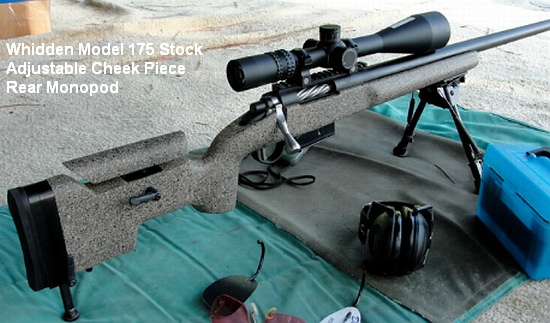
Built-in V-Block Standard, with Many Options Available
The latest stock design from Whidden Composite Works is the model 175 Tactical/F-TR stock. This unit offers a long, rigid fore-end, with a straight comb and straight buttstock toe. This makes it very well-suited for prone shooting with a rear sand-bag and front bipod. The design is ambidextrous so it can be used by either right- or left-handed shooters (with appropriate inlet). Five color choices are offered: black, silver, reddish brown, tan, and green. Base price, inletted for Rem 700 long- or short-action, is a reasonable $549.00 — remember that includes deluxe buttpad and the versatile V-block which allows one stock to be used with multiple barreled actions.

For the model 175, Whidden offers a number of options: $100 Fore-end Rail, $125 Adjustable Cheek piece, $135 Rear Monopod, and $75 Picatinny Bipod Rail. The sling attachments can also be flush-mounted for $10.00 per slot. For just $30.00 over the base price, Southpaws can order a left-hand version of the model 175 stock. Whidden Composites can also inlet for detachable bottom metal and for non-Rem actions (Tikka, Winchester, Sako, etc.), but it does cost more for these non-standard inlets.
Product Tip by EdLongrange. We welcome reader submissions.
December 13th, 2011
At the 2010 SHOT Show, we had the unique opportunity to corner three “superstars” of High Power shooting, and solicit their wind-reading secrets. In the three videos below (in alphabetical order), Carl Bernosky (9-Time Nat’l High Power Champion), David Tubb (11-time Nat’l High Power Champion and 7-time Nat’l Long -Range Champion), and John Whidden (2-Time Nat’l High Power Long-Range Champion) shared some of the wind-doping strategies that have carried them to victory in the nation’s most competitive shooting matches. This is GOLD folks… no matter what your discipline — be it short-range Benchrest or Long-Range High Power — watch these videos for valuable insights that can help you shoot more accurately, and post higher scores, in all wind conditions.
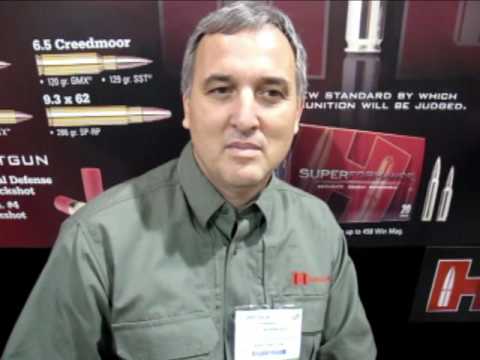
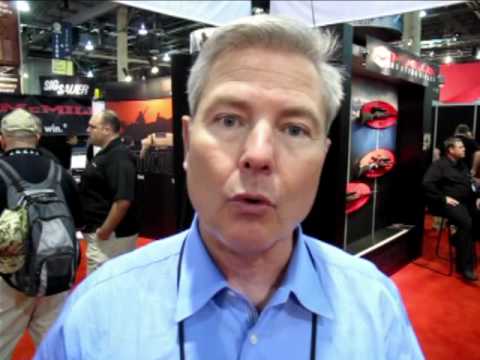
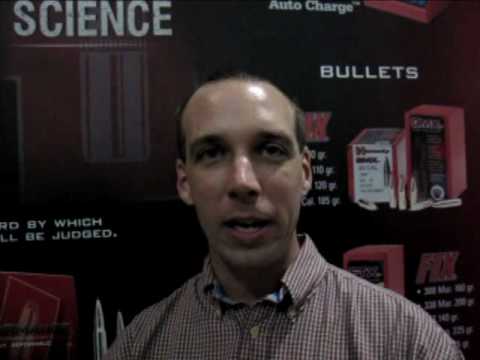
We were very fortunate to have these three extraordinarily gifted champions reveal their “winning ways”. These guys REALLY know their stuff. I thought to myself: “Wow, this is how a baseball fan might feel if he could assemble Babe Ruth, Hank Aaron, and Ted Williams in the same room, and have them each reveal their hitting secrets.” Editor’s Note: These interviews were conducted before Bernosky and Tubb won their most recent National Championships so the introductions may list a lower number of titles won.
|


