The NRA Blog ran an feature on Silhouette shooting by NRA Silhouette Program Coordinator Jonathan Leighton. Here are selections from Leighton’s story:
NRA Silhouette Shooting
The loud crack from the bullet exiting the muzzle followed by an even louder ‘clang’ as you watch your target fly off the railing is really a true addiction for most Silhouette shooters. There is nothing better than shooting a game where you actually get to see your target react to the bullet. In my opinion, this is truly what makes this game so much fun.
Metallic Silhouette — A Mexican Import
Silhouette shooting came to this country from Mexico in the 1960s. It is speculated that sport had its origins in shooting contests between Pancho Villa’s men around 1914. After the Mexican Revolution the sport spread quickly throughout Mexico. ‘Siluetas Metalicas’ uses steel silhouettes shaped like game animals. Chickens up front followed by rows of pigs, turkeys, and furthest away, rams. Being that ‘Siluetas Metalicas’ was originally a Mexican sport, it is common to hear the targets referred to by their Spanish names Gallina (chicken), Javelina (pig), Guajalote (turkey) and Borrego (ram). Depending on the discipline one is shooting, these animals are set at different distances from the firing line, but always in the same order.
Before Steel There Was… Barbeque
In the very beginnings of the sport, live farm animals were used as targets, and afterwards, the shooters would have a barbeque with all the livestock and/or game that was shot during the match. The first Silhouette match that used steel targets instead of livestock was conducted in 1948 in Mexico City, Mexico by Don Gonzalo Aguilar. [Some matches hosted by wealthy Mexicans included high-ranking politicians and military leaders].
As the sport spread and gained popularity during the 1950s, shooters from the Southwestern USA started crossing the Mexican border to compete. Silhouette shooting came into the US in 1968 at the Tucson Rifle Club in Arizona. The rules have stayed pretty much the same since the sport has been shot in the US. NRA officially recognized Silhouette as a shooting discipline in 1972, and conducted its first NRA Silhouette Nationals in November of 1972.
Silhouette Ace Eric Mietenkorte Shooting Smallbore Silhouette — Perfect Form:
Now There Are Multiple Disciplines
The actual sport of Silhouette is broken into several different disciplines. High Power Rifle, Smallbore Rifle, Cowboy Lever Action Rifle, Black Powder Cartridge Rifle, Air Rifle, Air Pistol, and Hunter’s Pistol are the basic disciplines. Cowboy Lever Action is broken into three sub-categories to include Smallbore Cowboy Rifle, Pistol Cartridge Cowboy Lever Action, and regular Cowboy Lever Action. Black Powder Cartridge Rifle also has a ‘Scope’ class, and Hunter’s Pistol is broken into four sub-categories. Some clubs also offer Military Rifle Silhouette comps.
Where to Shoot Silhouette
NRA-Sanctioned matches are found at gun clubs nation-wide. There are also many State, Regional, and National matches across the country as well. You can find match listings on the Shooting Sports USA website or contact the NRA Silhouette Department at (703) 267-1465. For more info, visit SteelChickens.com, the #1 website dedicated to Silhouette shooting sports.
Ace silhouette shooter Erich Mietenkorte (Team SK/Lapua) offers this report from Montana. Erich took top honors in Centerfire Silhouette (both standard and hunter rifle), while earning a first and second in the rimfire classes. Here is Erich’s report:
There’s a reason they call it the “Iron Man” Regional Silhouette Championship — shooting eight rifle matches over two days is no easy task! The four smallbore matches on Saturday were met with very windy conditions but I was able to shoot through it to finish 1st in standard rifle and 2nd in hunter rifle.
Great Conditions for Centerfire Matches
The wind died down on Sunday and we had great conditions for the High Power rifle events (bolt-action centerfire). Four matches later I finished first in both standard and hunter rifle classes. After the scores from all eight matches were totaled up, I finished first overall and won the “Iron Man” Aggregate trophy.
These results wouldn’t be possible without the amazing products from SK Ammunition, Lapua, Berger Bullets, and Vihtavuori Powders. Thank you for your support!
Thanks to all of the people who put on a great match at the beautiful Deep Creek Range in Missoula, Montana. All of your hard work is truly appreciated!
The NRA Blog ran an feature on Silhouette shooting by NRA Silhouette Program Coordinator Jonathan Leighton. Here are selections from Leighton’s story:
NRA Silhouette Shooting
The loud crack from the bullet exiting the muzzle followed by an even louder ‘clang’ as you watch your target fly off the railing is really a true addiction for most Silhouette shooters. There is nothing better than shooting a game where you actually get to see your target react to the bullet. In my opinion, this is truly what makes this game so much fun.
Metallic Silhouette — A Mexican Import
Silhouette shooting came to this country from Mexico in the 1960s. It is speculated that sport had its origins in shooting contests between Pancho Villa’s men around 1914. After the Mexican Revolution the sport spread quickly throughout Mexico. ‘Siluetas Metalicas’ uses steel silhouettes shaped like game animals. Chickens up front followed by rows of pigs, turkeys, and furthest away, rams. Being that ‘Siluetas Metalicas’ was originally a Mexican sport, it is common to hear the targets referred to by their Spanish names Gallina (chicken), Javelina (pig), Guajalote (turkey) and Borrego (ram). Depending on the discipline one is shooting, these animals are set at different distances from the firing line, but always in the same order.
Before Steel There Was… Barbeque
In the very beginnings of the sport, live farm animals were used as targets, and afterwards, the shooters would have a barbeque with all the livestock and/or game that was shot during the match. The first Silhouette match that used steel targets instead of livestock was conducted in 1948 in Mexico City, Mexico by Don Gonzalo Aguilar. [Some matches hosted by wealthy Mexicans included high-ranking politicians and military leaders]. As the sport spread and gained popularity during the 1950s, shooters from the Southwestern USA started crossing the Mexican border to compete. Silhouette shooting came into the US in 1968 at the Tucson Rifle Club in Arizona. The rules have stayed pretty much the same since the sport has been shot in the US. NRA officially recognized Silhouette as a shooting discipline in 1972, and conducted its first NRA Silhouette Nationals in November of 1972.
Now There Are Multiple Disciplines
The actual sport of Silhouette is broken into several different disciplines. High Power Rifle, Smallbore Rifle, Cowboy Lever Action Rifle, Black Powder Cartridge Rifle, Air Rifle, Air Pistol, and Hunter’s Pistol are the basic disciplines. Cowboy Lever Action is broken into three sub-categories to include Smallbore Cowboy Rifle, Pistol Cartridge Cowboy Lever Action, and regular Cowboy Lever Action. Black Powder Cartridge Rifle also has a ‘Scope’ class, and Hunter’s Pistol is broken into four sub-categories. Some clubs also offer Military Rifle Silhouette comps.
Where to Shoot Silhouette
NRA-Sanctioned matches are found at gun clubs nation-wide. There are also many State, Regional, and National matches across the country as well. You can find match listings on the Shooting Sports USA website or contact the NRA Silhouette Department at (703) 267-1465. For more info, visit SteelChickens.com, the #1 website dedicated to Silhouette shooting sports.
If your local shooting club wants to attract new members, and provide a new form of competition, consider starting a series of groundhog (varmint) matches. These can employ paper targets, metal silhouette-style targets, or both. Groundhog matches are fun events with straight-forward rules and simple scoring. You don’t need to bring windflags or load at the range, so a Groundhog match is more “laid back” than a registered Benchrest match. Normally there will be three or four rifle classes, so you can compete with a “box-stock” factory gun, or a fancy custom, as you prefer. Many clubs limit the caliber or cartridge size allowed in varmint matches, but that’s just to protect reactive targets and keep ammo costs down. In this article, Gene F. (aka “TenRing” in our Forum), provides a basic intro to Groundhog matches, East-Coast style.
Groundhog Matches Are Growing in Popularity
Though Groundhog matches are very popular in many parts of the country, particularly on the east coast, I’ve found that many otherwise knowledgeable “gun guys” don’t know much about this form of competition. A while back, I ordered custom bullets from a small Midwest bullet-maker. He asked what type of competition the bullets would be used for, and I told him “groundhog shoots”. He had not heard of these. It occurs to me that perhaps many others are unfamiliar with this discipline.
Groundhog matches have grown rapidly in popularity. There are numerous clubs hosting them in Pennsylvania, Maryland, and Delaware, as well as other venues. They are usually open to the public. Most Eastern clubs have five to twenty cement benches, and overhead roofs. At this time, there is no central source for match schedules. If you’re interested in going to a groundhog match, post a query in the AccurateShooter Forum Competition Section, and you should get some info on nearby opportunities.
How Matches Are Run — Course of Fire and Scoring
Unlike NRA High Power Matches, there is no nationwide set of standard rules for Groundhog matches. Each club has their own rules, but the basics are pretty similar from club to club. Paper groundhog targets are set at multiple distances. There are normally three yardages in the match. Some clubs place targets at 100, 200, and 300 yards. Other clubs set them at 200, 300, or 400 yards. At my club in Shippensburg, PA, our targets are placed at 200, 300 and 500 meters.
The goal is to score the highest total. The paper targets have concentric scoring rings. The smallest ring is normally worth ten points while the large ring is worth five points. The course of fire varies among the various clubs. Most clubs allow unlimited sighters and five shots on the record target in a given time period. Only those five shots on the scoring rings are counted, so that with three yardages, a perfect score would be 150 points. Tie breakers may be determined by total number of dead center or “X” strikes; or, by smallest group at the farthest distance.
Types of Rifles Used at Groundhog Matches
The same benchrest rigs found at IBS and NBRSA matches can be utilized (though these will typically be put in a ‘custom’ class). Though equipment classes vary from club to club, it is common to separate the hardware into four or five classes. Typical firearm classes can include: factory rifle; deer hunter; light varmint custom (usually a limit of 17 lbs.with scope); and heavy varmint custom (weight unlimited). Some clubs allow barrel tuners, others do not. Scope selection is usually unlimited; however, some restrict hunter class rifle scopes to 20 power. Factory rifles usually cannot be altered in any way.
Good, Simple Fun Shooting — Why Groundhog Shoots Are Popular
Forum member Danny Reever explains the appeal of groundhog matches: “We don’t have a governing organization, or have to pay $50 a year membership just to compete in matches. Sure the rules vary from club to club, but you adapt. If you don’t like one club’s rules, you just don’t shoot there. It’s no big deal.
There are no National records, or Hall of Fame points — just individual range records. If you want to shoot in BIG matches (with big prizes), there is the Hickory Ground Hog Shoot among others. If competition isn’t your bag, many clubs offer mid-week fun matches that you can shoot just for fun. You shoot the same targets but with a more relaxed atmosphere with no time limits.
The best part is you don’t have to shoot perfect at every yardage. You always have a chance because in this sport it really isn’t over until the last shot is fired. Typically ALL the entry money goes to the host club, with much of the cash returned back to the shooters via prizes. Junior shooters often shoot for free, or at a reduced rate. The low entry cost also encourages young guys to get involved who don’t have $4000 custom rifles or the money to buy them.
There isn’t a sea of wind flags to shoot over or to put up and take down. If the range has a couple of flags so much the better, but after all it is a varmint match. No pits to spot shots and slow things down either. If you can’t see your hits through your rifle scope or spotting scope well you are in the same boat as everybody else. That’s what makes it interesting/ sometimes frustrating!
Pick your passion — High Power, F-Class, Silhouette, Smallbore, Air Rifle, Pistol, Black Powder. The NRA runs National Championships for all these disciplines and more. Attending a National Championship event is a big commitment, but it’s worth it. You can meet new friends, test your mettle against the nation’s best, and record memories that can last a lifetime.
Mark your calendars boys and girls — here is the complete 2018 NRA National Match schedule. This includes the National High Power Championship, National F-Class Championship, Fullbore (Palma) Championship, and a 15 more major national events. The date and location are included for each listing. Click the link for each championship to go directly to the official NRA championship page for that particular discipline to get more information or to register. To get more information, visit compete.nra.org or send email to: comphelp@nrahq.org.
Mark your calendars boys and girls — here is the complete 2018 NRA National Match schedule. This includes the National High Power Championship, National F-Class Championship, Fullbore (Palma) Championship, and a 15 more major national events.
The 2018 NRA Championship season kicks off with the Intercollegiate Pistol and Rifle Championships at Fort Benning (GA). Then comes the NRA Bianchi Cup, followed by the National High Power Matches at Camp Atterbury (IN), the National Pistol Championships at Camp Perry (OH), the National Smallbore Championships in Bristol (IN), the National HP Silhouette Championships in Raton (NM), the NRA World Shooting Championship in Glengary (WV), the National F-Class Championship in Raton (NM), and many more major events throughout the summer and fall.
The complete 2018 NRA National Match schedule is as follows:
EVENT / DATE / LOCATION
Intercollegiate Pistol Championships / March 17-20, 2018 / Fort Benning, Georgia
Intercollegiate Rifle Club Championships / March 23-25, 2018 / Fort Benning, Georgia
NRA World Action Pistol Championship / May 19-20, 2018 / Hallsville, Missouri
NRA Bianchi Cup / May 23-25, 2018 / Hallsville, Missouri
National Muzzle Loading Championship / June 9-17, 2018 / Friendship, Indiana
National Air Gun Championship / June 14-19, 2018 / Bloomington, Illinois
National High Power Matches / July 5-24, 2018 / Camp Atterbury, Edinburgh, Indiana
National Pistol Championships / July 9-13, 2018 / Camp Perry, Ohio
National Silhouette Smallbore Championships / July 16-18, 2018 / Raton, New Mexico
National Smallbore Championships / July 19-30, 2018 / Wa-Ke’-De Range, Bristol, Indiana
National Silhouette High Power Championships / July 19-21, 2018 / Raton, New Mexico
National Silhouette Championship Lever Action Rifle / July 24-27, 2018 / Raton, New Mexico
National Silhouette Black Powder Cartridge Rifle / July 30-Aug. 3, 2018 / Raton, New Mexico
Fullbore Prone National Championship / September 8-14, 2018 / Raton, New Mexico
NRA World Shooting Championship / September 13-15, 2018 / Glengary, West Virginia
National F-Class Championship / September 16-23, 2018 / Raton, New Mexico
National Police Shooting Championship / September 24-26, 2018 / Albuquerque, New Mexico
National Silhouette Black Powder Target Rifle / October 1-7, 2018 / Raton, New Mexico
How to Get More Information about NRA Championships CLICK HERE for more information about NRA Competitive Shooting, including MATCH INFO and program rules. Visit Shooting Sports USA Magazine online at www.SSUSA.org for shooting news, competitor profiles, and match reports.
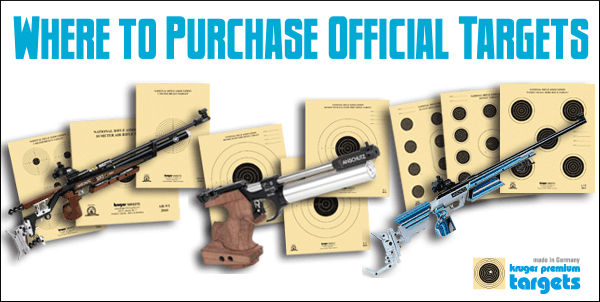
Need targets — not just any old targets, but the correctly-sized targets for specific shooting disciplines (such as NRA Smallbore, F-Class, and 1K Benchrest)? Well you won’t find them at your neighborhood Wally World store. Precise, dimensionally-correct competition targets are producted by a half-dozen specialty printers. In this article we provide links to the leading target sellers, with a chart showing “who’s got what”. Look for your particular discipline and the vendors will be specified.
Sources for Official Shooting Competition Targets:
AccurateShooter.com offers dozens of FREE, printable targets for target practice, load development, and fun shooting. We also offer a few of the most popular NRA Bullseye targets. One or more of these printable targets should work for most training purposes. However, some readers have asked: “Where can we get the real targets… exactly like the ones used in NRA, IBS, and NBRSA shooting matches?”
All these vendors carry nearly all the NRA High Power and Smallbore targets, including the new, smaller F-Class targets. National Target has the F-Class and High Power targets, including 100-yard reductions of the 200, 300, and 600-yard military targets. Germany’s Kruger Targets sells all the important NRA targets, and international (ISSF) air rifle and smallbore targets too.
Orrville Printing currently sells IBS targets for rimfire (50 yard) benchrest, short-range centerfire Benchrest (100, 200, 300 yards), Hunter BR Rifle (100, 200, 300 yards), plus the official 600-yard and 1000-yard IBS targets. National Target Company also has most of the IBS targets. NBRSA short-range, 600-yard, and 1000-yard benchrest targets are available directly from the NBRSA Business Office. Call (307) 655-7415 to order for the season.
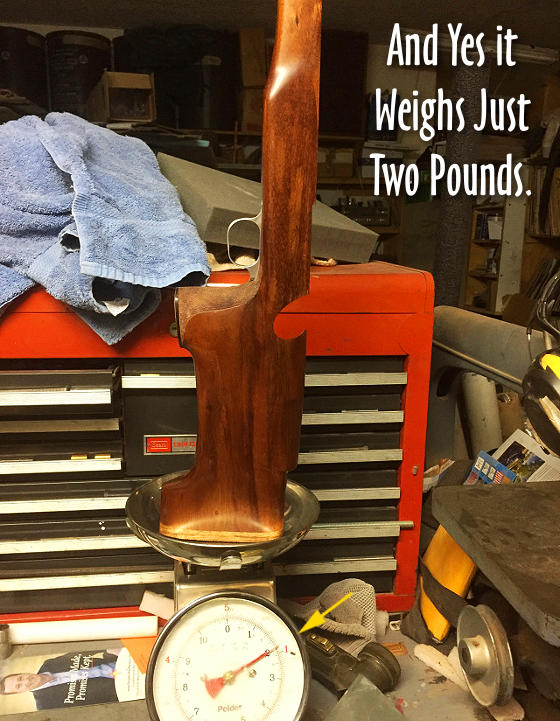
Our friend, gunsmith/stockmaker Doan Trevor recently created a lovely, one-of-a-kind silhouette stock for an Anschutz rimfire action. Built as a true custom design, this stock combines ideal standing position ergonomics with light weight — the entire stock weighs a mere two pounds. This project really showcases Doan’s remarkable skills with wood. Read the full story about this project (with more photos) at DoanTrever.com.
Doan explains his design process: “A customer came to me wanting to know if I could build a silhouette stock that was 2 pounds or less. I used the Koa wood because it is a lower specific gravity than Walnut (which makes it lighter) and stronger. I was still able to use pillar bedding and keep the weight down. The fore end could be shortened to reduce the weight even more. Since the drops on a silhouette rifle are different than a prone rifle, I kept the pistol grip from the prone rifle which is comfortable and tried to come up with a higher cheek piece and more drop to the buttplate. All of this required lots of hand carving.”
AccurateShooter.com offers dozens of FREE, printable targets for target practice, load development, and fun shooting. We also offer a few of the most popular NRA Bullseye targets. One or more of these printable targets should work for most training purposes. However, some readers have asked: “Where can we get the real targets… exactly like the ones used in NRA, IBS, and NBRSA shooting matches?”
All these vendors carry nearly all the NRA High Power and Smallbore targets, including the new, smaller F-Class targets. Germany’s Kruger Targets sells all the important NRA targets, and international (ISSF) air rifle and smallbore targets too.
Orrville Printing currently sells IBS targets for rimfire (50 yard) benchrest, short-range centerfire Benchrest (100, 200, 300 yards), Hunter BR Rifle (100, 200, 300 yards), plus the official 600-yard and 1000-yard IBS targets. National Target Company also has most of the IBS targets. NBRSA short-range, 600-yard, and 1000-yard benchrest targets are available directly from the NBRSA Business Office. Call (307) 655-7415 to order for the season.
The NRA has released new, updated versions of Competition Rules, with changes that have been adopted for 2016. There are quite a few minor changes affecting rifle competitors in High Power, Service Rifle, Prone AR Platform Rifle, F-Class, and Smallbore Disciplines. There are also new rules for matches with Electronic Targets.
You can download the updated rules, discipline by discipline, on the NRA Rulebook Page: http://rulebooks.nra.org. Bound copies of NRA Rule Books may be ordered online from the NRA Store: http://materials.nrahq.org.


 The NRA Blog ran an feature on Silhouette shooting by NRA Silhouette Program Coordinator Jonathan Leighton. Here are selections from Leighton’s story:
 Metallic Silhouette — A Mexican Import
 Before Steel There Was… Barbeque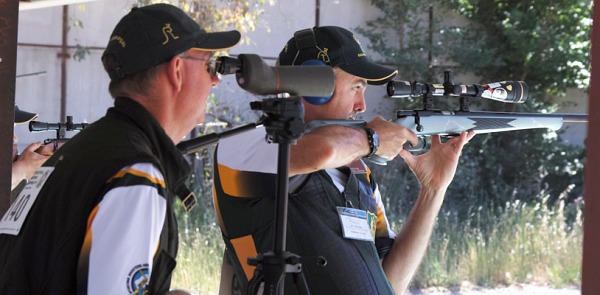


 Great Conditions for Centerfire Matches


 The
The 

 Groundhog Matches Are Growing in Popularity


 The 2018 NRA Championship season kicks off with the Intercollegiate Pistol and Rifle Championships at Fort Benning (GA). Then comes the NRA Bianchi Cup, followed by the National High Power Matches at Camp Atterbury (IN), the National Pistol Championships at Camp Perry (OH), the National Smallbore Championships in Bristol (IN), the National HP Silhouette Championships in Raton (NM), the NRA World Shooting Championship in Glengary (WV), the National F-Class Championship in Raton (NM), and many more major events throughout the summer and fall.