We often get questions about the 6.5 Creedmoor Cartridge — folks ask where they can find good resources for this cartridge, which is popular with Across-The-Course, High Power, and tactical shooters. We did some searching and found that the August 2011 digital edition of Shooting Sports USA has a good article for all fans of the 6.5 Creemoor.
Development of the 6.5 Creedmoor Cartridge
In the August 2011 Edition of Shooting Sports USA you’ll find a lengthy feature on the 6.5 Creedmoor cartridge. This story covers the origin of the cartridge and its performance both as a match cartridge and as a hunting round. Hornady Chief Ballistician Dave Emary explained: “the original intent of the cartridge was as an across-the-course match cartridge. We envisioned it as an off-the-shelf round that would produced the accuracy and ballistics to compete in all match disciplines right out of the box. At the same time we realized that the same characteristics would make an exceptional hunting cartridge with the right bullets.”
6.5 Creedmoor Brass No Longer Washed After Annealing
Here’s an interesting update on Hornady 6.5 Creedmoor brass and loaded ammo. In a move to improve case quality and neck uniformity, Hornady recently changed the 6.5 Creedmoor production process, eliminating the case-washing step after annealing. So now you will see annealing coloration on 6.5 Creedmoor brass, just like on Lapua brass. Dennis DeMille of Creedmoor Sports wanted to improve the consistency/uniformity of 6.5 Creedmoor case-necks. At Dennis’ suggestion, Hornady conducted tests which showed that the “standard industry practice” of washing brass could potentially alter the necks in undesirable ways. Bottom line, unwashed annealed brass was determined to have an accuracy edge over washed brass. Looking at these results, Hornady decided to forgo the post-anneal washing process. As a result, the latest 6.5 Creedmoor brass now displays the distinctive coloration left by neck/shoulder annealing. Learn something new every day, eh?
From now on, California will require all new-model semi-automatic handguns to be manufactured with microstamping technology (aka “ballistic imprinting”). This requirement went into effect on May 17th, when the California Attorney General’s office declared that technical and patent barriers to the implementation of microstamping had been removed.
To make a firearm compliant, firearms manufacturers must now engrave a gun’s make, model, and serial number on two distinct parts of each gun, including the firing pin, so that, in theory, this data is imprinted on the cartridge casing when the pistol is fired. If the microstamp on the end of the firing pin wears out, then the gun is considered “unsafe” under California law, and the owner may not sell or transfer the gun.
California’s microstamping law was enacted way back in 2007. However, by its terms, the law did not go into effect until the technology was mature and patent rights were resolved. With the State government claiming that microstamping is now practical, new gun models must have microstamping capability in order to be approved for civilian sale in California. This will, eventually serve as a de facto ban on new-model semi auto handguns in California. Brandon Combs, Executive Director of the Calguns Foundation, explains: “Manufacturers are not going to create a special run of firearms with all of these very burdensome manufacturing technologies just so they can comply and produce firearms for one market.” At present, as far as we can determine, no major gun-maker currently offers a microstamping-capable, semi-auto handgun for sale in the United States — not a single one.
Current “California-Approved” Semi-Auto Pistols Can Still Be Sold — For a Time
The “activation” of California’s microstamping requirement does NOT mean that semi-auto handguns currently on the California “approved” list can no longer be sold. The current inventory of “approved” handguns are “grandfathered”, so they may be sold so long as the manufacturers continue to pay annual handgun roster registration fees to the State of California. However, any new-model semi-auto pistol — even one with a minor design change from a previous version — will be blocked from sale in California unless it has the microstamping feature. If a manufacturer stops producing a particular handgun, replacing it with a newer, upgraded version, that newer model cannot be sold in California unless it is microstamp-capable. (We should add that the microstamp requirement does not apply to handguns sold to law enforcement agencies.)
What we can expect is that, in time, as handgun manufacturers replace old models with new models (or make modifications to existing models), fewer and fewer new semi-auto pistols will be offered for sale in California. If, for example, Glock updates its Glock 17, the new model could not be sold in California unless Glock outfits it with microstamping capability.
NRA Plans Legal Challenge
NRA Attorney C.D. Michel says that microstamping is a flawed and impractical technology: “This is not going to help solve crimes. [Microstamping] is easily defeated… and can be used to lead police down false alleys.” Michel notes that criminals can easily defeat the microstamp by filing the tips of firing pins. Overall, Michel believes, microstamping will not reduce crime, but it will cut off the supply of handguns available to Californians. He stated the the NRA plans a legal challenge to the implementation of microstamping in California.
While there is virtually no “real world” evidence that microstamping has ever solved actual crimes, there are many important criticisms of the “ballistic imprinting” technology:
Stamped casing can only be traced to the last registered owner, not to the person who used the gun when the casings were stamped. In the case of a stolen gun, as is the case for most firearms used in crime, the stamped case would not lead to the criminal.
Criminals could collect discarded brass from a firing range and salt crime scenes with microstamped cases, thereby providing false evidence against innocent people and increasing the workload for investigators.
Microstamping is easily defeated. Inexpensive files will remove microstamping. Firing pins are normally replaceable and can be changed with simple tools or without tools. Firing a large number of rounds will wear down the microstamp.
Microstamping is an immature technology, and has not been subjected to sufficient independent testing. Transfer of microstamped marks to the cases is less reliable than proponents claim.
Ruger has created a series of videos showcasing Metallic Silhouette, IDPA, SCSA (Steel Challenge), and USPSA shooting events. Log on to Ruger’s Beginner’s Guide to Shooting Competitions webpage to see informative videos on each of these popular sports. Below you can find the Video on Metallic Silhouette and the Video on SCSA Steel Challenge pistol competition. Silhouette is a great family sport and the Steel Challenge is the ultimate pistol speed-shooting event.
INTRO to RIMFIRE RIFLE METALLIC SILHOUETTE Competition
INTRO to STEEL CHALLENGE Pistol Competition
Ruger also offers many other cool videos, both on its Video Webpage and on Ruger’s YouTube Channel. On YouTube, you’ll find a great four-part Tactical Carbine video series, hosted by Dave Spaulding, winner of the 2010 Trainer of the Year award by Law Officer Magazine. Spaulding also hosts a set of Ruger videos on defensive handgun use. For novice handgunners, Ruger offers Beginner Shooting Tips with video segments covering each of these topics:
Introduction
Firearm Safety Rules
Pistol Functionality
Body Position Stance
Dominant Eye
Gripping the Handgun
Sight Picture
Aiming
Trigger Control
Loading and Unloading
Range Basics
Ready Position
Shooting Pairs
Shooting to Slidelock
Effects Of Cartridge Over All Length (COAL) And Cartridge Base To Ogive (CBTO) – Part 1 by Bryan Litz forBerger Bullets.
Many shooters are not aware of the dramatic effects that bullet seating depth can have on the pressure and velocity generated by a rifle cartridge. Cartridge Overall Length (COAL) is also a variable that can be used to fine-tune accuracy. It’s also an important consideration for rifles that need to feed rounds through a magazine. In this article, we’ll explore the various effects of COAL, and what choices a shooter can make to maximize the effectiveness of their hand loads.
Sporting Arms and Ammunition Manufacturers’ Institute (SAAMI)
Most loading manuals (including the Berger Manual), present loading data according to SAAMI (Sporting Arms and Ammunition Manufacturers’ Institute) standards. SAAMI provides max pressure, COAL and many other specifications for commercial cartridges so that rifle makers, ammo makers, and hand loaders can standardize their products so they all work together. As we’ll see later in this article, these SAAMI standards are in many cases outdated and can dramatically restrict the performance potential of a cartridge.
Bullet seating depth is an important variable in the accuracy equation. In many cases, the SAAMI specified COAL is shorter than what a hand loader wants to load their rounds to for accuracy purposes. In the case where a hand loader seats the bullets longer than SAAMI specified COAL, there are some internal ballistic effects that take place which are important to understand.
Effects of Seating Depth / COAL on Pressure and Velocity
The primary effect of loading a cartridge long is that it leaves more internal volume inside the cartridge. This extra internal volume has a well known effect; for a given powder charge, there will be less pressure and less velocity produced because of the extra empty space. Another way to look at this is you have to use more powder to achieve the same pressure and velocity when the bullet is seated out long. In fact, the extra powder you can add to a cartridge with the bullet seated long will allow you to achieve greater velocity at the same pressure than a cartridge with a bullet seated short.
Figure 1. When the bullet is seated farther out of the case, there is more volume available for powder. This enables the cartridge to generate higher muzzle velocity with the same pressure.
When you think about it, it makes good sense. After all, when you seat the bullet out longer and leave more internal case volume for powder, you’re effectively making the cartridge into a bigger cartridge by increasing the size of the combustion chamber. Figure 1 illustrates the extra volume that’s available for powder when the bullet is seated out long.
Before concluding that it’s a good idea to start seating your bullets longer than SAAMI spec length, there are a few things to consider.
Geometry of a Chamber Throat
The chamber in a rifle will have a certain throat length which will dictate how long a bullet can be loaded. The throat is the forward portion of the chamber that has no rifling. The portion of the bullet’s bearing surface that projects out of the case occupies the throat (see Figure 2).
The length of the throat determines how much of the bullet can stick out of the case. When a cartridge is chambered and the bullet encounters the beginning of the rifling, known as the lands, it’s met with hard resistance. This COAL marks the maximum length that a bullet can be seated. When a bullet is seated out to contact the lands, its initial forward motion during ignition is immediately resisted by an engraving force.
Seating a bullet against the lands causes pressures to be elevated noticeably higher than if the bullet were seated just a few thousandths of an inch off the lands.
A very common practice in precision reloading is to establish the COAL for a bullet that’s seated to touch the lands. This is a reference length that the hand loader works from when searching for the optimal seating depth for precision. Many times, the best seating depth is with the bullet touching or very near the lands. However, in some rifles, the best seating depth might be 0.100″ or more off the lands. This is simply a variable the hand loader uses to tune the precision of a rifle.
Many readers will be driving across multiple states this summer to attend competitions. Other shooters will be heading out of state for a game hunt or prairie dog safari. For $13.95 you can purchase a state-by-state Traveler’s Guide to firearms laws. This book can help ensure you comply with all state laws during your trip. Highways Magazine states: “If you carry a weapon in your rig, you need this book.” This 68-page guide covers all firearms types and all 50 states. It even has info for Canada and Mexico. The latest edition of the Traveler’s Guide, updated with 50 changes for 2013, is now shipping.
The Traveler’s Guide to the Firearm Laws of the Fifty States has sold more than 950,000 copies since it was first released in 1996. The book’s author, Attorney J. Scott Kappas, has written numerous magazine articles and has appeared on television, explaining the unexpected pitfalls that shooters may encounter when traveling with firearms. Along with being an attorney, Mr. Kappas serves as a director on the Board of the Kentucky Firearms Foundation, and Kappas is a Class III firearms dealer.
The Traveler’s Guide is especially useful for shooters traveling in RVs and motorhomes. The American Rifleman Magazine declared: “This book is a must-have for truck drivers, motor home enthusiasts, campers and other travelers…easy to read and understand, well-organized and concise….” One reader from Texas adds: “I used to think that my RV was the same as my home when it came to gun carry….the Traveler’s Guide set me straight. Now I know my motorhome is subject to the same laws as any vehicle when it comes to guns.”
These days, online gun auctions are busier than ever. Many folks are purchasing arms for the first time, and sellers are enjoying good prices for their wares based on increased demand. Some people even think that guns may be a safer investment than real estate or bonds at this time. That’s questionable, but this Editor finds it ironic that most of his guns have held their value while the price of gold has dropped over 25% in the past couple of years. For those with extensive collections (and gun safes bursting at the seams), this may be an opportune time to “thin out” your holding and sell off little-used (or less favored) rifles and pistols.
To assist our readers with the gun buying and selling process, we’ve prepared a guide to Selling Your Stuff Online. This quick guide surveys the major online sales and auction sites, comparing their fees and features. The costs are NOT all the same. Did you know that Gunbroker.com charges sellers 5% of the first $25.00, plus 2.5% of the value from $25.00 – $1000.00, plus 1.5% of the remaining value ($1000+). For a $3000.00 gun that’s over $50.00 in sales commissions! That’s why many sellers prefer to list their rifles on Benchrest.com for just $3.00, or right here on AccurateShooter.com for FREE!
1. Include Good, Sharp Photos: A custom rifle or expensive optic will sell two to three times as quickly, at a higher price, if you include good sharp photos. We can’t over-emphasize the importance of good photos. For all products, show multiple angles, and include the original boxes if you still have them. For a rifle, include detail shots as well as a photo of the complete gun.
2. Resize Your Photos Before Posting: Remember that many readers have monitors that only display 800-1000 pixels in screen width. We recommend you size your photos down to 600×480 pixels, or 800×600 at the most.
3. Be Fair and Complete in Your Description: Buyers appreciate honesty and thoroughness in product descriptions. Potential buyers want details. For a rifle, list the gunsmith, barrel-maker, round count, and provide the specifications. If the rifle has a winning competition history, say so. Always highlight the positives in your description, but you should disclose significant flaws. A buyer will be more willing to purchase if he thinks the seller is 100% honest.
4. Don’t Forget Contact Info: We’re amazed by how many adverts omit key contact info. In a forum classified ad, include your phone number, and email address in your listing. Include a first name, e.g. “Ask for Dan.” We also suggest you list your residence city and state. Some buyers will prefer to buy from a seller in their home state.
5. Make the Price Attractive: Buyers, everywhere, are looking for good deals. If you want your item to move quickly, set the price accordingly and don’t expect top dollar. Check comparable listings and then discount by 10-15% if you want the item to move fast.
6. Include a Call to Action: Advertisements can be twice as effective if they include a “Call to Action”, i.e. a statement that directly inspires the potential buyer to respond. Sample calls to action are: “Free Shipping — today only.” Or, you can use a time limit: “Special Sale Price good ’til the end of the month. Act soon”.
Classified Advert vs. Auctions For benchrest, F-Class, Silhouette, Tactical or High Power rifles, you may get the best results posting a For Sale ad on a Forum that caters to the right discipline. You want your ad to reach the right audience. On the other hand, a GunBroker.com auction will have tens of thousands of potential buyers. Realistically, however, if you price your rig attractively, it should sell quickly in a Forum Classified Advert. Plus with conventional Classifieds, you can sell immediately — you don’t have to wait for the auction to end. For scopes and reloading equipment (but not firearms, actions, barrels etc.), also consider eBay, which still allows many gun-related items.
Editor’s Comment: All long-range competitive shooters should watch this excellent video — whether you shoot with a team or as an individual. Three cameras were used so you can watch the shooter, the range flags, and the target simultaneously. After a discussion of scoring, the actual shooting starts at the five-minute mark in the video. Under the guidance of wind coach Gary Rasmussen, U.S. F-Class Open Team Captain Shiraz Balolia shoots 100-7X for ten shots, following Gary’s wind calls.
Team Shooting with a Coach Shiraz tells us: “We come across a lot of shooters who have never shot under a coach. This video was produced to give shooters a basic understanding of shooting with a coach and the importance of releasing a good shot. In a team setting, you basically leave all the decision-making to the coach and aim where you’re told to aim. I’ve worked with Gary many times and it shows in the comfort level we have with each other. The coach plots the shots or a plotter advises the coach of any grouping that is not centered.”
Watch Gary Call the Wind and Shiraz Shoot 100-7X for Ten Shots
For best viewing, click the YouTube settings button to watch in 720p or 1080p HD (high definition).
Shiraz was shooting a 7mm F-Open rig: “My .284 Shehane rifle takes about 10 to 12 shots to settle down and that is probably why we made several scope adjustments while shooting. It is a great caliber and a step up from a straight .284 Winchester. The wind was relatively calm, but sometimes that slow wind with subtle angle changes can be very deceiving.”
The video was shot the first week of May 2013 at a range in Custer, WA located about 20 miles from Bellingham, Washington. The production team included Shiraz Balolia, Gary Rasmussen, three cameramen, and a target puller. Big Thanks to Grizzly Industrial for providing the camera crew and post-production talent.
Report based on story by Kyle Jillson inNRABlog.
There will be a new rifle discipline at Camp Perry this year — the NRA National Mid-Range Championships, slated for August 5-9. Created due to the rising popularity of F-Class shooting, the new 3000-point Mid-Range Championships will be shot from distances of 300, 500, and 600 yards and will add yet another fun sport to the annual Remington/NRA National Rifle and Pistol Championships. The new Mid-Range Championship isn’t just for F-Class Open and T/R rifles though. Sling shooters are allowed to compete with Service Rifles and Match Rifles and will be classified accordingly.
F-Class Basics
F-Class is target shooting with scoped sights and artificial support (bipods for F-TR and rests or bipods for F-Open). F-Class shooting is done entirely from the prone position. Originally started among older High Power shooters who were straining to see traditional iron sights and needed a little more support, the sport now includes young shooters as well as experienced shooters looking for a new challenge.
There are two F-Class divisions: Open Class (F-Open) and Target Rifle (F-TR). In F-Open, rifles can weigh up to 22 pounds, fire any caliber under .35 and may be shot off just about any type of rest. F-TR rigs are limited to 18.15 lbs (8.25 kg), must be shot off a bipod, and must be chambered for either the .223 Rem and .308 Win (or 7.62×51) cartridges. For F-TR, the bipods are counted in the weight of the rifle. Other F-class rules are found in the official NRA High Power Rulebook.
The Mid-Range Championships will be held alongside the High Power Rifle Championships August 5-9 at Camp Perry, Ohio. And if your thirst for F-Class has not been sated by then, the US F-Class National Championships are coming to the NRA Whittington Center in Raton, New Mexico from August 18-20. After that the Whittington Center will hold the F-Class World Championships from August 23-27.
The CMP has just released a new DVD: Basic Rifle Marksmanship. The DVD features a series of lessons taught by leading instructors from the U.S. Army Marksmanship Unit (USAMU). Aimed at prone, high power, and service rifle shooters, this new DVD covers the fundamentals of target shooting (with a strong emphasis on position shooting with sling and irons). This $6.95 DVD (#784DVDBRM) is offered through the CMP eStore. Content is divided into eight lessons:
If you want to learn how to shoot accurately at very long range, one of the very best places to learn is the Williamsport 1000-Yard Benchrest School. The 6th Annual Benchrest School will be held Saturday June 8 and Sunday June 9, 2013. There are still a few slots available for this year’s session. Classes, taught by top 1K shooters, are held at the Original Pennsylvania 1000-Yard Benchrest Club Range, one of the best 1K ranges in the country. View the range on the Williamsport website, PA1000yard.com
Prospective students will be taught all aspects of long-range benchrest shooting from some of the most skilled marksmen in the country. All areas are covered: load development, precision reloading, bench skills, and target analysis. Much time is spent at the loading bench and on the firing line. And you don’t even need guns and ammo — all equipment and ammunition will be provided.
School instructors tell us: “This year’s benchrest school will be a 2-day weekend event. (There is also a ‘Meet and Greet’ gathering Friday evening). The school is a beginner class designed to teach the fundamental skills needed to be competitive at at 600 and 1000 yards. Saturday will be spent in class covering a range of topics including reloading dos and don’ts, load development and equipment handling. Sunday we will shoot an actual match to see what you’ve learned.”
Don’t hesitate if you want to grab one of the remaining slots for the 2013 school. Contact the school directors right away. For more info, visit contact Dave Gardner (Public Relations) at pa1000br@yahoo.com or 570-916-9095. To get an application, please contact Nancy Miller (Club Secretary) at nancymiller@htva.net or 607-426-1535. Cost for the class is $300.00 including lunch and dinner on Saturday.
To see what the 1K Benchrest school is like, watch the slide show/video below, produced by Sebastian Reist, an alumnus of the 2009 Williamsport 1000-yard BR school. Sebastian, a talented professional photographer, captured the highlights of his Williamsport 1K training weekend:


 Development of the 6.5 Creedmoor Cartridge
 6.5 Creedmoor Brass No Longer Washed After Annealing
 From now on, California will require all new-model semi-automatic handguns to be manufactured with microstamping technology (aka “ballistic imprinting”). This requirement went into effect on May 17th, when the California


 Effects Of Cartridge Over All Length (COAL) And Cartridge Base To Ogive (CBTO) – Part 1

 Many readers will be driving across multiple states this summer to attend competitions. Other shooters will be heading out of state for a game hunt or prairie dog safari. For $13.95 you can purchase a state-by-state
  The Traveler’s Guide to the Firearm Laws of the Fifty States has sold more than 950,000 copies since it was first released in 1996. The book’s author, Attorney J. Scott Kappas, has written numerous magazine articles and has appeared on television, explaining the unexpected pitfalls that shooters may encounter when traveling with firearms. Along with being an attorney, Mr. Kappas serves as a director on the Board of the Kentucky Firearms Foundation, and Kappas is a Class III firearms dealer.
 These days, online gun auctions are busier than ever. Many folks are purchasing arms for the first time, and sellers are enjoying good prices for their wares based on increased demand. Some people even think that guns may be a safer investment than real estate or bonds at this time. That’s questionable, but this Editor finds it ironic that most of his guns have held their value while the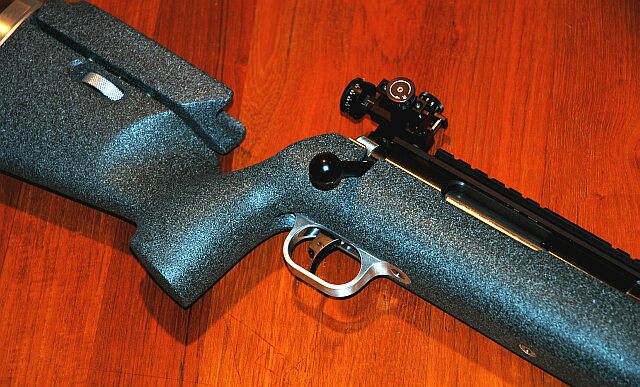
 For benchrest, F-Class, Silhouette, Tactical or High Power rifles, you may get the best results posting a For Sale ad on a Forum that caters to the right discipline. You want your ad to reach the right audience. On the other hand, a GunBroker.com auction will have tens of thousands of potential buyers. Realistically, however, if you price your rig attractively, it should sell quickly in a Forum Classified Advert. Plus with conventional Classifieds, you can sell immediately — you don’t have to wait for the auction to end. For scopes and reloading equipment (but not firearms, actions, barrels etc.), also consider eBay, which still allows many gun-related items.
 Shiraz tells us: “We come across a lot of shooters who have never shot under a coach. This video was produced to give shooters a basic understanding of shooting with a coach and the importance of releasing a good shot. In a team setting, you basically leave all the decision-making to the coach and aim where you’re told to aim. I’ve worked with Gary many times and it shows in the comfort level we have with each other. The coach plots the shots or a plotter advises the coach of any grouping that is not centered.”

 The CMP has just released a new DVD:
  If you want to learn how to shoot accurately at very long range, one of the very best places to learn is the


