


NJOSC Showcases State-of-the-Art Scoring Technology
 The 2014 National Junior Olympic Shooting Championships (NJOSC) take place this month in Colorado Springs, Colorado. The prestigious event, which runs through April 26th, kicked off yesterday with air pistol matches.
Following the pistol competition, Women’s Rifle takes to the range April 16-20, and then the NJOSC will conclude with Men’s Rifle, April 22-26. Both rifle weeks will include both Air Rifle and Three-Position (smallbore) competition.
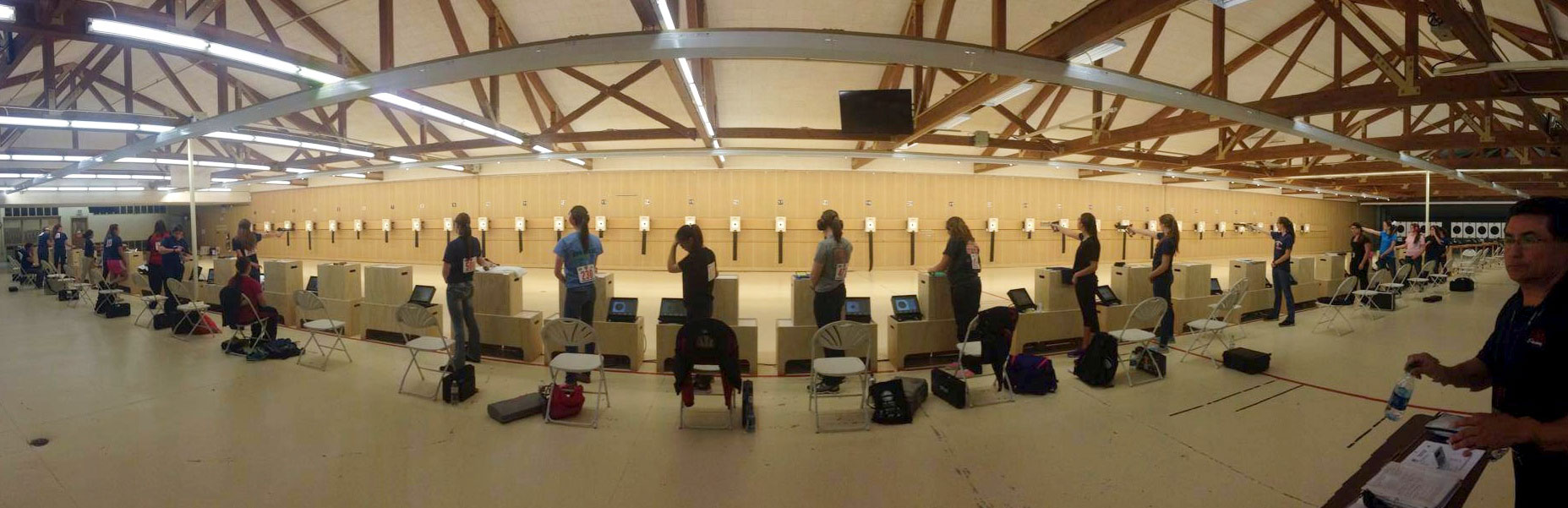
For the first time in the history of the National Junior Olympics, all competitors will shoot on electronic targets. USA Shooting completed a massive range upgrade to improve lighting and enhance the spectator experience by incorporating more than 70 new electronic targets. This is cutting-edge technology that allows both real-time scoring and even live video streaming on the internet. Shown below are the target print-outs for Air Pistol.

In our dreams we could hope for electronic scoring at high power and long-range centerfire events. Wouldn’t it be cool to have scores appear instantaneously, in real time? In addition, after firing a relay you could get a print-out that would show the exact placement of your shots in the scoring rings. That would be handy for analyzing your wind calls. But best of all, with electronic targets, shooters would no longer have to pull pit duty in the hot sun! Over time we may see more of this technology for centerfire competition. We’re told that the new 500-acre, $20 million CMP Talladega Marksmanship Park, being built in Alabama, will have some electronic scoring capabilities.
USA Shooting Video Streaming of Junior Olympics Events
On its YouTube channel, USA Shooting will provide Live and recorded events from the USA Shooting Olympic Training Center Ranges in Colorado Springs. As we write this, the NJOSC 2014 Men & Women Air Pistol Day 2 Air Pistol Relays are streaming. CLICK Here for NJOSC Videos and Streamed Events.

 I give my rifles a pre-season check before the shooting season starts. This starts with a general inspection starting with the butt-plate or recoil pad and making sure that all the screws and adjustable parts (on an adjustable butt-plate) move freely up or down and side to side. If you got caught in rain some of these screws and adjustable parts may not move when needed. I disassemble parts as needed and put rust preventative or a light oil and/or grease on threads and sliding parts. On rifles with recoil pads and fixed butt-plates, make sure the screws are tight and that holes in the stock aren’t stripped out. Make sure there are no cracks in the stock and around the butt-plate. If the recoil pad is glued-on, just make sure it hasn’t come loose.
 With the barreled action out of the stock, it is a good time to spray out the trigger with cleaner. I use Ronson oil or lighter fluid. [Editor’s Note: Some trigger-makers advise against using any kind of lubricant, grease or oil — so plain lighter fluid is preferred.] After the trigger is cleaned you may want to check the trigger pull weight. If you don’t feel comfortable doing this, take it to a gun smith and have it checked. It is worth every penny to not have a trigger issue and/or a safety malfunction. I also take the bolt apart and clean the firing pin spring and bolt housing with Gun Scrubber or automotive brake cleaner. Then lube the firing pin-spring and firing pin with light oil. I use Kel Lube and/or Butch’s gun oil. Put a small dab of gun grease on the [bolt locking lugs] and cocking ramp.
 Next I look at the trigger guard and hinged floor plate and make sure it works as designed. Make sure there are no cracks in the trigger guard from an accidental drop. Check guard screws and /or action screws for tightness and tighten to proper spec. There are torque specs for this, but on wood stocks the wood can crush and this should be checked throughout the year as weather change can affect this. My entire collection of rifles are bedded and I just tighten them just snug with screw driver or Allen wrench. The rimfire rifles have a spec of 55 to 74 inch/lbs and I think would carry over to center fire as well. I would caution you about torque wrenches as you need a good quality wrench, and read the directions on how to use it. You can over torque if not careful. Check the swivel studs and bipod to make sure there tight as well. You may want to take scope off and check the base screws and check the rings.


