Tuners work. So do muzzle brakes. But until recently, you had the choice of one or the other. Now with combo tuner/brakes you can tune the harmonics of your rifle barrel while enjoying significantly reduced recoil (and torque). This is a “Win-Win” for shooters of heavy-recoiling rifles.
Rifle accuracy and precision have come a long way in the past 15 years, particularly for long-range applications. The most recent tool to significantly improve precision is the barrel tuning system. The Rifle Accuracy System (RAS) developed by Precision Rifle Systems, incorporates a precision muzzle brake with the tuner. CLICK HERE for Product INFO.
This system potentially offers meaningful group size reduction through control of barrel harmonics. The RAS tuner/brake system was the subject of a June 2012 Precision Shooting (PS) magazine article, titled “Improved Rifle Accuracy” and was also featured in an article in the November 2012 issue of PS titled “Tuning with Confidence”.
READ MORE about RAS Tuner Tests on .260 AI, .223 Rem, and 22LR rimfire rifles.
Copies of both articles and detailed instructions on RAS installation and tuning can be downloaded from www.bostromgunsmithing.com. Eric Bostrom is the distributor for the RAS.
For years, Timney triggers have been popular drop-in upgrades for hunting rifles, rimfire rifles, and AR platform rifles. To meet the demand for its many trigger products, Timney Triggers has expanded its operation, adding state-of-the-art CNC machines and other high-end, automated equipment. A far cry from the dank gun factories of the 1950s and 1960s, Timney’s Arizona production center now resembles the squeaky-clean, ultra-modern facilities where electronics are assembled.
Today’s Timney factory is all about computerized automation. Timney Triggers’ owner John Vehr states that it would take 60 or more trained machinists and metal-workers to produce as many triggers as can Timney’s modern machines. Timney does employ two dozen workers, but they are assigned tasks that the computerized machines can’t do as well or better.
If you want to see how Timney triggers are made this days, check out Tom McHale’s recent account of his visit to the Timney Factory in Scottsdale, Arizona. McHale explains how the triggers are designed and fabricated, and 20 high-rez photos illustrate the production process and machinery.
Here’s a unique product that may be useful for practice sessions at 400 yards and beyond. Birchwood Casey now offers high-contrast, White/Black versions of its popular Shoot-N-C targets. There are four types of Shoot-N-C White/Black targets: 8″ Bulls-Eye X (#34802), 12″ Bulls-Eye X (#34019), and 12″ multi-diamond target (#34219), and 12″ x 18″ silhouette (#34615).
On all White/Black Shoot-N-C target types, the target background is all-white, and a large black “halo” or circle appears around each bullet hole. This makes the bullet impact much easier to see at long range. Normally it is very difficult to see 6mm (and smaller) bullet holes past 500 yards or so, unless conditions are absolutely perfect. At 800 or 1000 yards it can be nearly impossible to see even 30-caliber bullet holes in conventional paper targets. With these new white/black Shoot-N-C targets the large black ring surrounding each hit can be seen fairly easily, even at extreme ranges. NOTE: These targets work great with a target-cam — even if you have a monochrome monitor.
When your cases become hard to extract, or you feel a stiff bolt lift when removing a cartridge, it’s probably time to full-length size your cases, and “bump” the shoulder back. With a hunting load, shoulder bumping may only be required every 4-5 loading cycles. Short-range benchrest shooters, running higher pressures, typically full-length size every load cycle, bumping the shoulder .001-.002″. High Power shooters with gas guns generally full-length size every time, and may need to bump the shoulders .003″ or more to ensure reliable feeding and extraction.
Use Shims for Precise Control of Shoulder Bump
Some shooters like to set the “default” position for their full-length die to have an “ample” .003″ or .004″ shoulder bump. When they need less bump, a simple way to reduce the amount of shoulder movement is to use precision shims in .001″ (one-thousandth) increments.
Here are reports from Forum members who use the shims:
“Great product. I have my die lock ring(s) adjusted for the shortest headspace length on my multiple chambers 6BRs and 6PPCs. When needing a longer headspace, I just refer to my notes and add the appropriate shim under the lock ring. Keep it simple.” — F.D. Shuster
Mats Johansson writes: “I’ve been using [shims] since Skip Otto (of BR fame) came out with them. I set up my dies with the .006″ shim, giving me the option of bumping the shoulder a bit more when the brass gets old and hardens while still having room to adjust up for zero headspace, should I have missed the original setup by a thou or two. Hunting rounds can easily be bumped an extra .002-.003″ for positive, no-crush feeding. Being a safety-oriented cheapskate, I couldn’t live without them — they let me reload my cases a gazillion times without dangerous web-stretching. Shims are a must-have, as simple as that.” — Mats Johansson
Sinclair Int’l offers a seven-piece set of Sizing Die Shims that let you adjust the height of your die (and thereby the amount of bump and sizing) in precise .001″ increments. Sinclair explains: “Some handloaders will set their die up to achieve maximum sizing and then progressively use Sinclair Die Shims between the lock ring and the press head to move the die away from the shellholder. Doing this allows you to leave the lock ring in the same position. These shims are usually available in increments of .001″ and work very well.”
Seven Shims from .003″ to .010″
Sinclair’s $12.49 Die Shim Kit (item 22400) includes seven shims in thicknesses of .003, .004, .005, .006, .007, .008, and .010. For ease of use, shim thickness is indicated by the number of notches cut in the outer edge of each shim. Even without looking you can “count” the notches by feel.
At the request of our readers, we have launched a new “Deals of the Week” feature. If this proves popular, we’ll try to run this every Monday. Here are some of the best deals on hardware, reloading components, and shooting accessories. Be aware that sale prices are subject to change, and once clearance inventory is sold, it’s gone for good. You snooze you lose.
1. Bullets.com — Clearance on RCBS Presses and Reloading Kits
Bullets.com is clearing out all RCBS inventory. That means big savings on quality products. The Reloader Special is good choice for those who want a second press with a smaller footprint. This Editor owns an RCBS 2000 Progressive Press and can recommend it. I have used Dillon presses extensively. I prefer the RCBS rotary powder measure and I believe the RCBS strip priming system is safer than systems which stack primers vertically. The Partner Press Kit includes: compact reloading press, balance-beam scale, case lube pad + lube, loading tray, powder funnel, neck brushes, deburring tool, AND a Speer Reloading Manual. Hard to beat that for $155.00!
2. Sportsman’s Guide — Frankford Arsenal Case Tumbler Kit
For just $69.99, this Frankford Arsenal Kit provides everything you need to clean brass: Vibratory Tumbler, Rotary Media Separator, Bucket, Corn Cob Media (3 lbs.), and Brass Polish. The Case Tumbler holds up to 600 9mm cases or 350 .223 Rem cases. The separator system is generous, with a 3.5-gallon bucket. NOTE: Sportsman’s Guide Buyers Club members can purchase for $62.99.
3. Harbor Freight – 8-Drawer Wood Tool Chest
This Wood Tool Chest makes a great addition to your reloading room. The eight (8) drawers can hold the many small tools and accessories used for hand-loading, such as bushings, shims, uniforming tools, mandrels, neck-turners and more. A deeper top compartment (under the lid) holds wrenches and other larger tools. The price is just $79.99. A lockable sliding wood panel fits in place to cover the drawers when not in use. This locking panel also secures the drawers during transport.
With Nikon’s “Instant Savings” Promotion in effect through November 11th, you can snag this compact Nikon 16-48X ProStaff Spotting Scope Kit (with tripod and case) for just $249.95 with free shipping. With a length of just 12.3″, and weighing a mere 21.9 ounces, this is a good spotting scope for hunters or pistol shooters who prefer a straight-through view. The $249.95 price is a steal.
5. Southern Shooters — 17 HMR Ruger American Rimfire
With ballistics far superior to a .22 LR, the 17 HMR is ideal for Prairie Dogs and small varmints out to 180 yards or so. Now you can get a reliable, name brand 17 HMR rifle for under $250.00. That’s right, Southern Shooters is selling the 17 HMR Ruger American Rimfire, with 22″ barrel, for just $244.21. FFL required. For other vendors with this rifle, CLICK HERE.
6. Amazon.com — $39.39 Double Rifle Case
This tactical-style Double Rifle Case carries two (2) scoped rifles securely. With a main compartment measuring 48″ x 3″ x 12.5″, this double case is big enough to handle full-sized rifle. There is a padded layer between the two compartments, and the case features a shoulder strap as well as carry handles. NOTE: There are THREE color options: Black, Green, and Tan. Be sure to select color when ordering.
7. Powder Valley Inc. — SK .22 LR Rimfire Ammo $5.90/box
Looking for good-quality, affordable rimfire ammo? Our friends at Powder Valley Inc. (PVI) have you covered. PVI recently obtained a large quantity of German-made SK Standard Plus .22 LR ammo. This is very good ammo for the price. To order, click on “Specials” from the PVI home page
8. Buck Knives — Model 110 Folding Hunter
Read the nearly 1000 customer reviews on Amazon.com, and you’ll understand why the Model 110 Folding Hunter is one of the most popular knives ever produced by Buck Knives. The USA-made, lifetime-warrantied Model 110 features a 3.75″ blade, Dymondwood handle, polished brass bolsters, and leather carrying sheath. It’s a bargain at $27.99.
L.E. Wilson, makers of hand dies, case trimmers and other precision reloading tools, has released a series of informational videos. These videos show how to assemble and operate L.E. Wilson tools including the new Wilson stainless steel case trimmer with micrometer adjustment (photo below). The first video explains the operation of the Wilson trimmer and shows how to initially assemble the tool, attach the handle, and set the cut length.
This second video shows how to set up the new stainless Wilson trimmer with micrometer cut-length control. The new micrometer feature allows you to set the cartridge overall trim length with great precision. If you are trimming a variety of different cartridge types, the micrometer cut length control comes in very handy. In seconds you can “dial in” different trim lengths, without messing around with set screw or locking rings. Fine adjustment is in increments of .001″ is done with the the Micrometer. Gross adjustment is done with with the stop screw. If you go from a very short case to a very long case, you will need to reposition the stop screw. Note: In addition to the videos shown here, L.E. Wilson has a video showing how to mount a the trimmer assembly and case holder arm on a base.
KEY FEATURES of L.E. Wilson Stainless Case Trimmer with Micrometer:
New long-lasting stainless finish with micrometer adjustment.
New increased width on Stop Nut. This provides for a firm stop.
Larger stop screw with Black Oxide Coating, adjustment from 3/8″ (old) to 1/2″.
New 304 Stainless Steel Handle standard on all trimmers shipped after July 2013.
Made in the U.S.A. with American steel.
Along with its case trimmer video, L.E. Wilson has produced three videos showing how to use Wilson cartridge case gages. This series of Case Gage Videos show how to use the gage to check headspace and properly set shoulder bump with a full-length sizing die.
Videos found by EdLongrange. We welcome reader submissions.
Here’s something you don’t see every day — a bolt-action, repeating, double rifle. This amazing twin-barreled bolt-gun has a closing mechanism that locks two separate bolt bodies into the chambers of the right and left barrels. Yes there are two firing pins, two ejectors, two extractors, and two triggers. We’re not sure how one jumbo camming system closes two bolts, but there might be a geared center shaft rotating both right and left bolt bodies at the same time (but in opposite directions). Perhaps one of our gunsmith readers can explain how this system works.
This Rifle Has TWO Barrels and TWO Bolts
Just $78,000 at “Half-off Pricing”
This unique firearm, chambered in .416 Remington, was sold a few years back on Gunbroker.com for $78,000. That astronomical sum is just half the original cost, according to the seller. Crafted by Fuchs, this double rifle has 22″ barrels and weighs 11.5 pounds. Deep-chiseled, full-coverage engraving decorates the receiver. So, if you have a cool $78 grand to burn you can acquire a very rare firearm — we doubt if you’ll find another one of these anytime soon.
Savage has started to ship its new .308 Win Model 11 Scout rifle. Based on the concept popularized by Col. Jeff Cooper, the Savage Scout is designed to be short and handy, with an 18″ barrel and forward-mounted optic. This new Savage was unveiled at SHOT Show in January, 2015, but production models are just now starting to appear at dealers.
The Model 11 Scout comes complete with iron sights (blade front, Williams peep rear). A cantilevered Picatinny rail accepts forward-mounted, long eye-relief scopes. Available in dark Tan or OD Green*, the Model 11 Scout comes with a 10-round detachable magazine (see below). The only chambering currently offered is .308 Winchester. The gun ships with a screw-on muzzle brake. Rifle weight (without optic) is a modest 7.8 pounds.
This article first appeared in 2014. We are reprising it at the request of many readers who are fans of the .30-06 cartridge.
The “Old Warhorse” .30-06 Springfield cartridge is not dead. That’s the conclusion of Forum member Rick M., who has compared the 1000-yard performance of his .30-06 rifle with that of a rig chambered for the more modern, mid-sized 6.4×47 Lapua cartridge. In 12-16 mph full-value winds, the “inefficient and antiquated” .30-06 ruled. Rick reports:
“I was shooting my .30-06 this past Sunday afternoon from 1000 yards. The wind was hitting 12-16 mph with a steady 9 O’clock (full value) wind direction. My shooting buddy Jeff was shooting his 6.5×47 Lapua with 123gr Scenar bullets pushed by Varget. Jeff needed 13 MOA left windage to keep his 6.5x47L rounds inside the Palma 10 Ring. By contrast I only needed 11.5 MOA left windage with my .30-06. I was shooting my ’06 using the 185gr Berger VLD target bullet with H4350. I managed the same POI yet the .30-caliber bullet only needed 11.5 MOA windage. That’s significant. From this experience I’ve concluded that the Old Warhorse ain’t quite dead yet!”
Rick likes his “outdated” .30-06 rifle. He says it can deliver surprisingly good performance at long range:
“To many of the younger generation, the Old Warhorse .30-06 is ‘outdated’ but I can guarantee that the .30-06 Springfield is a VERY ACCURATE cartridge for 1000-yard shooting (and even out further if need be). With some of the advanced powders that we have today, the .30-06 will surprise many shooters with what it’s capable of doing in a good rifle with the right rate of twist. My rifle has a 1:10″ twist rate and I had it short-throated so that, as the throat erodes with time, I could just seat the bullets out further and keep right on shooting. My recent load is Berger 185gr Target VLDs pushed by IMR 4350. This is a very accurate load that moves this bullet along at 2825 fps.”
Denver Instrument, maker of the MXX and Timberline Series of precision balances, has created a helpful guide explaining how to get the best performance from a digital scale. Denver Instrument knows that, to achieve and maintain a very high level of accuracy with digital scales, they must be calibrated regularly, leveled properly, and kept away from sources of interference. Unfortunately, some reloaders treat their electronic scales as if the machines were toasters — something to place on a tabletop, plug into an outlet, then “set and forget.” There’s a better way to set up your scale and keep it functioning optimally. Here are ten guidelines provided by Denver Instrument. Follow these “Ten Commandments” and you’ll benefit:
ONE: Thou shalt choose the best resting spot. The performance of your balance depends greatly on the surrounding environment. Choose a location away from the main traffic flow of the room, especially doors. Also be aware of heating and cooling vents as these produce air movement. You can adjust the environmental settings on your balance to provide the best performance in the chosen location. Balances must be placed away from magnets as they affect the weigh cell performance.
TWO: Thou shalt avoid vibrations. Vibrations can come from large machinery in production environments and from fume hoods in laboratories. An alternative to fume hoods are Power Safety Workstations which are designed specifically for use with a balance.
THREE: Thou shalt watch temperature changes. On an analytical balance a one degree temperature change can cause a 1 digit (0.0001g) drift. Although Denver balances have temperature correction built-in, it is still important to calibrate your balance when the temperature changes significantly. Choosing to place your balance in a temperature controlled room, away from sunlight, and calibrating often helps minimize the effects of temperature.
FOUR: Thou shalt calibrate often. Upon installation and each time the balance is moved you should calibrate your balance. For example moving an analytical balance to a location that is only 13 feet higher changes the weight reading from 200.0000 g to 199.9997 g; which means the result is 0.0003 g lighter than the actual mass.
FIVE: Remember to check the level. The instrument should be leveled upon installation with all feet (two front feet for round pan units, four feet for square pan units) touching the countertop. If the level changes, the balance should be re-leveled and recalibrated. As an example, a 200g sample would weigh 0.0025 g less when tilted at an angle of 0.3°.
SIX: Honor thy weights. Keep in mind that weights are only as reliable as their quality and certification. Remember, a 1 g does not weigh precisely 1.00000 grams. Weights should be recertified annually. Denver Instrument offers recertification services on all weights 1 mg to 5 kg. Check to make sure you have selected the proper weight class for your balance. The weight tolerance should be better than balance readability. Always use tweezers or gloves when handling weights as smudges and indentations change the value of the weight. Keep weights in cases so they don’t get scratched or dusty.
SEVEN: Thou shalt always use a small container and weigh in the center of the pan. Especially when using an analytical balance, the effects of air buoyancy increase as the sample container size increases. Using a small sample container will minimize the effects. Items placed on the pan provide a downward force. Placing them directly in the center of the pan keeps corner loading errors at a minimum.
EIGHT: Thou shalt not unplug. To perform within published speci-fications, balances must have power applied for 30 minutes to 48 hours depending on the resolution of the balance. Denver balances have a standby mode which turn the display to standby but keep power cycling through the electronics.
NINE: Thou shalt not ignore static. Static is one of the most common weighing “noises”. It can cause reading to appear too high, too low or just be unstable. Denver balances include grounding methods to reduce the effects of static. However sometimes extra supplies are needed. Consider anti-static weigh dishes, anti-static brushes or low tech ways to increase the humidity of the chamber like placing damp cotton balls or glass wool in a small vial in the corner of the analytical draft shield.
TEN: Thou shalt clean often. Dirty weigh pans and powder in weighing chamber can contribute to static issues and lead to a wide variety of problems. Denver weigh pans are made from stainless steel and can be cleaned using a variety of household and laboratory chemicals. A small paint brush can be used to get power away from the edges of the draft shield for easy clean up.


 Tuners work. So do muzzle brakes. But until recently, you had the choice of one or the other. Now with combo tuner/brakes you can tune the harmonics of your rifle barrel while enjoying significantly reduced recoil (and torque). This is a “Win-Win” for shooters of heavy-recoiling rifles.

 Here’s a unique product that may be useful for practice sessions at 400 yards and beyond. Birchwood Casey now offers high-contrast, White/Black versions of its popular Shoot-N-C targets. There are four types of Shoot-N-C White/Black targets: 8″ Bulls-Eye X (#34802), 12″ Bulls-Eye X (#34019), and 12″ multi-diamond target (#34219), and 12″ x 18″ silhouette (#34615).


 Here’s something you don’t see every day — a bolt-action, repeating, double rifle. This amazing twin-barreled bolt-gun has a closing mechanism that locks two separate bolt bodies into the chambers of the right and left barrels. Yes there are two firing pins, two ejectors, two extractors, and two triggers. We’re not sure how one jumbo camming system closes two bolts, but there might be a geared center shaft rotating both right and left bolt bodies at the same time (but in opposite directions). Perhaps one of our gunsmith readers can explain how this system works.


 ONE: Thou shalt choose the best resting spot. The performance of your balance depends greatly on the surrounding environment. Choose a location away from the main traffic flow of the room, especially doors. Also be aware of heating and cooling vents as these produce air movement. You can adjust the environmental settings on your balance to provide the best performance in the chosen location. Balances must be placed away from magnets as they affect the weigh cell performance.
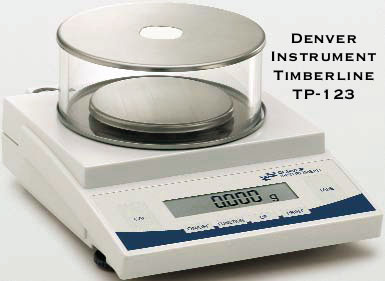 SEVEN: Thou shalt always use a small container and weigh in the center of the pan. Especially when using an analytical balance, the effects of air buoyancy increase as the sample container size increases. Using a small sample container will minimize the effects. Items placed on the pan provide a downward force. Placing them directly in the center of the pan keeps corner loading errors at a minimum.


