|
|
July 30th, 2015

Warner Tool Company (WTC) has introduced a new series of “Flat Line” ultra-high-BC bullets. These sleek, lathe-turned solids are some of the most perfectly-streamlined projectiles ever sold. The Ballistic Coefficients (BCs) of Flat Line projectiles are as much as 20% higher than other match bullets of similar caliber and weight. For example, the .30-caliber 200gr Flat Line bullet has a claimed G1 BC of 0.780. Compare that to 0.555 for the Sierra 200gr MatchKing and 0.622 for the Berger 200gr Hybrid.
The new Flat Line bullets all show extremely high Ballistic Coefficients for their weights:
| Caliber |
Description |
Twist Rate
|
3000-1500 fps |
3500-1500 fps |
| G1 BC |
G7 BC |
G1 BC |
G7 BC |
| 30 |
155.5gr Palma |
10 |
0.553 |
0.285 |
0.576 |
0.290 |
| 30 |
175gr FTR |
10 |
0.678 |
0.340 |
0.694 |
0.348 |
| 30 |
200gr |
9 |
0.780 |
0.391 |
0.796 |
0.399 |
| 33 |
255.5gr LRBT |
10 |
0.814 |
0.400 |
0.834 |
0.411 |
WTC also claims that Flat Line bullets can be launched at faster velocities than other bullets of similar caliber and weight. In its marketing materials, WTC says that Flat Line bullets deliver “Higher velocities when compared with projectiles in its weight class [and] much higher velocity when compared with projectiles of similar BC.” For example, WTC claims that “the 155.5gr .30-caliber bullet has the velocity of a 125-135gr bullet [with] the BC of a 185-200gr bullet.” It will be interesting to see if these claims can be verified in field tests.
Here are comparative G1 BCs for a variety of large .30-caliber bullets:

Cal Zant of the Precision Rifle Blog has obtained some early-production Flat Line bullets from their designer, Josh Kunz. Zant has written a lengthy article explaining the design and features of the new Flat Line bullets. If you are considering ordering some of these new lathe-turned solids, you should definitely read Zant’s report.
READ Flat Line Bullets Product Report in Precision Rifle Blog.
These bullets were designed by Aerospace engineer Josh Kunz using advanced computational fluid dynamics (CFD) to simulate supersonic air flow around the bullets. Through the use of advanced modeling and precision CNC machining, Kunz has developed extremely uniform, ballistically “slippery” bullets that fly faster and flatter than other projectiles of similar weight/caliber.
Premium Pricing: Flat Line Bullets Cost $125 to $165 per Hundred
These new Flat Line solid bullets are pricey. The 155s cost $1.25 per bullet and the price goes up from there. If you need large quantities of projectiles for a week-long match, the cost can be daunting. One hundred fifty of the 200-grainers will set you back $435.00! Here is a price list for the new Flat Line bullets. All quantities are in boxes of 50. Pricing is introductory and subject to change.
| .30 Cal 155 grain |
$62.50 per 50-ct box ($1.25 per bullet) |
| .30 Cal 180 grain |
$67.50 per 50-ct box ($1.35 per bullet) |
| .30 Cal 200 grain |
$72.50 per 50-ct box ($1.45 per bullet) |
| .338 Cal 255 grain |
$82.50 per 50-ct box ($1.65 per bullet) |
Is the cost worth it? When you look at the overall expense of attending a major match, and the fact that the top places in big matches are sometimes are decided by a single point (or X-Count), some competitors will spend the extra money for these ultra-high BC solids.
For more details or to place an order, visit Warner-Tool.com, call WTC at (603) 352-9521, or email info [at] warner-tool.com. CLICK HERE for WTC Flat Line Bullets Data Sheet (PDF).
Photos and Comparison Chart copyright PrecisionRifleBlog.com. Story tip from EdLongrange.
July 29th, 2015

Congratulations to SFC Brandon Green on winning the 2015 NRA National High Power Championship. Green shot an impressive 2387-140X to earn his second High Power title, finishing ahead of past Champion Norman Houle (2380-126X) and USAMU team-mate SFC Shane Barnhart (2379-127X). Brandon told AccurateShooter.com: “It’s a great honor and privilege to shoot and compete with such great people here at camp Perry. We had a great match this year and I already look forward to seeing everyone next year.”
Over 260 shooters competed in this year’s High Power Championship events. CLICK HERE to view complete match results, with overall rankings, as well as category-specific results.
It was a well-deserved win for Green, who had to over-come the effects of a nasty spider bite on his right arm (see photo). Joe Caley observed: “Our man Brandon Green and his new-found Spiderman powers pulled off another great Championship. Years from now, no one will remember the 2015 Championship [scores], but they will remember Brandon Green’s Spider Bite!”

SFC Green expressed gratitude to all those who assisted his efforts: “I just want to say thank you to all of my friends and family who support and help us do what we love to do. Thank you for all of the hard work, congratulations, and encouraging words. From the USAMU support team to the friends on the range and back home, I feel blessed to be surrounded by such wonderful people. THANK YOU!”
Here are the Top Ten Finishers, ranked by score for all Classifications:
| 1. SFC Brandon Green (HM) |
2387-140X |
U.S. Army, Service Match Rifle |
| 2. Norman Houle (HM) |
2380-126X |
Civilian Match Rifle |
| 3. SFC Shane Barnhart (HM) |
2379-127X |
U.S. Army, Service Match Rifle |
| 4. Rodrigo Rosa (HM) |
2374-106X |
Civilian Match Rifle |
| 5. MSG Robert Mango (HM) |
2372-104X |
U.S. Army Reserve, Service Rifle (NRA Rule 3.1) |
| 6. SGT Lee Bahten (HM) |
2370-116X |
U.S. Army, Service Rifle (NRA Rule 3.1) |
| 7. Joseph Hendricks (HM) |
2369-82X |
Civilian Match Rifle |
| 8. Ronald Zerr (HM) |
2367-112X |
Civilian Match Rifle |
| 9. CPT Samuel Freeman (HM) |
2367-96X |
U.S Army Reserve, Service Rifle (NRA Rule 3.1) |
| 10. Kenneth Lankford (HM) |
2367-95X |
Civilian Match Rifle |
CLICK HERE for Complete Results from NRA 2015 High Power National Championships.


Bernosky Forced to Withdraw Due to Medical Issues
Report by NRABlog.com
This is the second championship for SFC Green, whose first win came two years ago in 2013 after a tie with legendary shooter Carl Bernosky at 2384-126X each. Although both possessed the same point total and X-Count, Green was ultimately awarded the championship after a rulebook-mandated comparison of Xs at each distance gave him the advantage.
Bernosky, a ten-time NRA High Power Rifle champion, withdrew from this year’s competition after the first day (while in sole possession of first place) due to medical complications.
“This win is kind of bittersweet because Carl wasn’t able to be out here. We are pretty good friends and we’re both super competitive people so I wanted to shoot against him,” Green said. “Carl is one of the best competitors I’ve ever seen in this sport, Norm too, and it’s nice to be able to shoot with these guys every year.”
Range photos from 2015 HP Nat’l Championships courtesy NRABlog.com.
July 29th, 2015

Want to get a $25.00 store credit on a $100.00 purchase? Here’s how — use discount code “25NRASTORE” when shopping in the NRA’s online web-store now through September 13, 2015.
The NRA recently upgraded the NRAStore.com website. To encourage folks to try out the new site, the NRAStore is providing a FREE $25.00 gift card with all orders of $100 or more. If you purchase a minimum of $100 worth of gear, and you get $25 towards your next NRAstore purchase. Use promo code 25NRASTORE during checkout.Note: Gift card cannot be used towards initial or previous purchases. The Physical gift card will be delivered with order.
Here are three popular products from the NRA Store:
1. NRA Tactical Handgunner 4-gun Backpack, $119.95
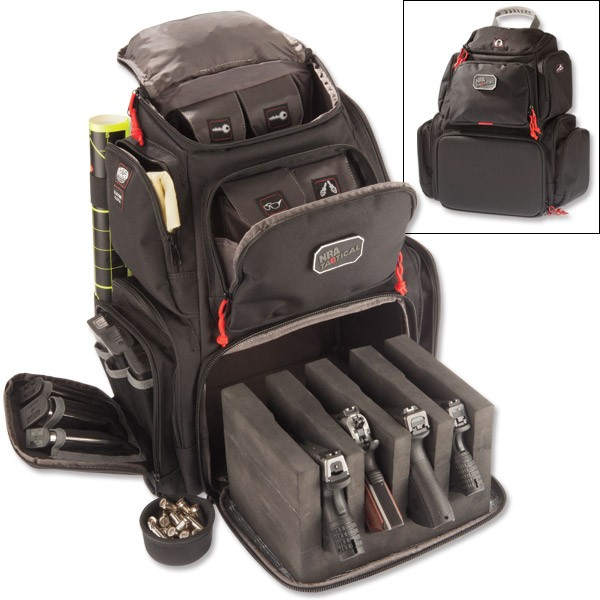
This specialty backpack features compartments for hearing protection, shooting glasses, stapler, tape, optics, and pistol magazines. The rigid lower compartment features a slide-out, four-gun foam cradle. Dimensions: 17” W x 22” H x 9” D.
2. The Ultimate Survival Manual: 333 Skills That Will Get You Out Alive, $24.95

Outdoorsman Rich Johnson presents 333 key tips in this 256-page survival manual. Topics include first-aid, building a shelter, and putting together a “bug-out” bag.
3. Tri-Fold Gun Cleaning Mats. (Pistol $19.95, Rifle $29.95, Shotgun $39.95)

This is a very nice mat. The waterproof exterior won’t absorb solvents, while the Tri-Fold design contains small parts when cleaning. Three sizes: Pistol (14” x 18”), Rifle (42” x 14”), and Shotgun (52” x 14”).
Discount Offer tip from EdLongrange. We welcome reader submissions.
July 29th, 2015
Every summer weekend, there are probably 400 or more club “fun matches” conducted around the country. One of the good things about these club shoots is that you don’t have to spend a fortune on equipment to have fun. But we’ve seen that many club shooters handicap themselves with a few common equipment oversights or lack of attention to detail while reloading. Here are SIX TIPS that can help you avoid these common mistakes, and build more accurate ammo for your club matches.
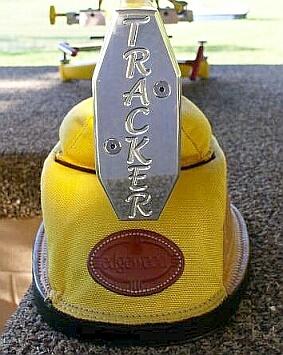 1. Align Front Rest and Rear Bags. We see many shooters whose rear bag is angled left or right relative to the bore axis. This can happen when you rush your set-up. But even if you set the gun up carefully, the rear bag can twist due to recoil or the way your arm contacts the bag. After every shot, make sure your rear bag is aligned properly (this is especially important for bag squeezers who may actually pull the bag out of alignment as they squeeze). 1. Align Front Rest and Rear Bags. We see many shooters whose rear bag is angled left or right relative to the bore axis. This can happen when you rush your set-up. But even if you set the gun up carefully, the rear bag can twist due to recoil or the way your arm contacts the bag. After every shot, make sure your rear bag is aligned properly (this is especially important for bag squeezers who may actually pull the bag out of alignment as they squeeze).
Forum member ArtB adds: “To align my front rest and rear bag with the target, I use an old golf club shaft. I run it from my front rest stop through a line that crosses over my speed screw and into the slot between the two ears. I stand behind that set-up and make sure I see a straight line pointing at the target. I also have a piece of tape that I’ve placed on the golf shaft that indicates how far the back end of the rear bag should be placed from the front rest stop. Don’t have an old golf shaft? Go to Home Depot and buy an inexpensive piece of wood dowel.”
2. Avoid Contact Interference. We see three common kinds of contact or mechanical interference that can really hurt accuracy. First, if your stock has front and/or rear sling swivels make sure these do NOT contact the front or rear bags at any point of the gun’s travel. When a sling swivel digs into the front bag that can cause a shot to pop high or low. To avoid this, reposition the rifle so the swivels don’t contact the bags or simply remove the swivels before your match. Second, watch out for the rear of the stock grip area. Make sure this is not resting on the bag as you fire and that it can’t come back to contact the bag during recoil. That lip or edge at the bottom of the grip can cause problems when it contacts the rear bag. Third, watch out for the stud or arm on the front rest that limits forward stock travel. With some rests this is high enough that it can actually contact the barrel. We encountered one shooter recently who was complaining about “vertical flyers” during his match. It turns out his barrel was actually hitting the front stop! With most front rests you can either lower the stop or twist the arm to the left or right so it won’t contact the barrel.
 3. Weigh Your Charges — Every One. This may sound obvious, but many folks still rely on a powder measure. Yes we know that most short-range BR shooters throw their charges without weighing, but if you’re going to pre-load for a club match there is no reason NOT to weigh your charges. You may be surprised at how inconsistent your powder measure actually is. One of our testers was recently throwing H4198 charges from a Harrell’s measure for his 30BR. Each charge was then weighed twice with a Denver Instrument lab scale. Our tester found that thrown charges varied by up to 0.7 grains! And that’s with a premium measure. 3. Weigh Your Charges — Every One. This may sound obvious, but many folks still rely on a powder measure. Yes we know that most short-range BR shooters throw their charges without weighing, but if you’re going to pre-load for a club match there is no reason NOT to weigh your charges. You may be surprised at how inconsistent your powder measure actually is. One of our testers was recently throwing H4198 charges from a Harrell’s measure for his 30BR. Each charge was then weighed twice with a Denver Instrument lab scale. Our tester found that thrown charges varied by up to 0.7 grains! And that’s with a premium measure.
4. Measure Your Loaded Ammo — After Bullet Seating. Even if you’ve checked your brass and bullets prior to assembling your ammo, we recommend that you weigh your loaded rounds and measure them from base of case to bullet ogive using a comparator. If you find a round that is “way off” in weight or more than .005″ off your intended base to ogive length, set it aside and use that round for a fouler. (Note: if the weight is off by more than 6 or 7 grains you may want to disassemble the round and check your powder charge.) With premium, pre-sorted bullets, we’ve found that we can keep 95% of loaded rounds within a range of .002″, measuring from base (of case) to ogive. Now, with some lots of bullets, you just can’t keep things within .002″, but you should still measure each loaded match round to ensure you don’t have some cases that are way too short or way too long.
 5. Check Your Fasteners. Before a match you need to double-check your scope rings or iron sight mounts to ensure everything is tight. Likewise, you should check the tension on the screws/bolts that hold the action in place. Even with a low-recoiling rimfire rifle, action screws or scope rings can come loose during normal shooting. 5. Check Your Fasteners. Before a match you need to double-check your scope rings or iron sight mounts to ensure everything is tight. Likewise, you should check the tension on the screws/bolts that hold the action in place. Even with a low-recoiling rimfire rifle, action screws or scope rings can come loose during normal shooting.
6. Make a Checklist and Pack the Night Before. Ever drive 50 miles to a match then discover you have the wrong ammo or that you forgot your bolt? Well, mistakes like that happen to the best of us. You can avoid these oversights (and reduce stress at matches) by making a checklist of all the stuff you need. Organize your firearms, range kit, ammo box, and shooting accessories the night before the match. And, like a good Boy Scout, “be prepared”. Bring a jacket and hat if it might be cold. If you have windflags, bring them (even if you’re not sure the rules allow them). Bring spare batteries, and it’s wise to bring a spare rifle and ammo for it. If you have just one gun, a simple mechanical breakdown (such as a broken firing pin) can ruin your whole weekend.
July 28th, 2015

Larry Vickers is a respected firearms trainer who has served with the U.S. Special Operations Forces (SOF). In the course of teaching classes he’s learned that many gun owners waste money on impractical gun accessories. In his recent Ammoland.com article, “Don’t Be a Tacti-Cool Fool”, Vickers examines today’s trend of over-accessorizing firearms, particularly AR-platform rifles. Vickers doesn’t mince words… he states that too many people are spending too much money on poorly-designed hardware that may be “useless” at best.
Equipment Selection Advice from Larry Vickers
Every class I teach I see and hear students talking about the realization that some things about their gear and shooting in general just doesn’t add up on the range. Everything looks good in a Brownells Catalog but a significant amount of the parts and accessories offered on the market today are: a) useless; b) poorly designed; c) of questionable value; or d) downright dangerous.
No one is better at taking fully-functional, factory-made firearms and turning them into junk than a certain segment of the American gun-buying public.
Some people really don’t apply the common sense approach of not messing with what is potentially a life-saving tool. Sadly some of those same people will get on the Internet and talk bad about how the firearm they modified no longer functions and therefore is junk. Or they will recommend to fellow shooters the same parts and modifications they have used to turn their gun into, at best, a range toy.
Some of this shows up in my classes and usually by lunch on the first day the obvious flaws of the equipment at hand become apparent for everyone in the class, most of all to the owner of said equipment. It may have cost the shooter some money but in turn he learned a serious life lesson –be careful what you read on the Internet about firearms modifications and there is no substitute for shaking out your equipment at the range in a structured class.
I’ve said it before and I’ll say it again: you’ll learn more about guns and shooting in one class than you could in a month on the Internet.
READ about guns, gear, and shooting on the Internet. LEARN about guns, gear, and shooting on the range during well-thought-out and useful training. This approach is proven and consistently produces results and shooter confidence.

Larry Vickers
Master Sergeant (Retired)
U.S. Army SOF Combat Veteran
http://vickerstactical.com
Larry Vickers is a retired U.S. Army Special Operations Forces veteran with 20+ years of service. Vickers served in Panama, the Middle East (Desert Storm), Somalia, Bosnia, and other locations. During his time with Delta Force, Vickers worked on weapons R&D, and served as a combat marksmanship instructor training new operational members of Delta.
July 28th, 2015

Safeguarding Social Security Beneficiaries’ Second Amendment Rights
Nineteen members of the U.S. House of Representatives Ways and Means Committee have challenged plans by the Obama administration to provide the names of disabled Social Security beneficiaries to the National Instant Criminal Background Check System (NICS). This would result in the classification of these beneficiaries as “prohibited persons” who are not allowed to acquire firearms. The Representatives say this proposal would violate the spirit of the Americans with Disability Act and threaten the Constitutional rights of law-abiding older Americans.
In their joint letter to the Commissioner of the Social Security Administration, the Representatives argue convincingly that plans to classify older citizens as “prohibited persons” for NICS purposes is unconstitutional:
It has come to our attention that the Social Security Administration is considering a policy to provide the names of Social Security beneficiaries who have a “representative payee” to the National Instant Criminal Background Check System (NICS) in an effort to limit [their] Second Amendment rights. This would be a dangerous overreach, and we urge you to abandon any such plan.
The representative payee system is vital for beneficiaries who need assistance managing their own finances. Millions of responsible seniors and people with disabilities rely on a representative payee. Simply using this system does not mean beneficiaries are a risk to themselves or others.
Providing information on individuals who have a representative payee to the NICS is a broad overreach of authorities and violates beneficiaries’ constitutional rights. This policy runs counter to the aims of the American with Disabilities Act (ADA)[.]
Old age or a disability doesn’t make someone a threat to society. Having a representative payee should not be grounds to revoke constitutional rights. We strongly urge you to halt any steps to provide information on Social Security beneficiaries or Supplemental Security Income recipients to the NICS.
July 27th, 2015

The new F1 Chassis System from Competition Machine is now in production. This straight-line, all-metal chassis with ultra-low bore axis is optimized for F-Class competition. Designer/builder Gary Eliseo tell us that Competition Machine is now accepting F1 Chassis orders for fall 2015 delivery. To order or if you have questions, email Gary via his website contact page.
Gary tells us: “The new F1 Chassis System, designed specifically for F-Open class, has already begun to rack up awards. The system has several innovations that make it an excellent choice for your next build.” F1 Chassis has many design features that improve tracking and tame torque effect:
Low COG — Super low rider fore-end keeps the center of gravity as low as possible
Long Wheelbase — The long separation from front of stock to rear bag-rider improves tracking and reduces the tendency to jump or twist (torque).
Adjustable Offset — The bag-rider section of the fore-end can be adjusted left to right. This adjustable horizontal offset allows you to choose if you want the fore-end offset left, right or center.
Adaptable to All Shooters — The F1 Chassis System features adjustable length of pull, buttplate drop, and cheekpiece height.

Unique Bonded Barrel Block™ System
Stress is the enemy of accuracy. For this reason the F1 Chassis system features a “zero stress” barrel mounting system which uses a barrel block securely bonded to the barrel (with an epoxy-type adhesive). This allows the action to float, relieving all stress from the threaded joint between the barrel and action and all flexing of the action. With this unique “floating action” design, the F1 chassis is compatible with ANY round rifle action. Replacement barrel blocks are available so you can run multiple barreled actions with your F1 chassis. When it’s time to replace the barrel, the barrel block can be “unbonded” and adapted to a new, same-diameter barrel.

July 27th, 2015

One of the most popular events at the Camp Perry National Matches is the CMP Rimfire Sporter Match. This will be held Saturday, August 1st, 2015 at Camp Perry. The match attracts shooters from 8 to 80 years, both novice competitors as well as experienced marksmen. Rimfire Sporter stresses fun, accessibility and practical marksmanship skills. It is a great game for shooters who want a target event that does not require expensive rifles or gear.
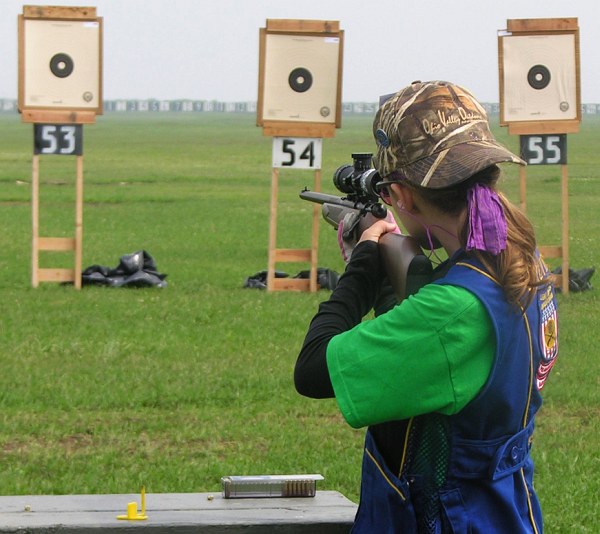
Rimfire Sporter tests shooters’ skills in three different firing positions, at two different ranges, in both precision and rapid-fire shooting. During the match, competitors fire smallbore sporter rifles from 50 and 25 yards. Rifles may be manually operated or semi-automatic and supported with sights or a sling. Choose whatever sighting system you prefer — there are classes for both iron sights rigs and scoped rifle. Competitors will complete slow fire prone, rapid fire prone, slow fire sitting or kneeling, rapid fire sitting or kneeling, slow fire standing and rapid fire standing shot sequences. There is no minimum age for the match, but all competitors must be capable of safely completing a 60-shot course of fire.
Three different classifications of rifles will be used during the competition: “O Class” for open-sighted rifles, “T Class” for telescope-sighted rifles and the recently-added “Tactical Rimfire” class. High Juniors and Seniors, as well as Overall winners will be named for each class.
For those wanting to learn more about the match before firing, an instructional Rimfire Sporter Clinic will be held on Friday, July 31 from 4-6 p.m. to cover rules, Course of Fire, safety instructions, and competition procedures. This FREE CLINIC will include demonstrations and presentations by qualified members of the CMP. Competitors with no previous Rimfire Sporter Match experience are strongly encouraged to attend.

To learn more about Rimfire Sporter Competition read AccurateShooter’s Guide to Rimfire Sporter Shooting. That comprehensive article explains match rules, rifle equipment standards, and the course of fire. In addition, the article illustrates the shooting positions, and explains how to start a rimfire sporter match at your local club.
July 26th, 2015

Roy Hunter’s Brace of Two 30 Dashers
by Jeff Stover, IBS President
Short range benchrest at 100 and 200 yards is the domain of the 6PPC. Since 1978 that has been the case. Yes, an occasional 30BR, the King of Score Benchrest, will sometimes punch with the 6PPC in group competition. But a .30-caliber benchrest rifle will put you at a disadvantage in group shooting over the long haul — that’s certainly the conventional wisdom. Apparently, no one told Roy Hunter.
6PPC Group vs 30 Dasher Group at 200 yards — the “Fat Dasher” is definitely competitive.

Roy brought two rifles to the 2015 Group Nationals. Both were 30 Dashers. He did not even go with the milder 30 BR. The Dasher boasts more case capacity and, thus, more velocity. (The 30 Dasher is a 6mmBR improved with the neck expanded to .30 caliber and the shoulder blown forward). Speed comes at a price. That price is recoil, especially in a 10.5-pound rifle, such as Light Varmint and Sporter (same as LV but with at least a 6mm bore). Roy can handle the Dasher even in a 10.5-lb gun. The target above shows a sub-.300” group at 200 yards compared to a 6PPC group at the same distance. The larger cartridge and .308 bore CAN compete with a 6PPC – at least in the hands of a benchrest ace like Roy.

Roy’s 30 Dasher in 10.5-lb trim boasts a 1:17″-twist Pac-Nor barrel. Roy shoots Euber 116gr .30-Cal bullets over 38 grains of H4198. That load is good for nearly 3300 fps. This rifle, shown above, has a distinctive stained Butternut finish.
The stocks on Roy’s rifles are his own, made in his shop near Gettysburg, PA. Before Roy Hunter was a premier benchrest stockmaker he built museum-quality 18th Century-style furniture, following Chippendale patterns and the like. Now he just makes benchrest-style stocks (benchrest only — there’s no time to make hunting stocks). The fit and finish are as good as it gets. Roy’s stocks combine old world craftsmanship with high-tech construction. Roy uses Butternut wood, English Walnut, and other woods laminated with carbon fiber. His 10.5-lb rifle is Butternut, while his 13.5-lb rifle is Walnut — and they both shoot superbly! If you are interested in a Roy Hunter stock, the best way to reach Roy is by phone: 410-259-7944.
July 25th, 2015

IBS Group Nationals — July 13-18, 2015
Report by IBS President Jeff Stover
The ancient benchrest alchemists once predicted a perfect storm for small groups. The recipe is: one part near ideal shooting conditions, 90 of the best benchrest shooters in North America and mix with the shooters’ best barrels and bullets. Place the entire concoction at the shooting benches for seven minutes at time. The result in Heavy Varmint (13.5-lb rifles) at 100 yards, for example, was that the top 17 shooters averaged under .200 for their five targets! Yes, nearly the entire Top 20 in HV100 shot a “teen agg”. Ten or fifteen years ago, that would have been unthinkable. Sure, the winners or top two or three would be in that rarefied air, but not half of an entire relay of 40 shooters. Remarkable.
Bill Sutton of Hart Rifle Barrels

IBS Group Nationals Full Results (XLS Spreadsheet) | IBS Group Nationals Equipment List
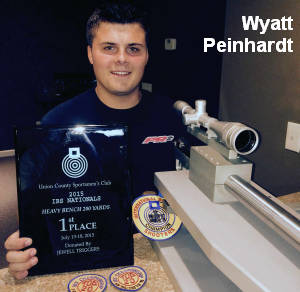 Another landmark of the 2015 IBS Nationals was that 17-year-old Wyatt Peinhardt of Quarryville, PA won the 200-yard stage of Heavy Bench. That meant he earned his first point toward the U. S. Benchrest Hall of Fame (HOF). You need ten to get in, but young Wyatt has plenty of time to get the other nine. He is no ‘flash in pan’. The young Mr. Peinhardt has been shooting since 2009 and now runs full speed with the big dogs of the sport. He was in the Top 20 in this year’s Super Shoot 2-gun results. Frequently he battles his dad, Jeff for supremacy at the bench. Strangely enough, here at Weikert in the Sporter Grand Aggregate (average of five targets at both 100 and 200 yards) Wyatt and his father tied right down to four decimal places: 0.2317! Another landmark of the 2015 IBS Nationals was that 17-year-old Wyatt Peinhardt of Quarryville, PA won the 200-yard stage of Heavy Bench. That meant he earned his first point toward the U. S. Benchrest Hall of Fame (HOF). You need ten to get in, but young Wyatt has plenty of time to get the other nine. He is no ‘flash in pan’. The young Mr. Peinhardt has been shooting since 2009 and now runs full speed with the big dogs of the sport. He was in the Top 20 in this year’s Super Shoot 2-gun results. Frequently he battles his dad, Jeff for supremacy at the bench. Strangely enough, here at Weikert in the Sporter Grand Aggregate (average of five targets at both 100 and 200 yards) Wyatt and his father tied right down to four decimal places: 0.2317!
Six Days of Competition with Four Classes
Some say that the Group Nationals are a marathon — six long days of competition at both 100 and 200 yards with four classes of rifles: Light Varmint (10.5 lb); Sporter (10.5 lb – 6mm minimum caliber); Heavy Varmint (13.5 lb) and Heavy Bench (known as ‘Unlimited’ in NBRSA-land). The first three are simply known as the “bag guns”. Most competitors use a 10.5-lb rifle in 6PPC and compete in all three classes. The Heavy Bench (HB) class requires 10-shot groups as opposed to the 5-shot ones for the bag guns. There is no prohibition to shooting your 10.5-pound rifle in HB, but a shooter is simply outclassed by the rail guns, especially for 10-shot groups.

As mentioned, the week’s weather was very good. After what seemed like weeks of on and off rain, the central Pennsylvania weather gods smiled on what is considered one of the most beautiful ranges in the USA. The shooters had nice sunshine and instead of the usual Weikert blow, they were treated to light zephyrs. It was a glorious week to be at a rifle match.

Course of Fire — First 100, then 200
The sequence of competition groups has 100-yard targets shot the first three days followed by three days at 200 yards. It is done this way to require only one change of wind flags. Nationals competition requires ‘full rotation’. That means that every time a shooter goes to the line for the next match target, he or she must move a requisite number of benches to the right. At the end of the day a shooter will shoot across the full width of the line. Some ranges offer unique properties that render some parts of the range harder or easier to shoot small groups. Bench rotation is important to even out those factors.
Monday morning saw the Heavy Bench (HB) shooters hauling the big rail guns to the line. Old pro Jack Neary led the way at 100 yards with .2186 Aggregate. The 200-yard stage for HB would not be held until Saturday morning. The winner there, of course, was Wyatt Peinhardt with his .2993 (MOA conversion for 200-yard scores). On Tuesday the bags guns came out for Light Varmint (LV) and Sporter (SP). Conditions allowed for quite a few very good groups. The top thirteen shooters in Sporter shot ‘teen aggs’ with Bart Sauter leading the way at a .1666. In Light Varmint, Wayne Campbell shot a tiny .1556. Both his warm-up and first record target were in the ‘zeroes’ (.096 and .088)!
Wednesday’s 100-yard Heavy Varmint match enjoyed what were probably the best conditions of the week. You needed to average under .200 for five targets to finish in the Top 20 or nearly so. Harley Baker won with a .1616. The talk in the loading area was Baker’s fourth record target — a tiny 0.050 bughole centered right in the center ring (usually called the ‘mothball’). It was probably the prettiest target most had ever seen. Better yet, the standing IBS HV 100 record is a 0.052 shot way back in 1980. Harley’s target is being submitted to the IBS Measuring Committee as a potential IBS record.

Wednesday afternoon saw the moving of flags for the 200-yard stage of the competition. The SP and LV 200-yard targets were Thursday’s course of fire. In LV, Andy Shifflett shot a .1966 Aggregate to pick up a HOF point. At 200 yards, Aggregates are logged in MOA units. Therefore, Andy’s .1966 Aggregate translates to an average 200-yard target measurement of slightly less than .400″. The afternoon was reserved for SP targets. Billy Stevens shot a .2060 to win the afternoon’s contest.
Powderpuff Event at the IBS Group Nationals
For decades IBS has hosted an exhibition shoot on the afternoon of a day when only one Aggregate is contested instead of two. It is called the Powderpuff and is intended to allow family members and others that do not shoot competitively to give benchrest shooting a try. Each shooter is assisted by a coach who instructs the shooter. World-class shooters such as Gene Bukys and Lester Bruno give their time and talents to assist novice shooters. There is no time limit to rattle the inexperienced shooters.
2015 Powderpuff Winners Jaydin Johnson (left) and Pam Campbell (right)


Barbara Hottenstein continued as the Powderpuff chair and assembled a large array of awards and prizes. The competition is financially supported by the IBS President’s Fund. This year we had 12 youth and adult competitors. Pam Campbell won the adult category while Jaydin Johnson (shown above with coach Nancy Scarbrough) won the youth division.
On Friday, a single Aggregate of five record targets were shot-for Heavy Varmint (HV) at 200 yards. Harley Baker had his mojo working with a .1896 Aggregate. That performance, coupled with Harley’s .1616 at 100 yards meant that his average in the HV class was a .1756 Grand Aggregate. That is small. Really small.
On Friday afternoon, many of the awards for bag guns were given out. Saturday was reserved for HB 200. Since some of the bag gun shooters do not shoot a rail gun, a number of competitors left Friday afternoon. The rail guns came out to contest 200 yards on the last day of the Nationals. The winner was Wyatt Peindardt. His .2993 was the only Aggregate under .300. Wayne Campbell was second with a .3028. Winning the HB Grand Aggregate was two-time Super Shoot winner, Larry Costa.

IBS recognizes Aggregate performances as follows: Grand (100 + 200) Aggregates in each of four classes; Two-Gun (all HV and LV targets in 100 + 200); Three-gun (HV, LV, SP in 100 + 200) and 4-gun (HV, LV, SP and HB in 100 + 200). In the multi-guns, Harley Baker won the Two-Gun. Gene Bukys added more HOF points by winning the Three-Gun. In the Four-Gun, Virginia’s Wayne Campbell who took the overall four-class Agg with an excellent .2326.
Praise for the Range Crew and Sponsors
The IBS Group Nationals requires a ton of work to run smoothly. The Weikert range’s sparkplugs are Mark Trutt and Dale Boop. This shoot does not happen without those two. This year’s registration and general admin fell to Nancy Scarbrough, who ran a flawless operation. She was assisted by Will Baylor in the scoring and by Stacy Hynes. Steve Dodge oversaw the entire target crew while Larry Hertzog alternated with Mark Trutt as Range Officer.
The benchrest cottage industry should be commended for giving back to the shooters. This year’s sponsors included: BAT actions, Black Hills Shooters Supply, Boops Sporting Goods, Bruno Shooters Supply, Hart Rifle Barrels, Jewel Triggers, JDS Bullets, K&M Precision Shooting, Krieger Rifle Barrels, L. E. Wilson, Pacific Tool & Gauge, and Shilen Rifle Barrels.
Parting Shot — Some Competitors tried to keep up with work while reloading …

|


