U.S. Rifle Team (F-TR) Selects New Berger 200.20X Bullet for 2017 World Championships
Berger Bullets has released new .30 caliber bullet that could be a game changer for the F-TR discipline — a bullet with exceptional accuracy and very high BC. Berger’s NEW 200.20X Hybrid Target Bullet is the result of extensive research and development in partnership with the U.S. Rifle Team (F-TR), world champion shooters, and accuracy enthusiasts within the long range shooting community.
The new 200.20X has a 0.640 G1/0.328 G7 BC compared to 0.616 G1/0.316 G7 for the older 200 grain .30 caliber Hybrid. That’s a significant reduction in drag. Recommended twist for the new bullet is 1:10″, same as with the earlier 200-grainer.
Berger Chief Ballistician and U.S. Rifle Team (F-TR) member Bryan Litz said, “This is the ideal bullet for F-TR and similar long-range disciplines. The 200.20X has a longer boat tail and nose, with shorter bearing surface which equates to less drag, a higher ballistic coefficient, and fewer points lost to the wind. The BC of the new 200.20X is 4% higher than the existing 200 grain Target Hybrid (G7 BC of 0.328 vs. 0.316). The shorter bearing surface also makes the 200.20X easy to load and shoot in standard chambers. New shooters won’t need special reamers or costly gunsmithing to make this bullet perform.” Bryan himself is switching to the new 200.20X: “After winning the 2015 National Mid-Range and Long Range F-TR Championships with the Berger 215 grain Target Hybrid, I’m switching to the 200.20X because it’s an even better option.”
Bryan tells us that new 200-20X bullet requires a 1:10″ twist to achieve full stability and performance (BC) in most conditions, but you can shoot it out of a 1:11″ twist with a minor decrease in BC. For a stability analysis, enter this bullet in the Berger Stability Calculator with a weight of 200.2 grains, and a length of 1.508″ to get stability results for your particular rifle and atmospheric conditions.
After extensive field testing, this new 200.20X bullet has been adopted as the official .30 caliber match projectile for the U.S. Rifle Team (F-TR). The team verified that this new bullet offers very impressive performance — the higher BC equates to less wind drift, and this bullet has shown exceptional ability to “hold waterline”. Check out this 1000-yard group by Team member Dan Pohlabel, as shown on an electronic target monitor.
To learn more about the new .30 caliber 200.20X Hybrid Target Bullet and its development, visit the Berger Bullets Blog for details. These 200.20X bullets are available right now through your favorite authorized Berger Bullets vendors.
About the U.S. Rifle Team (F-TR)
The two- time World Champion, U.S. Rifle Team (F-TR) is comprised of 30 shooters and coaches who have dedicated themselves to four years of training and preparation to represent the United States at the 2017 World Championships to be held in Canada. They compete all over the world at various ranges out to 1,000 yards.
Buy Bullets and Support U.S. Rifle Team (F-TR)
Eric Stecker, President of Berger Bullets said, “We are proud to be the Official Bullet of the U.S. Rifle Team (F-TR). To support our team, Berger Bullets will donate $1.00 for every box of 200.20X bullets sold towards U.S. Team expenses for the upcoming 2017 F-TR World Championships, which will be held at the Connaught Ranges in Ottawa, Canada.”
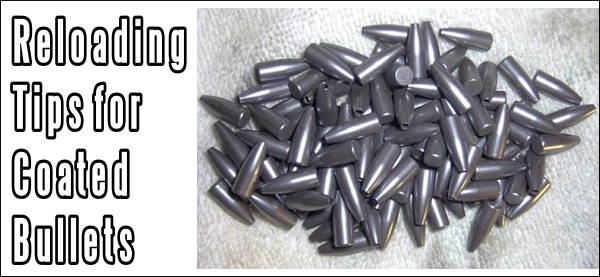
Coating bullets with a friction-reducing compound such as Molybdenum Disulfide (Moly) offers potential benefits, including reduced barrel heat, and being able to shoot longer strings of fire between bore cleanings. One of the effects of reduced friction can be the lessening of internal barrel pressures. This, in turn, means that coated bullets may run slower than naked bullets (with charges held equal). To restore velocities, shooters running coated bullets are inclined to “bump up” the load — but you need to be cautious.
Be Careful When Increasing Loads for Coated Bullets
We caution shooters that when your start out with coated bullets in a “fresh barrel” you should NOT immediately raise the charge weight. It may take a couple dozen coated rounds before the anti-friction coating is distributed through the bore, and you really start to see the reduced pressures. Some guys will automatically add a grain or so to recommended “naked” bullet charge weights when they shoot coated bullets. That’s a risky undertaking.
Instead we recommend that you use “naked” bullet loads for the first dozen coated rounds through a new barrel. Use a chronograph and monitor velocities. It may take up to 30 rounds before you see a reduction in velocity of 30-50 fps that indicates that your anti-friction coating is fully effective.
We have a friend who was recently testing moly-coated 6mm bullets in a 6-6.5×47. Moly had not been used in the barrel before. Our friend had added a grain to his “naked” bullet load, thinking that would compensate for the predicted lower pressures. What he found instead was that his loads were WAY too hot initially. It took 30+ moly-coated rounds through the bore before he saw his velocities drop — a sign that the pressure had lowered due to the moly. For the rounds fired before that point his pressures were too high, and he ended up tossing some expensive Lapua brass into the trash because the primer pockets had expanded excessively.
LESSON: Start low, even with coated bullets. Don’t increase your charge weights (over naked bullet loads) until you have clear evidence of lower pressure and reduced velocity.
Procedure After Barrel Cleaning
If you shoot Moly, and clean the barrel aggressively after a match, you may want to shoot a dozen coated “foulers” before starting your record string. Robert Whitley, who has used Moly in some of his rifles, tells us he liked to have 10-15 coated rounds through the bore before commencing record fire. In a “squeaky-clean” bore, you won’t get the full “benefits” of moly immediately.
To learn more about the properties of dry lubricants for bullets, read our Guide to Coating Bullets. This covers the three most popular bullet coatings: Molybdenum Disulfide (Moly), Tungsten Disulfide (WS2 or ‘Danzac’), and Hexagonal Boron Nitride (HBN). The article discusses the pros and cons of the different bullet coatings and offers step-by-step, illustrated instructions on how to coat your bullets using a tumbler.
Have shortages of .22 LR rimfire ammunition (and high .22LR ammo prices) caused shooters to switch to airguns? Unlike rimfire ammo, pellets are readily available and inexpensive. Moreover, air is free, most airguns can be safely fired indoors, and premium air rifles are surprisingly accurate out to 25m or so. Given those factors, one might think many sportsmen would shift from .22 LR shooting to airgun shooting, at least for plinking and short-range target work. But it looks like there has NOT been a significant exodus from the rimfire ranks. According to a recent survey, 75% percent of shooters have NOT done more air rifle shooting due to shortages of .22 LR rimfire ammo.
Shooter Survey Results
Of more than 4,500 shooters surveyed by ShooterSurvey.com, 40% reported shooting an air rifle in the past 12 months. In that same time span, 33% of those same sportsmen would have purchased more .22 LR ammo had it been available and 17% said they were not able to buy all of the rimfire ammo they wanted. So did those shooters stymied by the shortage opt to shoot air rifles more as a substitute for their rimfire rifles?
Interestingly, 75% of shooters surveyed said that rimfire ammo shortages had no impact on how much they shot air rifles. They would have shot air rifles the same amount. Eighteen percent, however, reported they would have shot air rifles less had they been able to buy more .22 ammo. Only 5% of respondents said they would not have shot air rifles at all had they been able to purchase more rimfire ammo at affordable prices.
“It would appear the recent shortage of .22-caliber ammunition has some impact on increased air rifle use, but maybe not as much as some people would expect. Airguns, it seems, are popular among a portion of today’s shooters on their own merits,” says Rob Southwick, president of Southwick Associates, which designs and conducts the surveys at HunterSurvey.com, ShooterSurvey.com and AnglerSurvey.com.
Grizzly Industrial and Bullets.com President Shiraz Balolia pulled off a stunning feat of marksmanship recently, winning his third straight F-Open title at the Canadian F-Class National Championships. It wasn’t easy — conditions were tough, as was the competition — there were top shooters from around the world, including many past U.S. Champions. Shiraz had a slim, one-point lead after Day 2, but Balolia ended up tied on total points (and V-Count) with Emil Kovan at the end of the third and final day. But when the cards were compared, a string of Vs on Day 3 secured Shiraz the win via tie-breaker. Thus Shiraz achieved the memorable “three-peat”, winning Canada’s 2016 F-Open National Championship to complement his 2015 and 2014 victories.
Three-Peat at Connaught — 2016 F-Open Canadian Championship
by Shiraz Balolia This trip to Ottawa for the Canadian National Championship was a specially important one. The U.S. Team tryout process and practice was to take place for two days prior to the National Championship as the next F-Class World Championship is going to be held in Ottawa in August of 2017.
Connaught Range is a fantastic range that is very well run. Pullers are provided as part of your entry fee and matches are run at different times of the day, even into the evening. The flags are heavier than the ones we use in USA and are notorious for lying to the shooter. Matches are shot in pair firing mode which means one shooter takes a shot and the other scores. You cannot simply rattle off a shot as soon as the target comes up.
Crazy Hot Conditions at the Connaught Range
The first day the winds were mild, but tricky and the temperature was 102° F. I had never shot in such weather and ended up in the 6th place for the day. The second day had several matches at 900 meters and the wind picked up, with a 105° F recorded temperature, causing havoc with everyone. In one of my matches at 900 meters I took my two sighters and my first shot for record was a 3 (equivalent to an 8 in USA). To top it off I shot another 3 a few shots later. Liar, Liar, flags on fire! Anyway, I dropped 7 points in that match only to find out some very good shooters had dropped over 10! I moved to top position for the two-day Aggregate.
The third and final day was one string of 20 shots with shooters squadded by their two-day Aggregate ranking. So I was paired with Emil Kovan, while the third position shooter was paired with the fourth-ranking shooter et cetera. We all shot in identical conditions.
Après Moi, le Déluge — Not Your Gentle Drizzle
Then came a vicious rainstorm. We waited out the storm for two hours before we shot. The rain was really, really nasty and coming down really hard. We were all huddled under the U.S. Open Team’s tent.
Shiraz and Emil Battle to the End…
Finally, after the long delay, we got back to the firing line. And it went down to the wire. Emil shot a 100 with 3 Vs and I shot a 99 with 12 Vs. When the dust settled, we ended up with the same score and total V-Count (611-61V). The tie would be resolved by a “count-back” procedure. I had a stack of Vs at the end of my string and that won the match. What a fight!
Shiraz told us that this third championship was the toughest: “A while back, I had rotator cuff surgery on my shooting arm and had not shot a match in 9 months. I barely was able to test loads for three weeks before I shipped my ammo and did not know what to expect.” He says that winning “did not even sink in for a few days and looking back, I think this will be something I will cherish forever.”
Shiraz’s win came against very tough competition. Shiraz notes: “The whole U.S. Team, the whole Canadian Team, many South Africans, Germans, British, Ukrainians and others were present. We had several past US National Champions present as well and it was a great honor to shoot with all of them.”
Note: This is a photo from 2013, there may be slight changes in the rifle.
The rifle features a BAT Machine ‘M’ action, with a 31″, 1:10″-twist Bartlein barrel. The scope is a March 10-60x52mm, which sits on a +20 MOA angled rail. The primary stockwork, including fitting of the adjustable cheek-piece and buttplate, was done by Alex Sitman of Master Class Stocks. Shiraz customized the stock with finger grooves, fore-end channel, and a bottom rear slide. Shiraz did the final stock finishing as well.
Gun Components
BAT Machine Action
Master Class Stock, modified by Shiraz
Bartlein Barrel, 1:10″ Twist, 31 inches long
Fitted Barrel Harmonic Tuner
March 10-60x Scope with fine crosshair and 3/32″ dot
Caliber & Load
.300 Winchester Short Magnum (WSM)
215gr Berger Hybrid bullets, 2870 FPS
Norma .300 WSM Cases
H4831SC Powder
Tula (Russian) Primers
NOTE: Shiraz was not running anywhere near max: “I chose a light load for Ottawa due to the range limits as my other accurate node is 100 FPS faster and almost at the range limit.”
Clear skies and calm winds welcomed 85 of the nation’s best Precision Rifle Series (PRS) shooters to the PRSID Shootout at the Snake River Sportsmen range in Vale, Oregon. Held on August 27-28, this sold-out event was hosted by the Precision Rifle Shooters of Idaho (PRSID). Finishing first was Jake Vibbert of Washington state with a 163.500 score, followed by Oregonian Jon Pynch with 156.500. In third place was Ben Cleland of Georgia with 152.500.
Over the two-day event, competitors shot 20 challenging stages such as ‘MGM Spin Cycle’, ‘Run through the Rocks’, and ‘MGM Spinner Chicken Dinner’. The course of fire featured many reactive targets. The “instant feedback” offered by reactive targets is a major “fun factor” contributing to the rapid growth of PRS shooting. Shooters engaged MGM targets on 19 of the 20 stages at distances from 300 yards to 1160 yards with MGM Flash Targets on all engagements past 300 yards. The Flash Target Systems made impacts easy to see for both shooters and spotters.
Light React LED Hit Sensors were also used to help confirm hits on the two long-range stages with engagements out to 1160 yards. In the past couple of years the PRS has emerged as a very popular competitive shooting discipline. PRS specializes in tactical-style target shooting “on the clock” with challenging scenarios and targets placed at distances out to 1200 yards. More typical, however, are PRS stages with targets placed from 200 to 500 yards.
Event organizers commented afterward: “A big thanks to Travis Gibson and MGM Targets for backing our club and for making targets that show clear impacts, it made it easy on the spotters. [The] Max light react system ran flawlessly on the long range in combination with MGM flashers. There was never any guessing whether you had an impact or not.”
Otis Technology, the makers of Ripcord pull-through bore cleaning ropes, has introduced a full line of new products to clean, lubricate, and protect firearms. There are dedicated bore cleaners, all-in-one CLP-type products, plus a variety of lubricants. Notably most of these new Otis products are bio-degradable. See the full line-up of new Otis “Smart Chemicals” at: OtisTec.com/cleansmart.
Otis Smart Chemicals are advanced, American-made chemicals designed to bring next-generation protection to any kind of firearm. Featuring a broad variety of cleaners, lubricants, protectants and CLPs, the Otis Smart Chemical line offers formulas for any kind of shooter from 3-Gun competitors to hunters and tactical professionals to gun collectors.
Versatile and Bio-Degradable
Formulated to the exact specification of Otis engineers and designed with intelligent application in mind, most Otis Smart Chemicals are biodegradable and available in liquid or aerosol form (as well as in grease and CLP wipes). A precision applicator pack is compatible with all liquid formulas to deliver a greater level of precision during the application process. Visit www.otistec.com/cleansmart to explore the full line or purchase Otis Smart Chemicals online.
For pure shooting fun it’s hard to beat a semi-auto .22 LR. While Ruger’s 10/22 is the most popular semi-auto .22 LR rifle, manufacturers are now offering AR-style self-loading rimfire rifles. These rimfire versions of the AR-15 are excellent training tools for 3-Gun and service rifle shooters. You can practice with less expensive rimfire ammo, and save wear and tear on your centerfire ARs. Rimfire AR clones also work great for Rimfire Tactical Matches.
AR-Style .22 LR Rimfire Rifles
Smith & Wesson M&P 15-22
Smith & Wesson’s 15-22 is a nice little rifle. The M&P 15-22 is designed and built as a true .22 LR semi-auto from the ground up, with ergonomics (and most controls) identical to a centerfire M&P 15 rifle. These rimfire AR clones are very affordable. For example, right now CDNN Sports is offering the M&P 15-22 (black/tan camo version) for just $299.99. (If that deal has expired by the time you read this, find other deals with the SlickGuns.com search engine.)
NRA reviewer Colon Noir tested the M&P 15-22 and was impressed: “This gun is unbelievably fun to shoot. There is virtually no recoil. The non-existent recoil makes shooting fast a breeze. Yeah, the magazine is a little quirky… but in the grand scheme of things, this gun feels like a full-out AR-15. The M&P 15-22 makes for a great training companion. I would place this gun in the ‘Fun Box’ — it’s reliable enough that you can have a fun time shooting. I’m picking one up, because it’s guns like these that make you truly realize how fun shooting is.”
Here’s a Video Review of the M&P 15-22 by the NRA’s Colin Noir
Hechler & Koch (Walther) HK 416
H&K offers the HK 416 D145RS, a dedicated .22 LR rimfire rifle. Engineered and built in Germany by Carl Walther, the HK 416 D145RS features a match-grade precision barrel, metal upper and lower receivers, retractable stock, and machined rail interface system with on-rail iron sights.
These Walther-made HK rimfire rifles (which employ a blow-back action) are accurate and reliable. They are also reasonably priced. Right now CDNN Sports is selling the HK 416 D145RS 22LR for just $379.99. Elsewhere it sells for $550.00 or more. One purchaser writes: “Great .22. I have had this gun a couple of months and have put about 500 rounds of 5 different brands of ammo through it. Not one FTE. I have shot other brands that can’t get through one 30-round mag without a failure. [The 416] is a little pricey compared to the competition but you get what you pay for.”
Get $25 Gift Card with $30 NRA Membership this Saturday and Sunday, September 10th and 11th.
This upcoming weekend, September 10-11, 2016, you can get an NRA annual membership for a net cost of $5.00. That’s right, five bucks. Here’s how it works. If you go to a Gander Mountain Store and purchase a one-year NRA membership for $30.00 ($10.00 off the regular price) you’ll receive a $25.00 Gander Mountain Gift Card you can use immediately.
Throughout the weekend event, store customers can purchase NRA annual memberships for $30.00, and receive a $25.00 Gander Mountain gift card in addition to the membership. NRA representatives will be on hand at all Gander Mountain stores nationwide to answer questions and process membership applications for new and renewing NRA members.
The regular NRA annual membership (which normally costs $40.00), includes a variety of extras, including one free NRA monthly print magazine, and $2,500 worth of firearms insurance coverage. NOTE, however — in order to get the insurance benefits, you MUST activate your NRA Policy. Many NRA members have learned the hard way that NRA insurance won’t pay unless the policy is activated!
Extended Discount and $10.00 Gift Card in Future
Even after NRA Weekend wraps up, Gander Mountain customers will be able to purchase NRA memberships in stores nationwide for $30.00 and receive a $10.00 Gander Mountain gift card and additional benefits.
If you’re in the market for a premium spotting scope, it’s time to consider Nikon again. In recent years the “best you can get” were offered by the likes of Kowa, Swarovski, and Zeiss. Now Nikon has released its first-ever Monarch line of spotting scopes with ED low-dispersion, apochromatic glass. And the price will be very competitive — around $1600.00 MSRP for the 82mm version. Nikon says its new Monarch Spotters “are being offered at a price point that is virtually unrivaled for this level of optical quality”.
Key Features of New Nikon Monarch Spotting Scopes
Advanced Apochromat Optical System with ED (extra-low dispersion) glass minimizes chromatic aberration.
Field Flattener Lens System provides consistent sharpness across the entire field of view, all the way to the periphery.
Dual-speed focusing system offers fine action for focusing on distant subjects and coarser action for nearby subjects.
Bright and clear view is achieved with a total reflection prism. Straight models use a Porro prism, while angled-type models employ Nikon’s original prism.
Apochromat ED Glass Minimizes Chromatic Aberration
As with other premium spotting scopes, the Monarch boasts ED (low-dispersion) glass. Nikon’s Apochromat ED glass dramatically reduces chromatic aberration which causes “color fringing”. This fringing is particularly noticeable at long range when viewing targets — you’ll see color bands at the edges — blue on one side and red on the other. Nikon’s advanced Apochromat ED glass corrects not only chromatic aberrations or red, blue, and green but also violet chromatic aberration to the furthest limits of the visible light range. This results in much greater contrast and sharpness when viewing objects at long range. Honest guys, having ED glass makes a real difference when trying to see bullet holes at long range.
Nikon has also developed a new lens technology that keeps the image sharp all the way out to the periphery. Nikon call this the “Field Flattener System”. It works by compensating for Field Curvature:
Choose 82mm or 60mm with Three Monarch Eyepieces
Customers will have the choice of 60mm or 82mm objective sizes and a straight or angled Fieldscope body. Monarch Fieldscopes come with Monarch Eyepiece (MEP) 20-60 (20-60x w/ 82 series and 16-48x w/ 60 series). Two additional eyepiece options are MEP 38W (38x w/82 series and 30x w/ 60 series) and MEP 30-60W (30-60x w/ 82 series and 24-48x w/ 60 series). All eyepieces feature a Type 1 Bayonet Mount for swift attachment/detachment.
The suggested retail prices for all MONARCH FIELDSCOPE options will be as follows:
20-60×82 ED Straight Body $1599.95 | 20-60×82 ED Angled Body $1599.95
16-48×60 ED Straight Body $1399.95 | 16-48×60 ED Angled Body $1399.95
The ability to read the wind is what separates good shooters from great shooters. If you want to learn wind-doping from one of the best, watch this video with 2010 National High Power Champion (and U.S. Army 2010 Soldier of the Year) Sherri Gallagher. Part of the USAMU’s Pro Tips Video Series, this video covers the basics of wind reading including: Determining wind direction and speed, Bracketing Wind, Reading Mirage, and Adjusting to cross-winds using both sight/scope adjustments and hold-off methods. Correctly determining wind angle is vital, Sheri explains, because a wind at a 90-degree angle has much more of an effect on bullet lateral movement than a headwind or tailwind. Wind speed, of course, is just as important as wind angle. To calculate wind speed, Sherri recommends “Wind Bracketing”: [This] is where you take the estimate of the highest possible condition and the lowest possible condition and [then] take the average of the two.”
It is also important to understand mirage. Sheri explains that “Mirage is the reflection of light through layers of air, based off the temperature of the ground. These layers … are blown by the wind, and can be monitored through a spotting scope to detect direction and speed. You can see what appears to be waves running across the range — this is mirage.” To best evaluate mirage, you need to set your spotting scope correctly. First get the target in sharp focus, then (on most scopes), Sheri advises that you turn your adjustment knob “a quarter-turn counter-clockwise. That will make the mirage your primary focus.”






 This trip to Ottawa for the Canadian National Championship was a specially important one. The U.S. Team tryout process and practice was to take place for two days prior to the National Championship as the next F-Class World Championship is going to be held in Ottawa in August of 2017.


 Versatile and Bio-Degradable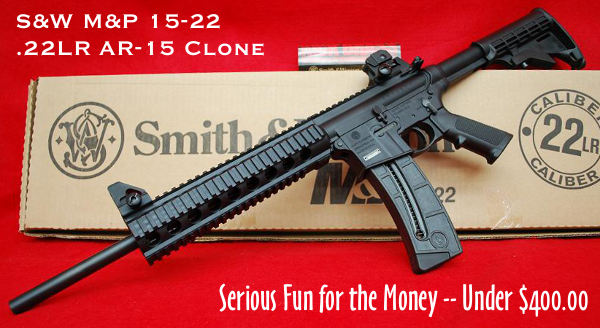


 The ability to read the wind is what separates good shooters from great shooters. If you want to learn wind-doping from one of the best, watch this video with 2010 National High Power Champion (and U.S. Army 2010 Soldier of the Year) Sherri Gallagher. Part of the USAMU’s Pro Tips Video Series, this video covers the basics of wind reading including: Determining wind direction and speed, Bracketing Wind, Reading Mirage, and Adjusting to cross-winds using both sight/scope adjustments and hold-off methods. Correctly determining wind angle is vital, Sheri explains, because a wind at a 90-degree angle has much more of an effect on bullet lateral movement than a headwind or tailwind. Wind speed, of course, is just as important as wind angle. To calculate wind speed, Sherri recommends “Wind Bracketing”: [This] is where you take the estimate of the highest possible condition and the lowest possible condition and [then] take the average of the two.”


