Sightron SIII 45x45mm Competition with ED Glass — Review by James Mock
Sightron has introduced a new, high-magnification Benchrest scope, the SIII SS 45x45mm Competition. This new-for-2019 45-power scope now offers very high-quality glass. In response to consumer demand, for this model, Sightron has upgraded to premium ED (extra low dispersion) glass. This kind of superior glass has been available with other more-expensive premium optics brands, and now Sightron has joined the ED-Glass ranks.
Testing the 45x45MM ED Sightron Benchrest Scope
Most of my shooting is done at 600 yards now. New for 2019, Sightron has introduced an impressive new 45-power competition scope, offered with either a Target Dot (EDTD) or Fine Cross Hair (EDFCH) reticles. I was able to test the target dot model. With this model I can check the ED glass used by Sightron and 45X is certainly enough for the 300- and 600-yard competitions I shoot.
Although this scope lacks some of the new features found on the SVSS models, it is designed for the shooter who wants a quality scope that is light enough to be used in short range Benchrest. It seems that Sightron designed this scope for the short range Benchrest shooters. They skipped all of the frills and designed this scope for PERFORMANCE.
The Sightron SIII 45x45mm has a simple side-focus parallax adjustment that works very well. The ocular focus is like the older models in that it has a locking ring rather than the fast focus. It has a 45mm objective lens. The model that I have features a 1/10th MOA dot reticle while the click adjustments are 1/10th MOA. NOTE that — the clicks are one-tenth MOA, NOT the 1/8th MOA you might expect.
At 20.5 ounces this scope will allow shooters to make most of the weight requirements found in Benchrest shooting. With the superb Japanese ED glass, it equals or surpasses the image quality of scopes of equal magnification costing twice as much.
Although this scope lacks some of the frills, it has the features that serious shooters appreciate. It has 7-layer coating on all lens (termed Zach 7), 1/10th MOA adjustments, 1/10th MOA dot reticle (or fine crosshair), generous eye relief, life time warranty, and 30mm main tube.
Testing Procedure for Sightron SIII 45x45mm
For testing the scope, I mounted it on my BAT/Leonard Benchrest rifle (shown above). The rifle is chambered in 6mm BRAI and I will shoot the rifle at 300 and 600 yards. The 300-yard match consists of three, 10-shot targets on the IBS 300-yard target. The 600-yard match consists of four, 5-shot targets. Both are shot for score only. So far the scope has performed flawlessly and the image is bright and the resolution was superb. One thing that I have dreamed about is a scope that will resolve 6mm bullet holes at 600 yards. Since I have shot this scope only during the summer months in Louisiana I cannot see bullet holes at 600 yards. However, in fairness to the scope, I don’t think the Hubble telescope would resolve the holes in the mirage and heat evident this summer.
I have tested scopes that cost over $3000 and this Sightron (street price $900-$1000) held its own with those higher-priced models and surpassed many of them. I wish that this scope would have been available back when I was shooting short range Benchrest. It is truly a great value for today’s shooter.
The first test performed was “shooting the square” in which I fired five (5) shots in order, cranking the turrets from shot to shot. This scope passed test #1 with flying colors — the fifth and last shot went through the same hole as shot #1. Here’s the process. After Shot One (lower left), I then cranked the scope up 4 MOA and fired Shot Two. For the third shot, I moved the scope to the right 4 MOA followed by a 4 MOA adjustment down. Next, I adjusted 4 MOA left and fired the fifth. If the scope tracts properly, the fifth shot should hit close to the first. In fact, Shot Five went through the same hole as Shot One. Of course one must have the same aiming point and an accurate rifle.
Shown above is the target that I shot at 100 yards. This was shot with my 6 BRAI rifle with 30.4 grains of H4895 and Bart’s 105gr VLD “Hammers” seated .006“ into the lands. This “square” shows perfect tracking and absolute accuracy in both windage and elevation adjustments. (However, note that the target itself was a little crooked as stapled to the backer). Sightron’s ExacTrac turret technologies shown below may be the reason for such great “shooting the square” results:
The above picture was taken from the Sightron catalogue and it illustrates what may be the most important feature for Benchrest shooters. They named it the ExacTrack and it features a cone shaped contact point on the windage and elevation knobs that allow constant and even pressure on the erector tube. In the picture above the left side shows conventional scope erector tube contact (figures 1 and 2). Figures 3 and 4 show how the Sightron system works. This unique system solves the problem of a flat tip pushing a round tube. My tests showed that this scope holds point of aim exceptionally well.
Using the Sightron 45X Scope in Match Conditions
I recently tested the the 45x45mm Sightron in competition for the first time. In preparation for this match, I tried four loads at 200 yards. I was impressed with the positive and accurate adjustments without the “mushy” feel that many scopes with fine adjustments exhibit.
I shot 3-shot groups and the groups measured as follows: 1) 30.0 grains H4895/Fed 205/Bart’s Gungnir = .605”; 2) 30.5 grains H4895/Fed 205/Bart’s Gungnir = .945”; 3) 30.0 grains H4895/Fed 205/Berger 108gr BT = .459”; 4) 30.4 grains H4895/Fed 205/Bart’s Hammer = .309” (this is my 600-yard “go-to” load).
The 300-yard match saw 101° temperatures with light, switching head winds up to 5 mph. The mirage was very noticeable but I was still able to see bullet holes. The scope performed well (although I did not). The click adjustments were precise and positive with both tactile and audible indicators. This is a quality scope.
SUMMARY of Test — Final Impressions
I am more than satisfied with this scope and I believe it represents a great value for competitive shooters. It has great glass, with positive adjustments that hold point of aim. Because of the ED glass, the image has correct color and is sharp to the edges. The scope’s reticle features a 1/10th MOA dot. The turrets use 1/10th MOA adjustments that allow precise aim and point of impact adjustments.
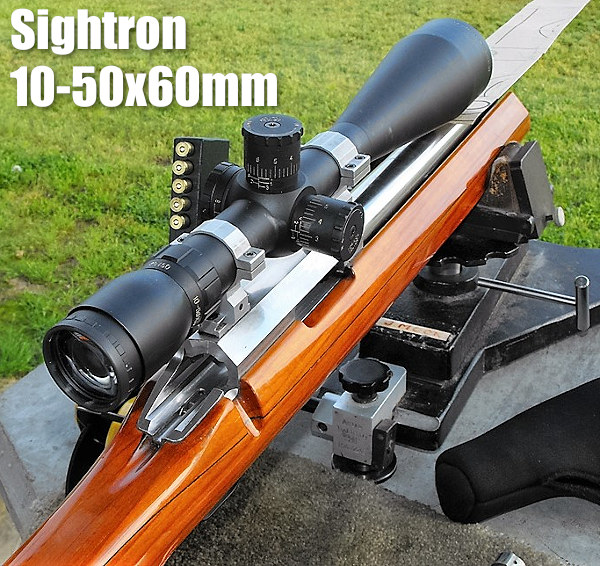
Is there anything that I would change? No, not for short range Benchrest (100/200/300yards), but for 600-yard shooting, I prefer a more detailed reticle with MOA-based hash-marks. With vertical and horizontal hashmarks one can quickly determine the amount of clickes needed to correct impact. Also, a variable power scope is very handy for those days when mirage does not allow precise aiming. Readers should note that Sightron does make a variable power 10-50x60mm ED scope featuring a reticle with MOA-based hash-marks. That should be a good option for shooters who need a high-magnification, variable-power comp scope.
But for those who prefer a fixed-power scope, Sightron’s new SIII SS 45x45mm is a smart option, that is a very good value. If you are in the market for a fixed-power 45X benchrest scope, I can heartily recommend this new offering from Sightron. — James Mock
Short History of “Freezing” Benchrest Scopes
Several years ago, many Benchrest shooters were having trouble with their riflescopes holding point of aim. Cecil Tucker, Jackie Schmidt, Gene Bukys, and Bob Brackney modified some scopes to “freeze” the adjustments. This worked fairly well but it hindered a shooter’s ability to make fine adjustments quickly.
The late Ron Hoehn along with others started using small Delrin screws to stabilize the erector tube. This brought about my first use of Sightron scopes. I contacted Sightron and asked if they would furnish a scope for me to try this procedure and they agreed. A friend and I drilled the two holes and tapped them to apply the Delrin screws. Surprisingly, this system worked well on the Sightron 36X SII model. As a matter of fact, COL Billy Stevens won the Super Shoot using one of those SII Benchrest scopes. There was a drawback however. When one tightened the screw against the erector tube there was a slight point of aim movement. This was not too noticeable in group shooting but hampered the score shooters.
The scope pictured above another Sightron I’ve used, a 10-50x60mm. This medium-priced scope offered excellent value-for-money and it sold very well. It performed superbly for me and in my opinion represents one of the best buys in a long range scope. About two years ago, Sightron decided to put out a more advanced scope. Sightron added locking turrets, 34mm tube, and a few more “premium” features. Of course the price reflected these changes but there was not a severe price increase.
3-Gun competitors must be wicked fast (and accurate) with rifle, pistol, and shotgun.
What’s the most exciting, physically challenging shooting sport? An argument can be made that three-gun shooting (also called “multi-gun”) tops the list. To succeed in the 3-Gun world, competitors must be fast and accurate with rifle, pistol, and shotgun. They must exhibit blazing speed in the short-range stages plus serious accuracy during long-range stages.
America’s top 3-Gun shooters held to Florida next month. The 2019 3-Gun Nation (3GN) Nationals take place October 12-13 at Southern Tactical Range in Holt, Florida. There will be plenty of fast action, plus some long-range accuracy stages. Watch the video below for a preview of the event:
If you’d like to try your hand at 3-Gun shooting, you can still register for the 3GN Nationals, by visiting 3GunNation.com. This match will feature a minimum of 8 stages of fire over a 2-Day Format. Southern Tactical Range offers a mixture of natural terrain and bay stages, featuring a long range area with targets up to 1000 yards.
Blast from the Past — 3-Gun Nation Championship Shoot-Off 2013
In this video 2019 3GN Champion Dan Horner wins a dramatic shoot-off at 2013 3GN Nationals. Horner, after leaving the USAMU, now shoots for Team SIG Sauer.
Hardware for 3-Gun Competition — Guns & Gear
In this NSSF video, Top Shot Finalist Chris Cerino reviews the hardware you’ll need for multi-gun matches. Chris talks about carbine configurations — including barrel, handguard, and optics options. Cerino also demonstrates pistol techniques and explains the key features of a belt/holster rig.
National Hunting and Fishing Day (NHF Day) takes place on Saturday, September 28, 2019. The annual celebration, on the 4th Saturday of September, serves as a reminder that conservation succeeds because of leadership and funding from hunters, shooters and anglers. National, regional, state and local organizations will run thousands of “open house” hunting- and fishing-related events around the country. Events will include Fishing Derbys, Hunting Expos, Wing-shooting tournaments, and much more. Over four million Americans will participate.
Find Events in Your State
For info on NHF Day, visit www.nhfday.org. To find NHF Day events in your state, click links below:
Hunters Aid Conservation Efforts
The contributions of hunters, in the form of excise taxes paid on firearms, ammunition, and archery equipment, benefit every state. These taxes have generated approximately $5.6 billion for wildlife conservation since 1939.
Origins of National Hunting & Fishing Day
National Hunting and Fishing Day dates back to the 1960s. In 1972, by Senate Joint Resolution 117, Congress requested the President to declare the fourth Saturday of September 1972 as National Hunting and Fishing Day. On May 2 of the same year, President Richard Nixon signed proclamation 4128 designating the Fourth Saturday in September National Hunting and Fishing Day.
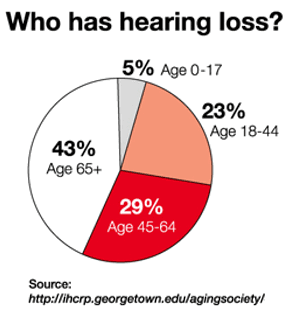
“Science tells us that exposure to continuous noise of 85 dB for eight hours is enough to cause permanent hearing loss, and worse, spikes of 130 dB and more can result in permanent hearing damage instantly.” Source: NRA Blog.
The Risk of Hearing Loss
Hearing loss can be progressive and irreversible. If you are a shooter, this is serious business. As the NRA Blog cautions: “You may not even realize you’re harming your hearing. Hearing loss occurs gradually, and can go effectively unnoticed until symptoms become severe. By then, the damage is done.”
Nobody wants to go deaf. But we often see shooters without effective hearing protection when they are walking around a few yards behind the firing line. That’s bad — even if you are away from the firing line, gunshot noises can damage your hearing. You MUST use effective hearing protection every time you go to the range. Good foam earplugs costs mere pennies but they can prevent deafness in your later years. Many folks also wear muffs over plugs.
Sound Levels for Common Noises:
9mm Luger pistol: 160 dB
Jet aircraft engine (near): 140 dB
.22 LR pistol: 134 dB
Normal human pain threshold: 120 dB
Noisy Nightclub: 110 db
Riding Motorcycle at 65 mph: 103 db
Power Lawnmower: 95 dB
Hearing damage possible: 85 dB (sustained for 8+ hours)
Ringing Telephone: 80 dB
Normal conversation: 60 dB
The Myth of the “Quiet” .22 LR
The NRA Blog notes that “many rimfire shooters, particularly those using the beloved .22 Long Rifle cartridge, argue that the small .22 LR caliber doesn’t produce enough sound to damage your hearing”. So, is that really true … or is it a myth?
In fact, a .22 LR can be much louder than you think — a .22 LR pistol can produce sound levels of 134 dB. That’s well above the normal human pain threshhold.
Highest Protection NRR 34dB-Rated Ear Muffs
For under $15.00 you can buy quality ANSI-approved muffs with a 34dB Noise Reduction Rating — the best you can get. Chose the Bright Yellow TR Industrial Muffs at $13.48, or the dark green Walker EXT Range Muffs for $13.99. Both products have padded head-bands which retract. Another dual-shell design with a 34dB NRR rating is the new FNova Muffs priced at just $12.88.
Many hunters and competitive shooters prefer low-profile ear muffs. As these typically have a lower Noise Reduction Rating, perhaps NRR 22-24, we recommend running earplugs under muffs, particularly when you are at a busy range or shooting a match. If you use low-profile electronic muffs, such as Howard Leight Impact Sport Muffs, you should still be able to hear range commands even with plugs underneath.
Howard Leight MAX NRR33 Earplugs, Just $7.98 for 50 Pairs.
20 Pairs
50 Pairs
These Howard Leight NRR33 Max plugs are your Editor’s favorite foam earplugs. Between shooting, motorcycling and mowing lawns, I probably have Max plugs in my ears 3-4 days a week. This is a very good price for a bulk pack of 50 pairs. And if you act soon, you can get free shipping to boot. This Editor just bought a 50-pack myself. And, yep, I got 50 pairs for $7.98 delivered, less than a pint of premium beer costs at my local pub:
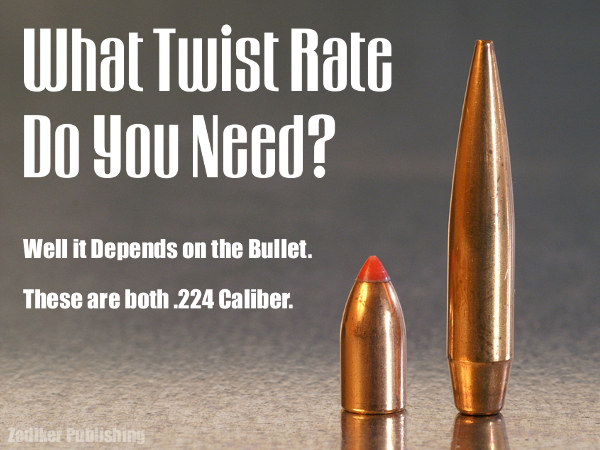
Here’s an extreme range of .224-Caliber bullets: 35gr varmint bullet and 90gr match bullet. Of course, along with bullet length/design, you need to consider MV when choosing twist rate.
Even with the same caliber (and same bullet weight), different bullet types may require different rates of spin to stabilize properly. The bullet’s initial spin rate (RPM) is a function of the bullet’s muzzle velocity and the spin imparted by the rifling in the barrel. You want to ensure your bullet is stable throughout flight. It is better to have too much spin than too little, according to many ballistics experts, including Bryan Litz of Applied Ballistics. Glen Zediker has some basic tips concerning barrel twist rates and bullet stability. These come from his latest book, Top Grade Ammo.
Choosing the Right Twist Rate
I’d always rather have a twist too fast than not fast enough. Generally… I recommend erring toward the faster side of a barrel twist decision. 1:8″ twist is becoming a “new standard” for .224 caliber, replacing 1:9″ in the process. The reason is that new bullets tend to be bigger rather than smaller. Don’t let a too-slow twist limit your capacity to [achieve] better long-range performance.
Base your next barrel twist rate decision on the longest, heaviest bullets you choose to use, and at the same time realize that the rate you choose will in turn limit your bullet choices. If the longest, heaviest bullet you’ll shoot (ever) is a 55-grain .224, then there’s honestly no reason not to use a 1:12″. Likewise true for .308-caliber: unless you’re going over 200-grain bullet weight, a 1:10″ will perform perfectly well.
Bullet Length is More Critical than Weight
Bullet length, not weight, [primarily] determines how much rotation is necessary for stability. Twist rate suggestions, though, are most usually given with respect to bullet weight, but that’s more of a generality for convenience’s sake, I think. The reason is that with the introduction of higher-ballistic-coefficient bullet designs, which are longer than conventional forms, it is easily possible to have two same-weight bullets that won’t both stabilize from the same twist rate.
Evidence of Instability
The tell-tale for an unstable (wobbling or tumbling) bullet is an oblong hole in the target paper, a “keyhole,” and that means the bullet contacted the target at some attitude other than nose-first.
Increasing Barrel Length Can Deliver More Velocity, But That May Still Not Provide Enough Stability if the Twist Rate Is Too Slow
Bullet speed and barrel length have an influence on bullet stability, and a higher muzzle velocity through a longer tube will bring on more effect from the twist, but it’s a little too edgy if a particular bullet stabilizes only when running maximum velocity.
My failed 90-grain .224 experiment is a good example of that: I could get them asleep in a 1:7″ twist, 25-inch barrel, which was chambered in .22 PPC, but could not get them stabilized in a 20-inch 1:7″ .223 Rem. The answer always is to get a twist that’s correct.
These tips were adapted from Glen’s newest book, Top-Grade Ammo, available at Midsouth. To learn more about this book and other Zediker titles, and read a host of downloadable articles, visit ZedikerPublishing.com.
AIM Field Sports FS-42 Rifle Carry Bag (Shoulder Pack)
Gear Review by Jason Baney
I recently had the opportunity to test out the AIM Field Sports FS-42 rifle carry bag from the UK. This brand, while not well known in the USA, is popular throughout Europe as AIM makes incredibly robust and well thought-out gear. In addition to AIM’s house brand, AIM also sells OEM gear for other well-known companies, so this outfit is well-versed in the market and know what works and what doesn’t. These are incredibly well-made bags at a very fair price (£157.50, about $196.00 USD). I expect we will see more AIM rifle bags come to the U.S. market in the coming years.
About the Rifle — Accuracy International AX in 22 Creedmoor
The rifle in the photos is Jason’s new “Groundhog Laser”, chambered in 22 Creedmoor. Jason reports: “The Accuracy Int’l AX platform lets me swap barrels quickly and the Tangent Theta scope allows quick zero resets when switching barrels. The suppressor is a Silencerco Omega and the scope mount is an ERATAC adjustable. With the 24″ 1:8″-twist Bartlein 5R barrel and a healthy charge of H4350 it runs a 75gr Amax just a touch under 3500 FPS for a 1000-yard come-up of about 5.3 mils!”
Jason added: “Even my 6-year-old son loves to shoot the rifle (with the LOP set at minimum). The boy took the first 7 groundhogs with it over a 2-hour span. I took 4 that day as well — an epic groundhog adventure. My son also recently shot this rifle at 1000 yards. On his very first 1K outing, he went 10 for 11 shots on a 2/3 IPSC target!”
For me, the FS-42 was intended to carry my Accuracy International AX (another fabulous tool from the UK) to and from the range, matches, and groundhog fields. While AIM Field Sports makes several types of Carry Cases and Drag Bags, this FS-42 is the model for right-side folding stock rifles up to a length of about 41.5.” AIM’s FXS-42 would be the choice for similar length rifles but with a butt-stock that folds to the left.
Good Shoulder Strap System Provides Comfortable Carry
The backpack straps received quite a bit of use and are well designed and rugged — you hardly know they exist until you deploy them for use. I actually enjoyed carrying my heavy rifle even when loaded with a tripod (strapped on the external loops), ammo, bipod, mags, suppressor, camera gear and a couple bean bags. It had no problem handling my heavy rifle and gear. Even with a 24″ barrel with suppressor mounted, and large Tangent Theta 5-25 scope the bag had plenty of room to secure and protect it.
The FS-42 gives plenty of room for support gear and has many well placed straps and reinforcements to keep your rifle in place and protected in transit. The more time I spend with it the more features I notice. It is obvious that these bags were designed by shooters. While no soft case/drag bag can quite offer the same protection of a hard case, it is much less cumbersome and holds about the same amount of gear. It is so well thought-out there is even a spot for a cleaning rod along the spine of the case!
Overall, the AIM FS-series bags are well-made, well laid-out and a great value in a world where some similar bags can be nearly twice the cost. These AIM bags are a great alternative to dragging heavy hard cases around.
Final Thought: “The FS-42 Bag is excellent — I dig it. It has worked well for all tasks. The only thing I would change is a bit more padding where the bag lies on your low-back/pelvis area.”
The NRA World Shooting Championship (WSC) starts today in West Virginia. The event runs September 18-21 at the the Peacemaker National Training Center in Glengary, WV. At the WSC, top professional and amateur shooters compete in a wide variety of shooting disciplines, including pistol, rifle, shotgun, and combined firearm sports.
As a key part of this event, Lapua will team up with Vudoo Gun Works on a special “tactical rimfire” stage. This allows shooters to enjoy the fun of PRS-style shooting with a rimfire cartridge. Lapua’s Center-X ammunition will be paired with a state-of-the-art Vudoo .22 LR rifle. On this stage, competitors will engage challenging targets at multiple ranges.
Even if you can’t make it to the World Shooting Championship, rimfire shooting with a Vudoo rig (or similar rifle) is a great way to cross-train for PRS/NRL with lower cost ammo. Factory loaded centerfire can easily cost $1.50 per round. Rimfire .22 LR ammo is a fraction of that cost. You can get good SK and Lapua ammo starting at about $6.50 per 50ct box. That’s just 13 cents per round.
“We are excited to return to the NRA World Shooting Championship at Peacemaker. As we did for the past two years, we are teaming with Vudoo to display the accuracy capabilities of Lapua ammunition. I think the shooters will be thrilled with the performance of Lapua Midas+ and Center-X ammunition in the Vudoo rifles. This event is a great test for shooter and equipment,” stated Adam Braverman, Lapua Director of Sales and Marketing.
by James Mock
After owning three different rifles with BAT actions, I have become a loyal fan of BAT Machine quality and customer service. Back in 2009, I traded my BAT/Scoville for the BAT/Leonard that I currently shoot. This rifle has a long history and Terry Leonard told me that “Old 87″ (as I have named it) was one of the earlier BATs that he stocked. He wrapped the stock in fiberglass and used 2-part epoxy back then. I must say that this rifle has held up remarkably well since it dates back to the 1990s. The action is a RB/LP/RE octagon Model B with .308 bolt-face.
Rifle Has Multiple Barrels for Multiple Disciplines
With this gun, I have shot several barrels of different calibers (.22 PPC, .22 PPC-short .095, 6mm PPC, 6XC, 6mm Dasher, .30BR, and will soon have a 6 BR-AI). It has been an exceptionally accurate rifle in several disciplines. In the hands of previous owners, it earned several Hall-of-Fame (HOF) points, and a “middle-of-the-pack” shooter (me) even received a HOF point with this rifle.
For most of its life, Old 87 served as a short range benchrest rifle, but I have used it for the last few years as a 600-yard rifle with the 6mm Dasher barrel. I was lucky enough to earn the Shooter of the Year award at the Prince Memorial Range in Louisiana for 2016.
After shooting my two Dasher barrels for last eight years, I have noticed a drop-off in accuracy at 600 yards. A decision had to be made — get a new barrel or sell the rifle and retire from competition. I will be 74 years old in six months and my competition days are limited due mainly to a chronic neck problem. After mulling over the decision to retire or not, I decided to give Old 87 one more year. Here is the story of how we upgraded the old war-horse.
Old 87 REBORN — Upgrading with New Components
I prefer cut-rifled barrels with four lands and grooves and have had success with .236 bore diameters and 1:8″ twist in long range rifles. I searched for barrels meeting those parameters and found a suitable BRUX at Bugholes.com (Southern Precision Rifles).
The 6BR-AI Option — Easy Fire Forming
I thought about having Billy Stevens chamber it for the Dasher, but decided to try something new. There seems to be a lot of interest in the 6BR-AI and I said, “Why not?” Well, I bought a shortened Dasher die from Harrell’s and will use my Wilson Dasher seating die. Bart Sauter was kind enough to let me use his reamer for chambering.
Fitting a New Roller-Type Cocking Piece on Older BAT Action
Since I was into the project this deep, I called Mike Ezell and ordered one of his Tungsten powder-dampened tuners. Since Old 87 had thousands of rounds since the firing pin spring has been replaced, I decided that it was probably needed. Well, I got to thinking (very dangerous) and asked Daryle Thom if it would be feasible to put a roller-type cocking piece and a new firing pin spring on such an old action.
The folks at BAT are very accommodating and they said that it would be no problem with such a conversion. While my bolt was in Idaho, the barrel with Ezell tuner arrived and I could not shoot it. However, my friend Jeff Turner loaned me his BAT bolt to see if it would work. Although the rifles differ in age by 15 or more years, the borrowed bolt worked perfectly in my rifle. This is a testimony to the great machine work performed at BAT Machine.
New Bolt Roller Tail-Piece Makes a Big Difference in Cocking Effort
With the borrowed bolt I managed to fire-form 50 rounds and get them ready for our 600-yard match on September 16. The folks at BAT quickly fixed my bolt by replacing the mainspring and ejector spring, polishing the ejector, and replacing the tail-piece with their roller type. Pictured below is this tail piece that makes a remarkable difference in the force needed to cock the action. It is amazing what this little wheel can do… even when placed in a 20+ year old action.
Working with the Ezell Barrel Tuner — Small Increments Work Best
Also, I would like to congratulate Mike Ezell on his new tuner which contains powdered Tungsten. It is easy to set up and Mike will help a buyer get maximum effectiveness from the unit. Just give him a call. Below is a picture of the tuner. I was lucky enough to have some time to “play” with it before the match.
Talking about the tuner, Mike writes: “Our new barrel tuners…
PDT stands for particle dampening technology. The science is there, we just applied it to a barrel tuner. The advantages are a wider tune window and more efficient control of barrel harmonics…in a tuner design that actually looks good.”
Mike advised me to set the tuner by turning it all the way into the shoulder and then come out to zero or the second time zero comes up if there is not at least half of a turn between the shoulder and the first zero. It is best to start with a proven load and adjust the tuner from that load. As unlikely as it seems, a rifle can go from a good tune to a very poor tune with only 5 marks (.005”) and vice versa.
Mike cautions those who use his tuner to NOT make adjustments which are too large. As a matter of fact, he recommends adjustments of .001 inch at a time. Ezell’s tuners are screwed onto the barrel with .900” by 32 threads per inch and has 32 marks on the circumference of the tuner. Therefore, each mark moves the tuner in or out by .001 inch. There are three set screws with Teflon tips which provide friction for the tuner on the threads. Do not tighten the screws so tight as they damage the fine threads.
If you want the smoothest bolt possible for your BAT, call or e-mail Daryle or Bruce Thom at BAT Machine and discuss your needs with them. I am sure glad that I did. If you want a state-of-the-Art tuner for your barrel, give Mike Ezell a call or visit his Ezell Custom Rifles Facebook Page.
— Good shooting, James Mock
At the request of our readers, we provide select “Deals of the Week”. Every Monday morning we offer our Best Bargain selections. Here are some of the best deals on firearms, hardware, reloading components, optics, and shooting accessories. Be aware that sale prices are subject to change, and once clearance inventory is sold, it’s gone for good. You snooze you lose.
1. CDNN Sports — Winchester XPR .30-06 Rifle with Scope, $299.99 after Rebate
Hunting season is here! If you need a good basic hunting rifle capable of taking game up to Elk size, here is a crazy good deal. CDNN is offering a Winchester XPR .30-06 Spr rifle, complete with 3-9x40mm Weaver scope, for just $349.99. But it gets even better. If you purchase before the end of September, you’ll get $50 back from Winchester. That $50 rebate lowers your net cost to $299.99! You can pay more than that for just a barrel! This same deal is offered for three other chamberings: .243 Win, .270 Win, and .308 Win.
2. EuroOptic.com — Vortex Scopes Close-Out Sale, Save Hundreds
Vortex scopes have become very popular for good reason. Vortex scopes deliver great performance for the price and Vortex offers a rock-solid lifetime warranty. Right now at EuroOptic.com you can save hundreds on Vortex Viper, Razor, and Strike Eagle riflescopes. Six of the deals are shown above, but there are more options on EuroOptic’s Vortex Close-Out Sale Page.
3. ArmorAlly — Lake City Once-Fired 5.56×45 Brass, $37.50/500
This Lake City 5.56×45 NATO brass is true once-fired, Milspec, thick-walled cartridge brass sourced from the U.S. Military. Lake City 5.56 (.223 Rem) brass is popular and reliable, and works great in AR-platform rifles. ArmorAlly includes 1% overage to account for any damaged brass. NOTE: Lake City brass has crimped primers and will need to be swaged prior to inserting a new primer. Lake City 5.56×45 brass is a good choice for varmint rifles that need hundreds of rounds in a weekend. Once you remove the crimp, you should get many reloads with this brass.
Everyone should own a rimfire handgun, and here’s a nice .22 LR pistol for under $200.00. Palmetto State Armory is selling the TX 22 for $249.99. Fill out the paperwork for the Taurus factory rebate, and you get $50.00 Cash Back. That lowers your net cost to just $199.99 — a great price for a fine .22 LR handgun. We like the ergonomics on this pistol and it has a surprisingly good trigger feel. NOTE: To qualify for the $50 rebate, the TX 22 must be purchased between July 1 and September 30, 2019.”
5. Grafs.com — FREE Litz Book with $200 Lapua Product Buy
This is one example. This deal works with $200 of ANY Lapua products purchased from Grafs.com.
Lapua makes great brass, bullets, and ammo. Bryan Litz writes great books. And now you can get both with this promotion from Graf & Sons. Here’s the deal — if you buy at least $200.00 worth of Lapua product at Grafs.com, you’ll get a free Applied Ballistics book authored by Bryan Litz. Mix and match any Lapua products — as long as the order totals $200.00 or more. We know you’ll want Lapua brass, but you should try out the great Lapua Scenar bullets too! NOTE: The book may be one of various Litz titles, such as Modern Advancements in Long Range Shooting or Ballistic Performance of Rifle Bullets. You do NOT get to pick the book title — you get what’s available.
6. Brownells & Natchez — 9mm Ammo Under $17.50 per 100
If you have a 9mm pistol, check out these great deals. because 9x19mm ammo is produced in such quantity, it is some of the cheapest centerfire pistol ammo you can buy. Here are two great 9mm Luger ammo deals for you, with big-name factory stuff for under 18 cents per round. Get either Sellier & Bellot or Fiocchi for under $0.18 per round. Brownell’s Sellier & Bellot $174.99/1000 deal with CODE NCS even includes free shipping. And the Fiocchi at Natchez is just $8.49 for a 50-count box.
7. Home Depot — Low-Profile Muffs + Shooting Glasses, $16.17
Every shooter should have an extra set of shooting muffs and protective earwear. These will provide vital protection for friends/guests you bring to the range. And let’s face it, sooner or later you’ll forget your own muffs, so it’s wise to keep an extra set in your vehicle at all times. This week Home Depot a great deal on Walker’s NRR 22 Muffs + ANSI Z87.1-rated Shooting Glasses. Get both as a Combo Set for just $16.17. Midsouth also has this combo for $19.99.
8. Midsouth — Lyman Cyclone Case Dryer, $52.49
Lyman’s Cyclone Case Dryer is great for those who wet-tumble cartridge brass. The Cyclone’s five, stackable trays let you separate up to five different case types. At full capacity, the Cyclone holds up to 1,000 .223 Remington cases or 2,000 9mm cases. The trays can also be used to dry parts that have been ultrasonically cleaned (such as pistol components). The Cyclone’s built in 3-hour timer lets you “set and forget”. Midsouth is offering a VERY good price– $52.49. The same Lyman case dryer is $64.18 on Amazon.
9. Amazon — Tipton Gun Butler, $19.96
Here’s a handy, portable gun caddy that works well for rifle maintenance chores at home or at the range. Right now the Tipton Gun Butler is marked down to $19.96. The Gun Butler offers a convenient platform for cleaning your gun or doing tasks such as scope mounting. Two removable forks/cradles hold a gun securely in place, while compartments and slots hold solvents, jags, brushes, mops, and tools. The Gun Butler features a convenient carrying handle, and slip-resistant rubber feet. NOTE: The front cradle may not work well with wide benchrest fore-ends.
With the U.S. F-Class National Championship running this week in Raton, NM, we thought we’d highlight a very important .284 Win rifle. This is the .284 Winchester rig that Charles Ballard used to win back-to-back F-Open titles in 2008 and 2009. Ballard’s huge success with the .284 Winchester cartridge helped make the .284 Win (and .284 Win Improveds) the dominant cartridge in F-Open competition worldwide. Enjoy this trip back in time to when the .284 Win was the “new kid on the block”.
Ballard Wins Back-to-Back F-Open Championships
In a very short span, Ballard and this rifle racked up an impressive string of performances. Ballard won the NRA Long-Range Regional, setting a new National Record in the process — 200-23X at 1000 yards. He also won the North Carolina F-Class Championship with the gun, and then captured the 2008 F-Open National Championship, followed by a second F-Open title in 2009. At the 2008 Nationals in Lodi, Wisconsin, Charles shot a 1337-65X with Berger 180gr bullets. At the 2009 F-Class Nationals, held at Camp Butner, NC, Ballard shot a 1328-62X to win his second straight National title.
Ballard’s “Purple Haze” rifle features superb components, including a BAT MB action, Nightforce 12-42 BR Scope, and a wickedly accurate 32″ Broughton barrel.
Charles Ballard always used eye and ear protection. For these photos, he removed safety glasses.
Building a Championship-Winning F-Classer
by Charles Ballard
This rifle project began several years ago. My purpose was to find a cartridge that would launch the high-BC, 180gr 7mm bullets at competitive velocities for F-Class competition. I also sought barrel life that would be far superior to that of a 7mm WSM or 6.5-284. I read the article on 6mmBR.com about Jerry Tierney’s .284 Winchester and the cogs began to turn. After speaking with Mr. Tierney at the 2006 US F-Class Nationals, I decided the .284 Win would be the chambering for the new gun, despite several shooters telling me I would not be able to obtain the desired velocities. Jerry said “go for it” and, as it turned out, the rifle delivered the velocity I wanted, plus extraordinary accuracy to boot. This gun has more than exceeded my expectations, winning matches and setting a new 1000-yard, single-target F-Class National Record (200-13X).
Rifle Specifications–All the Hardware
My action of choice was a beefy 1.55″-diameter, round BAT MB, Left Bolt, Right Port. I chose this action based on BAT Machine’s impeccable reputation. I also liked the fact that the MB (medium long front) action offered an extended front end. This would provide better support for a very long barrel and give more bedding surface. The action is topped with a stainless BAT tapered (+20 MOA) Picatinny scope rail. Housed in a polished, stainless BAT trigger guard is a Jewel trigger set at 5 ounces.
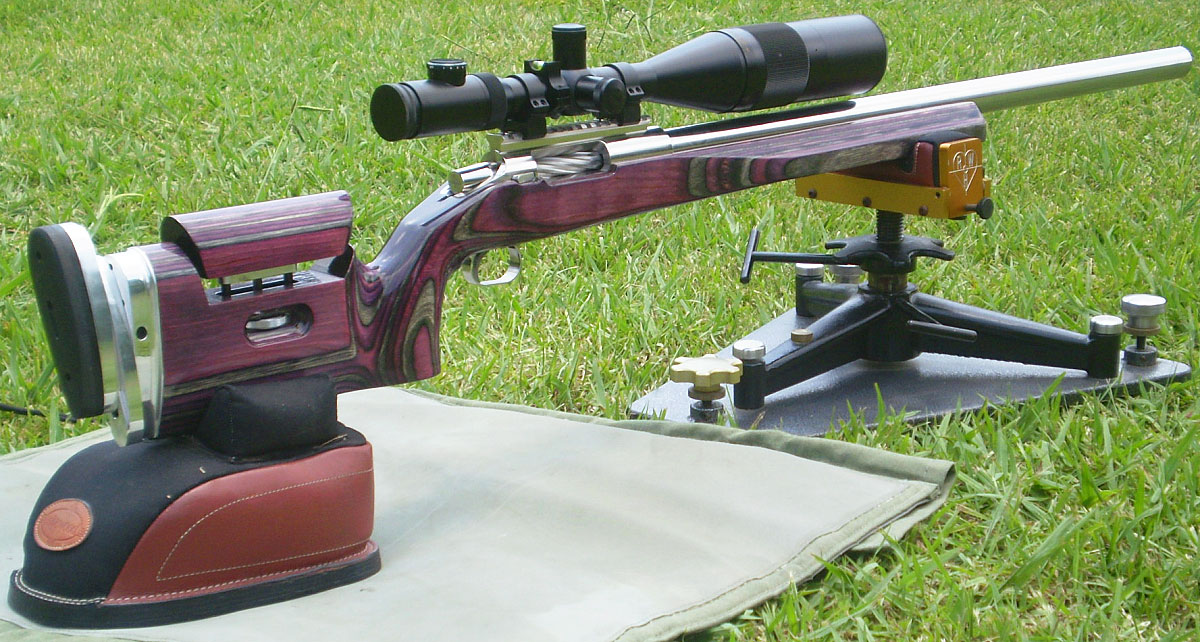
The barrel is a 32″ Broughton 5C. The chamber was cut with a reamer made for Lapua 6.5-284 brass necked up to 7mm. It’s throated for the 180gr Bergers. I selected a Broughton 5C because, as my gunsmith says, “They just shoot”. This is a 1:9″ twist, 1.250″ straight contour for 32″. Yes, that’s a long, heavy barrel, but I think the length gives me a velocity advantage. On other guns, a 32″ tube could cause the rifle to be front-heavy and out-of-balance. The stock by Precision Rifle & Tool has a 3″-longer fore-end which solves the problem. The purple .284 balances very well and tracks great.
Speaking of the stock, there was only one choice, a “Purple Haze” laminated F-class model from Precision Rifle & Tool. This stock features a fully-adjustable buttplate plus a removable cheek-piece with thumb-wheel adjustment. Most importantly, the stock features an extra-long, super-stiff, low profile fore-end. This design rides the bags better than any stock I have ever shot. The action area of this stock has been beefed up to house the large BAT MB action. The final component on this rifle is a 12-42×56 Nightforce BR with DD-1 reticle set in Leupold Quick Release rings.
The Ultimate F-Open Rig
To start this project, I contacted Ray Bowman of Precision Rifle & Tool, PrecisionRifleSales.com. The first order of business was to get the action ordered, knowing how long it would take to get a BAT left bolt, right port action, plus scope rail, and trigger guard. We knew we wanted a Broughton 5C, but what twist rate? Based on the success I had shooting 210s in my 300 WSM with a “slower” 1:11″ twist we opted to go with a 1:9″ twist 7mm to shoot the 180gr Bergers. A dummy round was sent to Pacific Tool and Gauge to have a reamer ground to our specs.
Not shooting free recoil, I needed a stock that would fit me like a prone stock but track like a benchrest stock. Precision Rifle & Tool’s F-Class stock fit this bill to perfection. Ray keeps Jewell triggers in stock so the only piece left to acquire was the scope. On the old F-Class targets I would have been content with a Leupold 8-25 LRT, but on the new target a scope with 1/8-MOA adjustments and high magnification is a must. I considered the Leupold competition scopes but ultimately decided on the Nightforce BR. The variable power and unobstructed DD-1 reticle of the NF were deciding factors.
NOTE: Charles Ballard always employs eye and ear protection when shooting. For these posed photos, he removed his safety glasses.
Ballard’s Tips for F-Class Competition
In this section, Charles Ballard explains the basics of shooting an F-Class match, from the initial prep period to end of match. He covers sighter strategies and techniques for record fire, and he also explains, in detail, how he dopes the wind and judges hold-offs based on mirage.
Three-Minute Prep Period
I spend the first part of my 3-minute prep period making sure my front rest and rear bag are in-line. This insures the gun returns to the same spot after recoil. After I am happy with my set-up, I take a position similar to that of a conventional prone shooter. My face rests on the stock and my shoulder is placed firmly into the buttplate. With the Right Bolt, Left Port action, I can shoot the entire match with minimal movement. The last segment of prep time is spent trying to dope the wind.
Sighter Strategies
In a match with only two sighters, I’ll make a wind call and try to hit the center with my first shot. In matches with unlimited sighters, I generally hold dead center with a no-wind zero and use the point of impact as feedback. If I feel there is a constant condition, I will click for the wind. This allows me to use the center as my primary hold. After I get the feedback I need from my sighters it’s time to go for record.
Record Fire
After record fire begins I shoot very fast, holding off for the wind. I’ll make my wind call while the target is in the pits; if my previous shot went where I thought it would I will take my next shot as soon as the target stops. I predominantly shoot and adjust my aim based on mirage. If I have switching conditions, I will remove all wind from the scope, slow down, use the flags and mirage, still holding off. I do this because I have never had success waiting on a condition to come back.
Cleaning Procedures
I do not clean until the match is over. This means I typically shoot 120 to 150 rounds on average between barrel cleanings. I quit cleaning every relay after reading Mr. Tierney’s article, but I would still clean on Saturday night after I got home. After getting in late one Saturday night, I forgot to clean my rifle. I remembered this as I was preparing to shoot the first relay Sunday morning. At the time I was shooting a 300 WSM. Well, guess what… that relay I shot a 200-19x, and the next relay I shot a 200-17x (these scores were on the old, larger F-Class target). I found that the 300 WSM’s vertical really tightened up after about 50 rounds. The same has proven true of my .284 Winchester–vertical improves once 50 rounds are through the bore.
When I do clean, it’s simple. I use Bore Tech Eliminator on three patches, then follow with a wet nylon brush. These steps are repeated until the bore is spotless. I then push one wet patch of Eliminator through the bore and leave it.
Load Development and Accuracy Testing
My philosophy on load development differs from many shooters. I don’t primarily shoot for groups. The only goal I have is to obtain the lowest ES and SD I possibly can. Holding elevation in F-Class is crucial. Uniform velocity gives me more consistent vertical point of impact.
As we commenced load development, Jerry Tierney’s .284 Win load data posted on this 6mmBR.com gave us a good starting point. We loaded 53.0 grains of Hodgdon H4831sc and shot one round, cleaned, shot three rounds, cleaned, then shot 10 rounds and cleaned. From this point we worked up in half-grain increments until pressure signs developed at 2950 fps. Then we backed the powder charge down until the bolt lift was smooth and the primers were nice and round. [Editor’s Note: Jerry Tierney is no longer with us. We mourn his passing.]
Success: 2910 FPS with Ten-Shot ES of 7 and SD of 3
At this point I began working with different primers, neck tension and seating depth. After trying Federal 210m primers, CCI BR-2 primers, light tension, heavy tension, jamming, jumping, we settled on 56.0+ grains of H4831sc with CCI BR-2 primers. We ran about .002 neck tension with the 180s seated just touching the lands. This load gave us 2910 fps velocity with an Extreme Spread (ES) of 7 fps and a Standard Deviation (SD) of 3 fps over ten (10) shots.
NOTE: If you’re skeptical of those single-digit chron readings, click on the Video Playback screen below to view Ballard test-firing a load that delivers an ES of 5 and SD of 2 for five shots. At the end he holds the Oehler Chrono up to the camera so you can view the readout yourself. Seeing is believing!
Houston–We Have a Problem
I thought we had a load dialed-in, so I was fairly confident going to the North Carolina Long-Range State Championships. Let’s just say it didn’t go as planned. I encountered vertical, vertical, and more vertical. Turns out this was my fault. I had committed a big reloading “No-No”. I had used the ball expander in the die to neck the cases up from 6.5 to 7mm. Big Mistake! The cases we had previously used for load development were first necked-up with Ray’s expander mandrel and then run through the Redding bushing dies. Lesson learned: use an expander when necking-up the brass! This step was performed on the cases for the next match and it corrected the problem, as I lost no points to elevation.
Surprise–Velocities Rise, So Load Must Be Tweaked
After the NC State Champs, the gun went into hibernation for the winter. In February of 2008, NSSC held its annual winter Palma match. On Saturday my .284 was absolutely hammering, but Sunday I started noticing a hard bolt lift. Eventually, at the end of my last string, the gun blew a few primers. Luckily, however, it was still shooting very well. On the following Monday, we went back to the test bench and chrono. To my surprise 57.0 grains of H4831 was now shooting 2975 fps! That’s way too hot. At this point the barrel had 439 rounds through it. I started calling anyone I could thing of to see if they had any idea what could be causing this problem. Nobody I spoke with had ever experienced this problem until I spoke with a very knowledgeable F-Class shooter named Andy Amber.
Andy informed me that this had happened to him with several rifles. For whatever reason, between 100 to 300 rounds, as the barrel gets broken-in, the velocity climbs significantly.. Andy told me if I loaded back to the previous velocity, in his experience, it would stay there. Andy was spot on. My load came back together with 54.5 grains of H4831sc. The Oehler consistently gave me readings of 2892 fps to 2902 fps with an SD of 4 fps using once-fired brass. New brass gave slightly slower velocity but better numbers: ES of 7 to 9 fps, and SD of 2 to 3 fps. All this data was duplicated on several occasions. This rifle now has 554 rounds through it, but only .003″ throat erosion. The bullet was moved out .003″ to maintain position relative to the lands.
I’m very exacting in my loading procedures. I think that’s why I’ve been able to build loads that consistently deliver single-digit Extreme Spreads with ultra-low SDs. Here’s my loading method.
Case Prep: I start with Lapua 6.5×284 brass necked up to .284 with an expander mandrel. Next I sort the cases into one-grain lots, for example 194.0 to 194.9 grains, then 195.0 to 195.9 grains, and so on. After the brass is sorted, I chamfer the case mouths with an RCBS VLD tool. Any residual lube from case expansion is then cleaned out of the case mouth with alcohol on a bronze brush. Finally all the cases are run through a Redding Type ‘S’ FL sizing die with .312″ neck bushing.
Loading Procedure: My CCI BR-2 primers are seated with a RCBS hand priming tool. Powder charges are dispensed and weighed with an RCBS ChargeMaster Electronic Dispenser, which is regularly calibrated with check-weights to assure accuracy. Then the 180gr bullets are seated using a Redding Competition Seating Die.
Processing Fired Cases: My fired cases are tumbled in walnut shell media, then cleaned off. Cases are full-length resized, but I bump the shoulders only .0005″ (one-half thousandth). After sizing, the case mouths are cleaned with a spinning bronze brush.
IMPORTANT TIP: After 3 firings I will uniform the primer pockets and anneal the case necks. I found this very important in holding good elevation (minimal vertical dispersion).
CALIBER CHOICE: The Case for the .284 Win
Comparison: 6.5-284, .284 Win, and 300 WSM
For shooters who are not sold on the .284 Winchester, I give you a real-world ballistics shoot-off. We comparison-tested a 6.5-284 rifle launching 142 SMKs at 2975 fps, a 300 WSM rifle firing 210 Bergers at 2850 fps, and my .284 Winchester shooting 180 Bergers at 2900 fps. We had three shooters and each rifle was fired simultaneously with no-wind zeros on three separate targets set at 1000 yards. The shooters then exchanged rifles and we repeated the test a couple times. The 6.5 and 300 stayed consistently within an inch of each other. But my .284, with its high-BC Berger 180s, shot inside both the 6.5 and 300 by at least 3″ every time. BC rules in the wind. I was sold!
Cost Comparison: .284 Win vs. 6.5-284
The cost of reloading the .284 Win is roughly $.07 more per round than that of the 6.5-284. The .284 uses a grain or two more powder than the 6.5-284, and 7mm bullets cost about $6.00 more per 100-count box. However, to truly compare the cost of shooting the two calibers you must figure in barrel life. My 6.5-284 barrel went south at 900 rounds. My .284 barrel now has 1,036 rounds, and by all indications it will shoot well to 3,000+ rounds. For cost comparisons sake, let’s use 1,200 rounds for the 6.5-284 and 3,000 rounds for the .284 Win. The average cost of a barrel, chambered and fitted, is $500.00. Using these figures, the barrel cost of a .284 Win is $.17 per round vs. $.42 per round for the 6.5-284. That’s a $.25 per round difference, equivalent to a 60% savings for the .284.
OK, if we now net the barrel cost savings (-$.25) for the .284 with the higher cost of 7mm reloading components (+$.07), I figure the .284 Win costs $.18 per round LESS to shoot than the 6.5-284. Over the span of 3,000 rounds, that’s a $540.00 savings.
Editor’s NOTE: These numbers are 10 years old. But the key fact is the extended barrel life of the .284 Win overcomes the increased bullet cost.
Gun Handling and Recoil
If there is a down-side to the .284 it would be recoil. Now don’t get me wrong, at 22 pounds with a decelerator recoil pad, the .284 is comfortable to shoot. The recoil difference between the 6.5-284 and the .284 is about the same as the difference between a 6x250AI and a 6.5-284. In the versatility section I will elaborate more on this subject.
Ease of Load Tuning
Despite the issues I explained in the load development section with low initial velocities on new barrels, I would say the .284 is fairly easy to tune. The barrel with which I shot my record was removed after that match so I don’t put too many rounds on it before the Nationals. The new barrel on this rifle was tested using the same load. As with the first barrel, the second barrel yielded 2775 fps with a “starter load” of 53.0 grains of H4831sc. With only 11 rounds through the new tube, I shot a 600-yard match on June 22, 2008. I loaded 44 rounds using 55.0 grains of H4831sc. This load ran at 2825 fps. After my first string this load started hammering. I shot a 200-7X with no elevation change on my last string.
Multi-Discipline Versatility
The .284 is my hands-down choice for shooting F-Class. I recently shot my first 600-yard benchrest match. I shot the .284 Win in heavy gun. In this match I found the first weakness in my beloved .284. On a bench you do notice the recoil. The 6mmBR pilots could run off five shots before I could shoot two. My groups were respectable: a four-group, 3.055″ Agg. But, the added recoil of the .284, even with front and rear rests aligned, took me off target. All this being said, if a man wanted just one caliber for F-Class, long-range benchrest, and hunting, I would still suggest the .284 Win.
WARNING: The loads stated in this article may be TOO HOT for many .284 Win rifles. Always START LOW and work up gradually in small increments, looking for pressure signs. With 7mm Sierra 175s, Hodgdon’s starting load is 52.0 grains of H4831sc.




 The Risk of Hearing Loss



 Increasing Barrel Length Can Deliver More Velocity, But That May Still Not Provide Enough Stability if the Twist Rate Is Too Slow


 This rifle project began several years ago. My purpose was to find a cartridge that would launch the high-BC, 180gr 7mm bullets at competitive velocities for F-Class competition. I also sought barrel life that would be far superior to that of a 7mm WSM or 6.5-284. I read the article on


 The Ultimate F-Open Rig
 NOTE: Charles Ballard always employs eye and ear protection when shooting. For these posed photos, he removed his safety glasses.
 Three-Minute Prep Period
 Surprise–Velocities Rise, So Load Must Be Tweaked
 Andy informed me that this had happened to him with several rifles. For whatever reason, between 100 to 300 rounds, as the barrel gets broken-in, the velocity climbs significantly.. Andy told me if I loaded back to the previous velocity, in his experience, it would stay there. Andy was spot on. My load came back together with 54.5 grains of H4831sc. The Oehler consistently gave me readings of 2892 fps to 2902 fps with an SD of 4 fps using once-fired brass. New brass gave slightly slower velocity but better numbers: ES of 7 to 9 fps, and SD of 2 to 3 fps. All this data was duplicated on several occasions. This rifle now has 554 rounds through it, but only .003″ throat erosion. The bullet was moved out .003″ to maintain position relative to the lands.
 CALIBER CHOICE: The Case for the .284 Win
 Gun Handling and Recoil


