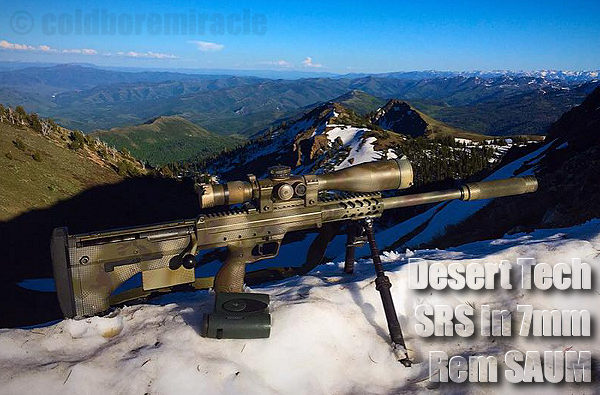
Here is the view from 9500 feet ASL. The SRS in 7mm Rem SAUM almost outran the Swarovski laser…
7mm RSAUM in a bolt-action bullpup? Yes it works. A talented shooter, who calls himself “ColdboreMiracle” in social media, has a Desert Tech SRS-A1 rifle chambered for the 7mm RSAUM, and it hammers. The 7mm Remington SAUM (Short Action Ultra Magnum) is popular with F-Open competition shooters. It can also work well for long-range hunting and tactical tasks. Learn more about the 7mm Remington SAUM in our 7mm Cartridge Guide.
ColdboreMiracle owns the SRS-A1 “covert” model, which has a shorter handguard than the standard SRS-A1 model shown below. Desert Tech now offers an SRS-A2 model which has an M-LOK handguard and some refinements to the chassis.
Here is a detailed video review of a Desert Tech SRS chambered in .308 Win. You can see a close-up of a 100-yard 5-shot group at time-mark 6:25:
Here is a review of the newer SRS-A2 Covert (shorter model), after 1000 rounds. The reviewer believe the SRS bullpup’s shorter length offers some advantages for precision shooters:
ColdboreMiracle says the bullpup design has many advantages: “The Stealth Recon Scout (SRS) rifle from Desert Tech is a bullpup-configured precision rifle with a shorter length than many carbines. The SRS has a multitude of barrel options that can be swapped in under a minute — all of them come with a 1/2-MOA accuracy guarantee and return to zero. The SRS’s bullpup design puts the rifle’s COG closer to the shoulder, making the rifle balance better off-hand. The straight-line geometry of the SRS makes recoil seem lighter, and barrel hop is reduced, allowing the shooter to stay on target better. It takes a little getting used to, when converting from a traditionally-configured bolt gun. But once you do, you won’t go back.” To learn more about this rifle (and other Desert Tech arms), visit ColdboreMiracle’s Facebook Page and YouTube Channel.
The 7mm RSAUM — Why It Was Chosen for this SRS
ColdboreMiracle explains how he selected the 7mm Rem SAUM chambering for his Desert Tech SRS Bullpup: “I just did a comparison between barrel life, velocity, brass, etc. and came to the SAUM. I can tell you this, if you go with one for your SRS, make sure you use long bullets like the 183 or 195, and seat them long. That will aid in smooth cycling.”
Mr. ColdboreMiracle tested the new generation 183gr Sierra MatchKings (item # 1983). These impressive projectiles are “tipped” at the factory. Claimed G1 BC is a lofty 0.707 (at 2300 fps and above). We have heard other reports that these bullets “hold waterline” exceptionally well at 1000 yards. That indicates the bullet-to-bullet BC is very consistent. No doubt the factory uniforming/pointing of the bullet tips helps in that regard.
As you can see, these 183-grainers shoot well in ColdboreMiracle’s SRS rifle. Here are five shots at 100 yards. That’s very impressive for a tactical-style rifle shot from a field-type bipod.
ColdboreMiracle says: “This is the only reason I need to shoot Sierra bullets. On the right (above) you can see the results of the 183gr SMK from my 7mm SAUM. Five shots at 100. A huge thanks to Mark at Short Action Customs, LLC for [chambering this barrel] for my Desert Tech SRS.”
7mm Remington SAUM — Key Considerations
In some respects, the 7mm SAUM cartridge may be better than the 7mm WSM. The 7mm SAUM holds less powder — but that’s a good thing, since the capacity is more than adequate to do the job. You can drive the 180s at 3000 fps with a SAUM using less powder than with a WSM. Additionally, the SAUM case has a slightly longer neck. This gives you greater flexibility in bullet seating. With a long neck you can set the throat so the long 180+ graing bullets are above the neck shoulder junction, yet you can still seat shorter hunting bullets close to the lands. Additionally, long case necks, some believe, cause less throat erosion than shorter necks. That’s not “hard science” but it is certainly a view shared by many experienced shooters. The long neck is one reason many varminters favor the 6mm Remington over the .243 Winchester.
7mm RSAUM Is More Efficient than 7mm WSM
7mm RSAUM shooter Steven Ikeeda tells us: “I decided that some type of 7mm was the ticket for doing well at 1000-yard matches, especially if one could drive the high-BC bullets at 2900+ fps. Looking over various 7mm cartridges that could produce those velocities (and didn’t require case-forming), I was impressed by the 7mm SAUM and the 7mm WSM. According to the load manuals, the 7mm WSM offered a bit more velocity than the 7mm SAUM. However, to achieve its small velocity advantage, the larger 7mm WSM had to burn 7-10% more powder than the 7mm SAUM. (The 7mm WSM has 81.0 grains of capacity vs. 73.6 grains for the 7mm SAUM.) The SAUM is a very efficient case. It looks like a 6.5×47 Lapua on steroids.”
There’s a very good episode of Gun Talk Radio slated today. Gun restoration expert Doug Turnbull will answer questions on restoring old guns, the team looks at the upcoming Presidential election, and Tom talks with the author of a new concealed carry manual. Tune in for all this today on Gun Talk, the original nationally-syndicated radio talk show about guns and the shooting sports.
This week, Tom interviews gun restoration expert Doug Turnbull (Turnbull Restoration). Call in with your questions about that old gun you own. Then gun rights attorney Emily Taylor comments on what a Biden presidency might look like and Tom also talks to Jerry Wayne, the Michigan union member who confronted Joe Biden about the Second Amendment. Lastly Tom Given talks about his new book Concealed Carry Class–The ABCs of Self-Defense Tools and Tactics.
This broadcast airs Sunday March 22, 2020 from 2:00 PM to 5:00 PM Eastern time on radio stations nationwide. Past podcasts can be heard online via the GUNTALK PODCAST Site and Apple iTunes. The Gun Talk podcast archive has many great shows. Click the link below to hear a recent show (3/15/2020) about the challenges of buying guns and ammo during the current crisis caused by the Coronovirus. In California, for example, the Governor has ordered the closure of gun stores, and state law blocks mail-order ammo sales.
Gun Talk Coronavirus Podcast from 3/15/2020:
As always, call 866-TALK-GUN with your comments, questions, and range reports.
Tom Gresham’s Gun Talk Radio show airs live on Sundays from 2PM-5PM Eastern, and runs on more than 270 stations. Listen on a radio station near you or via LIVE Streaming. All Gun Talk shows can also be downloaded as podcasts at http://bit.ly/GTRpodcast, Apple iTunes, or through the Gundelio Apps. Gun Talk is also available on YouTube, Roku, Apple TV, Amazon Fire TV, and GunTalk.com.
The question of barrel break-in is controversial. Some folks advocate an elaborate, lengthy cycle of shooting and brushing, repeated many times — one shot and clean, two shots and clean and so on. This, it is argued, helps barrels foul less and shoot more accurately. Others say minimal break-in, with patching and brushing after 10-15 rounds, is all you need. Still others contend that break-in procedures are a total waste of time and ammo — you should just load and shoot, and clean as you would normally.
We doubt if there will ever be real agreement among shooters concerning barrel break-in procedures. And one must remember that the appropriate break-in procedure might be quite different for a factory barrel vs. a custom hand-lapped barrel. This Editor has found that his very best custom barrels shot great right from the start, with no special break-in, other than wet patches at 5, 10, and 15 rounds. That said, I’ve seen some factory barrels that seemed to benefit from more elaborate break-in rituals.
What’s the best barrel break-in procedure? Well our friend Eric Mayer of Varminter.com decided to ask the experts. A while back Eric interviewed representatives of three leading barrel manufacturers: Krieger, Lothar-Walther, and Shilen. He recorded their responses on video. In order of appearance in the video, the three experts are:
Do I Need to Break-In a New Rifle Barrel?
Eric Mayer of Varminter.com says: “That is a simple question, [but it] does not necessarily have a simple answer. Instead of me repeating my own beliefs, and practices, on breaking-in a new rifle barrel, I decided to answer this one a bit differently. While we were at the 2016 SHOT Show, we tracked down three of the biggest, and most popular, custom barrel makers in the world, and asked them what they recommend to anyone buying their barrels, and why they recommend those procedures. We asked the question, and let the camera run!” Launch the video above to hear the answers — some of which may surprise you.
Long-Term Barrel Care — More Experts Offer Opinions
Apart from the debate about barrel break-in, there is the bigger question of how should you clean and maintain a barrel during its useful life. Some folks like aggressive brushing, other shooters have had success with less invasive methods, using bore foam and wet patches for the most part. Different strokes for different folks, as they say. In reality, there may not be one solution for every barrel. Different fouling problems demand different solutions. For example, solvents that work well for copper may not be the best for hard carbon (and vice-versa).
“Why worry about a little barrel fouling when the throat is subjected to a brutal 5,600° F volcano at 55,000 PSI? To investigate these and other questions about taking care of a match barrel, we spoke with a dozen experts and share their knowledge in this first of a series of articles.
After listening to folks who shoot, build barrels or manufacture cleaning solvents for a living, we concluded that even the experts each have their own unique recommendations on how to care for a match barrel. But they all agree on one thing — the gun will tell you what it likes best. Because the life expectancy of a match barrel is about 1,500 to 2,500 rounds, the objectives of cleaning one should include: preserve accuracy, slow the erosion, and remove fouling — all without damaging the gun. This article doesn’t claim that one cleaning method is better than the next. Rather, we set out to interject a little science into the discussion and to share some lessons learned from experts in the field.” — Chip Lohman
In many states, schools have been closed and citizens have been ordered to stay at home for days or weeks, as a response to the Coronavirus health issue. With more gun owners at home with their kids for extended periods, firearms safety is more important than ever. Given that fact, the NSSF reminds gun owners to keep their guns locked up so they cannot be accessed by children.
The National Shooting Sports Foundation (NSSF) and its partners urge gun owners to keep firearm safety a top priority and are making safety resources widely available as gun and ammunition sales increase, especially among first-time firearm purchasers.
“During this stressful time and with children spending more time at home, the firearm industry reminds gun owners that protecting yourself and your family includes making sure your firearms are stored securely when not in use”, said Joe Bartozzi, NSSF President and CEO. “The last thing any firearm owner wants is to have their gun fall into the wrong hands, particularly those of a child or someone at risk of harming themselves.”
For anyone considering buying a gun, Project ChildSafe’s Road To Responsible Firearm OwnershipMany Paths to Firearm Safety video series helps gun owners determine the best safe storage device for their home/lifestyle. You also view the Safe Storage Options chart.
NSSF encourages gun owners and non-gun owners to use the firearm safety resources available on its Project ChildSafe website. These include the McGruff Gun Safety videos for young children and this educational video explaining how to discuss gun safety with children:
“More parents are assuming the role of educators in their homes, so it’s a good to time have a talk with your kids about gun safety, even if you don’t own a gun”, Bartozzi said. “If you do own a firearm, be sure your family understands the safety rules regarding firearms in your home, and always store guns responsibly when not in use.”
The Civilian Marksmanship Program (CMP) is closing all its facilities and halting all scheduled activities from Monday, 3/23/2020 through Monday, 4/6/2020. During this period the CMP recommended that all CMP match sponsors “cancel their matches until some degree of normalcy returns.” The CMP issued this statement today:
Greetings. Many are facing difficult times in regard to the recent Corona virus outbreak and the CMP community is among them. We are grappling with the status of many of our current and upcoming programs, and unfortunately several events will be canceled or altered as a result.
The federal government’s Centers for Disease Control and Prevention has proclaimed that all events with attendance of 50 or more should be canceled immediately. The CMP has complied with this directive and we are notifying customers and participants accordingly.
The CMP is shutting down all of its facilities and activities for the next two weeks, beginning Monday, March 23, with plans to return Monday, April 6. During that time, the CMP will monitor conditions and will report changes to that plan as required. CLICK HERE for additional closure information.
We encourage all CMP match sponsors to cancel their matches until some degree of normalcy returns. It is in the best interest of the CMP community to take positive precautions rather than deal with potentially damaging consequences otherwise.
The CMP thanks you for your understanding during these trying conditions. We look forward to greater times ahead and getting back to the business of firearms safety and marksmanship!
Savage Arms has completed a major overhaul of the Savage website. Now the SavageArms.com site is more mobile-friendly and easier to navigate. Savage has expanded information on its rifle products, and also updated the Expert Advice area. This section of the website offers informative technical articles/videos, as well as numerous helpful tips for hunters.
You’ll find 30 informative topics in the Expert Advice section of the updated Savage Arms website. Below are FIVE of our favorites. Click each item to view the full text and linked VIDEOS. Even if you don’t own a Savage, these features are useful. And all new shooters should definitely check out the Advanced Optics selection. This features a good video covering mirage and light refraction.
1. Advanced Optics — Stan Pate
Light refraction can wreak havoc on your ability to connect with a target at extreme long range. Stan Pate offers some good advice concerning mirage and refraction.
If you have been waiting to purchase a chronograph… now is a great time to buy. You can get the affordable MagnetoSpeed Sporter for under $158.00. You can set up this device in a few minutes, and you never have to go downrange to fiddle with a tripod or fuss with wires. The MagnetoSpeed Sporter is simple and effective — a no-hassle solution.
See MagnetoSpeed Sporter Chronograph Features Reviewed in Video
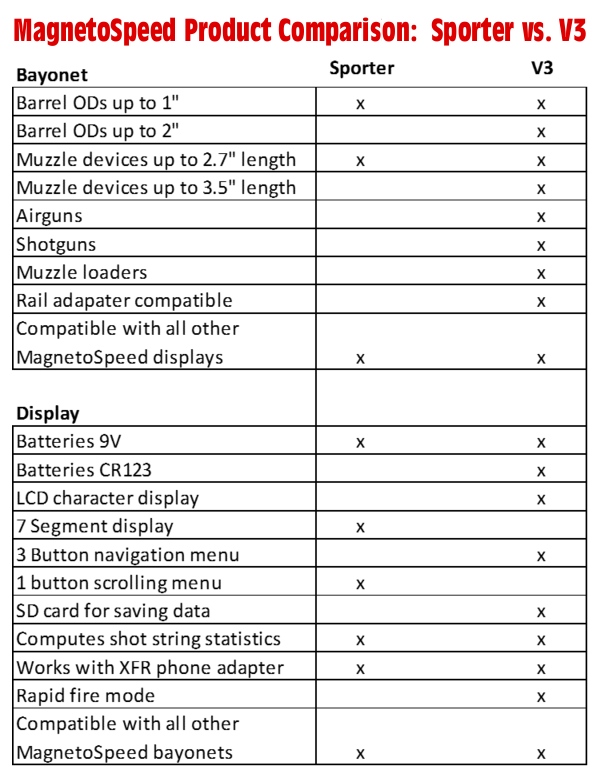
We like the Sporter chrono, as do other shooters — this unit is very popular. Like the MagnetoSpeed V3, the Sporter faithfully records shots, even in complete darkness. Shot strings are recorded digitally and can be transferred to a smart phone via MagnetoSpeed’s XFR accessory (and Apps).
The Magnetospeed Sporter offers most of the features of the more expensive models (see chart below for details) and has a updated sensor. MagnetoSpeed says its new Sporter is “Ideal for contoured rifle barrels (sporter barrels) and long-barreled revolvers.” The Sporter Chronograph Kit (shown above) includes: Bayonet Sensor, 3.5 foot Data Cable, Remote Display (with Battery), Strap with thumb nut, Two V-block spacers, and compact storage box.
Q: Will the Sporter Chrono work with thicker barrel (i.e. greater than 1″ diameter)?
A: The manufacturer recommends the $399.00 V3 model for thicker barrels. But, wink-wink, if you have a 1.25″ barrel you can get this to work, based on what we’ve seen.. If you have a really fat barrel (up to 2.0″ diameter), get the V3. Magnetospeed also says the V3 is needed for airguns, shotguns, and muzzleloaders.
Click Image for Full-Screen Photo
The Sporter Chrono attaches quickly and easily. It has a 3.5-foot-long cord, and will work with Muzzle Brakes and Flash-hiders up to 2.7″ long.
When he measures his loads or sorts bullets by weight, Forum Member Boyd Allen often employs his trusty RCBS 10-10 balance beam scale (although he does have handy digital scales as well). He finds that the balance beam scale works predictably, time after time, and it doesn’t suffer from the drift and calibration issues that plague some of the less expensive electronic scales on the market.
To make it easier to see the balance point, Boyd has adapted a magnifying glass with a mirror. This makes the end of his balance beam easier to view from his normal position on the bench. Boyd explains: “This set-up uses a cheap magnifier with positioning arms that was probably designed to hold and magnify small objects while soldering them. I think that it came from Harbor Freight many years ago. The mirror lets you look at the scale as if is was at eye level, and of course the magnifier makes the image easier to see.”
This impressive 15-round group was shot by Jim See of Elite Accuracy.
Different Shooting Disciplines Demand Different Levels of Precision/Accuracy
In the rapid-fire 3-Gun game, you could probably “clean” most stages with a 2-MOA rifle. By contrast, in the short-range group benchrest game, to compete with the best, you’ll need a rifle that shoots in the “ones” (i.e. 0.1-0.19 MOA) in perfect conditions. In 1000-yard F-Class competition, the top shooters want a rifle that will hold one-third-MOA of vertical at that distance.
What is your standard of accuracy? How good is “good enough”. Jim See, a skilled gunsmith and successful PRS competitor, recently answered that question for his tactical discipline. For the kind of matches Jim shoots, he likes to have a rifle that will hold half-MOA for five (5) shots, 3/4-MOA for 15 shots, and 1 MOA for twenty shots. Remarkably, Jim’s rifle can do that with factory ammo. Above is an impressive 15-shot group shot with .260 Remington Federal Premium Ammo.
“I say it all the time, my loads need to print 5 under 1/2″, 10 under 3/4″, and 20 under 1″. It’s simple, if a hot barrel will keep 20 rounds fired in succession under my standard it will be a good barrel and load for Precision Match Shooting. Federal Premium Gold Metal Match .260 with Sierra bullets made the cut for me today. 15 consecutive shots under 3/4 MOA.” –Jim See
It’s said that you “can never have too much accuracy”, but there are acceptable standards for each discipline, and they’re not the same. A 100/200 yard Benchrest shooter will be sorely disappointed with a rifle/ammo set-up that can only deliver half-MOA. On the other hand, a PRS competitor like Jim See can achieve great success with a lesser degree of precision. This means you can save time and money. You can run your barrels longer between cleanings, and you don’t have to go “full OCD” when loading your ammo. The PRS shooter does not need to weigh-sort primers, or load powder to single-kernel standards. Proof is the performance. Jim See recently took third place at the Spearpoint Shootout, and he has been a podium finisher at other events. Learn more about Jim’s gunsmithing and training operations at EliteAccuracy.com.
Download This Load Development Target
Jim’s target seemed a bit familiar. AccurateShooter.com created this Diamond and Dot Target a few years back. On each aiming point, there are high-contrast black horizontal and vertical lines for aligning your cross-hairs. The gray circle lets you see the bullet impacts above, without obliterating the red diamond, which is quite useful for precise aiming (we put fine cross-hairs on the points of the diamond). This target sheet includes data entry tables below each of the three aim points. There are many other free targets out there, but this format is very popular. We’re pleased to see Jim using it. You can download this and dozens of other FREE Targets from the AccurateShooter.com Target Page.
This custom war wagon hauls varmint hunters around the Longmeadow Game Resort in Colorado.
Winter is behind us — it’s officially Spring. Today, March 19, 2020, is the Vernal Equinox, the official start of Spring. For many shooters, the coming of Spring means that it’s time to head out to the varmint fields. Here are eaidht items that can help ensure successful spring varmint adventures.
Eight Great Products for Varmint Shooters
1. BarrelCool In-Action Fan
Busy Varmint shooters may expend hundreds of rounds in a day. That’s tough on barrels. One way to extend your round count is to use the ingenious BarrelCool device. This little yellow gadget fits in your action with a blower tube that goes into the chamber. A small electric fan blows cooling air through the barrel. It really works — folks who’ve purchased the Barrel Cool and run temp strips on their barrel say the BarrelCool can significantly reduce the time it takes to cool down a hot barrel.
In the past, folks have tried various methods to cool barrels: water flushed through the bore, CO2 tanks, even battery-operated fish pumps. BarrelCool is a simpler, less costly, and much handier solution. Priced at $36.99, this small device can potentially can save you money by extending barrel life. To see how Barrelcool works, visit BarrelCool.com. There you’ll find video demos of BarrelCool units in both bolt-action and AR-type rifles.
2. Uncle Bud’s Bulls Bag Sandbag
On most varmint hunts we spend most of the time shooting from a portable bench with a pedestal-type rest (we like the SEB Mini). But it’s nice having a big, heavy X-Type sandbag rig also. These four-chamber designs, such as the Uncle Bud’s Bulls Bag, allow shooting from a truck hood or any flat surface. Some rifles with narrow fore-ends really benefit from the firm “hug” provided by these “butterfly” style sandbags. We like the 15″ Uncle Bud’s Bulls Bag, currently $71.99 at Brownells. Durable and well-made, it will provide years of service. There is also a 10″ version that is easier to carry. Forum member Stoner24mkiv likes a Bulls Bag for shooting from a vehicle. He also suggests: “[take] an adjustable bipod if you are going to do any walking. Have a fanny pack or backpack for extra ammo, water, bore-snake, etc. when you go on your walkabouts. Bring a Boonie hat for blocking the sun, sun glasses, sunscreen. High leather boots.”
3. Scope with Built-In Laser Rangefinder
The Burris Eliminator III is an impressive piece of electro-optical technology. With a push of a button, a built-in laser rangefinder senses the distance to your target and the Eliminator’s microprocessor instantly calculates the required hold-over based on your load’s ballistics. The calculated aiming point is then displayed in the reticle with an illuminated red dot on the vertical cross-hair. Just put the red dot on the target and make the shot. Easy as that. If you are working a large prairie dog field and constantly moving near to far and back again, this scope is really handy. Laze, adjust aim with the dot, and squeeze the trigger. Its that simple. We’ve used this scope out to 500 yards on small steel targets and it worked flawlessly.
4. Hornady 17 HMR V-Max 500 Round Brick, $89.99
For those distant prairie dog shots, you’ll want a centerfire round such as a 22 BR/BRA or 22-250. However, for closer work, or for smaller varmints such as ground squirrels, the 17 HMR is hard to beat. There are many good factory rifles chambered for the 17 HMR, such as the Savage A17. Right now Midsouth has a Hornady 17 HMR brick of 500 for a low price of $89.99. That works out to just 18 cents per round — cheap enough that you can blast sage rats all days long and never worry about running out of ammo.
5. Stick-On Temp Strips Monitor Barrel Heat
You never want your barrel to get too hot. Accuracy suffers when barrels over-heat, and excessive heat is not good for barrel life. So how do you monitor your barrel’s temperature? You can check if the barrel is “warm to the touch” — but that method is not particularly precise. There is a better way — using temperature-sensitive strips. McMaster.com (an industrial supply house) offers stick-on temp strips with values from 86° F to 140° F. A pack of ten (10) of these strips (item 59535K13) costs $12.77 — so figure it’ll cost you about $1.28 per barrel for strips. That’s cheap insurance for your precious barrels. For best barrel life, try to stay under 120 degrees F.
6. Low-Fouling Power for High-Volume Varmint Loads
For high-shot-count varmint safaris, you want a clean-burning powder that minimizes barrel fouling. While there are many great powders for the .223 Rem, we like Hodgdon CFE 223 for our high-volume varmint loads. This powder really seems to keep barrels cleaner. Originally developed for U.S. rapid-fire military systems, CFE 223 incorporates a proprietary chemistry named “Copper Fouling Eraser”. Based on tests with extended shot strings, Hodgdon claims that, by using CFE™223, match shooters, varmint hunters, and AR shooters can maintain accuracy for longer periods, with less barrel-cleaning time.
7. Bog Pod SB-2 Sportsman’s Bipod (21″-40″)
If you’re looking for a versatile, stable and easy-to-carry field support, check out the latest BOG-POD Series SB-2 Bipod. Featuring 21″-40″ adjustable legs, the BOG-POD Bipod can be used while sitting, standing, or kneeling. This kid of support is highly recommended for shooting on hills where a conventional bipod doesn’t offer enough elevation. This unit has a 360° swivel head and the legs adjust independently out to a 60-degree angle with adjustable tension to ensure maximum accuracy. Right now you can get this SB-2 Bipod for just $19.99 on Amazon — a great deal.
8. Motorola T100 Talkabout Radios
When you’re in the varmint fields, its essential to have good communications with your fellow shooters. You can’t count on cell coverage in the hinterlands so we recommend a good pair of Walkie-Talkies. The Motorola T100s have a very impressive range (up to 16 miles in ideal conditions), yet cost just $21.99 for the pair. These 22-Channel T100 Talkabouts will run up to 18 hours on three AAA batteries. Users have been very pleased with this inexpensive handheld radios.




 In some respects, the 7mm SAUM cartridge may be better than the 7mm WSM. The 7mm SAUM holds less powder — but that’s a good thing, since the capacity is more than adequate to do the job. You can drive the 180s at 3000 fps with a SAUM using less powder than with a WSM. Additionally, the SAUM case has a slightly longer neck. This gives you greater flexibility in bullet seating. With a long neck you can set the throat so the long 180+ graing bullets are above the neck shoulder junction, yet you can still seat shorter hunting bullets close to the lands. Additionally, long case necks, some believe, cause less throat erosion than shorter necks. That’s not “hard science” but it is certainly a view shared by many experienced shooters. The long neck is one reason many varminters favor the 6mm Remington over the .243 Winchester.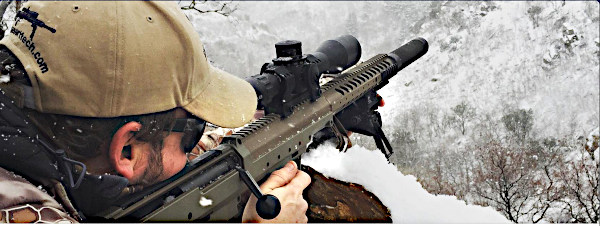


 This week, Tom interviews gun restoration expert Doug Turnbull (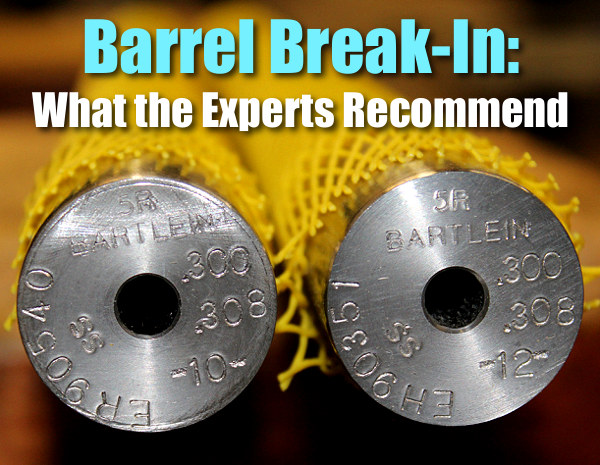
 Do I Need to Break-In a New Rifle Barrel?