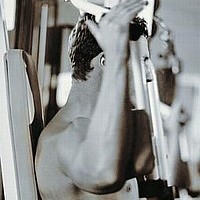
In the archives of The First Shot (the CMP’s Online Magazine), SGT Walter E. Craig of the USAMU discusses physical conditioning for competitive shooters, particularly High Power competitors. Fitness training is an important subject that, curiously, is rarely featured in the shooting sports media. We seem to focus on hardware, or esoteric details of cartridge reloading. Yet physical fitness also matters, particularly for High Power shooters. In his article, Craig advocates: 1) weight training to strengthen the Skeletal Muscle System; 2) exercises to build endurance and stamina; and 3) cardiovascular conditioning programs to allow the shooter to remain relaxed with a controlled heart beat.
SGT Craig explains: “An individual would not enter a long distance race without first spending many hours conditioning his/her body. One should apply the same conditioning philosophy to [shooting]. Physical conditioning to improve shooting skills will result in better shooting performance[.] The objective of an individual physical training program is to condition the muscles, heart, and lungs thereby increasing the shooter’s capability of controlling the body and rifle for sustained periods.”
In addition to weight training and cardio workouts (which can be done in a gym), SGT Craig advocates “some kind of holding drill… to develop the muscles necessary for holding a rifle for extended periods.”
For those with range access, Craig recommends a blind standing exercise: “This exercise consists of dry-firing one round, then live-firing one round, at a 200-yard standard SR target. For those who have access only to a 100-yard range, reduced targets will work as well. Begin the exercise with a timer set for 50 minutes. Dry-fire one round, then fire one live round and without looking at the actual impact, plot a call in a data book. Continue the dry fire/live fire sequence for 20 rounds, plotting after each round. After firing is complete, compare the data book to the target. If your zero and position are solid, the plots should resemble the target. As the training days add up and your zero is refined, the groups will shrink and move to the center.”
Fitness training and holding drills help position shooters reach their full potential. Here is 6-Time U.S. National Long Range Champion John Whidden.
Training for Older Shooters
Tom Alves has written an excellent article A Suggested Training Approach for Older Shooters. This article discusses appropriate low-impact training methods for older shooters. Tom explains: “Many of the articles you will read in books about position shooting and the one mentioned above are directed more toward the younger generation of shooters in their 20s. If you look down the line at a typical high power match these days you are likely to see quite a few folks who are in their middle 30s and up. Many people in that age range have had broken bones and wear and tear on their joints so a training program needs to take that into account. For instance, while jogging for an extended period for heart and lung conditioning may be the recommended approach for younger folks, it may be totally inappropriate for older people.”
Everyone should have a heavy-duty, thick-walled steel gunsafe for their firearms and valuables. Ideally this should weigh 400+ pounds and offer fire protection for the contents. However, a gun owner may also want more rapid access to defensive arms and security items, in a different part of the home. That is where the “hidden in plain sight” concept comes into play. Metal Art of Wisconsin has some unique wall-hanging products that provide hidden storage.
Freedom Cabinet Holds Long Arms and Pistols — RFID Access
The unique Freedom Cabinet, shown above, is a patriotic, wall-mounted Stars & Stripes Flag-themed concealment unit, offered in three sizes starting at $324.95. Available in Wood, Steel, or Carbon Fiber, each secure Freedom Cabinet features inlaid steel with optional RFID ($39.95) or Biometric ($49.95) locking systems. There is also the Decor series of Freedom Cabinets with simpler, single flip-up covers. CLICK HERE to view all the Decor Freedom Flip-Up Cabinets, ranging from $249.95 for small size (23″x12″) to $449.95 for large size (41″x22″), with 7 different graphic styles. Along with Metal Art’s flip-up Freedom cabinets in various sizes, there is a “Slider” version priced at $294.95.
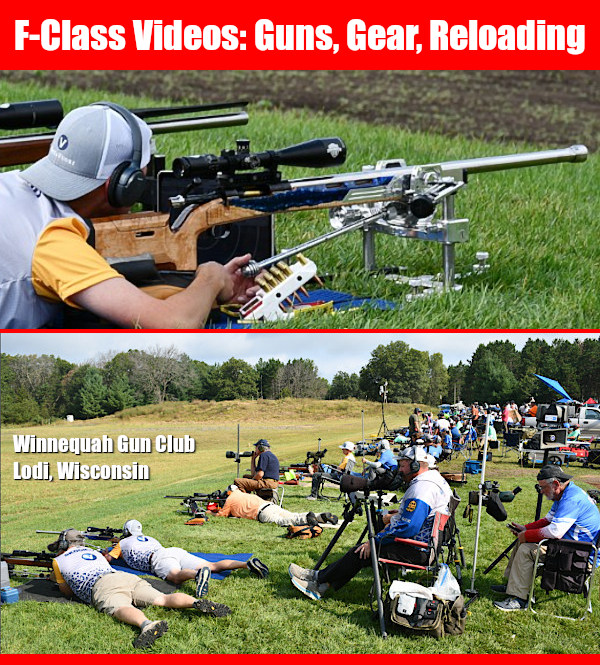
Today’s Saturday movie showcase features eight videos about F-Class marksmanship, gear selection, and reloading methods. The 2025 NRA F-Class National Championships take place next week at the Winnequah Gun Club range in Lodi, Wisconsin. The F-Class Nationals start on August 2nd and run through August 9th. There are two divisions: F-Open and F-TR. The F-Class Championships have two segments, Mid-Range and Long Range. The Mid-Range competition runs August 2-5, while the Long Range competition is scheduled for August 6-9. Competitors can register for the 2025 F-Class Nationals through the NRA Shooters Portal. Learn more about the range at Winnequahgunclub.org.
WICKED WINDS — At Ben Avery with 18-30 mph Winds
Long-range F-Class shooters will tell you that the winds can be the biggest challenge in a match. And things can get pretty wild at times as the Ben Avery range in Phoenix, site of the 2022 NRA F-Class National Championships. In this video, shooters fight through extremely strong 18-30 mph winds at 600 yards. In these kind of extreme conditions, a major unexpected gust can send your bullet off-target.
Wind-Reading for Long-Range Competition
In this excellent video Keith Glasscock, who has finished second overall at multiple F-Class Nationals, explains how to read the wind and even predict wind changes in cycling conditions. Keith notes that you should look at environmental features and mirage, not just wind flags. Keith is one of America’s best wind gurus — he was a team wind coach and he has finished second three times in F-Open division at the F-Class National Championships.
F-0pen rifle at the Berger SW Nationals at the Ben Avery Shooting Facility in Phoenix, AZ.
Load Development Procedures for F-Class — Seating Depth
In this video, 2023 NRA Mid-Range National Champion John Masek (aka “F-Class John”) explains how he does load development in an efficient and reliable manner. He specifically focuses on testing for optimal seating depth. With 318,000 views, this is the most-watched video on F-Class John’s popular YouTube channel. Viewers have praised this video: “This was a great video, really appreciate the explanation about how you bracketed the jump and why you chose the closest.”
Front Rest Options for F-Open (and Benchrest) Competition
If you are shopping for a front rest, definitely watch this comprehensive 42-minute video from start to finish. This is probably the most informative video about premium shooting rests available on YouTube. Top F-Class shooter and video-maker F-Class John covers a wide selection of front rests, with some observations about coaxial bipods as well. John covers the impressive new SEB NEO-X, the easy-to-transport SEB Mini-X, the excellent Rodzilla Rest, the innovative 21st Century Hybrid Rest, the sleek Italian Lenzi Rest. At the end of the video John reviews the very affordable Caldwell Fire Control Rest ($269.99 on Amazon), explaining how it can be a decent choice for shooters on a limited budget.
Reloading for F-Class — Interview with Erik Cortina
In this Precision Rifle Network video, Erik Cortina of Team Lapua-Brux-Borden covers the reloading process for his F-Class rifle. All phases of reloading are noted — brass prep, annealing, primer seating, precision powder measuring (to the kernel), and bullet seating. Erik also talk about load testing and use of barrel tuners. Erik produces the EC Barrel Tuner which is used by many top competitors.
Trigger Trio — Evaluation of Three Trigger Types for F-Class Rifles
In this video, F-Class John evaluates three triggers that are popular with F-Class competitors: Bix’N Andy, Flavio, and TriggerTech Diamond. John talks about the pros and cons of each trigger type and offers advice for mounting and pull-weight adjustment. The Italian Flavio triggers are sold by Bruno Shooters Supply, Bix’N Andy triggers can be purchased from Bullet Central, and the TriggerTechs are offers by MidwayUSA and Area 419.
F-Class Shooting at Bisley Range in the United Kingdom
F-Class competition is popular around the world, and the UK is a major center of F-Class shooting in Europe. The Bisley range is justly famous, with a long heritage of shooting competitions. This video features the European F-Class Championship held at Bisley in 2015.
Building a Modern F-Open Stock for Competition
In this video, our friend F-Class John explains the process for building two custom laminated stocks for his F-Open rifles. John selected handsome, highly-figured African hardwoods, which were then laminated into layers with purple-tinted heart-wood and dark Wenge wood stringers in the middle. The stock-maker then sliced the wood into layers (1:02) and then glued the layers together (1:40). After final cutting, the stocks are shown at 2:00, and then the video shows how the stocks received their final finish. Both stocks are fitted with the R.A.D. recoil-reduction system. See the bedding at 19:00 and the fully finished rifles at 19:12 with barreled actions fitted.
Here is another beautiful F-Open stock, on the firing line at Ben Avery, Arizona with a SEB Mini front rest. Note the metal side-bars on the front of the forearm. These metal fittings extend the stock’s “wheelbase” while also lowering the rifle’s center of gravity.
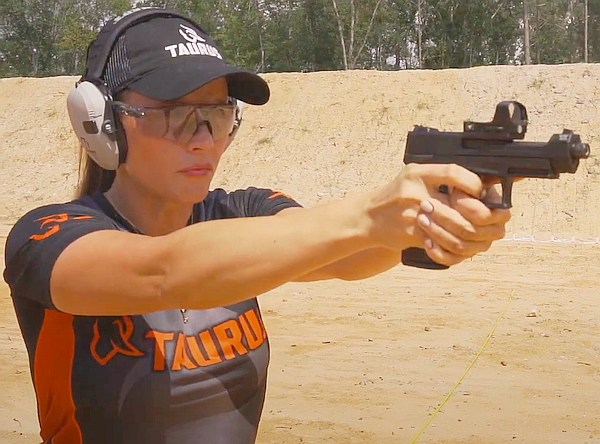
In addition to the basic, budget-priced TX 22 pistol, Taurus offers an impressive Comp model set up for optics. The Taurus TX 22 Competition model is built on the same full-size polymer receiver as the basic Taurus TX 22 but has a newly engineered slide and barrel assembly designed to work with red dot optics.
The Taurus TX 22 Competition features a “skeletonized” slide with a cutout between the ejection port to just behind the front sight. The mounting system allows the use of the following (but not limited to) sight models: Trijicon RMR, C-More STS 2, Vortex Venom, Doctor Noblex, Burris Fast Fire, Sightmark Mini, Holosun HS507C, Leupold Delta Point Pro.
Talented Jessie Harrison Demonstrates TX22 Competition
In this video, Jessie Harrison, the world’s best female action pistol competitor, shoots the TX 22 on steel, starting at 0:14 time-mark. She shows how the pistol’s low recoil allows amazingly quick follow-up shots.
There is an additional model, the Taurus TX 22 SCR (Steel Competition Ready) which offers a forward compensator. This TX 22 SCR was designed for steel plate competition and action pistol games. We like the balance and ergonomics of this pistol, and the integrated forward compensator does reduce muzzle flip, allowing faster follow-up shots and better split times.
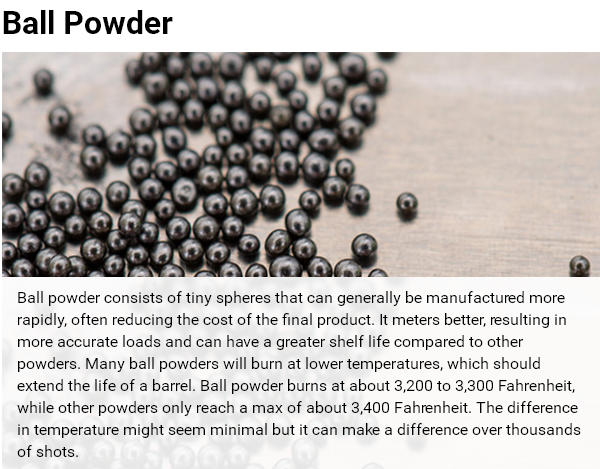
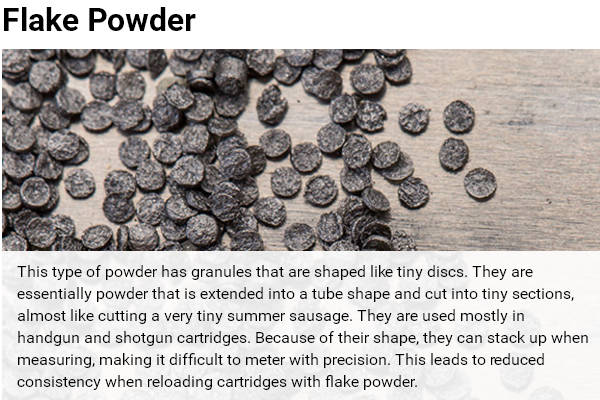
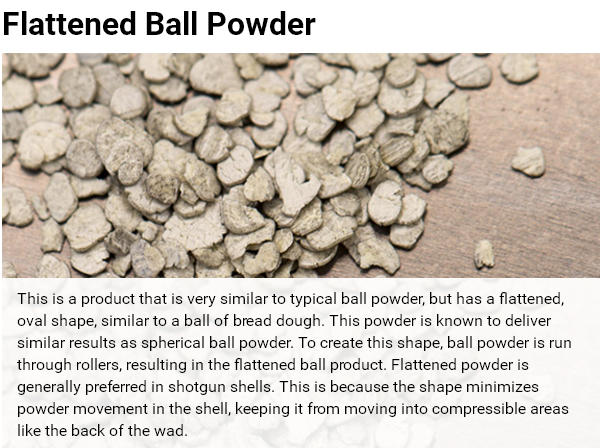
Widener’s Reloading & Shooting Supply has published a helpful introduction to reloading powders. Widener’s online Guide to Smokeless Powders shows the various types of powders, and explains how the differences in powder kernel/flake size and shape, and burn rate affect performance. We recommend you visit Widener’s website and read the Powder Guide in full.
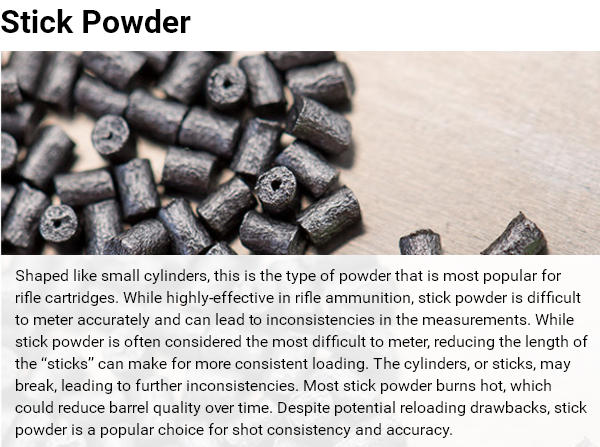
Take a close look at these illustrations which show the key differences between the four main powder types: extruded (stick) powder, ball (spherical) powder, flattened ball powder, and flake powder.
Burn Rate Basics
Widener’s Guide to Smokeless Powders also has a useful discussion of Burn Rate (a confusing topic for many hand-loaders). Wideners explains: “While a gun powder explosion in the cartridge seems instantaneous, if you slow it down you will actually find that each powder has a different ‘burn rate’, or speed at which it ignites.” This video shows powders with two very different burn rates. Watch closely.
Different burn rates suit different cartridge types notes Widener’s: “In general a fast-burning powder is used for light bullets and low-speed pistols and shotguns. Medium-rate powders are used for magnum pistols, while high-velocity, large bore rifle cartridges will need slow powders[.]
It should be noted that burn rate does not have a standardized unit of measurement. In fact, burn rate is really only discussed in comparison to other powders; there is no universal yardstick. Specifics will change by cartridge and bullet types[.]”
The 2025 NRA F-Class Nationals take place at the Winnequah Gun Club in Lodi, Wisconsin, August 2-9, 2025. So we know many of our readers will be flying with their rifles in the days ahead. Here is a helpful article from Team Savage Shooter Stan Pate. This covers how to ship your rifle safely, and then re-establish zero properly when the gun is reassembled after transport. This is one of a series of Shooting Tips articles in the Savage Blog.
Traveling with Firearms — Important Advice
Traveling with firearms can be stressful. You must comply with multiple regulations and then trust your expensive guns to airline baggage handlers. And after arrival you’ll need to put your rifles back together and confirm the zeros. This article offers helpful travel advice from Team Savage shooter Stan Pate. Pate has traveled the globe competing with match rifles. Here he shares his tips for making trips easier on you and your firearms.
Easier Air Travel With Firearms
TSA isn’t nearly as careful with your rifles as you are. Proper storage before sending your firearm up a conveyer belt and into the belly of a plane is critical. Stan Pate spends lots of time each year traveling the skies and has devised a system for keeping his rifle safe when going to and from.
“Never travel with your firearm completely assembled,” Pate cautions. “A fully assembled firearm is much heavier [as a total unit] than one that has been broken-down and stored [in separate sections]. More weight creates more in-the-case movement, which can result in damage. I learned this the hard way years ago. My rifle was actually broken in half when traveling to an international competition. Record your torque settings, use those settings during reassembly and your return to zero should be no problem.”
“Be sure to check on current TSA rules and regulations before travel to be aware of any changes that may effect how you pack your rifles,” says Pate.
Rifle Reassembly and Resetting Zero
The quicker you can reestablish your zero, the quicker you can relax and stop worrying about if your rounds are going to hit their mark during competition. Pate, over the years, has developed a system for rifle reassembly and getting back to zero as quickly as possible. While his torque settings may not be the same as yours, the process can still be used.
“The barreled-action goes back on the stock, and then I tighten all three receiver screws finger tight,” says Pate. “Next, I tighten the front two receiver screws down to 35-inch pounds. The rear receiver screws on this particular rifle likes 15-inch pounds. [Note: Proper torque settings will vary with your action and stock type. Most actions have TWO screws, not three.] Scope attachment comes next, and I follow manufacturer settings when tightening it down. All that’s left to do now is go zero your rifle.”
This video explains an efficient method to Re-Zero your rifles
Many shooters prefer to deprime their brass before resizing. That way they can tumble cases or keep primer debris off their main press. To deprime cases before sizing or cleaning you can use a Decapping Die. This pushes out the spent primer without changing the neck or body of a case. Such decapping dies work fine, but they do require the use of a press. Here is a handy alternative — a cool tool that allows you to deprime brass anywhere — no press needed.
Handheld Primer Removal Tool From Frankford Arsenal
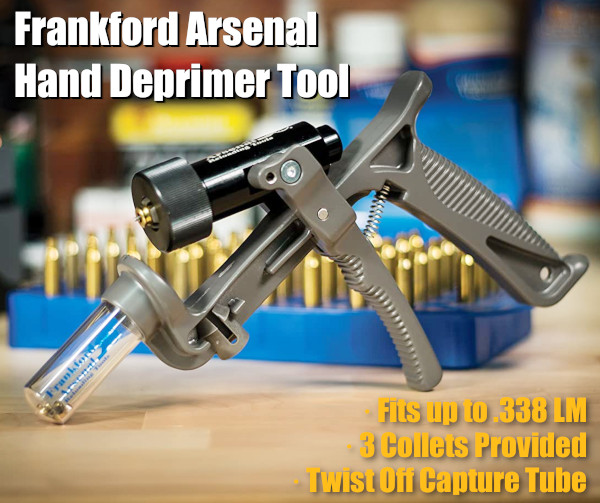
This cleverly-designed Hand Deprimer Tool allows you to deprime cartridge cases without a press. This hand-tool from Frankford Arsenal will deprime brass and capture primers conveniently. You can deprime your cases while watching TV or relaxing in your favorite chair.
This device lets you remove spent primers anywhere — no press needed and all the mess (cups/anvils/residue) stays in the capture chamber. This tool comes works with nearly all common case types up to .338 Lapua Magnum. With good leverage, this tool does the job quickly and efficiently. Forum members have praised this handy tool, but recommend wearing a thick glove if doing more than 100 cases in a session.
How to Adapt Tool for Small Flash Hole Brass
The Frankford Arsenal Deprimer Tool was designed for LARGE flash-hole brass. To deprime brass with small (1.5mm/0.59″) small flash-holes, as found on Lapua .220 Russian and 6mmBR cases, you will need to reduce the pin diameter. Frankford Arsenal currently recommends purchasing a replacement pin and “sanding it down” to the smaller diameter. NOTE: This is NOT difficult — simply spin the stock pin in some sandpaper.
This handy depriming tool is very versatile. With a universal, cylinder-style cartridge-holder, the tool can deprime a wide variety of cartridge types from .20 caliber up to .338 caliber. Three different plastic collets are provided to handle for different diameter cases. Spent primers are captured in a removable spent primer catch tube. Simply twist off the clear catch tube to dump the spent primers. With die-cast metal construction, this tool should last through many thousands of depriming cycles. MSRP is $54.99. Right now it is $52.00 on Amazon with 81% 5-star ratings.
User Modifications — Grip Padding and High-Volume Capture
Many users recommended putting some kind of padding on the grip and front lever to reduce pressure on the fingers. This can be done with a wrap or a rubber covering. In addition, users have adapted the unit with an attached hose and large primer capture jug. If you depriming hundreds of cases at a time, this hose conversion may make sense.
Review from actual owner: “I have owned one of these for about eight years and deprimed over 10,000 cases with this tool. I have never had to replace a single part on it. You will have to adjust the return spring every so often, but that is a very easy task. If you are depriming a LOT of brass, the handle can tear up your hand a bit. Solution: Wear a Mechanics Glove. Easy Peasy! You will NOT regret this purchase.”
Are you looking to get started in PRS and NRL practical precision rifle competition? Or perhaps you’d like to advance your skill set so you can place higher in big matches (and get your hands on those prize table items)? Of course there is no substitute for trigger time in the field, but there ARE some great print resources. These four books can help you select the right equipment, improve your shooting skills, make better wind calls, increase your fitness, and develop a more efficient between-match training program.
1. Precision Rifle Marksmanship: The Fundamentals
Frank Galli, $21.13 Paperback, $20.07 Kindle
Frank Galli (aka “LowLight”) is the founder/head honcho of SnipersHide.com, the most active tactical community on the internet. Galli is also a retired USMC scout-sniper. Practical Precision Rifle shooting is one of the hottest trends in competitive shooting today. PRS and NRL matches draw big turn-outs and boast impressive prize tables. Galli’s Precision Rifle Marksmanship (#ad) book covers the fundamentals of precision marksmanship with easy-to-understand methodology. The book uses the same instruction process that Galli uses in his live marksmanship classes.
As Sniper’s Hide guru Frank Galli explains, there is no voodoo when it comes to precision rifle marksmanship, but there are techniques that, when practiced, make the difference between good marksmanship and great marksmanship. Understanding the reasons that a bullet hits or doesn’t hit its intended target at ultra-long distances is a crucial element to learning. Galli’s explanations of how to understand and compensate for wind speed and direction are excellent — great wind-reading advice.
Published in 2020, this 272-page well-illustrated book covers the latest equipment (scopes, LRFs, chassis systems, mags, bags, bipods, tripods) favored by tactical competitors in PRS/NRL type matches.
2. Long Range Shooting Handbook
Ryan Cleckner, $24.95 Paperback, $9.99 Kindle
Ryan Cleckner’s Long Range Shooting Handbook (#ad) is the best-selling modern book on practical rifle skills. A former U.S. Army sniper instructor, Cleckner is knowledgeable, and his text is well-organized and chock full of good information. You can view Sample Chapters on Amazon.com.
Ryan Cleckner’s highly-regarded Long Range Shooting Handbook is designed as an intro to important fundamental concepts such as MOA vs. Mils, External Ballistics, and Environmental Effects. Included are personal tips and advice based on Cleckner’s years of experience as a sniper instructor.
The Long Range Shooting Handbook is divided into three main categories: What It Is/How It Works, Fundamentals, and How to Use It. “What It Is/How It Works” covers equipment, terminology, and basic principles. “Fundamentals” covers the theory of long range shooting. “How to Use It” gives practical advice on implementing what you’ve learned, so you can progress as a skilled, long range shooter. This book will benefit any long-range shooter, not just PRS/NRL competitors.
3. IMPACT! — Training and Preparing for Precision Rifle Matches
Rodney Maze, $14.99 Paperback, $4.99 Kindle
Impact!, by PRS competitor Rodney Maze, is an entry/intermediate level guide to preparing yourself and your equipment to compete in precision rifle type matches. It will also benefit anyone looking to learn about practical-style long range and precision shooting. We recommend you check it out for yourself — there are 20 Pages of free sample content (#ad) on Amazon. Topics covered include:
— Rifle, optic, and equipment selection
— Setting up your rifle, bags, tripods for PRS/NRL matches
— Understanding ballistics and how to record and use ballistic data
— Techniques for using holdovers for multi-target stages
— Gun skills, rapid fire techniques, clearing malfunctions
— Shooting off of barricades, and specialty stages
— Effects of wind and how to improve your wind calls
— Tips for live fire and dry fire practice
— Preparing yourself and your equipment for a match
— Mental strategies and techniques
Impact! is illustrated with plenty of photographs. Topics are divided logically, and concepts are explained in clear language. Also included is an extensive glossary of terms used in precision shooting and a list of additional resources you can use to further pursue your precision shooting knowledge. This book also includes a handy Appendix with formatted pages for recording data about your rifle, scope, and ammunition. There is also a Wind table for recording your rifle “dope” and wind hold-offs. Lastly, Impact! has a useful table of unit conversions.
4. Practical Shooter’s Guide
Marcus Blanchard, $19.98 Paperback, $9.99 Kindle
Thinking of getting started in the Practical/Tactical shooting game? Looking for ways to be more stable when shooting from unconventional positions? Then you may want to read Marcus Blanchard’s Practical Shooter’s Guide (A How-To Approach for Unconventional Firing Positions and Training) (#ad). Unlike almost every “how to shoot” book on the market, Blanchard’s work focuses on the shooting skills and positions you need to succeed in PRS matches and similar tactical competitions. Blanchard provides clear advice on shooting from barricades, from roof-tops, from steep angles. Blanchard says you need to train for these types of challenges: “I believe the largest factor in the improvement of the average shooter isn’t necessarily the gear; it’s the way the shooter approaches obstacles and how they properly train for them.”
As an Amazon affiliate, this site can earn revenues through sales commissions.
by Sierra Bullets Ballistic Technician Paul Box
One thing that plays a major role in building an accuracy load is neck tension [one of the factors that controls the “grip” on a bullet]. I think a lot of reloaders pretty much take this for granted and don’t give that enough thought.
So, how much neck tension is enough?
Through the years and shooting both a wide variety of calibers and burn rates of powder, I’ve had the best accuracy overall with .002″ of neck tension. Naturally you will run into a rifle now and then that will do its best with something different like .001″ or even .003″, but .002″ has worked very well for me. So how do we control the neck tension? Let’s take a look at that.
First of all, if you’re running a standard sizing die with an expander ball, just pull your decapping rod assembly out of your die and measure the expander ball. What I prefer [for starters] is to have an expander ball that is .003″ smaller than bullet diameter. So for example in a .224 caliber, run an expander ball of .221″. If you want to take the expander ball down in diameter, just chuck up your decapping rod assembly in a drill and turn it down with some emery cloth. When you have the diameter you need, polish it with three ought or four ought steel wool. This will give it a mirror finish and less drag coming through your case neck after sizing.
Tips for Dies With Interchangeable Neck Bushings
If you’re using a bushing die, I measure across the neck of eight or ten loaded rounds, then take an average on these and go .003″ under that measurement. There are other methods to determine bushing size, but this system has worked well for me.
Proper Annealing Can Deliver More Uniform Neck Tension
Another thing I want to mention is annealing. When brass is the correct softness, it will take a “set” coming out of the sizing die far better than brass that has become too hard. When brass has been work hardened to a point, it will be more springy when it comes out of a sizing die and neck tension will vary. Have you ever noticed how some bullets seated harder than others? That is why.
Paying closer attention to neck tension will give you both better accuracy and more consistent groups.
Here’s a very useful product that should please shooters who wet-tumble their brass with stainless media, or use ultrasonic cleaning machines to clean cartridge brass (and gun parts). Employing forced hot air circulation, the Lyman Cyclone Case Dryer will dry a large quantity of brass in under two hours. Internal racks provide five drying levels. With “street price” under $80.00, the Cyclone Case Dryer is an affordable and effective addition to an ultrasonic or rotary-tumbler cleaning system.
The Lyman Cyclone Case Dryer works fast. No need to wait overnight (or longer) to air-dry your brass. Lyman states that “The forced heated air circulation of the Cyclone will dry your brass inside and out within an hour or two, with no unsightly water spots.” The handy individual trays keep different types of brass separate. The dryer can also be used for gun parts that have been ultrasonically cleaned.
Lyman Cyclone Case Dryer Features:
• Holds up to 1000 .223 Rem cases or 2000 9x19mm Luger cases
• Works with cartridge brass cases or gun parts
• Fast drying time — Typically 1 to 2 hours
• Timer control can be set up to 3 hours
• Durable ABS trays with recessed handles
Watch How Cyclone Case Dryer Functions with both Cartridge Brass and Gun Parts
Cyclone Case Dryer 115V (Part #7631560) MSRP: $94.95
Cyclone Case Dryer 220V (Part #7631561) MSRP: $112.00


 In the archives of The First Shot (the CMP’s Online Magazine), SGT Walter E. Craig of the USAMU discusses physical conditioning for competitive shooters, particularly High Power competitors. Fitness training is an important subject that, curiously, is rarely featured in the shooting sports media. We seem to focus on hardware, or esoteric details of cartridge reloading. Yet physical fitness also matters, particularly for High Power shooters. In his article, Craig advocates: 1) weight training to strengthen the Skeletal Muscle System; 2) exercises to build endurance and stamina; and 3) cardiovascular conditioning programs to allow the shooter to remain relaxed with a controlled heart beat.