UltimateReloader.com offers some of the most thorough firearms and reloading tool tests on the internet. And the Ultimate Reloader YouTube Channel now has over 1300 videos that showcase reloading tools, accurate firearms, precision optics, gunsmithing methods, and top-tier reloading components. For today’s Saturday at the Movies feature, we showcase ten videos created by Gavin Gear and his UltimateReloader team. These videos feature ELR Rifles, Peterson and Lapua brass, a brand new RCBS trimmer system, BAT actions, a handsome 6x47L Custom Rifle, the Athlon Rangecraft Chronograph, and Ultimate Reloader’s impressive new RifleBuilderPro Software System. Enjoy this Saturday Video Showcase.
Extreme Long Range — One Mile Shooting
In this video, Gavin meets with Paul Phillips, an ELR “King of Two Miles” past Champion. Paul explains the features in his .375-caliber rifle designed to shoot to one mile and beyond. Along with a big action to hold the very long cartridge, an ELR rifle needs a special high-angle optics rail to allow the needed elevation. In addition, a long-wheelbase chassis is optimal for greater stability and balance. Recoil is very significant so Paul’s rifle boasts a massive 6-port muzzle brake on the very long barrel (ELR barrels can run 34-36″). For his projectiles, Paul is running Berger’s impressive new 410gr .375 caliber Hybrid Target Bullet (6:25 time-mark).
Peterson Cartridge — How High-Quality Brass is Crafted
Ever wondered how modern, top-quality rifle brass is made? Then watch this informative video from start to finish. It shows how the brass cases are drawn (lengthened) in stages, how the primer pockets and rims are formed, how the shoulders and case necks are crafted, and then how the brass cases are machine-annealed for consistent strength and neck tension.
6x47L Rifle Build with BAT Action & Woox Furiosa Ultra Chassis
Gavin Gear has completed many impressive custom rifles. This handsome rifle is one of Gavin’s best efforts. Chambered for the 6-6.5×47 Lapua wildcat cartridge (aka 6x47L), this rifle has show great accuracy. It boast a handsome black BAT Hammerhead action and a wood/metal composite WOOX Furiosa Ultra chassis. This high-tech hybrid stock/chassis combines wood sections over a full-length, aerospace-grade aluminum skeleton chassis, giving it the “feel” of a wood stock with the strength and stability of a metal stock. Gavin likes the way the stock feels on the trigger hand in particular and the smooth wood cheekpiece is also very nice. Made in Italy, the Furiosa is offered in three versions all with wood sections on the forearm, grip area, and cheekpiece. Choose natural Walnut Brown, Micarta Black, or Midnight Grey.
NEW RCBS MatchMaster Precision Case Trimmer System
At SHOT Show 2026, RCBS introduced the new MatchMaster Precision Case Trimmer system. Developed with Henderson Precision, this is a high-speed, motorized system that trims, deburrs, and chamfers .22 to .30 caliber brass in one step. With a $699.99 MSRP, the MatchMaster trimmer features a 3-way carbide cutter, micrometer adjustment for 0.001″ accuracy, and a brass shavings catcher. It is designed for high-volume reloaders, offering fast, consistent, and automatic case prep. In this video, Gavin shows the features of this new RCBS power tool.
BAT Actions — Insider Look at Manufacturing
Full Story:https://bit.ly/3hD2d11 BAT Machine Co. makes some of the finest custom actions you can buy. Numerous national and world records have been set with BAT actions. To create this 31-minute video, Gavin traveled to Idaho to visit the BAT Machine production center in Post Falls, ID. Gavin talked with BAT’s founder Bruce Thom. The video features extensive footage of advanced CNC machines used to produce the superb BAT actions.
New 6GT Cartridge Brass from Lapua
It’s great that Lapua is now offering 6GT brass. Developed by George Gardner of G.A. Precision and Tom Jacobs of Vapor Trail Bullets, the 6GT was designed to have the efficiency of a 6mm Dasher without the need for case forming. It was also designed with a longer case body so it feeds better from magazines.
Even with the added capacity, the 6GT is still very efficient, and can achieve good velocities with less powder than a 6mm Creedmoor. With outstanding brass now being offered by Lapua, the 6GT becomes a very good choice for PRS/NRL competition, and even mid-range F-class competition. It’s longer than a Dasher case so it runs better in magazines, but it’s still more efficient than a 6mm Creedmoor or .243 Win.
RifleBuilderPro Gunsmithing Program Unveiled
At SHOT Show 2026 Gavin Gear introduced an impressive new software/info system for gunsmiths and gun-building operations. Rifle Builder Pro provides key specifications and data for smithing operations. But it is more than just about machine controls — Rifle Builder PRO will be a subscription-based companion and digital reference library for Precision Rifle Gunsmiths, designed to help them achieve great results in less time. Subscribers will also automatically join an online community full of exclusive resources and support to improve their craft.
Rifle Builder PRO is currently targeted towards precision rifle gunsmiths working on bolt-action rifles but there are expansion plans to include additional types of rifle gunsmithing. At this time Rifle Builder Pro is still in development with a public Beta coming later this year. Sign up for email updates at RifleBuilderPro.com.
Athlon RangeCraft Chronograph (Two Videos)
Athlon’s Rangecraft Velocity PRO Doppler Radar Chronograph is a genuine rival to the popular Garmin. These two UltimateReloader vidoes cover the AThlon’s features, specs, and hardware. Then the video covers the testing process. The new Athlon Rangecraft Velocity Pro Radar Chronograph is an impressive and very affordable compact chrono, selling for $399.99 at most vendors. This employs Doppler radar allowing ultra-accurate velocity readings. Since the unit isn’t triggered by a muzzle blast, it can work with suppressors, muzzle brakes, and other muzzle devices.
The Rangecraft Vel Pro reads velocities between 65 FPS and 5000 FPS. So far field tests have shown that the Athlon Rangecraft chrono is reliable and picks up all shots fired with all types of rifles and pistols (even airguns). However the listed velocities may be a few FPS different than a Magnetospeed or Labradar. The unit includes a compact tripod.
BONUS: .223 Rem vs. 5.56x45mm — Ultimate Reloader’s Most Popular Video EVER with 7.8 Million Views
This video explains essential facts and corrects common misconceptions related to both .223/5.56 ammunition, as well as .223/5.56 rifles. Gavin provides insight on chamber specs, pressure levels, barrel twist rates, military 5.56 crimped brass, and other important topics. If you are new to the AR world, this video is definitely worth watching. And that’s why it now has garnered over 7.7 MILLION YouTube views, making it one of the most popular gun-related videos ever. Full Story:CLICK HERE for full written analysis of .223 Rem vs. 5.56x45mm with graphs and data.
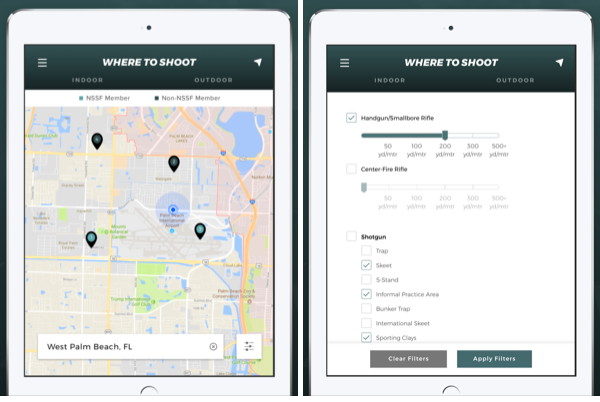
The Where To Shoot Mobile App quickly locates shooting ranges near you, drawing on North America’s most comprehensive directory of shooting ranges. Users can search by current location, state, or zip code. Once you locate a range, you can view activities offered along with a summary of range facilities. You can even get driving directions. If you don’t want to install an App, you can also access the NSSF shooting range database and maps via the NSSF WheretoShoot webpage.
The app is modeled after NSSF’s popular WhereToShoot.org® website and is updated frequently with range information for every U.S. state and Canadian province. Once you’ve located a place to shoot, the App can provide directions to the range. The App also includes video tips for shooters, news, and firearm-safety information.
Forum member Rich DeSimone uses a handy “Stub Gauge” for setting shoulder “bump” and seating depth. The gauge is made from a section of barrel lopped off when the muzzle is crowned. The chambering reamer is run in about 1/4 of the way, enough to capture the neck and shoulder area of the case. Rich then uses his full-length die to “bump” a master case with the ideal amount of headspace for easy feeding and extraction. He takes that case and sets it in this Stub Gauge, and measures from the front of the gauge to the rim. He can then quickly compare any fired case to a his “master” case with optimal headspace. Since the gauge measures off the shoulder datum, this tells him how much to bump his fired brass.
In addition, the Stub Gauge can be used to set bullet seating-depth. Rich has a channel cut transversely on one side of the gauge, exposing the throat area. Since the interior of the gauge is identical to the chamber in his gun, this lets him see where a seated bullet engages the rifling. He can tinker with bullet seating length until he gets just the right amount of land contact on the bullet, confirmed visually. Then he measures the case OAL and sets his seating dies accordingly. This is much handier than using a Hornady Tool to measure distance to the lands.
But what happens when the throat wears and moves out on your live barrel — making the actual length to lands different (slightly longer) than before. Well, the stub gauge is still valuable as a known starting point. As your barrel’s throat wears, you may seat your bullets out further to “chase the lands”, but the gauge provides a constant land engagement point, in the barrel’s “as new” condition. By measuring the difference between the land contact point on the gauge and the actual contact point on your barrel, you can determine throat “migration”.
SHOT Show 2026 in Las Vegas concludes today, January 23, 2026 at 4:00 pm. This was an impressive show with thousands of vendors displaying products on 19 acres of floor space at Caesars Forum and The Venetian EXPO. There were many innovative new products, including new optics, chassis systems, barrels, “smart” guns, advanced suppressors and much more. For this Friday Day 4 of SHOT Show we offer a showcase of interesting product report videos.
Good Hunting Gear — Rifles, Optics, LRFs, Packs
26 Interesting Recent Release Rifles (2025-2026)
Beretta B22 Jaguar .22 LR Pistol
With SHOT Show 2026 Concluding — PLAN for SHOT Show 2027!
SHOT Daily Day 4 Digital Magazine
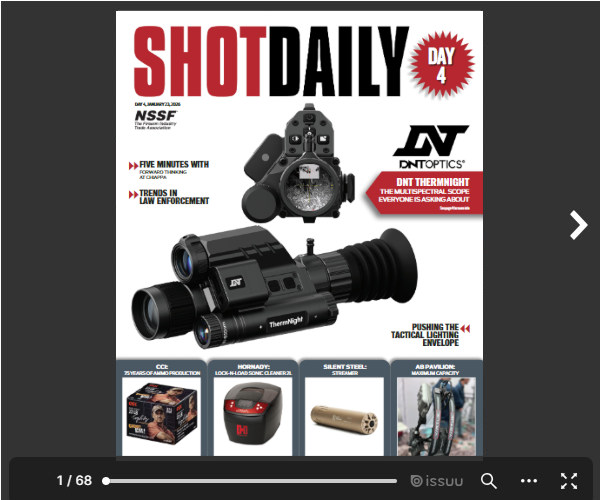
Today is the final day of SHOT Show 2026. So we offer another FREE digital magazine covering many new products at the Show. The SHOT Daily Day 4 edition (shown above) is a digital version of the print magazine distributed today at SHOT Show. It offers a number of interesting articles including NEW Products and Law Enforcement Trends. To access SHOT Daily Day 4 CLICK HERE or visit the SHOT Daily Archive which hosts all 2026 SHOT Daily issues.
To quickly scan through the entire digital magazines, use the slide bar. When you find content you want to read, use the zoom control or click the FULL SCREEN brackets icon at lower right.
“22 Plinkster” is an avid shooter who has produced a number of entertaining videos for his YouTube Channel. In the video below, he tackles the question “Why Do Misfires Occur in .22 LR Rimfire Ammunition?” This is the most common question posed to 22 Plinkster by his many viewers. He identifies four main issues that can cause .22 LR misfires or faulty ignition:
1. Damaged Firing Pin — The dry firing process can actually blunt or shorten the firing pin, particularly with older rimfire firearms. Use of snap caps is recommended.
2. Poor Ammunition — Some cheap brands have poor quality control. 22 Plinkster recommends using ammo from a manufacturer with high quality control standards, such as CCI and Federal.
3. Age of Ammunition — Rimfire ammo can function well for a decade or more. However the “shelf life” of rimfire ammunition is not infinite. You ammo’s “lifespan” will be shortened by heat, moisture, and humidity. You should store your rimfire ammo in a cool, dry place.
4. Mishandling of Ammunition — Tossing around ammunition can cause problems. Rough handling can cause the priming compound to be dislodged from the rim. This causes misfires.
Preventing misfires is essential if you want to succeed in NRL22 competition and other rimfire competition disciplines run “on the clock”.
The National Shooting Sports Foundation (NSSF) has prepared tips for gun owners transporting firearms in their vehicles. Whenever you are driving with guns (of any kind), the firearms should be transported securely. In some states, the firearms must be in locked cases inside the vehicle. And, with the rise of break-ins on parked vehicles, it’s important to keep gun cases out of sight if possible. This article has tips on safe and secure gun transport.
HERE Are Key Guidelines for Safe, Secure Handling of Firearms in Vehicles:
• Take note of and safely control the muzzle direction of firearms in vehicles. This is one of the main rules of gun safety and applies to the inside of vehicles as well as any other location.
• When finished using your firearm outside your vehicle, unload it before you re-enter your vehicle.
• Even after a long hunt or a day in the sun at the range, always check, and then double check, that guns are unloaded before placing them in a car or truck.
• Be very careful if you must unload a firearm in the confined space of a vehicle so as not to have an accidental discharge. If your location allows, it is safer and easier to unload the firearm outside the vehicle.
• Never leave firearms in parts of the vehicle accessible to children or pets.
• Keep firearms and ammunition out of sight to avoid tempting thieves.
• Use secure temporary storage for firearms in vehicles.
• A lockable gun case or a lock box may be the most practical choice to securely store a gun in a vehicle. These come in a range of prices and models.
• If you’re concerned about quick access to your firearm, many types of lockable safes allow for extremely fast access of your gun while at the same time helping to prevent unauthorized access.
• Secure the lock box to the vehicle, if possible. Some companies make custom concealed compartments for specific model vehicles.
Storing Firearms in Vehicles to Prevent Theft and Misuse
Unfortunately, thefts of firearms from vehicles are on the rise. Thieves commonly steal cars and trucks even when they don’t obviously contain firearms — a reminder that vehicle door locks are not totally secure. And there are major issues now with the electronic key fobs — criminals have ways to detect and copy the key fob signal, allowing them to open your vehicle, start the motor, and then drive away.
When you are not in your vehicle, all firearms should be placed in locked storage and out of sight. Locking the doors on your vehicle does not constitute secure firearm storage. As one writer put it: “Cars and trucks aren’t safes. And they’re not holsters. They’re not storage containers.”
It’s now Day 3 at SHOT Show 2026. There are impressive new offerings from hundreds of manufacturers. In today’s story we feature some notable new rifles, pistols, and suppressors. To learn more about new-for-2026 products, check out the SHOT Show Blog which had these recent features:
SHOT Show is one of the biggest trade shows of the year among ALL industries. This year there are thousands of exhibitors spread out over two exhibit halls the combined size of 14 football fields (19 acres)! This is the 9th largest trade show in the USA, promoting an industry that supports over 380,000 jobs and generates over $26 billion in wages.
Savage Revamps Multiple Rifle Models
As displayed at SHOT Show 2026, Savage Arms has updated its rifle line-up, including the Savage 110, signaling a major refresh across multiple platforms. While specifics are still limited, these changes point toward improved features and modern refinements throughout the lineup. This video features GunsAmerica Media Editor True Pearce, who recently tested many new firearms at Industry Day at the Range.
New CZ Rimfire Match Rifle for Position Shooting Competitions
The new CZ 457 Target is a break-through. This is the first high-end rimfire rifle CZ has crafted for high-level 3P competition. Purpose-built for ISSF 3-position and 3P Olympic competition, the new CZ 457 Target in .22 LR features a fully-adjustable aluminum chassis, fully-adjustable trigger and a longer, 26-inch Match barrel with 12 grooves and a target crown.
New Rifle Builder PRO Platform
At SHOT Show 2026 our friend Gavin Gear has introduced an impressive new software/info system for gunsmiths and gun-building operations. RifleBuilderPro.com provides key specifications and data for smithing operations. But it is more than just about machine controls — Rifle Builder PRO will be a comprehensive platform for precision gunsmiths including: Comprehensive cartridge and rifle action information, Integrated tooling solutions, Digital machining companion, Training for seasoned machinists and newcomers, and Online community. Stay tuned for a more complete report in the weeks ahead.
New Trends in Suppressors — Elimination of NFA Tax Stamp Fee
Thanks to the Trump Administration, the expensive cost of a Tax Stamp for a Silencer/Suppressor has been eliminated. You still have to fill out paperwork, but suppressors are now MUCH more affordable. The $200 NFA tax stamp for suppressors (silencers) and other items like Short-Barreled Rifles (SBRs) was eliminated effective January 1, 2026, meaning the monetary fee is now $0, but the registration process through the ATF (forms, background checks, fingerprints) remains mandatory. The change significantly lowers the cost barrier to owning these items, making them more accessible, but does not remove them from National Firearms Act (NFA) oversight.
The elimination of NFA fees is creating a huge growth in the suppressor markets. At SHOT Show 2026 several suppressor makers have showcased innovative designs and affordable options. This video reviews Dead Air Silencers and the cutting-edge technology behind their most innovative suppressor designs with lightweight titanium construction. Highlighted in this video are the RXD910Ti and RXD22Ti, highlighting their advanced materials, impressive sound suppression, and multi-platform versatility. Also featured is the Nomad Ti OTB, an over-the-barrel design.
Evolution of SIG Sauer’s M7 Military Rifle — Updates
In this video, TFBTV’s James Reeves chats with SIG Sauer about the SIG M7 rifle and what has changed since the M7’s adoption by the U.S. Army. While the M7 has already entered service, SIG explains that the platform is still evolving through the Army’s Product Improvement Effort, driven by real soldier feedback rather than a ground-up redesign. Updates focus on reducing weight, shortening the system with an 11-inch barrel, refining the suppressor, and improving handling without walking back the performance goals of the 6.8×51 cartridge. This conversation breaks down what was changed, why it was changed, and how the M7 continues to mature as the Army\s next-generation service rifle.
New High-BC Sierra MatchKings and New GameKing Bullets
Sierra has released a large selection of new match and hunting projectiles. There are new GameKings, 7 new tipped MatchKings, and two impressive new all-metal MatchKings — .22 Cal 77gr and 6mm 105gr. The new 105-grainer MK caught our attention. Sierra claims that its new 105gr MatchKing is the highest BC 105-grain bullet available, delivering an unmatched blend of speed and high BC. Sierra says the new 105gr SMK (non-tipped) offers the BC performance of heavier bullets while maintaining the velocity advantage of a lighter projectile.
Beretta B22 Jaguar .22 LR Pistol
The team at All4Shooters.com spotted a cool new rimfire handgun, the Beretta B22 Jaguar. This new blowback semi-auto handgun is an innovative chassis gun. Controls are ambidextrous and you can even choose left-side or right-side ejection. The mechanical system is Ruger-type, with a bolt that is cocked by operating the two rear serrated ears. The double-stack magazine has a capacity of 15 rounds. The standard B22 Jaguar pistol is priced at $699.00, while the B22 Jaguar Competition, featuring match barrel, compensator, and thumb rest, is $999.00.
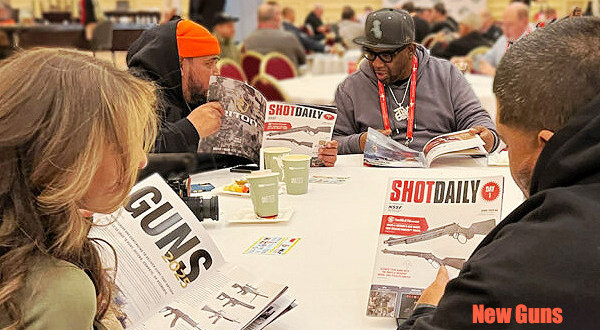
SHOT Daily Magazines Feature New Guns, Optics, Products
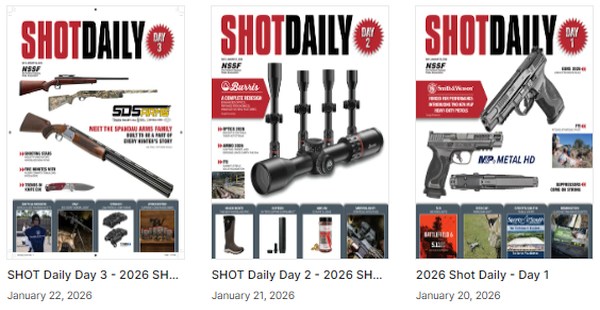
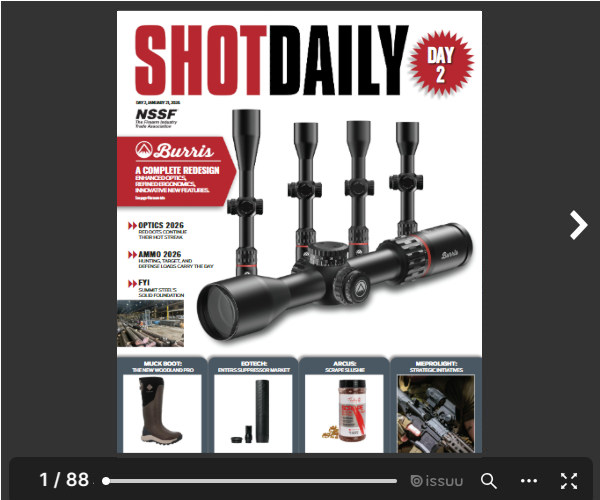
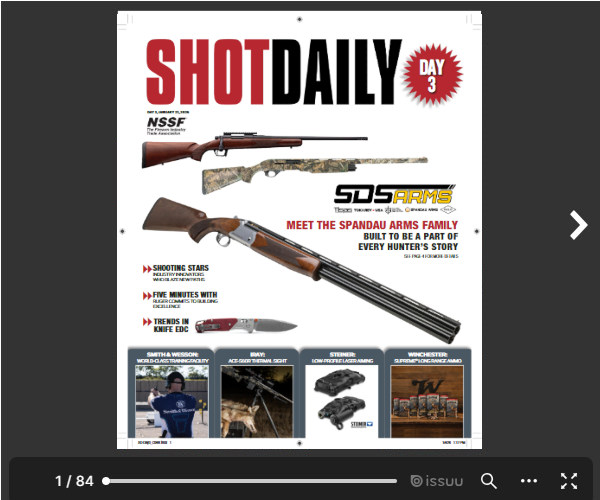
Want more information on new firearms and gun gear? Then check out SHOT Daily Magazine. Shown below are the digital edition covers for the SHOT Daily Day 2 and Day 3 magazines distributed at SHOT Show. The Day 2 issue features new scopes and ammo products while the Day 3 issue features a variety of topics including notable shooters. Click either Day 2 or Day 3 cover pages below to launch the full digital versions which you can read online for free.
The Making of MatchKings — How Sierra Produces SMKs
All Sierra bullets begin life as a strip of gilding metal, an alloy consisting of 95% copper and 5% zinc. To meet Sierra’s strict quality requirements, the gilding metal requires three times more dimensional and quality control standards than is considered standard in the copper manufacturing industry.
A blanking press stamps out a uniform disc and forms the cup that will be drawn into the MatchKing jacket. The cup is then polished and sent to a draw press to be drawn into a jacket that is longer than needed for the future MatchKing, thus allowing for the trim process. Press operators constantly check concentricity to ensures jacket quality. The jackets then go to a trimmer where they are visually inspected again.
After being polished a second time, the jacket travels to the bullet press. In the meantime, 80-pound lead billets are being extruded into lead wire for the cores where great care is taken so that the core wire is not stretched. The core wire is lightly oiled before continuing to the bullet press to be swaged.
The lead core wire and trimmed jacket meet at the bullet press where the first stage forms a boattail on the jacket. The lead core is then formed on top of the bullet press and fed down into the jacket. In one stroke of the press, the MatchKing is formed.
Quality control technicians pull samples from each lot of MatchKings to make sure they meet Sierra’s stringent standards. Samples are then sent to Sierra’s 300-meter underground test range (shown below) to be shot for accuracy on mechanical mounts referred to as “unrestricted return to battery rests” that Sierra designed and built in-house.
After inspection, the bullets are placed in the familiar green box along with reloading labels. They are then shrink-wrapped and shipped all over the world.
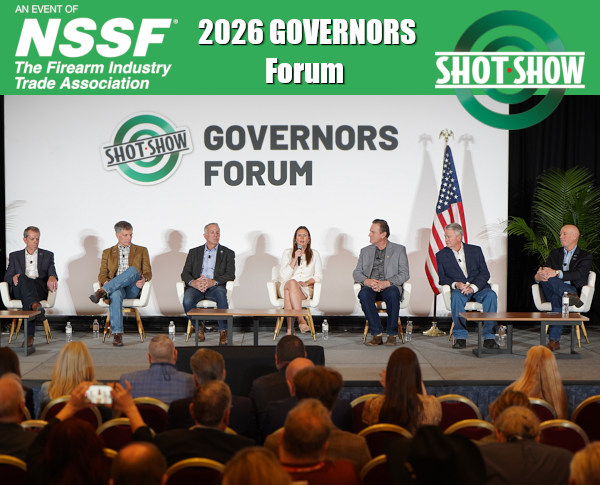
The NSSF’s 5th Annual Governors’ Forum at SHOT Show 2026 was held on Wednesday, January 21, 2026, in the Lido Room at the Venetian Expo in Las Vegas. The event featured State Governors discussing Second Amendment rights, gun laws, and the firearm industry’s future. Confirmed speakers included Governors Sarah Huckabee Sanders (AR), Brad Little (ID), Greg Gianforte (MT), Jim Pillen (NE), Joe Lombardo (NV), and Mark Gordon (WY), moderated by Shermichael Singleton.
Topics: Legislative landscape, gun control challenges, and safeguarding lawful gun ownership.
This forum provided a platform for state leaders to speak directly with industry members and media about critical issues facing the Second Amendment. The annual Attorneys General and Governors Forums provided expert insight on what is being done to protect and promote Second Amendment rights. In the audience were nfluencers, TV hosts and journalist reporting on industry developments.
It is now Day Two of SHOT Show 2026 in Las Vegas. There are huge crowds visiting the thousands of display booths in the “miles of aisles” (19 acres to be precise). Over 52,000 people have registered for the event. This year’s SHOT Show encompasses two facilities — the Venetian Expo AND the new Caesars Forum. Combined, these facilities provide over 830,000 net square feet of exhibit space. The two trade show halls are connected by an elevated walking bridge.
CLICK HERE for the searchable database of all SHOT Show 2025 exhibitors.
Today, as part of our Day Two coverage of SHOT Show 2026, we feature videos and images of new rifles from Smith & Wesson, CZ, Century Arms and new chassis systems from MDT. Other major makers, including Beretta, Bushmaster, FN, Remington, Rossi, SIG Sauer, and Tikka have many new guns on display at SHOT Show 2026.
Interesting New Products at SHOT Show 2026
Century Arms ATA ALR — Affordable Precision Rifle
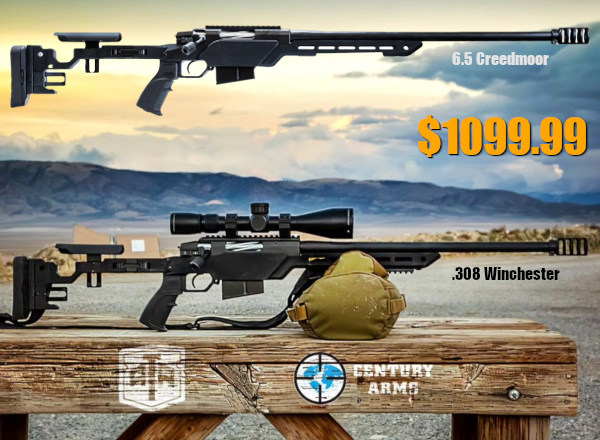
At SHOT Show, Century Arms showcased the new ATA ALR Tactical Rifle. Chambered in .308 Win or 6.5 Creedmoor, this modular rifle comes complete with adjustable aluminum chassis and muzzle brake. This could be a good starter rifle for PRS/NRL competition that does double duty as a hunting rig. And the ATA ALR is just $1099.99. That’s a great deal — you can pay that much just for an aftermarket chassis system.
Smith & Wesson New Metal-Frame Handguns
Smith & Wesson has many new products coming out in 2026. Many impressive new handguns have been seen at this year’s SHOT Show. This video covers some very impressive S&W handguns that feature aluminum and steel frames. The first pistol is the S&W SPEC VI with aluminum frame, ported barrel, and pre-installed Aimport optic. Next the reviewer covers the impressive steel-framed HD series pistols — both standard and competitor models. With good ergonomics and triggers, these are great for action pistol games.
MDT New Ultra-Light Chassis — Just 3.2 Pounds
In this video MDT Product engineer Josh Botha reviews the new MDT DRT lightweight chassis. This was designed for lighter weight for easier carry in the field by hunters. DRT stands for “Dead Right There” and this models was designed for “precision night hunting”. The chassis bare weight is just 3.2 pounds a significant reduction compared to previous MDT ACC chassis systems.
Ryan Cleckner — New Seekins SIC Multi-Caliber Sniper Rifle
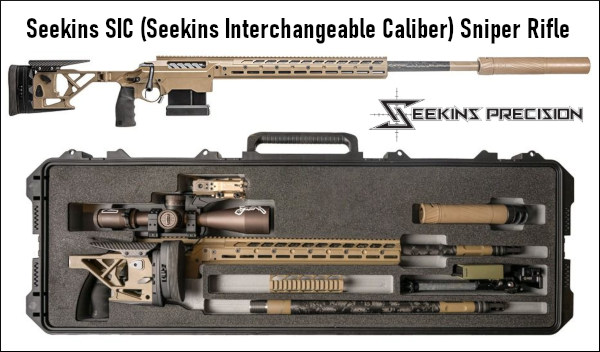
Ryan Cleckner is a respected gun journalist and former Army Sniper marksman and Sniper Instructor. In this video, at the 1:00-minute mark, Ryan spotlights the innovative Seekins SIC rifle crafted specifically for U.S. Special Operations. This rifle is designed to allow quick and easy barrel/bolt/magazine swaps so you can shoot multiple cartridge types with the same rifle. The Seekins SIC rifle is built to withstand extreme environments while letting the operator rapidly select and swap calibers to meet mission criteria. The $8900.00 Seekins SIC is a “purpose-driven, modular system” — not a chassis retrofitted to accept a barreled action.
New Hunting Rifles — Many Rifles Reviewed
This video reviews multiple hunting rifles, many of which were introduced in the last 12 months. This employs manufacture-supplied video clips, but it’s a good starting point if you’re shopping for a new hunting and/or varmint rifle. The video covers the pros and cons of these hunting rigs. Note, there is considerable annoying commentary in this video, but it does have good footage of the rifles and shows the bolts working and the rifles cycling. In order, the featured rifles are:
0:55 Bergara Platinum Stalker
2:30 Weatherby Mark V Backcountry Capra
2:52 Bergera Premier Cima Pro
5:32 Henry SPD Predator
7:06 Ruger American Rifle Gen II Prairie
8:34 Marlin 1894 Trapper (10mm)
10:15 CZ 600+
11:10 Previous CZ Models
11:45 Weatherby Model 307 Alpine ST
13:28 Smith & Wesson Model 1894 Stealth Hunter
15:06 Christiansen Arms Evoke
16:36 Bergara BMR-X (rimfire)
Handgun Shorts — CZ and Walther
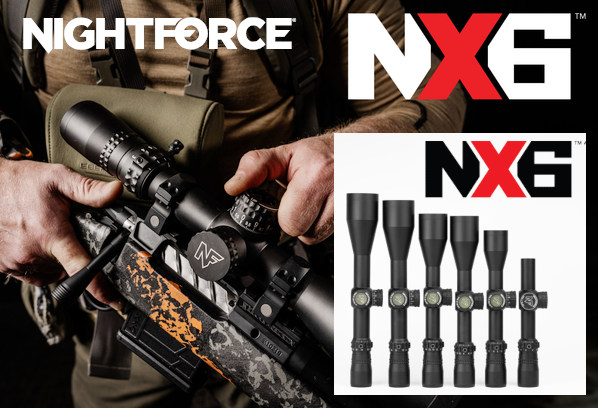
NEW Nightforce NX6 Scope Family for 2026
Nightforce’s new NX6 riflescopes offer lightweight configurations with an impressive 6X magnification range across the series. NX6 options include: NX6 1-6x24mm, 2-12x42mm, 3-18x50mm, 4-24x50mm, and 5-30x56mm. NX6 scopes are designed for wide field of view and good clarity. The FieldSet turret system provides great repeatability and tracking while offering ease of use and configurability, allowing shooters to convert from capped to exposed dials and custom Bullet Drop Compensating (BDC) dials.
SHOT Daily Magazines Feature New Firearms
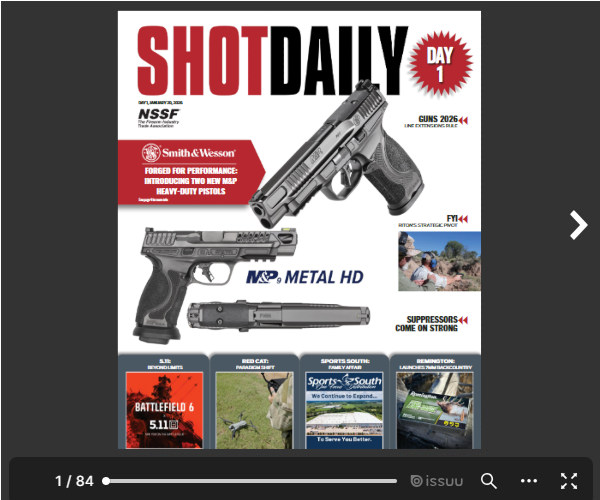
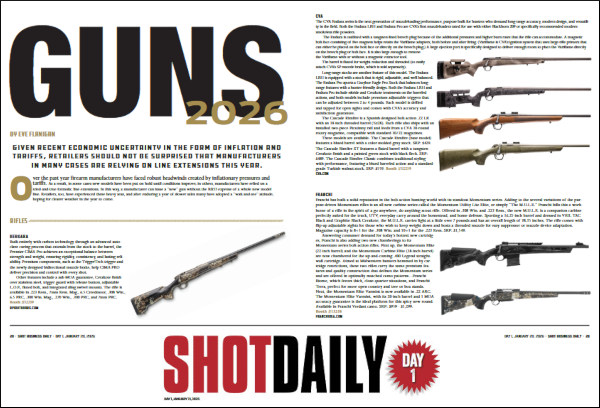
Want more information on new firearms and gun gear? Then check out SHOT Daily Magazine. Shown below is the digital edition cover for the SHOT Daily Day 1 magazine distributed at SHOT Show. The Day 1 issue features new rifles, shotguns, and pistols (pp. 30-42), and there is a good feature article on suppressors (pp. 64-71). The Day 2 issue should be released later today. Click the Day 1 cover page below to launch the full version which you can read in full for free.
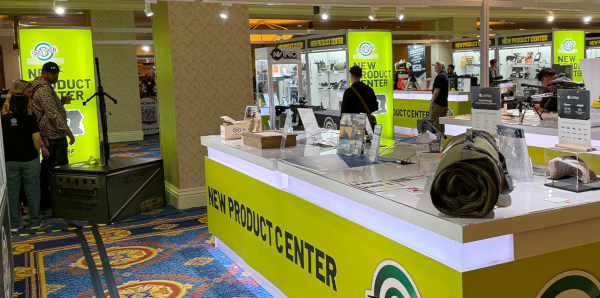
New Product Center
The New Product Center is a “must-see” offering at the Venetian EXPO. There are dozens of interesting and innovative new products all in one convenient location. On display were rifles, pistols, optics, electronics, gunsmithing tools, holsters, and dozens of other products.


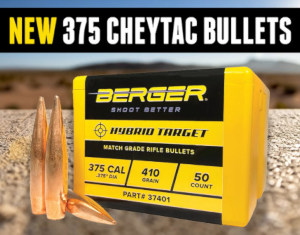 In this video, Gavin meets with Paul Phillips, an ELR “King of Two Miles” past Champion. Paul explains the features in his .375-caliber rifle designed to shoot to one mile and beyond. Along with a big action to hold the very long cartridge, an ELR rifle needs a special high-angle optics rail to allow the needed elevation. In addition, a long-wheelbase chassis is optimal for greater stability and balance. Recoil is very significant so Paul’s rifle boasts a massive 6-port muzzle brake on the very long barrel (ELR barrels can run 34-36″). For his projectiles, Paul is running Berger’s impressive new 410gr .375 caliber Hybrid Target Bullet (6:25 time-mark).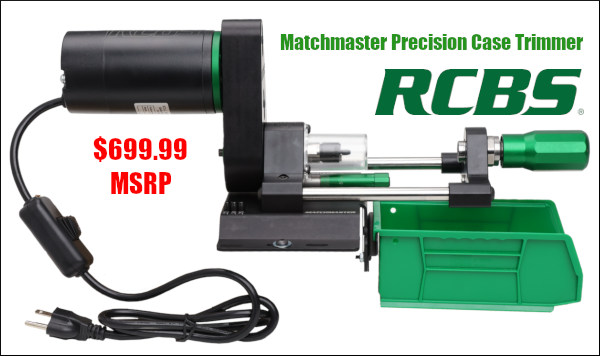






 Forum member Rich DeSimone uses a handy “Stub Gauge” for setting shoulder “bump” and seating depth. The gauge is made from a section of barrel lopped off when the muzzle is crowned. The chambering reamer is run in about 1/4 of the way, enough to capture the neck and shoulder area of the case. Rich then uses his full-length die to “bump” a master case with the ideal amount of headspace for easy feeding and extraction. He takes that case and sets it in this Stub Gauge, and measures from the front of the gauge to the rim. He can then quickly compare any fired case to a his “master” case with optimal headspace. Since the gauge measures off the shoulder datum, this tells him how much to bump his fired brass.