Useful reloading gear does not have to be costly. Here are ten handy (and very inexpensive) items that belong on your loading bench or in your range kit.
• Magnifying Glass – We use a flat, 2″x2″ pocket 4x-8x magnifier. This folds up on itself. Very handy, we use it to inspect bullets and brass. Use this to check your flash holes for burrs, and check the meplats of your bullets before loading.
• Clear 35mm Film Cannister – Use this to transfer the thrown powder charge to the little measuring cup that sits on your scale. That way you don’t get any kernel splash. Also if the charge weight is obviously off, it’s easy to dump back in the measure. A film canister works pretty well as a trickler too.
• Compressed Air in a Can -- Get these at office supply stores. Use the can (with tube attached) to blow crud out of cases after cleaning the neck with a brush, and blast loose debris out of primer pockets.
• Pin Vise – A simple pin vise with a #53 bit is perfect for deburring small PPC and BR flash holes without reaming the flash-holes any larger. The Lapua PPC/BR flash-hole diameter is 1.5 mm, or 0.059″. Amazon.com sells a handy $8.29 pin vise kit with 10 bits, including the ideal 1.5mm bit. Other vendors offer a #53 pin vise bit that measures .0595″ or .060″ (depending or source). You can find pin vises and bits at hobby stores — here’s an example below with ten bits including 1.5mm. Pin vise sets can be found from $7 to $15.
• Bounce Dryer Sheets – The common dryer sheets eliminate “static cling” on your plastic reloading parts such as powder measure cylinders, powder funnels, and reloading press plastic bins. Thanks to Doc76251 for this tip.
• Ballistol Aerosol – Try using this versatile lubricant/solvent for full-length sizing. Spray some on a patch and you can wipe the carbon off your case necks. Then, continue to apply a very small amount of Ballistol on the case bodies — just thin sheen is all you need. Ballistol is super slippery, and easy to remove. For general full-length sizing (on small cases) it works great and doesn’t leave a gooey, waxy, or chalky residue. For heavier case-forming jobs, we recommend Imperial Die Wax.
• Shotgun Mop – Stick this in the chamber when using Wipe-Out foaming bore cleaner. This will seal off the chamber so the foam doesn’t flow into your action. For long chambers screw on one section of cleaning rod to aid extraction.
• Colored Sharpie Marking Pens – Mark your bullets ahead of the bearing surface, and the color transfers to the target. This way you can shoot multiple loads at the same point of aim and discern which load shoots the tightest. (Recommended for 300 yards and beyond). With colored bullet tips you can test multiple loads “round robin” to equalize wind effects. When testing seating depths for example, you can mark the longer-seated set of bullets red and the shorter-seated set green and shoot them during the same sequence. Just look at the colored marks on the target to see which grouped better.
• Thin Latex Gloves – You should keep a box of inexpensive, disposable latex gloves (the kind doctors use) in your loading room. These will prevent contamination of primers or powder kernels that you handle directly. Also, use the gloves when handling fine blued tools or firearms to prevent transfering body oils and salts that promote rust.
• Plastic Washers for Neck Mic – If you use a Sinclair Neck-wall Micrometer Gauge with integral stand, you can use thin plastic washers to adjust the height of the case on the mandrel. This makes it much easier to measure the same point on the case neck every time. Thanks to MikeCR for this tip (and photo).
Some years ago, the folks at TargetWorkz published a a handy set of plans for a 48-inch tall self-supporting target stand. This makes a great do-it-yourself project. To create a sturdy, self-supporting target frame, all you need are some 2x4s, 1x2x48 furring strips, plus fasteners. The target holder, which supports an 18×24 inch cardboard target backer, separates from the base for easy transport.
Note: There is no cross-piece shown in the plan, but we do recommend putting wood crosspieces at the top of the target stand and about 18″ up from the bottom. This will make the frame more rigid, and will allow the frame to work even if the cardboard is badly “shot up”. Use a T-square to set the crosspieces before attaching them with screws.
Alternative Target Stand May from ABS or PVC Pipe
If you like this kind of project, but want to build a frame that is taller, yet can break down into sections, we also have an article showing you how to build a nice frame with inexpensive ABS or PVC tubing. VIEW ABS/PVC Tubing Target Frame Plans.
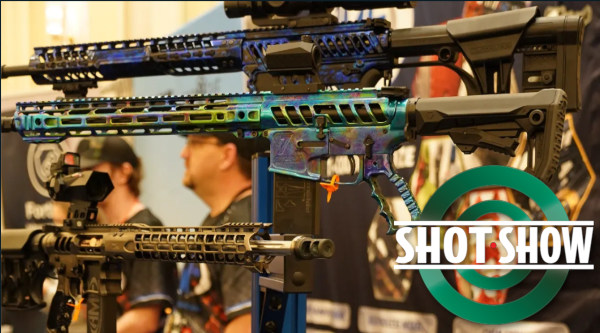
The 2026 SHOT Show (Shooting, Hunting, and Outdoor Trade Show) is officially underway in Las Vegas, with the full opening this Tuesday morning, January 20, 2026. Thousands of new products are on display at SHOT Show 2026, hosted at the Venetian Expo/Convention Center and Caesars Forum in Las Vegas. Gunmakers from around the world will be introducing hundreds of new (and updated) rifles, pistols, and shotguns. Along with the new guns, SHOT Show will feature noteworthy new optics, electronics, reloading equipment, hunting gear, and accessories.
The 2026 SHOT Show combines exhibit space at Caesars Forum and The Venetian Expo with a bridge between the two facilities. This year more than 2,700 exhibitors will showcase their products on 830,000+ net square feet (19 Acres!) of floor space. SHOT Show is the largest trade show of its kind in the world. Total attendance at last year’s SHOT Show exceeded 54,000 exhibitors, buyers, media, and industry professionals from 50 states and over 115 countries.
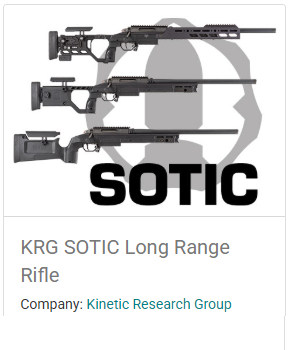
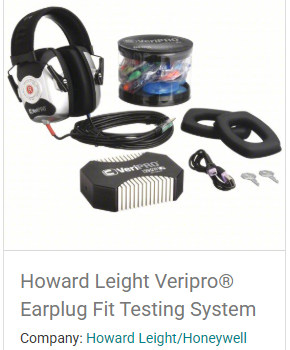
Here are 4 interesting products from SHOT Show 2026. Click each Image for more details.
SHOT Show Supplier Showcase — Monday and Tuesday
The SHOT Week Supplier Showcase returns this year with 600+ suppliers and countless materials and solutions. After a great first day yesterday, the Supplier Showcase kicks off its second and final day in the 5th Floor Palazzo Ballroom of The Venetian Convention Center.
SHOT Show 2026 INFO Sources
SHOT Show TV and YouTube — For all SHOT Show TV product highlights, interviews and overall show coverage, visit the SHOT Show Youtube Channel. SHOT Show Daily News — The SHOT News Blog Page has multiple daily reports and links to key content. Social Media — For real-time highlights and breaking news from the show, the SHOT Show’s Facebook, Instagram, YouTube, and X (Twitter) feeds offer regular reports with interviews, photos, and videos. SHOT Show Mobile App — Download the SHOT Show 2026 Mobile App for real-time show announcements, interactive floor maps, meeting and scheduling functions, product-information downloads (including product scanning at the New Product Center), SHOT Show video feeds and more!
Here’s an inexpensive product that can make your case prep and loading tasks easier. We use and recommend the cleverly-designed Lyman Bleacher Blocks. These multi-level (stepped) cartridge holders save space on your bench AND make it easier to select a particular case/cartridge from a full block. Each row is a different height for convenience. With Bleacher Blocks it’s also easier to check for powder levels, or place bullets before the seating process.
Lyman’s Bleacher Block cartridge holders have many advantages over conventional, single-level blocks. Use the different levels for sorting brass. Or, migrate the brass from top to bottom as you proceed through case prep stages. If you are assembling loads with different bullets for load testing, you could arrange the loaded rounds on different levels for easy recognition. For example put V-Max loaded rounds on the top tier, and Berger Hybrid loaded rounds on the bottom tier. Or, if you are experimenting with neck tension, you can use different rows for cases processed with different bushings.
Made of durable orange polymer, Lyman Bleacher Blocks are now molded in five sizes — small pistol, large pistol, and three rifle sizes. The smallest rifle block (with 0.388″-diam holes) fits .223 Rem-size case heads. The middle size rifle block (with 0.485″-diam holes) fits .308 Win-size case heads. That works for 6mmBR/Dasher sized cases perfectly. The biggest rifle Bleacher Block has 0.565″-diameter recesses for magnum-size cases. There are also two pistol blocks — .445″ hole size for 9mm/.357 size and .565″ diameter for larger .44/.45 pistol cartridges.
Here’s what Lyman says about its innovative cartridge block design: “Our [stepped] loading blocks allow for easier handling of cases in and out of the loading block. Our stepped design allows you to easily grip a single case without jamming your fingers down into a group of cases like in traditional loading blocks, and allows for a smaller ‘footprint’ on your bench.”
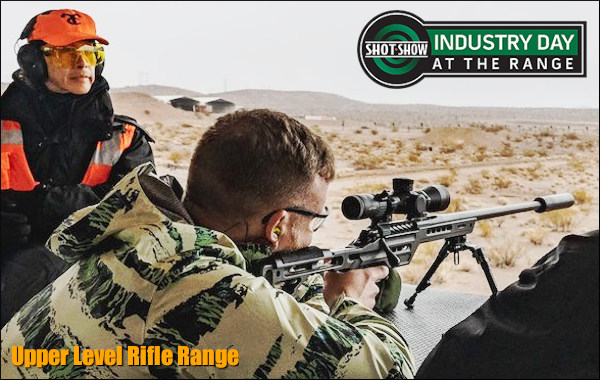
Industry Day at the Range is a unique event. Gun industry representatives are able to view, inspect, and shoot scores of new rifles, shotguns, and pistols provided by 200+ manufacturers from around the globe. In addition, new optics and shooting accessories are on display. Hundreds of media members and tech personnel visited the range on 1/19/2026 to test a wide variety of new firearms. There were many notable, innovative new rifles, pistols, and optics on display.
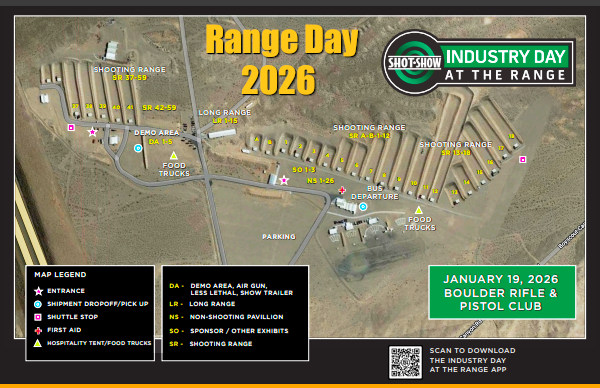
Conditions were good this year, with bright skies and temps in the high 60s. Winds did pick up in the afternoon. Still most of the shooting was at targets inside 50 yards so those breezes didn’t stop the show. It did make it more challenging to hit the longer range rifle targets. Still, media members were excited to see the scores of new rifles, pistols, and shotguns on display. See Range Day Map.
Notable New Guns and Products Previewed at Range Day
Range Day Special with Beretta and SAKO
Prior to the main Range Day, some major makers previewed important new offerings for select media members. This video features new guns from Beretta (which also owns SAKO/Tikka). The firearms covered include shotguns, rifles, and pistols listed below:
1:00 SHOTGUNS — SL2
2:46 DT11 Super Sporting
7:26 AX800
10:32 A300 Ultima
11:20 1301 Tactical
14:27 RIFLES – Sako TRG22
16:52 BRX1
17:40 PISTOLS – NEW Jaguar 22
20:47 92G Elite LTT II
24:24 M9A4 Overlanding
26:17 92SB Repro 50 Years
29:13 Langdon Tactical
SIG Pistols — New GT4 and GT5 2011 Handguns
SIG Sauer unveiled the new GT4 and GT5 2011 pistols at an early preview at the Desert Sportsman’s Club range outside Las Vegas. This GunsAmerica video, hosted by our friend True Pearce, provides a first look at these impressive new SIG pistols with competition inspired designs. Details are still under wraps, but these new models are already turning heads with their metal frames and superb accuracy. Pearce praised the ergonomics and accuracy of the new GT4 and GT5.
FN SCAR 20S 7.62×51
SIG MCX Spear M7
Impressive Zeiss optics were on display this year, as shown here in 2020.
This rapid-paced A-1 Locksmith video shows numerous rifles and pistols, including full-auto rifles. There are close-ups of new pistols from CZ and demos of multiple suppressors. This is a good, quick intro to the Range Day experience.
One of the best things about Industry Day at the Range is the FREE Ammo provided by Federal and other manufacturers. Rifle, pistol, shotgun — the ammo is ALL FREE.
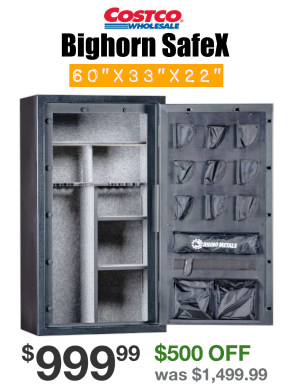
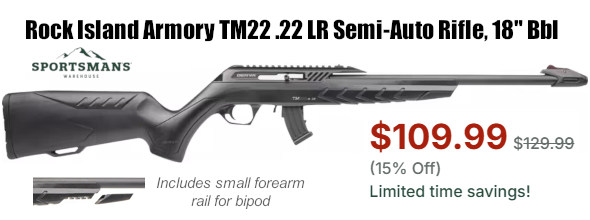
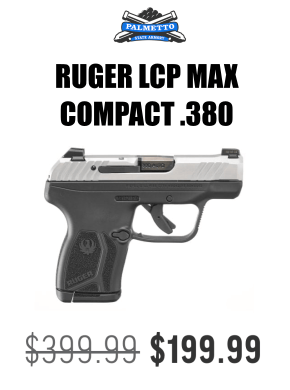
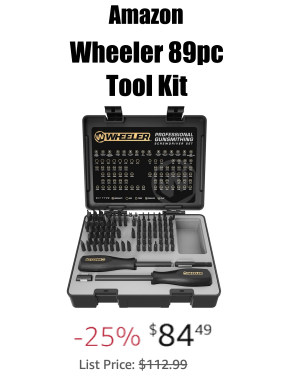
At the request of our readers, we provide select “Deals of the Week”. Every Sunday afternoon or Monday morning we offer our Best Bargain selections. Here are some of the best deals on firearms, hardware, reloading components, optics, and shooting accessories. Be aware that sale prices are subject to change, and once clearance inventory is sold, it’s gone for good. You snooze you lose.
NOTE: All listed products are for sale to persons 18 years of age or older. No products are intended for use by minors.
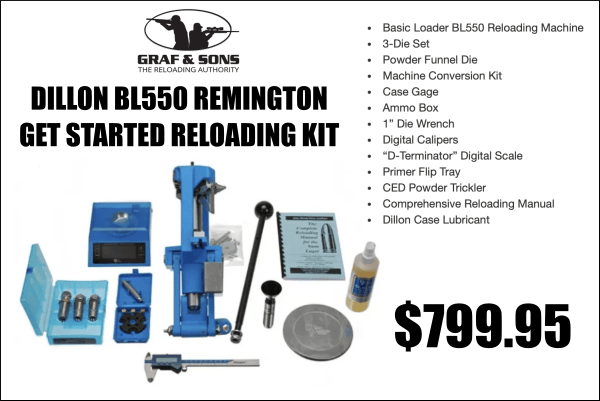
Graf & Sons — Dillon Get Started Reloading Kit, $799.95
⏺️ » Great savings on Dillon combo reloading kits
If you need a good progessive press system, consider the Dillon Get Started Reloading Kit at Grafs.com. This combo set includes a Basic Loader BL550 Reloading Machine, 3-Die Set, Powder Funnel Die, Machine Conversion Kit, Case Gage, Ammo Box, 1″ Die Wrench, Digital Calipers, D-Terminator Digital Scale, Primer Flip Tray, CED Powder Trickler, Reloading Manual, and Dillon Case Lubricant. This quality progressive reloading system is sold with dies for a particular cartridge. Chose a kit with dies for one of these cartridge types: .380 ACP, .38 SPL, .357 Mag, 9mm, .40 S&W, .44 Magnum, 10mm, .45 ACP, .45 Colt, .223 Rem, .308 Win, and .30-06 Springfield.
Midsouth — All Lee Precision ON SALE
⏺️ » Vast selection of Lee products with big discounts
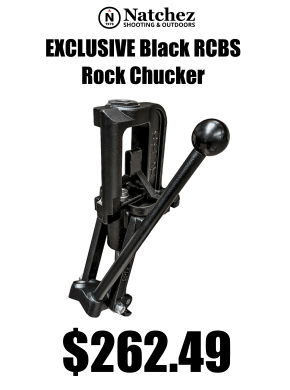
Lee Reloading offers affordable, well-designed reloading equipment that can produce very good ammo with a minimal investment. We like the Lee presses, priming systems, powder measures, and dies. Right now Midsouth is running a major sale with dozens of Lee products on sale including reloading combo sets, which provide all the tools you need to get started loading your own ammo.
As an Amazon affiliate, this site can earn revenues through sales commissions.
SHOT Show 2026, the biggest gun industry trade show, kicks off Tuesday, January 20, 2026 in Las Vegas and runs through Friday the 23rd. Over 2700 exhibitors will showcase thousands of new products at the Venetian Expo and Caesars Forum which together provide more than 830,000 net square feet of displays. The official SHOT Show Product Planner offers a “sneak peak” at 235+ new-for-2026 products for hunters and shooters. Here are a dozen cool new items from the SHOT Show 2026 New Product showcase (product profiles are based on descriptions provided by the manufacturers).
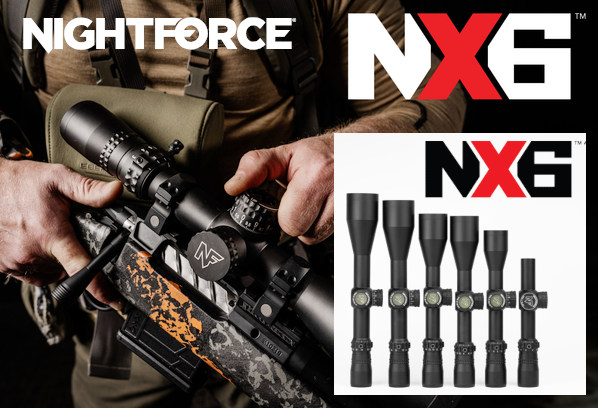
Nightforce NX6 New Scope Family for 2026
Nightforce’s new NX6 riflescopes offer lightweight configurations with an impressive 6X magnification range across the series. NX6 options include: NX6 1-6x24mm, 2-12x42mm, 3-18x50mm, 4-24x50mm, and 5-30x56mm. NX6 scopes are designed for wide field of view and good clarity. The FieldSet turret system provides great repeatability and tracking while offering ease of use and configurability, allowing shooters to convert from capped to exposed dials and custom Bullet Drop Compensating (BDC) dials.
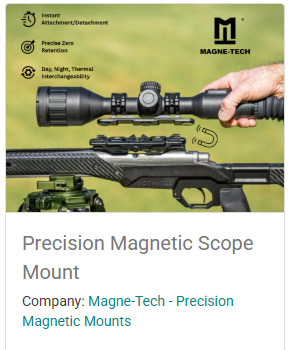
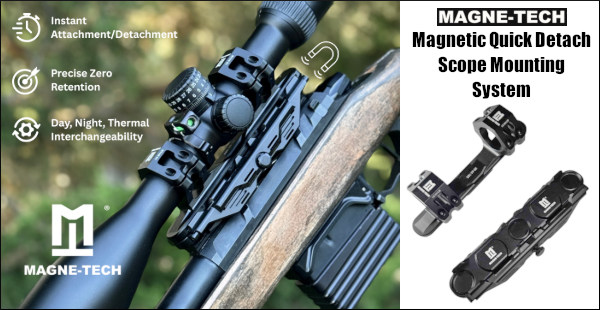
Magne-Tech Magnetic Scope Mount
This innovative Magne-Tech scope mounting system allows you to rapidly change optics without tools and not have to fuss with scope ring alignment. The Magnetic QD Scope Mount Set features a quick-detach mount system that allows you to instantly attach/detach your riflescope without losing zero. This allows shooters and hunters to transition quickly between different setups. This item is not cheap — the Magnetic Scope Mount retails for $349.99.
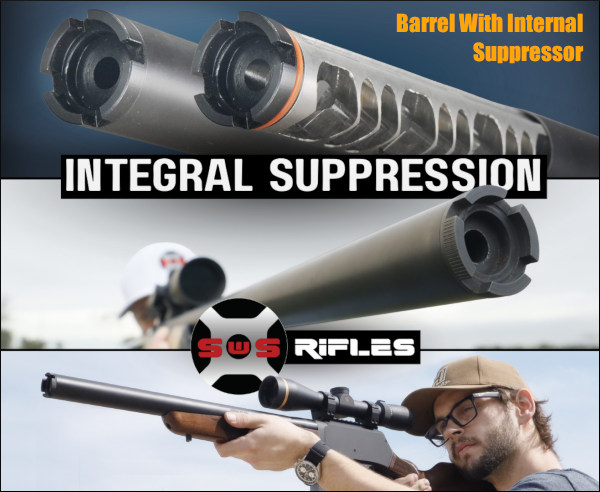
Monolithic Integral Suppressed Barrel (MISB) from SWS Rifles
The Monolithic Integral Suppressed Barrel (MISB) from SWS Rifles offers outstanding noise reduction. These barrels feature integrally suppressed baffle stacks, cut directly into customer-chambered barrel blanks. This utilizes the volume of the barrel on top of the suppressor baffles to capture as much gas as possible. Compared to a rifle shooting the same cartridge but with a screw-on suppressor, the SWS MISB system is 3 to 5 dB quieter. That’s significant.
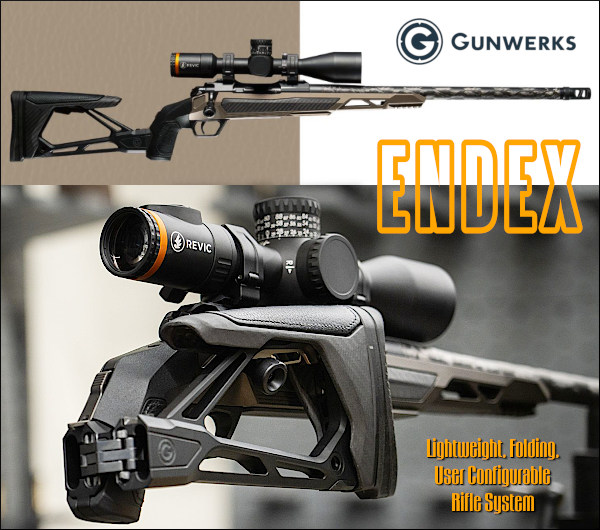
Gunwerks ENDEX Folding Rifle System
The Gunwerks ENDEX Rifle System is designed for hunters who want elite accuracy without serious weight or bulk. With this lightweight, folding stock rifle you can get “premium performance with packable portability”. With barrel lengths from 16″–24″ and a folding stock that collapses to 28″, the ENDEX is a travel-ready platform that allows easy chambering changes. Featuring a user-changeable barrel interface, modular bolt and magazine system, and compatibility with magnum cartridges like 6.5 PRC, 7 PRC, 300 PRC, and 28 Nosler, the ENDEX allows quick barrel swaps so you can switch chamberings in seconds. Every rifle is hand-tested, zeroed, and ready before it leaves the shop. The ENDEX boasts an advanced machined chassis and NX2 receiver for strength but low relative mass.
Revic Acura BR10 Ballistic Rangefinding Binocular
These Revic Acura BR10 laser rangefinder binoculars are expensive at $2945.00. However this 10×42 laser optic offers impressive performance, ranging out to 8000 yards on reflective surfaces (2800 yards non-reflective, 2200 yard on animals). Designed to deliver unmatched clarity and performance, the BR10 sets a high standard among laser RFs. Featuring an intuitive heads-up display, the Acura BR10 puts all critical data on one screen — ballistics, environmentals, and more — so you can stay focused on the shot.
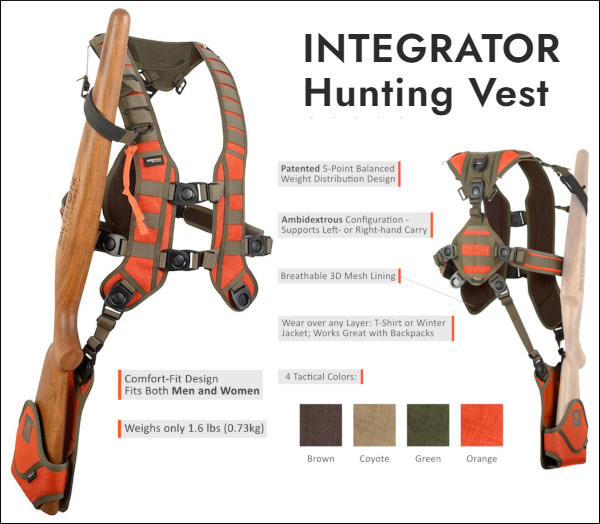
Integrator Hunting Vest with Quick Release Rifle Holster System
The Integrator Hunting Vest is a lightweight rifle carry system engineered for easy carry and rapid deployment. Produced by Saltstone Hunting & Outdoor, this Integrator system features a “One Sec Ready” quick-release mechanism that provides fast rifle release in the field. The patent-pending ergonomic harness design ensures balanced weight distribution, while the rugged MOLLE webbing allows attachment of matching accessories: backpack, ammo pouch, radio holster, tripod carrier, and more. Priced at $349.99, this Integrator Hunting Vest is made from high-quality materials for durability in extreme conditions.
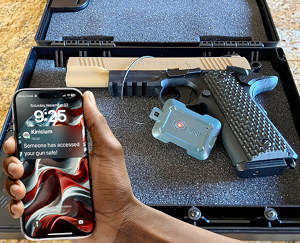
Kini Safe Alert
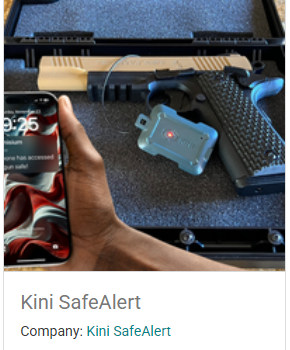
The modern Kini SafeAlert is a compact wireless motion sensor that signals if a firearm, safe, or storage area is moved or opened. The SafeAlert sends real-time alerts through SMS, email, or optional iOS push notifications and requires only Wi-Fi and a phone. There are no subscriptions, hubs, or tracking required. With over a year of battery life and IFTTT compatibility, Kini SafeAlert adds an effective layer of security to any safe, lockbox, case, or nightstand. It mounts easily with adhesive or a steel tether and can be moved between items at any time. The $75.00 price is quite affordable.
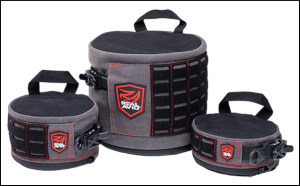
Real Avid Ratchet Rest Adjustable Height Shooting Bags
Real Avid soon will offer the world’s first precision height-adjustable shooting bags. These innovative Ratchet Rest™ padded shooting bags combine the stability of traditional shooting bags with built-in adjustment mechanisms. Featuring an integrated ratcheting system with Accu-Click™ technology, these adjustable shooting rests allow one-handed, click-by-click height adjustments while maintaining a stable shooting position. A non-slip rubberized base, heavy-duty waxed canvas exterior and moisture-resistant poly bead fill provide consistent support and long-term durability. These are available in Front Rest (Large), Front/Rear Rest (Medium) and Rear Rest (Small) configurations. The MSRP is $79.99 (Not yet available — coming mid-March 2026).
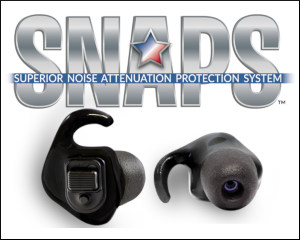
SNAPS Interactive Hearing Protection
The SNAPS (Superior Noise Attenuation Protection System) electronic plugs offer high-tech hearing protection. SNAPS active earplugs block harmful noise like gunshots while amplifying subtle sounds. To ensure comfort, SNAPS use custom earmolds that fit the precise contours of the user’s ears. SNAPS employs a digital processor that users can program. SNAPS utilizes a patented sliding switch to allow you to choose between full protection and full environmental awareness, all while offering maximum protection from impulse noise. SNAPS also offers BOOST MODE, a unique feature that can add 6 dB to low volume sounds.
Victory VCI Long Gun
Rust Prevention Storage Bags
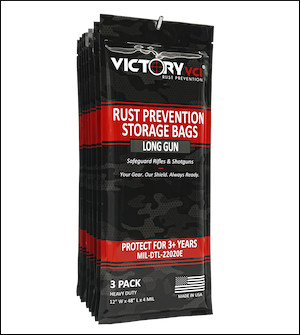
The Victory VCI gun storage bags provide impressive, military-grade rust protection. The maker claims these handy bags protect long guns from rust for 3–10 years using advanced Vapor Corrosion Inhibitor (VCI) technology, with zero maintenance needed. There are no drippy oils, no silica packs, no mess — just drop your gun in the bag and forget it.
These bags, which come in a handy 3-pack, comply with official MIL-DTL-22020E, Type 1 specifications. These Victoria Rust Prevention Bags are 100% Made in USA. They are designed, manufactured, and assembled in America with sustainable domestic materials. Cost is just $15.99 — a small price to pay to protect valuable long guns.
Defender EDC Tray Stand with Biometric Gun Lock
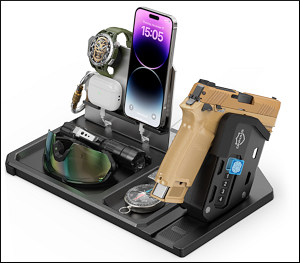
If you need a bedside station that can hold a handgun securely yet allow rapid access, consider the Onnais Defender EDC Tray Stand. This features an advanced Biometric lock with instant fingerprint access plus password access. You can register four unique fingerprints. Military-grade encryption ensures your firearm stays inaccessible to unauthorized users. A tamper-proof lock prevents accidental discharge with positive-lock trigger bar engagement. The system includes 2 backup manual keys. The Integrated Quick-Lock Pistol Slot should work with 95% of popular handguns including Glocks, SIGs, and 1911 pistols.
Rifle Shield Patented Rifle Cover
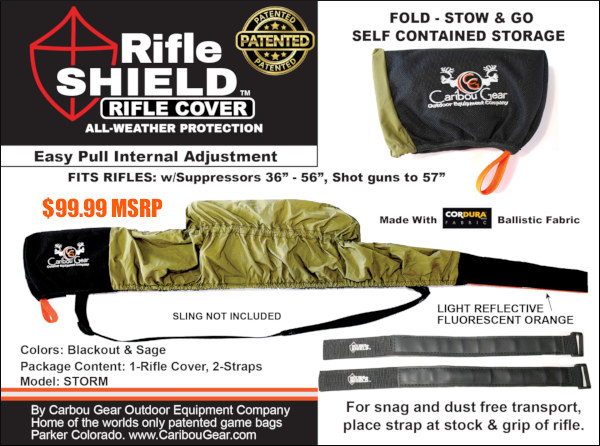
Caribou Gear’s Rifle Shield™ is a lightweight yet rugged (and waterproof) protective sack for your rifle. The case, with its double-layer Cordura Ballistic fabric, offers great weather protection with interior waterproof TPU coating and water repellent exterior. With an inner pull cord, the case allows easy length adjustments for a custom fit to your rifle. This patented carry case includes Velcro tab closures, and the nose section can fit a suppressor. The Rifle Shield ships with 2 Velcro straps and can be folded into a handy 7″ x 5″ self-contained sack. Weight is just 9.2 oz. and the current price is $94.11 ($99.99 MSRP).
CLICK HERE to read the full monthly digital editions of Shooting Industry Magazine online. Access to ALL articles is free via these Online Editions.
Most folks would be very impressed with a centerfire rifle that can shoot a quarter-inch group at 100 yards. But to do that with a rimfire rifle, shooting little .22 LR cartridges, that’s quite an accomplishment. Today’s Sunday GunDay story spotlights a superbly accurate new .22 LR Benchrest gun belonging to Forum member Dave Way. This rimfire tack-driver was crafted by respected gunsmith Alex Wheeler of Wheeler Accuracy. Check out this five-shot group Dave shot once he had figured out his optimal tuner position. That is mighty impressive for a rimfire rifle!
A sub-quarter-MOA group at 100 yards is impressive for a centerfire rifle. But for a rimfire rifle, it is truly stunning. Check it out — this rifle hammers!
I tested three lots of Lapua Super Long Range today. This lot looked really good so I bought a case. It’s a blast shooting this rifle over wind flags. It’s amazing how little wind it takes to move the bullet at 100 yards. I was having to hold off today to finish up groups. That’s when it’s the most fun. — Dave Way
Dave posted in our Shooters’ Forum: “To say I was impressed with the quality of the action and the accuracy of the rifle would be an understatement. I shot five different lots of Lapua Midas, Lapua Long Range, and Lapua Super Long Range ammunition. At 50 yards all the groups were pretty tight. I was shooting in some wind, using flags. One lot seemed to stand out so I put a target at 100 yards and shot three rounds in it as aiming points. I shot three five shot groups with the last 15 rounds of that lot that I had with me. All three groups were under 1/2″ and they were getting tighter as I moved the tuner!”
Above are initial 100-yard, 5-shot groups Dave Way shot with his rifle, while experimenting with different tuner positions. The largest group (on left) was a 0.416″, while the smallest (on right) was 0.296″. The average of the three groups was a stellar 0.369″ (0.352 MOA).
Dave Way treasures this rifle and praised Alex Wheeler’s skills as a gunsmith: “I have never received a rifle from Alex that didn’t shoot incredibly well and this one is no exception. I’m just getting into the .22 world so I don’t know if this is good, great, or excellent accuracy but it seems pretty accurate to me.”
Lot Testing and Tuner Experimentation Pays Off
Here are some initial groups Dave Way shot during initial ammo testing. They are all under half-inch at 100 yards. That’s pretty impressive — but read on. When Dave optimized his tuner position and found a great lot of Lapua Super Long Range .22 LR ammo — his groups got even smaller. Dave notes: “They could have been better but I was just getting used to the trigger and everything.”
Here are a series of three-shot, 50-yard groups. You can see this rifle is quite consistent. This is with five different lots of Lapua .22 LR ammunition.
Lot Testing with Lapua Ammo — Three-Shot Groups at 50 Yards
Rifle Components
Holeshot 2500X Right Bolt, Left Port Action
Muller Works 1:16″-twist, 8-groove Barrel
Holeshot Barrel Tuner
Bix-N-Andy Trigger
Holeshot 2500X actions and Holeshot tuners are now produced and sold by Precision Quest Products.
Have questions about this ultra-accurate rig? You can discuss this Wheeler-built rimfire rifle in a current AccurateShooter Forum Thread.
Three 50-Yard Groups, All Under 0.180″ — That’s Consistency!
With the right ammo, this rig is wicked accurate. Here are three groups shot at 50 yards one after another. Dave shot these three 5-shot groups consecutively while optimizing his tuner: “Working with tuner the last two trips to the range. [It was] very consistent and pretty tight at tuner setting 162. Here are three consecutive 50-yard groups (5 shots each).” The biggest group (at bottom) measured 0.175″ (0.334 MOA), while the smallest group (middle) was a stellar 0.154″ (0.294 MOA) — that’s mighty impressive!
Alex Wheeler Crafted His Own Superb Rimfire Rifle First
Gunsmith Alex Wheeler of Wheeler Accuracy has, over the years, concentrated on ultra-accurate mid-range and long-range centerfire benchrest rifles, along with some stellar long-range hunting rifles. But Alex has started to venture into rimfire shooting. Prior to building the Dave Way rimfire rifle featured here, Alex built a “sister rifle” for himself with similar components. That gun turned out so well that Dave asked Alex to build another. And, as you can see, Dave’s new Wheeler-built rimfire rifle turned out to be a true tack-driver.
Alex credits Dave’s shooting skills: “I don’t think its possible for anyone to send a rifle to Dave that doesn’t shoot. He just has a knack for it. I’m glad I got into the rimfire stuff. I don’t have any interest in rimfire competition but it’s taught me a lot about bench manners and I get a lot more trigger time. It’s a great tool to learn wind flags with as well. It should make me a better centerfire shooter. That was really why I built mine. I normally sell every gun I build eventually and Dave was going to get mine but I said you should start gathering parts, I think I’m keeping this one!”
Lapua Long Range and Super Long Range .22 LR Ammunition
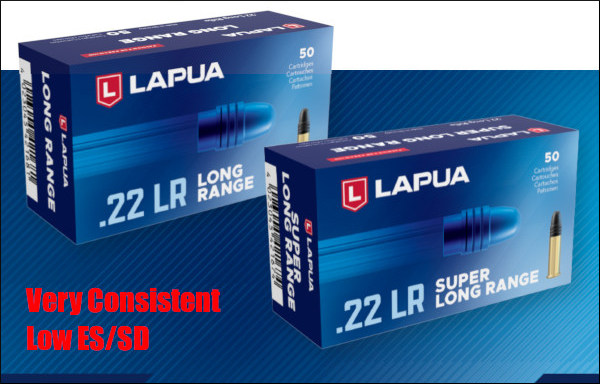
Dave Way had great results with his Lapua .22 LR ammo. Lapua Long Range and Super Long Range ammunition comes from Finland, and is designed for the growing long-range rimfire disciplines with targets at 100-300 yards. This ammo delivers very low ES and SD numbers. Our friend F-Class John tested this ammo and confirmed it performs very well (SEE Test Video).
Capstone’s Marketing Director, Geoff Esterline, explains: “Each production lot of Lapua’s [LR and Super LR] are test-fired in 50-round groups for dispersion. The results determine whether it makes Super Long Range or Long Range packaging.”
Are you seeing unpredictable changes in Point of Impact on your target? Think you may have a scope issue? Well maybe not — when was the last time you checked your BARREL?
Yes scopes do fail, and scope bases/rings do get loose. But sometimes problems with erratic POI shifts are caused by a LOOSE BARREL. This issue came up a while back in our Shooter’s Forum. One member complained that his zero was shifting from day to day — by as much as two inches at 100 yards. He was convinced he had a scope problem, based on erratic POI:
“I think my scope loses 1 to 3 MOA per day. When I shot my rifle Monday it was dead on. On Tuesday it was 1″ low. Then on Wednesday it was 1 or 2″ lower. I don’t get it. — the elevation knob never touched. Scope will track and return to zero that day perfect. Yes EVERYTHING has been checked, nothing loose. What is the chance the erector tube spring has gone south? For the record this is a Vortex GE. Never had a bad scope, but this has me wondering”. — LB
On Forum member told LB to send the scope right back to the manufacturer. Two other members suggested mounting the scope on a different rifle to test. Good advice. That’s generally a smart strategy before you conclude a scope has gone bad…
Could Problem Be the Scope Base?
Two Forum members, ExPiper and Dickn52, suggested checking the scope base, recounting their past experiences with troublesome bases. This was intelligent — anyone with a POI problem should check all the optics attachments:
“Went crazy one day chasing my impacts on a 100-yard target. Shots would group fine for three then go nuts for 4-5. I cranked and un-cranked for about an hour. Then I reached up and the base wobbled on the rifle. Removed scope, tightened base screws and back in business.” — Dickn52
“Years ago I had a problem [where] shots were climbing with almost every shot. I was blaming the scope. However, when removing the scope I noticed that the 20 MOA base was cracked and getting wider with every shot. Needless to say I replaced the base and the problem was solved. — ExPiper
Eureka Moment — The problem was the BARREL, not the Scope
There were many helpful suggestions, but member PirateAmmo steered LB to the real problem — a loose BARREL: “We had a problem on a home-built AR-platform rifle once, barrel was loose a tad…”
Member Snert chimed in: “Yep — I had a PPC that suddenly went 19″ low. Picked up gun off bench by barrel and felt a wiggle. I tightened the barrel and the POI went 19 inches up”.
Problem Solved — Barrel Tightened up and POI Back to Normal
The gentleman with the POI problem took the advice of PirateAmmo and checked his barrel. BINGO! Low and behold, the barrel WAS loose.
LB posted: “Barrel loose by about 2%, checked it twice before and didn’t find it the first two times”.
After LB re-tightened his barrel, his rifle started shooting normally again. No more shooting low by 1-2 inches. Problem solved. The fix didn’t cost a penny and now LB doesn’t have to send a perfectly good optic back to the manufacturer.
Lesson learned? Check ALL the variables before you assume a scope has gone bad. Along with the barrel, also check your action screw tension, and of course the scope base and rings.
The 2026 SHOT Show (Shooting, Hunting, and Outdoor Trade show) is just 3 days away. Thousands of new products will be on display at the SHOT Show, hosted at the Venetian Expo/Convention Center and Caesars Forum in Las Vegas January 20-23, 2026. Gunmakers from around the world will be introducing hundreds of new (and updated) rifles, pistols, and shotguns. Along with the new guns, SHOT Show will feature many noteworthy new optics, electronics, reloading equipment, and accessories.
Here are six interesting videos that preview new (and updated) firearms expected to be on display at SHOT Show in Las Vegas next week. There are hunting rifles, tactical rifles, rimfire rifles, plus a wide range of new pistols and some interesting shotguns.
Here’s a good initial video that covers a huge selection of new firearms. This 13.7-minute video covers a whopping 29 guns that will be showcased at SHOT Show 2026. Selections range from next-gen handguns and precision rifles to innovative tactical platforms and cutting-edge upgrades from top manufacturers. Whether you’re into concealed carry, competition shooting, duty weapons, hunting rifles, or tactical gear, this lineup has something you’ll want to see.
In this long 52-minute video, Pistol9x19 reviews 17 new firearms to be displayed at SHOT Show 2026. The video highlights innovative features, and performance for new pistols, rifles and shotguns. The 17 featured guns (with time-markers) are:
01:10 – Ruger SFAR 6.5 Creedmoor
04:07 – Henry Carbon Fiber Lever Action
07:03 – Savage Revel 22 LR Takedown
09:50 – Shadow System
12:58 – H&R Retro M16 Clones
16:05 – Mossberg 590 Professional Series
19:02 – Stoeger Combat SX 9MM
21:54 – Springfield Integrally Compensated Pistol
24:54 – H&R T48 FAL Clone
27:47 – Smith & Wesson M&P9 M2.0 Metal
30:50 – Korean K2 Civilian Rifle
33:33 – H&K P7 M13 Pro Slim
36:18 – Beretta 1301 Mod
39:19 – FN True Velocity 338 Norma Magnum LMG
42:16 – COLT KING COBRA
44:50 – RUGER SP 101
47:20 – Marlin 1895 Dark Series
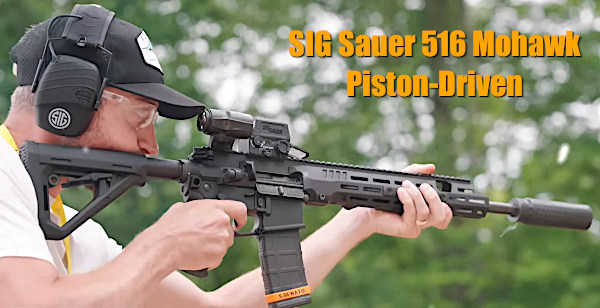
This video features seven new rifles that will be unveiled at SHOT Show 2026. There’s a wide selection — lightweight hunting rifles, modern lever guns, piston-driven tactical rifles, and even a big .50 BMG (the “King” shown in video cover shot). New guns include:
Glenfield Model A — affordable bolt-action rifle
Ruger American Rifle Gen 2 with new stock, trigger, and recoil system
Marlin Trapper 1894 in 10mm blending classic lever-gun heritage with modern power
SIG Sauer 516 Mohawk — piston-driven AR-type rifle built for reliability and hard use
Christensen Arms Evoke bolt action hunting rig in 6.5 PRC
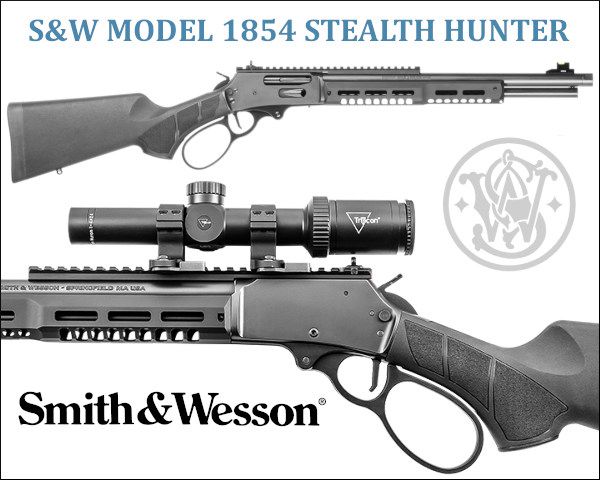
S&W 1854 Stealth Hunter — lever-action rifle with modern features
Thompson TA 50 — modern powerhouse in 50 BMG
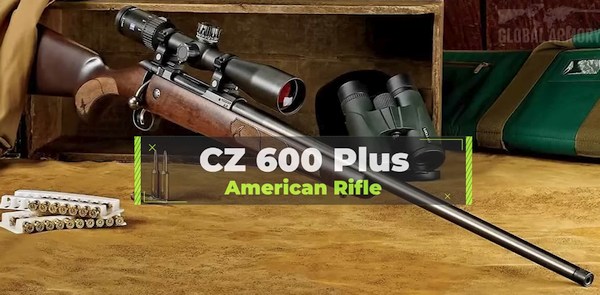
This 25-minute long video has good indoor/outdoor footage of 10 new firearms. Rifle shooters should check out the new Savage 110 Magpul (3:07) and the new CZ 600 Plus bolt-action rifle (7:46) which has a 100-yard sub-MOA accuracy guaranteee. Here are the time-mark slots for all ten guns:
00:54 – Smith and Wesson 1854 Stealth Hunter
03:07 – Savage 110 Magpul
05:29 – Savage RXR 22
07:46 – CZ 600 Plus American Rifle
10:01 – Springfield Armory Echelon 4.0C COMP
12:31 – Smith and Wesson M&P Shield X
14:54 – Staccato Compact HD C3.6
17:20 – Retay RXP 22
19:30 – Taurus GX4 Strike Bravo
22:06 – Taurus 66 Combat
Featured as the “Cover Shot” rifle is the Smith & Wesson Model 1854 Stealth Rifle (12:15 time), a lever gun upgraded with modern features including a long optics rail, tactical forearm panel, and threaded muzzle. Another interesting new rifle is the Savage Arms RXR22 (9:15 time) a very affordable semi-auto .22 LR rimfire rifle that accepts aftermarket Ruger 10/22 magazines, triggers, and barrels. Most of the other features guns in this 20.5 minute summary video are handguns.
This 23.5-minute video covers important handgun releases of SHOT Show 2026. The host says this video features the most notable new-for-2026 handguns — from ultra-concealable carry pistols to competition-ready, high-capacity race guns. Featured pistols are:
• Smith & Wesson M&P Shield Plus
• Taurus GX4 XL
• SIG Sauer P365 Fuse
• Springfield Armory Hellcat Pro Comp
• CZ P-10 M
• Canik MC9 LS
• Walther PDP F-Series
• Shadow Systems CR920P Elite
• Staccato CS 2
• Springfield Armory Ronin (Modular)
BONUS: SHOT Show Floor Tour — Locations of Gun Companies
Will you be heading to SHOT Show this year? CLICK HERE for the handy official Interactive Floor Map. For each building and floor level this shows the location of exhibitors. This can help you efficiently organize visits to your favorite gun and optics manufacturers.


 • Magnifying Glass – We use a flat, 2″x2″ pocket 4x-8x magnifier. This folds up on itself. Very handy, we use it to inspect bullets and brass. Use this to check your flash holes for burrs, and check the meplats of your bullets before loading.
 • Ballistol Aerosol – Try using this versatile lubricant/solvent for full-length sizing. Spray some on a patch and you can wipe the carbon off your case necks. Then, continue to apply a very small amount of Ballistol on the case bodies — just thin sheen is all you need. Ballistol is super slippery, and easy to remove. For general full-length sizing (on small cases) it works great and doesn’t leave a gooey, waxy, or chalky residue. For heavier case-forming jobs, we recommend Imperial Die Wax.