Eurooptic vortex burris nightforce sale


teslong borescope digital camera barrel monitor


As an Amazon Associate, this site earns a commission from Amazon sales.


July 7th, 2026

TEN Lessons for Camp Perry Competitors — 10 Ways to Win
Camp Perry cmp rimfire sporter 2023

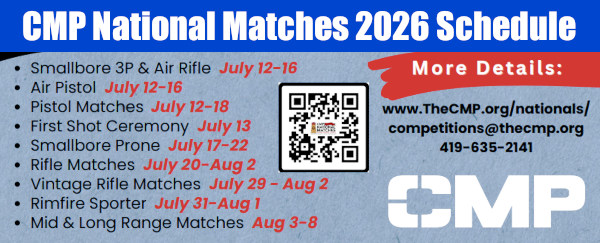
The CMP 2026 National Matches at Camp Perry, Ohio start in six days. The 2026 CMP National Matches will take place at Camp Perry from July 12 through August 8, 2026, with the First Shot Ceremony on Monday, July 13, 2026.

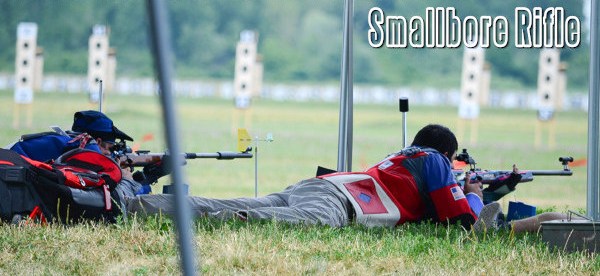
The rifle segments of the CMP National Matches commence next week at Camp Perry. First there will be smallbore competition July 12-22, with centerfire rifle matches commencing on July 20, and running through August 8, concluding with the Mid-Range and Long Range Matches.
camp perry national match rifle smallbore rimfire

To help those who will be competing this year, we offer Ten Lessons from Gary Anderson, DCM Emeritus.

TEN WAYS to Win — Competition Advice from Gary Anderson

DCM CMP Gary AndersonIn the archives of On The Mark magazine, Gary Anderson, an Olympic Gold medal-winning shooter, offers sage advice for competitive shooters.

In his article Ten Lessons I Wished I Had Learned as a Young Shooter, Anderson provides ten important guidelines for everyone involved in competitive shooting. Here are the Ten Lessons, but you should read the full article. Anderson provides detailed explanations of each topic with examples from his shooting career.

READ Full Article by Gary Anderson in On the Mark.

LESSON 1 – NATURAL ABILITY WILL NOT MAKE YOU A SHOOTING CHAMPION.
(You also need hard work, training effort and perseverance.)

LESSON 2 – ANGER IS THE ENEMY OF GOOD SHOOTING.
(The key to recovering from a bad shot is to stay cool, no matter what happens.)

LESSON 3 – BAD SHOTS CAN TEACH YOU MORE THAN GOOD SHOTS.
(Today, error analysis is one of the most powerful tools for improving scores.)

LESSON 4 – NEVER GO WITHOUT A SHOT PLAN.
(A shot plan is a detailed breakdown of each of the steps involved in firing a shot.)

LESSON 5 – PRACTICE IN BAD CONDITIONS AS WELL AS GOOD CONDITIONS.
(Most competitions are fired in windy conditions or where there are plenty of distractions.)

LESSON 6 – CHAMPIONS ARE POSITIVE, OPTIMISTIC PEOPLE.
(Negative shooters expect bad results; positive shooters expect to train hard to change bad results.)

LESSON 7 – IT’S NOT ABOUT WHETHER YOU WIN OR LOSE.
(It’s about how hard you try to win.)

LESSON 8 – YOUR DOG WON’T BITE YOU AFTER SHOOTING A BAD SCORE.
(Hopefully your coach, parents and friends won’t bite you either.)

LESSON 9 – YOUR PRESS CLIPPINGS CAN HURT YOU OR HELP YOU.
(Winning can go to our heads. We start thinking we are so good we don’t have to work hard any more.)

LESSON 10 — YOU NEVER SHOT YOUR BEST SCORE.
(Great champions are always looking for ways to improve.)

M1 Garand Camp Perry

rimfire sporter camp perry 2021

Camp Perry cmp rimfire sporter 2023

About Gary Anderson
DCM CMP Gary AndersonGary Anderson served as the Director of the Civilian Marksmanship Program (CMP) from 1999-2009, and is now DCM Emeritus. In 1959, he joined the elite U.S. Army Marksmanship Unit. Just two years later, he won his first national championship. Over his competitive career, Anderson won two Olympic Gold Medals, seven World Championships, and sixteen National Championships. He is unquestionably one of the greatest American marksmen ever.

At the 1962 World Shooting Championships in Egypt, Anderson won four individual titles and set three new world records. At the 1964 Tokyo Olympics, Gary won the 300m free-rifle Gold Medal, setting a new world record. At the 1966 World Shooting Championships in Germany, Anderson won three additional world titles. At the 1968 Olympics, Gary won a second gold medal in the 300m free-rifle event. After his “retirement” from international competition, Gary competed in the National High Power Championships, winning the President’s National Trophy in 1973, 1975 and 1976.


Permalink - Articles, Competition, Shooting Skills No Comments »
July 7th, 2026

Accuracy, Velocity, and Temp Stability — Consider All Factors

USAMU Reloading tips Handloading Hump Day

This USAMU article explores three different “Philosophies” of precision reloading. Some handloaders seek to produce ammo that yields the very tightest groups (without factoring in the wind). Other shooters load their ammo to deliver the highest safe velocity. That’s because a projectile launched at higher velocity will drift less in the wind. The theory is that even if fast ammo doesn’t produce the tightest groups in zero wind conditions, it will yield higher scores in a the real world (where the wind blows). Lastly, some handloaders favor ammo that is ultra-consistent across a wide temperature range. This last philosophy dictates selection of a powder that is temp-insensitive, even if it may not produce the very best raw accuracy (or speed).

USAMU Reloading tips Handloading Hump Day

What’s Your Handloading Philosophy?

Objectives of Reloading — Accuracy, Velocity, Temp Stability
What do you, the reader, primarily value in your handloads?

Viewpoint ONE: Accuracy Trumps Everything
Some shooters prize consistent, excellent medium/long range accuracy enough that they’re willing to give up some extra velocity (and reduced wind deflection) to obtain that. Their underlying philosophy could be stated: “Superior accuracy is present for every shot, but the wind isn’t”. One’s ability to hold well, aim well and read the wind are all factors in making this type decision. The photo below shows stellar raw accuracy. This is an 0.67″, 10-shot group at 300-yards fired from a text fixture. The group measures just 0.67″. (This shows the USAMU’s 600-yard load with 75gr bullets).

Viewpoint TWO: Load to Highest Safe Velocity for Less Wind Drift
Some shooters value obtaining the highest safe velocity, even if one’s pure, consistent mechanical accuracy at medium/long range isn’t quite as brilliant. The theory here seems to be that a really good hold extracts as much mechanical accuracy from the rifle/ammo as possible, and faster bullets equal occasional “bonus” points snatched from the jaws of wind.

[For example] one of the USAMU’s many Service Rifle National Champions revealed his philosophy. It can be stated thus: a super-accurate, but [relatively] “slow” load “required him to have a Ph.D. in wind reading for every shot, while a faster, but less accurate load netted him more points.”

Note — this was not mere speculation; his score book data backed up his claims, due to less wind effects. Remember, however, this fellow has a consistent, National Championship-level hold, and other Champions on the same team would have opted differently.

USAMU velocity chronograph testing

Viewpoint THREE: Temperature Stability Is Key
Still another approach is to place heavy emphasis on fine accuracy with absolute stability in changing temperatures. When this writer was actively earning his Distinguished Rifleman badge, that was his goal. The reason? Sighting shots are not allowed in EIC (“Leg”) matches. The first shot out of the barrel was for score. It had to be 100% consistent, with very reliable, predictable elevation and wind deflection regardless of the ambient temperature — even if it wasn’t the lowest wind deflection possible.

Naturally, selecting a powder that is insensitive to temperature changes is a key element here. Elevation zeros and wind effects HAD to be consistent every time. Hunters and military snipers might be among those who fall into this camp, as well as those in pursuit of their Distinguished Rifleman badges.

Contrast that with a traditional High Power shooter who gets two sighter shots before each event (offhand, sitting rapid, prone rapid, prone slow fire.) If there is a zero change on any given day, he/she can correct during sighters. This writer well remembers talking with another very high-level Service Rifle competitor who was happy to have high temperatures boost the velocities of his ammunition above their usual level… As far as this SR competitor was concerned, 60-80 fps more velocity -– even if only due to high ambient temperatures -– meant less wind deflection, and he was mighty happy to have it.

summer temperature chart USAMU loading tips

Particularly in the summer, with hot daily conditions, you need to be concerned about temperature stability. Loads worked up in winter may be over-pressue in the summer time. FYI summer officially begins this year on June 21, 2026, Summer Solstice, just 10 days away.

This article has been confined to NRA High Power Rifle competition, which has relatively generous 10-ring dimensions in relation to the accuracy of well-built competition rifles. Hopefully, it will provide food for thought. For some, this might be an opportunity to ensure that one’s load development approach helps them attain their desired results.

Permalink - Articles, Bullets, Brass, Ammo, Reloading No Comments »
July 7th, 2026

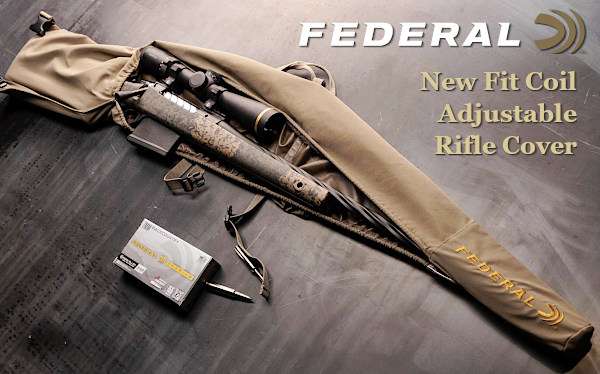
New Adjustable “Fit Coil” Rifle Cover from Federal

federal fit coil adjustable fabric rifle case cover

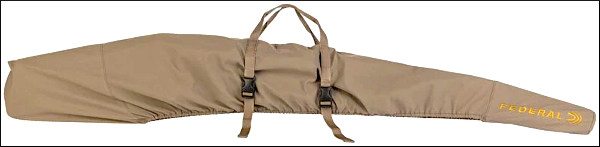
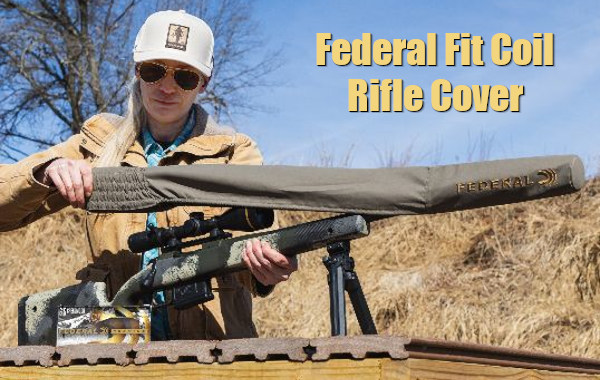
Federal Ammunition has introduced a new type of firearm cover, the Federal Fit Coil Rifle Cover. The Federal Fit Coil Rifle Cover features a roll-up design that lets shooters adjust cover length to the firearm. A key feature is an internal retracting elastic band that allows easy insertion but also adapts the cover to the actual rifle length from muzzle to buttpad.

federal fit coil adjustable fabric rifle case cover

Federal’s new rifle cover is “suppressor-ready”, meaning the muzzle area inside the cover has heat-resistant lining. Sizes include medium for firearms of 34 to 44 inches in length, large for 39 to 49 inches, and XL for 44 to 54 inches. All sizes are equipped with a quick-grab handle.

federal fit coil adjustable fabric rifle case cover

“With a roll-up design that lets shooters adjust case length to the firearm, our Federal Fit Coil Rifle Cover is a suppressor-ready rifle case that is ready for anything,” explains Jake Jacobs, Federal’s Accessories Product Director. “It has a heat-resistant lining in the muzzle area and a quick-grab handle. With suppressors being so wildly popular these days, having the gear needed to protect them properly and conveniently is an absolute necessity.”

Permalink Gear Review, New Product No Comments »