Our friend Gavin Gear has just released an excellent video showing how to make a threaded Modified Case for use with the Hornady Lock-N-Load Overall Length Gauge. You can watch Gavin make a Modified Case start to finish in the video below:
Video Shows How to Drill and Tap Modified Case
Gavin has some clever tricks. First he uses a sizing die to hold the cartridge case during the threading process. Second he uses two drill bits in sequence — a smaller bit to ream out the primer pocket, and then a larger “M” bit to increase the hole diameter before threading the brass. Finally he leaves the threading tap IN the brass, locks the tailstock, and then “gently pulls on the quill” to remove the brass from the die held in his lathe (See 5:46 timemark).
Get the Correct 5/16″-36 RH Tap
Unfortunately, Hornady has selected an uncommon thread type for OAL Gauges. You probably won’t be able to buy the correct 5/16″ – 36 RH HSS Tap at your local hardware store. However you CAN order this special tap from Amazon for $9.99.
Modified Case Q & A — TECH TIPS
Why do I need a Modified Case?
Every serious reloader should have a Modified Case for each cartridge type they shoot. The reason is that this allows you to get very precise measurements of the length-to-lands in your chamber. When used with the Hornady OAL Gauge, with some practice, you should be able to get repeatable length-to-lands measurements within about 0.015″. We generally do 4-5 measurements with the OAL Gauge and usually 3 or 4 will be “on the money”. NOTE: We recommend a gentle, easy pressure on the plastic pusher rod. Don’t push too hard or you will jam the bullet hard into the lands, which produces inconsistent results.
Can’t I Just Buy a Modified Case?
Hornady makes a variety of Modified Cases sold on Amazon and through retailers such as Midsouth. While Hornady makes modified cases for many standard cartridges, if you shoot a wildcat such as the 6mm Dasher or .284 Shehane, you’ll need to create a custom modified case. And even if you shoot a standard cartridge such as the .308 Win, you can get more consistent measurements with a custom Modified Case.
If you do decide to make your own modified case, you’ll want to start with a case that’s been fired in your rifle. That way you get the best fit to YOUR chamber. Also, you won’t need to expand the neck to provide bullet clearance. Then you need to drill out the primer pocket and tap the base of the case to match the threads on the Hornady OAL Gauge tool. Make at least two modified cases, as you’ll probably misplace one at some point.
Erik Cortina Makes a Modified Case
If you want to learn more about making Modified Cases, top F-Class shooter Erik Cortina has also created a helpful video showing the process he uses to make modified cases. In Erik’s video, he shows how he taps a case to work with the Hornady Lock-N-Load Overall Length Gauge (formerly the Stoney Point Tool). Erik also explains how to get the best results when using the Modified Case to measure length to lands.
MORE INFORMATION: Want to learn more? We published a much longer story in which Erik explains in greater detail how to made the Modified Case. That article illustrates the 5/16″ – 36 RH HSS Tap required and shows how to set up the lathe to drill and tap your case. If you are serious about making your own Modified Cases, you should Read the Full Article.
As ranges are starting to open up again, folks are enjoying the opportunity to shoot at long range. But if you like to shoot paper out beyond 400 yards or so, you’ll find that it can be difficult to see bullet holes on paper, even with premium high-magnification spotting scopes. That’s why it’s great to have a high-quality wireless target camera. The systems we like are produced by Longshot Target Camera (aka Targetvision).
With a Longshot camera system, you receive a live WiFi feed from a camera. This comes back to your shooting station on the firing line and you can view the image with a laptop or mobile device. No separate tall antennas or routers are required, and you don’t need internet coverage. Simply place the camera unit next to your target and the receiver unit close to your rifle or bench. (Or, with the 300-yard-rated Marksman you get the WiFi signal directly from the camera — there’s no separate receiver). The Longshot system is completely self-contained. Longshot produces a variety of cameras starting at just $399.00 for the LongShot Marksman. We recommend the $799.00 LR-3 unit which is rated to a whopping two miles.
This Video shows how the Longshot Marksman Wireless Target Camera Works:
Longshot camera systems are excellent. They provide VERY sharp images and the WiFi signal is strong and stable, without the fuzziness you find with lesser systems. And, importantly, Longshot cameras come with integrated shot-marking software that works with your mobile device (phone or tablet). The Longshot mobile Apps can mark all the shots in your group (and you can select colors). In addition you can make your last-fired shot blink on the screen. And, as you’d expect, you can take a screen-shot at any time to record your shot impacts for future review. This kind of functionality makes the Longshot camera system much more sophisticated than any conventional optical spotting scope.
Longshot CEO Clay Rhoden explains: “Longshot target camera systems provide shooters with the opportunity to see their long range impacts as they occur. Acting as your spotting scope downrange you are able to see each impact with clarity. Our wireless target camera systems and camera spotting scopes provide double the resolution and double the possible distance available elsewhere.”
If you purchase a Longshot camera system, we recommend getting the optional “Bulletproof Warranty” for $39.00. This will cover most replacements if you accidentally shoot the camera system placed down-range. That $39.00 buys a lot of peace of mind. If you start with a $399.00 Marksman unit, you can also later upgrade to a full 2 mile-rated LR-3 system.
This site is for and about accurate shooters. So today we feature the short-range group Benchrest game, where it’s all about shooting tiny groups in the ones and even “zeros”. Seeing the tiny groups 6 PPC aces produce, it’s easy to think the precision is all about the equipment. But there is a lot more involved. A talented human still has to watch the flags, run the gun properly, and tune his loads for the conditions. Here are some tips from one of the world’s best benchresters, Charles Huckeba.
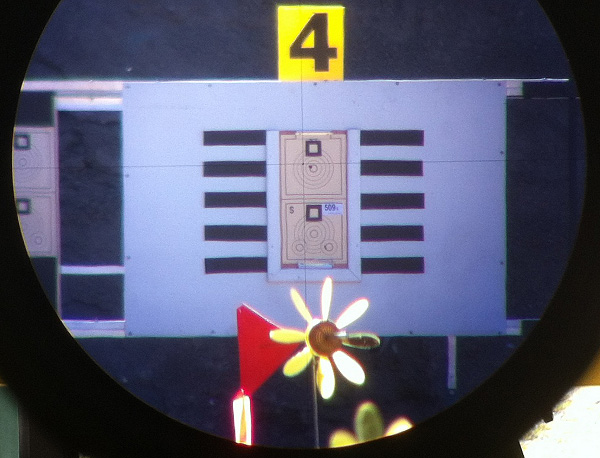
Texan Charles Huckeba was the top individual shooter at the 2013 World Benchrest Championships (WBC) held near Sydney Australia in October 2013. In this video, 2013 WBC Two-Gun Overall winner Charles shoots a 1/8th MOA group at 200 yards — “a little bitty dot” as a fellow Team USA shooter observes. That’s impressive. If you can describe Huckeba’s style in a nutshell it would be “smooth, consistent, and rapid but not hurried”.
Charles also employed some unusual hardware. In the video, take a close look at the joystick on the Farley Coaxial front rest. There’s no knob at the end. In its place is a small, wood ammo caddy. Charles removed the standard knob from the handle of his Farley rest and replaced it with a home-made wood block that holds cartridges for the record target. The 10.5-lb Light Varmint rifle is chambered in 6PPC with a BAT Machine Action and a composite wood and carbon-fiber stock.
Watch Charles Huckeba Shoot 1/8 MOA, 200-yard group at World Benchrest Championships
Here is the actual 200-yard, 5-shot group Charles shot in the video. Photo (by Stuart Elliot) taken through the lens of Huckeba’s 50X March scope (reticle has 1/16th MOA Dot).
Analyzing the Fine Points — What Makes Huckeba So Good
Short-range benchrest shooter Boyd Allen saw some interesting things in Huckeba’s WBC performance, as captured on video. Boyd noticed Huckeba’s smooth gun-handling and efficient loading. But Boyd also spied some interesting equipment, including an innovative joystick “handle-caddy”.
1. Low Friction Bags — When Huckeba slid his rifle, there was very little apparent friction. The front bag features the new 3M material (ScotchLite) on the sliding surfaces. The rear Protektor bag has ears of the same low-friction material.
2. Pause Before Chambering — While he was watching the flags and deciding when to start firing, Charles kept his first round in the action, but out of the barrel’s chamber, probably so as not to heat the cartridge and change the round’s point of impact.
3. Ammo Caddy on Joystick Arm – Charles shoots a Right Bolt/Left Port action, so he pulls his rounds with his left hand. Note that Huckeba’s record rounds rest in a small, wood ammo caddy attached to the end of the joystick shaft. Look carefully, you’ll see the wood ammo block in place of the normal black ball at the end of the joystick. That allows Charles to pull shots with the absolute minimum of hand movement. Ingenious! Huckeba is very fast, with a great economy of motion. I believe that because his ammo was literally at hand, Charles was better able to keep his focus on aiming and the flags.
4. Smooth-Cycling BAT Action — Note how smoothly Huckeba’s action operates. When Charles lifts the bolt handle (to extract a round and cock the firing pin), this does not disturb the rifle. Likewise, as he closes the bolt, the gun doesn’t wobble. The smooth action allows Charles to hold point of aim even when shooting relatively quickly. Huckeba’s BAT action is chrome-moly steel. Some shooters believe this metal makes for a smoother action than stainless steel or aluminum.
5. Long-Wheelbase Stock — The wood and carbon fiber stock is light, long, and stiff. Yet, importantly, the stock is also well-damped. The longer-than-average stock length (with extended forearm) seems to help the gun track well without jumping or rocking. The longer forearm allows a longer “wheelbase”, effectively shifting the weight distribution rearward (less weight on the front, more weight on the rear). This places a greater share of the gun’s weight on the rear bag, as compared to a more conventional benchrest stock. Huckeba’s stock, built by Bob Scoville, is at the cutting edge of short-range benchrest design. Its light-weight balsa wood and carbon fiber construction provides a combination of stiffness and vibration damping that allows its relatively long fore-end to be fully utilized to increase the weight on the rear bag (always an issue with 10.5-pound rifles).
To learn more about this benchrest stock design, read the comments by stock-builder Bob Scoville in our PPC with Pedigree story in our Gun of the Week Archives. Bob observed:
“There is a lot more to the structure of the stocks than meets the eye. The carbon fiber skin with which I cover the stocks creates a light, tough exterior surface. However, this contributes very little to the overall performance of the stocks. The real strength and stiffness is the result of an internal beam utilizing balsa core/carbon fiber technology.
This type construction can be found in aircraft, race cars, powerboats, and sailboats. It is interesting to note, balsa has the highest strength to weight ratio of all woods and carbon fiber is one of the lowest stretch (modulus of elasticity) relative to weight of all materials. The marriage of these two materials is common in the high-performance world. Additionally, balsa is used commercially for vibration dampening and sound reduction.”
Video find by Boyd Allen. Video by Stuart Elliot of BRT Shooters Supply, Brisbane, Australia.
Kirsten Weiss knows a thing about accuracy. She won the 2012 NRA Three-Position Women’s Smallbore Championship, while finishing as the National Overall Woman Champion. She used to shoot with the American team in top-level World Cup competition. Kirsten started shooting fairly late — at age 16. Despite her relatively late start, she earned a place on the University of Nebraska shooting team. That literally opened up a new world for Kirsten: “During the course of my career, I’ve had a lot of success. I’ve gone to World Cups… in Zagreb, Croatia, in Munich, Germany. I’ve won National Championships, and got on to the U.S. Olympic short list, so it’s been a good career.”
In these three videos, Kirsten offers key tips on accurate shooting. In the first video she explains how to get and maintain the proper cheek weld on your rifle. In the second, Kirsten talks about canting error — how having inconsistent side-to-side tilt on your rifle. In the third video, Kirsten explains the importance of proper trigger placement.
Proper Cheek Weld
No matter what your discipline — smallbore, silhouette, High Power, F-Class, or even PRS — it’s vital to have a consistent cheek weld for every shot. You want your head to be in the same position on the stock each time.
In this video, Kirsten explains how to find the best position for your head on the stock, which may require adjusting the cheekpiece and/or length of pull. Then Kirsten demonstrates how to maintain consistent cheek weld shot after shot.
Consistent Rifle Cant (Tilt from Centerline)
Kirsten says most training manuals don’t explain rifle cant: “You won’t find this shooting technique just anywhere. Most shooters don’t even think about it — and they’re missing out. Proper Rifle Cant or Gun Cant (also known as cant error or even scope cant) is a complicated topic, but I’ll explain it simply — and how to simply avoid cant error.”
Want to know how to actually aim a gun right? This accuracy tip covers a crucial aspect of marksmanship. If you cant your rifle inconsistently from shot to shot, the point of impact will change, even with “perfect aim”. This is another episode in Kirsten’s How to Shoot Awesomely video series.
Proper Trigger Finger Technique
Kirsten tells us: “Finger placement on the trigger might not seem like a big deal, but it actually is. The reason for this is because, depending on where your index finger is placed on the trigger, [this] translates to different muscle interactions with the gun.” Watch this video to see Kirsten demonstrate proper finger placement (and explain problems caused by improper finger positioning).
When you pull the trigger, you only want to engage the last section of your finger, in order to avoid unwanted muscle engagement and to achieve a smooth shot. Remember there is a “sweet spot” between the crease (first joint) and the tip of the finger. If you position the trigger in that “sweet spot”, you should see an increase in your accuracy. Don’t make the mistake of putting the trigger in the crease of your finger, as shown below.
Shooting USA will broadcast a great episode today, January 15, 2020. There are three segments worth watching. First the TV show spotlights the popular GAP Grind, a Pro-Am PRS event at the K&M Precision complex in Tennessee. Then this episode covers the NRA World Shooting Championship (WSC) in Virginia. This unique Pro-Am event challenges shooters with a dozen stages, employing a wide variety of pistols, rifles, and shotguns supplied by the manufacturers. The WSC offers huge rewards — over $250,000 in cash and prizes! Finally, there is a historical feature on the Spencer Rifle this week.
SHOW TIMES: This Shooting USA Episode airs July 1, 2020 (Wednesday) at 9:00 PM Eastern and Pacific; 8:00 PM Central.
PART ONE– 2019 GAP Grind Feature on Shooting USA
Lots of Action, with 20+ Stages
The GAP Grind is a challenging, “high tempo” match with minimal down-time between stages. Over the course of 20+ stages, competitors will fire 200+ shots at a variety of steel, paper, moving, and reactive targets out to 1,200 yards. Targets vary in size/difficulty based on the shooter’s position, distance, and time allotted. Most stages include “stressors” — i.e. time limits or required movement(s).
The GAP Grind is held at the impressive K&M Shooting Complex:
The GAP Grind attracts over 300 competitors — half experienced shooters and the other half newcomers to the sport. The key to growing the shooting sports is attracting new shooters. The best way to bring in “new blood” seems to be the Pro-Am type format. At the GAP Grind, experienced shooters share their knowledge and guide the new shooters through the competition.
Josh Temnnen Facebook photo.
GAP Grind Hardware
You’ll find the latest and greatest PRS hardware at the GAP Grind. Notable in 2019 was the fact that many top competitors “stepped down” from the 6.5/6mm Creedmoor to the smaller, more efficient 6mm Dasher, 6BRA and other 6mm cartridges. The Dasher offers excellent accuracy with less recoil than the 6.5 Creedmoor. Also, many top shooters are now running Kahles optics. Photo by Shelley Giddings.
PART TWO — NRA World Shooting Championship
In 2019, its sixth consecutive year, the NRA World Shooting Championship (WSC) returned to the Peacemaker National Training Center in Glengary, West Virginia. One of the nation’s biggest Pro-Am events, the WSC attracted many of the USA’s top professional shooters, along with talented amateurs. [NOTE: This year’s 2020 WSC has been cancelled due to COVID-19.]
This unique 3-day multi-gun match, held Sept. 18-21, 2019 tested competitors’ skills across twelve challenging stages involving nearly every major shooting discipline for rifles, shotguns, and pistols. Stages included fan favorites like 3-Gun, High-Power Silhouette, Cowboy Action, and more. For more information on the match, check out wsc.nra.org or email NRAhighpower@nrahq.org.
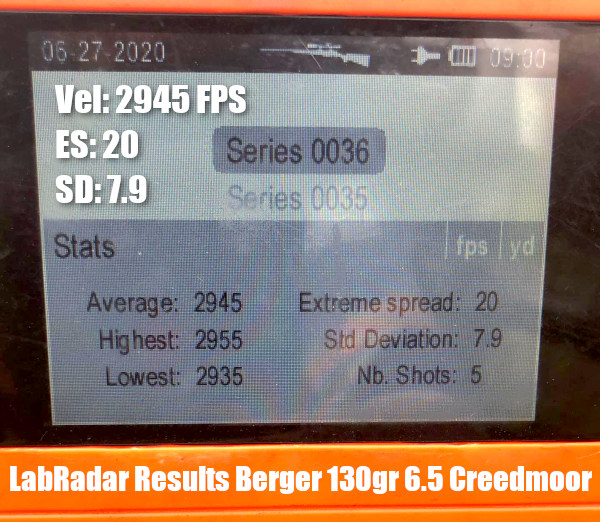
Is factory 6.5 Creedmoor ammunition good enough to win a PRS or NRL competition? The answer is a resounding “YES” if we’re talking about Berger ammunition. Produced with Berger match bullets and premium Lapua brass, this Berger 6.5 ammunition demonstrated excellent accuracy, impressive velocity, and very good ES/SD numbers. When tested at 1000 yards with an MPA-stocked PRS rig with Rem 700 action, this ammo showed just half-MOA of vertical, and produced a group that would have been a 50-1X in F-Class competition. That’s quite impressive for a PRS rig.
This ammo test was performed by our friend Erik Cortina from Texas. Erik is a top F-Class competitor who also shoots tactical matches (for fun and glory). Erik recently built a new 6.5 Creedmoor with a Remington 700 action. Though this rifle sports a top-shelf MPA chassis and premium Kahles scope, Erik calls this his “budget build” because it has a plain Rem 700 factory action rather than the elite Borden actions he normally runs. Erik’s actions of choice are the Borden Mountaineer for PRS and Borden BRM-XD for F-Class.
Erik posted: “Shot my budget 6.5 Creedmoor today with Berger Bullets factory ammo. I shot five rounds over the chrono to get speed. I used BC info from the box and it all lined up properly. I adjusted my ECTuner to tune load and it took just 15 shots to get it shooting well. It’s simple with good components.”
This Berger factory ammo features Berger 130gr Hybrid OTM Tactical bullets. The Lapua 6.5 Creedmoor cases have a large rifle primer. You can see this ammo displays good velocity with Extreme Spread and Standard Deviation rivaling good hand-loads.
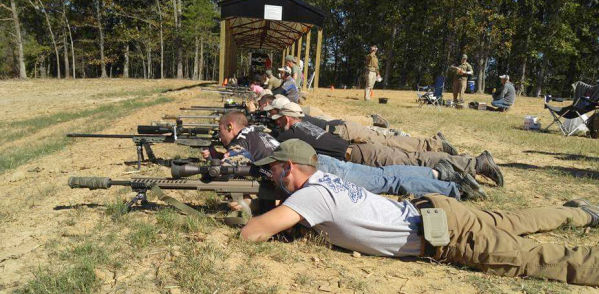
Cortina says the very accurate Brux barrel and razor-sharp 6-24x56mm Kahles scope help achieve this kind of outstanding performance at 1000 yards. Here are the key components for Erik’s latest PRS rig:
Barrel Tuner by Erik Cortina — Fits Behind Muzzle Brake
This rifle features a barrel tuner designed and crafted by Erik Cortina. You can the ECTuner alone, or, as you can see, the ECTuner can be fitted BEHIND a muzzle brake. Erik tells us: “The ECTuner allowed me to tune the barrel to my ammo rather than tuning the ammo for barrel as is done when reloading. With the tuner, there is no need to try different brands of ammo as they can all be tuned to shoot as good as possible in my rifle.”
MPA Chassis Configuration Guide
Erik’s “budget” PRS rifle employs a MasterPiece Arms (MPA) BA Competition Chassis with Rapid Adjustment Technology (RAT). This MPA Arms Video shows how to set up an MPA Chassis to suit the owner:
NRA Cancels WSC and NRA Police Shooting Championships Due to COVID-19
No big money this year at the NRA World Shooting Championship — the event has been cancelled. And Likewise the NRA Police Shooting Championship will not take place in 2020. This is the Year of Pandemic, and two more major shooting events have fallen victim to COVID-19.
Yesterday the National Rifle Association (NRA) issued the following statement:
Due to the circumstances surrounding the COVID-19 pandemic and the many ensuing federal and state safety regulations and mandates, the NRA has made the difficult decision to cancel the NRA World Shooting Championship and the NRA National Police Shooting Championships. Both events were scheduled to be held in mid September 2020 in West Virginia and Mississippi respectively.
We share your disappointment that both these competitions that attract participants from across the globe had to be canceled. The NRA wishes everyone good health and the best of luck. Stay safe and healthy.
The WSC was a big deal. It attracted top multi-gun competitors such as Jerry Miculek, Dan Horner, Doug Koenig, and Bruce Piatt. The winner took home a fat check for $25,000. This unique 3-day multi-gun match tests competitors’ skills across twelve challenging stages involving nearly every major shooting discipline for rifles, shotguns, and pistols. This major match attracted both sponsored Pros and “regular Joes”. Shooters were split into two groups: a Professional Division for sponsored shooters, and the Amateur Division for non-sponsored competitors. All firearms, optics, and ammo were provided by match sponsors for both divisions.
This video shows features of past NRA World Shooting Championship
All Equipment Was Supplied at NRA World Shooting Championship
“What makes this event very unique, especially to a professional shooter, is all the equipment is supplied. You have to leave your ego at home and just try to adapt as best you can to the equipment that you have supplied.” — Jerry Miculek
WSC stages encompassed everything from trap to bullseye pistol to PRS-style precision rifle. There was even a cowboy action stage with Henry “Golden Boy” lever-action rifles.
Dennis DeMille shows a young competitor at the CMP Western Games how to adjust his leather sling.
If you want to learn more about setting up your sling properly for position shooting, here are some tips from Dennis DeMille, a past Service Rifle Champion. Dennis explains how to choose a sling, and how to adjust it to fit properly.
The Benefits of Dry-Fire Training
Once you know how to set up your sling properly, you’ll want to practice. Dennis DeMille stresses the importance of dry-fire practice with sling and shooting coat. Dry-Fire training is essential to the sling disciplines. Dennis DeMille, a national Service Rifle Champion, told us that, for every minute he spent in actual competition, he would spend hours practicing without ammunition. While in the USMC, Dennis would practice in the barracks, working on his hold and dry-firing:
“The most important thing is to spend time off the range practicing. Most of what I learned as a High Power shooter I learned without ammunition — just spending time dry firing and doing holding exercises. Holding exercises will really identify the weak parts of your position. The primary purpose of dry firing is to get you used to shooting an empty rifle. If you can shoot a loaded rifle the same way you shoot an empty rifle then eventually you will become a High Master.”
SFC Brandon Green, 2018 Nat’l High Power Champion. Brandon, one of the nation’s best “hard-holders”, demonstrates proper use of sling in prone position.
Setting-Up a Leather Service Rifle Sling for Competition
So you made the mistake of disassembling your leather service rifle sling, or are intimidated about how to use one? In this Creedmoor Sports InfoZone video, former Creedmoor G.M. Dennis DeMille explains how to set up and use a sling. The covers the basics — Dennis starts with a totally disassembled leather service rifle sling and shows you how to set it up properly.
Tip: “Many shooters shy away from using a leather sling because they have never been taught how to use one. That’s unfortunate. In my opinion a leather sling offers more support than a web sling, which is important when competiting with the heavier than normal rifles.”
Configuring the Sling for the Standing (Offhand) Position
In this second in a series of Creedmoor InfoZone videos on the setup and use of the leather service rifle sling, Dennis DeMille details how to configure and best utilize the leather service rifle sling while shooting from the standing position.
Tip: “Putting the Frogs in different hole will change the amount of added elevation a sling provides.”
Looking at Sling Types — Comparing the Features
In this video Dennis showcases a large variety of shooting slings. He explains the strong points of each type so you can choose the sling best suited to your discipline and shooting style.
Report by Craig Arnzen, Area 419
As the PRS and other tactical/practical competitions continue to grow, a guy tends to wonder, just how good are the top competitors? And what are they actually doing (and viewing) as they complete a stage? Well, a great video from the new Long Range Precision Shooters YouTube Channel let us see what the best in the sport see through their scopes when they shoot.
This video features Dave Preston, 2015 National Champion and perennial powerhouse, shooting the PRS Skills barricade. Dave Preston is widely considered the best in the nation running this PRS stage. Dave nearly always shoots 100% with the fastest recorded time. In this video you’ll see him successfully engage all eight shots in under 43 seconds — that’s crazy fast. This includes a POV sequence (4:35 time-mark) showing the actual view through Dave’s scope as he completes the stage.
Watch this video! Dave offers excellent advice on gun-handling and body positioning for barricades. Listen to what he says and you WILL shoot better.
This video features the PRS Skills Barricade, an 8-round, 4-position stage featured at the majority of PRS matches throughout country. It’s called a “Skills Stage” as it is run the same way at every national match and gives shooters the ability to compare skill levels based on hit percentage and speed.
The target is a 10″ plate at 400 yards. There are four different positions, with two shots each. Most people run this stage in about 70 seconds, some in the mid-60s, the greats in the high 50s, and Dave does it in the low 40s… mighty impressive!
The Right Gear Aids Stability and Lets You Shoot Faster
Let’s also take a look at two pieces of gear that really helped Dave Preston get stable and shoot fast.
1. BARRICADE BAG — To Get Stable, Really Stable
In the video Dave is using a Solo Sac from Short Action Precision This bag was designed by USMC Solomon Mansalala, and $5 of every purchase goes to help the Marine Scout Snipers buy gear. It’s a very soft/dense bag and is popular at matches.
The other bag that sees a LOT of use, and is far and away the most used, is the patented Gamechanger Bag from Reasor Precision Solutions and Armageddon Gear.
2. MUZZLE BRAKE — To Make Your Follow-Up Faster
You’ll notice that in the video the rifle is very steady through firing, even though he is not applying a lot of pressure to the rifle. Dave is using a Hellfire Muzzle Brake from Area 419. Combined with the soft-recoiling 6mmBR cartridge he is able to spot his impacts and make adjustments, and can also make very fast follow-up shots as his rifle hasn’t bounced way off target.
As a member of the USAMU, SFC Daniel Horner established himself as one of the top 3-Gun shooters on the planet. In fact, given his major championship titles, a strong argument can be made that Horner is the most successful Multi-Gun competitor in history — the best of the best. Now a civilian professional, Dan Horner competes as Team SIG Sauer’s 3-Gun ace.
Horner captured yet another prestigious Championship earlier this month, winning the 2020 USPSA National Championship. Horner finished first in the Tactical Division at the 2020 USPSA Multi-Gun Nationals at the Universal Shooting Academy in Frostproof, Florida, June 11-14, 2020. This is Daniel’s 12th victory at the prestigious Multi-Gun Nationals.
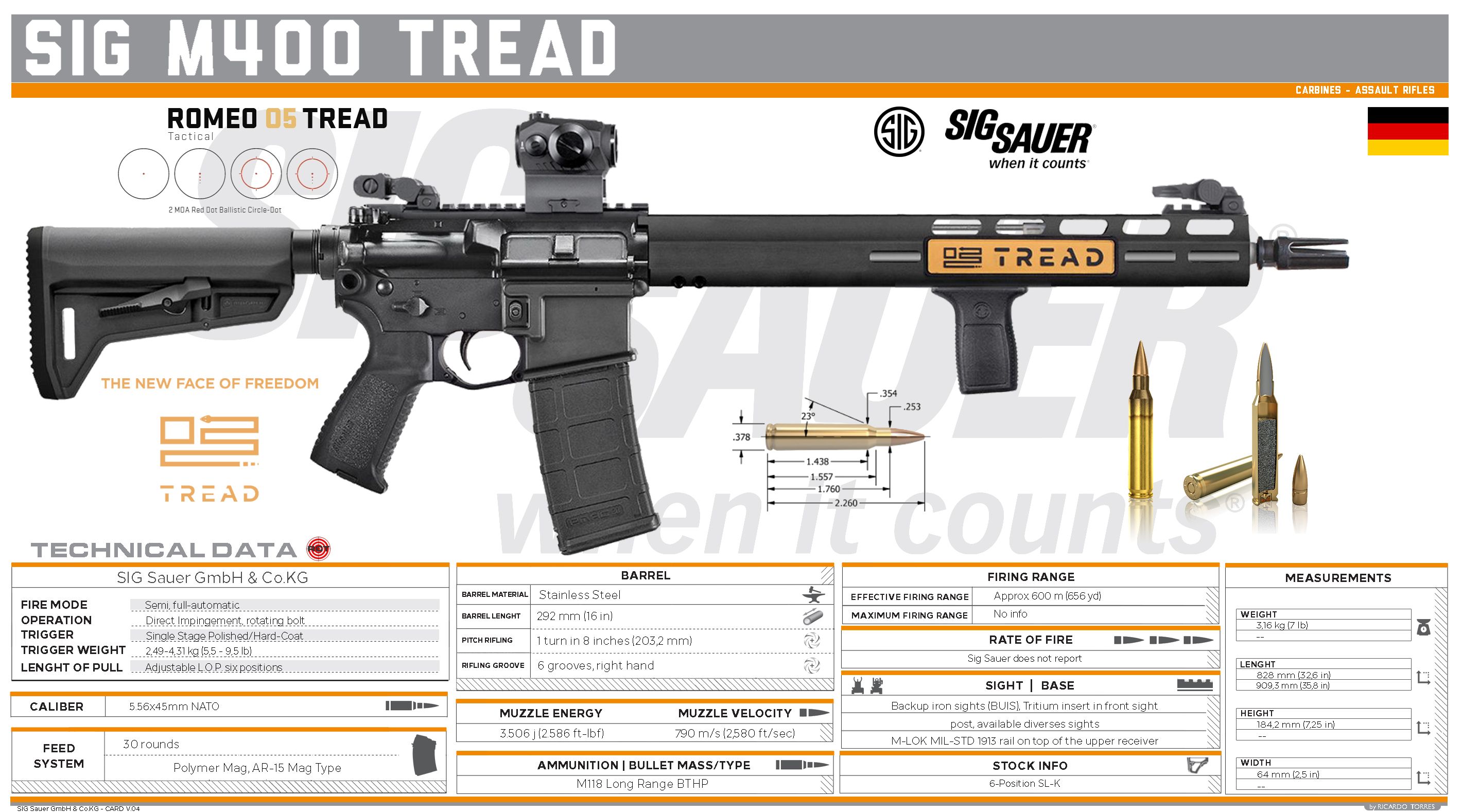
At the USPSA Nationals Horner competed through 12 stages with pistol, rifles, and shotgun. For pistol competition, Horner used a SIG Sauer P320 X5 LEGION pistol with iron sights. For the long-range competition, Horner used his SIG Sauer M400 rifle with a SIG Sauer TANGO6T riflescope, and a SIG KILO 3000BDX Rangefinder.
Click Photo for full-screen diagram
Horner said the 2020 Multi-Gun Nationals were very tough — a special challenge:
“The competition at this year’s Multi-Gun Nationals was the best I’ve seen. Everyone that competed had obviously spent extra time training and practicing while they were at home over the past few months. With this being the first major nationals match since quarantine, the training showed and the competition was elevated. The accuracy and reliability of my SIG equipment, combined with my training routine, gave me the edge I needed to pull-off the victory[.]”
How Hot is Horner — Just Watch and Be Amazed
Here are two videos showcasing Horner’s Skills with Rifle and pistol. In the first video, Horner demonstrates how to move and shoot with an AR platform rifle. In the second video, Horner demonstrates his speed, mobility, and accuracy during the final stage of a 3-Gun Nation event.
Rifle Skills for Multi-Gun Competition — Grip, Stance, and Body Position
Daniel Horner Shreds 3-Gun Nation Stage with Blazing Speed
As a soldier with the USAMU, Horner was a true phenom with rifle, pistol, and shotgun, winning multiple 3-Gun titles against tough competition. When he was on his game, no one on the planet was better in the 3-Gun arena. His record of major multi-gun championships may never be rivaled. He has won over 125 major events/titles at the world, national, regional, and state level.
Daniel Horner Major Titles
10-Time USPSA Multi-Gun National Champion
4-Time 3-Gun Nation Pro Series Champion
2014 NRA World Shooting Championship Winner
2-Time Int’l Sniper Competition Team Winner
2-Time IDPA National Champion
IPSC Shotgun National Champion



 3. Ammo Caddy on Joystick Arm – Charles shoots a Right Bolt/Left Port action, so he pulls his rounds with his left hand. Note that Huckeba’s record rounds rest in a small, wood ammo caddy attached to the end of the joystick shaft. Look carefully, you’ll see the wood ammo block in place of the normal black ball at the end of the joystick. That allows Charles to pull shots with the absolute minimum of hand movement. Ingenious! Huckeba is very fast, with a great economy of motion. I believe that because his ammo was literally at hand, Charles was better able to keep his focus on aiming and the flags.




 Cortina says the very accurate Brux barrel and razor-sharp 6-24x56mm Kahles scope help achieve this kind of outstanding performance at 1000 yards. Here are the key components for Erik’s latest PRS rig:


 The Benefits of Dry-Fire Training