“Science tells us that exposure to continuous noise of 85 dB for eight hours is enough to cause permanent hearing loss, and worse, spikes of 130 dB and more can result in permanent hearing damage instantly.” Source: NRA Blog.
The Risk of Hearing Loss
Hearing loss can be progressive and irreversible. If you are a shooter, this is serious business. As the NRA Blog cautions: “You may not even realize you’re harming your hearing. Hearing loss occurs gradually, and can go effectively unnoticed until symptoms become severe. By then, the damage is done.”Effective hearing protection is a must whenever you are shooting firearms or when you are in the vicinity of gun-shots. For ultimate protection, we recommend a good set of tapered foam earplugs, topped by ear-muffs. However, there are situations when you may prefer lighter-weight hearing protection that can be quickly removed. For example, if you are standing well behind the firing line as an observer, or if you are working as a rangemaster or waddie some distance away from the shooters.”
Sound Levels for Common Noises:
9mm Luger pistol: 160 dB
Jet aircraft engine (near): 140 dB
.22 LR pistol: 134 dB
Normal human pain threshold: 120 dB
Noisy Nightclub: 110 db
Riding Motorcycle at 65 mph: 103 db
Power Lawnmower: 95 dB
Hearing damage possible: 85 dB (sustained for 8+ hours)
Ringing Telephone: 80 dB
Normal conversation: 60 dB
What about suppressors? If you use a suppressor is it OK to dispense with hearing protection? Not really. Even the most effective suppressors, on the smallest and quietest calibers (.22 LR), reduce the peak sound level of a gunshot to between 110 to 120 dB. To put that in perspective, according to the National Institute for Occupational Safety and Health (NIOSH), that is as loud as a jackhammer (110 dB) or an ambulance siren (120 dB). For normal caliber handguns and rifles, suppressed sound levels routinely exceed 130 dB, just shy of OSHA’s “hearing safe” threshold of 140 dB. Accordingly, we recommend use of hearing protection even when shooting suppressed.
1. Ear Muffs — Max Protection and Compact Options
The highest current USA Noise Reduction Rating is 34 dB NRR. To get that kind of protection, you need pretty big muffs, but thankfully, you don’t have to spend big bucks. For under $15.00 you can buy quality ANSI-approved muffs with a 30+ dB Noise Reduction Rating. Chose the 34 NRR G&F Pro Muffs at $10.99 or the more comfortable 30 NRR Walker EXT Range Muffs for $12.75. Both products have padded head-bands which retract.
Many hunters and competitive shooters prefer low-profile ear muffs. As these typically have a lower Noise Reduction Rating, perhaps NRR 22-24, we recommend running earplugs under muffs, particularly when you are at a busy range or shooting a match. If you use low-profile electronic muffs, such as Howard Leight Impact Sport Muffs, you should still be able to hear range commands even with plugs underneath.
2. Electronic Plugs — New Technology with Adjustable Volume
For maximum hearing protection we still recommend good muffs over quality foam ear plugs, there is a new option available. A variety of companies now offer electronic ear buds that include small speakers so you can hear range commands and conversations. Please note — these MUST be specially-designed protective in-ear devices. Do NOT just use ear-buds designed for music playback!
Howard Leight recently introduced new Impact Sport In-Ear plugs with an impressive 29 dB Noise Reduction Rating (NRR). That NRR is better than most compact ear muffs. The plugs automatically compress amplification when loud impulse sounds (like gunshots) exceed 85dB. Internal amplification allows you to hear range commands and conversations. The cord connecting the plugs includes twin, handy volume controls. These plugs come with moldable earhooks with 3 different ear tip sizes. The base unit (dark green color) is $85.39 on Optics Planet. A deluxe model with BlueTooth is also available for $113.62 on Amazon. With the BlutTooth version you can take phone calls.
3. Foam Earplugs — Small, Inexpensive, but Essential
20 Pairs
50 Pairs
Quality foam earplugs offer great hearing protection at low cost. These Howard Leight NRR33 Max plugs are your Editor’s favorite foam earplugs. Between shooting, motorcycling and mowing lawns, I probably have Max plugs in my ears 3-4 days a week. These Leight Max plugs are very effective, easy to insert/remove (with the flared ends), and they seem to be less abrasive in the ear canal than some other brands. Right now you can get 20 pairs of these NRR33 Leight Max plugs for just $8.88 or 50 pairs for $11.90.
Note, if you prefer thin, light-weight earmuffs, we recommend running earplugs underneath for double protection while shooting firearms (or when you’re on the firing line). Sound experts tell us that running plugs and muffs together can effectively improve your effective noise reduction by 4-7 dB NRR.
Hearing bands are inexpensive, lightweight, and are handy for special situations, such using hedgetrimmers and noisy power tools, when you may need to frequently remove the protection. These banded products are a also a very good form of hearing protection for hunters. You can keep them handy around the neck while spotting game, and then insert the plugs before shooting. We have tried two types of banded hearing protection, the Howard Leight Quiet Band (shown above) (25 dB NRR), and the Radians Rad-Band (23 dB NRR). The Leight Quiet Band is quite durable and the plugs can be replaced.
Radians Rad-bad is very light-weight, with Jelli™ Plugs that are comfortable, washable, and reusable. Peltor also offers Sport Banded Earplugs but we think those are a bit flimsy and the NRR seems exaggerated.
This time of year, deer and elk hunters throughout the Northern Hemisphere trek into the wilds in search of game. To celebrate the hunting lifestyle, we’re reprising a story from Europe that showcases the beauty of nature that can be experienced on a hunting trip.
If you need a break from your hum-drum day at the office, how about taking a virtual vacation to Norway, where you can explore the scenic mountains in the Fjord region?
Forum member Kenneth Skorpen (aka “Sal”) has created a cool video of a deer-hunting trip he took in Norway. He didn’t bag a buck on this trip, but the walk in the Fjordland mountains took Kenneth through some spectacular scenery. (At the 11:25 time mark you’ll see an amazing sunset over the Fjord.) Kenneth did encounter a doe that had fallen down the mountain, and apparently broken its neck (14:35 time mark). The terrain is very steep, and Kenneth observed that: “I feel fortunate to be able to do this, but I also feel very tired in my legs. Did you know that the hares around here have shorter left legs due to the steep hills?”
More Hunting/Shooting Videos from Norway
You can watch more interesting hunting and shooting videos from Norway on Kenneth Skorpen’s Streken Vertebrae YouTube Channel. Here are some links:
And here is another Skorpen video showcasing beautiful Norwegian landscapes. This was filmed during a February rifle testing session with targets at 1100 and 1400 meters. You’ll see some stunning snow-capped scenery here, starting at the 4:30 time mark.
Do you know someone getting started in the shooting sports? Or perhaps you know shotgun or rifle shooters who want to improve their handgun skills because they have obtained CCW pistol permits? Then here is a good resource for those shooters-in-training. Smith & Wesson GUNSMARTS is a new video series that covers the key points of firearm ownership, from purchasing a pistol, to shooting techniques, gun safety, and storage. While this 38-part series does include some rifle-centric videos, it is mostly focused on handgun training, as you might expect from Smith & Wesson.
The GUNSMARTS series has 38 different videos covering gun safety, gun operation, marksmanship, maintenance, and secure storage. There are both general videos about gun handling and very specific videos about topics such as sight alignment, magazine loading, optics and more. Here are six of the best videos in the series. You will find 32 more on the Smith & Wesson Gunsmarts Playlist Page.
10 Tips for Your First Visit to the Range
Shooting Fundamentals — Sight Picture and Sight Alignment
Handgun Skills — Grip Pressure
Concealed Carry Positions and Holster/Belt Options
Talented sharpshooter Kirsten Joy Weiss is featured in an episode of NRA All Access. The show covers Kirsten’s development as a competitive shooter, and her success as a trick-shot artist with her own popular YouTube channel. Here’s the All Access segment featuring many of Kirsten’s most famous trick shots.
During the video Kirsten also talks about her background in shooting and how she wants to be a good ambassador for the shooting sports, “spreading the positive reality of shooting”. Kirsten explains: “The fun challenge and joy of shooting is important to me because I really wanted to be a positive example. So when the media says the ‘guns are a bad thing and nobody does anything good with guns’, they can say ‘Well, what about her [Kirsten]’?”
Kirsten: “I think that it’s important for young girls to have somebody that they can look up to… I feel responsibility to show young shooters coming up, especially females, that you can respect yourself and shoot a gun as well.”
A gifted “natural” shooter, Kirsten started shooting fairly late — at age 16. Despite her relatively late start, she learned very quickly, and managed to earn a place on the University of Nebraska shooting team. That literally opened up a new world for Kirsten: “During the course of my career, I’ve had a lot of success. I’ve gone to World Cups… in Zagreb, Croatia, in Munich, Germany. I’ve won National Championships, and got on to the U.S. Olympic short list, so it’s been a good career.”
Kirsten tells us: “A lot of people don’t think of shooting as a sport, but it absolutely is, and I would even go so far as to say that it is an art form.” We don’t know if this is art, sport, or magic, but very few shooters have the skill or flexibility to make this upside-down shot…
In this video, former Army Ranger sniper team leader Ryan Cleckner explains how proper head and scope position is a critical component to accurate shooting. Ryan finds that some shooters place the scope too far forward or too far rearward. If the scope is too far back you may have issues with eye relief and stock reach to shoulder. If it is too far forward, you may have cheek-weld problems or get neck strain. Cleckner cautions: “When you are in a good prone position, you don’t want any strain in your neck muscles or back.”
In the video, Cleckner offers a simple method to check your scope position:
“To see if your scope is set up properly … close your eyes, lay your head on your gun, get completely comfortable, and only when you are set-up, then open your eyes. If you can’t see clearly through your scope, CHANGE something [such as comb height or scope position]”.
“When you open your eyes, if you see some scope shadow [i.e. the black ring around the edge of the scope picture], figure out which way you need to move your head to get rid of that shadow, and then make adjustments to either your position, the rifle, or the scope.”
“Very often you’ll open your eyes and realize you need to move further back or further forward. Instead of moving your position [or head], move the scope and get it set up properly.”
Tip on Viewing Your Reticle:
Cleckner: “Sometimes it can be difficult to focus between the target and the reticle, even with the parallax adjusted properly. I recommend you focus only on the reticle. Just like the front sight on a rifle or a handgun, that reticle is what you can control, and it’s what matters. Focus on a crisp, clear reticle, in a stable platform, and all that’s left is trigger control.”
Long Range Shooting Handbook — A Good Resource
Cleckner’s Long Range Shooting Handbook covers a wide range of topics important for precision marksmanship — both shooting skills and technical matters. You can view Sample Chapters from Ryan’s Book on Amazon.com. Cleckner’s book is designed as an intro to key concepts such as MOA vs. Mils, External Ballistics, and Environmental Effects. Included are personal tips and advice based on Cleckner’s years of experience as a sniper instructor and special operations sniper.
The Long Range Shooting Handbook is divided into three main categories: What It Is/How It Works, Fundamentals, and How to Use It. “What It Is/How It Works” covers equipment, terminology, and basic principles. “Fundamentals” covers the theory of long range shooting. “How to Use It” gives practical advice on implementing what you’ve learned, so you can progress as a skilled, long range shooter.
Ryan Cleckner was a special operations sniper (1/75 RGR) and he served as a U.S. Army sniper instructor. Currently he works as a firearms industry executive and practicing firearms attorney.
Right now reloading presses are in high demand. If you are shopping for a single-stage press, here’s a good press you may still find available at many vendors. The Hornady Iron Press features a super-strong, pyramid-style cast-iron frame with an open front. A clever optional “automatic” priming system shuttles primers from a vertical tube in the back to the shell-holder in the front. This is very clever engineering. The Auto-Prime system is sold separately or as part of the Iron Press Reloading Kit.
The broad top of the beefy (26-lb.) Iron Press can hold case prep tools (such as chamfer tool and case-neck brush) and/or a box for bullets or brass. NOTE: This is NOT a turret press — you can only use one die at a time. However, Hornady offers an accessory “Die Caddy” (sold separately) that can hold up to three (3) more dies. That way you can quickly switch from a sizing die to a seater die (or vice-versa). What Hornady calls the “Accessory Mounting Deck” gives quick access to items such as trays for bullets or cases, chamfer and deburr tools, case neck brushes, primer pocket cleaners and other accessories. The Iron Press comes with the Lock-N-Load® bushing system which allows for rapid die changes.
Optional Auto Prime Shuttle Priming System
The optional auto-priming system is a real selling point for this press we think. When you move the press handle rearwards, a horizontal bar toggles back to pick up a primer from the column in the rear of the press. Then this same bar move forwards to place the fresh primer in the center of the shell-holder. Hornady explains: “The available gravity-fed Automatic Priming System (sold separately or with the Lock-N-Load® Iron Press Reloading Kit), combined with the Accessory Mounting Deck, increases reloading efficiency by allowing more processes to occur simultaneously. The Iron Press is the first of its kind to allow the ability to deprime, pause, and remove the case to chamfer & deburr … then replace and prime.” This video shows how to install and operate the Auto Prime system.
Video Shows Set-up and Operation of Gravity-Fed Shuttle Priming System:
Shoot Like A Girl is proud to announce that the Sea To Shining Sea Tour will hit the road in early 2022, bringing a mobile range to locations across the country. This organization is dedicated to educating women and their families about the importance of firearms safety. The Shoot Like a Girl’s signature semi-tractor trailer, fitted with state-of-the-art firearms simulators, will allow attendees to gain experience in handling and shooting handguns, long guns, and compound bows. The experience is FREE for participants.
Stops on the 2022 Sea To Shining Sea Tour include:
Dallas Safari Club Expo (Dallas, TX) – January 6-9, 2022
SHOT Show Industry Day at the Range (Boulder City, NV Restricted) – January 17, 2022
Cabela’s (Fort Worth, TX) – February 5-6, 2022
National Wild Turkey Federation Convention (Nashville, TN) – February 17-20, 2022
Bass Pro Shops (Spanish Fort, AL) – March 5-6, 2022
Bass Pro Shops (Bossier City, LA) – March 19-20, 2022
Bass Pro Shops (Little Rock, AR) – April 2-3, 2022
Bass Pro Shops (Olathe, KS) – April 23-24, 2022
Cabela’s (Grand Junction, CO) – May 14-15, 2022
Bass Pro Shops (Reno, NV) – June 4-5, 2022
Cabela’s (Springfield, OR) – June 25-26, 2022
Cabela’s (Tulalip, WA) – July 9-10, 2022
Rocky Mountain Elk Foundation’s Mountain Festival (Park City, UT) – July 21-24, 2022
Bass Pro Shops (Auburn Hills, MI) – August 6-7, 2022
Cabela’s (Columbus, OH) – August 20-21, 2022
Cabela’s (Hamburg, PA) – September 3-4, 2022
Bristol Motor Speedway NASCAR Event (Bristol, TN) – September 15-18, 2022
Bass Pro Shops (Morgantown, WV) – October 1-2, 2022
Cabela’s (Round Rock, TX) – October 15-16, 2022
Cabela’s (Glendale, AZ) – November 5-6, 2022
What To Expect
At any Shoot Like A Girl event, guests 16 years of age or older can train with handguns and long guns under guidance from certified female instructors. The mobile range features a state-of-the-art, military-grade firearm simulator which provides realistic recoil, impact, and sound feedback. Archery coaches will also be onsite to assist guests with shooting bows. Outside the range, at the Shoot Like A Girl gun counter, visitors can handle non-firing firearm samples, including revolvers, semi-automatic pistols, shotguns, and rifles. Additional products will be on display, including optics, conceal carry bags, holsters, TrueTimber camouflage gear, SABRE pepper spray products and more. More information about Shoot Like A Girl’s mission, partners, and event schedule is available at ShootLikeAGirl.com.
“Shoot Like a Girl” long-sleeve shirt from Savage Infidel.
Check the ShootLikeAGirl.com Website for Mobile Range 2022 Travel Schedule.
About Shoot Like A Girl
Shoot Like A Girl is committed to growing the number of women and their families who participate in the shooting sports by empowering them with confidence. The Shoot Like A Girl semi-tractor trailer, utilizing InVeris Training Solutions state-of-the-art military grade firearm simulator, travels to cities all across the United States. This allows attendees to shoot pistols, rifles, and bows in a fun, safe, and comfortable atmosphere. The event is free to each guest thanks to Shoot Like A Girl’s corporate partners.
This week, Shooting USA TV spotlights the 2021 GAP Grind, the largest PRS Pro-Am Tactical match with nearly 400 competitors. The 2021 GAP Grind/Bushnell Pro/Am took place in October at the K&M Precision Shooting Complex in Finger, Tennessee. The 3-day event, the biggest PRS match of the year, included professional and “amateur” classes with both individual and team competition. Here are highlights from the 2021 event in this Area419-produced video:
GAP Grind 2021 in Tennessee:
SHOW TIMES: This Shooting USA Episode airs Wednesday, December 15, 2021 at 9:00 PM Eastern and Pacific; 8:00 PM Central. If you miss the regular broadcast, you can stream the show at any time on Vimeo for $0.99 per episode.
The GAP Grind is held at the impressive K&M Shooting Complex in Tennessee:
Lots of Action, with 20+ Stages
The GAP Grind is a challenging, “high tempo” match with minimal down-time between stages. Over the course of 20+ stages, competitors will fire 200+ shots at a variety of steel, paper, moving, and reactive targets out to 1,200 yards. Targets vary in size/difficulty based on the shooter’s position, distance, and time allotted. Most stages include “stressors” — i.e. time limits or required movement(s).
The GAP Grind typically attracts over 300 competitors — half experienced shooters and the other half newcomers to the sport. The key to growing the shooting sports is attracting new shooters. The best way to bring in “new blood” seems to be the Pro-Am type format. At the GAP Grind, experienced shooters share their knowledge and guide the new shooters through the competition.
Great video shows K&M Complex — overhead and action shots — Click II pause to halt:
GAP Grind Hardware
You’ll find the latest and greatest PRS hardware at the GAP Grind. Notable in 2021 was the fact that many top competitors “stepped down” from the 6.5/6mm Creedmoor to the smaller, more efficient 6mm Dasher, 6BRA and other 6mm cartridges. The Dasher offers excellent accuracy with less recoil than the 6.5 Creedmoor. Also, many top shooters are now running Kahles optics and we predict will be running the new Zeiss FFP scopes in 2022. Photo by Shelley Giddings.
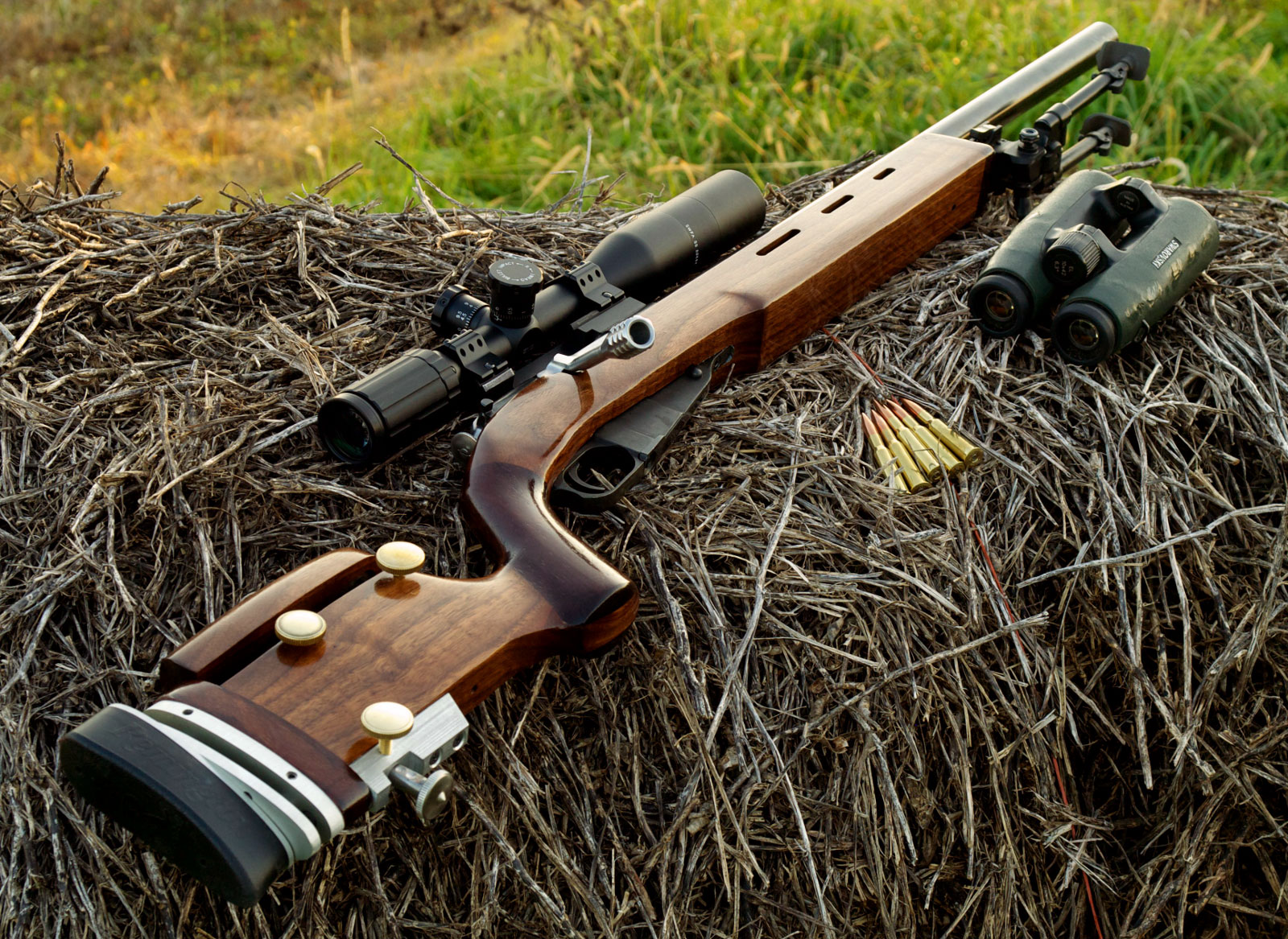
One of the most popular features of our Shooters’ Forum is the Official ‘Pride & Joy’ Rifle thread. There you’ll find dozens of interesting rifles, with photos and descriptions supplied by proud owners. Today we’re spotlighting one of the more interesting ‘Pride & Joy’ rifles unveiled this year, a Mosin Nagant “senior citizen”. This 72-year-old Russian bolt gun is not like any Mosin Nagant you’ve ever seen before. It has been brought into the 21st Century with a handsome target stock and some first-class upgrades, including Lothar Walther barrel and Timney trigger. Here’s a look at a very nice Russian rifle, belonging to Forum member Ben C. (aka “Grimstod”):
Video Shows Rifle Shooting Sub-Half-MOA from Bipod (in the Snow):
Name of rifle: Smyert Mk3 (Modified Mosin Nagant)
Make: Izhmekh/Izhevsk (“Izzy”) High Wall
Model: 91/30 | Year: 1942
Scope mount: Rock Solid (looks like an action sleeve)
Scope: SWFA 20x42mm MRAD
Gunsmith: Sheppard
Bolt handle: Rock Solid with Surgeon tactical handle
Bipod: Versa Pod
Total Weight: 18.6 lbs
Grimstod’s Mosin Nagant Custom Shoots Under 0.5 MOA From Bipod
Even in harsh winter conditions, the rifle shot well. (I guess we should expect that for a Russian gun). The photo below shows a group shot from bipod. (The video shows Grimstod’s snow-bound range session). Grimstod calculated the group at 0.394 MOA measuring from outside edge to edge. Using our On-Target software, which measures center to center of most distant shots, we came up with 0.428 MOA. Still that’s impressive for an ancient action being shot in the dead of winter with snow falling. To learn more about this rifle (and view photos of the build process), visit the SurplusRifleForum.com.
The History and Features of the Mosin Nagant M1891
Now that you’ve seen a modernized Mosin Nagant, we through we’d provide some information about the original rifle, first issued in the late 19th century. It is one of the most mass-produced military bolt-action rifles in history with over 37 million units having been made since 1891.
The is a lengthy Wikipedia article on the Mosin Nagant rifle design and history. The 3-line rifle M1891, known in the West as Mosin Nagant and in former Soviet Union as Mosin’s rifle (Russian: винтовка Мосина), is a five-shot, bolt-action, internal magazine–fed military rifle. It is primarily chambered for its original 7.62×54mmR cartridge. The 3-line rifle, Model 1891, its original official designation, was adopted by the Russian military in 1891. There have been several variations from the original rifle, the most common being the M1891/30, which was a modernized design introduced in 1930.
Here is a test of the Sniper Version of the Mosin Nagant:
Photo credit: Nemo5576 retouched by Ewan ar born, Copyrighted free use, via Wikimedia Commons.
Like the Gewehr 98, the 1891 Mosin uses two front-locking lugs to lock up the action. However, the Mosin’s lugs lock in the horizontal position, whereas the Mauser locks vertically. The Mosin bolt body is multi-piece whereas the Mauser is one piece. The Mosin uses interchangeable bolt heads like the Lee–Enfield. Unlike the Mauser, which uses a controlled-feed bolt head in which the cartridge base snaps up under the fixed extractor as the cartridge is fed from the magazine, the Mosin has a push-feed recessed bolt head in which the spring-loaded extractor snaps over the cartridge base as the bolt is finally closed similar to the Gewehr 1888 and M91 Carcano or modern sporting rifles like the Remington 700. Like the Mauser, the Mosin uses a blade ejector mounted in the receiver. The Mosin bolt is removed by simply pulling it fully to the rear of the receiver and squeezing the trigger, while the Mauser has a bolt stop lever separate from the trigger.
Photo courtesy Armémuseum (The Swedish Army Museum), public domain.
Like the Mauser, the bolt lift arc on the Mosin Nagant is 90 degrees. The Mosin bolt handle is similar to the Mannlicher: it is attached to a protrusion on the middle of the bolt body, which serves as a bolt guide, and it locks protruding out of the ejection/loading port in front of a split rear receiver ring, also serving a similar function to Mauser’s “third” or “safety” lug.
In this video Jerry Miculek tests the carbine version of the Mosin Nagant:
The rifling of the Mosin barrel is right-turning (clockwise looking down the rifle) 4-groove with a twist of 1:9.5″ or 1:10″. The 5-round fixed metallic magazine can either be loaded by inserting the cartridges singly, or more often in military service, by the use of 5-round stripper clips.
Photo courtesy Armémuseum (The Swedish Army Museum), public domain.
Wikipedia text courtesy Creative Commons Attribution-ShareAlike 3.0 Unported License (CC BY-SA).
Area 419’s ZERO reloading press is a brilliantly engineered 9-station turret press with some very unique features. This press was designed to be the most precise turret ever created. As tested by Gavin Gear of UltimateReloader.com, the ZERO turret press delivered very impressive shoulder-bump consistency and ultra-low seated bullet run-out (about +/- 0.0005″). The numbers were as good as you can get from a quality single-stage press, so Area 419 did some impressive engineering. We would expect that, as this is an expensive product — MSRP is $1200.00. SEE FULL REVIEW on UltimateReloader.com.
The ZERO turret press lets you install up to nine (9) different reloading dies in the large top turret, which revolves around a central axis. But unlike most turret presses, the ZERO doesn’t have flex or wobble when you’re loading. This is because Area 419 includes a clever system for locking the turret in position after you’ve selected the die from your array. Area 419 also uses a unique system for securing shell-holders (see video at 12:00). This, likewise, adds to the precision of the press.
In the video above, you can see how the turret is secured with a “wedge clamp”. By loosening the wedge clamp you can index the press easily to any station. Then, when you have selected your die, you tighten the wedge clamp again. You can see this important procedure at 13:20 – 13:35 timemark in the video.
ZERO Turret Press Has Very Smooth Operation
Gavin observed that this ZERO turret is both smooth and very precise, thanks to smart engineering and the use of multiple bearings. Area 419 describes the design features:
— Turret (zero-slop) eliminates variability induced when removing and resetting dies
— The turret head holds nine 7/8×14-threaded dies (1-1/4 thread in future)
— Available ram-stroke here is 4.4″, allowing use of very tall cartridge types.
— Adjustable/interchangeable handle setup for maximizing leverage/feel based on operation
— Internally contained primer-catch system, slide-out drawer
Important Features of ZERO Turret Press
1. Press frame: 6061 Aluminum, clear anodized
2. Wedge clamp (locks turret into indexed position)
3. Turret (7075 aluminum and steel construction)
4. Adjustable handle with roller knob (set either left- or right-handed operation)
5. Bearings: Ball bearing plus roller thrust bearings for side plates
6. Ram riding in self-lubricated linear bearing
7. Spent primer catcher drawer
Milled from American billet aluminum and stainless steel, this press employs 14 bearings, including a self-lubricating linear sleeve bearing for the precision-ground 1.25″ ram. The linkage system also glides on bearings providing smooth operation with near-ZERO slop. The oversized ram features a 0.75″-diameter steel arm and ZERO-friction knob. The turret system is located with an oversized ball-detent system and secured using an over-sized, custom-made ZERO-point pull-stud. Locking the turret after indexing require only a half-turn of the supplied T-handle (see photo above). When indexing the turret, repeatability variance of the system should be less than .0005″.
The opening in the press will allow for sizing and seating of cases up to.338 Lapua Magnum, and will accept standard 7/8″ dies and standard shellholders. NOTE: Area 419 will be making and selling shellholders specifically fit to the system later in 2020.
SUMMARY — Impressive Press Delivers Precise Results
Gavin Gear was very impressed with Area 419’s new Zero Press, which he said offers the precision of a quality single-stage with the versatility of a turret: “There will always be people that prefer a traditional single-stage. Where the ZERO will be compelling is to those who want the precision of a single-stage without the need to screw dies in and out. Leaving your dies set can have benefits for precision as well — everything comes back to the ‘same place’ when dies are indexed into position. Screwing dies in and out can impose variation, and variation is the enemy of the ‘white lab coat shooter’. I plan on testing the ZERO press with ultra-high-end dies, and custom dies that I ream to my own specifications. I’m thinking that will show the true potential of this press!”
Area 419 ZERO Press Video with Operation Instructions


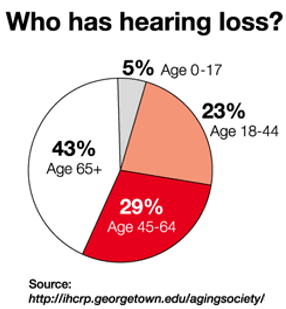 The Risk of Hearing Loss


 If you need a break from your hum-drum day at the office, how about taking a virtual vacation to Norway, where you can explore the scenic mountains in the Fjord region?


 A gifted “natural” shooter, Kirsten started shooting fairly late — at age 16. Despite her relatively late start, she learned very quickly, and managed to earn a place on the University of Nebraska shooting team. That literally opened up a new world for Kirsten: “During the course of my career, I’ve had a lot of success. I’ve gone to World Cups… in Zagreb, Croatia, in Munich, Germany. I’ve won National Championships, and got on to the U.S. Olympic short list, so it’s been a good career.”