On our main Accurateshooter.com website, you’ll find a comprehensive review of the STM system for cleaning cartridge brass with stainless media. To clean brass with stainless media, start with five pounds of small stainless pins sold by StainlessTumblingMedia.com. Place these along with a gallon of water, a little liquid cleaner, and two pounds of cartridge brass in a rotary tumbler, and run the machine for one to four hours.
Forum Member Tests STM System
Our reviewer, Forum member Jason Koplin, purchased the STM media and a new Thumler’s Tumbler. He then tested the STM cleaning procedure on his own brass, including some extremely dirty and tarnished “range pick-up” brass. Jason was thoroughly impressed with how well the STM process worked — as you can see from the “before and after” photos below. Brass which looked like it was ready for the scrap heap was restored to “like-new” appearance. The process works equally well on both rifle brass and pistol brass. Jason observed that one surprise benefit of the STM cleaning procedure is a big reduction in noise. Jason said the water-filled rotary tumbler was much quieter than his vibratory tumblers.
You’ll want to read Jason’s full review which shows more before and after images. The full article features a “how-to” video created by Forum member Cory Dickerson, the young man who pioneered the stainless tumbling process and founded STM. The video shows how to load brass, media, and cleaner solutions into the tumbler, and how to separate media from brass once the tumbling is done.
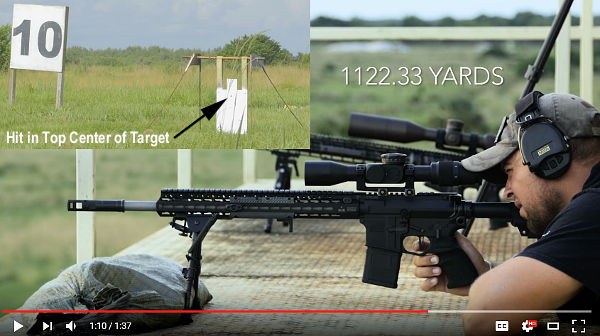
Many of our readers have never had a chance to shoot much past 600 yards. How far away does a 1000-yard+ target really seem to the naked eye? Well this short video answers that question. Gorilla Ammo, the video’s producers, used a camera-carrying aerial drone to fly downrange from the firing line all the way out to 1122 yards (and back again). Watch the drone footage at 0:00-0:07 and especially 0:48-1:03. The “bird’s-eye view” really gives you a sense of the distance. The “fly-back” at 0:48-1:03 time-mark is what makes this video worth watching.
The video features prone shooting at steel targets placed at 750 and 1122 yards. We do apologize for the lame, “oh so serious” voice-over which attempts to make this rather ordinary range session seem like some kind of life-changing experience. (Frankly, you may just want to turn the sound off — it’s that annoying.) It’s really not that big a deal to hit steel at 750 yards with a quality AR-15, chambered in .223 Rem, shooting Sierra 77 grain MatchKings.
Hitting Steel at 1122 Yards with 2540 FPS Ammo Can Be Challenging
The 1122-yard hits are a bit more impressive. Gorilla Ammo lists a relatively sedate 2540 fps Muzzle Velocity for its .223 Rem 77gr SMK ammunition. According to JBM Ballistics, at 1125 yards, that 2540 fps load has 68.3 MOA of drop from a 100-yard zero (firing at sea level and 80° F ambient). Morever the bullet goes trans-sonic around 750 yards (losing stability) and is traveling just 933 fps at impact. And the wind’s the killer — at 1125 yards, with this bullet/load, a mere 2 mph, full-value wind change can move the Point of Impact over three feet!
“[Elite] shooters have this specific thing that happens in their brain when they are shooting well. Maybe you’d call it a ‘quiet time’. One interpretation is that it is a lack of self-instruction or analysis. Once you are an expert you really shouldn’t be [thinking] ‘don’t do this, don’t do that’.”
In this video from USA Shooting, a scientist uses brain wave (EEG) and muscle activity monitors to study the biomechanics and cognitive functions involved in competitive shooting. The study explores how elite shooters control their muscles and mind before executing a perfect shot.
In the video, USOC Sports Psychologist Lindsay Thornton works with pistol shooter Teresa Chambers to evaluate (and optimize) Teresa muscle and brain wave activity during shooting. One purpose of the study is to see how a shooter’s muscles function before, during and after a firing sequence. The goal is to use the muscles in the most efficient manner. This reduces fatigue and improves shot-to-shot consistency. Thorton says: “We are trying to define [muscle activity] efficiency with numbers so we can replicate that.”
Thorton is also exploring how a top shooter’s brain functions when he or she is “dialed in” and shooting most accurately. Thornton explains: “We are looking at EEG activity, which is brain wave activity. Research studies show that shooters have this specific thing that happens in their brain when they are shooting well. Maybe you’d call it a ‘quiet time’. One interpretation is that it is a lack of self-instruction or analysis. Once you are an expert you really shouldn’t be [thinking] ‘don’t do this, don’t do that’ — everything should be pretty automatic.” Interestingly, the test showed a specific pattern of Alpha band brain waves right before a trained shooter breaks the shot.
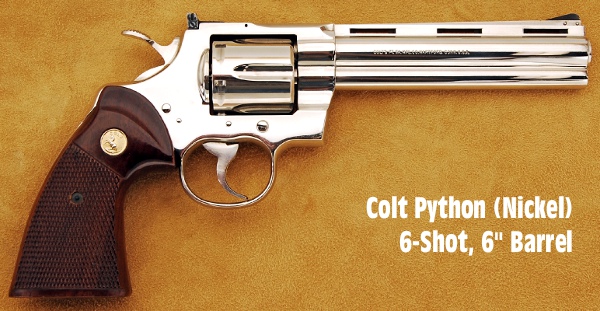
If you are considering acquiring a revolver for fun shooting, self-defense, or competition, you should definitely watch this YouTube video. In this 23-minute presentation, legendary shooter Jerry Miculek puts three .357/.38 SPL wheelguns through their paces. Jerry, one of the greatest revolver shooters in history, hosts a “Revolver Showdown” with three popular wheelguns: 1) S&W L frame (3″ bbl); 2) Colt Python (6″ bbl); and 3) Ruger Speed Six (2.75″ bbl).
Smith & Wesson Model 686 Plus, L-Frame, 7-rd .357 Magnum/38 SPL, 3″ Barrel.
Testing at 10 Yards and 50 Yards
In the video, Jerry shoots all three revolvers rapid-fire, double-action at 10 yards. Then he shoots the three guns single-action, slow-fire at 50 yards (starting at time mark 7:19).
After his range session, Jerry examines nine medium frame revolvers, comparing and contrasting design features. Jerry considers these factors:
1. Accuracy
2. Balance and Handling
3. Speed and Sureness of Trigger Return (watch video at 3:45″ re Colt.)
4. Reliability
5. Barrel Twist Rate
6. Strength of Construction/Durability
Brownell’s has prepared a useful video showing how to remove light rust from a firearm. This shows how to use soft cloths, polishes, and 0000 steel wool to eliminate light surface rust. CAUTION — if you have a very high gloss blued finish, ANY abrasive and even the finest grade of oiled steel wool can scratch or alter the finish. With something like a $1200.00 “Royal Blue” Colt Python, it may be better to tolerate a few small pits than to work it over with steel wool.
Watch Brownell’s Video on Rust Removal
Brownell’s technician, Steve Ostrem, notes that many things can promote rust — some you might not expect. In addition to moisture in the air, rust can be caused by the salts and oils from your hands, sweat, blood, or even insect repellent. Ostrem also observes that temperature changes can produce condensation which may lead to rust inside the gun that you don’t even notice: “In the real world we know that if you take the gun outside, sooner or later, it’s going to rust. When you come inside, wipe the gun down the first opportunity you get. If you bring a cold gun into a warm, humid house, you’re going to have an instant coating of moisture… make sure you get the gun dried off and you’ll avoid a lot of problems.”
Rust Prevention
We’ve conducted a comprehensive test of corrosion-fighters. Among the best products to prevent rust are Boeshield T-9, Corrosion-X, and Eezox. Break-Free also works well, but it leaves a somewhat greasy residue, and it did not perform as well during long-term salt exposure as did the other three products.
For long-term storage, nothing beats a coating of Cosmoline, Rig or similar grease. This provides a barrier layer that blocks the oxidation process, which is how rust forms. These greases performed extremely well in a comparison test of Rust Preventative Products performed by Brownell’s. CLICK HERE for Comparison Test.
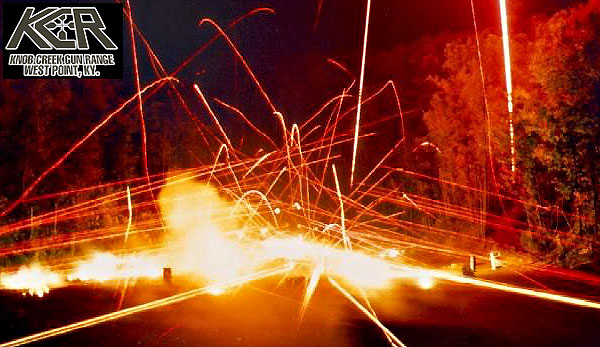
Twice a year, select-fire fans head to the Knob Creek Gun Range in West Point, Kentucky, for the nation’s largest Machine Gun Shoot. A bi-annual event, the Machine Gun Shoot is typically held on the second weekend of April and October. The next Machine Gun Shoot is coming up in one month. This year, the popular fall Shoot will be held October 14th through 16th. The highlight of every Machine Gun Shoot is the Saturday Night event, where scores of guns send regular and tracer bullets down-range. An estimated 1.25 million rounds will be expended during this year’s October 15th Night Shoot.
Click Triangle to Watch Knob Creek Machine Gun Shoot Video (Warning: Very Loud Audio)
Back in 2013, Top Shot Season 4 Champ Chris Cheng was on hand to record the firepower. Chris wrote: “About an hour before dark, folks are out on the range setting up all sorts of explosives while a crowd builds, anxiously awaiting what we all know is coming. The lights go out, and the next thing you know machine guns are going off for almost 20 straight minutes. This year’s October 2013 edition did not disappoint. Check out the video below — other than the beginning, my favorite part is at the 5:50 mark [when a Mini-Gun opens fire from the right].”
The ability to read the wind is what separates good shooters from great shooters. If you want to learn wind-doping from one of the best, watch this video with 2010 National High Power Champion (and U.S. Army 2010 Soldier of the Year) Sherri Gallagher. Part of the USAMU’s Pro Tips Video Series, this video covers the basics of wind reading including: Determining wind direction and speed, Bracketing Wind, Reading Mirage, and Adjusting to cross-winds using both sight/scope adjustments and hold-off methods. Correctly determining wind angle is vital, Sheri explains, because a wind at a 90-degree angle has much more of an effect on bullet lateral movement than a headwind or tailwind. Wind speed, of course, is just as important as wind angle. To calculate wind speed, Sherri recommends “Wind Bracketing”: [This] is where you take the estimate of the highest possible condition and the lowest possible condition and [then] take the average of the two.”
It is also important to understand mirage. Sheri explains that “Mirage is the reflection of light through layers of air, based off the temperature of the ground. These layers … are blown by the wind, and can be monitored through a spotting scope to detect direction and speed. You can see what appears to be waves running across the range — this is mirage.” To best evaluate mirage, you need to set your spotting scope correctly. First get the target in sharp focus, then (on most scopes), Sheri advises that you turn your adjustment knob “a quarter-turn counter-clockwise. That will make the mirage your primary focus.”
Helpful “How-To” Maintenance Videos from BAT
BAT actions are beautifully made — but they represent a substantial investment. If you’re fortunate to one one or more BAT actions, it’s important that you understand how to properly clean and lubricate the action, and how to assemble the bolt components. To help BAT owners with maintenance chores, The BAT Machine website features a Video Archive with many informative videos about bolts, ejectors, are action maintenance, and other technical matters. Here are two video:
How to Grease and Maintain Your BAT Action and Bolt:
How to Remove (and Re-Install) Firing Pin Assembly:
More Helpful Information on BAT Website
One thing that people might easily miss is the large spreadsheet that details the specs of all BAT Machine actions: CLICK HERE to download.
Also, on the BAT website FAQ page, you’ll find prints for barrel tenon machining, firing pin sizes, torque specs, and tons of other very helpful info. This is well worth a look.
Story Tip from Boyd Allen and EdLongrange. We welcome reader submissions.
Jewell triggers are still the most-used triggers on competition benchrest and F-Class rifles and they are also popular for hunting, varmint, and tactical rifles (with or without safeties). While a Jewell trigger can work for years with minimal maintenance, if the trigger becomes gunked up, it may be necessary to disassemble the trigger for a thorough cleaning. Our friends Ed and Steve, aka the 6.5 Guys, have produced a helpful video that shows how to disassemble and then reassemble a Jewell trigger.
Why You May Need to Disassemble Your Jewell Trigger — the 6.5 Guys
Jewell triggers are a popular choice in the sport of long range precision shooting, and like everything else require regular cleaning and maintenance. In most cases they can be cleaned with charcoal lighter fluid or dropped into an ultrasonic cleaner. Should the situation require, they can be completely disassembled according to the Jewell Trigger Manual.
We ran into a situation where we had to dissemble a trigger due to the entrapment of some sticky dirt that couldn’t be removed with an ultrasonic cleaner. Our first step was to find some step-by-step instructions but we couldn’t find anything.
Recognizing that other shooters might be in the same situation we produced a step-by-step guide and video, published in full on 65Guys.com. These instructions will work with a left- or right-handed trigger. In our case we worked with a left-handed BR model trigger with safety and bolt release.
Step-by-Step Instructions are provided on 65Guys.com website. We recommend you read all the instructions carefully before you even think about disassembling your trigger. This video explains the process so you can get a sense of what is involved.
Ruger has created a series of videos showcasing competitive shooting competitions including: Rimfire Challenge, Metallic Silhouette, Biathlon, IDPA, SCSA (Steel Challenge), USPSA, and Cowboy Action shooting events. Log on to Ruger’s Beginner’s Guide to Shooting Competitions webpage to see informative videos for these sports. Rimfire Competition is affordable and fun, Silhouette is a great family sport, and the Steel Challenge is the ultimate pistol speed-shooting event.
INTRO to RUGER RIMFIRE CHALLENGE Matches
INTRO to STEEL CHALLENGE Pistol Competition
Ruger also offers many other cool videos, both on its Video Webpage and on Ruger’s YouTube Channel. On YouTube, you’ll find a great four-part Tactical Carbine video series, hosted by Dave Spaulding, winner of the 2010 Trainer of the Year award by Law Officer Magazine. There are also a number of videos featuring the Ruger Precision Rifle (RPR) a popular (and affordable) rig for Tactical/Practical shooting competitions. The video below explains the RPR’s adjustments:


 On our main Accurateshooter.com website, you’ll find a comprehensive review of the STM system for cleaning cartridge brass with stainless media. To clean brass with stainless media, start with five pounds of small stainless pins sold by StainlessTumblingMedia.com. Place these along with a gallon of water, a little liquid cleaner, and two pounds of cartridge brass in a rotary tumbler, and run the machine for one to four hours.




 Testing at 10 Yards and 50 Yards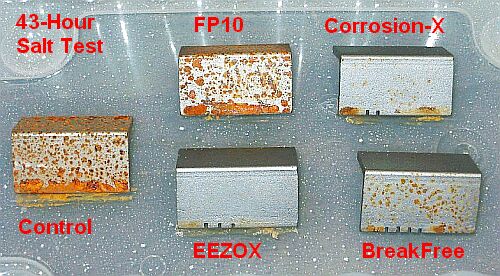



 The ability to read the wind is what separates good shooters from great shooters. If you want to learn wind-doping from one of the best, watch this video with 2010 National High Power Champion (and U.S. Army 2010 Soldier of the Year) Sherri Gallagher. Part of the USAMU’s Pro Tips Video Series, this video covers the basics of wind reading including: Determining wind direction and speed, Bracketing Wind, Reading Mirage, and Adjusting to cross-winds using both sight/scope adjustments and hold-off methods. Correctly determining wind angle is vital, Sheri explains, because a wind at a 90-degree angle has much more of an effect on bullet lateral movement than a headwind or tailwind. Wind speed, of course, is just as important as wind angle. To calculate wind speed, Sherri recommends “Wind Bracketing”: [This] is where you take the estimate of the highest possible condition and the lowest possible condition and [then] take the average of the two.”


