Do you own an RCBS electronic powder dispenser? If you do, take the time to watch this ChargeMaster Tuning video from 8541 Tactical. This nine-minute video demonstrates how to re-program your Chargemaster to “tune” the dispensing process. The video shows the exact programming procedures to follow, step-by-step. Some folks want a faster powder flow — others tune their machines for a more reliable drop (with fewer over-runs). One cheap and popular modification is to insert a 1″-long section of a McDonald’s straw in the ChargeMaster’s silver dispensing tube. This works surprisingly well to smooth kernel drop and prevent “clumping” that can cause an over-charge. The McDonald’s straw MOD is demonstrated in this video, starting at the 6:22 mark.
Large-Diameter Dispensing Tube Mod
Many folks have had success with the McDonald’s straw modification demonstrated in the above video. However, some folks would like to get even better flow performance (with virtually no clumping). Forum Member Frank B. has come up with a new option using a brass hose fitting with a large outside diameter. The hose fitting (with tape wrapped around the barbed nose section) is placed inside the RCBS dispensing tube (be sure to have some kind of wrap — you don’t want metal-on-metal). Here’s how the unit looks installed:
Frank tells us: “I have found a cure for the over-throw problem. It is a simple 1/4″ barbed hose nipple. I wrapped a couple layers of tape around the barbed end for a snug fit. With this in place, I have thrown 100+ charges of Varget without a single overthrow. The ID of the barbed end needs to be approximately 3/16″ to feed a steady flow. This works because of the larger ID at the drop.”
Frank adds: “You can see in the photo that the powder is not stacking up. You can watch it drop one grain at a time. Hope this will take the aggravation out of your case charging.” For best performance with this brass fitting MOD, we recommend de-burring and smoothing out the front edge of the brass fitting over which the kernels drop.
Brass fitting mod suggested by Boyd Allen. We welcome reader submissions.
The prestigious GAP Grind tactical match took place 16-18 October, at the K&M Shooting Complex in Finger, Tennessee. Here’s a “sizzle reel” video showing highlights from this year’s match, which drew talented competitors from across the nation. Held in association with the Precision Rifle Series (PRS), this year’s Grind features a Pro/Am format with professional and amateur competitors aiming for individual and team honors.
Watch GAP Grind 2015 Video (Loud Soundtrack):
Lots of Action, with 20+ Stages
The GAP Grind is a challenging, “high tempo” match with minimal down-time between stages. This year, over the course of 20+ stages, competitors each fired 200+ shots at a variety of steel, paper, moving, and reactive targets out to 1,200 yards. Targets varied in size and difficulty based on distance and time allotted. Most stages included “stressors” — i.e. time limits or required movement(s).
Hornady has introduced an innovative new single-stage press with some very impressive features. The new-for-2016 Hornady Iron Press™ features a super-strong, pyramid-style cast-iron frame with an open front. A very clever optional “automatic” priming system shuttles primers from a vertical tube in the back to the shell-holder in the front. We’ve never really seen anything quite like this before. You really should watch the video — it shows the patented auto-priming system in action. This system appears to be a very smart piece of engineering — good job Hornady.
Watch this Video to See Gravity-Fed Shuttle Priming System (00:45, 01:00):
The broad top of the beefy (26-lb.) Iron Press can hold case prep tools (such as chamfer tool and case-neck brush) and/or a box for bullets or brass. NOTE: This is NOT a turret press — you can only use one die at a time. However, Hornady offers an accessory “Die Caddy” (sold separately) that can hold up to three (3) more dies. That way you can quickly switch from a sizing die to a seater die (or vice-versa). What Hornady calls the “Accessory Mounting Deck” gives quick access to items such as trays for bullets or cases, chamfer and deburr tools, case neck brushes, primer pocket cleaners and other accessories. The Iron Press comes with the Lock-N-Load® bushing system which allows for rapid die changes.
Optional Automatic Priming System
The optional auto-priming system is a real selling point for this new press we think. When you move the press handle rearwards, a horizontal bar toggles back to pick up a primer from the column in the rear of the press. Then this same bar move forwards to place the fresh primer in the center of the shell-holder. Hornady explains: “The available gravity-fed Automatic Priming System (sold separately or with the Lock-N-Load® Iron Press™ Reloading Kit), combined with the Accessory Mounting Deck, increases reloading efficiency by allowing more processes to occur simultaneously. The Iron Press™ is the first of its kind to allow the ability to deprime, pause, and remove the case to chamfer & deburr … then replace and prime.” Do watch the video to see the priming system in action.
Trijicon Challenge Champion Jerry Miculek with wife Kay (left) and daughter Lena (right).
The legendary Jerry Miculek earned top honors at the 2015 Trijicon Shooting Challenge, winning a $50,000 grand prize. This year’s match, held October 21-24 at the Rockcastle Shooting Center, turned out to be a family affair — Jerry’s talented daughter Lena Miculek won the 2015 Womens’ Title. Todd Jarrett finished second overall, while Tim Yackley secured the Junior Division title.
Over $300,000 worth of Cash and Prizes Were Awarded
The 2015 Trijicon Challenge was a rich event. Shooters competed for over $100,000 in match cash, and over $200,000 in prize table awards. Some 180 professional and amateur competitive shooters from around the world traveled to the Rockcastle Shooting Center in Kentucky to compete.
This grueling event featured three days of action shooting in evenly weighted disciplines, with pistol, rifle, shotgun and combined arm segments. All firearms and ammunition were provided for the competitors, leveling the playing field.
With top five finishes in the final six stages of competition, Jerry Miculek showed the skills (and speed) that have made him one of the greatest action shooters in history. Jerry out-shot some very skilled competitors, including recently-crowned NRA World Shooting Championship winner Bruce Piatt, who finished sixth overall. Todd Jarrett took second, and Greg Jordan finished third. Rounding out the Top 5 were Tony Holmes (fourth) and BJ Norris (fifth).
Miculek Celebrates by Carving a Pumpkin with a Barrett .50 BMG
To celebrate his recent Trijicon Challenge victory, Jerry Miculek decided to do some pumpkin carving — with a .50 BMG Barrett Rifle.
Shooting the 30-lb rifle off-hand, Jerry blasted some serious holes in Mr. Pumpkin. Needless to say, the results were dramatic, if somewhat messy. Advancing the science of terminal ballistics, Jerry (not surprisingly) confirmed that “the 663-grain bullet did manage to penetrate the pumpkin all the way.” Thanks Jerry!
Halloween is less than a week away. Our friend, trick-shot ace Kirsten Joy Weiss, did something special for this week, “carving” a pumpkin using her semi-auto Volquartsen .22 LR rifle. Kirsten had to send a lot of rimfire rounds into her orange friend. It turns out the little .22-caliber bullets worked better on exit than entry — Mr. Pumpkin’s posterior side was more impressive than his front. But overall, the effort turned out very well indeed, as you can see. Nice job, Kirsten.
On inspection, Kirsten found that the most impressive Jack ‘O Lantern face appeared on the reverse side of her pumpkin. The “exit wounds” were better than the entry holes.
If the mainstream media is to be believed, America is experiencing a surge of gun-related violence. Meanwhile sponsors of new restrictions on firearms claim that gun crime is increasing. Due in part to television crime reports, the majority of Americans also believe that firearms-related crimes are on the rise. But is this really the case?
If fact, the crime rate has been dropping steadily for more than 20 years. That has occurred while the number of firearms owned by American has risen significantly So, statistics prove that we really have witnessed “more guns, less crime”. The NSSF video linked above demonstrates this point very effectively.
The numbers don’t lie — over the past 20 years, there has been a major reduction in gun-related crime while gun ownership levels have risen significantly. Moreover, the number of accidental gun fatalities has dropped precipitously, even though Americans own more firearms than ever before.
Nightforce Optics has just launched a new monthly newsletter. This free, subscription-based digital publication will offer information on optics, target shooting, hunting, and other topics of interest. The debut October issue, released this week, features match reports, tactical shooting hold-over advice, plus a TECH TIP explaining Parallax.
PARALLAX – What is it and Why is it important?
What is Parallax?
Parallax is the apparent movement of the scope’s reticle (cross-hairs) in relation to the target as the shooter moves his eye across the exit pupil of the riflescope. This is caused by the target and the reticle being located in different focal planes.
Why is it Important?
The greater the distance to the target and magnification of the optic, the greater the parallax error becomes. Especially at longer distances, significant sighting error can result if parallax is not removed.
How to Remove Parallax
This Nightforce Tech Tip video quickly shows how to remove parallax on your riflescope.
While keeping the rifle still and looking through the riflescope, a slight nod of the head up and down will quickly determine if parallax is present. To remove parallax, start with the adjustment mechanism on infinity and rotate until the reticle remains stationary in relation to the target regardless of head movement. If parallax has been eliminated, the reticle will remain stationary in relation to the target regardless of eye placement behind the optic.
If you want to subscribe to the Nightforce Newsletter, CLICK HERE to open the Newsletter then click the green “Join Email List” button at the top of the page.
Jay Christopherson (aka “JayChris”), Accurateshooter’s IT guru, is a heck of a good shooter as well as a computer wizard. Jay recently won the F-TR division of the NW Long Range Regional held at the always-challenging Rattlesnake Shooting Range. To top the F-TR field, Jay had to battle extreme wind conditions that required double-digit windage corrections (and a hold-off) just to get on paper. Jay said: “The wind was 25 to 35 mph, switching between half and full value. I had 18.5 minutes on. Some of the sling shooters were [running] 24-36 minutes.”
MUST WATCH Video! Wicked, INSANE 25-35 mph winds at Rattlesnake:
Jay reports: “The typical Rattlesnake range caveats apply with regards to scores. This was a Long Range Regional, here in Washington State. This was also the first time I’ve ever had to put on double digit windage on at a match. Yesterday at 1000 yards, I had to put on 15 minutes AND hold another 3.5 to the edge of the target board to get on paper. I probably owe a great deal of thanks to Monte Milanuk for convincing me that (after my third sighter off the target board) dialing in that much wind was, in fact, NOT insane.
Because I didn’t come to the match armed with enough ammo and I couldn’t afford to be shooting more sighters… it was a close thing as it was. Even some of the well-known wind ninjas shooting sling were having some difficulty with the conditions.
Jay was modest about his win: ‘I did a poor job of shooting at 800 yards on both days, in fairly decent conditions, but made up for it at 1000 on both days. I happened to dope the wind on the last relay better than the guy leading me.
Really, the wind is the story — on the last relay of that first day (shown in the video), the storm rolled in, along with a wildfire that started up on one of the hills behind us. We were all watching that pretty closely, but they contained it pretty quickly.”
Our friend Dennis Santiago was doing pits duty during the Small Arms Firing School (SAFS) phase of the CMP Western Games. Here are some views from the pits at the Ben Avery Range in Phoenix, Arizona. Dennis also took a video from the pits during live fire. Listen to rounds zip over-head and impact into the berm beyond the targets, in the video below.
Watch Video with rounds flying over the pit zone:
Dennis reports: “Here’s a slice of life at the receiving end of live fire. This is a rapid fire stage as seen from the target pits at the 2015 CMP Western Games. The targets are placed up in the air. The bullets go through them over the heads of competitors protected behind an earth berm. The bullets land in a designated impact area (berm) beyond the target frames.”
At the CMP Western Games, participants shoot, score and do pit service. The pit workers are positioned on a catwalk behind a concrete wall. There is a thick, earth-works berm on the other side.
Norma has released a fascinating video showing how bullet, brass, and ammunition are produced at the Norma Precision AB factory which first opened in 1902. You can see how cartridges are made starting with brass disks, then formed into shape through a series of processes, including “hitting [the cup] with a 30-ton hammer”. After annealing (shown at 0:08″), samples from every batch of brass are analyzed (at multiple points along the case length) to check metal grain structure and hardness. Before packing, each case is visually inspected by a human being (3:27″ time-mark).
The video also shows how bullets are made from jackets and lead cores. Finally, you can watch the loading machines that fill cases with powder, seat the bullets, and then transport the loaded rounds to the packing system. In his enthusiasm, the reporter/narrator does sometimes confuse the term “bullets” and “rounds” (5:00″), but you can figure out what he means. We definitely recommend watching this video. It’s fascinating to see 110-year-old sorting devices on the assembly line right next to state-of-the art, digitally-controlled production machinery.
Video tip by EdLongrange. We welcome reader submissions.


 Over $300,000 worth of Cash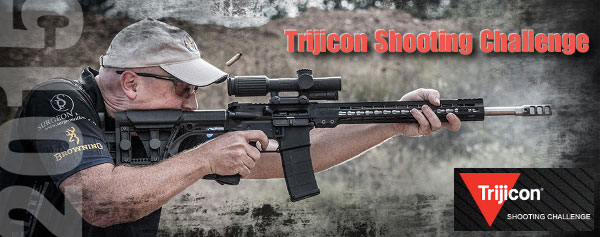


 If the mainstream media is to be believed, America is experiencing a surge of gun-related violence. Meanwhile sponsors of new restrictions on firearms claim that gun crime is increasing. Due in part to television crime reports, the majority of Americans also believe that firearms-related crimes are on the rise. But is this really the case?


 Jay reports: “The typical Rattlesnake range caveats apply with regards to scores. This was a Long Range Regional, here in Washington State. This was also the first time I’ve ever had to put on double digit windage on at a match. Yesterday at 1000 yards, I had to put on 15 minutes AND hold another 3.5 to the edge of the target board to get on paper. I probably owe a great deal of thanks to Monte Milanuk for convincing me that (after my third sighter off the target board) dialing in that much wind was, in fact, NOT insane.


 Norma has released a fascinating video showing how bullet, brass, and ammunition are produced at the


