If you own an RCBS ChargeMaster 1500 electronic powder scale/dispenser, or are thinking about purchasing one, here are a few tips that can cut your loading times and eliminate some petty annoyances.
Mute That Annoying Beep
Some ChargeMaster users complain about the loud beep at the end of each cycle. There’s a simple way to silence the beep — and you don’t have to cut any wires or permanently disable the speaker. To mute the beep, simply hold down the Zero button until “beep off” displays. Repeat this procedure to restore the beep function.
Activating the Auto-Dispense Mode
You can set the ChargeMaster to automatically dispense your pre-programmed charge as soon as you put the pan back on the scale. Simply press and hold the “Enter” button. The code “Auto” should then appear on the display. At this point, push “Disp” to dispense the first charge. When you replace the pan, the unit will automatically dispense the same charge. For some people this is an added convenience. You can always go back to the default manual dispense method by changing the dispense mode using the “Enter” button again.
Use a McDonald’s Straw to Reduce Over-Throws
Jaco Brink provided another useful tip to avoid “over-throws” (excess charge weight): “The RCBS employee advised me to take a McDonald’s straw (because it is thicker than a normal straw), cut off about a half inch piece and put it into the tube where the powder exits. This caused the last part of an extruded powder to cluster less, and reduced the amount of overthrows dramatically.”
Instructional Video
The video below shows how to set up and calibrate a Chargemaster 1500. Be sure to level the unit carefully, both left to right and front to back. Starting at the 1:44 mark in the video you can see the unit dispense a 50-grain charge in 30 seconds. The slow, final trickle stage takes about half of the total time.
How to Shorten Dispensing Times
The last tip is for advanced users only. You can alter the programming settings to speed up powder dispensing dramatically. One user reported that, by re-programming his machine, his cut his dispensing time for a 30-grain load from 22 to 13 seconds “with no overthrows”. WARNING: once you change the parameters, there is no “restore” command to set everything back to the defaults. So proceed carefully. The speed enhancement procedure is described on the pages linked below:
Ana Pereira, from Portugal, is a Field Target World Champion. In the three videos below, Ana explains her sport and interviews other Field Target shooters. Field Target competitors shoot air rifles from a variety of positions over a multi-station field course. Targets are typically placed 9m to 50m distant (minimum distance rules vary country-by-country). Targets are usually small animal shapes that fall down when hit. There are a variety of air gun classes for Field Target, with the most exotic pre-charged pneumatic rifles costing many thousands of dollars.
Watch Interview with Ana Pereira
Field Target Shooters use very high-magnification scopes fitted with large side-wheels that control the parallax. The shooters use the parallax control to range the distance to the target and then adjust their elevation accordingly. In the video below, featuring the Steyr LG110 Field Target Air Rifle, you can see how the large side wheels are used for distance-ranging.
In the United Kingdom, most shots may be taken in any stance, but the seated position is the most popular due to its stability (and often one must shoot over logs or tall grass, so the prone position is not practical). Most competitors carry a small beanbag or cushion to sit on while shooting. It may also be used under the knee or to support the ankle during kneeling shots.
Targets are shot from “gates” in a firing line, and are divided into “lanes” of two targets each. Targets are often placed at about the same height as the shooter, but it is not uncommon for them to appear high up banks or in trees, or down steep slopes. The hit zone of a target is circular, usually 40–45 mm in diameter, although “reducer” targets as small as 25 mm may be employed for closer-range shots.
Ana Periera Interviews Springer Class World Champion Heli Jalakas in Estonia.
This Video Also Shows Shooting Sequences from International Competition:
SHOT Show 2014 kicks off in two weeks in Las Vegas. While at SHOT Show next month, we plan to get the “inside scoop” on new bullet designs from Berger, Hornady, Lapua, Nosler and Sierra.
At SHOT Show 2012 we chatted with Berger Ballistician Bryan Litz about Berger’s popular line of Hybrid bullets. Berger now offers a wide range of Hybrids in multiple calibers and weights. In fact, for .30-Caliber shooters, Berger now offers seven different Hybrid match bullets, with weights from 155 grains up to 230 grains. Two .338-caliber OTM Tactical Hybrids were introduced in 2012 (a 250-grainer and a 300-grainer).
Bryan tells us: “The hybrid design is Berger’s solution to the age old problem of precision vs. ease of use. This design is making life easier for handloaders as well as providing opportunities for commercial ammo loaders who need to offer a high performance round that also shoots precisely in many rifles with various chamber/throat configurations.”
For those not familiar with Hybrid bullets, the Hybrid design blends two common bullet nose shapes on the front section of the bullet (from the tip to the start of the bearing surface). Most of the curved section of the bullet has a Secant (VLD-style) ogive for low drag. This then blends in a Tangent-style ogive curve further back, where the bullet first contacts the rifling. The Tangent section makes seating depth less critical to accuracy, so the Hybrid bullet can shoot well through a range of seating depths, even though it has a very high Ballistic Coefficient (BC).
In the video we asked Bryan for recommended seating depths for 7mm and .30-Caliber Hybrid bullets. Bryan advises that, as a starting point, Hybrid bullets be seated .015″ (fifteen thousandths) off the lands in most barrels. Watch the video for more tips how to optimize your loads with Hybrid bullets.
The GAP Grind is one of the nation’s premier tactical matches. The 20-minute YouTube video embedded below features highlights of the 2013 GAP Grind, hosted this fall at the K&M Precision Rifle Training facility near Crestview, Florida. It’s interesting to see the many types of rifle systems used at this match — Tubeguns, Aluminum Chassis rifles, AI models, and customs built on fiberglass stocks. These are all used in a dizzying variety of shooting positions and scenarios. Ninety (90) competitors fired over 15,000 rounds during this year’s GAP Grind.
The video employs multiple camera angles, giving you an “insider’s view” of the match. Starting at 16:30 you’ll see an interesting sequence — the Bartlein Steel Safari, with multiple steel targets engaged at progressively longer distances. Watch carefully and you’ll see bullet trace and the “splash” of impact. (This sequence is also previewed at the 2:30 time-mark — watch the trace).
Watch 2013 GAP Grind Tactical Match Video
The GAP Grind has been described as “a high tempo match with minimal ‘down-time’ between stages”. Competitors use rifle and pistol in a variety of scenarios, with pistol stages from 5 to 40 yards, and rifle engagements out to 1000 yards. Targets — an assortment of steel, reactive, paper, and automated moving targets — vary in difficulty based on the shooters’ position, distance, and time allotted. Most stages involve time limits, or required movement, or other “stressors” that heighten the difficulty (and get the heart pumping). Scoring employs Precision Rifle Series (PRS) guidelines in order to reward the most consistent shooters.
Brownells is teaming up with Shooting USA to give viewers ideas for gunsmithing projects they can accomplish at home. Shooting USA will air six original Brownells Home Gunsmithing segments, featuring John Scoutten guiding viewers through the projects. The projects range from applying a camouflage paint job on a shotgun (Episode 1) to upgrading an AR-15 trigger.
The first Shooting USA episode featuring a Brownells Home Gunsmithing Segment aired on Christmas Day, December 25, 2013. The remaining five new episodes, plus re-airs, will run throughout 2014. Episode 1 covers application of a Camouflage finish to a shotgun. The step-by-step stages of this process are illustrated on the ShootingUSA Website.
Viewers of the show are encouraged to visit the Shooting USA page at Brownells.com to check out the Brownells products featured during the segments. “John has done a number of projects in the past for our viewers, and they like seeing what they can do themselves,” said Shooting USA Executive Producer, Jim Scoutten. “But with this new series, they’ll be backed-up by Brownells’ 16-man staff of expert gunsmiths, ready to take their call, if they have any questions about the process. Nobody else provides that kind of support,” Scoutten said.
About Shooting USA Television
Shooting USA and Shooting USA’s Impossible Shots anchor the Wednesday night Gun Sports and Shooting Block on Outdoor Channel. The shows appear 52 weeks of the year, reaching 40 million enthusiast households. Jim and John Scoutten have been working together since launching the first TV gun sports show in 1993.
In his Guns & Ammo Blog, Top Shot (Season 1) Champion Iain Harrison explains how to get started in 3-Gun Competition. Iain begins with some very practical advice: “Don’t worry too much about the gear. Spending a ton of money to get into the game, only to discover a few months later that you want to head in another direction, is a surefire way to alienate your significant other…. Go shoot what you have, even if it’s not ideal; you’ll learn much more about what works and what doesn’t by shooting in a match than you ever will by reading blogs like this.”
It’s obvious that you’ll need three firearms — pistol, carbine/rifle, and shotgun. But Harrison explains you don’t have to go out an get the most expensive (or complex) weaponry. For the rifle/carbine segment, Harrison says: “A vanilla AR15 with a low-power variable scope is a good place to start. Pretty much any flat top AR15 [will do].” For a scattergun, yes it would be nice to have an exotic Benelli M1 Super 90, but a low cost semi-auto from Remington, Winchester, or Mossberg will be competitive. And many guys start off with their “old reliable” Rem model 870 pump shotgun. Harrison explains: “Add an extended mag tube to the Remington 1100 lurking in the back of the safe and you have the shotgun component covered, though if you’d rather run your trusty pump gun… that’s cool too.”
Choice of Pistol and Caliber
The best handgun brand and caliber is really a matter of personal choice. You want a “dead-nuts” reliable pistol, for which you can get affordable accessories (holster, mag pouches, high-cap magazines). Glocks, 1911s, HKs, Sigs, S&W M&Ps are all popular. As for caliber choice, Harrison notes: “Most guys run 9 mm handguns as the capacity advantage over a .40 or .45 is significant, but whatever you choose, your holster is as important as the piece it contains. Bump a loaded pistol out of your holster in the middle of a stage and you’ll be going home early.”
Video Shows Highlights from 3-Gun Nation 2011 Championship
In his Guns & Ammo Blog post, Harrison also give advice about 3-Gun optics and he lists particular firearms models that are favored by competitors. Learn more about these topics by visiting the 3-Gun Nation website. When it comes to gun shopping, Harrison does advise to “buy new” — that’s because active 3-gunners fire so many rounds in practice and competition that they really can wear out their firearms. Click Here to read Harrison’s full Getting Started in 3-Gun Blog article. While visiting GunsandAmmo.com, check out Harrison’s amusing Top Five Reasons to Try 3-Gun. Here’s Reason Number One: “It’s sexy. So sexy in fact, it’s the only shooting sport with its own TV show!”
Kirsten Joy Weiss is one of America’s top smallbore shooters. Her many titles include the 2012 NRA National Women’s Smallbore 3P Championship. Using her Anschütz target rifle and Lapua ammunition, she has competed at top-level national and international events. To help demonstrate the fun of shooting, Kirsten has started her own YouTube Channel, Facebook Page, and her own website, www.KirstenJoyWeiss.com. There you’ll find shooting tips, gear reviews, and videos. Each week Kirsten does a new trick shot video. Here are three of our favorites.
Here Kirsten Drills the Center of Two Apples with One Shot:
In this Video, Kirsten Shoots from Pilates Position with Rifle Held Upside-Down (Wow!):
For this Trick Shot, Kirsten Shoots the Lead Tip off a Pencil without Breaking the Wood:
Kirsten Joy Weiss Competition Highlights
Kirsten is from Pennsylvania. A 3-time All-American in smallbore, Kirsten led the Univ. of Nebraska Cornhuskers to a 4th-place finish at the NCAA Championships. Weiss was an NRA Second-Team All-American and was named to the CRCA All-Collegiate Team twice. In 2012, Kirsten was the top USA athlete-shooter at the Munich World Cup. She won the 2012 NRA Three-Position Women’s Smallbore Championship and also won the Standing Position, while finishing as the National Overall Woman Champion.
This week’s episode of Shooting USA TV features the NRA Annual meeting and the U.S. National Steel Championships, two segments worth watching. Shooting USA airs Wednesdays on the Outdoor Channel, at 3:30 pm, 8:30 pm, and 12:00 midnight (Thursday) Eastern Time (check with your TV carrier for other time zones).
Over 86,000 members attended the NRA’s Annual Meeting and new Product Show held this year in Houston’s giant convention center. With gun issues being so prominent in recent months, the NRA added over 1,000,000 new members in 2013. Not surprisingly, there was a huge turn-out in Houston. Shooting USA interviews industry leaders and spotlights Product Show highlights.
U.S. National Steel Championship
In the world of action shooting, there is no other sound that instantly draws the attention like a round hitting a steel plate. It’s been called “bang and clang” and “drag racing with guns”. For three days, at the U.S. National Steel Championships in Florida, the fastest pistol shooters from across the nation competed for glory, prize money, and the title of “America’s Fastest Gun”. This year the Main Match came down to an epic battle between KC Eusebio and Max Michel, two of the fastest shooters on the planet. Visit www.USSteelshoot.com for more info and complete match results.
Watch Video of KC Eusebio in Action at 2013 U.S. National Steel Championships:
We were talking with TubeGun builder Gary Eliseo recently, and the subject of his “Mad Minute” fun match came up. A while back, at our suggestion, Gary re-created the one-minute rapid fire marksmanship training drill done by British riflemen. Using a Competition Machine TubeGun, Gary managed 24 hits in 60 seconds on a 300-yard target. Gary told us that people often ask about his “Mad Minute” experience, so today we’re reprising the story (with video) for those guys who missed it the first time around. Forum member Laurie Holland, who hails from Great Britain, also contributes a brief history of the “Mad Minute” and the Lee-Enfield (SMLE) rifle.
Last year, the Top Shot TV show featured the “Mad Minute”, a high-speed drill requiring shooters to place as many hits as possible on a steel plate set at 200 yards. The time limit was one minute, and shooters were using historic Lee-Enfield bolt-action rifles. Top Shot’s “Mad Minute” was based on a British Army training drill. Soldiers were expected to get at least 15 hits on an bullseye target at 300 yards. Top Shot cheated a bit, placing the target at 200 yards (instead of 300 in the real British Army “Mad Minute” drill). Still the two Top Shot shooters managed only six (6) shots each in one minute. Consider that a “passing score” for a Brit soldier was 15 hits, you have to give credit to those WWI-era Tommies.
Watch Gary Eliseo Shoot the ‘Mad Minute’ (Starts at 4:47 on Video)
Eliseo Gets 24 Hits on 300-yard Target in One Minute
Using an Eliseo RTM Tubegun chambered in .308 Winchester, Gary Eliseo attempted the “Mad Minute” last weekend. Gary ended up with 24 hits on a bull target set at 300 yards. That’s four times as many hits as the Top Shot competitors. Gary actually had 25 hits in 25 rounds fired, but the last round hit just after the 60-second time period expired. Note how Gary pulls the trigger with the middle finger of his right hand. This allows him to work the bolt faster, using his thumb and index finger. The straight-through (inline stock) design of the Tubegun allowed Gary to maintain his cheekweld and head position throughout the minute-long drill.
Gary told us: “This isn’t easy. I came away very impressed with the training of the Tommy soldiers if they could make 15 hits in one minute. We had some skilled shooters who brought their own Lee-Enfields and they only did as well as the guys on Top Shot — making six or seven hits in a minute. The problem is that, with the cock-on-close operation of the Lee-Enfield, the gun would push away when the shooter closed the bolt, so the shooter would lose his sight picture, and have to re-center the rifle. I am truly astounded that the record for the ‘Mad Minute’ is 38 shots. That is hard to do with an AR, much less any bolt gun.”
Gary Hopes to Beat the ‘Mad Minute’ Record in the Future
The record for the “Mad Minute” — 38 shots on target at 300 yards — was set in 1914 by Sergeant Instructor Alfred Snoxall*. In the subsequent 98 years, that record has never been broken by any shooter with a conventional bolt-action rifle. Gary told us: “As long as that record still stands, I’m going to keep working at it. I know I lost a few seconds with mag changes. I think with some additional training, I can increase my score. Still, 38 hits is phenomenal. I am very, very impressed at what that guy did — it’s really mind-boggling to do that with an Enfield. Contrary to what has been written, those old Enfields are not that easy to shoot fast. Our club shooters found that out.”
* There is some uncertainty concerning the size of the target used by Snoxall. Some internet reports say the target was 12″ x 12″. Other posts, from England, suggest the target was 36″ by 36″. If the target was a 12″-diameter bull, Snoxall’s achievement is even more amazing.
‘Mad Minute’ and British Marksmanship with the SMLE (Lee-Enfield) Commentary by Laurie Holland
The original military requirement of the ‘Mad Minute’ saw the soldier ready to fire with a round in the chamber, 9 in the magazine, safety on. This course of fire is still followed by the GB Historic Breechloading Arms Association and other bodies in their recreated ‘Mad Minute’ competitions.
The first 10 would go quickly, but reloads were critical, this not done by a magazine change as Gary did with the RTM or in a modern tactical or semi-auto rifle, but through slick use of ‘chargers’. It is this aspect which fouls so many of my colleagues up as it’s very easy to cause a jam and a large part of 60 seconds can go in sorting it out!
As well as the training Gary mentions and commends, there were pay incentives / penalties for certification or failure, and there were valuable monetary and kudos benefits in achieving very high hit counts in the 20 + range. Tommies could draw their rifles from the armory any time when off duty and spent hours in barracks practicing using inert rounds and dry firing. For instance, a common practice was to balance a halfpenny coin on the foresight blade between the sight protecting ears and take shot after shot prone on the barracks floor until the trigger was pressed and the ‘shot taken’ without the coin falling off its perch.
Charger clips were selected for those that just held the rounds firmly enough to stop then falling out, were sand-papered and polished with a stove / fireplace polish called ‘Zebrite’ so that the rimmed rounds would slip through the clips like corn through a goose.
If you’re unfamiliar with the cock-on-closing Enfield action, it seems clumsy. With intensive practice it is very smooth and can be operated incredibly quickly. The trick is to whip the bolt back onto its stop and initiate a rebound movement that takes it and the cartridge well into the chamber thereby reducing the effort required to close the bolt and chamber the round.
None of this is to detract from the skill many of these guys had and the fantastic results they got both in rate of fire and accuracy out to 500/600 yards. That came from long days of live firing at full distances — far more practice than I’ll warrant US doughboys got at that time. The result was when the small British Expeditionary Force acted a blocking force against two advancing German infantry corps in Belgium in the autumn of 1914. Kaiser Wilhelm predicted confidently that his highly trained ‘Landsers’ would sweep this ‘contemptible little army’ aside. Instead, the Germans advancing in the open at ranges they felt was safe from rifle fire ran into a wall of lead of such a rate and accuracy that regimental commanders explained their failure to advance and massive casualties through the British having far more automatic weapons than their intelligence had briefed. The British survivors of that period adopted the self-styled title of ‘Old Contemptibles’ as an ironic rebuke to Wilhelm, one still used today. By Christmas 1914 that small and highly professional British army had been destroyed through attrition and army rifle competitions aside never achieved those riflecraft standards again — but of course that’s what a machinegun is for and it was criminal that BEF battalions (600-1,000 men) went to war with an establishment of only two Vickers-Armstrong machine-guns — a fraction of that in the opposing German units.
If you are considering purchasing a sound moderator (aka “suppressor” or “can”) for one or more of your rifles, a video from Surefire explains the many benefits of modern suppressors. Sound moderators not only reduce the audible sound coming from a firearm, but they also reduce flash signature, dust signature, and recoil.
In the video below, Surefire highlights the features and benefits of its line of quick-attach suppressors. These are crafted from special alloys that are “stronger at 1000° F than stainless steel is cold.” While the video focuses on the use of suppressors by military and police personnel, these devices are also beneficial for hunters and competitive tactical shooters.
Noise Reduction
A shot from a .308 Win rifle can be as loud as 167 db to the shooter. Notably, the noise level can be just as great to someone positioned one meter away (Source: 1999 Finish Suppressor Trials). What’s worse is that popular muzzle brakes can INCREASE shooters’ noise exposure by 5 to 10 db. The noise level at which hearing damage can occur is about 140 db. A quality modern suppressor can reduce .308 Win rifle shot noise levels to 130 db or less.
Flash Signature Reduction
For a varminter, a quality suppressor can reduce the visible muzzle flash from a rifle by 90% or more. That’s important when hunting at night. The bright flash can both spook game and temporarily degrade the hunters’ night vision. Using a suppressor can help the shooter maintain his night-adapted vision.
Recoil Reduction
Recoil reduction is a real benefit. In 1992, Finland’s National Board of Labor Protection tested a variety of suppressors on both bolt-action hunting rifles and select-fire military rifles. The study concluded that recoil reduction was significant: “Suppressors reduced recoil energy by 20 to 30 percent, or about as must as muzzle brakes, making powerful bolt-action hunting rifles considerably less painful to shoot (especially repeated shots in training).”
Dust Signature
When firing prone, a rifle with a muzzle brake kicks up a large cloud of dust. (Watch video at 3:00). In a military situation, this dust signature can reveal the shooter’s position — with potentially disastrous consequences. For a tactical competitor, the dust may prevent recognition of a hit while impeding a rapid second-shot. For the varminter, the dust cloud is a nuisance that may prevent him from seeing his hits, while sending critters scurrying back into cover.
Message to Politicians — Suppressors Will Save Tax Dollars
Here is an interesting finding from the 1992 Finland Suppressor Project: “The unit price of a mass-produced suppressor may be reduced to $50 to $70 (1992 prices). [This low cost] will make cost-effectiveness of the suppressor far better than that of any shooting range [sound-proofing]… and, actually, also better than the cost-effectiveness of hearing protection, especially when several persons are present while just one of them is shooting at a time.” Too bad most politicians can’t seem to understand these points. They still view suppressors as evil tools employed by gangsters, rather than proven safety devices that will reduce noise pollution.
Is the “price of noise” something we really need to consider from a public policy standpoint? Absolutely. In 2004 the Veterans Administration paid out $633.8 million in compensation to 378,982 vets whose main disability is hearing loss. Only a small fraction of those vets saw combat; most damaged their hearing during weapons training activities.


 If you own an RCBS ChargeMaster 1500 electronic powder scale/dispenser, or are thinking about purchasing one, here are a few tips that can cut your loading times and eliminate some petty annoyances.

 The
The 


 In his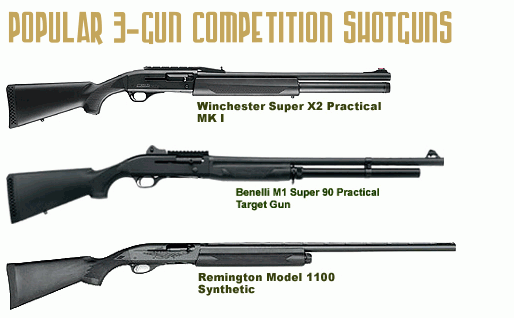

 Kirsten Joy Weiss Competition Highlights

 Last year, the


 Flash Signature Reduction


