|
|
May 7th, 2017

Click to zoom image
We first ran this story a couple years back. We’re republishing it today as a reminder to our readers that safety should be their paramount concern at the range. Avoid distractions and always check your barrel for obstructions before you chamber a round or pull the trigger. A moment of inattention can result in a catastrophic kaboom …
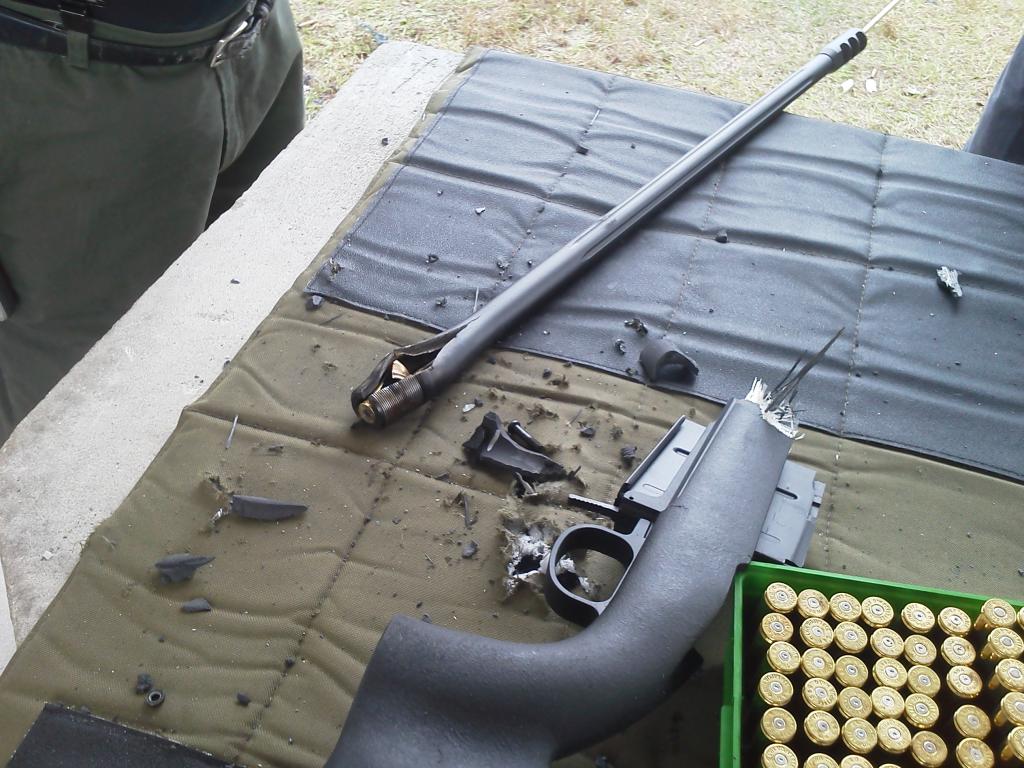
Discharging a .338 Lapua Magnum round with a cleaning rod in the barrel — that’s a recipe for disaster. What happens when a fired .338 caliber bullet and a cleaning rod try to occupy the same place at the same time? Well you get a catastrophic kaboom, with metal pieces flying all over the place, and a shooter very lucky to escape without serious injury. This incident occurred recently in Manatee, Florida, as reported by Sniper’s Hide member Queequeg. We thank SnipersHide.com for granting permission to publish these revealing images in the Daily Bulletin. CLICK HERE for more Kaboom info on the ‘Hide.

This story should serve as a chilling reminder to follow proper safety practices whenever you are at the range. Always check to make sure there is no obstruction in the bore BEFORE loading a live round.
.338 Lapua Magnum + Cleaning Rod + Inattention = Kaboom!
Kaboom at Manatee!
Sniper’s Hide member Queequeg recently published shocking photos of a catastrophic kaboom involving a .338 Lapua Magnum (Savage action). The action was blown off the rifle, shrapnel went through the roof, and the barrel split at the tenon before taking an excursion downrange. The action did crack in the front but the lugs remained engaged so the bolt did not slam to the rear (luckily for the shooter).
Here’s the report: “This happened [January 20, 2014] at the Manatee Gun and Archery Club. Al, Ren and myself were there with a couple other folks. Ren was at bench 12, I was at 13. The fellow at 11 was running a Savage .338 Lapua. He had a very bad day! He damn sure could have killed himself and quite likely Ren as well.”

Queeqeg added: “After the boom, I heard Ren ask ‘Are you alright’ and then turned to look in time to see the fellow reacting in total shock — literally stunned. Ren and I went over to him and could not see any major injuries. Ren was uninjured as well but had a lot of fiberglass splinters on him. The barrel nut is what I presume punched the two holes in the roof. The shooter is a regular there[.] He had been having a problem with sticky cases though he said he was certain the loads were mild. That’s why he was content to knock the sticky ones out with the rod. He simply forgot to remove the rod after knocking out the last stuck case. You can see what happened next.”


To learn more about this incident, go to the original Snipers Hide Forum Thread. There you’ll find more details and over four pages of related discussions.
The Important Lesson Here
What did the .338 LM shooter do wrong here? You will say — “Well that’s obvious, he left a cleaning rod in the barrel and then shot a round.” Yes, that was a potentially fatal error. But that was his second mistake — one that occurred only because he made a more fundamental judgment error first.
The FIRST mistake was not acknowledging the problem with his ammo. Had he heeded the warning signs, he would still have a rifle (and an unsoiled pair of trousers). When he first observed that he was having problems with extracting cases, a warning light should have gone off in his head. Presuming his extractor was not broken (and that the chamber was cut properly) he should have been able to extract his brass if he was running safe loads. The lesson here we all need to learn is that if you observe a serious ammo-related issue, it is time to stop shooting. Don’t try to invent work-arounds just to extend your range session, when there are clear signs that something is wrong, very wrong.
May 2nd, 2017

There’s a great interview with Bryan Litz of Applied Ballistics on Mia Rhode’s Life Of A Shooter’s Wife Blog. We recommend you read the full interview. Bryan offers many important insights that can benefit any precision shooter. It’s fascinating to learn about Bryan’s background and how he progressed in competitive shooting, starting with very basic equipment. As a “broke high school kid”, he got started on the cheap, paying for gear with wages from McDonald’s. Now he’s a globally-recognized expert in Ballistics and Long Range precision. You’ll enjoy reading the Full Interview. Here are some highlights…
 LOASW: When did you first become interested in shooting? LOASW: When did you first become interested in shooting?
Bryan: My first memories of shooting were at the age of about 9 or 10. Pellet rifle in the back yard. My Dad taught me to shoot, stressing the importance of accuracy. I was driven to hit targets, mostly small targets at long distance. My grandfather was on the All-Army shooting team back in the ‘50s, and was distinguished in both rifle and pistol. Shooting is part of my family’s DNA and I benefited from that from a young age.
LOASW: What sparked your interest in Competitive Shooting and how old were you when you started competing?
Bryan: Hunting groundhogs in the farm-fields of Pennsylvania through high school is where I truly connected with long-range shooting. My Dad heard of a competition range (The Original Pennsylvania 1000 Yard Benchrest Club in Williamsport, PA). So we visited there one summer and I immediately found my trusty 22-250 inadequate for the job of 1000-yard benchrest shooting. So I saved my McDonald’s wages until I could afford a 7mm Remington Magnum and began competing in my first matches at the age of 15.
Learning with Limited Resources…
… It was a huge mis-match to my situation because benchrest is a highly gear-driven sport, and the winners typically have many $1000s of dollars wrapped up in equipment. I was a broke high school kid who needed my parents to drive me to the range my first year, and my second year, I had to rely on fellow competitors to jump start my old pick-up truck that was always breaking down. Nevertheless I enjoyed the hell out of shooting 1000 yards. I can honestly say that I don’t have any more FUN shooting these days with all the best equipment as compared to those bad ‘ol days when I had maybe $900 total wrapped up in all my gear. Those who remember me from those early days might recall the home-made shooting rest and McDonalds French fry box that I carried all my gear in. Later when I picked up prone/sling shooting, my shooting mat was a piece of carpet (pink, no less), and my shooting coat was a military field jacket with belts sewn in it.
Money was probably my biggest challenge when I started out. I had plenty of fun with my budget kit, but was certainly constrained by lack of access to quality gear. I overcame this with hard work and making the most of what I had. Learning how to mitigate the deficiencies of my equipment was an important stepping stone which has been highly valuable even now when I’ve got better stuff. It’s a good skill to have, to be able to spot something about to come unraveled.

LOASW: What advice would you give to someone new to competitive shooting?
Bryan: Find a mentor, someone who lives near you who has experience and is willing to share it. You will cut years off your learning curve if you can get someone to share their experience with you who’s “been there done that”.
April 26th, 2017
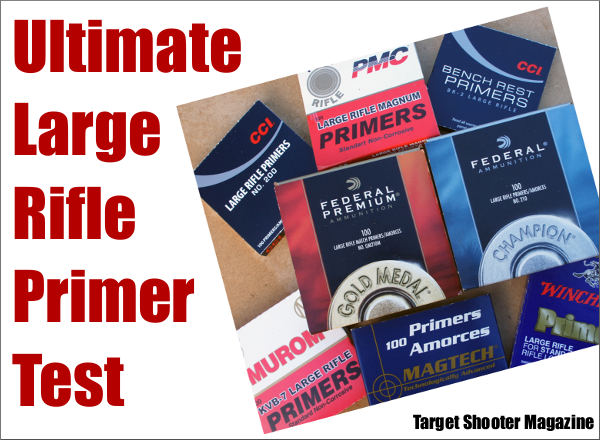
Click Photo to read full test results in Target Shooter Magazine.
Mother of All LR Primer Tests
If you shoot a .308 Win, or any cartridge that uses a Large Rifle (LR) primer, you should read an important article by Laurie Holland in Target Shooter Magazine. Holland, a talented shooter from the UK, tested no less than sixteen (16) different large primer types using a custom F-TR target rifle shot from the bench. Laurie loaded .308 Win ammo* with 16 LR primer varieties and then tested for average velocity, ES/SD, and group size. This may be the most comprehensive and thorough LR primer test ever done. Here are the primer types tested:
1. CBC Magtech 9½
2. CCI 200 LR
3. CCI BR2 Match
4. CCI 250 Magnum
5. Federal 210
6. Federal 210M Match
7. Federal 215M Magnum Match
8. Fiocchi Large Rifle |
9. Kynoch Large Rifle
10. Murom KVB-7 (PMC LR)
11. Norma Superflash LR
12. PMC LR Magnum
13. Remington 9½ LR
14. Remington 9½ M Magnum
15. Sellier & Bellot LR
16. Winchester WLR |

Test Rig: Osprey Rifles-built F-TR rifle with Savage PTA action, 32″ Bartlein 1:12″-twist ‘Heavy Palma’ barrel, and Dolphin Gun Company modular stock with an F-Open/Benchrest fore-end.
Some of Laurie’s results may surprise you. For example, would you guess that Sellier & Bellot primers had the lowest ES, by a significant margin? And get this, among ALL the primers tested, Rem 9½M Magnum primers produced the lowest velocity, while Rem 9½ LR (non-magnum) primers yielded the highest velocity. (The total velocity spread for all primers was 35 fps). That’s counter-intuitive and it’s odd that Rems were at opposite ends of the speed spectrum among ALL primers tested.
“The rationale for doing side-by-side tests is to see what effect primer choice has on ballistics, i.e. average velocities and MV consistency. There are a great many views on the subject, a few based on tests (including primer flame photography) but most apparently hearsay.” — Laurie Holland
Every serious hand-loader should definitely read the full test results to understand Laurie’s methodology and get all the details. This is an important test, with significant findings. But if you can’t spare the time right now, here are some highlights below:
Primer with Lowest Velocity: Remington 9½ M Magnum (2780 fps)
Primer with Highest Velocity: Remington 9½ LR (2815 fps)
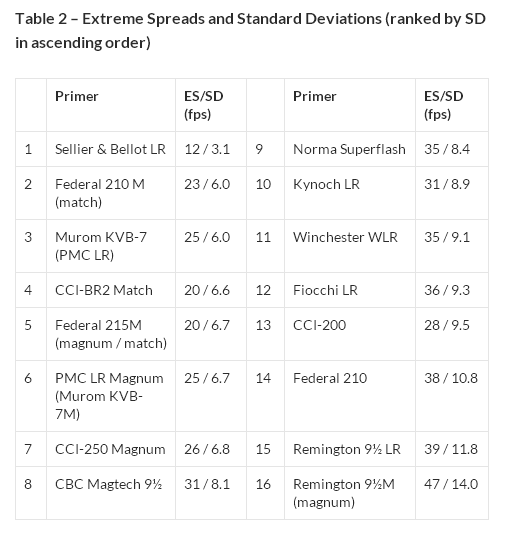
Primer with Lowest ES/SD: Sellier & Bellot LR (12/3.1 fps)
Primer with Highest ES/SD: Remington 9½ M Magnum (47/14.0 fps)
Primer with Smallest Group Size: Remington 9½ LR (0.43″ average, three 5-shot groups)
Primer with Biggest Group Size: CBC Magtech 9½ (0.7″ average, three 5-shot groups)
Editor’s Comment: Laurie shot three, 5-shot groups at 100 yards with each primer type. The average group size for the top six primers varied by only 0.10″ (0.43″ to 0.53″), so one can’t conclude that one type is much better than another. Total group size variance (from best to worst) was 0.27″.

“The biggest surprise to me … came from an elderly (at least 10 years) lot of Czech Sellier & Bellot standard caps with an ES of 12 and SD of 3.1 fps, way below those of the nearest competitor. By contrast to the Fiocchis, they were an almost slack fit in the cases and this may have contributed to their consistent performance.” — Laurie Holland
NOTE: Values in chart are based on 15-Shot strings. The ES/SD numbers will therefore be higher than is typical with five-shot strings.
All ES/SD Values from 15-Shot Strings
Testing 16 primer types was a huge task — we commend Laurie for his hard work and thoroughness. This extensive test is an important contribution to the “knowledge base” of precision shooting. Laurie’s findings will doubtless influence many hand-loaders who hope to produce more consistent ammunition, or achieve better accuracy. Credit should also be given to Target Shooter Magazine for publishing the results. Well done gentlemen…
*Reloading method for Test Ammo: “Test batches consisted of 16 or 17 rounds for each primer, charges thrown by an RCBS ChargeMaster and checked on lab-quality electronic scales, adjusted if necessary to within ± 0.04gn, so any charge weight variation would be under 0.1 grain which equates here to 5 fps.”
April 20th, 2017

You may not realize it… but to get the optimum BC from your bullets (i.e. the lowest aerodynamic drag), you must spin the bullets fast enough. Bullet drag increases (as expressed by lower BC) if the bullet spins too slowly. Bryan Litz of Applied Ballistics explains how BC changes with twist rates…
More Spin, Less Drag
In this article, we look at how twist rate and stability affect the Ballistic Coefficient (BC) of a bullet. Again, this topic is covered in detail in the Modern Advancements book. Through our testing, we’ve learned that adequate spin-stabilization is important to achieving the best BC (and lowest drag). In other words, if you don’t spin your bullets fast enough (with sufficient twist rate), the BC of your bullets may be less than optimal. That means, in practical terms, that your bullets drop more quickly and deflect more in the wind (other factors being equal). Spin your bullets faster, and you can optimize your BC for best performance.
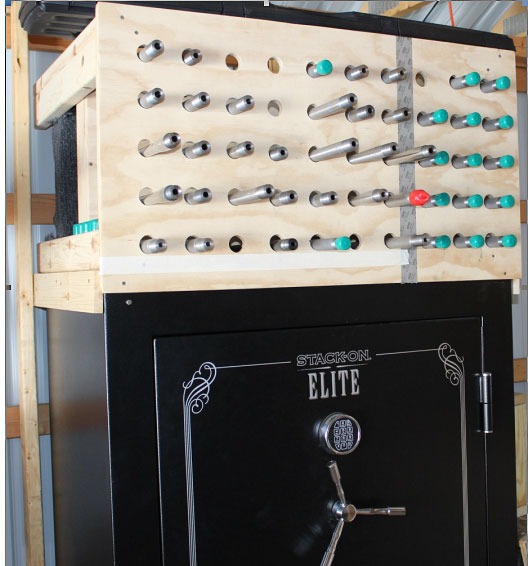
Any test that’s designed to study BC effects has to be carefully controlled in the sense that the variables are isolated. To this end, barrels were ordered from a single barrel smith, chambered and headspaced to the same rifle, with the only difference being the twist rate of the barrels. In this test, 3 pairs of barrels were used. In .224 caliber, 1:9” and 1:7” twist. In .243 caliber it was 1:10” and 1:8”, and in .30 caliber it was 1:12” and 1:10”. Other than the twist rates, each pair of barrels was identical in length, contour, and had similar round counts. Here is a barrel rack at the Applied Ballistics Lab:
Applied Ballistics used multiple barrels to study how twist rate affects BC.
“The Modern Advancements series is basically a journal of the ongoing R&D efforts of the Applied Ballistics Laboratory. The goal of the series is to share what we’re learning about ballistics so others can benefit.” –Bryan Litz
Barrel twist rate along with velocity, atmospherics, and bullet design all combine to result in a Gyroscopic Stability Factor (SG). It’s the SG that actually correlates to BC. The testing revealed that if you get SG above 1.5, the BC may improve slightly with faster twist (higher SG), but it’s very difficult to see. However, BC drops off very quickly for SGs below 1.5. This can be seen in the figure below from Modern Advancements in Long Range Shooting.
The chart shows that when the Gyroscopic Stability Factor (SG) is above 1.5, BC is mostly constant. But if SG falls below 1.5, BC drops off dramatically.
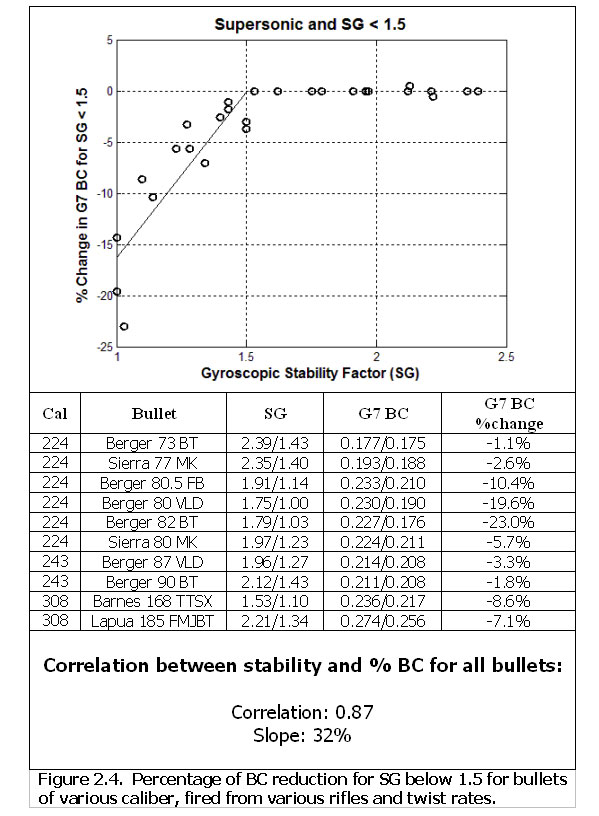
Note that the BC drops by about 3% for every 0.1 that SG falls below 1.5. The data supports a correlation coefficient of 0.87 for this relationship. That means the 3% per 0.1 unit of SG is an accurate trend, but isn’t necessarily exact for every scenario.
It’s a common assumption that if a shooter is seeing great groups and round holes, that he’s seeing the full potential BC of the bullets. These tests did not support that assumption. It’s quite common to shoot very tight groups and have round bullet holes while your BC is compromised by as much as 10% or more. This is probably the most practical and important take-away from this test.
To calculate the SG of your bullets in your rifle, visit the Berger Bullets online stability calculator. This FREE calculator will show you the SG of your bullets, as well as indicate if your BC will be compromised (and by how much) if the SG is below 1.5. With the stated twist rate of your barrel, if your selected bullet shows an SG of 1.5 (or less), the calculator will suggest alternate bullets that will fully stabilize in your rifle. This valuable online resource is based directly on live fire testing. You can use the SG Calculator for free on the web — you don’t need to download software.
Learn More About SG and BC
 This article is just a brief overview of the interrelated subjects of twist rate, Gyroscopic Stability, and BC. The coverage of twist rates in Modern Advancements in Long-Range Shooting is more detailed, with multiple live fire tests. This article is just a brief overview of the interrelated subjects of twist rate, Gyroscopic Stability, and BC. The coverage of twist rates in Modern Advancements in Long-Range Shooting is more detailed, with multiple live fire tests.
Other chapters in the book’s twist rate section include:
· Stability and Drag – Supersonic
· Stability and Drag – Transonic
· Spin Rate Decay
· Effect of Twist rate on Precision
Other sections of the book include: Modern Rifles, Scopes, and Bullets as well as Advancements in Predictive Modeling. This book is sold through the Applied Ballistics online store. Modern Advancements in Long Range Shooting is also available in eBook format in the Amazon Kindle store.
April 19th, 2017

This photo is one of Nightforce’s series of picturesque “Gunscapes”. SEE MORE HERE.
This story is not (directly) about firearms, or reloading gear, or any of the little details of our sport. It, instead, is about life… and, sadly, about death. The recent passing of a friend (and fellow shooter) got me to thinking, “I’m sixty — what if I only had ten more years to live — how would I want to live my life? What really counts the most? What things would I do differently? What dreams would I pursue?”
From the demographics of this website, I know we have thousands of readers in their 50s, 60s, and 70s. Hopefully we will all live long, happy, and fruitful lives. But it’s not a bad idea to consider that we are all mortal, and the clock is ticking. Consider this — in the United States, the average male life expectancy is 77 years*. Using that number as a benchmark, I personally may have just 15 more years to enjoy life and to do the things I love — shooting, traveling, sailing, camping, listening to music, being with friends and family. Breaking that down into months, I have 180 more months to do fun and rewarding stuff. Just 180 months — that’s a real number my brain can comprehend all too well. If I live an average lifespan, that means I also only have 780 more weekends to do all that I want to do. With less than 800 weekends remaining, I don’t want to waste a single one.
Living a Life with More Good Times, and Fewer Regrets
Recently, a group of men, very near the end of their lives, were surveyed. They were asked if they would do things differently if they could live their lives over again. The vast majority of these men gave surprisingly similar responses, which fit into five “Life Lessons”. These “Top 5 Regrets of the Dying” were reported in a story by Bronnie Ware, writing for the AARP online magazine. Ware writes: “When questioned about any regrets they had or anything they would do differently, common themes surfaced.” Here are the five regrets most often mentioned by older men:
1. I wish I’d had the courage to live a life true to myself, not the life others expected of me.
“This was the most common regret of all. When people realize that their life is almost over and look back clearly on it, it is easy to see how many dreams have gone unfulfilled. ”
Lesson: Don’t wait to follow your dreams. Be true to yourself.
2. I wish I didn’t work so hard.
“This came from every male patient [surveyed]. All of the men… deeply regretted spending so much of their lives on the treadmill of a work existence.”
Lesson: Don’t let your work crowd out other important aspects of life.
3. I wish I’d had the courage to express my feelings.
“Many people suppressed their feelings in order to keep peace with others. As a result, they settled for a mediocre existence and never became who they were truly capable of becoming.”
Lesson: Express yourself truthfully. Don’t suppress your feelings for decades.
4. I wish I had stayed in touch with my friends.
“There were many deep regrets about not giving friendships the time and effort they deserved. Many [were] so caught up in their own lives that they had let golden friendships slip by over the years.”
Lesson: Take an interest your friends’ lives; keep bonds of friendship strong.
5. I wish that I had let myself be happier.
“This is a surprisingly common [regret]. Many did not realize until the end that happiness is a choice.”
Lesson: Affirmatively pursue the things that bring you happiness. Don’t just stick to old habits.
Turn Off the Computer, and Do Something Memorable with Your Friends Today
How does this all apply to our shooting hobby? Well, if (like me) you are middle-aged (or older), go have some fun this weekend! Load up your rifle and get to the range. Don’t put off doing the things that make you happy. Call those old buddies you may not have seen in a long time. Renew friendships. Get out into nature. And start figuring out how you can live your dreams. As the saying goes, “Time waits for no man”.
*One of our readers pointed out that the numbers actually work out better than this, because once a man survives to later life, men of his surviving age cohort enjoy a projected lifespan longer than the average projected lifespan from birth. For example, using actuarial tables, a man born exactly 60 years ago (still alive today), has a calculated life expectancy of 23.4 years… meaning he would live to age 83.4 years, on average. CLICK HERE to see actuarial-predicted longevity based on your birthdate.

Practicing What I Preach…
As you read this, your Editor will NOT be sitting in front of a computer. Instead he will be on a boat, taking him 30 miles offshore to this beautiful spot. Three days with no internet, no TV, no Schedule Cs, and no traffic. Just good friends and unspoiled nature. Living like a kid again.

April 16th, 2017

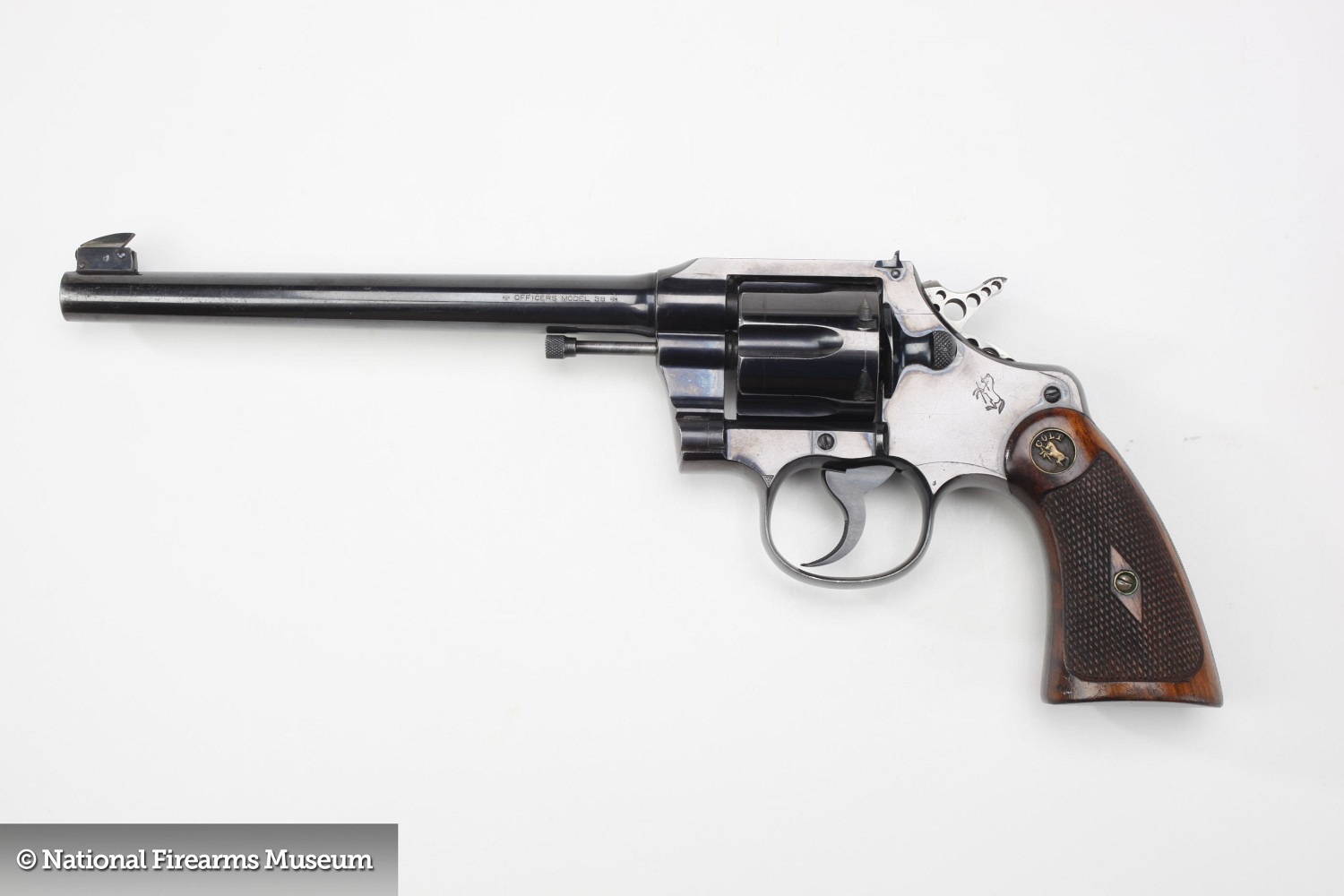
 A.P. Lane’s Gold Medal-Winning Colt Revolver A.P. Lane’s Gold Medal-Winning Colt Revolver
This Colt Officer’s Model revolver, factory-fitted with a skeletonized hammer, belonged to legendary Olympic shooter A. P. Lane, who was known as the “Pistol Wizard”. Lane used this Colt Revolver to win FIVE Olympic Gold Medals — three in 1912 and two in 1920.
A.P. Lane was one of the greatest pistol shooters of his generation. He shot scores that were typically 25-50 points higher than those of his competitors. And he exhibited true Corinthian spirit. At the 1912 Olympics, Lane shared his match ammunition with another competitor who used that ammo to capture the Silver Medal (Lane won the Gold).
This revolver, factory-fitted with a skeletonized hammer, was used by American A.P. Lane in winning five Olympic Gold Medals in the 1912 and 1920 Olympic Games. It’s a .38 caliber, Officer’s Model centerfire revolver from the early 20th century. Olympian A.P. Lane’s Gun can be found in Gallery 13, Firearm Traditions for Today, at the NRA National Firearms Museum in Fairfax, Virginia. The Museum exhibit includes a panoply of Lane pieces – his revolver, his five Gold Medals, and the five Olympic certificates that went along with them.
Click Photo to See Full-Size Image

Watch Video History of the A.P. Lane Revolver


April 6th, 2017

If you couldn’t attend SHOT Show this past January, here’s the next best thing. Shooting Industry Magazine has released, in its April issue, a comprehensive guide to SHOT Show 2017. You’ll find a summary of the hottest new products, including dealers’s selections for potential top sellers of 2017.

Over 60 products are detailed in this issue’s expanded New Product Showcase (April issue pp. 40-53). This features many new rifles suitable for Tactical or PRS Competition as well as some interesting hunting/varmint rig. You’ll also find some
 A second product feature, “SHOT Show Standouts”, highlights dealers’ top picks from a variety of categories. Black Hills’ new line of “Honey Badger” ammunition, eye-catching knives from Steel Will and a smartphone-synced thermal camera by are just a few of the newest products poised to potentially draw big sales. Lastly, a variety gun storage solutions are covered in this April edition in an Arms & Woman feature. A second product feature, “SHOT Show Standouts”, highlights dealers’ top picks from a variety of categories. Black Hills’ new line of “Honey Badger” ammunition, eye-catching knives from Steel Will and a smartphone-synced thermal camera by are just a few of the newest products poised to potentially draw big sales. Lastly, a variety gun storage solutions are covered in this April edition in an Arms & Woman feature.
You can access all these product features on the Shooting Industry Digital Edition. CLICK HERE to launch the April Cover page, then navigate by flipping pages, just as with a print magazine. You’ll find the main SHOT Show Product Showcase starting on page 40.
April 4th, 2017

Forum member Kevin (aka “N10Sivern”), revealed he needs some help with a compulsion — a compulsion to keep buying more and more guns and ammo. Particularly ARs, all shapes and sizes of ARs. Way too many ARs. You could say he has an ARdiction….
In a Forum Thread, Kevin posted: “I may need an intervention. Trying to clean my office and pulled this stuff out. I’m missing an AR10 lower somewhere and an AR15 upper. I’ll find them before the day is done. I have a big box full of parts as well, and 4 barrels still in the cardboard tubes. Sigh. This is gonna be a lot of Cerakoting for me.”
Another Forum member said: “For the love of God, man. Delete this thread lest you be accused of hoarding!”
Kevin replied: “I guess I am hoarding a little. But it’s good hoarding right?”
And then he posted this “Mail Call” photo:

Kevin’s caption: “It only gets worse. Mail Call today: 20″ .308 Ballistics Advantage barrel, 26″ Savage 25-06 barrel, 700 pieces of .38 special, 300 pieces of .357 magnum, 500 pieces .308 Win, gas tube, Hornady Modified Case Gauge. I have more crap on the way too.”
Forum Member’s Chime In…
Kevin’s “Need Intervention” post drew plenty of comments from other Forum Members:
“God! It is so refreshing to see that my illness is widespread with little hope (or desire) for a cure. I smiled reading each post.” — Gary0529
“You know you have a problem when you open a drawer and find components you forgot you bought.” — JoshB
“It’s not hoarding if you intend to use it. Says he who has 12,000 primers.” — Uthink
“I guess I’ll go ahead and volunteer to help you with your obviously much needed intervention… send me the pictured items and then you’ll no longer have to deal with those nasty temptations. Just think about it, you’ll have less clutter in your office plus you’ll not have to fret over the need for any cerakoting either. I’m just one human being volunteering to help out another fellow human being who needs help!” — PikesPG
April 1st, 2017

After you’ve become an NRA Life member what’s next? Well now you can extend your NRA membership into the afterlife, the great beyond. For just five thousand bucks, you can now show your commitment to the Second Amendment for all eternity. The NRA has announced that it will, for the first time ever, offer Perpetual Memberships so you can enjoy being an NRA member from your grave. The new “After-Life” Perpetual Membership confers many benefits, including continuing insurance on firearms in ones estate, NRA-branded headstones (see above), and perpetual magazine subscriptions to a surviving spouse or designated beneficiary. In addition, upon the passing of an After-Life Member, the NRA will donate $100.00 to the NRA program of his/her choice.
How to Become an NRA Member Forever
The NRA After-Life Perpetual Membership has been introduced by the NRA as the request of many current NRA Life members who want a permanent, perpetual affiliation with the NRA. A step-up from the $1500 Life Membership, the new After-Life Membership normally costs $7500.00, but this month the After-Life Membership costs just $5000.00. As a special Promotion in connection with the 146th Annual NRA Annual Meetings and Exhibits in Atlanta, Georgia (April 27-30), the new After-Life Membership will discounted 33% for the entire month of April, 2017. For a mere $5000.00 (after discount) the NRA After-Life Membership secures an individual’s support for the Second Amendment throughout eternity.

Help Defend the Second Amendment in the Future
Many celebrities, business leaders, and avid shooters have NRA Life Memberships. Until today, that was longest-duration NRA membership available. Now, with the introduction of the After-Life Perpetual Membership, current Life Members can secure their affiliation with the nation’s leading gun rights organization for all time, in perpetuity. When you think about it, $5000.00 is a small price to pay for the assurance that you will continue to support freedom and the Second Amendment long after you’re gone.
All NRA After-Life Perpetual Members will receive a handsome yet somber yellow-on-black sweatshirt.

March 25th, 2017
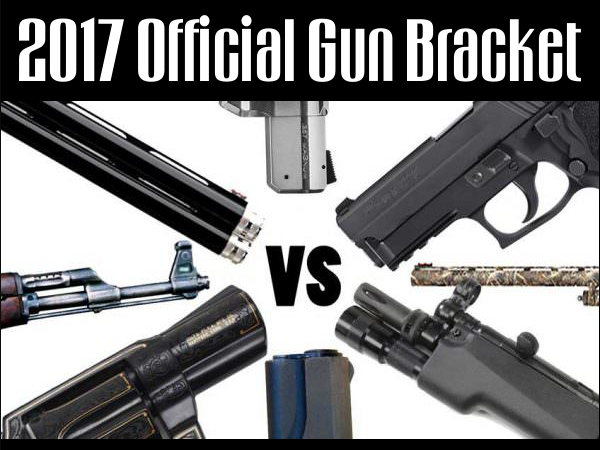
Here’s a fun interactive Gun Selection Game from the NRA Blog. You can choose your favorite firearms in a head-to-head bracket, similar to the “March Madness” NCAA Basketball tournament.
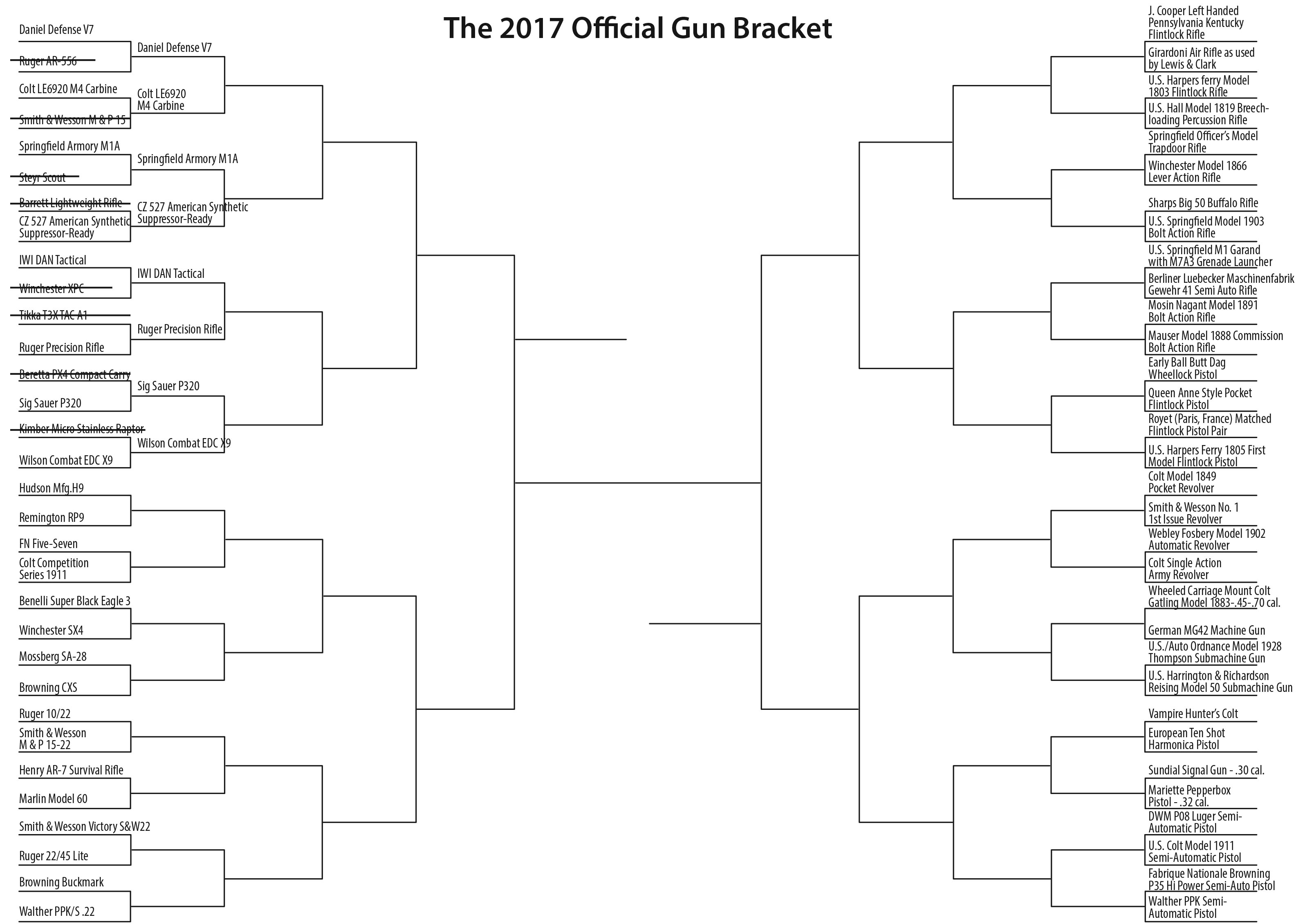
Here are all the Bracket Choices. Click Image to Zoom Out So You Can Read Gun Names.

March is tournament time! Here’s a tournament for firearms fans — the 2017 NRA Blog Official Gun Bracket. The NRA’s selection committee has narrowed the field of firearms down to 64, including 32 of the most popular modern firearms on one side, and 32 historical classics on the other.
Here’s a Sample Bracket Question. CLICK HERE to VOTE.
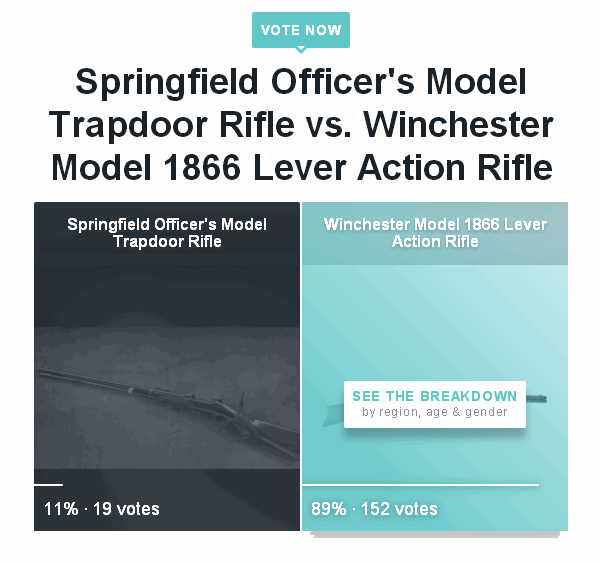
The guns featured include everything from flintlocks, early repeaters and single-action revolvers of yesteryear to the latest AR-15s, carry pistols, performance shotguns and precision rifles of today. Readers vote on each head-to-head matchup, determining which firearm prevails all the way to championship round, when the top historic gun takes on the top modern firearm for the final “Top Gun” winner. CLICK HERE to VOTE.
|