Based on the questions we get on a daily basis on our 800 (Customer Support) line, twist is one of the most misunderstood subjects in the gun field. So let’s look deeper into this mystery and get a better understanding of what twist really means.
When you see the term 1:14″ (1-14) or 1:9″ twist, just exactly what does this mean? A rifle having a 1:14″ twist means the bullet will rotate one complete revolution every fourteen inches of the barrel. Naturally a 1:9″ turns one time every nine inches that it travels down the barrel. Now, here’s something that some people have trouble with. I’ve had calls from shooters thinking that a 1:14″ twist was faster than a 1:9″ because the number was higher with the 1:14″. The easiest way to remember this is the higher the number, the slower the twist rate is.
Now, the biggest misconception is that if a shooter has a .223 with a 1:8″ twist, his rifle won’t stabilize a 55gr bullet or anything lighter. So let’s look at what is required. The longer a bullet is for its diameter, the faster the twist has to be to stabilize it. In the case of the .223 with a 1:8″ twist, this was designed to stabilize 80gr bullets in this diameter. In truth the opposite is true. A 1:8″ will spin a 55gr faster than what is required in order to stabilize that length of bullet. If you have a bullet with good concentricity in its jacket, over-spinning it will not [normally] hurt its accuracy potential. [Editor’s Note: In addition, the faster twist rate will not, normally, decrease velocity significantly. That’s been confirmed by testing done by Bryan Litz’s Applied Ballistics Labs. There may be some minor speed loss.]
Many barrel-makers mark the twist rate and bore dimensions on their barrel blanks.
Think of it like tires on your truck. If you have a new set of tires put on your truck, and they balance them proper at the tire shop, you can drive down a street in town at 35 MPH and they spin perfect. You can get out on the highway and drive 65 MPH and they still spin perfect. A bullet acts the same way.
Once I loaded some 35gr HP bullets in a 22-250 Ackley with a 1:8″ twist. After putting three shots down range, the average velocity was 4584 FPS with an RPM level of 412,560. The group measured .750″ at 100 yards. This is a clear example that it is hard to over-stabilize a good bullet.
Twist-rate illustration by Erik Dahlberg courtesy FireArmsID.com. Krieger barrel photo courtesy GS Arizona.
With the Republican (GOP) Convention recently concluded in Cleveland, readers have asked: “What is the official Republican Party position on the Second Amendment and gun rights?” Here is the section of the Republican Platform concerning gun issues, quoted word for word:
The Second Amendment: Our Right to Keep and Bear Arms
We uphold the right of individuals to keep and bear arms, a natural inalienable right that predates the Constitution and is secured by the Second Amendment. Lawful gun ownership enables Americans to exercise their God-given right of self-defense for the safety of their homes, their loved ones, and their communities.
We salute the Republican Congress for defending the right to keep and bear arms by preventing the President from installing a new liberal majority on the Supreme Court. The confirmation to the Court of additional anti-gun justices would eviscerate the Second Amendment’s fundamental protections. Already, local officials in the nation’s capital and elsewhere are defying the Court’s decisions upholding an individual right to bear arms as affirmed by the Supreme Court in Heller and McDonald. We support firearm reciprocity legislation to recognize the right of law-abiding Americans to carry firearms to protect themselves and their families in all 50 states. We support constitutional carry statutes and salute the states that have passed them. We oppose ill-conceived laws that would restrict magazine capacity or ban the sale of the most popular and common modern rifle. We also oppose any effort to deprive individuals of their right to keep and bear arms without due process of law.
We condemn frivolous lawsuits against gun manufacturers and the current Administration’s illegal harassment of firearm dealers. We oppose federal licensing or registration of law-abiding gun owners, registration of ammunition, and restoration of the ill-fated Clinton gun ban. We call for a thorough investigation — by a new Republican administration — of the deadly “Fast and Furious” operation perpetrated by Department of Justice officials who approved and allowed illegal sales of
guns to known violent criminals.
PrecisionRifleBlog.com (PRB) recently published results from a field test PRB conducted to quantify the temperature stability of the popular Hodgdon H4350 and Varget powders and compare those to IMR’s new Enduron line of powders, specifically IMR 4166 and 4451.
Hodgdon Extreme Series powders have attracted quite a fan base, with over 90% of the top shooters in the Precision Rifle Series choosing to run one of those powders. IMR recently released a new line of powders “with Enduron Technology” — which is also marketed to have “extreme temperature stability”. Sounds familiar! These new powders should compete directly with the Hodgdon Extreme Series, which gives shooters more temp-stable powder options to consider.
The top shooters in the PRS and veteran long-range shooters in other disciplines have learned to value a temperature-stable powder. That’s because a change in temperature can affect the trajectory or “flight path” of the bullet in two well-known ways:
1. Assuming all other environmental conditions remain the same, an increase in air temperature will cause a flatter trajectory due to a lower air density (easier for the bullet to cut through the air).
2. The same increase in temperature also causes the nitrocellulose-based powder inside the cartridge to burn at a higher rate, producing approximately four times the Point of Impact (POI) shift than just air temperature alone. (SEE: Temperature Effects On Zero on KestrelMeters.com.)
“The initial heat condition of your powder will affect the burn rate,” Bryan Litz explained at a recent Applied Ballistics Seminar. That means swings in ambient outside temperature can affect your internal ballistics, which will directly affect your muzzle velocity, which will change your bullet’s trajectory. Some powders are more affected by changes in temperature than others. So if your goal is first-shot hits and you may shoot in a variety of conditions — you should care about temperature stable powders.
The folks at PrecisionRifleBlog.com meticulously loaded 6.5×47 Lapua ammo with each powder using some of the best equipment available. This included the top-of-the-line Prometheus Gen II Powder Scale, which is capable of loading to the nearest kernel of powder. This ensured the powder charges were identical for each round of ammo. PRB’s testers explain the full set of equipment and steps in their loading process in the Full Test Report.
Once they had a couple dozen rounds loaded with each powder, they went and shot them with each powder at 25° F, 65° F, and 140° F. The muzzle velocity of each shot was recorded using both a LabRadar Doppler Radar and a MagnetoSpeed Chronograph. The LabRadar is a new type of device that allows you to measure muzzle velocity within at least +/- 0.1% of the reading.
Here are the results from the PRB Powder Temp Stability Tests:
You can see Hodgdon H4350 had the least variance in muzzle velocity, with just 25 fps over the 115° swing in temperature! That is very, very low. Hodgdon Varget was the second least temperature sensitive powder in this test, with 46 fps of variance in muzzle velocity between temperatures of 25° F and 140° F. IMR 4166 performed very similar to Varget, and proved to be fairly insensitive to large swings in temperature. IMR 4451 had the largest swing in muzzle velocity of the powders tested, but keep in mind just 68 fps over 115° F swing is still a good performance.
Most powders aren’t specially formulated to be temperature stable. So they would likely show much larger swings than what these four top-performing powders showed.
PRB’s test team also noticed other interesting trends in the data. For example, variation in velocity does NOT appear to be linear across the full range of temperatures. By that, they mean the change per degree from 20° to 65° might be smaller or larger than the change per degree from 65° to 140°.
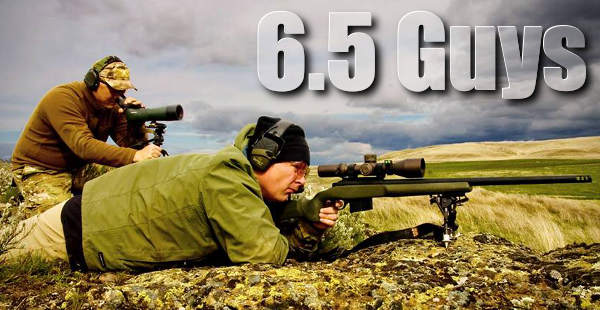
Have you been bitten by the PRS Bug? Our friends, Ed Mobley and Steve Lawrence, aka the “6.5 Guys”, have written an excellent article on getting started in practical/tactical competition. If you are new to the game, these tips can help you save money, progress faster, and have more fun. Here are article highlights, but we recommend you read the full story,5 Tips for Attending Your First Precision Rifle Match, onwww.65guys.com.
We often meet people who are new to long range precision shooting, and want to improve their knowledge and skill level. However, they aren’t sure if they are ready to sign up to compete in a match. They often ask, “What knowledge or skills are necessary to compete in a match?” Others may state, “I need to purchase this gear or that gear before I can attend a match”. For those guys who have a strong interest in precision rifle shooting, and who wish to check out a precision rifle match, below are Five Tips to make it a positive experience.
TIP ONE: Make Plans and Commit to Go
First you need to start by finding a match to attend. This may entail a little bit of research and investigative work on your part to find what matches are scheduled in the next few months. We recommend starting with any match that may be within a reasonable driving distance. This may likely be a local “club” match, many of which are held on a regular basis. These make great venues because it will provide an opportunity to meet some of the regular attendees as well as shooters that are from your geographic area. Additionally, most of the smaller matches are a little more relaxed in terms of level of competitiveness.
Once you decide on the match you want to attend, do your homework. This means finding out if you need to pre-register or pre-pay the match fee. Commit to going by registering for the match and putting it on your schedule. Be sure to find other useful information for questions such as:
— What time should I arrive?
— Is there a mandatory safety briefing for new shooters at that venue?
— What is the travel time required to get to the match site?
— How many stages will there be?
— Is there a description of the stages available before the match?
— How many rounds should you bring?
— Are there special equipment requirements? (E.g. do you need chamber flags, is there a pistol stage?)
TIP TWO: Bring What You Have
(Don’t Spend a Fortune at the Start)
Some new shooters often assume they need a custom match rifle or all of the miscellaneous shooting gear associated with long range precision shooting to compete in match. While having a Kestrel weather meter and a high quality laser range finder and other shooting accoutrements are invaluable kit, you will find other shooters at your first match that will provide you with the information and coaching you need to get on target.
In fact, the only gear you really need to bring is a scoped rifle with a bipod and ammo capable of consistently shooting within one MOA. Also, be sure to know the ballistic drops or have a ballistic drop table prepared for your rifle/ammo to dial the correct DOPE on your scope for different target ranges. Many of the other participants at the match will be willing to let you borrow a support bag, bipod, tripod or other gear if you need one — just ask. Don’t use the excuse of not having the right gear to delay getting out to a match!
One reason not to make a big initial investment in a new rifle and assorted gear before competing, is we’ve seen a number of people come into the sport and try it for a year and then make the decision to move on to something else.
TIP THREE: Be Prepared to Learn
As a new shooter at a match, there is no better opportunity to learn. We often look to our local club matches as a group ‘training’ session to prepare for the bigger matches. You will find competitors at all levels of skill and many of your fellow shooters will enthusiastically provide helpful advice once they learn you are new to the sport. Take advantage of the opportunity to ask questions if you would like ideas for how to engage a stage, but also be sure to do more listening than talking as you receive guidance and tips from more experienced competitors.
Watch and observe other shooters and how they approach and ‘game’ a specific stage or course of fire. You’ll begin to recognize which shooting positions work best for different scenarios, and maybe even come up with some new ones that no one has thought of before.
Seeing what the better shooters do is an invaluable instructional tool. You can use your smart phone’s video camera to record other shooters (with their permission). When you’re ready to shoot, ask another shooter to record your performance. Watching yourself will point out needed areas of improvement.
After each match conduct an informal after action review and summarize for yourself the things that went well and what you should continue to do. You should also identify the specific shooting skills you should develop and make a plan to integrate the appropriate practice drills into your practice sessions. Finally, if you maintain a shooter’s data book or journal you’ll want to note things such as:
After Action Review – How you did, what went well, things you need to work on in practice. Stage Observations – Successful methods used for specific courses of fire. Note barricades, positions used, specific gear used for stages. Gear Observations – How your rifle/gear performed, what new items you should add to your “buy list”.
TIP FOUR: Be Safe and Have Fun
You’ve all heard a parent or teacher say, “It’s all fun and games until someone loses an eye.” The same can be said of the shooting sports. Safe handling of firearms is the number one rule at any match, and comes before the FUN part in terms of importance.
Before all matches start there will always be some form of a mandatory safety briefing. Make sure you know, understand, and follow any unique safety protocols for the match you attend. Some matches require all rifles have chamber flags inserted and are stowed in bags/cases while not on the firing line — other matches may not. If you run afoul of any safety rules, you risk the chance of being disqualified from a stage or worse, the entire match.
The second rule is simply have fun. This starts with having a good attitude throughout the day. Keep in mind that as a new competitor you should think of a match as a solid day of practice and training. If you blow a stage, use it as an opportunity to diagnose what you could have done differently or what you need to improve on — then smile and drive on.
Any day at the range or shooting is a good day. A match is an opportunity to hang out with like-minded people who are passionate about shooting and impacting targets far-far away. Life is great when you are doing what you enjoy!
TIP FIVE: Make Friends
There is no better way to meet lots of precision rifle shooters and make friends than at a match. The people that attend the tactical precision matches on a regular basis are those that have ‘fallen into the deep end of the pool’ and are really into the sport. As a result, they have become part of the local precision shooting community. As you strike up conversations at the match, find out if your new-found friends visit specific forum boards or social media outlets, or if there are other matches they attend.
Precision shooters tend to congregate and share information in different corners of the Internet. It will serve you well to meet some of the guys in person at matches and be able to connect a face to a screen name. As you develop your friendships and develop a level of trust, you will find opportunities become available to shoot with others in your local area, or get ‘read-in’ on a secret honey-hole of a spot to shoot long distance. Additionally, the local shooting community will often find it more convenient to sell or trade gear and equipment locally than deal with buyers/sellers that are out of state.
Adam Scepaniak, of The Guns and Gear Store, has written an interesting story about Prairie Dog Hunting in North Dakota. If a P-Dog safari is on your “bucket list”, you’ll want to read the full story in the Sierra Bullets Blog. Adam provides many tips that can help you plan a successful prairie dog adventure.
Prairie Dog Hunting in North Dakota with Sierra Bullets (Excerpt)
It’s that time of year where lots of men and women point their vehicles westward and try to push the limits of their rifles on prairie dogs. I was a part of this group of people just a few days ago while in northwestern North Dakota. CLICK HERE to Read Full Story.
Little Missouri National Grassland
Once my hunting party arrived at the Little Missouri National Grassland in North Dakota we immediately began scouting for prime prairie dog towns. There is a certain amount of strategy involved in choosing a prairie dog town … for several reasons. For one, you should try to always stay “above” the prairie dogs.
Small objects like rocks, cactuses, and prairie vegetation can easily obstruct your view if you’re shooting prone on a level plane. We encountered this in the first small prairie dog town we stopped and shot at. The prairie dog town was very visible while walking and standing, but once we laid down with our rifles on bipods the two-foot prairie grass became a severe obstruction. We shortly moved on because the small town became quick-studies to our shooting.
The second prairie dog town we hunted was at the base of a small ridge with a dried, cattle creek at the bottom. This area offered better shooting opportunities because we were above most of the prairie dog holes, and if we were not above them, a deep ravine separated us from the prairie dogs removing any obstructions from our rifle scopes which was our previous problem. This area had its own disadvantage though because of some other wildlife present. There were approximately fifty head of cattle in our close vicinity grazing, which was to no surprise because many ranchers utilize the National Grassland for grazing. We had to wait for the cattle to leave our area as to not have an incidental hit due to a rare ricochet. As the sun passed over the horizon we decided to return to this spot the next morning, but would change our shooting position to increase our advantage.
This Location Offered a Nice Overlook.
Zoomed Image Shows Individual Prairie Dog Mounds.
My previous varminting best was a 275-yard shot near Mobridge, South Dakota on a separate prairie dog hunting trip. With more experience and better reloading, Here in North Dakota I was able to make a solid hit on a prairie dog just over 400 yards which made me ecstatic! For a central Minnesota, shotgun-raised guy, I was pretty happy that my bullet selection and hand-loading ability produced a 125-yard improvement.
Once we cleaned and cased our rifles for the journey home we had shot a little over 200 rounds of my Sierra® reloads. This was a lot less than previous prairie dog trips I have been a part of, but our hit percentage was substantially higher as well. Traveling into a new area meant a lot more scouting and experimentation for us as a group. In future trips or hunts of your own, it can be very beneficial to schedule an extra day just for scouting[.]
Little Missouri National Grassland is a National Grassland located in western North Dakota. At 1,033,271 acres, it is the largest grassland in the country. Within its borders is Theodore Roosevelt National Park. The Little Missouri National Grasslands was once a part of the Custer National Forest, but is now a part of the Dakota Prairie Grasslands, a National Forest unit consisting entirely of National Grasslands. A predominant feature of the grassland is colorful and beautiful badlands, a rugged terrain extensively eroded by wind and water. It is a mixed grass prairie, meaning it has both long and short grass.
The boundaries of the grasslands on certain maps can be misleading. Within the boundaries of the national grassland are significant portions of state-owned and privately-owned land, much of it leased by cattle ranchers for grazing.
The grassland is administered by the Forest Service as part of the Dakota Prairie Grasslands from offices in Bismarck, ND. There are ranger district offices in Dickinson and Watford City.
There is one subject as to which we should all be in agreement — the need to wear quality, protective eyewear whenever one uses a firearm. Sadly, it’s not uncommon, at the range, to see shooters wearing no eye protection, or wearing cheap, “dime-store” glasses that can shatter on impact.
This video from Luckygunner Labs shows what can happen with low-quality eyewear. When hit with pellets, the left lens came out and the right lens entered the eye socket!
Read Our Guide to Protective Eyewear
We’ve created a comprehensive Guide to Protective Eyewear. Forum member ChuckW2 told us: “That was the most important article that has ever been posted on this site. I am amazed how many people do not wear glasses while shooting or hunting. Great read….” If you haven’t done so already, read the story. We guarantee you’ll learn something new.
The Eyewear Guide explains the safety standards that apply to protective eyewear and reviews the best lens materials currently available including Polycarbonate, Trivex™, and SR-91. You may not have heard of Trivex, but it is probably the best material out there right now — it’s tough, lightweight, and has better optical properties than Polycarbonate. SR-91 is a good choice for those who need a polarized lens. Our Eyewear Guide also includes a section by Danny Reever on Prescription Shooting Glasses. Danny discusses the available options in lens materials and has many helpful recommendations.
Along with our reviews of lens materials, tint properties, and frame design, we highlight a study done by the NRA’s American Hunter magazine. 10 popular brands of eyewear were tested, with some very interesting results. The testers observed that price does not necessarily assure quality. Relatively inexpensive Bollé VX and Pyramex eyewear both worked better than some expensive brands.
On the other hand, don’t select eyewear simply because it’s cheap or easy to find. American Hunter editor Jeff Johnston observed: “It’s a mistake to assume that any plastic-lens sunglasses off the rack at the local 7-11 are made of polycarbonate and therefore are effective as shooting glasses—cheap plastics are not polycarbonates; in fact, wearing them could be worse than wearing nothing, as they can introduce sharp shards of plastic to your eyes in addition to the projectile(s) that caused them to break.”
In this article, Gun Watch Editor Dean Weingarten interviews SilencerCo Founder/CEO Josh Waldron. Started in 2008, SilencerCo is an amazing success story. The company now sells 18,000 silencers a month. To put that in perspective, a decade ago, the entire domestic suppressor industry was selling 18,000 suppressors a YEAR. SilencerCo now controls 65% of the suppressor market in the USA, and its business is growing 100% a year.
This growth is remarkable considering that suppressors remain highly regulated and costly to acquire. The National Firearms Act (NFA), passed in 1934, imposes significant restrictions and requires a $200 tax to be paid on each silencer sold.
At the NRA Annual Meeting in Louisville, Kentucky, I was able to talk to Josh Waldron, CEO of SilencerCo. Josh is more than a visionary. He is a man who acted on his vision, and is changing the gun culture and the national culture.
I [visited] the SilencerCo booth during the NRA Annual Meeting. I was told that SilencerCo produces about 65% of the silencers in the United States. The company is growing so fast that it was hard to keep up with the number of employees, currently about 330 and rising quickly. There is no doubt that SilencerCo holds a dominant market share and is growing at an exceptionally fast rate. I asked Josh about the future of silencers and silencer legislation.
Q: Do you have a plan, and can you tell me about it?
“It starts as education. Ever since we started the company in 2008, we have had a focus on education and advocacy. When I first started the company… only 18,000 silencers were sold in the United States each year, and that was every manufacturer.”
“From the time we have started until now, there were 18,000 then, we are now selling about 18,000 silencers every month, just SilencerCo.”
“In the last five years, this has been the fastest growing segment of the firearms industry.”
When I first started the company… only 18,000 silencers were sold in the United States each YEAR [from] every manufacturer. We are now selling about 18,000 silencers every MONTH, just SilencerCo. — Josh Waldron
“People are just starting to understand. This is not a ‘cool accessory’ as much as it is a personal protection/personal safety device, just as you would consider any other device that keeps you safe while you shoot, such as safety glasses. It is really the only true way to hunt while you protect your hearing. As we continue to educate the market, it grows exponentially. A guy will get one who has never had one before, he brings it home, he shows his friends, and they say ‘Oh my gosh, I want to buy one!’ Every time we get suppressors out there, the snowball continues to grow and get bigger and bigger.”
Q: Your market share is dominant. Your sales growth is exponential, isn’t it?
“Yes … pretty amazing. We are growing 100% every year.”
WATCH X-Ray View of Shots Through Silencer (28,000 frames per second, 22 Sparrow)
Q: Do you fear that removal of suppressors from the NFA (National Firearms Act) will cut into your profit margin?
“I don’t think so. We don’t get to take full benefit of the economies of scale. We have to order materials on a small-batch basis. As we increase the number of suppressors going out the door we decrease the amount that it costs us. We haven’t pushed it to the level where are seeing those economies of scale.”
“We are always going to be a top-shelf brand. We are never going to discount our brand. We will be a leader in the industry, continually. I do believe there will be a lot of new entrants to the industry. I do not think that will hurt our brand or hurt our market.”
Q: I saw the Maxim 9, SilencerCo’s integrally-suppressed pistol, at the SHOT Show in Las Vegas. Is the Maxim 9 in production yet?
“It is not in production yet. Projects of this size take a lot of research and development. They take a lot of torture testing. We have to put it through a lot of standard testing. We use outside firms that come in and test and evaluate, so that we can hold our heads up high and say ‘This is a duty grade weapon’. We are not going to release it until it is.”
“I do not want to be marketing to our men and women in uniform, and saying this is a safe way to shoot until we can say this is a perfect firearm for them. The amount of testing is extremely rigorous. We are on schedule. We will release it, probably in December.”
Q: Is the Maxim 9 your entry into a future market of integrally-suppressed firearms?
“Yes. Our intention with the Maxim brand is to have integrally-suppressed firearms in that brand. We are talking everything from shotguns to rifles to pistols. The pistol is a good place to start because it is the holy grail of integrally suppressed guns that everyone has wanted. It is extremely difficult to do. People have tried it and failed, years and years, for decades, and this is the first time it has actually been viable and real. We are very excited about that, and very proud of that. We are going to move into new calibers as soon as this one starts shipping. We are very excited to expand that line.”
“Do I think the gun companies will compete? They can try. Number one, our IQ is amazing around this product. We spent a lot of time researching every firearm, every handgun that you can think of. How the mechanisms worked, and why. We had to be thorough. Which is why we designed the gun from the ground up. We went into every single style of this type of firearm, and other types of handguns as well, and really, truly understand how it needed to be designed. We had to take every mechanism, the guide rods, the springs, the things that are in front of the chamber in a conventional handgun, and move them behind the chamber. That was our biggest challenge. Do I think that some of those guys will start competing and get around our IQ? It will be a lot harder for them than for us. Because we are the ones who figured it out in the first place, and we have a lot of patents around that.”
Q: Rifles have had a lot of [suppressor] solutions … for a long time.
“We will get into those lines, the rifle lines. The difference is that we will design the gun, just the same way as we did for the Maxim 9. We will design the gun for the suppressor instead of putting on a suppressor designed for the gun, so our guns will be better.”
“There are about 400 million firearms in the U.S. right now. Most of those were not designed with a suppressor in mind. There is a huge market for retrofitted suppressors.”
“Which is what we have been doing for the last eight years, it is what we have done as a company which is providing solutions for firearms that already exist. The field is ready to harvest as far as creating a new platform. A new platform that has never been done before this, that was designed from the ground up with the intention of being suppressed, integrally suppressed.”
Q: You say you are going to stay on the high end. I looked at some of the markets. There is a lot of low end potential out there.
“There is. It is something that I am just not interested in. Number one, I do not know how to make something that is not the best.”
“It is impossible to know what the percentage of the market the high end will be. It is important to me to make the best product in the world. I am a brand guy. My brand is very important to me to so if I am making things that are less than the best, that is not ever something that I want. I always want to be top shelf.”
Q: Are you exporting much?
“We export, yes. We can’t export to the commercial market. Only to the military and law enforcement. It is a State Department thing.
“We have a bill right now, it is called the Suppressor Export Act. Congressman Jeff Stewart is the one that is sponsoring that bill for us. It would ensure that the State Department would have to allow us to take part in the world market, that is available, that we are not able to take part in right now. We can only export to law enforcement and military, but not to the commercial market. But with this bill, we would be able to export to everybody. If there is a country where it is legal to have suppressors, we would be allowed to export to them.”
“There are suppressor manufacturers all over the world, and they sell all over the world. The United States is the only place where they are this regulated. It is just crazy. You can go to the UK, where it is really hard to own a gun, and you can buy a suppressor over the counter, without a background check.”
“We are behind the curve when it comes to the rest of the world.”
If you are at the NRA Annual Meetings & Exhibits today, you might want to visit the Remington booth. 2016 marks Remington’s 200-year Anniversary, and Remington’s booth features displays showcasing the company’s rich history over the past two centuries. Layne Simpson notes: “When Eliphalet Remington II hammered out his first rifle barrel in his father’s commercial iron forge in 1816, little did he realize that 200 years later we would be celebrating such an exceptional milestone.”
NRA Publications has created a free 68-page eBook that traces the history of Remington, America’s oldest gunmaker. The book includes many well-researched historical articles, a company time-line, and the 2016 Remington Gun Guide. Get the FREE Remington 200th Anniversary Commemorative Book HERE: Remington History Book and 2016 Gun Guide.
The book contains many interesting feature stories. A fascinating article by Garry James, Remington Goes to War, covers the history of Remington firearms used by the American military. Interestingly, the first complete rifles built at the Remington factory were Model 1841 muskets contracted by the U.S. Army Ordnance Department in 1845.
In another in-depth article (featuring a fascinating, illustrated Remington timeline), NRA Museum Senior Curator Philip Schreier recounts the remarkable history of Remington firearms and ammunition. The From the Forge article by Layne Simpson highlights the key rifle models developed by Remington, from muskets to the legendary Model 700. Finally, John Zent writes about Remington’s manufacturing plants in Ilion, NY, and Huntsville, AL. Zent explains the processes (both traditional and ultra-modern) Remington uses to make all types of firearms.
Edgewood makes some of the best front and rear shooting bags you can buy. And the latest Edgewood rear bag is better than ever, with a new hybrid “slick material overlay”. This combines the shape retention and stability of leather ears, with slick, low-friction material where the stock rides. This “best of both worlds” solution delivers both bag stability and improved tracking. Derek Rodgers, the only man who has won BOTH the F-Open and F-TR National Championships, is using this new rear bag, and he says it’s excellent. He says his gun tracks great with the slick material on top of leather-based ears.
You’re probably familiar with Edgewood for its high-quality shooting accessories. You may not know that Edgewood also offers a full line of quality leather holsters. And we bet you didn’t know that Edgewood got its start making tack and bridles for horse riders. Here’s a short history of Edgewood Leather, a family-run business based in Albuquerque, New Mexico.
The History of Edgewood Leather
by Jack Snyder
I’ve always enjoyed working with leather and still do to this day. Something about starting with an idea and building a useful and hopefully, beautiful piece does it for me. There’s nothing like leather to stimulate my imagination. It brings out my creativity and makes me happy.
I began doing leatherwork as a kid, 12 or 13, and the first piece I made was a pair of shoes. Got a job in a leather shop in the late ’60s and made purses and belts, wallets and sandals — many pairs of sandals. I opened a small retail shop in Estes Park, CO and made even more of the same, adding vests, halter tops, hats, mountain man gear of all sorts from skunk hats to goat fur high-top moccasins.
After a decade or so, I became restless for something new and taught myself bridle work. I discovered a niche market with English riders who were always looking for beautiful, well-fitting show bridles and over a period of about twenty years developed and produced many products for these riders — numerous types of nosebands, breastplates, martingales, girths and many different varieties of reins. At the same time I observed that for every horse and rider there were at least two dogs trotting along beside. I began making dog products which closely resembled their horse buddies bridle work. Sales were good. Leashes, leads, halters and collars showed up at dog shows around the country. My bridles were worn by many champions in every horse discipline — dressage, show ring, hunter-jumpers, and my polo gear became popular among the players. All of that was fun and I’m still proud of those products (still being made today), but it was time for a change. I sold my interest to my partner and tried to retire. Didn’t work, though.
My plan was to shoot benchrest matches, as many as I could. And I did for some time and loved every minute. I’ve made many friends among the shooters, discovering early on that these people are the most interesting, smart folks a guy could ever associate with. To the man, they’ll share what they know with you and even hand you their gun when yours malfunctions during a match, and grin and slap you on the back when you beat ‘em with it!
When I was getting started in benchrest, one aspect of the game was somewhat disappointing to me-the quality and stability of the shooting bags. It was natural with my past leather experience to make what I thought would be a better product. I cobbled up a couple of bags and went to a match in Oklahoma. All hell broke loose. Most of the shooters had to have one. By the end of the summer, I had so many orders for shooting bags, I couldn’t keep up the pace. I was improving the designs, based on the shooters telling me what worked and didn’t work. I was adding new products, experimenting with materials, processes and configurations and having a great time. Completely by accident, Edgewood Shooting Bags was born. My wife Cindy and my two kids Jackie and Aaron jumped in and we became a bag-making machine — always looking to improve and expand upon the products. Jackie’s husband Ryan joined us several years ago and together, we’ve made a pretty awesome team.
Edgewood’s New Line of Leather Holsters
Since we’re all avid shooters with many handguns among us, the next logical product to add to our catalog would be a line of high-quality leather holsters. For the last year or so, we’ve come up with what we believe to be the most comfortable, elegant holster out there. Affordably priced, these holsters are are available in many different styles and configurations, for both outside carry and concealed carry.
Latest Rear Bag Design — Leather Ears with ‘Slick Material Overlay’
Edgewood constantly strives to improve its products. Witness the new “slick material overlay” bag ears. This is a major design improvement over our regular “slick ears”. The development of the overall design all started when we noticed some shooters applying household products like talcum powder or dryer sheets to the ears of their bag in an effort to reduce friction and speed up their rifle’s return to battery. We found a material that would achieve this function without the need to raid their wife’s pantry for powders or laundry accessories and began sewing the ears up using this “microscopic glass bead impregnated” fabric. We were happy with the results. However, we soon began to realize that the slick material could have the longevity of our nylon as well as its slick properties, if we found a way to increase its thickness without causing wrinkles or inconsistencies.
First, we ended up hunting down some similar fabric with a much higher strength and thickness. It even has a fireproof backing that makes it far more durable — even if shooters aren’t planning on exposing it to temperatures higher than the Arizona desert can offer. This material was definitely superior and even more representative of the quality and durability that shooters have come to expect from products wearing the Edgewood logo. We didn’t stop there, either.
We started experimenting with a way to combine our toughest ear design, which is made from soft leather, with the slick material to create the best of both worlds. We deemed it the “slick overlay” option and many of the world’s top shooters now swear by it. There is no compromise with this ear set — shooters gain all of the advantages of the slick material, in addition to durability and consistency that exceeds even our tried and true nylon ears. Many of our original bags have been punished by shooters for over a decade and are still performing. We expect this design to last even longer.
Keeping ahead of the curve with innovations that create and help propel evolution in the sport is a signal of our commitment to retain our status into the future. Along with other new products like our second generation of concealed and open carry holsters, range bags for sighting in hunting rifles, radius front bags for AR-style rifles, camouflage color options and more — we even have a new logo for 2016. Check us out online or give us a call. We’re ready to meet the demands of shooters — from Benchrest and F-Class to concealed carry and IDPA.
Jack Snyder
President – Edgewood Shooting Bags and Gun Leather
Do you have a concealed carry permit, or do you plan to carry a concealed handgun in the future? Then you can benefit from Beretta’s FREE 15-page e-book, Ten Essential Tips for CCW Holders. This eBook, in handy PDF format, helps gun owners select an appropriate handgun (and holster), understand legal obligations and responsibilities, and train effectively with the firearm. This short eBook offers many useful tips to consider, in particular for gunowners who are contemplating the pros and cons of everyday carry for themselves.
As the Beretta CCW booklet says, “Carrying a concealed handgun requires a certain amount of confidence. You need to be confident in your knowledge of laws and regulations. You have to have confidence in your accuracy, and you need to trust that you can carry a gun effectively, securely and comfortably. If a gun is a burden for you to carry, you probably won’t.”
Surprising Facts About Actual Defensive Handgun Use
You may be surprised to learn when and how handguns are actually used for self-defense. Most defensive uses are at very short range and the incident only lasts a matter of seconds. You need to be prepared, and train to be proficient drawing and aiming your weapon. And remember, shooting is a last resort, when a safe retreat is not available.
55% of gunfights take place in 0-5 feet.
20% of gunfights take place in 5-10 feet.
20% of gunfights take place in 10-21 feet.
95% of gunfights take place in 0-21 feet. (Source: FBI)
The average man can cover 21 feet of ground in 1.5 seconds.
The average gunfight is over in 3-5 seconds.
3 to 4 shots are usually fired.
Most gunfights take place in low-light conditions.
On average, one shot in four strikes someone.
Here are two (2) sample pages from Beretta’s CCW eBook.





 Little Missouri National Grassland


 The book contains many interesting feature stories. A fascinating article by Garry James,

 I began doing leatherwork as a kid, 12 or 13, and the first piece I made was a pair of shoes. Got a job in a leather shop in the late ’60s and made purses and belts, wallets and sandals — many pairs of sandals. I opened a small retail shop in Estes Park, CO and made even more of the same, adding vests, halter tops, hats, mountain man gear of all sorts from skunk hats to goat fur high-top moccasins.


