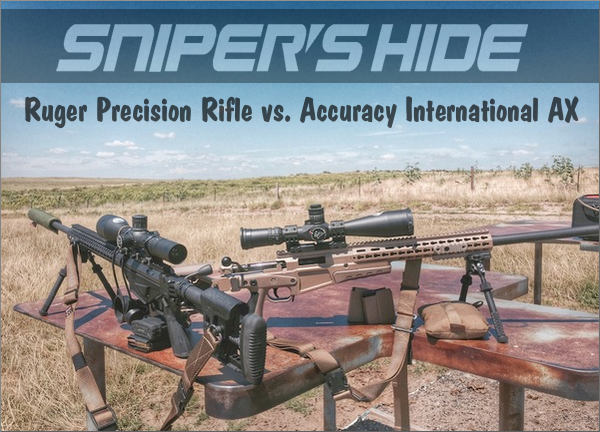
Sniper’s Hide has just released an interesting comparison test, running the $1150* Ruger Precision Rifle vs. a $7000 Accuracy International AX in a 450-yard “mad minute” drill. The goal was to see how many shots could be put on a 12″ steel target in one minute. Both rifles were chambered for the 6.5 Creedmoor and were fed with Hornady 140gr Amax ammo. The much cheaper Ruger did surprisingly well, though the AI AX did come out on top. Frank Galli, Head Honcho of Sniper’s Hide, got 19 rounds on target in one minute with the AI AX compared to 14 rounds with the Ruger.
Watch the “mad minute” face-off in this video:
Galli notes: “The target is 450 yards away, and, as noted in the video, we have winds gusting anywhere from 10 to 18 mph out on the Front Range of Colorado today. So my job is to not only hit the target as fast as possible, but to also manage the conditions.”
In Summary
Frank Galli says the Ruger offers a lot of bang for the buck:
“For those looking to get into competitive tactical shooting, like a PRS Event, there is absolutely no excuse. This rifle will allow you to be competitive, the only thing that would hold a person back is themselves. The more this rifle is shot, the more impressive it is. Would I trade my Accuracy International for one? Well, odd question, but no. However for those on a budget I would recommend the Ruger in a heartbeat.”
*MSRP for the Ruger Precision Rifle is $1399.00. Some dealers are posting prices as low as $1100.00, but $1150.00 seems typical.
Deep Creek 1000-yard line: 46°55’35.03” N 114°14’45.40” W, elevation 3355′.
The International Benchrest Shooters (IBS) welcomes the Montana NW 1000 Yard Benchrest Club as a newly-affiliated club hosting registered IBS matches. The Montana club’s origins go back to 1996 when the Whitefish (Montana) Rifle and Pistol Club affiliated with the Original Pennsylvania 1000-Yard Benchrest Club (Williamsport) to conduct 1000-yard matches. Early in 1998 the Northwest 1000-Yard Benchrest Association was formed to promote 1000-yard benchrest competition in affiliation with Williamsport. The Club now operates at the Deep Creek Range as the Montana NW 1000 Yard Benchrest Club (www.MT1000yd.com), an IBS-affilated organization.
2015 Championships at Deep Creek
The 2015 Championships were held this past weekend, August 7-9. The video below features the winners from this year’s championships, Tom Mousel (Two-Gun Overall), Leo Anderson (Heavy Gun Overall), and Bill Johnson (Light Gun Overall). The three winners describe their equipment. Tom shot a pair of 17-lb 6mm Dashers, running Vapor Trail Bullets pushed by CCI 400 primers and Hodgdon H4895 powder. The brass is Lapua 6mmBR hydro-formed to Dasher with lightly-turned necks.
Here is one of Tom Mousel’s match-winning rifles, and an impressive 100-3X, 10-shot target:
The Club holds 12 shoots per year over six weekends that count towards the 6- and 10-shot Aggregates for the year. The Championship Shoot held in August is match number 11 and 12 and does not count for Aggs. More than $20,000 worth of prizes were donated by major sponsors this year. The prize table featured scopes from Nightforce and Vortex, actions from DeFrance, Borden, BAT, Kelbly, and Stiller, plus barrels from Bartlein, Benchmark, Brux, Caliber, Krieger, and McGowen.
The Deep Creek Rifle Range is located near Missoula, Montana. Club members are continually upgrading the 1000-Yard Range, which has become one of the best long-distance benchrest shooting facilities in the country. The Deep Creek Rifle Range invites shooters to visit this scenic shooting facility. Participation in club matches continues to grow, and club members hold several 1000-yard World Records for group, score, and Aggregates of both. For more information on club shoots and joining the club, contact Alex Wheeler: zfast_malibu [at] yahoo.com.
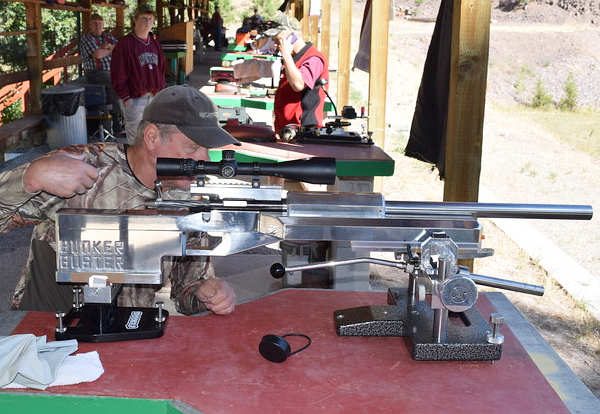
Here’s “Bunker Buster”, a metal-stocked Heavy Gun (HG):
At Deep Creek, competitors shoot three (3) classes: IBS Light Gun (LG), IBS Heavy Gun (HG), and a special 11-pound class. At registered matches, Light Gun shoots five shots per relay, Heavy Gun shoots 10 shots, while the 11-pound class shoots five shots. For more information on classes and courses of fire, visit MT1000yd.com or send email to: northwest1000ydbenchrest [at] gmail.com.
New World Records Set at July 2015 Match:
Important 1K records were set at the Club’s July 9-10 match earlier this summer. Tom Mousel broke the Light Gun 10-match score record and Heavy Gun 10-match group record. Jim Williams broke the HG 10-match score Agg record. In the video below, Tom Mousel talks about his record-breaking performances.
Missoula, Montana Travel Tips
The City of Missoula is nestled in the Northern Rockies of Montana, at the confluence of three rivers. Surrounded by seven wilderness areas, Missoula is an outdoor enthusiast’s dream. You can kayak, raft or tube through downtown, or take a relaxing hike in 60,000 acres of wilderness minutes from your hotel. Missoula is known for blue-ribbon trout fishing (made famous by the movie A River Runs Through It) and spectacular natural beauty.
Missoula is a popular destination for shopping and dining, featuring three shopping districts and an abundance of restaurants, cafes, and brew-pubs with something to fit all budgets and palates. Known for its eclectic culture, Missoula offers a wide variety of entertainment including theater, film festivals, college sports, ballet, and even roller derby.
by Dennis Santiago
Tricked-out match guns are fun but, if you want to prove that you’ve got an eagle eye and steady hands, a true test of skill is the Civilian Marksmanship Program’s As-Issued Four Gun Aggregate.
The Four Gun Aggregate encompasses a series of CMP John C. Garand 30-shot matches (200-yard As-Issued Military Rifle Match Course A) on NRA SR targets at one of the CMP Regional Games or the Nationals officiated by the CMP. These are the only places you can earn the coveted neck-ribbon CMP achievement medals.
You will need four as-issued rifles. The first is the M-1 Garand. (The course of fire is named after this rifle’s inventor.) This remarkable battle rifle will test your prowess at slow prone, rapid prone, and offhand. The match winner will put almost all bullets into a saucer.
You do get to hear that classic “ping” when the en bloc clip ejects with this gun. It’s a good idea to write your firing point number on your hand for each match because you will move around over the course of the tournament.
Next comes the hyper-accurate 1903 Springfield. You can use either the WW I M1903 or the later WW II M1903A3 model with peep sights. A Springfield will typically shoot groups half the size of a Garand with the same ammunition. Think potential in terms of tea cups instead of saucers.
Initially drawn to the 6mmBR and 6mm Dasher, I realized these cartridges wouldn’t feed from an AICS magazine system without extensive modification. I took a look at the 6mm Creedmoor, 6XC, and 6mm-6.5×47 Lapua (aka 6×47 Lapua), all of which feed well from a detachable magazine. At right you can see the 6×47 Lapua in an AICS magazine. It has the “Goldilocks factor” — not too long, not too short.
The ability to simply convert 6.5×47 Lapua brass to 6×47 brass by running the parent 6.5mm brass through a full-length Forster sizing die in a single step was what made me choose the 6×47 Lapua over the 6mm Creedmoor and 6XC (both excellent cartridges in their own right). I also own a 6.5×47 Lapua rifle, so I had a supply of 6.5×47 brass ready to neck-down. Being able to create 6×47 brass easily (one pass and done) was very appealing.
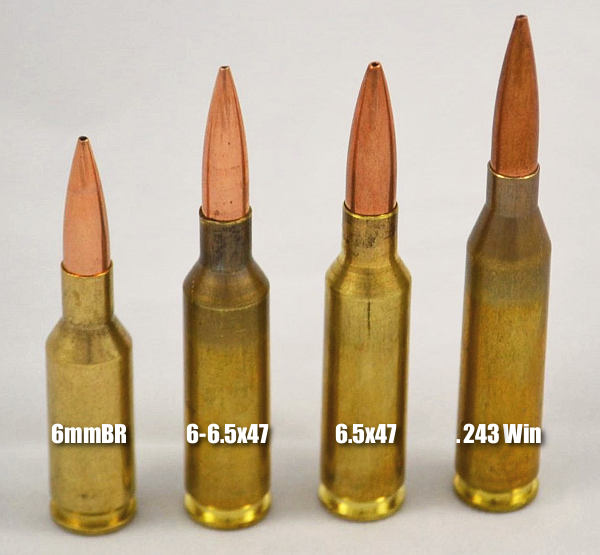
Left to right, below: 6mmBR, 6-6.5×47 Lapua, 6.5×47 Lapua, and .243 Winchester.
I cut the chamber end off my .243 Win barrel, threaded and chambered my rifle for the 6×47 Lapua cartridge. I have written a lengthy article on this cutting and re-chambering process. Home gunsmiths interested in this process can READ MORE HERE.
When the re-chambering was complete, I headed to the range and worked up a set of eight loads using Berger 108 BTHPs, H4350, Lapua brass, and CCI 450 primers.
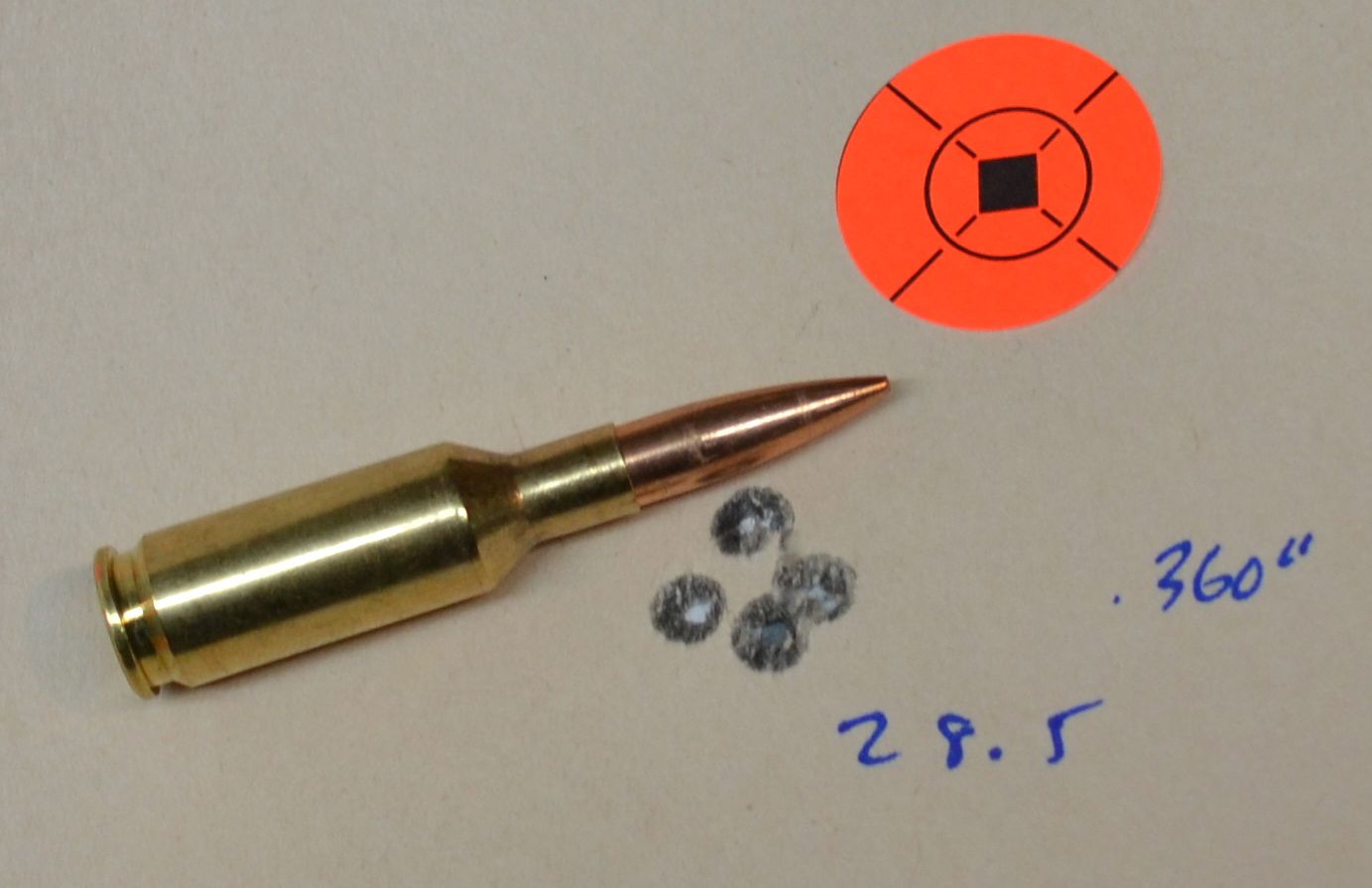
Load development was a little trickier than with the 6.5×47 Lapua parent cartridge. The accuracy nodes were smaller. However, once I dialed in a load with Hodgdon H4350 and the 108-grain Berger BTHP, the rest was history. The 6×47 rig is now one of the most consistent rifles I own, holding just above 0.3 MOA for 5-round groups. Below is a 100-yard test target with 108-grain Berger BT in the 6×47 Lapua. Five-shot group sizes are (L to R): .369″, .289″, and .405″. The average size was .354″ or .338 MOA. [Editor: We think that is excellent accuracy for a tactical-type rifle shot from bipod.]
Learn More about this 6×47 Lapua Project
I’ve written more about this 6×47 rifle on my Rifleshooter.com website. To learn more about my experience with the 6×47 Lapua, click this link: 6-6.5X47 Lapua Review.
About the author: Bill has been a serious shooter for over 20 years. A former Marine Corps Sergeant, he’s competed and placed in High Power Rifle, ISPC, USPSA, IDPA, 3-Gun, F-Class, and precision rifle disciplines. In addition to being an NRA-certified firearms instructor and range officer, Bill has hunted big game in North America, South America, and Africa. Bill writes extensively about gunsmithing, precision rifles, and the shooting sports on his blog, Rifleshooter.com.
Barrel nut system allows “Pre-Fit” barrel installation on a Remington action. CLICK photo to zoom.
REMAGE Project Report by Bill, Rifleshooter.com Editor
Installing a new barrel on your Remington 700 (especially without a lathe) may seem like a daunting task, but thanks to companies like McGowen Precision Barrels, there are easier alternatives. By adopting a Savage-style barrel nut on a 1 1/16″ thread for a Remington 700 receiver, pre-chambered (aka “pre-fit”) barrels can be easily swapped with just a few hand tools. This system is sometimes called a REMAGE conversion (for “REMington savAGE”).
The existing barrel is simply removed from the action (normally the hardest part) and the new barrel is screwed on with the Go Gauge in place. The barrel nut is tightened against the action, headspace verified with the Go Gauge, and you are off to the range. It takes all of the machine work out of the barreling process. Note: the barrel nut has a slightly larger diameter and some stocks may require minor inletting. Also if you are shooting fired brass from another rifle with the same chambering, you should FL-size the brass before loading it for your new pre-fit barrel.
Bill has been a serious shooter for over 20 years. A former Marine Corps Sergeant, he’s competed and placed in High Power Rifle, ISPC, USPSA, IDPA, 3-Gun, F-Class, and precision rifle disciplines. In addition to being an NRA-certified firearms instructor and range officer, Bill has hunted big game in North America, South America, and Africa. Bill writes extensively about gunsmithing, precision rifles, and the shooting sports on his blog, Rifleshooter.com.
AccurateShooter.com has released the most complete discussion of the 6.5×47 Lapua cartridge ever published. Our new 6.5×47 Cartridge Guide is packed with information. If you own a 6.5×47 rifle, or are thinking of building a rifle with this chambering, definitely read this Cartridge Guide from start to finish. Our comprehensive, 5000-word article was researched and written by the 6.5 Guys, Ed Mobley and Steve Lawrence. Both Ed and Steve shoot the 6.5×47 Lapua in competition and they are experts on this accurate and efficient mid-sized cartridge.
You’ll find everything you need to know about the 6.5×47 Lapua in our new Cartridge Guide. We cover ballistics, reloading, die selection, and we provide an extensive list of recommended loads, for bullets from 120 to 140 grains. You can read interviews with respected experts who’ve built and tested many 6.5×47 rifles. The Guide includes helpful tech tips such as how to maximize the powder fill in your cases. This Cartridge Guide can put you on the “fast track” — helping you develop accurate, reliable loads with minimal development time.
6.5×47 Lapua Cartridge Guide Highlights:
Cartridge Specifications
Comprehensive Load Data
Best Bullets and Primers for 6.5×47
Ballistics Comparison Charts
Sizing and Seating Die Options
6mm-6.5×47 (Necked-Down) Options
Ask the Experts Section
Tips for Accurate Reloading
Brass Life and Annealing
Chambering and Gunsmithing Tips
6.5×47 Lapua for Hunting
6.5×47 Lapua for Tactical Competition
6.5×47 Factory-Loaded Ammo
Here is a sample from the 6.5×47 Cartridge Guide’s Ask the Experts Section. This is an interview with Rich Emmons, one of the founders of the Precision Rifle Series:
Here’s the early morning view, looking down-range through Orland Bunker’s 6X Hunter Class scope.
21st Annual Bud Pryor Memorial Match: June 12-14, 2015 Match Report by Richard Grosbier for IBS
It was hot and humid for the 21st Bud Pryor Memorial match. Temperatures were in the high 80s with humidity in the high 90% range all three days. For once we never got rained on. Thunderstorms with high winds were forecast for both Saturday and Sunday. Luckily the storms materialized AFTER the shooting concluded on both days. Wind was not especially strong all weekend but it was tricky and could let off, pick up, or reverse in a heartbeat. Even at 100 yards (on Friday), good shooters lost points.
Thurmont Conservation & Sportsman’s Club, Thurmont, Maryland Click Photo above to see large image.
Three 750s Shot in Varmint for Score Grand Agg
In the Varmint for Score (VFS) 100-200-300 Grand Aggregate John Cascarino was the big winner with a 750-35X. This writer was very happy to see John win a big match. He is a great guy who does an enormous amount of work for all IBS shooters and clubs in his role as IBS Second Vice President. Ricky Read was second with a 750-31X followed closely by Wayne France with 750-28X. It is quite unusual for there to be three 750 scores shot at the “Bud”. I checked the IBS website for 11 years back and found no more than two and frequently there are no 750s shot at the event.
VFS Grand Aggregate Winner John Cascarino.
Top honors in Hunter Class went to Randy Jarvais (below) with a 742-23X. Second went to Gary Long with 742-22X and third to Orland Bunker with 737-25X. Most people had an enjoyable weekend, the threatened thunderstorms never materialized until after the shooting was over.
Hunter Class Winner Randy Jarvais.
Roy Hunter and his “Ugly Stock”
Roy Hunter crafts superb wood-composite, carbon-reinforced stocks. These great-shooting stocks are very popular among benchresters, particularly on the East Coast. Roy complained that every time he built himself a rifle somebody would offer to buy it at a price he could not refuse. That was frustrating so Roy built the odd-looking, calico rifle shown below. He deliberately made it “so ugly nobody that would want it.” At least it does (sort-of) match his multi-color prop-top hat. (Will propeller-top beanies become a hot “must-have” item at Benchrest matches, augmenting downrange wind-flags?)
Click Photo below to see large image:
Day by Day Results:
100 Yards on Friday
A large contingent of Southern shooters were competing at the Bud Pryor for the first time. Initially, it seemed that the southerners might take home all the marbles. At Friday’s 100-yard match, Richard Sissel took first with a nice 250-24X score, followed closely by Ronnie Milford with 250-23X. James Parham, also a Southerner, was third with the first of two 22X scores. Match Director Dean Breeden placed fourth.
In Hunter Class, “Mainiac” Orland Bunker turned in an impressive 250-18X score at 100 yards, shooting with a 6-power scope and 2-1/4″-wide fore-end. To put that in perspective, Orland’s score would have placed him ahead of 60% of the VFS shooters, all of whom benefited from using wider stocks and high-magnification optics.
200 Yards on Saturday Saturday the targets were moved back to 200 yards and the fun continued. Hall-of-Famer Allie Euber from Vermont took top honors in VFS class with a 250-14X score from his LV rifle. In the Points Race for Score Shooter Of the Year (SSOY), it was another sweep for the Southern contingent. Under IBS rules, only the first rifle one shoots may garner SSOY points. Allie did, in fact, win the 200 VFS stage (with his LV). However, as he shot his HV rifle on the second relay and his LV on the third relay, Allie picked up no SSOY points.
Accumulating the most SSOY points was second place Jerry Powers with 250-13X, followed by third place Jim Cline also with 250-13X. In Hunter Class, Orland Bunker was still on a tear, logging a 248-4X score, followed closely by Gary Long with a 247-6X score. Gary’s score included a one-point crossfire penalty. Had he not cross-fired, Gary would have finished first.
300 Yards on Sunday
Sunday’s 300-yard competition is always the big equalizer at this event. Conditions were relatively mild at Thurmont for the 300-yard match but there was enough wind and mirage to keep scores down. Another Hall of Famer, Harley Baker from Pennsylvania, won the yardage with a nice 250-6X score. Dewey Hancock took second (also with a 250-6X score), followed by John Cascarino with the same score. VFS front-runner Richard Sissel shot well but two dropped points moved him down to 13th at 300.
In all there were only five 250s shot of the 44 guns in attendance. Veteran shooter Ricky Read shot 250-4X and Wayne France turned in a 250-2X performance. In Hunter class, the 100/200 front runner Orland Bunker struggled at 300 yards. K.L. Miller, who only shot the 300-yard stage, won Hunter class with a 249-5X. Miller was attempting to break the 300-yard Hunter record and almost did. Randy Jarvais was second with a 247-2X.
Target Cake is a Big Hit
Ready, Aim, Eat. A special hand-decorated cake featured a six-bull target (complete with sighter shots). Beautifully presented, the Bud Pryor bullseye cake was a huge hit with match attendees. Here is Sandy the food lady with the confectionery masterpiece. Sandy also provided wonderful home-cooked food to the shooters at Thurmont.
If you will be flying with firearms this summer, you should read this article. You need to familiarize yourself with current Federal Regulations on gun transport before you get anywhere near an airport. Thankfully, the Transportation Security Administration (TSA) has a web page that states the important requirements for airline passengers traveling with firearms and/or ammunition.
You’ll want to visit the TSA Firearms and Ammunition webpage, and read it start to finish. In addition, before your trip, you should check the regulations of the airline(s) with which you will fly. Some airlines have special requirements, such as weight restrictions.
Here are the TSA’s key guidelines for travel with firearms:
30th Annual FCSA Championship Coming Soon
The 30th Annual FCSA 1000/600 Yard World Championship will be held July 3 through 5, 2015 at the Whittington Center in Raton, New Mexico. CLICK HERE to REGISTER.
By James Patterson This article first appeared in Sinclair International’sReloading Press Blog
For a number of years I drooled over every .50 BMG caliber rifle that I came across, I read every article I could find and determined that ‘Someday’ I was going to have one. Well I finally took the plunge and in 2002 I purchased my first ‘Big 50’. Almost immediately I joined the Fifty Caliber Shooters Association (FCSA) and I have since come to immensely enjoy shooting this challenging cartridge and associating with some of the best people on earth.
With barrels, one wonders “Can a little more length provide a meaningful velocity gain?” To answer that question, Rifleshooter.com performed an interesting test, cutting a .308 Win barrel from 28″ all the way down to 16.5″. The cuts were made in one-inch intervals with a rotary saw. At each cut length, velocity was measured with a Magnetospeed chronograph. To make the test even more interesting, four different types of .308 Win factory ammunition were chronographed at each barrel length.
Test Barrel Lost 22.7 FPS Per Inch (.308 Win Chambering)
How much velocity do you think was lost, on average, for each 1″ reduction in barrel length? The answer may surprise you. With a barrel reduction from 28″ to 16.5″, the average speed loss of the four types of .308 ammo was 261 fps total. That works out to an average loss of 22.7 fps per inch. This chart shows velocity changes for all four ammo varieties:
Summary of Findings: The average velocity loss per inch, for all four ammo types combined, was 22.7 FPS. By ammo type, the average loss per inch was: 24.6 (Win 147 FMJ), 22.8 (IMI 150 FMJ), 20.9 (Fed GMM 168gr), and 22.5 (Win 180PP).
Interestingly, these numbers jive pretty well with estimates found in reloading manuals. The testers observed: “The Berger Reloading manual says for the 308 Winchester, ‘muzzle velocity will increase (or decrease) by approximately 20 fps per inch from a standard 24″ barrel’.”
How the Test Was Done
The testers described their procedure as follows: “Ballistic data was gathered using a Magnetospeed barrel mounted ballistic chronograph. At each barrel length, the rifle was fired from a front rest with rear bags, with five rounds of each type of ammunition. Average velocity and standard deviation were logged for each round. Since we would be gathering data on 52 different barrel length and ammunition combinations and would not be crowning the barrel after each cut, we decided to eliminate gathering data on group sizes. Once data was gathered for each cartridge at a given barrel length, the rifle was cleared and the bolt was removed. The barrel was cut off using a cold saw. The test protocol was repeated for the next length. Temperature was 47° F.”
CLICK HERE to Read the Rifleshooter.com Test. This includes detailed charts with inch-by-inch velocity numbers, multiple line charts, and complete data sets for each type of ammo. Rifleshooter.com also offers ballistics graphs showing trajectories with different barrel lengths. All in all, this was a very thorough test by the folks at RifleShooter.com.
Much Different Results with 6mmBR and a Longer Barrel
The results from Rifleshooter.com’s .308 barrel cut-down test are quite different than the results we recorded some years ago with a barrel chambered for the 6mmBR cartridge. When we cut our 6mmBR barrel down from 33″ to 28″, we only lost about 8 FPS per inch. Obviously this is a different cartridge type, but also our 6mmBR barrel end length was 5″ longer than Rifleshooter.com’s .308 Win start length. Velocity loss can be more extreme with shorter barrel lengths (and bigger cartridges). Powder burn rates can also make a difference.






 The Four Gun Aggregate encompasses a series of CMP John C. Garand 30-shot matches (200-yard As-Issued Military Rifle Match Course A) on NRA SR targets at one of the CMP Regional Games or the Nationals officiated by the CMP. These are the only places you can earn the coveted neck-ribbon CMP achievement medals.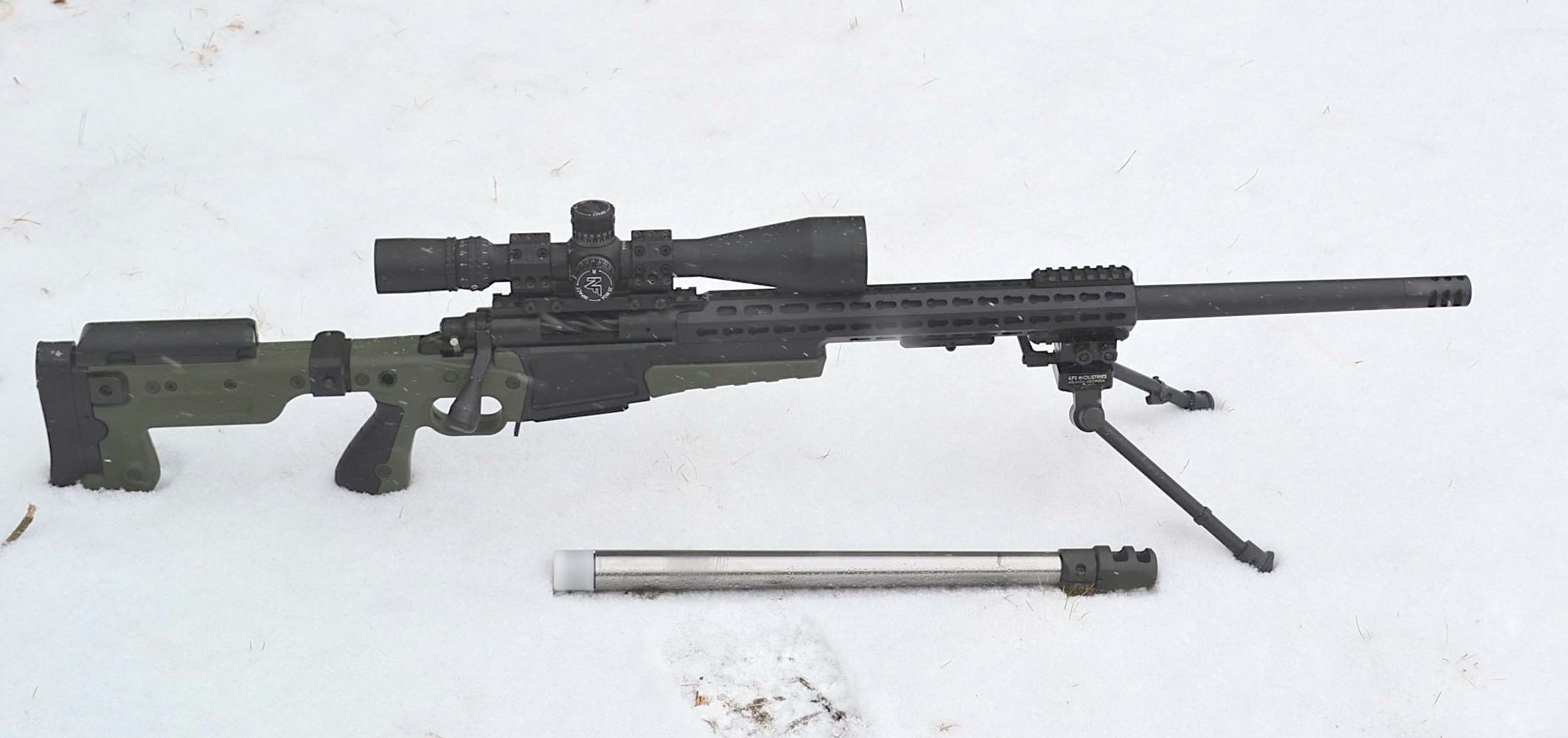

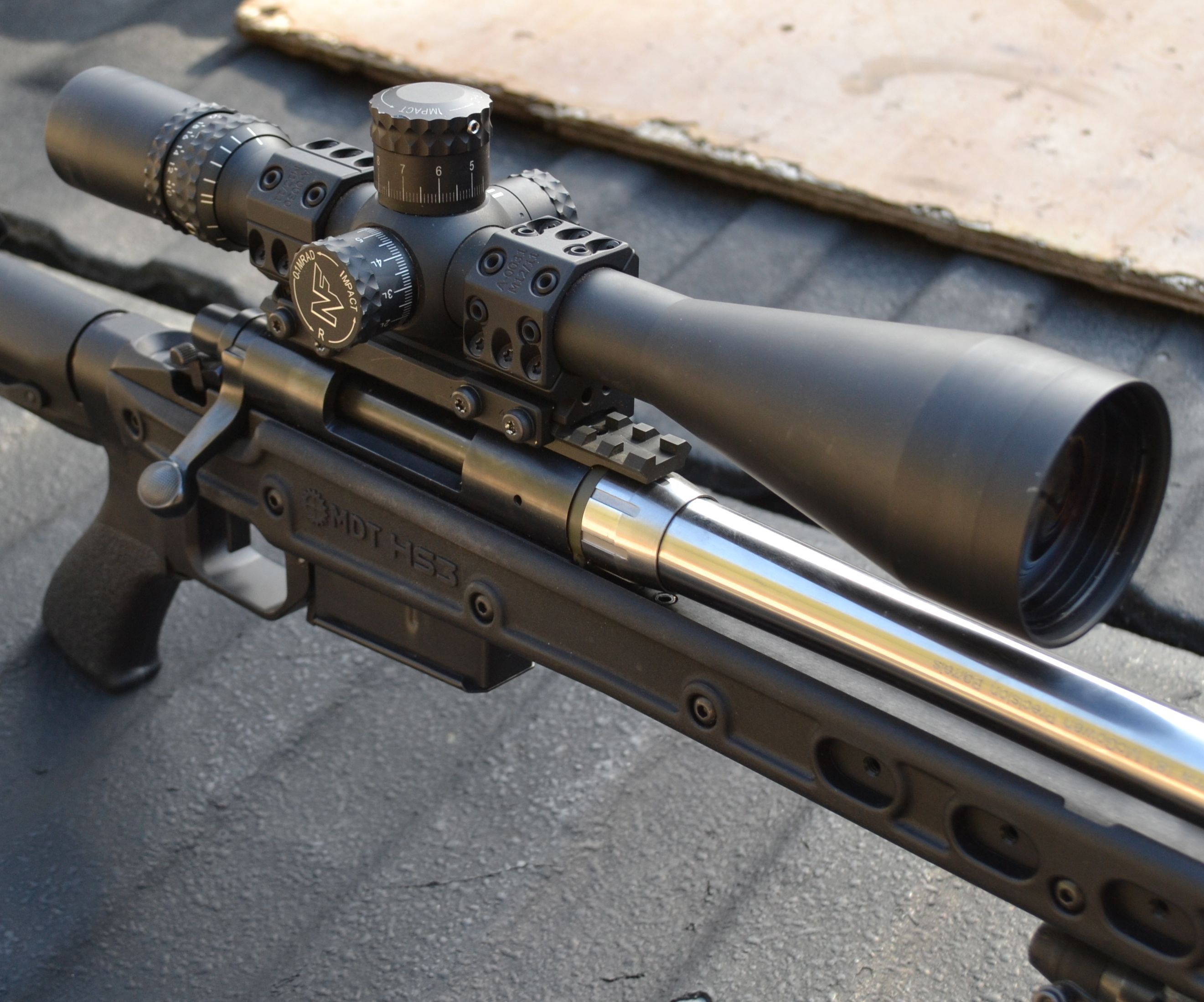


 6.5×47 Lapua Cartridge Guide Highlights:


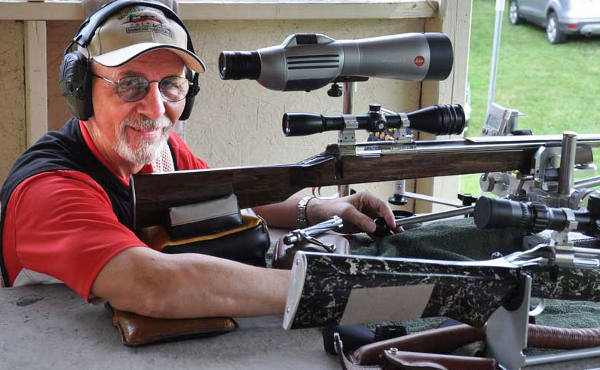


 Saturday the targets were moved back to 200 yards and the fun continued. Hall-of-Famer Allie Euber from Vermont took top honors in VFS class with a 250-14X score from his LV rifle. In the Points Race for Score Shooter Of the Year (SSOY), it was another sweep for the Southern contingent. Under IBS rules, only the first rifle one shoots may garner SSOY points. Allie did, in fact, win the 200 VFS stage (with his LV). However, as he shot his HV rifle on the second relay and his LV on the third relay, Allie picked up no SSOY points.


