Oregon Ballot Measure 114 is considered by many to be the most oppressive, anti-gun legislation in the nation. We urge ALL Oregonians to vote in the upcoming election and vote “NO” on Ballot Measure 114. Here are some of the key provisions of the unconstitutional Ballot Measure 114 which will restrict the Second Amendment rights of Oregonians:
Ballot Measure 114 will require a permit to purchase or transfer any firearm.
Ballot Measure 114 creates a searchable government registry of firearm owners.
Applicants cannot obtain a permit without first passing a law enforcement firearms training course, but Law Enforcement Agencies are NOT required to provide the training.
Ballot Measure 114 bans ammunition magazines over 10 rounds.
Gun Owner Registry: Ballot Measure 114 would allow your personal information to be added to a government registry. Measure 114 requires law enforcement to maintain a registry of gun owner’s personal information including applicant’s legal name, current address, and telephone number, date and place of birth, physical description, fingerprints, pictures, and any additional information determined necessary by law enforcement. This data will be published annually, so every criminal can find out who has guns and where they are stored.
Mandatory Permit to Purchase/Transfer Guns: Ballot Measure 114 requires a permit-to-purchase (or transfer) a firearm. The permit must be issued by law enforcement. A Concealed Handgun License does not qualify as a permit-to-purchase. A Hunter Safety Certification does not qualify as a permit-to-purchase. Permits must be renewed every 5 years for a fee. Issuance of a permit requires completion of classroom and live-fire training offered only by law enforcement certified instructors. There is no limit to the amount that can be charged for these classes. Nothing requires law enforcement agencies to actually offer the classes required to obtain the permit.
Firearm Magazine Restrictions: Ballot Measure 114 bans ALL firearms magazines with more than 10 rounds. Measure 114 will ban the use, possession, manufacturing, and transfer of ammunition magazines over 10 rounds. Use of a currently-owned magazine will only be lawful on private property, at a shooting range, and while engaged in hunting. When a magazine is transported off private property, the magazine must be removed from the firearm and stored separately.
Want to learn more about Ballot Measure 114? CLICK HERE for FULL TEXT of Ballot Measure 114.
Unconstitutional and Impractical Training Requirements
Ballot Measure 114 mandates gunowner training by Law Enforcement agencies, but provides no separate funding for that training carried out by police and sheriffs. The Stop114.com website explains:
The measure only allows those approved by police to provide the required “training” to apply for a permit. Police in Oregon are underfunded and understaffed. There is no plan in place to actually provide any training and virtually no police have the facilities or manpower to provide classes.
The Oregon State Sheriff’s Association has estimated that if a person somehow could complete the required training, the permitting process would cost sheriffs almost $40 million annually. There is nothing in the measure that provides any funding and the fees included would not come close to covering the costs. The estimate of costs to local police (not Sheriffs) is $51.2 million dollars the first year.
Free Range American states that Ballot Measure 114 could halt gun sales for two years or more:
OREGON MEASURE 114 COULD HALT GUN SALES IN STATE FOR YEARS
OCTOBER 14, 2022 By David Maccar
If [Oregon Ballot Measure 114] passes, the state will have the strictest gun laws in the entire country. Its passage will also likely result in the suspension of gun sales and purchases in the state, potentially for years, as the state creates a purchase permitting system from scratch that will cost taxpayers tens of millions of dollars.
The measure requires only a simple majority to pass.
If it passes, its various provisions would go into effect in January. On a recent Howl for Wildlife podcast, Amy Patrick, the policy director for the Oregon Hunters Association (OHA), told Free Range American that it will take at least two years to stand up a permitting system for residents. There’s no grace period, which means FFL gun sales would simply stop until purchase permits could be issued, potentially putting gun shops out of business and preventing state residents from exercising their 2A rights.
For more information visit Stop114.com and/or FreeRangeAmerican.us.
You can also contact the NRA to get involved:
Contact Rick Coufal at nra.oregon [at] gmail.com
Contact Jesse Greening at Jesse [at] nrailafrontlines.com
Canada’s nationwide handgun freeze went into effect last week. Under this repressive rule from Prime Minister Justin Trudeau and the Liberal Party, nearly all handgun sales and transfers are banned (except to certain “exempted individuals”). Likewise handgun imports are banned. Essentially it is an authoritarian attack on freedom approved by Trudeau’s ruling Liberal Party. This freeze on handgun sales and transfer was initially announced in May 2022, and went into effect last week.
On Friday, October 21, 2022, Canadian Prime Minister Justin Trudeau announced in a public speech:
“Today, our national freeze on handguns is coming into force. From today forward, it is no longer legal to buy, sell, or transfer a handgun in Canada.”
In a social media post Trudeau added: “People can no longer buy, sell, or transfer handguns within Canada — and they cannot bring newly-acquired handguns into the country.”
This handgun freeze comes after Trudeau imposed radical restrictions on long rifle sales. Trudeau bragged about his previous authoritarian actions restricting long guns: “We’ve already banned more that 1,500 types of assault-style firearms. And we’ll continue to do whatever it takes to keep guns out of our communities.”
Canadian Firearms Rights Groups Oppose Handgun Freeze
Groups which support gun rights in Canada oppose Trudeau’s handgun freeze. Opponents of the freeze argue that it won’t achieve its stated goals, even while the policy violates the rights of law-abiding Canadian citizens. And by making it impossible to sell legally-acquired handguns, the freeze effectively ruins the commercial value of those guns, essentially stealing money from handgun owners.
As quoted by the CBC.ca website, Tracey Wilson of the Canadian Coalition for Firearm Rights (CCFR) said the firearms freeze was approved as a “distraction to a scandal-ridden government” and it will not really reduce crime. Wilson added: “The CCFR condemns the actions of the Liberal government today. This perfectly timed move by Trudeau, to implement the handgun ‘freeze’ on 650,000 licensed, RCMP-vetted gun owners, serves no purpose other than to energize [the Liberal] base.” SEE CBC.ca article.
The CCFR argues that the freeze is not needed because there are already significant handgun rules and regulations in effect. Under current Canadian laws, handguns are classified as “restricted” firearms, which can only be used at RCMP-approved shooting ranges. Only licensed owners who have passed a course that covers the safe handling, transportation and storage of restricted firearms can legally possess a handgun.
Given the existing restrictions on handgun use in Canada, there is no need for a freeze on all handgun sales and transfers. That freeze is nothing but an authoritarian move by a power-hungry prime minister supported by compliant Liberal Party members in Parliament.
Want to learn the basics of position shooting? Then you should check out an article by Gary Anderson, DCM Emeritus, in On the Mark digital magazine (Summer 2014, pp. 6-13). This article covers all the key elements: body position (prone, sitting, standing), sling use/adjustment, sight picture, aiming process, and trigger control. While this 8-page article was specifically written for Rimfire Sporter shooters, the techniques described by Anderson apply to all types of position shooting, whether you shoot air rifles, smallbore rifles, or centerfire rifles.
Here’s what Anderson says about aiming — how to keep your sights steady and get them centered on the middle of the target:
Trigger Contact and Center As soon as aiming at the target begins, the index finger must move from the trigger-guard to contact the trigger. It is important to get initial pressure on the trigger as soon as aiming begins. Then the shooter must focus on the sight picture and centering the sight picture movements over the aiming point. No one, not even champion shooters, can hold the aligned sights perfectly still. The sights are going to move a little bit or a lot, depending on the shooter’s skill level. The secret is to center those sight picture movements over the aiming point on the target (see trace illustration) before pulling the trigger.
When the sight picture movements on the target are centered, the last step in firing the shot is to add… smooth pressure on the trigger until the shot breaks.
Anderson also discusses the 5 Basics of Shot Technique:
Rimfire is hot now. Across the nation, .22 LR rimfire disciplines are now the fastest growing types of rifle competition. And with today’s featured rig, the Competition Machine (Eliseo) Universal Match Rimfire Rifle (UMRR), you can shoot a variety of matches — NRA rimfire, NRL22, NRL22X, PRS Rimfire, local silhouette-style steel matches, even local rimfire benchrest matches (with a bag-rider fitted up front).
Compared to shooting centerfire, rimfire shooting is much less costly. You can get pretty good match ammo for under $8.00 per box. That works out to just 16 cents per round. Compare that to $1.20 or more per round for handloaded centerfire ammunition. And you don’t have to deal with the persistent shortages of powder and primers, or spend hours hand-loading. With rimfire, just open your .22 LR ammo box, load your magazine, and shoot.
Versatile, Accurate, Affordable — Universal Match Rimfire Rifle
If you’re a Palma shooter and want to shoot rimfire with a rifle with identical ergonomics and “feel” as your centerfire tubegun, Gary Eliseo’s new Universal Match Rimfire Rifle (UMRR) is your logical choice. Or if you are looking for a high-quality bolt-action chassis rifle for NRL22 (rimfire tactical) competition, this is a great option. Running a smooth Tikka T1x action, the UMRR offers match-grade performance at an attractive price — $1750.00 for the Sport-Target model with 20″ Tikka factory barrel.*
The Tikka T1x action is a smooth, short-throw action that cycles quickly and easily:
Gary Eliseo, head honcho of Competition Machine in Arizona, explained the features of the UMRR: “Our Universal Match Rimfire Rifle system has all the features of its big brother the Universal Match Rifle System (UMRS) and will accept all the same accessories and attachments. The rimfire UMRR is identical in size to the centerfire version so it’s possible to have your centerfire and rimfire rifles set up exactly alike.” That’s ideal for guys who compete in both centerfire and smallbore matches, and likewise it is ideal for cross-training using lower-cost rimfire ammo.
The UMRR is built around the excellent Tikka T1x platform. Gary notes: “We have accurized and tuned the T1x to give the best possible performance from factory barrel and trigger. The UMRR can also be customized with a high-end match barrel and trigger. By just changing the attachments, the UMRR can be used in multiple shooting disciplines like NRL22 and NRA rimfire competitions.” Gary also noted that Tikka recently updated the T1x bolt and magazine for improved feeding and extraction. See video below.
Sport-Target UMRR Shows Excellent Accuracy with Factory Barrel
Eliseo confirms that the Sport-Target UMRR with factory Tikka barrel and trigger is easily capable of sub-MOA precision. Check out those five-shot groups shot at 50 yards. The smallest group (.210″) works out to 0.40 MOA, while the largest group (0.39″) is 0.74 MOA. Remember this is with Tikka factory barrel!
The Sport-Target UMRR with factory Tikka barrel and trigger is capable of sub-MOA precision.
The Sport-Target version uses the factory 20″ Tikka barrel with threaded muzzle that has been set back and re-chambered so the bullet will engrave the rifling, which increases the precision of the rifle significantly. The excellent Tikka trigger is tuned to a pull weight of one pound. Overall the UMRR is a great choice as an XTC/LR prone trainer or NRL competition rifle at very reasonable cost.
Superb Accuracy from UMRR Match-Target Model
The Match-Target version comes with a top of the line Benchmark match barrel and Eley match chamber with the muzzle configured for your application to accept a front sight, tuner, or threaded, there are several aftermarket single-stage or two-stage match triggers available. Current Eliseo Rifles price for the UMRR Match-Target is $2400.00.*
The Match Target with Benchmark match barrel is capable of competing at the highest level. Shown above are 50-meter sling targets and Lapua 50-meter test center results. The bottom box shows 20 shots with a superb 10.52 average score.
Updates from Tikka Improve the T1x Action and Magazine
Gary noted that Tikka recently made an update to the Tikka bolt and magazine to improve feeding and extraction. Tikka replaced a wire-type system with a solid ejector element in the magazine. Gary says that improves the reliability of both feeding and extraction. Watch the video to see how this works.
Centerfire Accesories Will Work on UMRR
Gary notes that all the centerfire UMRS attachments will fit the UMRR, including handstop, rear balance weights, Picatinny scope rail, ARCA accessory rail, rear bag-rider, bipod mount, and front bag riding attachments. This easy adaptability makes the UMRR a true multi-discipline system for smallbore matches, NRL22/PRS rimfire competition, and cross-training.
Adapt the UMRR Easily to Multiple Shooting Disciplines
The UMRR can be easily configured for NRL, PRS, or NRA rimfire competitions by just changing the attachments. The UMRR is built on the excellent Tikka T1x barreled action that’s been accurized and bonded into the UMRR chassis system. Gary says the UMRR feeds .22 LR rounds flawlessly from the Tikka 10-round magazine, especially with the new, improved magazines. The UMRR is currently available in two basic configurations, both of which can be customized to your specifications.
Two Versions — Sport-Target and Match-Target
The Sport-Target version of the UMRR uses the factory 20″ Tikka barrel with threaded muzzle. Gary can tune the excellent Tikka T1x trigger down to a pull weight of around one pound, though for tactical work he says you may want to leave it stock. Gary tells us the Sport-Target is a great choice as an XTC/LR prone trainer or NRL22 competition rifle.
Match Target UMRR with Benchmark Custom Barrel
The Match-Target version comes with a top-of-the-line Benchmark match barrel and Eley match chamber with the muzzle configured for your application to accept a front sight, tuner, or suppressor. There are several aftermarket single-stage or two-stage match triggers available.
Tikka T1x — Quality Rimfire Technology from Finland
Gary Eliseo’s impressive UMRR is based on the smooth, reliable Tikka T1x rimfire action shown below. Note the nice craftsmanship of action, bolt, mag system, and trigger group. There is an extensive review of the T1x (.17 HMR version) on Britain’s GunMart.net website.
Gary Eliseo of Competition Machine. Here is UMRR designer Gary Eliseo at the 2017 Berger SW Nationals. Gary is a talented rifle marksman who competes in both smallbore and high power disciplines.
* Price is subject to change. Price may be increased based on increased costs of actions, barrels, and components. Contact Eliseo Rifles for current pricing.
You have probably watched one of the excellent shooting sports videos Ryan Cleckner has done for the NSSF. Ryan’s Understanding Minute of Angle (MOA) video (see below) has been viewed over 3.4 million times! Ryan is noted for his ability to explain complex topics in an easy-to-comprehend manner.
Cleckner has also authored a hugely popular book, the Long Range Shooting Handbook, which expands on the topics covered in his popular video series. This book is the #1 Best Seller on Amazon in its category. You can view Sample Chapters from Ryan’s book — just click “Look Inside” on the Amazon product page.
As a long-range shooting expert, Ryan Cleckner has impressive credentials. Cleckner was a special operations sniper (1/75 Rgr) with multiple combat deployments, and he has served a U.S. Army sniper instructor. Currently he works as a firearms industry executive and attorney.
The Long Range Shooting Handbook is divided into three main categories: What It Is/How It Works, Fundamentals, and How to Use It. “What It Is/How It Works” covers equipment, terminology, and basic principles. “Fundamentals” covers the theory of long range shooting. “How to Use It” gives practical advice on implementing what you’ve learned, so you can progress as a skilled, long range shooter.
Ryan Cleckner’s best-selling Long Range Shooting Handbook is designed as an introduction to important fundamental concepts such as MOA vs. MILs, External Ballistics, and Environmental Effects. Included are personal tips and advice based on Cleckner’s years of experience as a sniper instructor and special operations sniper.
Iain Harrison, editor of Recoil Magazine, said: “Whether you’re looking to dip a toe into the complex world of long range shooting, or you’re a seasoned shooter with years of trigger time, Ryan Cleckner’s book will prove to be excellent reference material. Well written and easy to understand, it covers all the essential topics that a well-rounded shooter needs to master.”
In this video, Ryan Cleckner reviews proper technique for rifle shooters. A stable platform, sight alignment, sight picture, and trigger control are key fundamentals to shooting properly.
A number of interesting jobs in the firearms industry have become available in recent weeks. The NSSF maintains a regularly-updated listing of employment opportunities with gun-makers and shooting sports organizations. On the NSSF Career Center right now there are executive openings, engineering jobs, tech placements, account manager positions, sales and marketing positions, and digital media opportunities. Here are some of the jobs we found this week posted on the NSSF Website. CLICK HERE to visit the NSSF Career Center with all current listings.
Firearms Industry Jobs — Current Openings
The gun industry needs skilled personnel! The total number of full-time equivalent jobs in the firearms industry rose from approximately 166,000 in 2008 to almost 342,330 in 2020, a 106% increase. Here are some current job openings posted on the NSSF Career Center:
Creedmoor Sports produces premium precision shooting equipment, and is a major online vendor of ammo, reloading supplies, optics, tools, triggers, targets, rimfire rifles, and shooting accessories. It offers some of the best range carts, mats, shooting coats, and other shooting gear on the market. To assist its operations, Creedmoor Sports recently completed the purchase of four acres immediately adjacent to its current Alabama facility. The acquisition will support Creedmoor Sports’ “long-term growth objectives” and allow for facility expansion in the future.
Creedmoor Sports’ facilities are located on the grounds of historic Fort McClellan in Anniston, Alabama. The former U.S. Army installation is now home to a mix of private industry, government, and military training facilities. Since relocating to Alabama in 2013, Creedmoor Sports has enjoyed strong business growth. The company has recently become more vertically integrated by expanding its in-house manufacturing capabilities. This additional acreage will provide the infrastructure for further expansion in the areas of manufacturing, product development, and retail distribution operations.
“Expanding our operational footprint has been a key element of our long-term growth plan for quite some time” said Bill Gravatt, Creedmoor Sports President. “The efforts of our hard-working, talented Creedmoor Sports team in areas such as product development, marketing, and operational efficiencies have created this need to expand. We’ve outgrown our current space, and to support our growth in current and new markets, we need to expand our campus. The fact we can do so right here on McClellan is really an honor. The historical significance of the area is appreciated by all of us at Creedmoor[.]”
“Our growth just over the past two years has us really pushing the limits of our current facility,” said John Teachey, V.P. of Operations and Marketing. “Bill touched on a critical point that the real impetus behind this endeavor has been our investment in growing the company; and that investment is working. Fueling this growth are aggressive new product development programs and market expansion plans which will push this need even greater in the not-to-distant future. Continuing to provide our best-in-class customer service, and delivering the products our customers want requires expansion”, added Teachey.
Tour of Current Creedmoor Sports Production/Warehousing Facilities
The U.S. Army Marksmanship Unit (USAMU) has published a series of reloading “how-to” article on the USAMU Facebook page. In this article, the USAMU’s reloading gurus address a question frequently asked by prospective handloaders: “Should I buy a single-stage press, or a progressive?” The USAMU says the best answer is Solomon-esque in both its wisdom and simplicity: “Get BOTH!” However, there is definitely more to the issue, as the USAMU explains below.
Bottom line, the USAMU recommends that novice handloaders start with a single-stage press. That press will always be useful for many tasks, even if a multi-station progressive is later acquired.
Progressive Press Safety Considerationsby USAMU Staff
Many are the beginning handloaders who have asked a friend about their “setting up” a progressive press for them. The idea is that the newbie could then just feed in components and crank out buckets of practice ammo without needing to really learn much about handloading. Tempting though this might be, that’s simply not how it works. Such an approach might be ok if there were never a malfunction with either press or operator, but that’s unrealistic. Our hypothetical newbie would then lack the knowledge to problem-solve most situations.
Worse yet, several different handloading operations would be occurring at different stations on the progressive press at the same time. It takes an experienced operator to keep track of, and truly understand the significance of, all those potential mini-problems. Loading without this experience is a recipe for potential disaster — such as a double powder charge (especially with pistol cartridges) dropped while the loader was attending to some other function, etc. Progressives are an animal unto themselves, and while they offer many benefits, they do take some getting used to – even by experienced handloaders!
ILLUSTRATIVE HORROR STORY
Here, enter a 40-year veteran handloader who decided to jump onto the progressive bandwagon late in his career, having used only single-stage presses all his life. A High Master NRA High Power Rifle competitor, he had no background in competitive pistol shooting, where historically most progressive presses are found.
Experienced Action Pistol shooters have typically encountered multiple episodes in which shooters “skipped” a powder charge for some reason, leading to a squib round and a bullet possibly lodged in the bore. Thus, at matches, it’s reflexive for them to yell “STOP!” in unison if they see a shooter get a “click” vs. a “bang”, and rack the slide to keep firing. This writer has personally seen several pistols saved in just such scenarios over the years.
Better Safe Than Sorry — the RCBS Lock-Out Die
RCBS Makes a “Lock-Out Die” that senses the powder charge. This will halt the Progressive press if you have a double charge, or an undercharge. Your Editor has the Lock-Out Die on his RCBS Pro 2000. It has “saved his bacon” a half-dozen times over the years. It can be used on Dillon and Hornady progressives as well as RCBS machines.
Click No Bang — What NOT to Do
Our High Master set up a popular progressive press and began turning out .223 Rem 100-yard practice ammo with abandon. He was using a moly-coated 52gr match bullet and an economical, fast-burning surplus powder that gave great accuracy. Once on the range, he began practicing strings of rapid-fire. All was well, until he heard “Click!” rather than “Boom”.
Lacking the above experience or onlookers to halt him, he reflexively operated the charging handle on his expensive, custom NM AR15 Service Rifle, and the next trigger squeeze reportedly registered on seismographs over at least a three-state radius. He sat, uninjured but bewildered, until the hail of expensive bits and pieces quit raining down around him.
When the smoke cleared, he immediately cursed the horrid, evil, demonically-possessed progressive press for this, his first-ever reloading mishap. His $1400 NM upper was ruined, but thankfully, his $800 pre-ban lower… and he had escaped injury.
This tale is told not to discourage the use of progressive presses, but to emphasize the need to EASILY and IMMEDIATELY KNOW what is happening with the press at each station, every time the handle is cranked. Not to do so is, as they say, “bad ju-ju.”
It illustrates why we at the USAMU Handloading Shop agree in recommending that new handloaders should begin with a single-stage press. Once one thoroughly learns the steps in each phase of handloading by repeated experience, then one will be qualified to move on to a progressive press.
The single-stage press will REMAIN virtually indispensable for one’s entire handloading career, even after having purchased a progressive press (or two). There are endless small projects that are best handled on a single-stage press, and a poll of USAMU’s Handloading staff reveals that not one would willingly be without his single-stage press, despite owning at least one progressive.
For hunters in a tree stand, SFC McPhail recommends a position with your weakside leg pulled up and firmly braced on the front rail of the treestand. You can then rest your support arm on your leg. This provides a rock-solid position when shooting from a stand.
Team USA Olympian and ISSF World Cup Winner SFC Michael McPhail is one of the world’s best smallbore rifle shooters. He is also an avid hunter, who enjoys harvesting game with centerfire rifles. In a USAMU video, McPhail shows how competition shooting positions can be adapted for hunters. McPhail shows how well-established positions can provide a more stable platform for hunters in the field. That can help ensure a successful hunt. McPhail demonstrates three positions: kneeling, supported prone, and sitting in a tree-stand.
Watch SFC McPhail Demonstrate Positions for Hunters (Good Video):
McPhail first demonstrates the kneeling position. Michael notes: “I like kneeling. It’s a little bit of an under-utilized position, but it’s almost as stable as prone. It allows you get up off the ground a little bit higher to [compensate for] vegetation. For kneeling start by taking your non-dominant foot and put that towards the target, while at the same time dropping down to a knee on the dominant leg. At the same time … wrap the sling around wrist and fore-arm, lean slightly into the target and take the shot.”
McPhail shows a nice “field expedient” use of your backpack. He shows how the basic prone position can be adapted, using the pack as a front rifle support. McPhail recommends pulling your dominant (strongside) leg forward, bent at the knee. According to Michael, this takes pressure off the abdomen, helps minimizes heart beat effects, and helps with breathing.
We first ran this story a few years back. But it’s still a very interesting subject for benchrest shooters. Shown above, the 30 BR (a 6mmBR necked up to .30 caliber) currently rules the benchrest-for-score game. However, a 30 BR Improved offers some potential advantages, particularly when the winds are strong or tricky. In this article Al Nyhus explains his 30 BRX wildcat. Running Hodgdon H4198, Al says he gets an easy 150 -200 FPS more than the conventional 30 BR. That can translate to less drift in the wind. It also lets you pursue a higher speed node, which can lead to improved accuracy with some barrels.
Forum member Al Nyhus is a top-level score shooter who has competed successfully with the 30 BR cartridge in VFS (Varmint for Score) matches. Al has been working on an “improved” 30 BR cartridge that delivers extra velocity. Al’s 30 BRX cartridge is inspired by the 6mm BRX cartridge, popular in 600-yard benchrest and across-the-course competition. The 6mm BRX cartridge maintains the same sidewall profile and shoulder angle as the parent 6mmBR case. Likewise, the 30 BRX retains the 30° shoulder used on the popular 30 BR cartridge.
Al reports: “Thought you might like to see what I’ll be working with in my VFS gun this season. It’s a true 30 BRX — a 30 BR with the shoulder moved forward 0.100″ with the standard BR shoulder angle. Stan Ware of SGR Custom Rifles built one last season for Steve Grosvenor and I was really impressed by the performance of Steve’s gun. The 30 BR barrel on my VFS gun needed replacing, so the new 30 BRX got the nod.”
30 BRX Delivers 150-200 FPS More Velocity than 30 BR
Al says his 30 BRX gives a solid 150-200 fps speed gain over the 30 BR at the top, while needing just 2.5-3.0 more grains of Hodgdon H4198 to do so. A 30 BR case holds on average 40.8 grains of water, while the 30 BRX holds 42.3 grains (roughly 4% more). So the 30 BRX delivers a 7% increase in velocity with a mere 4% increase in H20 capacity. That’s pretty good efficiency. [Editor’s Note: Assuming 34 grains of H4198 is a typical 30 BR match load, Al’s increase of 2.5-3.0 grains for the 30 BRX represents roughly a 7.5-8.5% increase in actual powder burned. That explains the higher velocities.]
Why did Nyhus decide to try an “improved” 30 BR?
Al explains: “The 30 BRX was created to operate at a [higher] velocity level than can be achieved with the standard 30 BR case, while at the same time keeping the easy-tuning characteristics of the standard 30 BR case. We also wanted to use the same powders currently used with the 30 BR and maintain similar operating pressures.” Is the 30BRX harder to shoot because of the increased velocity? Al doesn’t think so: “In a 13.5-lb HV gun, the 30 BRX case is a pleasure to shoot with just a flea bite of recoil.”
Will the 30 BRX Become Popular in Score Competition?
The 30 BR is already an exceptionally accurate cartridge that dominates short-range Benchrest for Score competition. Will the 30 BRX make the standard 30 BR obsolete? Nyhus doesn’t think so. However, Al believes the 30 BRX offers a small but important edge in some situations: “On any given day, it’s the shooter that hits the flags best and makes the fewest mistakes that ends up on top. No amount of velocity will save you when you press the trigger at the wrong time. Missing a switch or angle change at 200 yards that results in 3/4″ of bullet displacement on the target can’t be compensated for with another 200 fps. That’s the hard fact of benchrest shooting. But on those days when, as Randy Robinett says, ‘our brains are working’, the BRX may offer enough of an advantage to turn a close-but-no-cigar 10 into an ‘X’ at 200 yards. Or turn a just-over-the-line 9 into a beggar 10.” Given the fierce competition in Score matches, an extra 10 or another X can make the difference between a podium finish and also-ran status.


 Gun Owner Registry: Ballot Measure 114 would allow your personal information to be added to a government registry. Measure 114 requires law enforcement to maintain a registry of gun owner’s personal information including applicant’s legal name, current address, and telephone number, date and place of birth, physical description, fingerprints, pictures, and any additional information determined necessary by law enforcement. This data will be published annually, so every criminal can find out who has guns and where they are stored.

 On Friday, October 21, 2022, Canadian Prime Minister Justin Trudeau announced in a public speech:
 As soon as aiming at the target begins, the index finger must move from the trigger-guard to contact the trigger. It is important to get initial pressure on the trigger as soon as aiming begins. Then the shooter must focus on the sight picture and centering the sight picture movements over the aiming point. No one, not even champion shooters, can hold the aligned sights perfectly still. The sights are going to move a little bit or a lot, depending on the shooter’s skill level. The secret is to center those sight picture movements over the aiming point on the target (see trace illustration) before pulling the trigger.


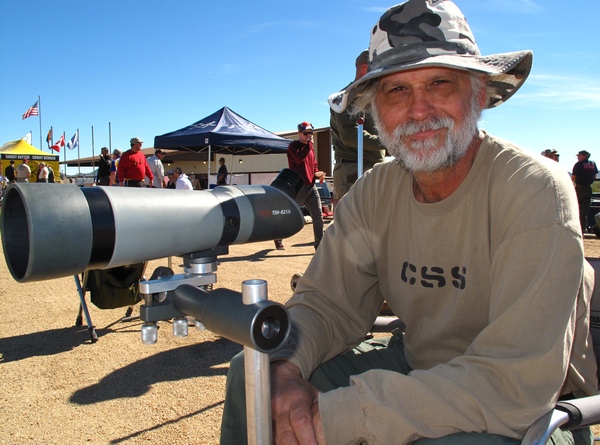



 A number of interesting jobs in the firearms industry have become available in recent weeks. The NSSF maintains a regularly-updated listing of employment opportunities with gun-makers and shooting sports organizations. On the




 Team USA Olympian and


 Forum member Al Nyhus is a top-level score shooter who has competed successfully with the


