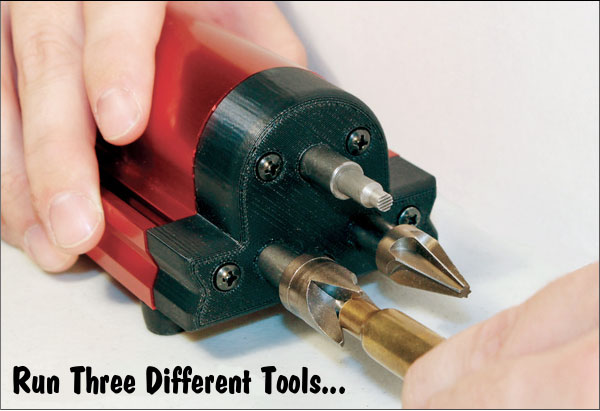
Nobody likes to spend hours manually chamfering cases and cleaning primer pockets. There are simple hand tools that will perform these tasks, but the process is time-consuming and tedious after a couple dozen cases. To speed up case prep duties, you can get one of the large, powered case prep centers. These function well, but frankly we didn’t want to give up that much precious space on our reloading bench. One good solution is Hornady’s compact Lock-N-Load Case Prep Trio (item 050160). This triple-threat tool packs a lot of functionality in a small package.
This cleverly-designed powered tool has a small footprint, yet it can perform three tasks as well as much more expensive, tower-style case prep units. The versatile Hornady Case Prep Trio is $139.99 at Brownells, $139.99 at Midsouth, and $155.95 on Amazon. We’ve used this machine and it works well. The only negative is that you will get metal shavings on your bench (unlike some of the larger case prep centers). We’ve seen some guys put a small pan under the power head — then you can just dump the shavings out of the pan.
With three active stations, you can chamfer, deburr and clean primer pockets without having to change tools. The Case Prep Trio ships with inside chamfer, outside chamfer, and deburr tools. You can also use the machine with other optional 8/32 threaded accessories such as primer pocket reamers, primer pocket uniformers, and case neck brushes. CLICK HERE to see all tool options. Conveniently, the Case Prep Trio has on-board storage for your tool-heads. User reviews have been very positive.
At the request of our readers, we provide select “Deals of the Week”. Every Sunday afternoon or Monday morning we offer our Best Bargain selections. Here are some of the best deals on firearms, hardware, reloading components, optics, and shooting accessories. Be aware that sale prices are subject to change, and once clearance inventory is sold, it’s gone for good. You snooze you lose.
NOTE: All listed products are for sale to persons 18 years of age or older. No products are intended for use by minors.
Sportsman’s Warehouse — Big September Sale
⏺️ » Big savings on hunting rifles, optics, packs and more
If you need gear for your fall hunt, definitely check out the major Outdoor Shooting Gear Sale running now at Sportsman’s Warehouse. There are big discounts up to 30% on hunting rifles, optics, rangefinders, hunting gear, carry packs and more. Save on products from leading brands including Smith & Wesson, Savage, Vortex, Leupold, and SIG Sauer.
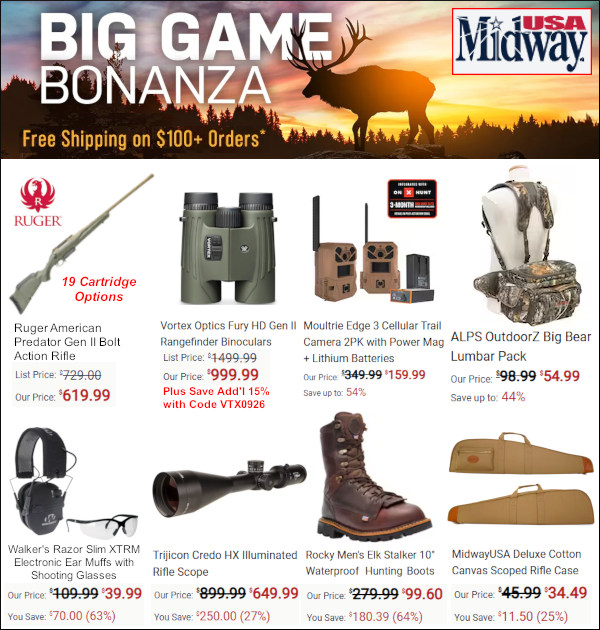
MidwayUSA — Fall Bonanza Sale Plus FREE Shipping on $100+
⏺️ » Major savings on optics/hunting gear, FREE Shipping with $100+ orders
Right now MidwayUSA has a vast selection of gear on sale — everything a hunter might need for the fall hunting season. In addition to great deals on hunting rifles, you can save up to 64% on scopes, binoculars, trail cams, carry packs, gun cases, boots and more. Along with the big discounts, MidwayUSA is also offering FREE Shipping on $100+ orders.
As an Amazon affiliate, this site can earn revenues through sales commissions.
Ever wondered what caused a particular bulge or marking on a case? And more importantly, does the issue make the case unsafe for further use? Sierra Bullets Ballistic Technician Duane Siercks offers some insight into various issues and their causes in two Case Diagnostic articles from the Sierra Blog.
Incipient Case-Head Separation
This is a Winchester .308 Win case that has a real issue. This case has a very obvious incipient case head separation in the process of becoming a complete failure.
This is most commonly caused by over-sizing the case causing there to be excess headspace on the case. After a few firings and subsequent re-sizing, this case is just about ready to come completely apart. Proper die adjustment is certainly a requirement here. Of course this case is not safe to reuse.
Excessive Pressure (Load Too Hot)
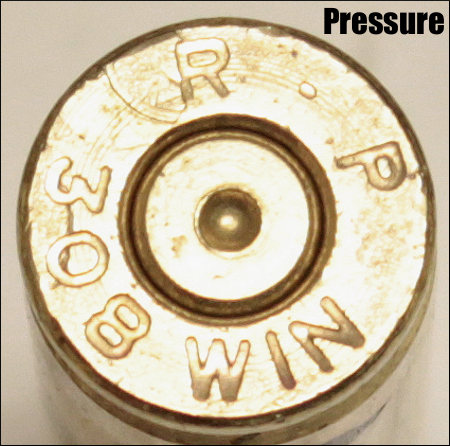
If you will notice in the picture of the case rim, there are two pressure signs to notice. First, look at the primer. It is basically flattened to about the max of what could be considered safe. If this was the only pressure sign noted, I would probably be fine with this load, but would constantly keep an eye on it especially if I was going to use this load in warmer temperatures. This load could easily cross into the “excess pressure” realm very quickly.
There is another sign of pressure that we cannot ignore. If you’ll notice, there is an ejector mark apparent that is located over the “R” of the R-P headstamp. This absolutely tells us that this load would not have been in the safe pressure range. If there were any of these rounds loaded, they should not be fired and should be dis-assembled. This case should not be reloaded.
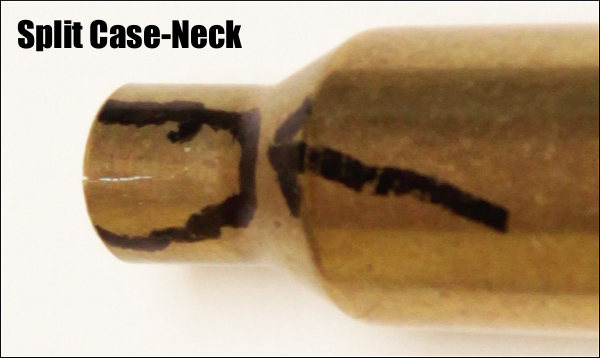
Split Case-Neck
Here we have an R-P .22-250 case that has died the death. Everything looks fine with this case except the neck is split. This case must be tossed.
A split neck is a normal occurrence that you must watch for. It is caused by work-hardening of the brass. Brass cases get harder with age and use. Brand new cases that are stored for a period of time can become hard enough that they will split like this case within one to two firings. I have had new factory loads do the same thing. Then as we resize and fire these cases repeatedly, they tend to get harder and harder. Eventually they will split. The life of the case can be extended by careful annealing practices. This is an issue that would need to be addressed in an article by itself. Of course this case is no longer usable.
In the classes that I teach, I try to use examples like this to let the students see what they should be looking for. As always, if we can assist you, whether you are new to reloading or very experienced, contact us here at Sierra Bullets by phone at 1-800-223-8799 or by email at sierra@sierrabullets.com.
Dented Case Body
Here we have a Lake City 7.62×51 (.308 Win.) case with two heavy marks/dents in the case body.
This one may be a bit of a mystery. It appears as if this case may have been caught in the action of a semi-auto rifle when the firearm jammed or the case failed to clear during the cycling process. I probably would not reload this case just to prevent any feeding problems. This also appeared to be a factory loaded round and I don’t really see any pressure issues or damage to the case.
Multiple Problems — Lake City 5.56×45 unknown year.
This case has suffered multiple failures and cannot be re-used. First its has have a very rounded shoulder that is split. Upon first look it was obvious that this round had been a victim of excess pressure. The firearm (perhaps an AR?) was apparently not in full battery, or there was possibly a headspace issue also. While taking a closer look, the primer was very flat and the outside radius of the primer cup had been lost. High pressure! Then I also noticed that there was an ejector mark on the case rim. This is most certainly an incident of excessive pressure. This case is ruined and should be discarded.
It is very important to observe and inspect your cases before each reloading. After awhile it becomes second nature to notice the little things. Never get complacent as you become more familiar with the reloading process. If ever in doubt, call Sierra’s Techs at 1-800-223-8799.
We are seeing decent prices on name-brand factory-loaded ammo, and there are some notable inventories of ammunition right now at Midsouth, Palmetto State Armory, Powder Valley, and Precision Reloading. We are even starting to see ample supplies of large-caliber hunting rifle ammunition — something hard to find a couple seasons back.
Thankfully, if you shop around aggressively, you can now find many types of ammunition at reasonable prices. By using AmmoSeek.com you can instantly compare ammo prices from dozens of sellers. AmmoSeek monitors more than 180 online vendors — checking current pricing and available inventory, for pistol, rifle, and shotgun ammunition. Looking for .22 LR ammo for your rimfire trainer or .45 acp ammo for your 1911? Just select the cartridge type from the “Quick Seek” list on the right. Likewise you can find .223 Rem and .308 Win Rifle ammo with one click.
If you haven’t sourced ammo online before, note that, for nearly all jurisdictions, it IS legal to order ammunition online and have it delivered to you at home in most states. But check your state and local laws! California, for example, has prohibited direct ammo shipments to ordinary customers.
Got Ammo? Here’s just part of the vast inventory at Skagit Arms in Washington State.
Use Ammoseek.com to Find Reloading Components Too
Ammoseek.com also lets you search for reloading components, including powder, primers, brass, and bullets. This is a huge time-saver. You can instantly check a dozen or more vendors to see if a particular type of powder is in stock. Likewise, you can quickly check for primer availability. If you have a big match coming up and are short on primers — this could solve the problem. To search for components, from the AmmoSeek home page, click the gray “Reloading” Tab (see below), then select Bullets, Brass, Primers, or Powder from the pull-down menu.
AmmoSeek.com FAQ Page
If you have questions about using AmmoSeek.com, visit the AmmoSeek FAQ Page. You’ll find details on how the search engine works. Here’s one FAQ:
How often does the AmmoSeek engine process its ammunition data?
Every minute or two! AmmoSeek is constantly updating ammunition data 24 hours a day, 7 days a week, automatically. Individual retailers are updated at least hourly, most most are updated much more often. Still, however, there’s always the possibility that items can go out of stock the moment after our site is updated, so it’s not always possible to be 100% accurate.
At the request of our readers, we provide select “Deals of the Week”. Every Sunday afternoon or Monday morning we offer our Best Bargain selections. Here are some of the best deals on firearms, hardware, reloading components, optics, and shooting accessories. Be aware that sale prices are subject to change, and once clearance inventory is sold, it’s gone for good. You snooze you lose.
NOTE: All listed products are for sale to persons 18 years of age or older. No products are intended for use by minors.
MidwayUSA — RCBS Reloading Tools Sale
⏺️ » RCBS reloading equipment and tools with big savings
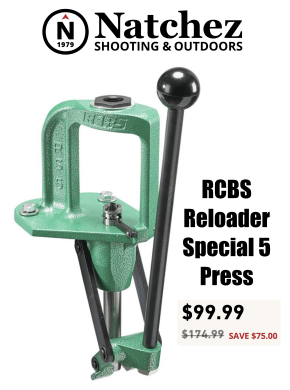
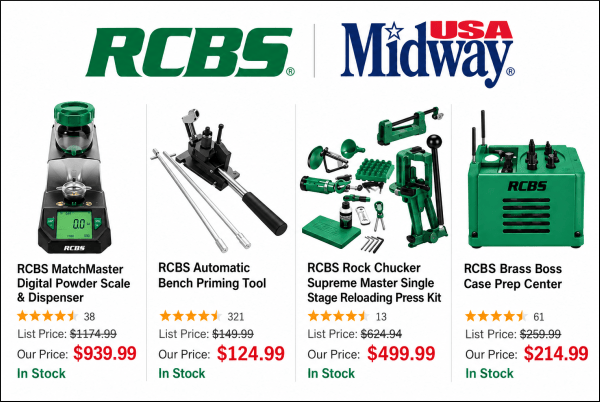
If you need a press, reloading scale, dies, or other loading tools, definitely check out the major RCBS Sale running now at MidwayUSA. They have everything RCBS on sale, including Presses, Combo Reloading Kits, ChargeMaster Electronic Scale/Dispensers, Priming tools, Mechanical scales, Dies and more — all priced to move. There are very significant savings, up to 25%. For example the innovative RCBS Summit Press is $75 off, a 20% savings while a RockChucker combo reloading kit is $125 off, also 20% discount.
Brownells — Labor Day Sale + 12% OFF with Code LABORDAY12
⏺️ » Deals on guns, ammo, optics and gear plus 12% OFF Code
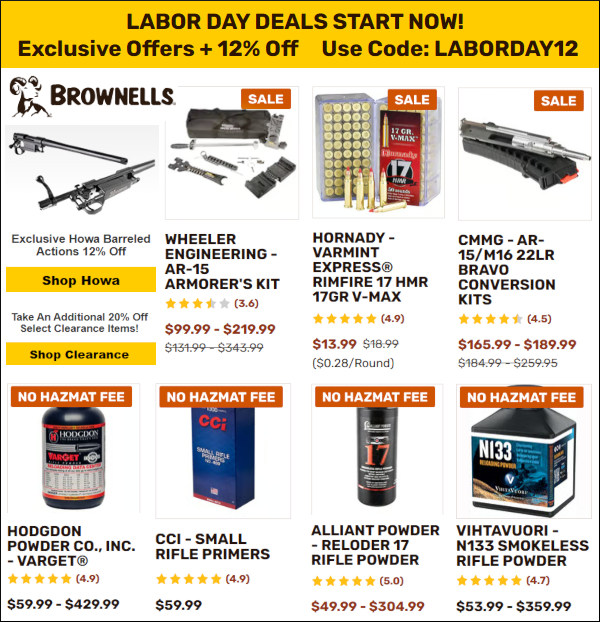
Get big savings with the Brownells Labor Day Sale. Along with the already discounted prices, on select clearance items you can save an additional 12% by using Code LABORDAY12 during check-out. Sale items include rifle scopes, Howa barreled actions, Reloading equipment, Hunting packs, Ammo (rifle, pistol, shotgun), powder and primers. Definitely check out this Clearance Sale. There are exceptional deals plus there are ZERO HazMat Fees on Powder and/or Primer purchases with no minimum!
Natchez — Giant Ammo Sale
⏺️ » Great deals on major brand rimfire and centerfire ammo
If you need quality rimfire or centerfire ammo at great prices check out the Giant Ammo Sale at Natchez. There is regular and subsonic .22 LR rimfire ammo. For pistols, choose .380 ACP, 9mm Luger, or .45 ACP from CCI, Federal, and Remington. And there is Federal American Eagle 5.56 NATO (.223 Rem) rifle ammo. All these ammo types are heavily discounted. For example the 1000ct CCI Blazer 9mm ammo is $269.99, $50 off the regular $319.99 price. And along with the savings on the ammo, Natchez is offering $5 Flat Rate Shipping on $99+ Orders (use Code FR260903).
As an Amazon affiliate, this site can earn revenues through sales commissions.
Many online vendors are running sales this Labor Day Holiday weekend. You’ll find scores of products marked way down, plus discount codes that can save you 15% or more on your purchases. Some sales run through end-of-day (11:59 pm) on Monday, September 1st, while other Labor Day sales extend all week long. Be sure to check the sale schedules.
Brownells Labor Day Sale — 12% Off Plus Sale Pricing
Save now with Brownell’s Labor Day Sale which is already underway. You get 15% Off popular $200+ parts and gear orders with promo code: LABORDAY12. Plus there is special SALE Pricing on a vast selection of popular products including actions, barreled actions, triggers, magazines and ammo.
Precision Reloading Labor Day Sale
Precision Reloading is running a major Labor Day Sale through midnight on September 7, 2026. A huge variety of products are on sale. Plus, during this sale you can save 10% on virtually all orders over $99 with with Coupon Code LD26.
Sportsman’s Warehouse is running a big Labor Day Weekend Sale. There are major discounts — up to 50% on camping, hunting, and fishing gear. Gun guys will find many rifles, shotguns, and pistols on sale, and there are big savings on factory ammunition. In addition there are deals on optics, gun safes, and hunting packs, rangefinders, and Garmin GPS/SatComm units.
Midsouth Shooters Labor Day Sale
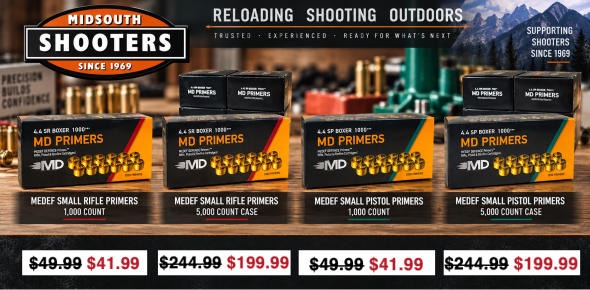
Midsouth has special promotions for Labor Day weekend. Along with big savings on Accurate Powders, and MD Primers (through 9/7/2026 at 11:59 pm) you can get special deals on orders over $99 with three codes. Pick your deal: FREE Shipping (up to 49 lbs.), FREE Hazmat, or 10% off ALL regular-priced items. For an order to qualify, the order must include $99 or more of in-stock items. NOTE: These codes are good through 11:59 pm CST on 09/08/26.
1. Get 10% off ALL Regular Priced items with Code 10S926; or
2. Get Free Shipping with Code FS926; or
3. Get Free Hazmat with Code FHM926.
Bruno Shooters Supply — Labor Day Blowout Sale
Bruno Shooters Supply is running a major Labor Day Blowout sale this week with big discounts sitewide. Bruno’s says the vast majority of product are current “at or below costs” with “heavy discounts sitewide”. If you are looking for benchrest and f-class rifles, reloading equipment, optics, or top-quality brass and bullets, head over to Bruno’s for major savings. In addition, there is a New Customer Promotion, where you get $5 off your first purchase with a $75 minimum order.
If you need factory ammo for your rifles, pistols, or shotguns, head over to the Ammunition Depot. Right now there are discounts on a huge selection of ammo from many different ammo-makers including CCI, Federal, Fiocchi, Speer, Winchester and other big names. Use Code LABORDAY6 to save 6% on your ammunition order.
Keith Glasscock is an outstanding competitive shooter, who has finished second at the F-Class National Championships (F-Open) multiple times. Keith is also a skilled wind coach who runs the popular Winning in the Wind YouTube Channel. Along with his interest in F-Class competition and (recently) PRS/NRL competition, Keith also enjoys game hunting and varmint adventures.
Hunting season is coming soon, so today we showcase two videos Keith has made about developing hand-loads for hunting rifles. Developing accurate hand-loaded ammo for hunting and varmint rifles involves procedures that may be a bit different than load testing for a match rifle. You want to be efficient, and use the types of brass and bullets you’ll be using on the hunts. In these two videos, Keith shows how he developed good, accurate loads for a .223 Rem varmint rifle and a .308 Win hunting rifle.
In addition to Keith’s two informative videos, today we feature three other videos with useful tips and techniques for hunters and huntresses. These cover rifle marksmanship, hunting optics selection, and methods for sighting-in hunting rifles.
.223 Rem Load Development — Powder Charge and Seating Depth
In the first video, Keith covers the load development process for a Remington 700 bolt-action varmint rifle chambered in .223 Remington. Keith starts by full-length sizing the brass. Then he experimented with powder charge weights, and came up with a promising load of 24.7 grains of Alliant AR Comp with Hornady 50gr A-Max bullets.
Next Keith experimented with seating depths (see 5:30-6:100) and found that accuracy improved as he changed OAL length in .005 increments. Keith ended up with 2.270″ with a 3-shot group in the twos! This video shows the importance of testing your bullet choice at various seating depths. Keith shoots this rig prone off bipod, which is similar to the bipod shooting he does in the varmint fields. Keith explains key factors to consider when optimizing the .223 Rem cartridge in a varmint rig. Velocity readings are made with a LabRadar unit.
Load Development for .308 Win Hunting Rifle
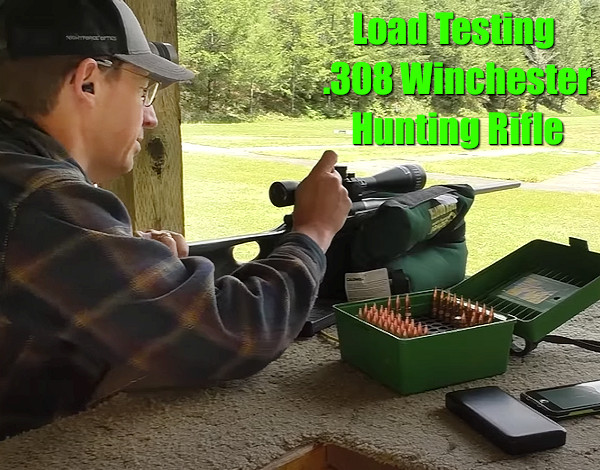
In a second video, Keith shows the process for load development with a .308 Winchester hunting rifle. Here Keith uses a large X-type sandbag for a front support. Again, he was shooting a Remington 700 bolt-action rifle, this time with Barnes TSX solid copper bullets, PPU Brass, Federal 210m primers, and AR Comp powder. Keith said the Barnes bullets were excellent — he commented that these bullets were “match quality in terms of precision”. Keith achieved some very small three-shot groups with AR Comp and the TSX projectiles. Keith did note that point-of-impact shifted up significantly with increases in charge weight (see 6:20-7:10). With thinner-contour hunting barrels, this is not unexpected. But POI change should be observed carefully during load development, as you may need to adjust your zero after completing testing.
Three Bonus Videos for Hunters and Huntresses
Here are three videos with useful tips and techniques for hunters and huntresses. These cover rifle marksmanship, optics selection for deer hunting, and efficient methods for sighting-in hunting rifles.
How to Shoot Better with a Hunting Rifle
This “must-watch” video has great practical advice for hunters. It illustrates proper hand-hold and head position, and shows how to stay steady when breaking the shot. Even competition shooters can learn a few things. One viewer notes: “This was very informative. The footage through the scope showing how one’s position moves the sight alignment was particularly helpful.”
You’ll find more great videos on Thomas Haugland’s THLR.NO YouTube Channel, that offers videos for long-range hunters and marksmen. Haugland, who hails from Norway, is a serious shooter, who takes his rifles out into the field, in all conditions. The THLR.NO channel offers solid advice on scopes, reticles, wind-reading, field positions, and much more. Haugland’s team puts a wide variety of gear through serious field tests — every thing from suppressors to packs to electro-optical hardware. In addition the THLR.NO channel provides good advice on stalking techniques and hunting skills.
The Complete Optics Selection for For Deer Hunting
In this video, Vortex optics techs explain the optics package deer hunters will want to take into the field. Along with a good medium-power zoom riflescope, you’ll want binoculars and (probably) a spotting scope. You’ll also want a Laser Rangefinder (LRF) or laser-equipped binoculars. As the team points out, the LRF is not just to range your prey right before you take a shot. A top-quality LRF can range a reflective object as far as 1500 yards away. That helps you decide whether you want to hike a mile to reach that buck you see way out on the next ridge.
How to Sight-In Your Hunting Rifle
This video offers good basic advice for sighting-in a hunting rifle. There are a series of six points covered. Here’s Tip #1: “Find a safe place to shoot your rifle with a backstop. If possible, use a bench and a rock-solid shooting rest. Sighting-in is all about consistency, so the less human error you have, the better. For safety, be sure to also bring ear and eye protection.” READ FULL ARTICLE on NRAWomen.com.
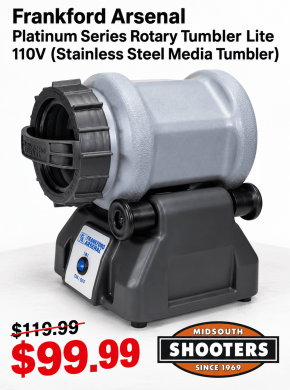
Ace tactical shooter and gunsmith Jim See of Elite Accuracy LLC has tested a Frankford Arsenal rotary brass tumbler. Like the older Thumbler’s Tumblers, this can tumble your cases in a liquid solution. The wet-tumbling process worked very well Jim reports. Posting on Facebook, Jim noted: “I was super impressed with the Frankford Arsenal rotary tumbler and cleaning packs they sent me. I ran 350 pieces of brass for one hour. They now look great.” Jim appreciated not having to deal with dry tumbling media, such as crushed walnut shells. Dry media produces dust and can leave residues or clog flash-holes.
Interestingly, Jim recommends you try wet-tumbling WITHOUT using stainless media. At least give it a try. Tumbling without media simplifies the process and you don’t have to worry about pins stuck in flash-holes or case-necks*. Jim reports: “Stainless steel pins come with the Frankford kit, but mine hit the trash right out of the box. There is no need to clean the inside of your cases 100% and that’s all the pins add to the equation. The brass bumping brass with hot water and Frankford’s liquid cleaner works great all by itself.” One wag stated: “That’s great to hear. Stainless steel pins are a PITA.”
Other Facebook posters concurred with Jim’s evaluation of the Frankford Arsenal Rotary Tumbler:
“I’ve had one for a couple years, and it works well. I usually run about 250-300 Dasher cases at once in it. But I use the pins because I’m OCD about clean brass.” — David W.
“I’ve had one for a year and a half and it definitely works with or without pins.” — Luke C.
“I got one about six months ago and have yet to use any stainless steel media [pins]. I just use some dawn, distilled water, and Lemi Shine®. Turns nasty 5.56 range brass bright and shiny.” — Brian D.
“I don’t use the pins either and use a combination of Dawn soap and Lemi Shine.” — Jon N.G.
This video shows how to assemble and operate the Frankford rotary tumbler. But note, Jim See does NOT feel that it is necessary to use stainless media.
How to Dry Your Brass — Hair Dryer Vs. Machine
The downside of wet tumbling is that you end up with a pile of wet brass at the end of the cleaning cycle. There are many ways to dry brass, from drying in the sun to using a kitchen oven (be careful not to “overcook” your brass). One Facebook poster asked Jim: “What is your drying method for wet brass, and how long does it take?”
Jim See replied: “To start I just drain off the dirty water, and rinse the brass with clean hot water. Then I roll the brass on a towel for 30 seconds and put the brass in a one-gallon bucket. Next I insert a hair dryer in the bucket (with the brass) and let it run for about 5 minutes. With this procedure, the drying process for me is done in less than 10 minutes.”
Jack Lanhart has another method: “I use a food dehydrator. It takes 30 to 45 minutes.”
For those who don’t want to mess with towels and hair dryers, Frankford Arsenal offers a matching Platinum Series Case Dryer ($67.99 on Amazon) that simplifies the process of drying brass. Lyman also makes an excellent Cyclone Case Dryer ($81.99 on Amazon). These drying machines both have multiple levels so you can separate different types of cartridge brass. Lyman states that “The forced heated air circulation of the Cyclone will dry your brass inside and out within an hour or two, with no unsightly water spots.” The Lyman dryer can also be used for ultrasonically-cleaned gun parts.
*The Frankford Rotary tumbler does include media separators if you choose to use the provided pins or other media. CLICK HERE for diagram showing how to use media separators.
Killough Shooting Sports (KSS), the Texas-based retailer serving precision rimfire, benchrest, and competitive pistol shooters, has a new and improved online store at KilloughShootingSports.com. The new site has been designed around how serious shooters actually shop: by discipline, by rifle, and by the specific grade of ammunition they are looking for. The new site has faster page loading, faster check-out, and more payment and shipping options.
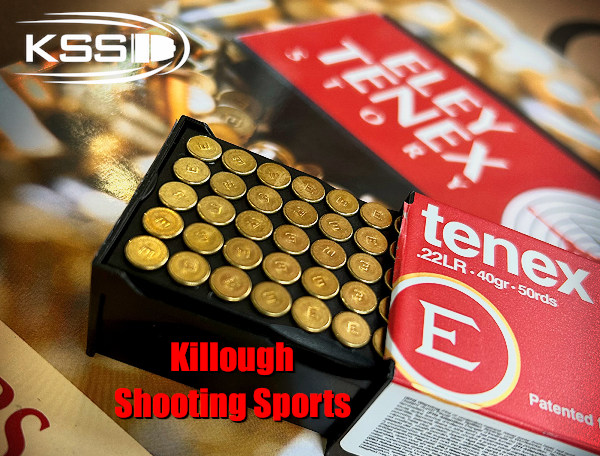
“Our customers know exactly what they want, and they want to get to it quickly,” said Michael Atkinson, KSS Sales and Marketing Director. “Whether that is a case of ELEY Tenex, a rimfire barrel or a front rest for the next benchrest match, the new site gets them there in fewer clicks, and it gives us a far better platform for looking after them once they have ordered.” KSS is the home of ELEY, the British manufacturer of world championship and Olympic-winning .22LR ammunition. ELEY’s US customer ammunition testing is carried out at Whidden Gunworks.
Same day dispatch and delivery direct to the match
Every order placed before 2:00 pm Central is dispatched from the KSS warehouse in Brownsville, Texas, the same day.
Delivery Direct to Shooting Match Locations
KSS also offers a unique service — free shipping to competitions. Competitors can pre-order their ammunition through the store and have it delivered directly to the match, eliminating the need to travel with ammunition cases.
The Full ELEY Ammo Selection including ELEY X-Shot
KSS is an online source for the complete ELEY .22 LR range, from recreational and training grade ammo through to Match, X-Shot, and Tenex.
Full Product Line at Killough Shooting Sports Store
Actions | Barrels | Stocks | Rests | Scope Mounts | Targets | Ammo
Along with .22 LR rimfire ammunition, the KSS store has ELEY 9mm and .38 Super competition ammunition, actions, stocks, rimfire rifle barrels, scope mounts, deluxe front rests, plus targets and cleaning supplies. Products come from leading manufacturers including Benchmark Barrels and Burris.
The new website gives KSS a more reliable checkout, faster page loading, enhanced mobile functionality, and modern payment and shipping options. For more info, visit KilloughShootingSports.com
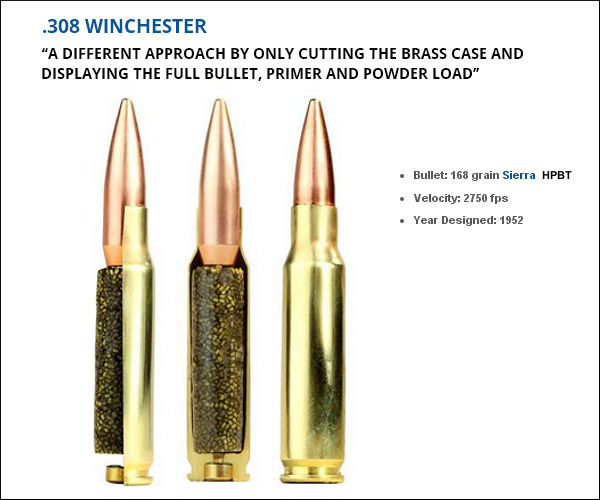
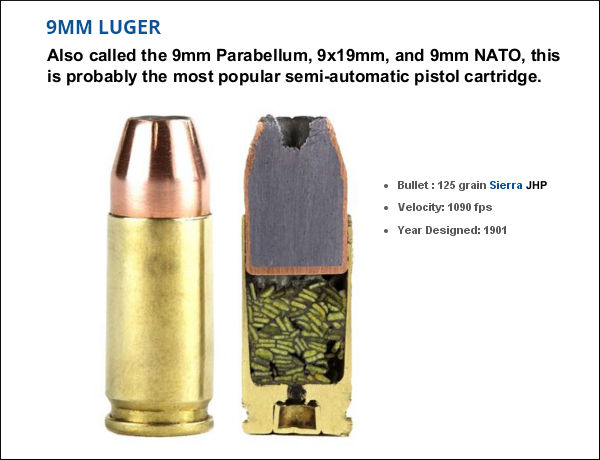
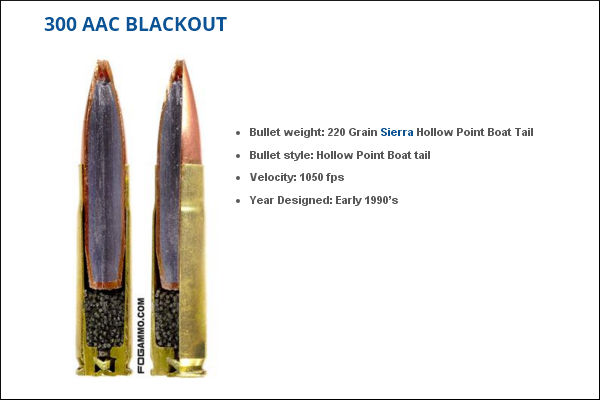
Here’s something you don’t see every day — the inside of loaded cartridges, sliced halfway through. This lets you see how bullet core, jacket, cartridge case, powder, and primer all fit together. Give credit to the folks at FOG Ammunition for creating this interesting series of cut-through ammo images. We show four cartridges here: the .308 Winchester, 9mm Luger, 300 BLK, and .50 BMG. You’ll find two more (the .223 Remington and .45 ACP) on the original FOG Ammo Blog Article.
This .308 Winchester model took on a different approach by only cutting the brass case and displaying the full bullet, primer and powder load. A spec amount of powder was used to create the model powder form. An estimated 10% volume was added during the forming process, along with an undetermined amount of air pockets.
This bisection is a 9mm Luger Jacketed Hollow Point round with flake powder held together with super glue. After this self-defense round was cut by a trained professional the round was polished by hand. This might look like stick powder, but those are in fact flakes stacked up in cross-section. Designed in 1901 by Georg Luger, this popular cartridge is used by civilians, military, and law enforcement.
For this model of the .300 AAC Blackout (aka 300 BLK), a Dremel tool was used to create a pie cut within the bullet and brass case. A measured amount of power, roughly 65% of spec charge, was placed inside the case with super glue. This cartridge was originally optimized for subsonic use with a suppressor, so the amount of powder used is small relative to the nominal case capacity. That leaves more room for the relatively large .30-caliber bullet.
Last but definitely not least is the .50 Caliber BMG round (aka .50 Browning Machine Gun). Famed for its wartime use in the M2 Machine gun, the .50 BMG round is also used in civilian Long Range competitions. A typical .50 BMG cartridge holds over 225 grains of powder. That’s almost ten times the amount in a 5.56×45 NATO Round! To demonstrate the size of the .50 BMG, check out that .223 Rem for comparison.