You can spend thousands on a rifle, but that expensive hardware won’t perform at its best if you have poor trigger technique. One key element of precision shooting is trigger control. Our friend Kirsten Joy Weiss has produced a good video that shows how to refine your trigger technique for better accuracy. In this video, Kirsten talks about the actual placement of a shooter’s index finger on the trigger. It is important to have the finger positioned optimally. Otherwise you can pull the shot slightly left or slightly right.
Kirsten tells us: “Finger placement on the trigger might not seem like a big deal, but it actually is. The reason for this is because, depending on where your index finger is placed on the trigger, [this] translates to different muscle interactions with the gun.” Watch this video to see Kirsten demonstrate proper finger placement (and explain problems caused by improper finger positioning).
When you pull the trigger, you only want to engage the last section of your finger, in order to avoid unwanted muscle engagement and to achieve a smooth shot. Remember there is a “sweet spot” between the crease (first joint) and the tip of the finger. If you position the trigger in that “sweet spot”, you should see an increase in your accuracy. Don’t make the mistake of putting the trigger in the crease of your finger, as shown below.
Effects of Incorrect Finger Placements
You want to place the trigger shoe between the end of your finger and the first joint. If you place the trigger on the very tip of you finger you’ll tend to push the rear of the rifle to the left when engaging the trigger, causing shots to go right (for a right-handed shooter). On the other hand, if you put the trigger in the crease (first joint), you’ll tend to bring the rear of the rifle to the right, causing shots to fall left. This is illustrated below for a right-handed shooter.
Are you looking to get started in PRS and tactical/practical competitions? Here are three videos that can help you improve your game. These videos feature two top PRS competitors, and George Gardner of G.A. Precision, considered one of the founding fathers of the PRS game. You’ll find other PRS-focused videos on the Long Range Precision Shooters YouTube channel.
PRS Ace Shows Skills Barricade Technique — with POV Video
This first video features 2015 PRS Champion David Preston shooting the PRS Skills barricade. Dave Preston is widely considered the best in the nation running this PRS stage. Dave nearly always shoots 100% with the fastest recorded time. In this video you’ll see him successfully engage all eight shots in under 43 seconds — that’s crazy fast. This includes a POV sequence (4:35 time-mark) showing the actual view through Dave’s scope.
The PRS Skills Barricade is an 8-round, 4-position stage featured at most PRS matches. It’s called a “Skills Stage” as it is run the same way at every national match and gives shooters the ability to compare skill levels based on hit percentage and speed. The target is a 10″ plate at 400 yards. There are four different positions, with two shots each. Most people run this stage in about 70 seconds, some in the mid-60s, while Dave does it in the low 40s!
Know Your Limits PRS Stages — Pro Tips
The Second video showcases how 2018 Oklahoma PPS Champion Clay Blackketter approaches Know Your Limit Stages. With these particular type of stages you have to make judgment calls about your rifle’s accuracy and your ability to hold on target. You can boost your score by shooting the smallest target(s), but you risk losing points if you miss. Clay explains how best to manage a Know Your Limits stage.
Cartridge Choice for PRS and Tactical Competition
Today’s third video reviews many of the different caliber selections popular for PRS-style competition. The video examines pros and cons of various cartridge choices, focusing on accuracy, recoil, mag-feeding, and value for money. This segment features G.A. Precision owner/founder George Gardner.
Most Top PRS shooters are using 6mm catridges these days. These deliver excellent accuracy with lower recoil and cheaper bullet cost. Popular choices include 6 Dasher, 6mm Creedmoor, 6XC, 6-6.5×4 and the new 6GT cartridge, which is sort of a stretched version of a 6mmBR. It has a bit more case length for better feeding, and greater case capacity than a 6BR so you can shoot 105-108 grain bullets at the 2950 fps node.
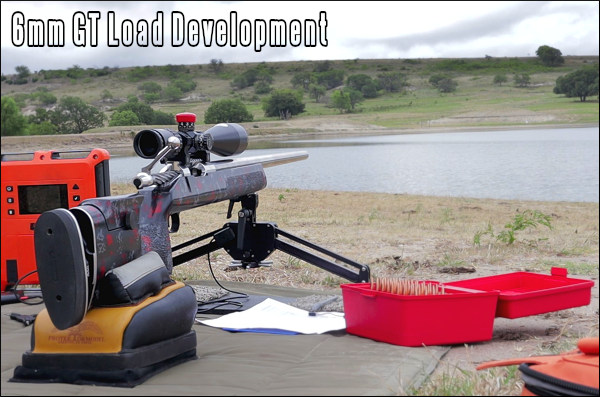
CLICK HERE for a full write-up on a 6GT rifle build by Mike McCasland (Texas Precision). This includes load development suggestions and a 6GT reamer print. The most common 0.120″ freebore chamber allows for the majority of high-BC 6mm projectiles found in both F-Class and PRS. Mike had good luck with the pointed 107gr Sierra Match Kings (SMK), as well as the 110gr Hornady A-Tips in his rifle, shown below:
Practical Shooter’s Guide
Thinking of getting started in the Practical/Tactical shooting game? Looking for ways to be more stable when shooting from unconventional positions? Then you may want to read Marcus Blanchard’s Practical Shooter’s Guide (A How-To Approach for Unconventional Firing Positions and Training). Unlike almost every “how to shoot” book on the market, Blanchard’s work focuses on the shooting skills and positions you need to succeed in PRS matches and similar tactical competitions. Blanchard provides clear advice on shooting from barricades, from roof-tops, from steep angles. Blanchard says you need to train for these types of challenges: “I believe the largest factor in the improvement of the average shooter isn’t necessarily the gear; it’s the way the shooter approaches obstacles and how they properly train for them.”
The Civilian Marksmanship Program will postpone its November Talladega 600 rifle and pistol event due to storm damage to portions of its 500-acre marksmanship park. The annual event, scheduled for November 16-22, will likely be rescheduled in January or February 2021. The new date will be set based on what works best for the 125+ competitors who had registered for the November 2020 event. Participants will be contacted by the CMP to determine the best dates to hold the event in early 2021.
The Talladega 600 features a wide variety of service rifle, vintage rifle, rimfire rifle matches, and pistol matches plus firearms training programs.
Hurricane Zeta Damaged Kongsberg Electronic Targets
“Unfortunately, our facility suffered damage to portions of our electronic targetry when Hurricane Zeta made landfall in our area,” said Mark Johnson, chief operating officer of the CMP. “Key components necessary to repair the system ship from [Kongsberg in Norway] and the timing will not allow us to complete repairs by November 16. That takes us into the Thanksgiving and Christmas holidays, leaving us no choice but to move the event into next year”. Organizers hope to have the big event in January or February 2021.
Talladega 600 Will Be Rescheduled
The CMP will reschedule the event as quickly as possible to best fit the schedule of more than 125 competitors who have registered for the event. “Participants can expect contact from us soon to determine the best time slot to get the competition back on track,” Johnson said. “We recently performed a number of upgrades to our High Power range, so the timing of the damaging storms is unfortunate. We look forward to providing our participants with the best experience possible.”
A.P. Lane’s Gold Medal-Winning Colt Revolver
This Colt Officer’s Model revolver, factory-fitted with a skeletonized hammer, belonged to legendary Olympic shooter A. P. Lane, who was known as the “Pistol Wizard”. Lane used this Colt Revolver to win FIVE Olympic Gold Medals — three in 1912 and two in 1920.
A.P. Lane was one of the greatest pistol shooters of his generation. He shot scores that were typically 25-50 points higher than those of his competitors. And he exhibited true Corinthian spirit. At the 1912 Olympics, Lane shared his match ammunition with another competitor who used that ammo to capture the Silver Medal (Lane won the Gold).
This revolver, factory-fitted with a skeletonized hammer, was used by American A.P. Lane in winning five Olympic Gold Medals in the 1912 and 1920 Olympic Games. It’s a .38 caliber, Officer’s Model centerfire revolver from the early 20th century. Olympian A.P. Lane’s Gun can be found in Gallery 13, Firearm Traditions for Today, at the NRA National Firearms Museum in Fairfax, Virginia. The Museum exhibit includes a panoply of Lane pieces – his revolver, his five Gold Medals, and the five Olympic certificates that went along with them.
The 2020 NRA F-Class National Championships are now complete. We hail the new Champions Pat Scully (F-Open), and Ian Klemm (F-TR). We also give congratulations to all the competitors who dueled often-tough conditions at Ben Avery Shooting Facility in Phoenix, Arizona, with periods of very high winds. CLICK HERE to see all 2020 F-Class Nationals Results for all participants.
Top-Ranked Shooters at 2020 NRA F-Class National Championships
F-Open Top Competitors
1. Pat Scully, F-0pen Champion, 1575-73X
2. Keith Glasscock, 1575-60X
3. Tod Hendricks, 1574-83X
4. Eric Wuestenhoefer, 1572-59X
5. Tim Vaught, 1565-76X
6. Patrick Fulghum, 1564-60X
7. Ken Dickerman, 1563-64X, High Senior
8. Bret Solomon, 1562-58X
9. Emil Kovan, 1562-53X
10. Erik Cortina, 1561-70X
Christine Harris, 1543-60X, High Lady
Kaycie Blankenship, 1517-35X, High Junior
Larry Bartholome, 1541-53X, High Gr. Senior
F-TR Top Competitors
1. Ian Klemm, F-TR Champion, 1561-56X
2. Keith Trapp, 1555-47X
3. Brad Sauve, 1553-40X, High Senior
4. Luke Ramsey, 1551-42X
5. Scott Harris, 1551-39X
6. Nancy Tompkins, 1550-44X, High Lady
7. James Crofts, 1546-52X
8. Henry Rockhill, 1543-37X
9. Brian Harder, 1539-37X
10. Nick Abbott, 1535-45X
Morgan Abbott, 1495-34X, High Junior
Raymond Weaver, 1534-30X, High Gr. Senior
Pat Scully (right) is 2020 F-Open National Champion while fellow team-mate Tod Hendricks (left) finished third overall, just one point back.
In tough conditions, the top shooters put on impressive performances. Competition was tight and it went down to the wire. After multiple days of shooting, F-Open Champion Pat Scully and runner-up Keith Glasscock ended up tied on points (both scored 1575), but Scully did have a huge edge in X-count with 73X vs. 60X for Keith. In F-TR, LR Champion Ian Klemm posted an impressive 6-point win. Ian also recorded high X-Count (56X) among all F-TR shooters. Phil Kelley posted: “Ian is now only the second 3-Time F-TR National LR Champ and he has won 3 of the last 4 years — an amazing run.” Phil also observed that his fellow Team USA shooters took 7 out of the top 10 F-TR places.
Overall, the “top guns” in both divisions performed amazingly well given some very tough conditions. Forum member ShootDots noted:
“On the last day I was on the line with Keith Glasscock [Second Overall] on my immediate left. I was scoring for Pat Scully [F-Open Champion]. With wind conditions that would make a brass monkey flinch, these two gents made it look easy! I have shot with some REALLY good shooters over the years [but] these two are at a different level altogether!
I do not know Ian Klemm BUT I do know how he shoots! When you are surrounded by the finest, you get a first hand view of what REAL shooting is all about. My hat is off to the winners and to those who came within a hairsbreath of them! A B-I-G hearty CONGRATULATIONS to them!”
Our Forum tech staffer Praveen (who shot F-Open) concurred, praising the top-finishing Open-class competitors, noting that 3rd-place Tod Hendricks amassed an amazing 83 Xs. Praveen posted: “Congratulations… I witnessed some really fine shooting this year while experiencing some very tough wind conditions. Pat, Keith, and Tod — hats off to you. And Tod — so many Xs!” Forum member RonatSpokane also noted Tod’s stunning X-Count: “Sheesh Tod, you’re … bogarting those Xs. With 83 Xs, more than 50% of your shots were under 1/2 MOA. In those kinds of conditions, that’s nothing short of stunning.”
Forum member Carlsbad noted that the final day was very tough: “What a match. Every day had different challenges. The last day was challenging. We had one guy clean the afternoon string on Friday and then shoot 180 in the afternoon string on Sunday. That was tough. I don’t know how guys shot high 190s in those conditions. Congratulations to Ian Klemm and Pat Scully.”
Three National Titles in Four Years for 2020 F-TR Champ Ian Klemm
Ian Klemm has now won three National F-TR Championships in four years. Ian captured back-to-back titles in 2017 and 2018, winning at Lodi, WI in 2017, and Raton, NM in 2018. Ian also finished second at the 2019 Nationals. Ian put on another great performance to win in 2020 under very challenging conditions.
This Sunday we mark the passing of a prolific writer, High Master marksman, good father, respected colleague, and reloading guru. Glen Zediker, author of many leading treatises on reloading, gun maintenance, and shooting skills, passed away on October 1, 2020, one month ago today. We mourn this loss. Glen helped this website with advice many times and Glen’s classic Handloading for Competition remains one of our favorite reloading resources. Glen was a “leading light” in the shooting sports world for decades. His books and technical articles have helped countless shooters and hand-loaders. His knowledge of the AR15 platform was unrivaled. He will be missed. Rest in Peace Glen.
In 2015 Glen started a series of articles for the Midsouth Shooters Blog, the Reloaders Corner. Here is a section from his introduction to that series:
Glen Zediker — Author and High Master Marksman Glen posted this in 2015…
“I’ve been ‘at this’ for over 40 years now, and ‘this’ is shooting, handloading, and writing about it for the past 25. My background is competitive shooting, primarily NRA High Power Rifle. From that followed my exploration of handloading and education therein. As an NRA High Power Rifle competitor, I earned a High Master classification, and I did it competing in Service Rifle division.
The whole reason I started writing about all this came about because I couldn’t find anything to read that put the pieces together — all the pieces that all the better shooters knew. I wanted to learn more, and I spent a lot of time and effort doing so. I continually got answers from winners and those who built rifles for winners. Unfortunately, those answers were not the same as I had been reading, and none of the authors of the other material I had read had won any championships. I thought there must be others who would appreciate some short cuts, and that’s how I started my publications career.
I think I’ve helped a few folks along the way.”
From Glen Zediker’s Reloaders Corner
Here is Glen’s advice about loading from his first “Reloaders Corner” Blog article in 2015:
“So, the advice that accompanies this first installment is to consider or reconsider your standards, and your evaluation of what is a good load. When I’m testing I choose the best group out of whatever it was I was testing. However, when it’s decision time, I choose the best, worst group. Let me explain. I really don’t consider what the very best any combination can show me is, but rather what is the worst the combination has shown me. Exceedingly tight groups are all too often a combination of luck and a little more luck. We got lucky in our judgment to choose the combination and the bullet fairy tipped her tiara. The more rounds anyone shoots, the bigger the groups are going to get. That’s just math. However, if three or four 10-shot groups are showing X-Ring accuracy, I’m going to ignore the group measurement, pay more attention to the chronograph, and pay very close attention to any over-pressure indicators. I don’t want to see anything outside a golf-ball sized circle at 300 yards, and I’m hoping to keep it that way.
Speaking of which — years ago, I was a golf pro… a legendary golf instructor, Percy Boomer (real name) had a line, ‘The difference between the amateur and professional is not in the quality of their best shots, but in their worst.’ That’s it. The difference between a good load and one that’s almost a good load is that also. The good load stays tight, throughout. A ‘flyer’ is grounds for disqualification. That’s a shot that strays from the herd. Don’t ignore it.”
Glen Dwight Zediker Obituary
June 17, 1959 – October 1, 2020
Glen Dwight Zediker, died on October 1, 2020, at home in Oxford, Mississippi, with his sons at his side.
Glen was born on June 17, in Rifle, Colorado, to Lloyd and Marie Zediker (both deceased) of Grand Valley (now Parachute), Colorado. He attended K-12 in Grand Valley, studied at the University of Colorado, Boulder, and graduated from the University of Mississippi with a B.A. in English.
Glen spent most of his professional career combining his expertise in target shooting with his skill at writing. He became an NRA High Master known for pinpoint accuracy. He wrote and published several books on target shooting and reloading which are highly respected in the precision shooting community.
Glen spent many years in Mississippi and embraced southern culture from the food to Faulkner, but at his core, he remained a Westerner. He loved nothing more than riding over red dirt hills and hiking in the Southwest.
Glen’s two sons, Matthew and Charlie, were the center of his life. In addition to his sons, he is survived by his sister, Diane Zediker-Pastore (Victor) and his former wife, Kris Kunkler Zediker. See more life history and photos on Glen’s Memorial tribute site.
Read Glen Zediker’s Articles on Reloading and Gun Tech
If you haven’t read any of Glen’s works, you will find a selection of shorter articles on the Midsouth Shooters Blog. This is a good way to sample the scope of Glen’s knowledge of reloading, AR15 technical matters, and service rifle shooting. We’ve enjoyed reading Glen’s articles and we know you will too.
In addition, Glen’s website, Zediker.com, has 20 older articles which you can read in PDF format for free. You can find these at Zediker.com/articles/articles.html. Here are three examples:
By Glen Zediker. Folks who read Handloading For Competition know most of this material, but here it is encapsulated for those who want. It’s the run down on how to load at the range, on the spot, and radically improve your success in working up an ammo recipe.
By Glen Zediker. A lot has changed since the original MKII, but then some things really haven’t. There are new triggers on the market and this article will run down what they are and what I think of them. Drop-ins, pins, and lock-time get their spaces too.
By Glen Zediker. There are three articles on this topic that are separated into barrel cleaning, cleaning and lubrication of the rest of the rifle, and a full component on how to run an AR15 as well as store it unharmed.
Royalties from Glen Zediker’s Books go to his surviving sons/family members. Consider purchasing one now:
NOTE: Most of these books are also available from Midsouth Shooters, some at lower cost.
Yesterday was the 1000-yard Team Match Day at the F-Class Nationals in Phoeniz Arizona. It was also Halloween, and there were some very creative costumes on display at the Ben Avery Shooting Facility. First, for the serious stuff, we want to congratulate the two winning teams — Team Lapua/Brux/Borden in F-0pen and Team Texas in F-TR. CLICK HERE for updated F-Class Nationals Results.
Team Lapua/Brux/Borden (LBB) (1590-84X) took the F-Open title by six points (and 4 Xs) over runner-up The Long Shots (1584-80X), with Team Grizzly (1580-58X) third.
In F-TR, Team Texas topped the field with 1572-63X, winning by an impressive 17 points (and 5 Xs) over Team USA Independence (1555-58X). Team USA Freedom was third with 1553-44X. Team Texas’s Randy Littleton turned in a stunning individual performance in the first match, shooting 200-14X, best among F-TR shooters. F-Open competitor Jeff Cochran of Team Spindle Shooters also drilled a 200-14X in that first match, the top F-Open individual 20-shot performance.
“Team Texas (center) had plenty of silver and bronze medals in previous national championships, but today earned their first gold medal. Very talented USA teams finished second and third.” — Skip Barkley
Big news for F-Open competitors, long-range tactical shooters, and big game hunters — Lapua will offer four (4) new types of ultra-premium cartridge brass in the spring of 2021. The four new Lapua cases are: 6.5 PRC, .284 Winchester, .300 Winchester Magnum, and .300 PRC. The .284 Win cartridge still dominates the F-Open game, so this is good news for F-Class shooters. Lapua is excited about the PRC offerings: “The new Lapua 6.5 and .300 PRC cartridge cases provide competitive shooters, hunters, and accuracy enthusiasts a premium selection for precision hand loads, an option that’s been missing from the market since the PRC’s inception.” The venerable .300 Winchester Magnum remains a top choice for hunting.
Here Is Product Information from the Lapua.com website:
The 6.5 PRC Case
The 6.5 Precision Rifle Cartridge (PRC) was originally designed for long-range hunting, but it has also been popular for long-range precision shooting. The 6.5 PRC’s case capacity enables velocities up to 262 FPS (80 m/s) faster than the 6.5 Creedmoor or 6.5×55 SE. By design, the cartridge features a long neck enabling the use of today’s popular, high-BC projectiles. The 6.5 PRC case works well with relatively slow burning powders. It is a great choice for heavy bullets (up to 150+ grains) with excellent retained energy and terminal performance.
The .300 PRC Case
The .300 PRC was designed for long range shooting with heavy, high-BC bullets. Its superior ballistics and modern, beltless case design with modern long, high-BC .30-caliber bullets . With its ability to load heavier bullets, the .300 PRC can out-perform the .300 Winchester Magnum and many other .30-Cal Magnums. The .300 PRC is also an excellent choice for long distance hunting of mid-to-large sized game, pushing bullet weights exceeding 15.8 g / 245 grains.
The .284 Winchester Case
The .284 Winchester and “Improved” variants such as the .284 Shehane, have dominated F-Open competition for many years. From time to time a Big .30 will win a major match, but most top competitors are running the .284 Win or some improved .284. Now top shooters, including the members of the Lapua-sponsored U.S. Rifle Team, will have great Lapua brass without having to neck-up 6.5-285 cases. The .284 Winchester’s rebated rim design enables a large powder column, yet easily functions through medium-length actions making it desirable for custom rifles. With its accuracy and good velocity with heavy bullets the .284 Win is also a great hunting cartridge.
Jerry Tierney, who sadly passed away in 2015, pioneered the .284 Winchester in F-Open competition, which was previously dominated by the 6.5-284. The original “straight .284″ offers superb accuracy plus much better barrel life than its 6.5mm little brother.
The .300 Winchester Magnum Case
The .300 Winchester Magnum has been a staple within the firearms industry, widely used by hunters, target shooters, military, and law enforcement agencies since its development in the early 60s. It is still used for competitive target shooting, hunting, and Mil/LE snipers. It delivers excellent long-range performance with a wide range of bullet weights from 165 to 230 grains and more. Lapua’s .300 Win Mag case will be a great addition to Lapua line given the huge selection of bullets available for this caliber. And there is a great choice of factory hunting rifles chambered for the .300 Win Mag.
Mid-Range Competitors Battle Tough Conditions at Ben Avery Report by F-Class John (competing at the Nationals)
The Mid-Range Nationals at Ben Avery in Arizona have been completed, and many competitors are breathing a sigh of relief. Winds were howling and conditions were VERY tough. We congratulate all the competitors who battled the high winds. This year all shooting at the Mid-Range Nationals was done at 600 yards (the simplified course of fire was adopted in 2019). I think I can safely say everyone is excited and ready to move on to Long-Range portion of the championships.
The Top 10 in each division are listed below. New F-Open Mid-range Champion Tim Vaught put together a very impressive performance, dropping just 14 points in very challenging conditions.
The fact that F-Open winner Tim Vaught dropped just 14 points across nine 20-shot relays is INSANE given the incredibly tough conditions. He deserved his title without a doubt. F-TR Mid-Range Champion Andrew Cyr also had an impressive performance, winning by 9 points over a very tough field, including past National F-TR Champions and Nancy Tompkins, past NRA High Power and Long Range Champion.
The F-TR division was won by Andrew Cyr. His gunsmith, Bryan Blake, said this rig has some unusual features, including barrel twist rate. Stay tuned for a full tech report…
Challenging Conditions at F-Class Mid-Range Nationals
Conditions were pretty incredible and by no means typical for Ben Avery for the Mid-Range portion of the USA F-Class National Championships. We started on Sunday with dead calm conditions on relay one and by the end of shooting, it was challenging but certainly not anything outside the normal for most of the people. We woke up Monday to crazy strong winds that just tore apart those who were ‘lucky enough’ to be on the first relay and it throughout the day it went from horrible to manageable and it was just dumb luck if your relay got hit or spared. The uncharacteristically strong winds met us Tuesday morning again for the final day of Mid-Range.
Video has highlights from three days of Mid-Range competition.
Before the first relay I measured gusts that were almost 24 mph with the constant wind hovering in the high teens. It calmed down from there but still remained very challenging until the end. Overall it was quite the fight for first with Tim Vaught earning the F-Open win with Dan Bramley and Tod Hendricks taking a respective second and third place out of a field of 66 High Masters and 13 Masters. These guys all shot superbly in some of the most challenging conditions ever witnessed at the Ben Avery range in Arizona. Mighty impressive…
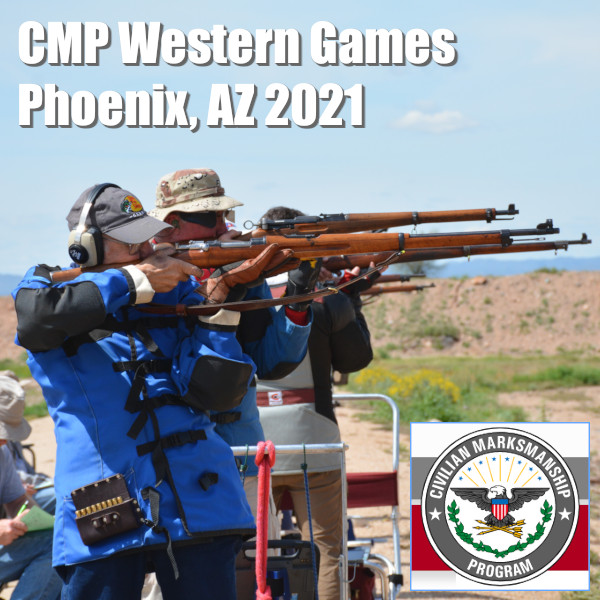
Even while other major matches (such as the 2021 SWN) have been cancelled, the 2021 CMP Western Games could be bigger than ever. Next year’s Western Games, held March 12-21, 2021 at the Ben Avery Shooting Facility in Phoenix, Arizona will include pistol matches for the first time. That should attract more competitors, so register early. Western Games online registration opens on November 1, 2020.
NEW in 2021: The CMP will be holding pistol matches during the 2021 Western CMP Games. There will be a Pistol Marksmanship 101, plus an M9 EIC Match, CMP Match Pistol 2700, EIC Service Pistol Match .22 Rimfire Pistol EIDC Match, Military/Police Service Pistol Match and 1911 As-Issued Pistol Match.
RETURNING EVENTS: The Western CMP Games include the Garand, Springfield, Vintage Military, Modern Military, Rimfire Sporter, M1 Carbine, and Vintage Sniper Match. There will also be a Rifle Marksmanship 101 with M16 EIC Match. Other clinics include the GSM New Shooter Clinic and the M1 Maintenance Clinic.
Additionally, the CMP HP Rifle Matches will include a Team CMP Clinic with live-fire, plus 4-Man Team Match, EIC Rifle Match and three days of 80-shot events.
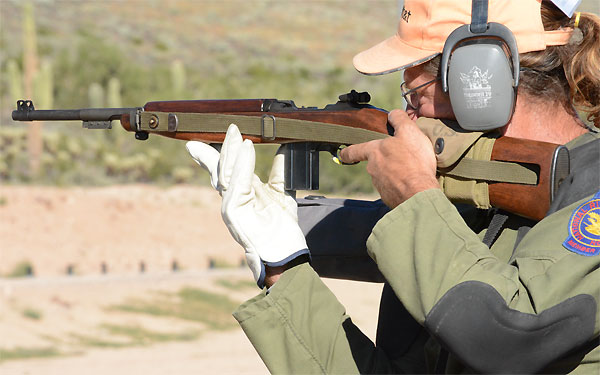
Competitor in M1 Carbine Match at CMP Western Games




 A.P. Lane’s Gold Medal-Winning Colt Revolver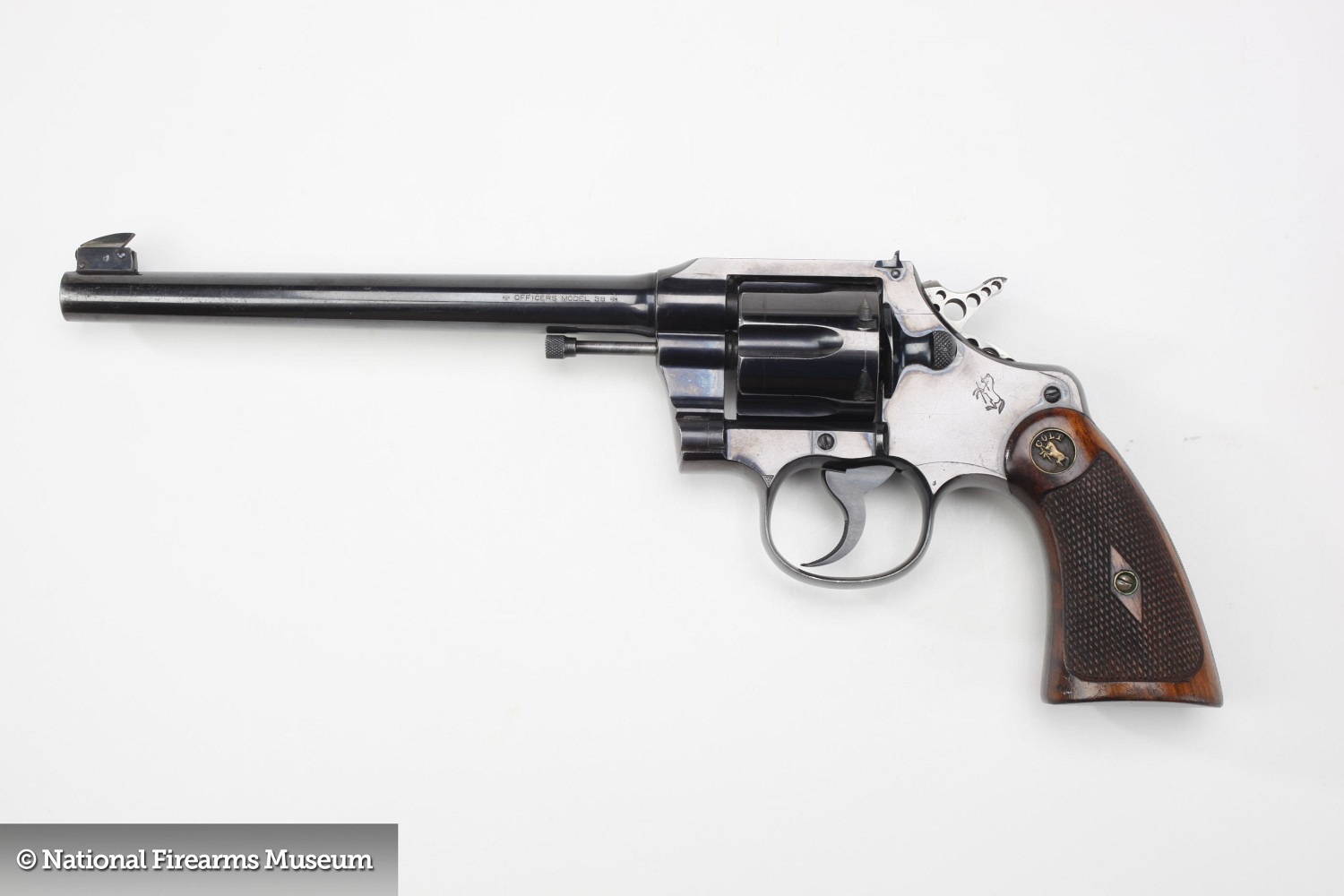


 “I’ve been ‘at this’ for over 40 years now, and ‘this’ is shooting, handloading, and writing about it for the past 25. My background is competitive shooting, primarily NRA High Power Rifle. From that followed my exploration of handloading and education therein. As an NRA High Power Rifle competitor, I earned a High Master classification, and I did it competing in Service Rifle division.
 “So, the advice that accompanies this first installment is to consider or reconsider your standards, and your evaluation of what is a good load. When I’m testing I choose the best group out of whatever it was I was testing. However, when it’s decision time, I choose the best, worst group. Let me explain. I really don’t consider what the very best any combination can show me is, but rather what is the worst the combination has shown me. Exceedingly tight groups are all too often a combination of luck and a little more luck. We got lucky in our judgment to choose the combination and the bullet fairy tipped her tiara. The more rounds anyone shoots, the bigger the groups are going to get. That’s just math. However, if three or four 10-shot groups are showing X-Ring accuracy, I’m going to ignore the group measurement, pay more attention to the chronograph, and pay very close attention to any over-pressure indicators. I don’t want to see anything outside a golf-ball sized circle at 300 yards, and I’m hoping to keep it that way.