Jessie Harrison is a multi-time Bianchi Cup Ladies’ Division Champion.
This week’s edition of Shooting USA, which airs Wednesday, February 12, features the NRA Bianchi Cup. This competition is one of the most prestigious and popular events in the world of handgun shooting. Officially, the annual competition in Columbia, Missouri is known as the National Championship of NRA Action Pistol. But to everybody, world-wide, it’s the Bianchi Cup, the trophy named for one of the founders, John Bianchi. In the past 30 years the match has become the richest handgun tournament in the world, with cash and prizes for the best scores on four stages of fire. Shooting USA will spotlight top male and female Bianchi Cup competitors in both wheelgun and and semi-auto pistol divisions. Along with North American shooters, the Bianchi Cup draws top handgun competitors from around the globe. Shooting USA airs Wednesday nights, on the Outdoor Channel, at 9:00 pm Eastern and Pacific, and 10:00 pm Central.
John Scoutten and his team report the action from the Bianchi Cup. This year shooters from as far away as Australia, New Zealand, and Japan traveled to Columbia, Missouri in search of the perfect 1920 match score. Each round is the aggregate of the four (4) fired events: Practical, Barricade, Falling Plate, and Moving Target Events. Each of the four events requires 48 shots to complete. 480 points possible on each event. Three of the four are scored on the NRA tombstone P1 target. You must hit in the 10-ring or inner X-Ring on EVERY shot to shoot a “clean” 1920.
27 Years ago Doug Koening set the standard with a 1920. Since then, every Open shooter knows that he or she must “clean” this match (i.e. score a “1920”) to have a chance to take the title of “Champion”. The X-Count is the tie-breaker.
Here are the top four women shooting the Practical Event during the Colt Championship Final in 2017. From top: 2017 Bianchi Women’s Champion Cherie Blake, third place SFC Katie Bahten, second place Anita Mackiewicz, and fourth place Jessie Duff. Shooting Sports USA Photo
In this video, 18-Time Bianchi Cup Winner Doug Koenig demonstrates Fast Follow-up Shots
Bianchi Cup — Classic Course of Fire
The MidwayUSA/NRA Bianchi Cup is a combination of Speed and Accuracy. Competitors shoot from both standing and prone positions and are also required to shoot with both strong and weak hands at various stages. Stages may combine stationary and moving targets. As conceived by former police officer and holster-maker John Bianchi, the Bianchi Cup originated in 1979 as a Law Enforcement Training match. The Course of Fire consists of four separate matches:
The Practical Event: From the appropriate shooting line, the shooter fires at distances from 10 yards to 50 yards under varying time limits.
The Barricade Event: From within shooting boxes and behind barricades, a shooter fires at targets on either side of the barricade at different distances and under varying time limits.
The Falling Plate Event: From the appropriate shooting line, the shooter fires at 8 inch round steel plates arranged in banks of six at distances from 10 to 25 yards under varying time limits.
The Moving Target Event: From within shooting boxes at distances ranging from 10 to 25 yards, the shooter fires at a target moving from left to right with the target being exposed for only 6 seconds.
Due to the high accuracy required in each stage of the Bianchi Cup, the tournament is widely considered one of the most difficult handgun championships on the planet.
In these two videos from the Rekyyli Ja Riista (Recoil and Game) YouTube Channel, you can see how a modern, short-range benchrest rifle is shot. Note how the gun tracks superbly, returning right on target, shot after shot. As a result, the shooter doesn’t have to adjust the rifle position after firing (other than pushing the gun forward), so he can quickly load and fire within seconds of the previous shot. Good rests and consistent, smooth bolt actuation keep the gun from rocking.
It does take practice to perfect the right technique for shooting free recoil (or nearly free recoil — with just a pinch on the trigger guard). And, of course, you must have a very good bag/rest set-up and the stock geometry and rifle balance must be perfect. The ammo caddy also helps by placing the cartridge up high, right next to the left-aide loading port. Hats off to Forum member Boyd Allen for finding these videos. Boyd told us: “Watch carefully — Now this is how it’s done.” [Work Warning: Loud gunshot noises — Turn Down Volume before playback.]
The 2020 Berger Southwest Nationals are complete. As expected, it was a hugely successful match that challenged the nation’s top Sling and F-Class shooters. We want to praise all the competitors and congratulate the 2020 SWN Champions in all three classes. The competition was fierce through-out the match. John Whidden won the Sling Division with a 1245-75X score, just one point ahead of runner-up Oliver Milanovic (1244-72X). Bobby Gill was third with 1240-58X.
In the F-TR Division, Peter Johns had a dominant performance with 1242-58X, twelve points ahead of second-place Wade Fillingame (1230-50X) and third-place Ian Klemm (1230-46X). Ian also shot on the winning USA Independence F-TR Team.
Jay Christopherson Wins F-Open
We cheered the F-Open news. AccurateShooter’s own Jay Christopherson, our Systems Administrator, took the 2020 F-Open title with a brilliant 1247-83X score, 11 “Xs” ahead of runner-up Pat Scully (1247-72X). In third place was Tod Hendricks (1245-81X). Jay (photo right) was shooting a Brux-barreled straight .284 Win with Berger 180gr Hybrid bullets. Up front he uses a SEB Mini coaxial tripod rest. Jay also helped carry Team Lapua-Brux-Borden to an F-Open Team victory. Here’s a short video of Jay shooting when he finished second in F-Open division at the SWN a couple seasons back. You can view Jay’s smooth gun-handling and patience waiting for his condition:
Jay Christopherson, AccurateShooter.com’s System Admin, won the F-Open division. Jay’s Brux-barreled .284 Win was superbly accurate all week long. This video was from a past Berger SWN Event.
John Whidden of Whidden Gunworks won Sling division with a 1245-75X score. John really likes this match: “For most of us it’s the first match of the year, a chance to shake off the cobwebs.” John said conditions were “pretty nice on Friday, Saturday and Sunday — most of the changes came slow and conditions were readable from the mirage.” John, a 5-time National Long Range Champion, is always a threat to win at the SWN. John shot a .308 Win in the Palma Class, and then his .243 Win in the Any Rifle division. Both with Berger bullets and Vihtavuori powders. Here’s John at Ben Avery in 2018:
Above is Peter Johns, F-TR Class winner. Peter posted: “I just accomplished one of my goals of winning a national-level F-Class shooting match! I was only able to do with the support of my wife and family. Also I would like to thank Alonzo Custom Rifles for building a great shooting rifle, Kelly McMillan for the best rifle stock for F-TR (Kestros BR) and Vortex for the best riflecope (Golden Eagle) for F-Class.”
Top SWN Team Performances
A new team record was set at Ben Avery this year. In the F-TR Division, Team USA Independence finished with a 2563-113X score. We are told this is the highest-ever F-TR score. Congratulations to Top Scorer Ian Klemm (645-28X) and the other shooters Wade Fillingame, Fritz Braun, and Luke Ramsey. Keith Trap coached and Kent Reeve was Captain.
In F-Open Team Lapua-Brux-Borden continued its dominance, with a fine performance on the final day. The Team finished at 2584-160X, six points ahead of runner-up Team McMillan F-Open (2578-135X).
F-Open Rifle with Barrel-Cool Device on SEB Neo front rest.
Give Credit to the Match Directors and Staff
Emil Praslick III of Capstone Precision Group offered this perspective on the 2020 Berger SW Nationals: “Wrapping up the Southwest Nationals which was amazingly well run by the Desert Sharpshooters. Matthew Schwartzkopf, Michelle Gallagher, Nancy Tompkins, Melesia Cisneros, Scott Fulmer, Mid Tompkins, and everyone else behind the scenes literally work for at least six months to make the event the well-oiled machine that it is.
Moving and managing close to 400 shooters is a Herculean task, and anyone who thinks they can do better should… offer to come down to help out. I shot awful, but it was a pleasure to see the joy of the shooters as they experienced this one-of-a-kind match. Imagine cooking Thanksgiving dinner for 400 relatives with individual dietary needs on a motel hot plate, and you’ll get an idea of the scale involved. Again, thank you Matt and the gang, and we’ll see you next year!”
We first ran this story a few seasons back. Since then we’ve received many questions about this gun, so we thought we’d give readers another chance to learn about this truly innovative, switch-barrel “convertible” rifle. This gun works for both short-range (100/200) and long-range (500-1000 yd) benchrest matches.
You interested in a truly innovative bench gun that can shoot both short-range and long-range matches? Check out Seb Lambang’s original “do-it-all” rifle. This switch-barrel rifle combined two very different chamberings: 6 PPC and .284 Winchester. With that caliber combo, Seb’s covered from 100 yards (LV/HV mode) all the way out to 1000 (LR Light Gun mode). But the dual chambering is not the rifle’s only trick feature. Exploiting the long-range benchrest rules on stock designs, Seb has fitted a 3″-wide, flat rear metal keel to the buttstock. That counter-balances his 30″-long 7mm barrel, improves tracking, and adds stability. Seb built the stock and smithing was done by Australian gunsmith David Kerr.
Detachable Hammerhead Wing Section Plus Fat-Bottom Keel
To further reduce torque and improve tracking, the stock features an 8″-wide, detachable fore-end fixture. This “hammerhead” fore-end section has extended “wings” on both sides, making the rifle super-stable. The hammerhead unit can be removed, leaving the stock 3″ wide for use in registered benchrest matches where 3″ is the maximum width. The photos below show Seb’s gun in .284 Win Long-Range (LR) Light Gun mode, complete with front wings and rear keel.
Yes This Rig Shoots … In Both Configurations, Long-Range and Short
Seb has already used his switch-caliber, switch-barrel rig successfully in competition. Seb tells us: “The gun shot and tracked real well either in 6 PPC LV/HV mode or in .284 Win LG mode. I love it! Back in 2015, with this gun I placed Top 10 for the Two-Gun at the Harry Madden Championship in Brisbane, Australia just a few days ago and took the silver medal for the 500m Flyshoot with the .284 Win on the next day. So who says a switch-barrel rifle can’t (or doesn’t) work?” And get this, Seb finished the stock just four days before the Brisbane match. He glued-in the action the evening before the match and shot it the next day in competition. Pretty impressive we’d say….
6 PPC and .284 Win Convertible Rifle Specifications
Action: Stolle Panda Short Action (glue-in plus front/rear alum. pillars), Right Bolt, Right Port, Right Eject, .473 bolt face.
LV/HV Weight: Rifle weighs 10.4 lbs in 6 PPC mode (no keel, no front wings).
LV/HV Barrel: Krieger 21.5″ OAL, 6mm (6 PPC, .270″ neck), 1:14″ twist.
Light Gun Weight: 15.5 lbs in .284 Mode with 3″ rear aluminum keel and 8″ fore-end attachment.
Light Gun Barrel: Maddco 30″ OAL, 7mm (.284 Win, .316″ neck), 1:9″ twist.
Metal: Home-made, one-piece scope base with +15 MOA scope rings.
Seb Lambang — Indonesian Innovator
Sebastian (“Seb”) Lambang is the designer/builder of the innovative SEB Coaxial rests, some of the best joystick rests on the market. The SEB Mini is a remarkable design — very compact but solid enough to win F-Class matches. And the SEB Neo Rest has become the go-to choice for short-range and long-range benchrest. The NEO folds flat for transport, yet offers extended vertical and horizontal travel and a rest top that can adjust from roughly 2″ wide to over 6″ in width. This Editor uses a SEB Neo for both bench and F-Class shooting and it is my favorite joystick rest. Here’s a video review of the SEB Mini, filmed at the Ben Avery Range in Phoenix:
Seb is actually in the USA right now, competing at the Berger Southwest Nationals (SWN). No he’s not shooting his radical Hammerhead at Ben Avery this year — he’s got a more conventional F-TR rig. He is shooting with the Int’l Pickup F-TR team coached by Dean Wheeler. In the 2/6/2020 Team Palma match, Seb finished with high score for his team, 438-9X.
ADDENDUM — Seb Succeeds at SWN in Sharpshooter Division:
Seb just posted this report from the Berger SW Nationals in Phoenix: “Proud to get first place in Sharpshooter Class in the Long Range Day 1 Aggregate. Super tough F-CLASS match against lots of the best shooters in the USA and some other countries. Thanks a bunch to my gunsmith Alex Wheeler who did a really great job, [providing a] super-smooth timed action. Thanks also to Tom Mousel who did a great job with the super-accurate ammo! Thanks to Will McCloskey for the best laminate wood rifle stock on the market. The rifle shoots GREAT. I really enjoy this match!”. Here is Seb on the firing line at Ben Avery. The rifle rests on the SEB Joy-Pod joystick bipod he created.
[NOTE: The NRA has multiple divisions: High Master, Master, Expert, Sharpshooter, and Marksman. The most elite level is High Master.]
Thursday 2/6/2020 was the first Team Day at the Berger Southwest Nationals (SWN). Dozens of squads competed in F-TR, F-Open, and Sling Divisions. This 4-Man Palma Team Match had 15 shots for record each at 800, 900, and 1000 yards. This is a real test of wind-reading and marksmanship. Phil Kelley reports: “Tricky conditions challenged great teams throughout the day.” We first want to congratulate Team Lapua Brux Borden (LBB), with a convincing Thursday win in the F-Open Division. We were especially proud of this performance because Team LBB member Jay Christopherson serves as AccurateShooter.com’s system administrator. Congrats to Jay (far right below) and his team-mates including David Christian, Tod Hendricks, Pat Scully, Erik Cortina (Captain), and Bob Sebold (Coach).
Team Lapua Brux Borden Archive Photo from 2019 at last year’s Berger SWN.
In the F-TR division, Team USA Independence took top honors with a 1773-83X total for four shooters: Ian Klemm, Wade Fillingame, Fritz Braun, and Luke Ramsey.
In the Sling Division, Team USNRT Milanovic took top honors with 1782-82X, finishing three points ahead of Team USNRT Gill. Captain/Coach Oliver Milanovic lead the team with 449-30X.
In team competition, the shooter relies on his coach and spotter.
Berger SWN 600-Yard Mid-Range Match Results
In the Mid-Range match, Tod Hendricks topped the F-Open field with 598-37X, a dominant performance. Jim Fowler finished second with 596-20X, and our own Product Tester John Masek was third with 595-33X. John, aka “F-Class John” in our Forum, prepares our Deals of the Week, and does product reviews. Here is his latest Teslong Borescope Review.
In the F-TR Division, the top three shooters all finished with 584 points. However, Mid-Range Champion Scott Harris (584-30X) tallied a huge X-Count advantage over second-place Doug Boyer (584-21X), and third-place Ian Klemm (584-20X). Congrats to all three men.
In the Sling Division, Randy Teissedre won with 597-33X, followed by Mike Kelley with 593-30X, and Larry Sollars with 592-32X.
High Winds for Mid-Range Match on Wednesday
It was windy and cold to start the day for the 600-Yard, Mid-Range Match on Wednesday at the Ben Avery Range in Phoenix. Capstone’s Adam Braverman posted: “Nice full value wind to start the Mid-Range portion of the SW Nationals sponsored by Capstone Precision Group. 38 degrees felt like 27!”
Readers often ask for a good, authoritative resource on doping the wind and reading mirage. Many of our Forum members recommended M.Sgt. Jim Owens’ Wind-Reading Book. With 22 sets of wind charts, this 166-page resource is offered for $14.95 in print format or $12.95 in CD format.
Owens’ Reading the Wind and Coaching Techniques clearly explains how to gauge wind speeds and angles. Owens, a well-known High Power coach and creator of Jarheadtop.com, offers a simple system for ascertaining wind value based on speed and angle. The CD also explains how to read mirage — a vital skill for long-range shooters. In many situations, reading the mirage may be just as important as watching the wind flags. Owens’ $12.95 CD provides wind-reading strategies that can be applied by coaches as well as individual shooters.
NOTE: The Wind DVD product is completely different than Owens’ $12.95 CD. The DVD is like an interactive class, while the CD is basically an eBook.
Played straight through, the DVD offers about 75 minutes of instruction. M.Sgt. Owens says “You will learn more in an hour and fifteen minutes than the host learned in fifteen years in the Marine Corps shooting program. This is a wind class you can attend again and again. [It provides] a simple system for judging the speed, direction and value of the wind.” The DVD also covers mirage reading, wind strategies, bullet BC and more.
The 2020 Berger Southwest Nationals, one of the biggest (and best) rifle competitions of the year, kicks off Wednesday, February 5, 2019 at the Ben Avery Range outside Phoenix, Arizona. The big match continues through Sunday, February 9th. This match attracts the top F-Class and sling shooters in the country, along with many talented foreign competitors. See Desert Sharpshooters SWN Facebook Page.
Here’s a state-of-the-art F-Open rig with sleek, low-profile, Speedy-designed Shurley Brothers stock:
Talk to the competitors and many will tell your that the SWN is their favorite match of the year. For those in Northern states, the chance to enjoy some Arizona sunshine is a big draw, along with the quality of the competition, and the camaraderie.
The 2020 Berger SWN event commences today with a Mid-Range, 600-yard Match:
Capstone Precision Group Makes This Event Possible
The Berger SW Nationals are made possible through the principal support of Berger Bullets and Lapua, both part of the Capstone Precision Group, which also distributes Vihtavuori powder and SK Ammunition in the USA. Berger and Lapua both generously donate prizes for 2020 SWN competitors.
Bird’s Eye Ben Avery — A Look at the Range
If you’ve never visited the Ben Avery Facility north of Phoenix, Arizona, here is a video shot in 2016 that shows the 1000-yard range (including drone footage). The desert range at Ben Avery is something special — check out this “birds-eye view”. This video also includes an interview with Derek Rodgers, F-TR World Champion, King of 2 Miles, and the only man who who has earned both F-Open AND F-TR USA National titles.
Event Schedule for 2020 Berger SWN
Wednesday, 5 February 2020, 9:00 AM
Mid-Range Match – Three 20-shot matches at 600 yards. (Divisions – Palma, Any Rifle-Any Sight, F-Open, F-TR)
Thursday, 6 February 2020, 9:00 AM
4-Man Palma Team Match – 15 shots for record at 800, 900, and 1000 yards. (Divisions – Palma, F-Open, F-TR)
Friday, 7 February 2020, 8:30 AM – Start of Grand Agg
Individual Palma Match – 15 shots for record at 800, 900, and 1000 yards. (Divs – Palma, F-Open, F-TR)
Swap Meet at 1000-Yard Line after conclusion of Day’s Match
Saturday, 8 February 2020, 8:30 AM
Individual 1000 Yard Matches – Two 20-shot matches at 1000 yards. Any Rifle-Iron Sight (Any sight for F-Class shooters). (Divisions – Palma, Any Rifle-Iron Sight, F-Open, F-TR)
4 Man Team Match – 20 shots at 1000 yards. Any Rifle-Iron Sight (Any sight for F-Class shooters). (Divisions – Palma, Any Rifle-Iron Sight, F-Open, F-TR)
Banquet Dinner – Approximately 5:00 pm at Indoor Range.
Sunday, 9 February 2020, 8:30 AM
Individual 1000 Yard Matches – Two 20-shot matches at 1000 yards. Any Rifle-Any Sight (Any sight for F-Class shooters). (Divisions – Palma, Any Rifle-Any Sight, F-Open, F-TR)
Awards Ceremony at the Indoor Range.
Sling Shooters in Palma Division
For the Palma division, the cartridge of choice is the .308 Winchester (7.62.x51). This versatile cartridge is still capable of extreme accuracy. Never underestimate a skilled sling shooter with a good Palma rifle. Below is multi-time NRA National Long-Range Champion John Whidden in action. John’s rifle features a centerfire action in an aluminum Anschutz small-bore stock.
The 2020 Berger Southwest Nationals kicks off 2/5/2020 at the Ben Avery Range outside Phoenix, AZ. The big event starts with a 600-yard Mid-Range Match. Many of the nation’s most talented F-Class and sling shooters will be there. But no matter what your skill level, it is still possible to make major mistakes that can spoil the day and/or put you out of the running for the entire match. This article aims to help competitors avoid the big errors/oversights/failures, aka “train wrecks”, that can ruin a match.
Photo by Sherri Jo Gallagher.
In any shooting competition, you must try to avoid major screw-ups that can ruin your day (or your match). In this article, past F-TR National Mid-Range and Long Range Champion Bryan Litz talks about “Train Wrecks”, i.e. those big disasters (such as equipment failures) that can ruin a whole match. Bryan illustrates the types of “train wrecks” that commonly befall competitors, and he explains how to avoid these “unmitigated disasters”.
Urban Dictionary “Train Wreck” Definition: “A total @#$&! disaster … the kind that makes you want to shake your head.”
Success in long range competition depends on many things. Those who aspire to be competitive are usually detail-oriented, and focused on all the small things that might give them an edge. Unfortunately it’s common for shooters lose sight of the big picture — missing the forest for the trees, so to speak.
Consistency is one of the universal principles of successful shooting. The tournament champion is the shooter with the highest average performance over several days, often times not winning a single match. While you can win tournaments without an isolated stellar performance, you cannot win tournaments if you have a single train wreck performance. And this is why it’s important for the detail-oriented shooter to keep an eye out for potential “big picture” problems that can derail the train of success!
Train wrecks can be defined differently by shooters of various skill levels and categories. Anything from problems causing a miss, to problems causing a 3/4-MOA shift in wind zero can manifest as a train wreck, depending on the kind of shooting you’re doing.
Below is a list of common Shooting Match Train Wrecks, and suggestions for avoiding them.
1. Cross-Firing. The fastest and most common way to destroy your score (and any hopes of winning a tournament) is to cross-fire. The cure is obviously basic awareness of your target number on each shot, but you can stack the odds in your favor if you’re smart. For sling shooters, establish your Natural Point of Aim (NPA) and monitor that it doesn’t shift during your course of fire. If you’re doing this right, you’ll always come back on your target naturally, without deliberately checking each time. You should be doing this anyway, but avoiding cross-fires is another incentive for monitoring this important fundamental. In F-Class shooting, pay attention to how the rifle recoils, and where the crosshairs settle. If the crosshairs always settle to the right, either make an adjustment to your bipod, hold, or simply make sure to move back each shot. Also consider your scope. Running super high magnification can leave the number board out of the scope’s field view. That can really increase the risk of cross-firing.
2. Equipment Failure. There are a wide variety of equipment failures you may encounter at a match, from loose sight fasteners, to broken bipods, to high-round-count barrels that that suddenly “go south” (just to mention a few possibilities). Mechanical components can and do fail. The best policy is to put some thought into what the critical failure points are, monitor wear of these parts, and have spares ready. This is where an ounce of prevention can prevent a ton of train wreck. On this note, if you like running hot loads, consider whether that extra 20 fps is worth blowing up a bullet (10 points), sticking a bolt (DNF), or worse yet, causing injury to yourself or someone nearby.
3. Scoring/Pit Malfunction. Although not related to your shooting technique, doing things to insure you get at least fair treatment from your scorer and pit puller is a good idea. Try to meet the others on your target so they can associate a face with the shooter for whom they’re pulling. If you learn your scorer is a Democrat, it’s probably best not to tell Obama jokes before you go for record. If your pit puller is elderly, it may be unwise to shoot very rapidly and risk a shot being missed (by the pit worker), or having to call for a mark. Slowing down a second or two between shots might prevent a 5-minute delay and possibly an undeserved miss.
Photo by Sherri Jo Gallagher.
4. Wind Issues. Tricky winds derail many trains. A lot can be written about wind strategies, but here’s a simple tip about how to take the edge off a worse case scenario. You don’t have to start blazing away on the command of “Commence fire”. If the wind is blowing like a bastard when your time starts, just wait! You’re allotted 30 minutes to fire your string in long range slow fire. With average pit service, it might take you 10 minutes if you hustle, less in F-Class. Point being, you have about three times longer than you need. So let everyone else shoot through the storm and look for a window (or windows) of time which are not so adverse. Of course this is a risk, conditions might get worse if you wait. This is where judgment comes in. Just know you have options for managing time and keep an eye on the clock. Saving rounds in a slow fire match is a costly and embarrassing train wreck.
5. Mind Your Physical Health. While traveling for shooting matches, most shooters break their normal patterns of diet, sleep, alcohol consumption, etc. These disruptions to the norm can have detrimental effects on your body and your ability to shoot and even think clearly. If you’re used to an indoor job and eating salads in air-conditioned break rooms and you travel to a week-long rifle match which keeps you on your feet all day in 90-degree heat and high humidity, while eating greasy restaurant food, drinking beer and getting little sleep, then you might as well plan on daily train wrecks. If the match is four hours away, rather than leaving at 3:00 am and drinking five cups of coffee on the morning drive, arrive the night before and get a good night’s sleep.”
Keep focused on the important stuff. You never want to lose sight of the big picture. Keep the important, common sense things in mind as well as the minutia of meplat trimming, weighing powder to the kernel, and cleaning your barrel ’til it’s squeaky clean. Remember, all the little enhancements can’t make up for one big train wreck!
Forum members are lamenting that they can’t find Hodgdon H4350 at local gunstores or through major online Vendors. There ARE a few shops that do have H4350 (and Varget) on the shelves. But the nearest H4350 may be in another state, far away. Therefore, you may want to consider using Alliant Reloder 16 (RL16). We highly recommend Reloder 16 for shooters who can’t find H4350. RL16 has a very similar burn rate, excellent accuracy, and is VERY temp stable. Some ace F-Class shooters (among Top 10 at Nationals) tell us that, with hot ambient temps (80-100+° F), RL16 is even more temp stable than H4350.
Powder Availability at Online Vendors — H4350, Reloder 16, Varget
*This is available in-store only at a few locations. You need to search store locations near you for availability. For example, H4350 8-pounders are available in a couple locations including Show Low, AZ and Midvale, UT. Varget 8-pounders are available in AZ, NM, and WY and a couple other states.
Do You Like H4350? Then You Should Try Reloder 16 — It Is Accurate and Temp Stable
Alliant Reloder 16 is used now by many top shooters for cartridges that work well with Hodgdon H4350. In fact, we’d say that Reloder 16 is the best substitute for H4350 on the market. Alliant’s RL 16 is very temp stable, offers good velocity, and the accuracy is top tier. Some guys report slightly better accuracy than H4350 in the .284 Win, .260 Rem, 6.5 Creedmoor, 6mm Creedmoor, and 6XC cartridges. If you currently use H4350, you should definitely give Alliant Reloder 16 a try. The powder also boasts excellent lot-to-lot consistency and contains a proprietary de-coppering additive.
This is NOT just a slower version of Alliant’s double-based Reloder 15 (which words great in the 6mmBR and Dasher cartridges). Reloder 16 is a completely new formulation, produced in Sweden by Bofors for Alliant. Reloder 16 utilizes TZ technology, which manipulates the response of the propellant and resists the natural tendency to generate more pressure at higher temperatures and less pressure at lower temperatures. As a result, Alliant’s Reloder 16 offers truly outstanding temperature stability.
With the Berger Southwest Nationals (SWN) taking place this week in Phoenix, we are reprising this discussing of rear bag designs and fill levels. By “tuning” your rear bag you can reduce hop on shot-firing and help your rifle track better. All that can translate to better scores, particularly with large-caliber rifles.
Tuning Your Rear Sand Bags
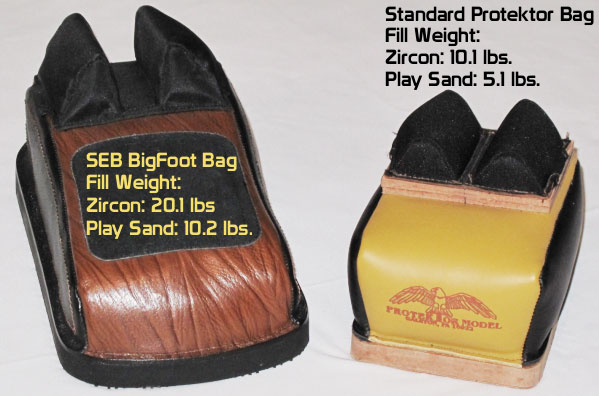
Over the years, noted gunsmith and a Benchrest Hall-of-Fame inductee Thomas ‘Speedy’ Gonzalez has learned a few things about “tuning” rear sandbags for best performance. On his Facebook page, Speedy recently discussed how sand bag fill levels (hard vs. soft) can affect accuracy. Speedy says you don’t want to have both your front and rear sandbags filled up ultra-hard. One or the other bag needs to have some “give” to provide a shock-absorbing function (and prevent stock jump). And you want to tune your fill arrangements to match your shooting style. Free recoil shooters may need a different fill levels than bag squeezers (who a softer bag but harder ears).
SAND BAGS & HOW TO FILL THEMby Speedy Gonzalez
I was asked several times by competitors at the S.O.A. Matches and F-Class Nationals as to how I fill my sand bags for benchrest competition. Here is a copy of a reply I gave several years ago:
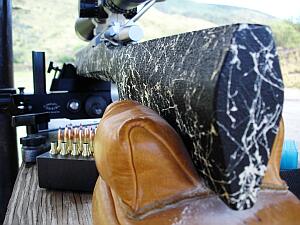
Back in the old days, Pat McMillan told me: “You can not have two bags filled so hard that you gun bounces on them in the process of firing round at your target, especially if you have a rig with a very flexible stock. The bags must be set up in a manner for them to absorb the initial shock of the firing pin moving forward and igniting the primer.
Then [they must] maintain their shape and absorb the second shock wave as well the rearward thrust and torque of the rifle. What happens to the rifle when this is not done? Well let me tell you. The rifles have a very bad tendency to jump and roll in the bags. This causes many of those wild, lost shots that one can’t explain.”
Here’s some Good General Advice for Bag Set-up:
1. You should not have TWO hard bags [i.e. both front AND rear] in your set-up.
2. Heavy sand magnifies these phenomena.
3. If you are a bag squeezer, pack ears hard and leave bag pliable enough to squeeze for the movement required. You may pack front bag as hard as rules permit.
4. Free recoil shooters pack both bags firm, but not so hard as to allow stock jump. Especially if you have a stock with a very flexible forearm.
5. We use play-ground sand, also know as silica sand. I sift mine to get any large impurities out then mix it with 25% to 50% with Harts parakeet gravel to the desired hardness that I am looking for. The bird gravel keeps the sand from packing itself into that solid as a brick state.
Speaking of bricks — another thing that happens when shooters employ that heavy zircon sand is the ears form a low spot under them from recoil and then tend to rock back and forth with the rifle causing many low shots to crop up. Edgewood makes an Edgewood/Speedy rear bag specially reinforced under the ears to eliminate this scenario.
General Thoughts about Bag Construction and Ear Materials
I do not like the solid double-stitched leather bottoms. While this seems like a good idea, I see more shooters have problems because of them. They tend to slide around the bench and or slide with the rifle on recoil. The standard Protektor with Cordura rabbit ears and an Otto ring bag with a Cordura front would be what I would suggest to the new shooter or one of the Edgewood / Speedy rear bags, these mimic the “Donut” and feature a ring of leather around the bottom circumference that keep the bottom from rocking on the bench or ground[.]
One last note –If you use the Cordura bags, keep them sprayed with a good silicon spray or “Rain-Ex”. This keeps them from getting sticky. — Speedy


 This week’s edition of Shooting USA, which airs Wednesday, February 12, features the NRA Bianchi Cup. This competition is one of the most prestigious and popular events in the world of handgun shooting. Officially, the annual competition in Columbia, Missouri is known as the National Championship of NRA Action Pistol. But to everybody, world-wide, it’s the Bianchi Cup, the trophy named for one of the founders, John Bianchi. In the past 30 years the match has become the richest handgun tournament in the world, with cash and prizes for the best scores on four stages of fire. Shooting USA will spotlight top male and female Bianchi Cup competitors in both wheelgun and and semi-auto pistol divisions. Along with North American shooters, the Bianchi Cup draws top handgun competitors from around the globe. Shooting USA airs Wednesday nights, on the Outdoor Channel, at 9:00 pm Eastern and Pacific, and 10:00 pm Central.


 In these two videos from the
 In the F-TR Division, Peter Johns had a dominant performance with 1242-58X, twelve points ahead of second-place Wade Fillingame (1230-50X) and third-place Ian Klemm (1230-46X). Ian also shot on the winning USA Independence F-TR Team.


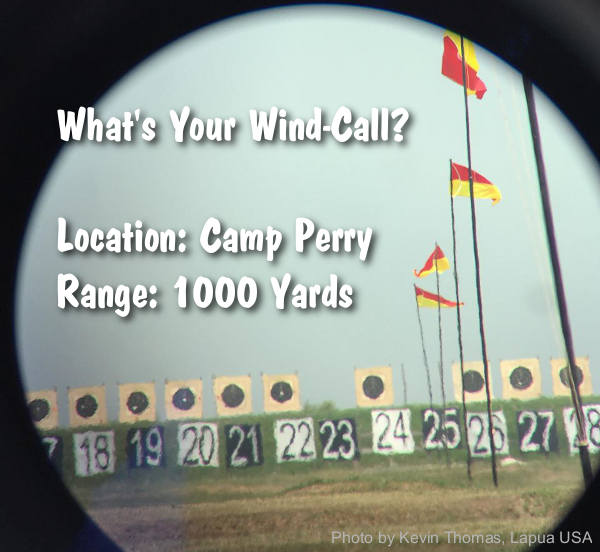

 As a separate product, Owens offers a


 Train Wrecks (and How to Avoid Them)


 4. Wind Issues. Tricky winds derail many trains. A lot can be written about wind strategies, but here’s a simple tip about how to take the edge off a worse case scenario. You don’t have to start blazing away on the command of “Commence fire”. If the wind is blowing like a bastard when your time starts, just wait! You’re allotted 30 minutes to fire your string in long range slow fire. With average pit service, it might take you 10 minutes if you hustle, less in F-Class. Point being, you have about three times longer than you need. So let everyone else shoot through the storm and look for a window (or windows) of time which are not so adverse. Of course this is a risk, conditions might get worse if you wait. This is where judgment comes in. Just know you have options for managing time and keep an eye on the clock. Saving rounds in a slow fire match is a costly and embarrassing train wreck.


 Back in the old days, Pat McMillan told me: “You can not have two bags filled so hard that you gun bounces on them in the process of firing round at your target, especially if you have a rig with a very flexible stock. The bags must be set up in a manner for them to absorb the initial shock of the firing pin moving forward and igniting the primer.


