The Civilian Marksmanship Program (CMP) Oklahoma Games are happening this weekend at the Oklahoma City Gun Club. Events started on October 7th and run through Sunday the 13th with the final event — the popular Vintage Sniper Team Match. If you’re anywhere near OK City you might want to check out the action. There are Vintage Military Matches today, along with Rimfire Sporter competition and EIC pistol matches. The CMP’s Oklahoma Games are not just for seasoned competitors. There will be a Small Arms Firing School plus a New Shooter Clinic for those who have never fired in a CMP Games match.
Previously held in April, the CMP Oklahoma Games will feature the popular M1 Garand, M1 Carbine, Springfield, Vintage/Modern Military, Rimfire Sporter, and Vintage Sniper Rifle matches. Pistol matches, such as the As-Issued 1911, Military & Police Service Pistol and .22 Rimfire Pistol will also be held throughout the week. The CMP Cup Matches will again be held at this Travel Games event. This include two days of invididual competition, followed by a 4-Man Team Match, and EIC Service Rifle Match.
Electronic Targets Allow Faster Relays and No Pit Duty!
High Power competitions will be fired on CMP Targets, an electronic target system that plots shot placement in real time, and eliminates the need for pit duty — allowing quicker matches with less physical labor. Shot locations/scores appear on remote monitors placed at each shooting location.
Along with competitive matches, a rifle Small Arms Firing School (SAFS) was held. Both beginning and experienced marksmen were trained in the classroom and on the firing line, with the help of CMP staff and certified instructors. SAFS attendees learned rifle handling, shot technique and safety, followed by firing in an actual M16 EIC match.
VINTAGE SNIPER MATCH — Sunday October 13th
The last event of the 2019 Oklahoma Games is the Vintage Sniper Team Match. Competitors must use Korean War or earlier, as-issued military sniper rifles or replicas of those rifles. Optics must also be original issue or replica scopes from the same period. The CMP Games Rules lists the approved rifles and optics.
The course of fire is designed to reproduce the conditions under which skilled long-range military riflemen operated. Two riflemen work together as a team. During the match, each team member functions alternately as a shooter or a spotter. After one team member finishes firing, they switch roles and the other team member fires. Firing is done at distances of 300 and 600 yards from the prone position. Shooters may use either a sling or sand bag support, but not both. Wind doping is critical and firing must be done quickly; targets are exposed for each shot for only 20 seconds and then withdrawn for 20 seconds.
About the CMP Travel Games
The CMP Travel Games are regional competitions held in different corners of the country throughout the year, featuring exclusive CMP rifle and pistol outdoor events. A common part of the CMP schedule for the last decade, the Games are centered around recreation-oriented competition and educational activities that are designed to accommodate experienced marksmen as well as those just beginning the sport.
During shooting season, there are probably 400 or more club “fun matches” conducted around the country. One of the good things about these club shoots is that you don’t have to spend a fortune on equipment to have fun. But we’ve seen that many club shooters handicap themselves with a few common equipment oversights or lack of attention to detail while reloading. Here are SIX TIPS that can help you avoid these common mistakes, and build more accurate ammo for your club matches.
1. Align Front Rest and Rear Bags. We see many shooters whose rear bag is angled left or right relative to the bore axis. This can happen when you rush your set-up. But even if you set the gun up carefully, the rear bag can twist due to recoil or the way your arm contacts the bag. After every shot, make sure your rear bag is aligned properly (this is especially important for bag squeezers who may actually pull the bag out of alignment as they squeeze).
Forum member ArtB adds: “To align my front rest and rear bag with the target, I use an old golf club shaft. I run it from my front rest stop through a line that crosses over my speed screw and into the slot between the two ears. I stand behind that set-up and make sure I see a straight line pointing at the target. I also tape a spot on the golf shaft that indicates how far the back end of the rear bag should be placed from the front rest stop. If you don’t have a golf shaft, use a wood dowel.
2. Avoid Contact Interference. We see three common kinds of contact or mechanical interference that can really hurt accuracy. First, if your stock has front and/or rear sling swivels make sure these do NOT contact the front or rear bags at any point of the gun’s travel. When a sling swivel digs into the front bag that can cause a shot to pop high or low. To avoid this, reposition the rifle so the swivels don’t contact the bags or simply remove the swivels before your match. Second, watch out for the rear of the stock grip area. Make sure this is not resting on the bag as you fire and that it can’t come back to contact the bag during recoil. That lip or edge at the bottom of the grip can cause problems when it contacts the rear bag. Third, watch out for the stud or arm on the front rest that limits forward stock travel. With some rests this is high enough that it can actually contact the barrel. We encountered one shooter recently who was complaining about “vertical flyers” during his match. It turns out his barrel was actually hitting the front stop! With most front rests you can either lower the stop or twist the arm to the left or right so it won’t contact the barrel.
3. Weigh Your Charges — Every One. This may sound obvious, but many folks still rely on a powder measure. Yes we know that most short-range BR shooters throw their charges without weighing, but if you’re going to pre-load for a club match there is no reason NOT to weigh your charges. You may be surprised at how inconsistent your powder measure actually is. One of our testers was recently throwing H4198 charges from a Harrell’s measure for his 30BR. Each charge was then weighed twice with a Denver Instrument lab scale. Our tester found that thrown charges varied by up to 0.7 grains! And that’s with a premium measure.
4. Measure Your Loaded Ammo — After Bullet Seating. Even if you’ve checked your brass and bullets prior to assembling your ammo, we recommend that you weigh your loaded rounds and measure them from base of case to bullet ogive using a comparator. If you find a round that is “way off” in weight or more than .005″ off your intended base to ogive length, set it aside and use that round for a fouler. (Note: if the weight is off by more than 6 or 7 grains you may want to disassemble the round and check your powder charge.) With premium, pre-sorted bullets, we’ve found that we can keep 95% of loaded rounds within a range of .002″, measuring from base (of case) to ogive. Now, with some lots of bullets, you just can’t keep things within .002″, but you should still measure each loaded match round to ensure you don’t have some cases that are way too short or way too long.
5. Check Your Fasteners. Before a match you need to double-check your scope rings or iron sight mounts to ensure everything is tight. Likewise, you should check the tension on the screws/bolts that hold the action in place. Even on a low-recoiling rimfire rifle, action screws or scope rings can come loose during normal firing.
6. Make a Checklist and Pack the Night Before. Ever drive 50 miles to a match then discover you have the wrong ammo or that you forgot your bolt? Well, mistakes like that happen to the best of us. You can avoid these oversights (and reduce stress at matches) by making a checklist of all the stuff you need. Organize your firearms, range kit, ammo box, and shooting accessories the night before the match. And, like a good Boy Scout, “be prepared”. Bring a jacket and hat if it might be cold. If you have windflags, bring them (even if you’re not sure the rules allow them). Bring spare batteries, and it’s wise to bring a spare rifle and ammo for it. If you have just one gun, a simple mechanical breakdown (such as a broken firing pin) can ruin your whole weekend.
This could be big news for F-TR and Palma competition, where cartridge options are limited to .223 Rem and .308 Win. Berger is introducing a NEW, very high-BC, 22-caliber Long Range Hybrid Target Bullet. Stated Ballistic Coefficents (BCs) are: 0.524 G1 and 0.268 G7. That’s near the top among .22-cal bullets and makes this 85.5 grain projectile a very viable long-range option. Want to try some? These should be available very soon. Pre-order now from Creedmoor Sports, MidwayUSA, and other vendors.
This new 85.5gr bullets boast smaller, more uniform meplats, giving them a higher long-range BC. The meplat enhancement is achieved with “Meplat Reduction Technology” (MRT). Berger Engineer Garett Stoddard, who spearheaded the MRT project, explains: “Every bullet nose is formed with optimal swage pressure determined by force instead of length. In addition to reducing a projectile’s drag by shrinking its meplat diameter, this technique takes the inherent meplat inconsistencies that plague OTM style projectiles and brings them closer to the rotational axis. This is a key factor to the consistent balance of the bullet in flight.” The new 85.5s, like all other Berger projectiles, are made with precise Berger/J-4 bullet jackets which boast +/- .0003″ jacket TIR (total indicated runout).
7-Twist Barrels Recommend for new 85.5gr MRT Berger
The 85.5gr Long Range Hybrid Target Bullet’s G7 BC of .268 is achieved with optimal stability from a 1:7″-twist barrel. Berger says “Excellent accuracy may also be attained with 1:8″-twist rifle barrels, resulting in a slightly decreased BC value”.
Initial Test Results Are Very Positive
A third party tester, shooting the new 85.5-grainer in Arizona, reported excellent performance at 1000 yards: “The projectile performed extremely well at 1000 yard in spite of only being driven to ~2800 to 2850 fps. This projectile is clearly competitive at 1000 yards in a Palma rifle as tested. With a slightly longer throat and a faster-twist barrel, I am confident the 85.5 Hybrid would be a viable option for those looking to shoot .223 Rem in Long Range competitions.”
Meplat Reduction Technology Enhances Shot-to-Shot Consistency
Berger says: “Utilizing advanced and proprietary manufacturing processes, Berger’s innovative Meplat Reduction Technology (MRT) System applies controlled pressure along the projectile nose, producing a homogeneous and repeatable bullet profile for the industry’s most consistent Ballistic Coefficients (BC). While a high BC is desirable to competitive shooters, shot-to-shot BC consistency is critical when engaging targets to 1000 yards and beyond.”
MasterPiece Arms (MPA) has a new chassis system — the “MPA Matrix”. Derived from the MPA BA Chassis, the MPA Matrix Chassis offers a “multitude of configurations in grips, thumb rests, and trigger finger supports”. MPA claims the grip and hand area has over 100 different variations. The MPA Matrix has a fore-end two inches longer than the standard BA or BA Competition Chassis. Overall, the Matrix is fairly heavy, at 6.4 pounds, and pretty expensive, with a $1250-$1450 MSRP (depending on options). By contrast the MPA BA Hybrid Chassis costs $925.00 and weighs 3.5 pounds (without recoil pad).
CLICK Image for large MPA Matrix Photo:
There are significant design differences between the MPA Matrix and MPA BA Hybrid (below). The Matrix, at 6.4 pounds, is also much heavier than the 3.5-lb BA Hybrid. Given that many PRS/NRL competitors favor heavier rifles for greater stability (and less felt recoil), the Matrix’s extra mass is probably a good thing.
The MPA Matrix features five different grip options (3 swept and 2 vertical), three different thumb-rest designs and four different trigger finger supports. That’s great for shooters who like to keep their thumb forward on the bolt side of the action. However, looking at the chassis, we’re really not sure we like the way the Matrix encircles the grip area. You’ve got hard metal behind the grip. The Matrix appears set up for resting the thumb of the trigger hand alongside the action. That can work for sure, but we think some shooters will prefer a more conventional vertical grip you can wrap your thumb around. A conventional grip will also have recoil cushioning for the web of the hand. See the BA Hybrid chassis for comparison. This Matrix is really VERY different in the grip area. But if you don’t like the Matrix, there are certainly other stock options available.
The new Matrix Chassis is designed for Remington Short Actions and Rem clones. The Matrix does offer good adjustability — the buttstock has an adjustable cheek riser and length of pull adjusts from 13.5 to 14.75 inches. Plus, the recoil pad adjusts for height and cant. You can get either an adjustable rear monopod or a bag-rider configuration. As you’d expect, the MPA Matrix has M-LOK slots along the fore-end sides and barricade stop holes along the bottom.
What was the concept behind the Matrix chassis? MPA’s President, Phil Cashin, states: “One of the things that we have seen in precision rifle shooting over the past couple of years is how many different methods a shooter used to engage a stock or chassis. Due to variations in hand size, finger thickness and length, as well as shooter preference on how they want to engage the chassis or stock, we’ve seen a lot of inconsistencies among the shooters in how they engage the rifle and where they position the pad of the trigger finger with the shoe of the trigger. This inspired us to create a system that would provide a more custom fit procedure for our customers by creating a chassis with more customized configurations.”
The MPA Matrix Chassis (MSRP $1250-$1450) is available in eight Cerakote colors: Graphite Black, Flat Dark Earth, Burnt Bronze, Tungsten, Gunmetal, Sniper Green, NRA Blue, and USMC Red. Custom H Series Cerakote colors are an additional $135, while camo patterns are $450 extra.
Over 100 Top Shooters Competed at the 2019 IBS 1000-Yard Nationals.
Match Report by Blake Wilson, IBS Match Editor
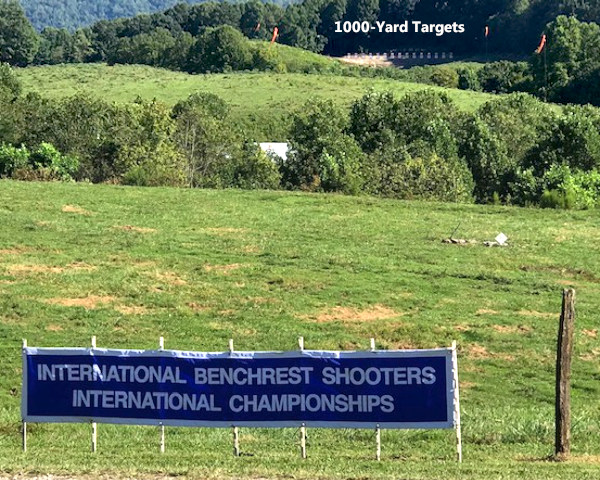
The International Benchrest Shooters (IBS) 1000-Yard Nationals were, once again, a success. The Hawk’s Ridge Gun Club in Ferguson, North Carolina, hosted a flawless event over Labor Day Weekend. Over 100 of the nation’s top shooters, from 19 states, gathered to compete for the crown of “National Champion”. Events such as this take an army to make work and the 2019 IBS Nationals were no different. But the event was a big success, despite some challenging conditions on Day One. We congratulate Glenn Hiett, who shot superbly to win BOTH the Two-Gun Overall AND Light Gun Overall 2019 Championships. Well done Glenn! We also recognize IBS Heavy Gun Overall Champion Sam Edwards.
Ideal Conditions Change Quickly on Saturday
Hawk’s Ridge is a very beautiful range. But “The Ridge” can sometimes have very tricky, unfriendly winds. Labor Day weekend 2019 was no different. Conditions started near perfect early Saturday morning — the day began with mild temps and wind flags hanging low. Things then changed for the worse. The great conditions only lasted a handful of relays as winds became unpredictable, showing the competitors how tough Hawk’s Ridge can be. Tiny groups and high scores quickly become scarce and shooters began to feel the effects of switching, hard-to-read winds.
2019 IBS 1000-Yard National Championships Top Competitors
Two-Gun Overall Champion: Glenn Hiett
Light Gun Overall Champion: Glenn Hiett
Heavy Gun Overall Champion: Sam Edwards
Highest-Placing Female: Donna Matthews
Junior Champion: Hunter Hall
Light Gun Group Winner: Scotty Powell
Light Gun Score Winner: Robert Banner
Heavy Gun Group Winner: Sam Edwards
Heavy Gun Score Winner: Tod Soeby
1000-Yard Nationals Course of Fire
IBS 1000-Yard Nationals is a 6-target Aggregate event over a two-day period for Light Gun and Heavy Gun. Light Guns must not exceed 17 lbs. weight and shoot 5 rounds per target. Heavy Guns have no weight limit and shoot 10 rounds per target. At the Nationals each shooter gets three Light Gun targets and three Heavy Gun targets. The results are aggregated together to determine Two-Gun Overall, Light Gun Overall, Heavy Gun Overall. There are also separate awards for Light Gun Group and Score and Heavy Gun Group and Score.
Day 1 included a Light Gun target, Heavy Gun target and ended with a second Light Gun target. After two Light Gun targets, several shooters were feeling great about their chances — Robert Banner, Brian Buttrick, and Dan Pantinski all had 99 scores, just one from perfect. Jerry Powers had the best Day 1 Light Gun Agg, a 3.472″ average (0.33 MOA). Justin Morrow shot the smallest Light Gun Group — 2.604″. That works out to a very impressive 0.249 MOA at 1000 Yards!
Donna Matthews shot this excellent 50-2X, 3.257″ LG target on Saturday.
Participants Rewarded with Famous Hawk’s Ridge BBQ
As Saturday came to an end, the smell of chicken had taken over the range. Range owner Mike McNeil is known for his famous secret sauce BBQ chicken. From the comments of the crowd as they sunk their teeth into chicken, potato salad, fresh baked desserts — they had no complaints whatsoever. Bellies full, guns cleaned, everyone headed to their rooms for some much anticipated rest.
More Readable and Consistent Conditions on Day 2
Feeling refreshed and excited for the challenge and anticipation for the final day, shooters showed up raving about the BBQ chicken and ready to shoot. For the most part, Day 2 was much more forgiving and calm than Day 1. The format was the opposite of Saturday — Heavy Gun relays were conducted first and last with Light Gun in the middle.
Perfect scores, small groups and everything in between was shot. Shooters made adjustments and for the most part they worked. But some made the wrong choices and the price was paid.
IBS 1000-Yard Nationals Equipment List (CLICK to Zoom): CLICK PHOTO to view LARGE Equipment List.
Editor’s Comment: Looking at the Two-Gun Top 20 Equipment List above, we see the Light Gun Ranks were dominated by 6mm Dashers, and 6 BRAs (BR Ackleys), most using Hodgdon H4895 powder. There were quite a few 300 WSMs among the top Heavy Guns. Krieger, with 10 selections, was the most popular barrel choice, followed by Bartlein (4), and Brux (3).
More than Marksmanship — Competitors Appreciate the Camaraderie
These events are always a pleasure to attend. You get to put faces with the names you’ve heard, compete against the best across the country, and see how you stack up to them. It’s fun to shake hands with the likes of Tom Jacobs (Vapor Trail Bullets past National Champion), Bart Sauter (Bart’s Bullets and current holder of 600-yard records), Mike Wilson (Current Light Gun Group and score record holder), the Hornady Team and many more.
This wonderful sport has no shortage of great men and women from many different states and cultures. Match director David Matthews, as well as Robert Smithey and the entire Hawk’s Ridge Gun Club staff, definitely showed how to put on a nearly flawless event. We cannot forget Kent Bratten for his tireless efforts in finding prize donations for the match. The IBS gives a special thanks to all our great sponsors who make the prize tables so abundant. Thanks for your generosity!
Chris Nichols with potential world record (1.297″ 4-Target Agg) Heavy Gun Targets!
Report by Bart Sauter, Bart’s Custom Bullets
Chris Nichols is one of the best 600-yard shooters in the game. This 2019 season he compiled one of the most impressive mid-range benchrest seasons ever. Check out the stats — Chris’s nine-match, Two-Gun Group Aggregate (Agg) for the year is 1.983″! That’s under two inches average at 600 for 72 record targets fired in competition. Many 600-yard shooters aspire to shoot a single, 4-target Agg that measures 1.983″, but doing that for 72 targets is amazing!
And of the nine matches Chris shot, he took SIX Overall Two-Gun wins — a 67% win ratio. And in the process Chris also shot what is possibly the smallest 4-target Heavy Gun Agg ever recorded — 1.297 inches. Hey readers — that Agg works out to 0.206 MOA average group size — well under quarter-MOA for four, 5-shot groups at 0.34 MILES (600 yards)!
Chris with 0.665″ group at 600 yards. This is the smallest HG group fired in the IBS in 2019.
The Equipment: 6mm Dasher Light Gun and Heavy Gun
Chris likes to run 1.550 stainless steel Bat “B” actions, Jewell triggers, Brux or Bartlein barrels. He prefers wooden stocks as he feels they produce a better resonance for Long Range rifles. Chris has his own stock design crafted by Johnny Byers. Imagine a Wheeler LRB stock front half mated with an McMillan ST 1000 rear section and you have Chris’ stock! It features a Wheeler-type, 4″-wide fore-end with an ST 1000 low-comb profile in the back. Both Light Gun and Heavy Gun sport Vortex 15-60x52mm Golden Eagle scopes mounted with Harrell’s double screw tall rings. Chris does NOT use either muzzle brake or tuner.
Here is Chris at his home range with his Light Gun (17 lbs. max).
Chris Nichols’s Heavy Gun is a true heavy coming in at around 42 pounds. It was responsible for the HG Agg of 1.297″ (potential new world record). His season-long aggregate with his Heavy Gun was 1.861″ for 36 targets! This rifle has similar components as his Light Gun, except the barreled action rides in a barrel block in a McMillan HBR 50 BMG stock.
Both rifles ride a top of a Sinclair competition rest with a Protector DR Flat Top rear bag. When Chris goes to HG gun he simply switches tops (made by Daniel Greenlaw) on his front rest to accommodate the larger forend. As Chris says ,” This keeps things simple and exactly the same. ” Just the way he likes it.
Reloading for the 6mm Dasher
Chris’s load choice for both LG and HG is Hodgdon Varget pushing 105gr Berger VLDs. He uses CCI 450 primers, seated with an old Lee hand primer. When it comes to reloading, Chris likes to keep things as simple as possible. “If people saw me reloading they’d probably laugh!” Chris revealed that he doesn’t anneal or clean his cases. He just sprays them down with Hornady One Shot Case Lube, resizes, then runs a brush down the necks, and cleans the primer pockets. The only cleaning his cases get is when he wipes the lube off of them. Chris WILL trim and chamfer as needed.
Chris says seating consistency is critical — he uses a K&M Arbor press with force dial indicator. I asked if there were certain numbers he looks for when seating. Chris replied, “I’m only concerned with consistency and not a certain number, 5 pounds or 60 pounds. It doesn’t matter as long as they are the same. I take what the brass gives me.”
Tuning the 6mm Dasher for Record-Setting Accuracy
I asked Chris what was special about his Dasher and how he kept it tuned and so competitive? His reply is something all shooters should pay careful attention to: “[Success] starts with having a good reamer, bullets and barrels. But more than that, it’s KNOWING your Cartridge, KNOWING your bullets, and KNOWING your barrels! I’ve shot it so much I just know what to do. I’m comfortable with it. I know how to get it to shoot and when it’s not, I have a pretty good idea how to get it back in tune. Once you know your equipment, then you can learn how to get the most out of it.”
Chris has a range at his house and he tunes at 300 yards. He looks for consistent, 300-yard 5-shot groups of 0.600″ or less! He wants to see nice round groups! Not groups with four in and one out or vertical strings. Chris starts by finding “touch” (to the lands) then he moves the bullets .002″ off the lands and begins tuning. Chris has found that usually somewhere around .008-.012″ off the lands is where his Berger 105gr VLDs shot best. I asked Chris what’s the biggest factor contributing to his success? He said, one big thing was that he can do his own work. That’s a huge advantage.
Look for Accuracy First, Velocity Second
Early on Chris had it in his mind that for a 6mm Dasher to shoot best he needed to achieve a certain velocity range — 2990 to 3030 FPS. The problem was he wasn’t paying attention to what the target was telling him. He’d get to the speed he was looking for but the accuracy wasn’t there. Once he started slowing the speeds down and giving the barrel what it wanted, then the accuracy came! Also with the slower speeds came better consistency.
Chris Nichols’s Tuning Tips for 6mm Dasher:
• Take consistency over speed.
• Only change one thing at a time and run it to the ground.
• Every barrel is a little different, so give it what it wants.
• Pay attention to what your target is telling you.
• Don’t be afraid to REDUCE your powder load.
Chris Nichols’s Advice for New Shooters
Chris says the best thing a new shooter can do is align themselves with knowledgeable people, and if they will talk, listen! Next, be ready to buy the best equipment or be ready to buy it twice. Chris also says: “Don’t cheap-out on sighters. Sighters need to be just as good as your record rounds.”
In the Beginning — Learning the 600-yard Benchrest Game
Chris’s shooting career began in 2012. His first win came in 2014. He was shooting beside guys like Sam Hall, Larry Isenhour, Mike Hanes, Jeff Godfrey James Coffey, and Chad Jenkins, who are very tough competition indeed. He said when he won he was ecstatic and he’ll never forget it! That first trophy had him feeling like he’d just won the Nationals! Chris shot a 6BR for the first two years of his career, before switching to the 6 Dasher. I asked him why he switched? He said, “guys were starting to shoot the Dasher and winning with it!”
I asked Chris if he had a mentor and he said, “not really”. He learned by watching the guys who consistently finished Top 5 at matches and occasionally asked them a question. Not two questions, just one! Chris didn’t want to push his luck by asking too much. Then Chris would take that information and test it and apply it to his own shooting. Chris says, “he learned mainly by the ‘school of hard-knocks’. The good thing about learning that way is it sticks with you!”
Chris Nichols 2019 600-Yard Win List and Statistics
Yesterday at the 2019 GAP Grind PRS match in Tennesee, Savage Arms unveiled three new Precision Series rifles — one centerfire rig, and two rimfire rifles. Aimed at PRS/NRL factory class shooters, these new rifles feature tweaked Savage actions in Modular Driven Technologies (MDT) chassis systems. The new Precision Series includes one centerfire rifle, the model 110 Elite Precision, and two rimfire rifles: the B Series bolt action, and the A22 Series semi-auto. All three new models utilize MDT chassis systems.
New Savage 110 Elite Precision
The new 110 Elite Precision is designed for PRS and NRL tactical-style competitions. Optimized for PRS/NRL Factory Class, this rifle boasts a blue-printed, black flash-nitrided 110 target action with gold-tone, titanium-nitrided bolt body. The fully-adjustable MDT ACC aluminum chassis features an ARCA Rail along its entire fore-arm, MDT Vertical Grip, and AICS mag compatibility. The Accu-Trigger adjusts from 1.5 to 4 pounds. Up front, Savage supplies a self-timing, taper-aligned muzzle brake. The 110 Elite Precision will be offered in eight (8) chamberings at two prices: .223 Rem., .308 Win., 6.5 and 6mm Creedmoor for $1,999; and .300 Win. Magnum, .300 Norma, .300 PRC, and .338 Lapua Magnum at $2,149.
Savage Elite 110 Precision Rifle Features:
Savage factory blue-printed 110 action
Stainless steel, flash-nitrided receiver
1.5-4 lb. user-adjustable AccuTrigger
Titanium Nitride bolt body
MDT ACC aluminum chassis, fully adjustable
Self-timing, taper-aligned muzzlebrake
MDT Vertical Grip and AICS magazine
ARCA Rail along entire fore-arm
Savage A22 Precision
The A22 Precision rimfire rifle employs Savage’s popular A22 delayed blow-back semi-auto action. Optimized for the NRL22 rimfire series and rimfire cross-training, this little self-loader features a custom MDT chassis similar to the B Series, adjustable length-of-pull from 13.5 to 14.5 inches, and an oversized charging handle. The A22 Precision weights 7.28 pounds. The company describes it as “the showcase to Savage’s love affair with the .22 LR.” The A22 is available in .22 LR for $599.
Savage B Series Precision
The new B Series bolt-action Precision rimfire rifle features an MDT aluminum chassis that adjusts for length-of-pull and comb height. The rifle ships with an 18-inch heavy barrel threaded at the muzzle, with a Picatinny rail on the action. This modestly-priced bolt-action rimfire also has a crisp Accutrigger. The B Series Precision comes in three rimfire chamberings, all for $599: .22 LR, .17 HMR and .22 WMR.
Doug Koenig’s Championship Season returns to Pursuit Channel celebrating its 9th season. The latest show features long range precision rifle competition. Doug travels to the 2019 Masterpiece Arms (MPA) Spring Shootout in Georgia, campaigning his 6mm Creedmoor bolt-action Ruger Precision Rifle. Doug has been a top competitor in Production Division (factory class), having posted multiple first-place Factory Class finishes in recent months.
Each week, Doug Koenig’s Championship Season airs on the Pursuit Channel three times: Wednesday at 5:30 pm (EST), Friday at 9:00 pm (Eastern Primetime), and Saturday at 1:00 am (EST). View past seasons and previously-aired episodes at PursuitTV.com. You can also see previews and get competition news on Doug Koenig’s Facebook Page.
Koenig said, “I’m relatively new to long range precision rifle competitions, but it’s the combination of shooting from fixed or uneven barricades, to the variety of shooting positions and distances that has captured my excitement for this sport.”
Koenig secured a Production Division win at the 2019 MPA Spring Shootout held at the Arena Training Facility in Blakely, GA with a final score of 173.00 and a time of 58.89. “The MPA match had some long shots out to 800-1356 yards, but my factory rifle got the job done and helped me win my third production class title in a row. That proves you don’t need to spend a fortune to get started in PRS competition.”
Precision Rifle matches offer a variety of challenges not found in benchrest or High Power matches. Over the course of multiple stages, competitors must shoot a wide variety of positions, standing, prone, and from barricade, while the clock is ticking. Some PRS/NRL matches even have moving targets. These matches test shooting fundamentals, while demanding good wind reading skills, and the ability to shoot at multiple distances in a stage. That demands good “dope” and the ability to hold-over and hold-off.
Koening Goes Hunting for Argentine Stag
Doug Koenig is also an avid hunter. In this Championship Season episode from 2016, Doug takes viewers into the field on an Argentine Stage Hunt. There is also some shotgun shooting footage:
Michelle Gallagher is one of the nation’s top rifle shooters and team coaches. A past Long Range National Champion, Michelle is part of America’s “First Family” of Shooting, being raised by Mid Tompkins and Nancy Tompkins, both rifle champions in their own right.
Michelle, who works for Sierra Bullets, was at the 2019 F-Class National Championships in Raton, New Mexico. At the event, Michelle captured some great photos of the competitors and the New Mexico countryside at the NRA Whittington Center. This year’s Nationals were very challenging competition, with truly brutal winds on some days. Here is Michelle’s Photo Essay on the 2019 F-Class Nationals.
Father Ken Klemm and Son Ian Klemm shot together in F-TR Team Matches. Individually, Ian was second overall in the 1K F-TR Nationals, while Ken finished as High Grand Senior.
Three talented lady shooters: Michelle Gallagher (L), Nancy Tompkins, and Madison Bramley.
The National Rifle League (NRL) started off sponsoring major centerfire tactical matches, similar to PRS competitions. That proved successful and the NRL added a .22 LR Rimfire series, called NRL22. The NRL22 rimfire discipline has been a success, as rimfire guns are fun to shoot and ammo is very affordable. The most popular NRL22 matches have drawn up to 150 rimfire competitors. Get more info at NRL22.org.
NRL22 is a great way to get into competition shooting with minimal expense. There are Five (5) classes: Open, Base, Ladies, Young Guns (8-16), and Air Rifle. Base Class is for the budget-minded shooter — the combined MSRP of Rifle and Optic may not exceed $1050.00 (so you could spend $550 on a rifle and $500 on a scope for example). That keeps the sport affordable. Open, Youth, and Ladies Classes have no price limits on Rifle and Optic. Visit NRL22.org to find an NRL22 match near you.
The two videos above from Long Range Shooters of Utah feature footage from the January 2019 course of fire from the NRL22 Rimfire Competition Series. Note the snow-capped hills in the lower video. Useful commentary explains how competitors establish their shooting positions.
NRL22 Publishes Monthly Courses of Fire
This video from a Utah NRL22 Match features shooters from each of the four rimfire classes. With the NRL22 program, scores from from local matches like this are ranked against scores from other matches nationwide. In advance of match dates, NRL22.org publishes 5 courses of fire to be used in that month. Each course of fire will always include 2 prone stages, 1 positional, 1 barricade, and a fifth that can be any of those. Details of the course of fire, including target distances, target sizes, time limits, and barricade profiles, are listed at NRL22.org.
Official NRL22 Rimfire Steel Target Package
This video reviews the official NRL22 Rimfire Steel Target Kit. Crafted by JC Steel Targets from AR500 steel, this kit from JC Steel Targets includes 8 hanging targets, 4 KYL (Know Your Limits) targets, plus all needed Hangers. That’s lot of steel and hardware for $329.99.
About NRL22 Tactical/Practical Competition The goal of NRL 22 is to make Precision Rifle competitions more available to every community. However, nearly all localities have access to 100-yard ranges and most shooters own a .22 LR rifle. The NRL22 program is designed so any facility with a 100-yard range can host matches. Participants at local NRL22 events can then attend a National Championship. NRL22 started with four classifications: Open, Base, Ladies, and Young Guns (8-18 age). Air Rifle is the new fifth class. For the 2018/2019 Competition Season, over 700 shooters attended NRL22 matches. In the 2019/2020 Competition Season, the NRL22 expects significant growth and is excited to welcome new members and clubs.


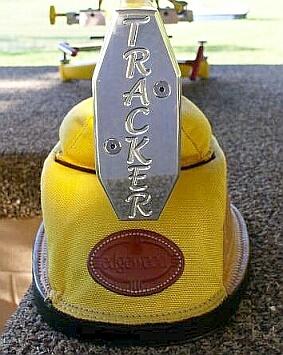 1. Align Front Rest and Rear Bags. We see many shooters whose rear bag is angled left or right relative to the bore axis. This can happen when you rush your set-up. But even if you set the gun up carefully, the rear bag can twist due to recoil or the way your arm contacts the bag. After every shot, make sure your rear bag is aligned properly (this is especially important for bag squeezers who may actually pull the bag out of alignment as they squeeze).
 3. Weigh Your Charges — Every One. This may sound obvious, but many folks still rely on a powder measure. Yes we know that most short-range BR shooters throw their charges without weighing, but if you’re going to pre-load for a club match there is no reason NOT to weigh your charges. You may be surprised at how inconsistent your powder measure actually is. One of our testers was recently throwing H4198 charges from a Harrell’s measure for his 30BR. Each charge was then weighed twice with a Denver Instrument lab scale. Our tester found that thrown charges varied by up to 0.7 grains! And that’s with a premium measure.
 5. Check Your Fasteners. Before a match you need to double-check your scope rings or iron sight mounts to ensure everything is tight. Likewise, you should check the tension on the screws/bolts that hold the action in place. Even on a low-recoiling rimfire rifle, action screws or scope rings can come loose during normal firing.



 1000-Yard Nationals Course of Fire


 The goal of NRL 22 is to make Precision Rifle competitions more available to every community. However, nearly all localities have access to 100-yard ranges and most shooters own a .22 LR rifle. The NRL22 program is designed so any facility with a 100-yard range can host matches. Participants at local NRL22 events can then attend a National Championship. NRL22 started with four classifications: Open, Base, Ladies, and Young Guns (8-18 age). Air Rifle is the new fifth class. For the 2018/2019 Competition Season, over 700 shooters attended NRL22 matches. In the 2019/2020 Competition Season, the NRL22 expects significant growth and is excited to welcome new members and clubs.


