As the practical/tactical game has evolved, with low recoil and high accuracy becoming ever more important, many top competitors have moved to smaller cartridges such as the 6mm Dasher and its parent, the 6mmBR Norma. These cartridges deliver outstanding accuracy plus good barrel life. However, the “short, fat” 6BR/Dasher design doesn’t feed optimally in magazines designed for the .308 Win family of cases. Yes you can modify your own magazines (Mag Mod HERE), or buy a pricey conversion kit, but now there is a turn-key solution from MDT (Modular Driven Technologies).
MDT’s 6mm BR magazine fits the parent 6mmBR cartridge and all the popular varients including the 6 BRA, 6 Dasher, and 6 BRX. MDT says this new 12-round magazine is a “one-step solution [delivering] smooth, reliable feeding for the most popular rifle cartridges in precision rifle competitions.”
MDT built this AICS-pattern mag for PRS/NRL competitors and anyone wanting to run 6mmBR-family cartridges in mag-fed actions: “The limiting factor for competitors running 6mm BR variants has been feeding. Until now, the only option has been to purchase an AICS-pattern magazine plus an additional kit to make the magazines work with the shorter cartridges. This solution costs upwards of $100 or more and can require additional tuning to work in most rifles.”
The MDT 6mm BR mag has a maximum internal length of 2.580″, which accommodates pretty much any 6mm bullet you’d want to use. These MDT magazines are crafted from quality steel, nitride-treated, then black Cerakote finished inside and out. To reduce friction between cartridge and magazine body, MDT added two internal ribs which provide a smooth transition from double stack to single-feed.
Magazine Conversion — Use .308 Win Mags with Modified Followers
A decade ago we showed our readers how to modify .308 Win magazines to feed the 6mmBR cartridge efficiently. This procedure, explained by Texas gunsmith, Mike Bryant, is easy to do with simple tools. You can modify most standard magazines, both internal-style and detachable style. CLICK HERE for full, step-by-step magazine conversion article.
The basic procedure involves trimming the rear of the magazine, and creating a rear stop with a block from a Remington .223 magazine. Next the .308 Win magazine follower is shortened and beveled. Some guys tweak the feed lips a bit, but this may not be needed. Many of our readers have performed this simple magazine modification and report their rifles feed quite reliably. One reader, who converted a 7mm-08 hunting rig into a 22 Dasher varmint rifle, tells us his modified mag feeds flawlessly.
We know our readers like accurate rifles — the more accurate the better. You guys also love really great craftsmanship and state-of-the art componentry. To satisfy that lust for amazing, accurate rifles, we’re starting a new feature — Sunday GunDay. We’ll try to do this a couple Sundays a month, provided we have some great candidates. For our first Sunday GunDay feature, we are presenting a stunning .284 Win F-Open match rifle owned by David Christian of Team Borden/Brux/Lapua. This impressive rig is as good as it gets in the F-Open game. The write-up is by David’s friend, Forum member F-Class John.
Tips For Competitors from David Christian
1. Tracking is Really Important. I learned this lesson from Bill Brown. Make sure your rifle is tracking exactly on your bags. If you slide the gun back and forth and it does not line up on your original aim point, something is out of alignment with you rear bag or mat and needs to be adjusted.
2. Wind Calls — Be Brave. Don’t be timid with your wind calls. It is better to err with a slight over-correction, rather than miss a change entirely.
3. More Data is Good. Keep track of as much data as you can so that you can learn from it. For example I shoot as much as I can with my chrono and track my load speeds so that I can tell if I am drifting out of my node.
David Christian’s .284 Win F-Open Rig
Report by F-Class John
Here’s match rifle that’s as handsome as it is effective (and accurate!). In its first-ever tournament, this impressive rig took 8th place overall in F-Open at the 2019 Berger Southwest Nationals. This .284 Win hammer was wielded by David Christian, the newest member of Team Borden/Brux/Lapua. David built this .284 Winchester around a Borden BRMXD action with black PVD coating and a Jewell BR trigger. What I found fascinating is that David had built all of this before ever being approached for the team. When I asked him how that worked out, he simply said he picked the components he liked the best and knew would do the job. It was just the universe in action that he’s now on the team that matches his gear and he’s certainly not complaining that he gets to represent them now.
David uses a custom-contour 32″-long Brux 1:8.5″-twist barrel that tapers from 1.35” to 1.25” because he likes the extra stability and weight it brings. It’s all mounted in an amazingly-crafted Cerus Stock (Speedy Gonzales “Spear of Destiny” design). While Will McCloskey built the stock, it was finished to perfection by Devin Wiggett and mounted by Terry Wright of Right Rifle in Oregon. You might also notice that the buttstock features a R.A.D. recoil system which adds the final touch to the system.
Stunning Laminated Maple/Cherry/Walnut/Wenge Cerus Stock
When asked what people comment on when they see his gun, David says it’s the stock, hands down. Having handled this gun myself, I have to agree and believe me when I say the pictures don’t do it justice. The exterior forearms are torrified Maple while the core is made up of Brazilian Cherry, Walnut, and African Wenge wood. It makes for an ultra-strong stock with stunning beauty to match.
David currently tops this beauty with a Kahles K1050 10-50x56mm scope featuring the MOAK reticle. David really likes the 20 MOA per revolution dial as well as the top-mounted parallax adjustment. This is especially helpful for him as David shoots left-handed. Most scopes have a left-side parallax knob which is difficult for him to use during a match.
You can’t have a rifle this good-looking and functional without riding on the right gear. David uses a Protektor DR Bag and a SEB Special Edition NEO coaxial front rest. All told it took nearly six months to get all the parts delivered and assembled but he looks at that as a short term loss and a long term gain. Using Erik Cortina’s load development methods with Berger 180gr Hybrid Target or 184gr Hybrid Target bullets and quality Lapua brass, David has achieved some amazing results. Here’s a representative target from a recent match. That’s mighty fine shooting!
If you want to “hit the ground running” in the F-Open game, this wouldn’t be bad setup to emulate and if you see David at a match, he’s always more than happy to talk to you about it.
Three factory ammo types shot 0.53″, 0.55″, and 0.57″ respectively. That’s impressive.
Chassis rifles are hugely popular for PRS/NRL practical rifle competition. There are many good options for Production Class. You may not know that Weatherby, a company that built its reputation on hunting rifles, offers a great-shooting chassis rifle for PRS comps and other tactical disciplines.
Called the Vanguard® Modular Chassis (VMC), this rig has shown remarkable accuracy. Vanguard’s VMC features a Modular Driven Technologies (MDT) aluminum stock, Luth AR MBA-1 buttstock, and 22″ heavy barrel. The Weatherby Vanguard action is fitted with an adjustable 2-stage trigger. Priced at $1519.00 MSRP, this rifle can be campaigned in the PRS “Production Class”, which limits complete rifles to $2000.00 without optics. The rifle is offered in three chamberings: .223 Rem, 6.5 Creedmoor, and .308 Winchester.
Weatherby says its Vanguard Modular Chassis tactical rifle is very accurate. To back that claim, Weatherby offers a SUB-MOA accuracy guarantee — Weatherby guarantees the rifle will shoot .99” or smaller 3-shot groups at 100 yards when used with Weatherby® factory or premium ammunition.
Near Half-MOA Accuracy with Factory Ammo (5-Shot Groups)
It turns out Weatherby’s accuracy claims are conservative. This tactical rifle is closer to a half-MOA rig than a 1-MOA gun. American Rifleman tested a .308 Win version of this rifle and recorded really stellar accuracy — close to half-MOA. What’s more, this rifle is not fussy — with a 1:10″-twist barrel it proved very accurate with six types of factory ammo, with three of types registering 0.57″ or better.
The rifle delivered near-half-inch 5-shot groups with two types of Hornady ammo along with Black Hills 168gr. The worst group of six ammo types tested, Black Hills 175gr, was 0.76″, still very impressive for factory fodder. With good hand-loads this gun could go well under half-MOA (for five shots).
Vanguard Modular Chassis FIVE-SHOT Factory Ammo Test Groups:
0.53 inches | Hornady 168gr Match BTHP (2718 fps)
0.55 inches | Hornady 155gr Steel Match (2612 fps)
0.57 inches | Black Hills 168gr BTHP (2608 fps)
0.66 inches | Federal Premium 168gr MatchKing BTHP (2659 fps)
0.70 inches | Hornady 155gr American Gunner (2697 fps)
0.76 inches | Black Hills 175gr BTHP (2603 fps)
NOTE: Group sizes are for 5-shot groups shot from bench at 100 yards with Caldwell pedestal rest and rear sandbag. Pentax Lightseeker 6-24x50mm scope. Velocities in FPS from PACT Chronograph.
The accuracy testing was done by gunwriter Mike Detty, who notes: “My single best group was fired with Hornady’s Match 168-gr. BTHP ammunition. Five shots measured just slightly more than a half-inch. Hornady’s 155-gr. Steel Match ammo wasn’t far behind with a group of .55″. Also accounting for the small groups is the VMC’s wonderful trigger. It is a two-stage affair and the first stage has about 3/8” take up with about a pound of pressure until it reaches the second stage where another 1 ¾ lbs. was required to break the shot.”
Vanguard Modular Chassis FEATURES:
Action with Fully Enclosed Bolt Sleeve, Integral Recoil Lug
CNC-machined, hard-anodized, 6061 aluminum chassis
Fully adjustable LUTH-AR MBA-1 buttstock
Adjustable 2-stage trigger with 3-Position Safety
PRS Production Class Cost Limits
Production Division combined rifle and scope MSRP as listed on the company’s website shall not exceed $3,000 USD, the rifle shall not exceed $2,000 USD and the optic not exceed $2,000 USD. [Editor: For example, you could have a $2,000 rifle with a $1000.00 scope or vice-versa. The total system cannot exceed $3000. Rifle alone cannot exceed $2000.00 retail sale price.]
Production Division rifles are not permitted to be altered or improved in any way from the original factory configuration.
Many of our Forum members have expressed interest in a recoil-reduction system for prone F-Open competition rifles shooting heavy bullets from powerful cartridges. A .300 WSM shooing 200+ grain bullets can definitely take its toll over the course of a match. One system that has been used with considerable success is the hydraulic “Bump Buster” recoil system. This definitely reduces the pounding your shoulder gets during a long match. To illustrate this system, we’ve reprised an article on Brett Soloman’s F-Open rifle from a couple years back. Watch the Videos to see the Bump Buster in action.
On his Facebook page, Hall-of-Fame shooter and ace gunsmith Thomas “Speedy” Gonzalez unveiled an impressive new F-Open rifle built for Bret Solomon. The rifle features Speedy’s new low-profile F-Class stock.
Bret’s gun is chambered for his 300 Solomon wildcat, shooting heavy 210gr bullets, so it can can be a real shoulder-buster, without some kind of buffer. The stock is fitted with a Ken Rucker’s Bump Buster hydraulic recoil reduction system to tame the recoil. The Bump Buster was originally designed for shotguns and hard-hitting, big game rifles. It is interesting to see this hydraulic buffer adapted to an F-Open rig.
Here you can see Bret shooting the gun, coached by Nancy Tompkins and Michele Gallagher:
Bret’s gun features a stainless Viper (Stiller) action, barrel tuner, and an innovative Speedy-crafted wood stock. Speedy says this stock design is all-new: “It is a true, low Center-of-Gravity F-Class stock, not a morphed Palma stock merely cut out on the bottom”. See all the details in this short video:
Stock Features: Glue-in or Bolt-In and Optional Carbon Pillars and Cooling Ports
Speedy explained the features of the new stock design: “Terry Leonard and I started working on an F-Class version of his stocks last year during the F-Class Nationals and came up with what he and I consider the first true low-CG stock in the sport. As you can see by the videos, there is very little torqueing of the stock during recoil. I add the carbon fiber tunnel underneath the forearms to save Terry some time. This bonds very well to his carbon fiber skeleton within the stock adding addition stiffness to the forearm to support the heavy barrels found on the F-Class rigs. We are playing with both glue-ins like we benchresters use and bolt-ins as well. The rifles on the videos are glue-ins. Bret just took delivery today of his first bolt-in employing carbon fiber pillars and the first Leonard stock ever to have cooling ports.”
Need for Recoil Reduction Follows F-Class Trend to Bigger Calibers and Heavier Bullets
In recent years we have seen F-Open competitors move to bigger calibers and heavier bullets in pursuit of higher BC. There is no free lunch however. Shooting a 210gr .30-caliber bullet is going to produce much more recoil than a 140gr 6.5mm projectile (when they are shot at similar velocities). Does this mean that more F-Open shooters will add hydraulic buffers to their rigs? Will a recoil-reduction system become “de rigueur” on F-Open rifles shooting heavy bullets?
Our friend Boyd Allen observes: “You may imagine that shooting a short magnum, or even a .284 Win with heavy bullets, involves a fair amount of recoil, and in the prone position this can be more than a little wearing. It can in fact beat you up over the course of a match. Some time back, Lou Murdica told me about having a hydraulic recoil absorbing device installed on one of his F-Class rifles, chambered in .300 WSM. Lou is shooting heavy (210-215gr) bullets so the recoil is stout. According to Lou, the hydraulic recoil-reduction system made all the difference.”
Story tip from Boyd Allen. We welcome reader submissions.
Vu Pham takes a shot at the Snake River Sportsman Range in Oregon. Click image for full-screen version.
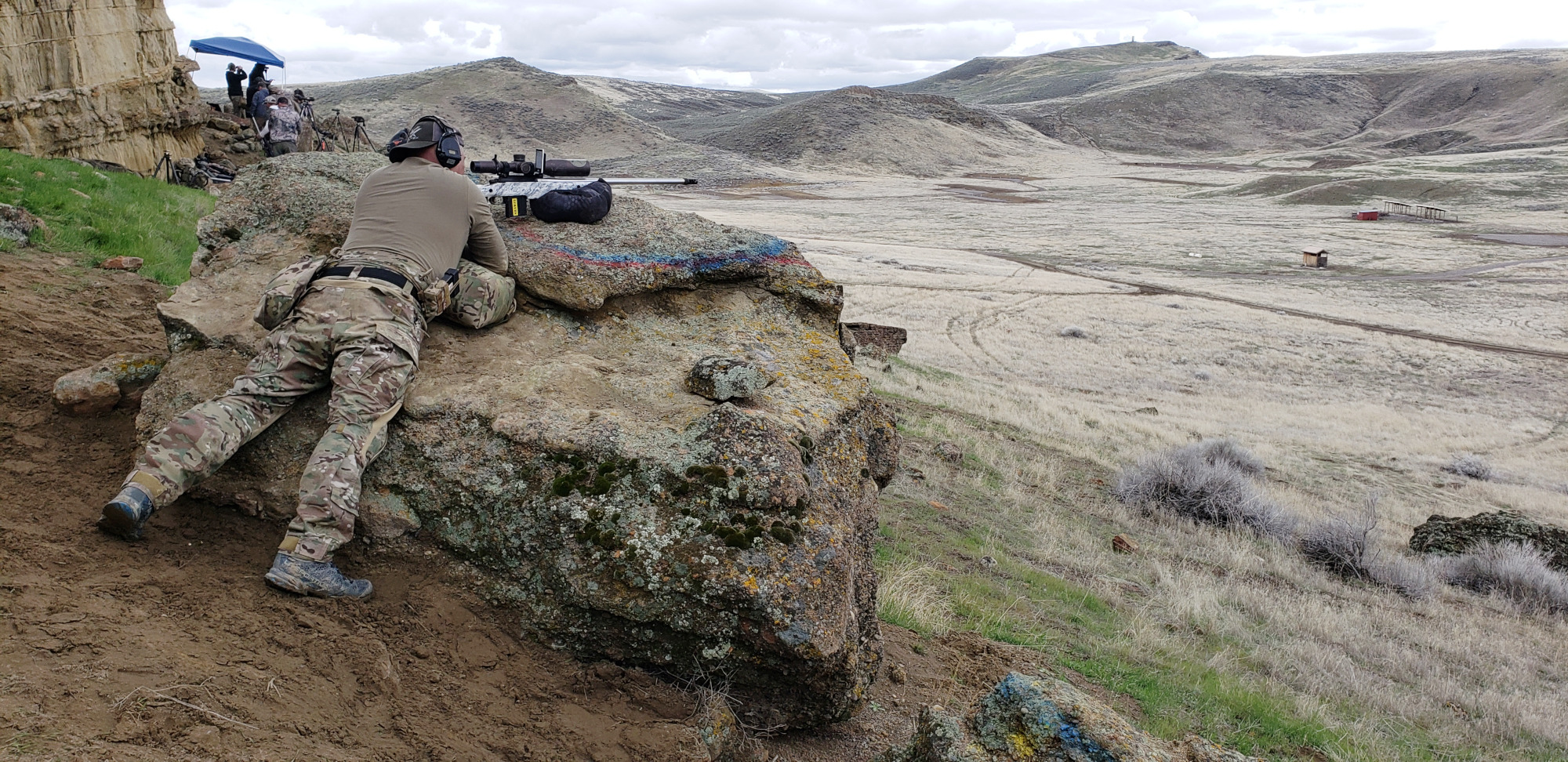
Vu Pham recently attended a great practical/tactical match, the Gem State Stand Off. This NRL-sanctioned match drew 113 shooters, including many of the best PRS/NRL competitors in the country. Vu says this was a great event: “The 220-round, 22-stage course of fire was fun, yet challenging. Every stage had a two-minute par time requiring 10 rounds fired at multiple targets. 113 competitors fired about 24,000 rounds without a single target failure.”
2019 Idaho Gem State Stand Off AAR
Target Distances: 300 to 1200 yards
22 stages/220 round Course of Fire
113 Competitors
Match Directors: Nate Lauerman & Seth Howard
Range Officers: 21 Precision Rifle Shooters of Idaho
Event Date: March 23rd & 24th, 2019
Location: Snake River Sportsman Range in Vale, Oregon
“With technological advances in equipment, training, and ballistics, plus increased opportunities for competitors to fine-tune their skills, Practical Precision Rifle competition has become a perfectionist sport. The constant evolution of this discipline never ceases to amaze me. With competitors and manufacturers constantly pushing to gain an edge… there is no shortage of innovation.” — Vu Pham
Gem State Stand Off — After Action Report
Report by Vu Pham, NorCal Practical Precision Rifle Club
I was fortunate enough to snag a last-minute slot for the 2019 Gem State Stand Off hosted by the Precision Rifle Shooters of Idaho Club (PRSID). This is one of 17 National Rifle League events where competitors will battle for points hoping to secure a slot for the 2019 NRL Championship. The Snake River Sportsman Range is a beautiful venue in Vale, Oregon, near the Idaho border.
The digital display carries ballistics info and elevation/windage tables from Vu Pham’s Kestrel. He says the unit really helps his performance.
From the hills looking down-range. Click image for full-screen version.
Hardware Report — Top PRS/NRL Gear for 2019
Modern Precision Rifle Comp Gear — Stocks and Chassis Systems
The traditional rifle stock we know has now moved to more modular and customizable designs. One product that caught my eye is the new XLR Industries Envy JV Heavy Fill Chassis system. After seeing a lot of competitors use them with good results, I think I will be giving one a try soon. Not being able to borrow a piece of gear because the entire squad is running ARCA can be a drag. Picatinny forearm rails have gone the way of the dinosaur with ARCA Swiss becoming the standard for attaching accessories.
Those like myself who may not want to give up their traditional-style stocks do have the option of modifying their existing stock with a universal ARCA rail from Henderson Precision. That company makes a variety of rails that fit a number of stock platforms.
Rifle Support Options — Bags and Tripods
Tripods are also used a lot as front and rear support by the majority of the field as well. Support bags now come in every shape, size, weight, and material imaginable. Even the fundamentals of driving your rifle is being challenged by the evolution of “free recoil”. Instead of counting the number of hits for the day, the top echelon shooters count the number of shots they dropped.
Calibers of Choice — Small is Big — the 6mms Dominate
6mmBR Improved cartridges (6mm Dasher, 6BR Ackley) and mid-sized 6mms (such as 6mm Creedmoor) dominate the field. In addition we are seeing some guys running the 22 BR and 22 BRA, which work surprisingly well. [Editor: Run the ballistics with a .22 Cal 80-grainer and you’ll see why.]
Wind Monitoring and Ballistics
Kestrel Environmental Meters with Applied Ballistics are “must haves”. I have found my Really Right Stuff tripod and Vortex 12×50 Razor binoculars extremely useful for locating targets and going through the target shooting order before it was my turn to shoot. Watching what the wind and competitor’s rounds are doing before you are on the gun is a huge benefit.
Great Match with Great Shooters
Tough Competition with a Field of Ace Practical Marksmen
The field of competitors at this match was stacked. I heard there were 20 competitors in attendance who have won national-level PRS or NRL events. 20 top-echelon competitors mixed in with a solid field of shooters made it a tough for anyone looking to finish at the top.
This article first appeared in 2014. We are reprising it at the request of many readers who are fans of the .30-06 cartridge.
The “Old Warhorse” .30-06 Springfield cartridge is not dead. That’s the conclusion of Forum member Rick M., who has compared the 1000-yard performance of his .30-06 rifle with that of a rig chambered for the more modern, mid-sized 6.4×47 Lapua cartridge. In 12-16 mph full-value winds, the “inefficient and antiquated” .30-06 ruled. Rick reports:
“I was shooting my .30-06 this past Sunday afternoon from 1000 yards. The wind was hitting 12-16 mph with a steady 9 O’clock (full value) wind direction. My shooting buddy Jeff was shooting his 6.5×47 Lapua with 123gr Scenar bullets pushed by Varget. Jeff needed 13 MOA left windage to keep his 6.5x47L rounds inside the Palma 10 Ring. By contrast I only needed 11.5 MOA left windage with my .30-06. I was shooting my ’06 using the 185gr Berger VLD target bullet with H4350. I managed the same POI yet the .30-caliber bullet only needed 11.5 MOA windage. That’s significant. From this experience I’ve concluded that the Old Warhorse ain’t quite dead yet!”
Rick likes his “outdated” .30-06 rifle. He says it can deliver surprisingly good performance at long range:
“To many of the younger generation, the Old Warhorse .30-06 is ‘outdated’ but I can guarantee that the .30-06 Springfield is a VERY ACCURATE cartridge for 1000-yard shooting (and even out further if need be). With some of the advanced powders that we have today, the .30-06 will surprise many shooters with what it’s capable of doing in a good rifle with the right rate of twist. My rifle has a 1:10″ twist rate and I had it short-throated so that, as the throat erodes with time, I could just seat the bullets out further and keep right on shooting. My recent load is Berger 185gr Target VLDs pushed by IMR 4350. This is a very accurate load that moves this bullet along at 2825 fps.”
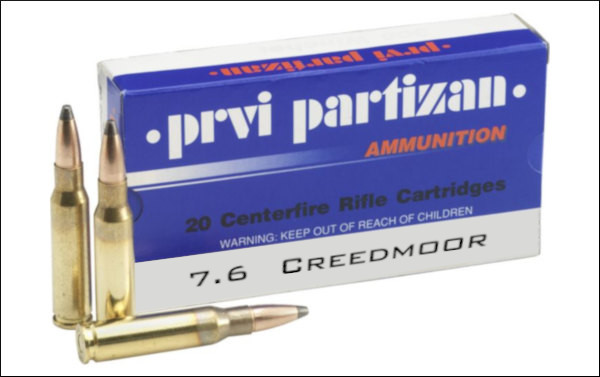
Leveraging the incredible success of the 6.5 Creedmoor cartridge, ammo-makers and rifle manufacturers have teamed up to produce a bigger Creedmoor cartridge — the 7.6 Creedmoor. The latest addition to the Creedmoor line gets its name from its 7.62mm bullet dimension. Yep, that makes it a .30-cal cartridge, but the creators stuck with the metric title for consistency. Makes sense. We like the way “7.6 Creedmoor” sounds and we bet consumers will too. The 6.5 Creedmoor has been a singular success — it is by far the most popular new cartridge introduced in the last decade. We think the 7.6 Creedmoor could become equally successful in short order.
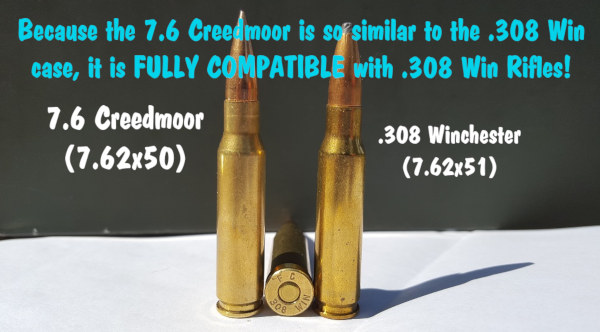
In creating the new 7.6 Creedmoor, the product engineers were primarily concerned with accuracy, reliability, and compatibility. In a brilliant marketing stroke, the 7.6 Creedmoor’s designers crafted this cartridge to be 100% compatible with existing .308 Winchester and 7.62×51 rifles. So you can shoot the 7.6 Creedmoor safely in your existing .308 Win deer rifle or F-TR rig. As one ammo-maker’s marketing manager told us: “The 7.6 Creedmoor gives you everything you liked about the .308 Win, with a trendy name and the undeniable Creedmoor cachet. The 6.5 Creedmoor has become hugely popular. We expect the new 7.6 Creedmoor to do as well, or better!” We agree. Consider this — the 7.6 Creedmoor offers much better barrel life than the 6.5 Creedmoor, along with better bullet selection, particularly for hunters. With these advantages, how could the 7.6 Creedmoor not become a huge hit? The Creedmoor name alone should ensure success.
We discussed the new 7.6 Creedmoor with Dennis DeRille, one of the “founding fathers” of the 6.5 Creedmoor. Dennis said — “The Creedmoor name is synonymous with innovation and tactical success. This new 7.6 should live up to its name as it delivers .308 Win performance in a package for the 21st Century.”
Reassuring .308 Win Ballistics and Die Compatibility
Another great feature of the new 7.6 Creedmoor is that you can use existing .308 Win dies and reloading components. That excited one PRS shooter: “I had all this old .308 brass and .30-Cal bullets sitting around. When I heard about the 7.6 Creedmoor I said ‘Wow this is great, I can use this stuff in a Creedmoor now’. I know it will be accurate based on the name alone. That’s cool — tacticool!”
Because the new 7.6 Creedmoor shares case capacity and design details with the venerable .308 Win, it also shares the .308 Win’s impressive ballistics performance. “Whatever you can do with a .308 Win, you can do with the 7.6 Creedmoor… and then some!” says Hornady. Here is a chart showing projected velocities for the 7.6 Creedmoor with various barrel lengths and bullet weights.
NRA Approves 7.6 Creedmoor for F-TR Competition
Currently, NRA competition rules restrict F-TR rifles to the .308 Win (7.62×51) and .223 Rem (5.56×45) chamberings. But that’s going to change. Starting in June 2019, the NRA will allow 7.6 Creedmoor rifles in all F-TR matches. In addition, the 7.6 Creedmoor can be used in service rifles such as the popular M1A. It’s great to see this old battle rifle updated with Creedmoor accuracy and performance.
USA and Foreign Ammo Makers will Produce 7.6 Creedmoor Ammo
7.6 Creedmoor factory-loaded ammunition will be available from all major USA ammo-makers including Federal, Hornady, CCI, and Remington. As well, foreign ammo-makers Hirtenberger, Sellier & Bellot, and Prvi Partizan have pledged to produce 7.6 Creedmoor ammunition. That’s good news for shooters who want affordable Creedmoor ammo. One ammo-maker told us: “The whole industry is excited about the 7.6 Creedmoor. To be honest, .308 Win ammo sales have been declining for a number of years. Now we can repackage those same great components and market them to a new set of consumers reared on the 6.5 Creedmoor. This is a great deal for ammo-makers, who know how excitable Creedmoor fan-boys can be!”
First there was F-Class, and now there will be E-Class, the “E” standing for “Economy”. The NRA Competitive Shooting Division has just approved a new form of rifle competition starting in 2020: E-Class. Unlike F-Class, E-Class will have tight rifle and gear cost controls. This is a clear response to rising F-Class costs, which have spiraled out of control. The first major E-Class National event will be a preview match held this summer at Camp Atterbury in Indiana.
The NRA’s sanctioning of E-Class competition makes sense. Let’s face it, top-level F-Class competition, both F-TR and F-Open, has become just too expensive. A modern F-Open rifle capable of winning a championship can now cost $9000.00 or more, including rest, premium trigger, and optics. Under the NRA’s new E-Class Rules, rifles can cost no more than $2000.00 total, including optics and rest (E-Open) or bipod (E-TR). In addition, new E-Class rules will recognize a special division, called E-Factory, that is limited to factory rifles, such as the Savage F-Class rig and Ruger Precision Rifle. Factory Class will be restricted to .223 Remington to keep costs down.
E-Class Factory Division
Complete Rifle RPR: $1200
Barrel: Included
Stock: Included
Optics: $400
Trigger: Included
Bipod: $100
Rear Bag: $50 Total: $1750.00
Under the new E-Class rules, TOTAL Cost for an E-Open or E-TR Rifle is limited to $2000.00, including optics, front rest or bipod, and rear bag. There are specific gear limits. Scope maximum is $500.00. Front rest or bipod is limited to $200.00. In the chart above you see how an E-Open rifle could be built for under $1800 with a factory action (such as Howa or Savage) and a $400.00 optic. In the third column we’ve priced out an E-Factory rifle, based on a Ruger Precision Rifle, at $1750.00.
A top-of-the-line F-Open set-up like this can cost more than $8000.00 with custom stock, high-end optic, and coax front rest. All new E-Class rifles must cost less than $2000 including rests and scope.
Either way these E-Class rigs cost ONE-FIFTH of the Top-of-the-line $8750.00 F-Open Rig. That’s a huge savings, that will allow more shooters to enjoy competitive shooting. E-Class combines the fun challenge of the F-Class course of fire, with a vastly lower investment. With the rising costs of taxes, food, fuel, and everything else, it’s high time we get serious about the money we throw away on competition rifles. We know the wives will approve!
Keeping on Lid on Expenses
In the Wings — Controls on Ammo Costs as Well
Shooters know that the price of the rifle, optics, and rests is only part of the cost equation. The price of ammunition is also significant. Currently, in F-Open, competitors can easily pay $1.00 per round just for the expendables — bullets, powder, and primer. Add in the cost of premium .284 Win brass and the cost per shot goes up significantly. One competitor lamented “Shooting a match these days really empties your wallet. I cringe every time I pull the trigger, knowing what it costs.”
Therefore, the NRA is considering E-Class ammo restrictions. Starting in 2021, E-Factory class competitors would be required to shoot recycled bulk brass and blem bullets. Bulk Lake City 5.56 brass will be offered by ARMorAlly.com, and blem bullets will be offered by Midsouth Shooters Supply. Purists may complain about using surplus brass, but it only costs $93 for 500 cases! That’s a huge savings.
The Final Step — Claiming Rules for E-Class
As in every competitive endeavor, there may be temptation to bend or even break the rules. Predictably, some E-Class competitors may try to substitute more expensive components, such as high-cost triggers, or modified actions. To prevent this, the NRA plans to impose claiming rules for E-Class matches. This means that any rifle that captures first or second place in a major match can be claimed by another competitor for the fee of $2000.00. This procedure may seem radical but it is used in other sports to ensure parity among the competitors. If a shooter wins with a “cheater” $5000.00 rifle, he can be forced to sell it to a competitor for $2000.00.
Many F-Open shooters favor low-profile benchrest-type stocks. They shoot these with minimal hand and cheek contact. Not “free recoil” mind you, but pretty close. With practice and a high-quality front rest and rear bag, that “minimal hold” style can work very well.
Modern F-Open Rifle designed for “minimalist” grip/hold. Note the complete abscence of cheekpiece.
However, other successful F-Open and F-TR shooters prefer to hold their rifles, with a firm grip and solid cheek weld. If you come from a “hard-holding” Palma rifle background this may seem more natural. In addition, this shooting style may work best for folks who also shoot PRS or tactical matches using a vertical pistol grip and solid hold.
For guys who want to shoot their F-Open rig as they do their prone, tactical or hunting rifles, here is a modern F-Open stock designed for this kind of shooting. And this stock was crafted by a fellow with a pretty good shooting resume — Carl Bernosky.
Most of you know as a great marksman and 10-time National High Power Champion. But you may not realize that Carl is also a superb stock-maker. A true craftsman, Carl produces outstanding laminated and fancy wood stocks for hunters and competitive shooters. Visit CarlBernosky.com to see a selection of Carl’s competition and hunting stocks.
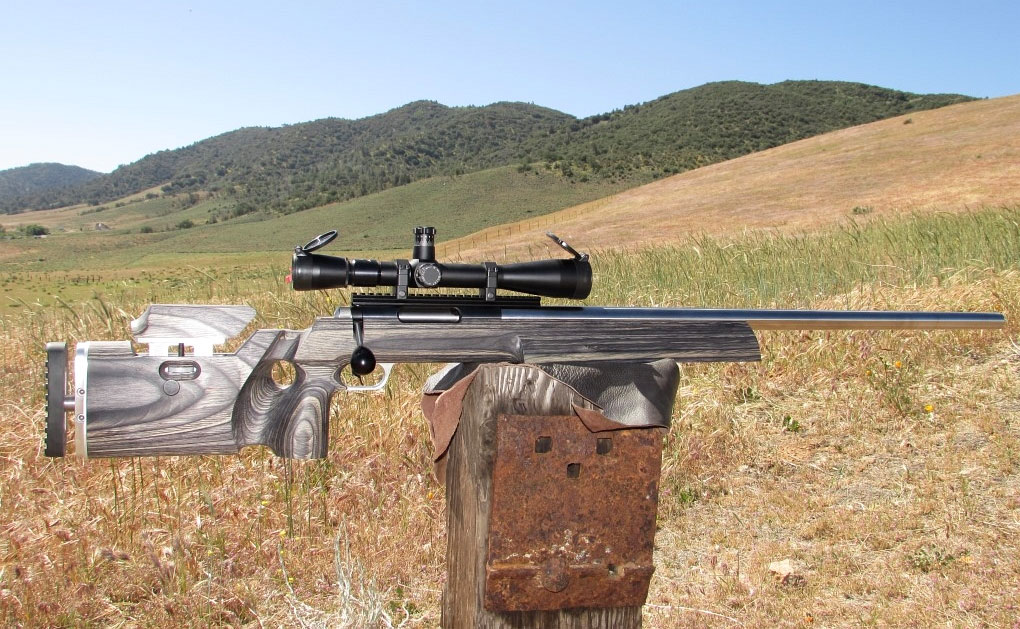
Her is Carl’s thumbhole F-Class stock. Designed for F-Open shooters, this stock features a flat, 3″-wide fore-end, ergonomic grip, and adjustable cheekpiece. The laminated Bernosky stock featured here was crafted for Chesebro Rifles, which offers a turn-key stock package for the Barnard ‘P’ action, one of our favorite custom actions. This particular build features a MT Guns Vee Block Bedding System, MT Guns 3-Way Adjustable Butt Plate, and B&D Precision removable cheek piece.
Click Photo to view full-size image of stock.
As you see it, complete with all hardware (including short fore-end rail for bipod) this stock runs $1275.00 ready to ship. Just attach your Barnard barreled action and you’re ready to compete. The stock (by itself) weighs 6.5 pounds. Contact Chesebro Rifles, (661) 557-2442, for more information.
Looking 1000 yards downrange at the Deep Creek Range outside Missoula, Montana.
On Facebook recently, we saw an eye-catching rifle. Owned by top 1000-yard competitor (and past IBS Champ) Tom Mousel, this rifle was smithed by Alex Wheeler of Wheeler Accuracy. This rig features the McMillan-crafted Wheeler LRB stock with adjustable keel. It also has BAT Machine’s very impressive new Neuvo LR (aka “Neuvo M”) action, serial number LR0001. The Neuvo LR has some important design features — horizontal lug orientation, full-diameter bolt body, and advanced fire control system. More about those features below.
This gun is a shooter. Tom has already shot a 1.5″ four-shot group at 1000 yards. How does he do that? First you need a great barrel, great bullets, and superior hand-loading skills. But then it comes down to great gun-handling. You can see that in the video below. NOTE to ALL Long-Range Benchrest shooters — Watch this video! You’ll definitely learn from watching Tom shoot — he’s one of the best in the business.
Tom Mousel shoots 1000-yard ladder test with first-released Neuvo LR action, SN LR0001.
Rifle chambering is 6BR Ackley (6BRA) in 28″ Krieger barrel.
Rifle Components and Build INFO:
This rifle has a BAT Neuvo LR (aka Neuvo “M”) action glued and screwed into the LRB stock using a special bedding block, a Boyd Allen concept that Tom has requested to use on every future build. The 28″ Krieger 1:8″-twist HV barrel was indexed using a little different method than most use. It is “panning out well” says Alex, who adds: “So far it has shot [multiple low ones] with two barrels and three different bullet types. This rifle is definitely one of the better shooters I have seen.” We’d agree — owner Tom Mousel has had a 1.5″ 4-shot group at 1000 yards in testing, plus some “zero” 3-shot groups at 100 yards.
Chambering is the 6mmBR Ackley (6BRA). The stock is a Wheeler/McMillan LRB stock with vivid orange and black paint job. It features an adjustable keel in the rear. Trigger is a Bix N Andy unit from Bullets.com.
This BAT Neuvo LR action is a Left-loading Drop Port. Cartridges eject out the bottom of the action.
BAT Machine Neuvo Long Range “M” Action
This is the “Long Range” version of the BAT Neuvo. Dwight Scott and Chris Harris were the original inspiration. I worked with Chris to come up with a version for long range. The main differences for the LR Neuvo (compared to the shorter Neuvo) are this has integral lug and rail, with flat bottom and sides for better bedding. The BAT Neuvo LR is available in drop port, dual port, and single port as well as magnum.
Take a look at the bolt. Notice the lug orientation and full diameter bolt body. There are no bolt raceways in the action and the two lugs sit HORIZONTALLY when the bolt is closed — that’s different than the vast majority of other two-lug actions.
Alex Wheeler says the Neuvo is a winner. He thinks some of the action’s design features really do contribute to enhanced accuracy: “The … fire control (firing pin assembly) carries a lot of energy and has a very “clean” release. This is an excellent design with many small details that combine to deliver superior function. In addition, the full-diameter bolt can be fitted tighter than one with lugways. Also the horizontal lugs may be why we see less vertical stringing in the groups. They are timed perfectly as well.”


 On his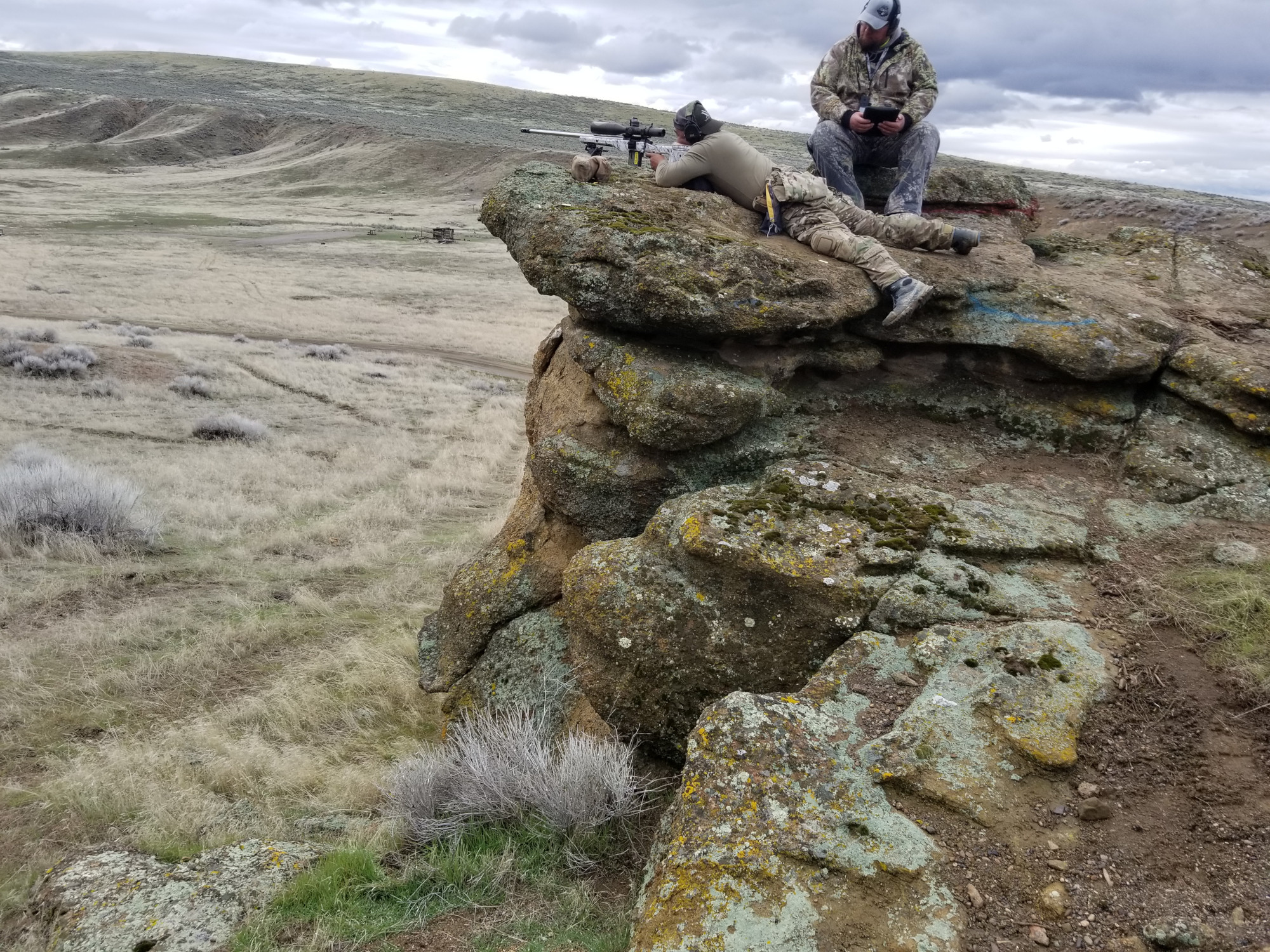






 For guys who want to shoot their F-Open rig as they do their prone, tactical or hunting rifles, here is a modern F-Open stock designed for this kind of shooting. And this stock was crafted by a fellow with a pretty good shooting resume — Carl Bernosky.