In November, the ISSF Administrative Council approved new ISSF rules calling for major changes in ISSF and Olympic Shooting Sports events. Starting in 2013, all Finalists will start with zero scores and there will be elimination rounds, ending with a final two-shooter duel for the Gold medal (the loser of the duel gets Silver). The new Finals procedure represents the ISSF’s first major format change since the introduction of finals in 1986. The new Finals format will be used in all 2013 ISSF Championships.
This rules were changed to make shooting events more “spectator-friendly”, attract media coverage, and engage a larger fan base. It is hoped that the new format, ending in a duel, is more appealing and easily understandable. The new ISSF rules contain new Finals formats for all Olympic shooting events mandating that ALL finalists start from zero. This means that qualification scores will not be carried into the Final anymore, making the scoring system immediately understandable for spectators. Furthermore, all Finals feature eliminations, and end with duels between the two best athletes to decide the gold and silver medals. The new 2013 Rules have been published on the ISSF website, ISSF-sports.org.
Other Shooting Rule Changes to Be Implemented
The new ISSF Rules also include the separation of sighting and match firing in 10m and 50m rifle and pistol events, a new position order for 50m Rifle 3-Position events, and a provisional test of decimal scoring for 10m Air Rifle and 50m Prone Rifle events. The Final for the 50m 3-P Rifle event will become a true 3-Positions Final, not a one-position Final like it used to be. And new time limits will require shooters to make more rapid position changes in future 3-position rifle Finals. Both 25m Pistol Finals will use hit-miss scoring to encourage more spontaneous spectator reactions.
ISSF Big Shots Praise Finals Format Changes
“The shooting sport has always been a leading sport in the Olympic movement. And with the new finals we made an important step forward to keep that leading position,” said ISSF President, Mr. Olegario Vazquez Raña.
ISSF Sec. Gen’l Franz Schreiber concurred: “It was time to change….The ISSF has always been open to innovation, and we are proving it once again. All sports must adapt to the digital era of technology and media. The time has come to adopt new [formats] which fulfill these objectives.”
Legendary USA Olympic marksman and ISSF Vice-President Gary Anderson observed that the rule changes will present challenges: “We will have to work hard to make this work. But our sport will benefit from this new, appealing format.”
At a recent 600-yard High Power prone match in Florida, Forum member Frank Diaz shot a spectacular 200-26X score. He was firing his 6 BRX rifle with sling and scope in the Any Sights/Any Rifle category at the Port Malabar Rifle & Pistol Club. This is a remarkable accomplishment — we have never heard of a higher ‘Any/Any’ score shot at this distance on a 20-round stage with sling support. How do you score twenty-six Xs in a 20-shot match, you may ask? The answer is that, under the NRA rules, a competitor who shoots a perfect score (all 10s in X-Ring for his record shots), can continue to fire until he eventually places a shot outside the X-Ring. So Frank hit 26 Xs in a row. Wow.
Frank reports: “I shot a 200-26X at Port Malabar, FL at 600 yards using sling and scope. The wind was light, moving from Northeast to East at 5 to 10 mph. The gun was a 6mm BRX with 32.8 grains of Varget. My gun features a Barnard action, Brux barrel chambered by Paul Larson, and an H&H prone stock with work done by Alex Sitman (MasterClass Stocks). I [sometimes] shoot this gun with irons but for this match I mounted a Nightforce 12-42″.
The Port Malabar Rifle & Pistol Club operates the last civilian competition 600-yard rifle range left in Florida. With 122 acres and a dozen ranges, Port Malabar is the largest self-policed shooting club in the state. While the 600-yard range is not open to the public, there are numerous organized events open to shooters from other clubs and locations. The range is located at: 610 Hurley Blvd. SW, Palm Bay, FL 32904.
Port Malabar Rifle & Pistol Club
P.O. Box 060307
Palm Bay Florida, 32906
(321) 956-8300
In his Riflemans Journal Blog, German Salazar has authored an excellent article on IMR 4320 — The Forgotten Powder. German tested IMR 4320 and found that it produced outstanding results both in the .308 Winchester and the 30-06. This means that shooters have another very effective propellant option for their .308 and 30-06 match rifles. With H4895 and Varget being hard to obtain lately, you may want to give IMR 4320 a try.
German writes: “IMR 4320 falls right between 4895 and 4064 on the burn rate scale for most cartridges — in other words, right where Varget falls. Yet, despite having a very useful burn rate, 4320 has languished for decades while newer powders of similar burn rate have gained in popularity. I was interested in seeing what current production IMR 4320 would do in the .308 with the 155gr Palma bullets. My interest was sparked by the obvious fact that Varget and H4895 have been very hard to get lately while IMR 4320 sits on the shelves.”
German loaded up some .308 Win loads with IMR 4320 and moly-coated Sierra 155gr Palma bullets. German’s “practical max” load delivered 2990 fps in his long-barreled Palma rifle. This is certainly competitive speed-wise.
German observed that: “IMR 4320 has very small granules and throws very consistently from the powder measure — it is very much like Reloder 15 in granule size — so for those who prefer to throw charges it’s a good choice.”
Satisfied with the chron results, German loaded more rounds with the two most promising charge weights and used them in a 500-yard prone match at Ben Avery (ambient temps were 60s-80s F). Here is his report:
“As in the chrono tests, all IMR 4320 loads were with moly-coated Sierra 155 Palma bullets, Winchester brass and PMC primers. Powder charges should be reduced at least 1.0 grain for bare bullets. The load with 45.0 grains of IMR 4320 gave me a 199-12X with the single 9 being a high shot just off the 10 ring line at 12:00. Overall, I would rate that load as good, very useable for the intended purpose of 500 or 600 yard shooting (it’s 2844 fps) but no better than my H4895 load for that purpose.
Next I fired the heavier 47.0 grains ‘practical max’ load and that was an eye opener. The score was 200-15X in conditions that were windier than those in which the first load was fired. Elevation was noticeably tighter and shots were exactly on call. This load gives 2990 fps, so it has real potential as a Palma load. While no 500-yard test can ensure results at 1000, given the MV and reasonably low SD of this load as well as the good performance at 500, I won’t hesitate to shoot it at 1000 at the first opportunity. Warning: this was a STRONG LOAD and may not be safe in your gun.
Overall, I’m very satisfied with what I’ve seen in these past few days from IMR 4320 and plan to shoot it in some of our upcoming Palma and 1000-yard matches with the 155s. It appears to be a very useful alternative to some of the harder to get powders.”
SCATT Company, based in Russia, produces an advanced marksmanship training aid that is now being used by many of the world’s top prone and position shooters. The SCATT system uses a gun-mounted infrared (IR) sensor that precisely tracks the movement of the rifle during the aiming process. This tracking data can then be displayed on a computer screen or special electronic targets. In development since 1991, the SCATT system was first employed by the Russian Federation shooting team. However, the SCATT technology was released commercially and is now being used by many other national teams including: USA, China, France, Germany, Japan, and Switzerland.
SCATT Training Systems employ an electronic optical sensor fixed to a gun’s barrel, frame, or the compressed air cylinder of an air gun. The shooter then aims at the electronic target. A trace of the point of aim can then be followed on a ‘real-time’ display screen. When the shooter pulls the gun’s trigger, the point of impact is then displayed on the screen. (This is dry-fire only — no projectiles are loaded). All results of training sessions can be recorded for later analysis. Russian research has shown that SCATT training is both effective and efficient. Using SCATT, beginning marksmen can acquire competitive skills two to three times more quickly than with conventional practice methods alone.
SCATT Shows How an Olympian Holds
The video below shows the aiming patterns of Olympic bronze medalist Miss Snježana Pejčić, a 10m Air Rifle shooter. The SCATT system records the air rifle’s muzzle motions as green traces while Snježana dials in her aim. Her final shot positions (and scores) are recorded when the large circle appears.
SCATT Company has dealers worldwide for its training systems, electronic targets, and shooting accessories. To order SCATT systems in the USA, contact:
Center Shot Sports
www.CenterShot.com
4300 Rogers Ave., Suite 20,
Box 213
Fort Smith, AR 72903
Phone: 479-262-2584
E-mail: info [at] centershot.com
Entry registration for the 2013 F-Class World Championships in Raton, New Mexico is now open on the Bald Eagles Rifle Club website. Beverly Bartholome notes: “Before registering for the 2013 FCWC please go to the F-Class World championships web site http://fcwc-usa.org/. Under ‘Entries’ read both the entire Program and the Information Packet.” You’ll find info on matches, awards and entry requirements. Plus links within the program take you to the FCWC and FCN entry forms.
Are sound suppressors useful in competition shooting? In some disciplines, and in venues where sound “moderators” are permitted, the answer is “yes”. In the November edition of Shooting Sports USA eZine, you’ll find an interesting article about the use of sound suppressors (aka “cans”). The article explores the use of suppressors in Europe and in tactical matches in North America. You’ll also find an explanation of the rules and regulations governing suppressor ownership and use in the United States.
Shooting Sports Editor Chip Lohman tests three rifles from the bench and found that sound suppressors did not harm accuracy. In fact, all three test rifles (one each in .223 Rem, .308 Win, and .338 Lapua Magnum), shot slightly better 5-shot groups at 200 yards when a suppressor was fitted to the barrel. However, the suppressors did alter point of impact. Interestingly, velocity standard deviation (SD) values were lower with suppressors in place for all three test rifles. This observation calls for further study.*
So the use of suppressors in competition could be a good thing. However, in the United States, current NRA High Power rules prohibit the use of sound suppressors. NRA Rule 3.16.1 subsection (a) states: “Sound Suppressors are not authorized for use in High Power competition.” In addition, there are some practical problems with suppressors — the heat rising off of a naked suppressor can create mirage problems (that’s why some shooters wrap their cans with a cover).
Despite such issues, we are starting to see moderators on rifles used in non-NRA-sanctioned tactical matches. For example, many competitors in the popular Steel Safari field challenge match use suppressors. The photo below shows our friend Zak Smith competing in the Steel Safari with his suppressed Accuracy International rifle.
*The article cautions that one should not extrapolate too much from the SD numbers, given the low number of test shots. Chronograph-maker Ken Oehler, when asked to comment on the SD values stated: “[You should] report the observed SDs, but draw no conclusions until… you can do more testing with larger sample sizes.”
Team GLOCK member K.C. Eusebio won the High Overall Award at the World Speed Shooting Championship (aka Steel Challenge) held November 1-4 in Frostproof, Florida. This was the first time in the competition’s history that a Glock (albeit a modified version) boasted the lowest elapsed time over the 8-stage course of fire.
Using his hot-rodded Glock 17, 24-year-old Eusebio shot approximately 200 rounds in less than 79 seconds. That’s total time for multiple stages of steel targets set at 10 to 35 yards. The GLOCK, modified by Zev Technologies of California, had a C-More Red-dot sight, 3-port compensator and a textured silicon carbide grip coating. “Regardless of the modifications, it’s still a GLOCK,” commented Eusebio. “Flawless. This was my fourth championship win, the first time that’s been done by anyone.”
When it comes to raw speed on the Challenge course, Eusebio is the man. K.C. currently holds several world records in the Steel Challenge Shooting Association (SCSA), including the fastest time on the “Smoke And Hope” stage: 1.69 seconds to draw and hit five individual steel targets. That’s not a misprint — 1.69 seconds for five shots hitting five different plates. Here’s a video of K.C. Shooting “Smoke and Hope” in California a few years back when he was a member of the USAMU shooting team.
Eusebio told us: “We definitely set the bar high at this match. I shot record-breaking scores of 2.55 seconds on the “Pendulum” stage and 2.27 seconds on “5 To Go”, and came out on top in 4 of the 8 stages. I also averaged 1.80 seconds on the “Smoke and Hope” stage. Heads were turning, some said it couldn’t be done, but I had confidence in my ability and my Glock”.
Photo courtesy Shin Tanaka
The Steel Challenge was created in the early 1980s in Southern California, as a new and exciting addition to combat or practical shooting matches. The originators, Mike Dalton and Mike Fitchman, wanted an exciting alternative to paper targets and came up with the all-steel format. The match awards the fastest time, but accuracy is also critical. The Steel Challenge is now a hugely popular event with West Coast Championship in Piru, CA and East Coast Championship in Florida. There are also regional Steel Challenge Matches held around the country.
SSG Daniel Horner and SPC Tyler Payne of the USAMU outlasted 35 other teams to win the tough 72-hour International Sniper Competition at Fort Benning, GA. The 2012 field included entries from Denmark, Germany, Ireland, United Arab Emirates, plus U.S. Army Special Forces, the Air Force, Marine Corps, and Army National Guard. There were also LEO duos from Las Vegas, Chicago and Florida.
The competition is hosted by the U.S. Army Sniper School. Top shooters from across the globe travel to Fort Benning, GA to compete in the annual competition, a grueling test of marksmanship and sniper skills. The two-man teams competed in 14 events including a sniper stalk, urban shooting, and orienteering exercises, firing under stressful conditions. The 72-hour event runs virtually non-stop, with only two four-hour rest breaks in the three days of competition.
“It feels awesome to win,” SSG Horner said. “I’ve wanted to compete in this event my whole life. We didn’t have a slot to compete in the last few years so when we got in this year we trained hard the past few weeks to get prepared.” Horner’s partner, SPC Payne, added: “There were some real challenges out there. Many of the events had tight time constraints. Finding the targets was tough, especially at night.”
“Time management was a big factor in the outcome,” Horner said. “We are really good at getting a lot accomplished really quickly. There was no way you could physically get everything done in the time allotted so it was who completed the most in the time they had. In an event like this if you only know the fundamentals then you will get run over. The fundamentals are the foundation of any good marksman, but here you had to know how to read wind, calculate mover speed, shoot alternate positions, and be able to physically complete the events, such as the 4.5 mile run with all of your gear.”
Despite having seven shooting teams within the ranks of the USAMU, the unit doesn’t have a sniper team nor teach sniper skills at any of the marksmanship training courses. Horner is a 5-time and current USPSA Multi-Gun national champion and Payne was a finalist at last year’s 3-Gun Nation championship. As members of the action shooting team, the Soldiers must have the ability to shoot rapidly and accurately with a handgun, rifle and/or shotgun, skills they were able to adapt and use for the sniper competition.
SSG Horner and SPC Payne hope to defend their title next year. Payne explained: “We have wanted to shoot this for a long time so to win it in our first year feels amazing. I really hope we get to come back next year and defend our title.”
Our friend Sebastian Lambang, creator of the SEB Coaxial rests and the new SEB Joystick Bipod, recently visited Great Britain to participate in the European F-Class Championships. While in the UK, Seb visited the famous (infamous?) Diggle Range, as well as London Towne. Seb was hosted by Brit shooters Brian Fox and our buddy Vince Bottomley (who writes for the TargetShooter Magazine).
Shooting in the UK Report by Sebastian Lambang
After flying from Surabaya to Manchester airport, Brian Fox picked up my wife Lily and me on Oct. 26 morning. We then went straight to Diggle Hotel. Saturday I shot the 800-yard match at Diggle Range and Sunday I shot the 300m ‘Tactical’ Match.
Monday to Wednesday morning Lily and I did sight-seeing in London. Then we went to Bisley by train. I got a little practice time on Thursday then shot the individual match on Friday and Saturday. The team match was on Sunday but I didn’t shoot it since a friend took us to his house.
Bisley Was Cold and Conditions Were Hard to Read
I think I didn’t do very well in the Europeans. Probably because this was my first-ever F-class match, and the temps were too low for me. I was told also that Bisley is hard to shoot, the wind flags pointing ‘everywhere’, and I wasn’t sure what I should I watch to judge the conditions. I can’t trust the wind-flags, I couldn’t see mirage most of the time to help to determine the hold off. However I really liked the Championship event and enjoyed the shooting. Congrats to Lee Tomlinson (F-Open Winner, 459.30), Tim Stewart (F-TR Winner, 439.23) and Great Britain’s victorious F-Open and F-TR teams.
Vince Bottomley supplied a rifle for me to use at the Championships. Vince is a great guy indeed, he helped me with the rifle, the loads etc., and most of all he spent three full days with me while I was shooting the match. I can’t thank him enough.
Testing the New SEB Joystick Bipod
AccurateShooter: How did the new Joystick Bipod Work?
Seb: Unfortunately I didn’t have much time to try the bipod myself. But Thursday afternoon several Spanish shooters tried the bipod on their gun and they said that the bipod works fine and their shots went into the spot they want. I tried a few rounds with their gun but the impacts were not as expected … probably because I shot their F-TR .308 gun free recoil. [Editor: Even with ski-type bipod feet, you will usually benefit by having a pretty firm grip on the gun — not a death hold — but contact with the gun at multiple points.]
AccurateShooter: When will the bipod go on sale? Is the design finalized?
Seb: I still need to perfect the legs of the bipod, I think. I will probably make two models, one with compactness in mind and one other with the lightest legs possible. The MAX rest is in production currently, and then I’ll make another 200 NEO rests for the people on the waiting list. After that we could probably start bipod production. I do hope that the bipod can be ready for sale sometime in mid-2013. The first batch would be 100 units. If my prediction is correct, all 100 units will be sold or spoken for.
AccurateShooter: How much will the production version of the Joystick Bipod cost?
Seb: Still not sure, but it should be around $350-$400 in the USA. The most expensive part is the coaxial unit. According to Brian Fox, the bipod attracted a lot of attention/interest during the match and if I had a dozen units with me, we might have sold them all at the match.
Great Visit to the UK
I really enjoyed my visit to the UK, especially visiting with Brian Fox (he is a great guy and genuine indeed!) and meeting fellow shooters from other European countries. I learned a bit from the F-class shoot and I think the bug has bitten me. It’s also nice to see a sea of SEB rests at the Bisley range in the F-Open Class.
I send my thanks to all the people I met during my visit. It is great to make new friends, and I’m happy to be a part of this great group of shooters.
The 2012 Western CMP Games and Creedmoor Cup were held October 13-21, 2012. This combined event starts off with the CMP Games followed by the Creedmoor Cup competition. The CMP and Creedmoor matches, hosted at the Ben Avery Range near Phoenix, AZ, were well-attended this year. Competitors were treated to clear skies, and mostly favorable conditions. A highlight of the CMP season, the Western CMP Games includes numerous disciplines such as: M1 Garand Match, Springfield Match, Vintage Military Rifle Match, Vintage Sniper Rifle Match, M1 Carbine Match, and the Rimfire Sporter Match. The Creedmoor Cup is a High Power-type event, with team and individual competitions for both Service Rifles and Match Rifles.
Western CMP Games Results
The interim Western CMP Games results are found at the link below. It appears these results are incomplete, and we are still awaiting verification of the final scores (for all days). Check back here Monday and we should have the final, confirmed winner list.
Creedmoor Cup Results
In 4-Man Team Competition, the CA Killer Rabbits & One Grizzly Team won the Service rifle event with a 1895-56X score, while the Remington Roxburgh team won the 4-Man Match Rifle Competition with a 1965-73X combined score. Top Individual Match Rifle Shooter was Nick Mowrer (2376-103X) followed by Nathaniel Guernsey with 2361-89X. Scoring 2338-64X, Joel Sylvia won the Service Rifle Division, while Sagen Maddalena finished second with 2330-80X. Sagen was also High Junior (Server Rifle).
Watch 2012 Western CMP Games Slide Show (Steve Cooper Photos)
Tips for Capturing Great Images of Your CMP Match, by Steve Cooper
Photography is a lot like rifle and pistol shooting. For both disciplines you want each shot to be a winner. Here are a few tips to keep in mind next time you’re snapping photos of a match:
Get Involved – Though shooting is a pretty static sport, there’s a lot happening on the firing line. First off, let shooters know you’re there so they aren’t surprised when you walk up on their firing point. Make small talk and set the shooter’s mind at ease. When you do that you’ll be surprised how many smiling faces and enjoyment will show up in your photos.
Solid Position – Just like shooting, regardless of the type of camera you use, maintain balance and stable footing – that way you won’t bounce around and blur a good shot. Get close to the subject, whether it’s with a zoom lens or if you need to step closer, remaining in a safe position.
Anticipate – Don’t just snap random photos of a group of shooters and call it good. If you’re reading this, you’re most likely a shooter, so you know what to expect. If there’s action involved, you know what’s coming next, so be ready for it and snap the shutter when it happens or just beforehand. Wait for a reaction or catch the shooter concentrating, making equipment adjustments or maybe even catch that empty shell casing flying out of the chamber. If you’re taking snaps of a sniper match, catch the guys discussing the shot, calling wind – yelling at each other!
Be Smart – You don’t have to be a rocket scientist to capture good images, but it pays to consider the environment you’re shooting in. A cloudy bright day is perfect for photography. Harsh sun or super shady periods like early morning or dusk can be challenging. Unless a flash will disturb the shooter, using a flash most of the time is a great practice when shooting close-up photos. A flash will fill in the shadows and many times put a little needed light on the subject to improve color and tone. Don’t shoot into direct sunlight. Don’t stand so far away from the subject that you can’t identify the shooter.
Be an Artist – So what if your elementary school sculpture of your mom looked like the Creature from the Black Lagoon? That doesn’t mean your creativity hasn’t evolved. If there’s a sports photograph you really like, try to duplicate it with your camera. Try unusual angles, extreme close-us with a zoom lens – photos that show the shooter’s character, his/her ammo box, scorebook, shooting glasses – the possibilities are endless.
Shoot 10s and Xs with your gun AND your camera. With a little thought and determination, your shots will be impressive!


 In November, the ISSF Administrative Council approved new ISSF rules calling for major changes in ISSF and Olympic Shooting Sports events. Starting in 2013, all Finalists will start with zero scores and there will be elimination rounds, ending with a final two-shooter duel for the Gold medal (the loser of the duel gets Silver). The new Finals procedure represents the ISSF’s first major format change since the introduction of finals in 1986. The new Finals format will be used in all 2013 ISSF Championships.
  The Port Malabar Rifle & Pistol Club operates the last civilian competition 600-yard rifle range left in Florida. With 122 acres and a dozen ranges, Port Malabar is the largest self-policed shooting club in the state. While the 600-yard range is not open to the public, there are numerous organized events open to shooters from other clubs and locations. The range is located at: 610 Hurley Blvd. SW, Palm Bay, FL 32904.
 In his
 SCATT Company has


 Team GLOCK member K.C. Eusebio won the High Overall Award at the World Speed Shooting Championship (aka



 Despite having seven shooting teams within the ranks of the USAMU, the unit doesn’t have a sniper team nor teach sniper skills at any of the marksmanship training courses. Horner is a 5-time and current USPSA Multi-Gun national champion and Payne was a finalist at last year’s 3-Gun Nation championship. As members of the action shooting team, the Soldiers must have the ability to shoot rapidly and accurately with a handgun, rifle and/or shotgun, skills they were able to adapt and use for the sniper competition.
 Our friend Sebastian Lambang, creator of the


 Seb: I still need to perfect the legs of the bipod, I think. I will probably make two models, one with compactness in mind and one other with the lightest legs possible. The MAX rest is in production currently, and then I’ll make another 200 NEO rests for the people on the waiting list. After that we could probably start bipod production. I do hope that the bipod can be ready for sale sometime in mid-2013. The first batch would be 100 units. If my prediction is correct, all 100 units will be sold or spoken for.
 Great Visit to the UK
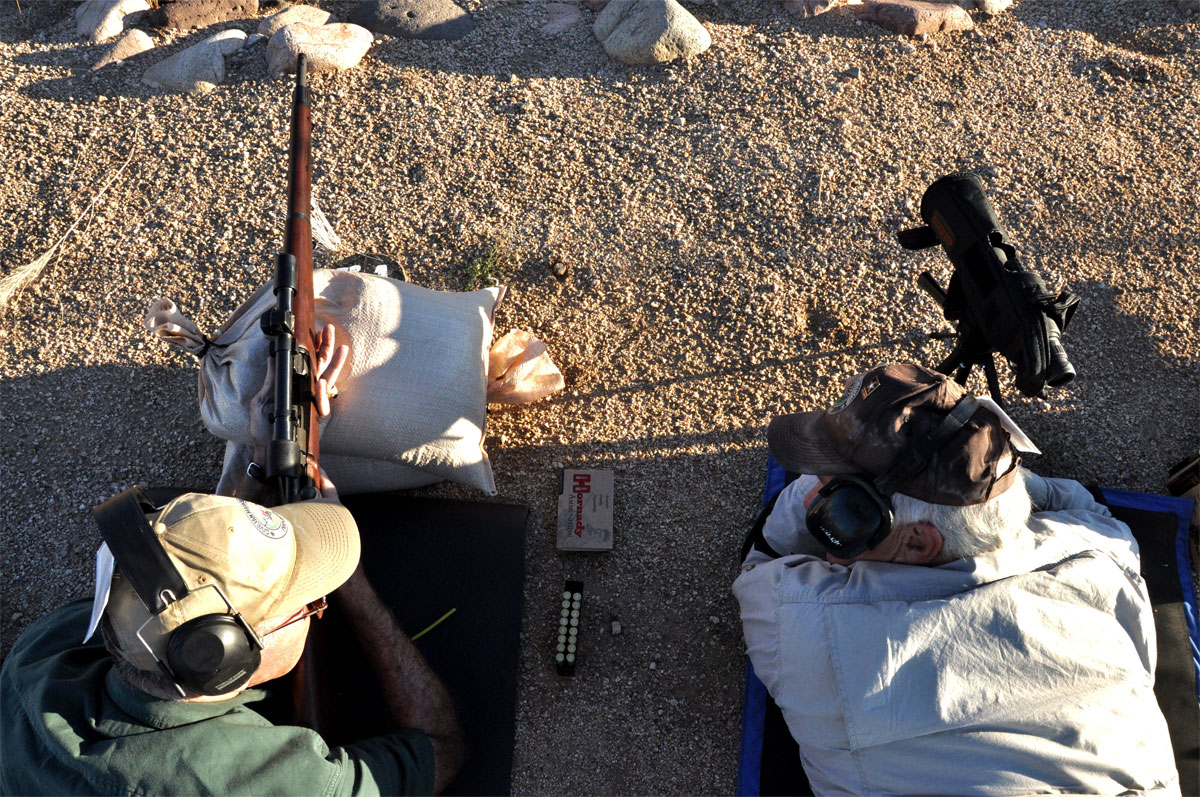
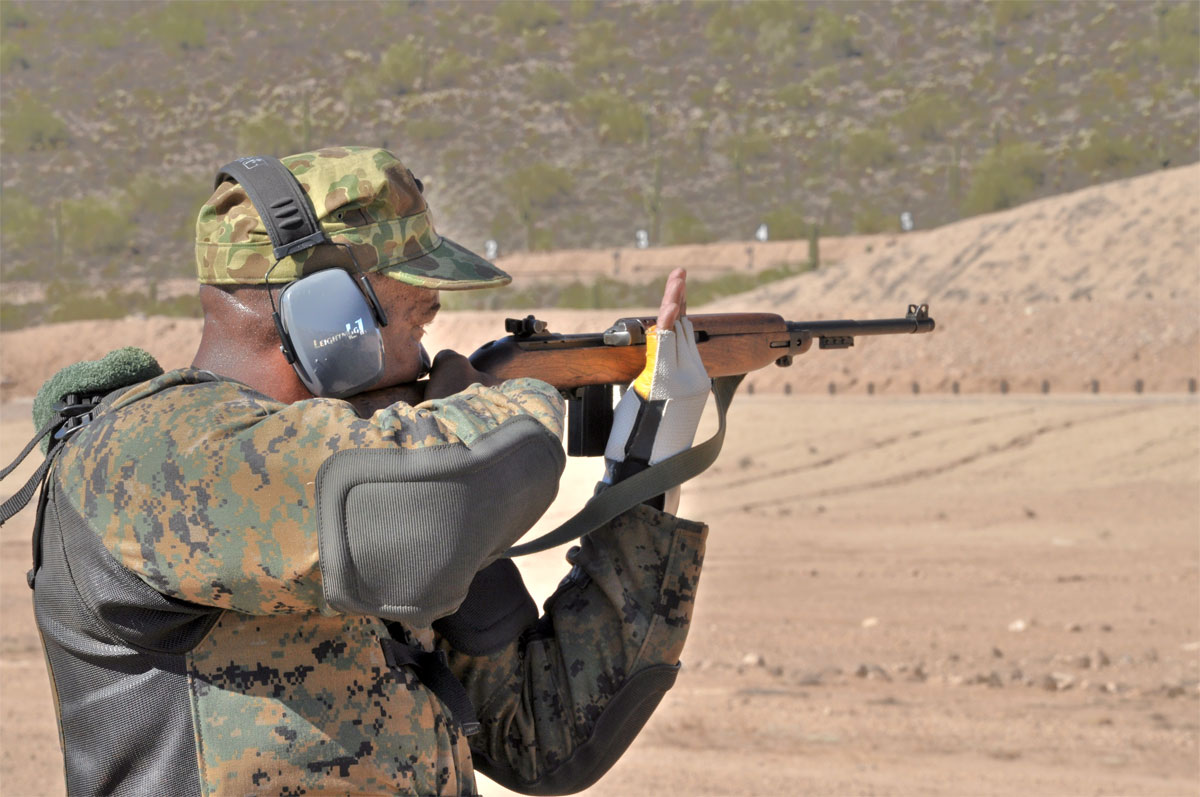


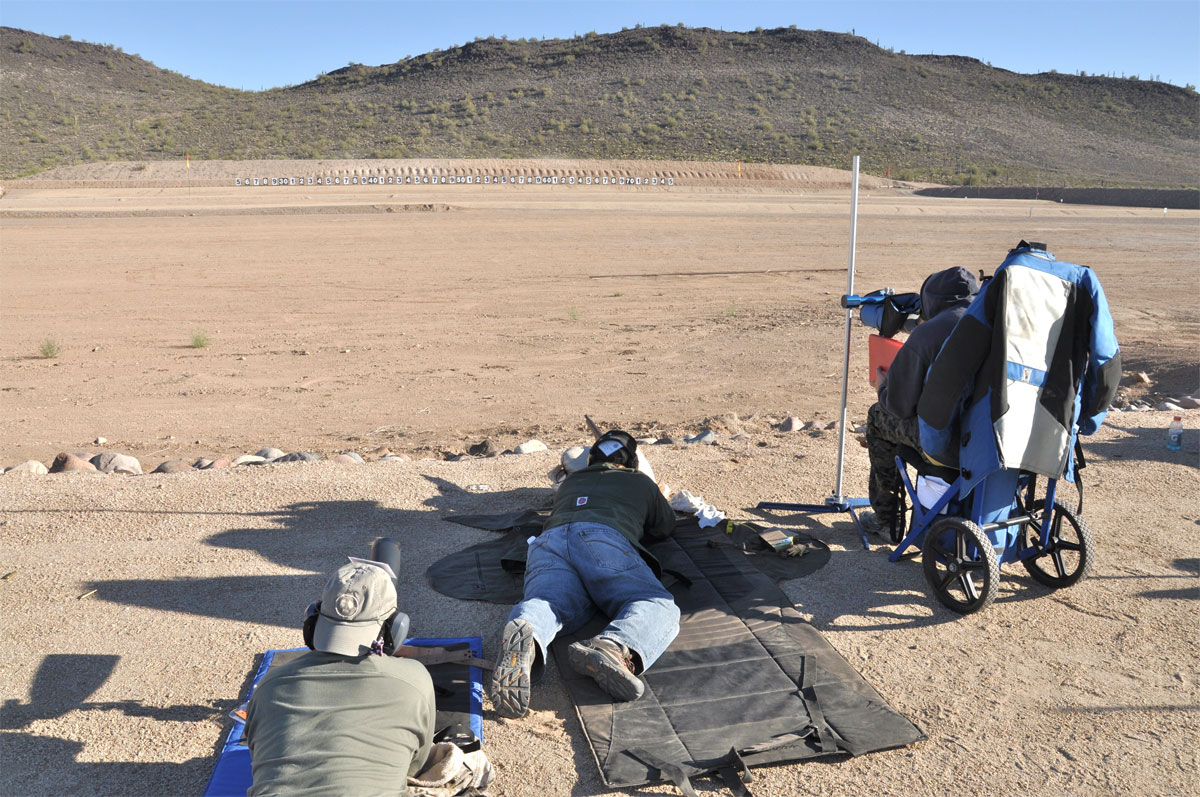


 Anticipate – Don’t just snap random photos of a group of shooters and call it good. If you’re reading this, you’re most likely a shooter, so you know what to expect. If there’s action involved, you know what’s coming next, so be ready for it and snap the shutter when it happens or just beforehand. Wait for a reaction or catch the shooter concentrating, making equipment adjustments or maybe even catch that empty shell casing flying out of the chamber. If you’re taking snaps of a sniper match, catch the guys discussing the shot, calling wind – yelling at each other!


