In the digital archives of Shooting Sports USA, we’ve found some great features that deserve a second look. A few years back, Shooting Sports USA published Sights, Wind and Mirage, an outstanding article that explains how to judge wind speed/direction and adjust your sights accordingly. Authored by highly respected shooter Ernest (Ernie) Vande Zande, this article is a definite “must-read” for all competitive rifle shooters — even those who shoot with a scope rather than irons. Vande Zande’s discussion of mirage alone makes the article well worth reading. Highly recommended.
Invaluable Insights from a World-Class Shooter
The article covers a wide variety of topics including Wind Reading, Mirage, Effects of Sight Canting, Quadrant Shooting, and Sight Adjustment Sequencing. Vande Zande offers many jewels of insight from his decades of experience shooting and coaching in top level tournaments. U.S. Shooting Team Leader at the 1996 Olympics, Vande Zande has set more than 200 records in National and International competition. He was the Smallbore Rifle Prone Champion at Camp Perry in 1980. An International Distinguished shooter, Ernie has been on nine Dewar teams and he was a member of the USAR Shooting Team from 1982. No matter what your discipline, if you are a competitive rifle shooter, you should CLICK HERE to read Sights, Wind, and Mirage.
Jeff Hansen of Utah now holds Distinguished Rifleman Badge #2561. Jeff’s journey to Distinguished status began with a box filled with his grandfather’s old shooting medals, which led him to the Camp Perry National Matches in Ohio four years ago.
Though he originally had no intention of shooting competitively, the competition shooting histories of his grandfather and uncles and the ambiance of Perry inspired him to start his own marksmanship career — eventually leading him to a prestigious Distinguished Badge.
At the 2022 National Matches, Jeff fired his best scores yet. In the National Trophy Individual (NTI) Match, he reached an overall score of 487-9X for 52nd overall out of nearly 790 competitors. And at the 600-yard line he shot an outstanding 199-5X out of a 200 possible.
“He was on the range with me shooting that 199″, Jeff said of his grandfather. “I felt like he was right there when I finished up. I just hope other people see this and see what I’ve tried to do – if I can do this, they can do this”, he said. “Chase that dream”.
Left to Right: Alvin Hansen, Ray Hansen, and Jeff’s Grandfather Lou Hansen at Camp Perry.
Inspired by My Grandfather to Become a Distinguished Marksman
Jeff Hansen earned his Distinguished Rifleman Badge in 2022 – a journey which began with his Grandpa’s own marksmanship tales from the 1920s and 1930s.
As early as I can remember, my grandfather, Lou, was a huge influence in my life. He was a great marksman. My dad, Ed Hansen, would tell me about the hunting trips they would go on and how Grandpa would make incredibly long shots to get an amazing bull elk or mule deer, only taking one shot to do so. He was always taking me hunting and fishing and shooting – lots of sleepovers where I didn’t actually sleep much, if any, because I would be so excited for the adventures that were going to happen with him the next day.
Whether it was hunting ducks, pheasants, chukars or just shooting, it didn’t matter. It was always an awesome experience with him. Life was great. Then, we got some tough news – my grandfather had leukemia. He fought a courageous battle with it for a couple of years, then in 1978, when I was 8, he passed away. Needless to say, I was devastated.
Inspired by Grandfather’s Shooting Medals
Not too long after he passed away, my dad brought home a box from Grandpa’s. It was full of medals. He carefully removed them and told me they were from when my grandfather competed in rifle matches with his brothers (Alvin Hansen, a U.S. Army veteran of World War I in France, Ray Hansen, and Oscar Hansen) at Camp Perry, Ohio, in the late 1920s to 1937.
Shooting medals from 1920s and 1930s with picture of Lou Hansen and his brothers.
My Grandpa was really humble – never said much about his trips to Camp Perry or his accomplishments there. Seeing the contents of the box, my grandfather became an even bigger hero to me. The medals he earned that impressed me the most were the three President’s Hundred brassards from 1935, 1936 and 1937 – along with many others.
I grew up looking at those medals thinking I wish I could do that maybe, someday. My life moved forward. My dad, a U.S Air Force veteran, and I both loved hunting, fishing, and shooting and still went as often as we could. Later, I got married and now have three daughters and one son. As my family grew up, we also enjoyed hunting, fishing, and shooting together.
Then, life threw some blows. My dad passed away suddenly in November 2014, and my mom fought a fierce battle with cancer for a few years before passing away in March 2018. Not long after she passed away, I found myself hanging [my grandpa’s] medals on the wall in my own home. Seeing them there got me thinking about how awesome it would be to go to Ohio and watch the President’s Match – not shoot, just watch.
In July 2018, I went. I’ve got to admit there were a few tears in my eyes driving between the two iconic lighthouses at the entrance to Camp Perry. I loved it.
The year I came happened to be the year SFC Brandon Green of the U.S. Army Marksmanship Unit cleaned the President’s Match — a record that still holds today. I got to talking to one of the Army Reserve team guys, asking him questions about competing, and he couldn’t believe I was there just to watch. I showed him some pictures of my grandfather’s medals, scorebook, and of Camp Perry in the 1930s. Matt Goad and Jon Arcularius of the Army Reserve team came over to look at them.
They said, “Hey, you can’t come all the way out here with a family history like that and not shoot here!”
They offered to sign me up for the NTI match the following day and even said they would get a rifle, ammo, and anything else I would need. That was so awesome, but I couldn’t make it work – I was flying back home the next day. Although I didn’t shoot, they did get me all the information I needed to get started.
I loved every minute of my first Camp Perry trip. It was because of the people there, showing me such kindness and taking me under their wings, that I thought, “I’ve shot all my life and hunted, and I’ve always liked marksmanship. This is something I can do.”
When I got home, I ordered a White Oak upper and started changing parts on my AR-15 to make it ready for matches. I was ready in the spring of 2019 and started shooting mostly small matches.
Grandpa Lou was humble and never talked about his achievements at Camp Perry.
At first, all I wanted to do with my rifling career was get a President’s Medal — following in my Grandpa’s footsteps. I didn’t know what “going Distinguished” was all about. I got a Silver Achievement Medal in the first match I went to, then started to go to more matches. Through that, I caught wind that winning President’s is one thing, but you’ll get to President’s if you excel your skills and go Distinguished. So, that became the new goal.
By summer, I was traveling to EIC matches and earned my first points at Nampa, Idaho, on July 21, 2019. After that, it was time to head back to Perry for the President’s and the NTI.
I didn’t do as well as I wanted, but it was an amazing experience to be competing where my grandfather had. I struggled the rest of the year and didn’t earn any more points until 2020. It was tough trying to find matches during COVID, but I ended up earning 12 more points by the end of the year. I missed a hard leg at Twentynine Palms, California, by X-Count, and things got tough after that.
I figured I needed to step up the way I was practicing, so I got a Shot Marker electronic target system and some wind flags so I could practice full distance. I’m very lucky that I can practice 30 minutes from home any time I want on public land.
At the 2022 National Matches, Jeff fired a superb 199-5X at the 600-yard line.
Starting in the first part of December, I had some extremely hard things going on in my personal life, and I didn’t feel like practicing. I didn’t even pick up my rifle for two months. I missed the first EIC in Phoenix in January, and before I knew it, February was half gone. Then, one of my friends talked me into going to the Western CMP Games in Phoenix in March.
Practice was tough, and sometimes I wondered why I was even trying. Tons of things were going wrong, and I was about DONE. I wanted to quit, many times. [But then] Western Games was fun, and I did well, but gained no points.
Navy Matches were coming around at the end of April, so I practiced as much as I could and made the trip. With several friends going, it would be great getting together after the matches and have a good time. I shot well the first day as well as on that Saturday. I even shot my personal best National Match Course score. Then Sunday, May 1, was the real test – the EIC match.
I struggled in standing and dropped a few more points than usual. Sitting was the same – rapid prone was good. Slow prone went well. The wind had some fairly big changes, but I worked through it and ended up with 477-11X. I figured there’s no way I’m making the cut for a hard leg this time and headed to the pits to finish out the match. We finished and waited for the results.
When the results were posted, I couldn’t believe it – I FINALLY GOT THAT HARD LEG! I did it. On top of earning my goal at last, it’s awesome to have my friend Jeff Lovat (#2383) be the one to present me with my Distinguished pin. (That President’s Hundred medal is still out there – maybe next year!)
The Honor of Earning the Distinguished Marksman Badge
Though I certainly enjoy earning my Distinguished Badge, the greatest thing I have gained from accomplishing this is without a doubt all the friends and people I have gotten to know along the way. To all my shooting friends, thanks for not letting me quit – part of this accomplishment is yours too.
To all of you that are working toward that goal, don’t ever quit. Keep practicing, and your day will come. Never quit until you reach your goals.
[And] when I walked that stage at Perry at the 2022 National Matches and got my Distinguished Badge officially presented to me — well my father, my grandfather and his brothers [were] with me.
About the Distinguished Badge Program
To earn a Distinguished Badge, a competitor must earn 30 Excellence-In-Competition (EIC) points or more in a qualifying competition. Individuals earn the 6, 8 or 10 “leg” points based on score and a percentage of match participation, with at least one “hard” leg, worth 8 or 10 points. Currently, the CMP administers Distinguished Badges for:
Service Rifle
Service Pistol
.22 Rimfire Pistol
Junior Air Rifle
Smallbore Rifle
International Shooter
Distinguished Marksman Badge
Distinguished Air Rifle and Air Pistol
Distinguished Service Revolver Badge
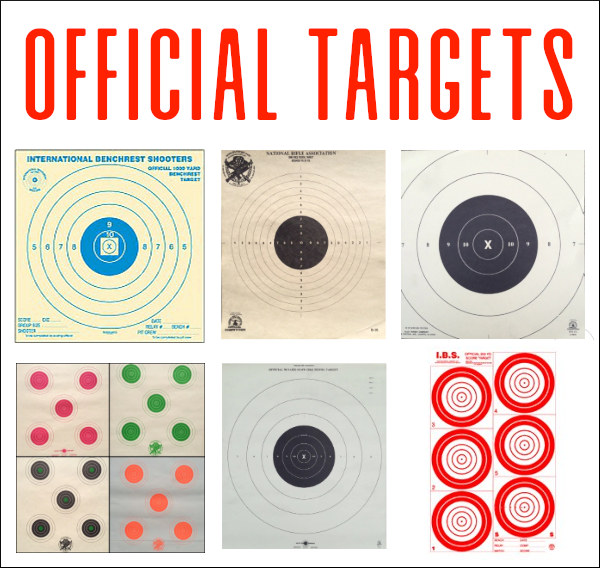
While some shooting disciplines have moved to electronic targets, most shooting matches still use paper targets, which must have precise dimensions for the particular distance and discipline. If you need correctly-sized targets for specific shooting disciplines (such as NRA Smallbore, F-Class, and 1K Benchrest) check out the links in this article. Precise, dimensionally-correct competition targets are produced by a half-dozen specialty printers. In this article we provide links to the leading target sellers, with a chart showing “who’s got what”. Look for your particular discipline and the vendors will be specified.
Sources for Official Shooting Competition Targets:
AccurateShooter.com offers dozens of FREE, printable targets for target practice, load development, and fun shooting. We also offer a few of the most popular NRA Bullseye targets. One or more of these printable targets should work for most training purposes. However, some readers have asked: “Where can we get the real targets… exactly like the ones used in NRA, IBS, and NBRSA shooting matches?”
All these vendors carry nearly all the NRA High Power and Smallbore targets, including the smaller F-Class targets. National Target has the F-Class and High Power targets, including 100-yard reductions of the 200, 300, and 600-yard military targets.
Here are some of the air rifle, smallbore, and High Power targets at Creedmoor Sports:
National Target currently sells IBS targets for rimfire (50 yard) benchrest, short-range centerfire Benchrest (100, 200, 300 yards), Hunter BR Rifle (100, 200, 300 yards), plus the official 600-yard and 1000-yard IBS targets. NBRSA short-range, 600-yard, and 1000-yard benchrest targets are normally available directly from the NBRSA Business Office. Send an email to nbrsa@icloud.com or call (434) 993-9201.
Good Source for Specialty Targets and Target Stands
Need Steel, Cardboard Silhouettes or specialty targets? ALCO Target Company in Duarte, California is the USA’s leading producer of the full spectrum of shooting targets including paper targets, cardboard targets, steel targets, and target stands.
When shooting at long range, two heads (and two sets of eyes) can be better than one. Teaming up with a buddy who acts as a spotter can speed up your long-range learning process. You can focus 100% on the shot, while your buddy calls the wind and spots your hits and misses.
The NSSF has created a short video that shows how shooter and spotter can work as a team. In the video, the NSSF’s Dave Miles works with Rod Ryan, owner of Storm Mountain Training Center in Elk Garden, WV. As the video shows, team-work can pay off — both during target training sessions and when you’re attempting a long shot on a hunt. Working as a two-person team divides the responsibilities, allowing the shooter to concentrate fully on breaking the perfect shot.
The spotter’s job is to watch the conditions and inform the shooter of needed wind corrections. The shooter can dial windage into his scope, or hold off if he has a suitable reticle. As Rod Ryan explains: “The most important part is for the shooter to be relaxed and… pay attention to nothing more than the shot itself.” The spotter calls the wind, gives the information to the shooter, thus allowing the shooter to concentrate on proper aim, gun handling, and trigger squeeze. Rod says: “The concept is that the spotter does all the looking, seeing and the calculations for [the shooter].”
Spotter Can Call Corrections After Missed Shots
The spotter’s ability to see misses can be as important as his role as a wind-caller. Rod explains: “If you shoot and hit, that’s great. But if you shoot and miss, since the recoil pulse of the firearm is hitting your shoulder pretty good, you’re not going to be able to see where you missed the target. The spotter [can] see exactly where you missed, so I’ll have exactly an idea of how many [inches/mils it takes] to give you a quick secondary call so you can get [back on target].”
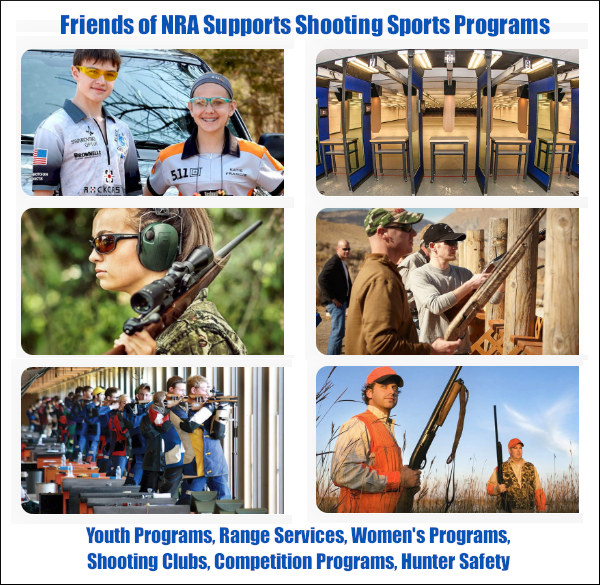
Each year, funds raised through Friends of NRA events raise money to support grants at the national, state, and local levels. These grants help organizations across the country create opportunities that promote firearms safety, strengthen shooting sports programs, and educate communities about the rich history and tradition of responsible firearms ownership.
Friends of NRA Grants fund activities and programs that:
1) Promote firearms and hunting safety; 2) Enhance marksmanship skills; and 3) Educate the public about firearms history and technology.
If your organization works to support youth education, shooting sports, hunter education, firearms training, range development, conservation, or other qualifying initiatives, your project may be eligible for a Friends of NRA Grant. Organizations are encouraged to review the grant requirements and determine if their program matches NRA grant objectives.
Whether you are looking to purchase equipment, expand an educational program, improve a facility, or provide new opportunities for participants, Friends of NRA grants help turn ideas into impactful programs in communities across the country. Friends of NRA grants are made possible because of the dedication of volunteers, donors, sponsors, and supporters who come together at local Friends of NRA events.
How to Apply for Friends of NRA Grants
Application deadlines vary by state. Organizations interested in applying are encouraged to review their state’s specific deadline and submit applications early to allow adequate time for review. While deadlines differ based on location, all State Fund Committees provide applicants with at least two months to submit their applications. CLICK HERE for Friends of NRA Grant Application deadlines.
Visit the Friends of NRA Grants page to review eligibility requirements, learn more about the application process, and submit your application today. Questions? Email: grantprogram@nrahq.org
A while back our Aussie friend Stuart Elliot of BRT Shooters Supply filmed some interesting videos at the QTS range in Brisbane, Australia. Stuart told us: “I was shooting in an Air Gun Benchrest match here in Brisbane, Australia. I finished my target early and was awaiting the cease fire and took a short, slow-motion video of windflag behavior.” You may be surprised by the velocity changes and angle swings that occur, even over a relatively short distance (just 25 meters from bench to target).
Here are windflags in slow motion:
The flags show in the videos are “Aussie Wind Flags”, developed by Stuart Elliot. These are still produced in Australia, and are now available through BRTFlags.com.
Here is a video in real time:
Stuart says this video may surprise some shooters who don’t use windflags: “Many people say the wind doesn’t matter. Well it sure does — whether for an airgun at 25 meters or a long range centerfire at 1,000.” This video illustrates how much the wind can change direction and velocity even in a small area.
Today, August 2, 2026, classic military rifles will fill the firing lines at Camp Perry. Multiple vintage rifle competitions have been running this weekend. The National John C. Garand, Springfield, Vintage and Modern Military Match (GSMM) ran on August 1st, while today the M14 Heritage Mage and Vintage Sniper Rifle matches run at the Viale Range at Camp Perry. (See CMP Camp Perry 2026 Calendar.) Some participants are shooting just one rifle type, but there was also a combined GSMM 4-Gun Aggregate. This GSSM Agg encompasses a series of position shooting matches on NRA SR targets at the CMP Nationals. Match scores will be posted on the CMP National Matches Results Page.
August 1, 2026
National John C Garand, Springfield, Vintage
and Modern Military Match (Viale Range – 10 Relays)
New in 2026 – CMP Roosevelt Match (Viale Range)
August 2, 2026
M14 (M1A) Heritage Match – (AM Viale Range)
CMP Vintage Sniper Match (Viale Range 11:30AM)
CMP Games Awards Ceremony
This video shows the Garand Match at Camp Perry. The rifles are still the same a decade later…
The annual GSMM event is one of the most popular events at Camp Perry, drawing participants from around the nation. One of America’s top GSSM shooters is Brian Williams, who was profiled in our Daily Bulletin. The 4-gun Aggregate includes Garand, 1903 Springfield/1917 Enfield (or similar bolt rifle), M1 Carbine, and AR-type rifle for “Modern Military”. Remarkably, Brian won the GSMM 4-Gun at the CMP National Matches in Camp Perry three years in a row — the inaugural 2017 4-Gun Agg, plus 2018 and 2019. Below, Brian offers some thoughts on the classic wood-stocked rifles used in GSMM competition: M1 Garand, 1903 Springfield, and M1 Carbine.
M1 Garand Service and Maintenance
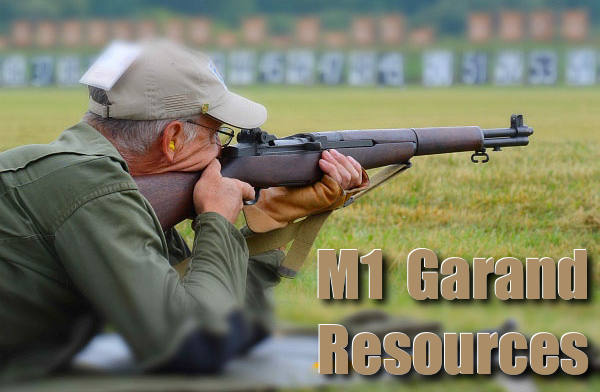
Shooting Sports USA (SSUSA) published an excellent article on Service and Maintenance of M1 Garand Rifles. This offers some smart tricks, such as using smoke from burning masking tape to darken the front sight post. There is also an older SSUSA article that covers basic cleaning and servicing and also explains how to upgrade the performance of your Garands. READ Article HERE.
M1 Garand Disassembly, Cleaning, and Lubrication
This Brownells video shows how to disassemble your M1 Garand.
Recommended M1 Garand Service Manuals
Among the many M1 Garand manuals available, we recommend the CMP’s U.S. Rifle, Caliber .30, M1: ‘Read This First’ Manual. This booklet covers take-down, reassembly, cleaning, lubrication, and operation. The manual comes with CMP rifles or can be purchased for $3.25 from the CMP eStore. The author of Garand Tips & Tricks says: “It’s one of the best firearms manuals I’ve seen and I highly recommend it.”
The Classic Wood Guns of CMP 4-Gun Competition
Perspectives on M1 Garand, M1903A3, M1917, and M1 Carbine
CMP 4-Gun ace Brian Williams provides perspectives on the “Wood Gun” game, with suggestions on how to improve your performance with the M1 Garand, M1903 Springfield, M1917 Enfield, M1 Carbine, and other 20th Century military rifles. Brian explains what to look for…
Q: What should one look for when acquiring older rifles for CMP 4-Gun Games — M1 Garand, M1903/1903A3, M1917, M1 Carbine? What are realistic budgets for these firearms? What kind of accuracy can one expect? What upgrades are important?
Brian: All of these military surplus rifles are out there, but they are getting harder to get your hands on. And, just like everything else, the prices continue to rise. Not that long ago you could get your hands on a M1 Garand for four or five hundred dollars. In today’s market they are usually about double that price. But understand that these rifles are all unique and all have a story to tell. No two are alike, or have the same story. Just like the guns themselves, there are fewer and fewer dedicated gunsmiths for these vintage rifles. But I promise if you look for a good smith, they are out there and they are some of the most interesting people you will ever meet.
M1 Garand — Of the four (4) centerfire guns I shoot in the CMP games, my favorite has to be the M1 Garand. There were over 6 million of them produced in a very short time period, and every single one has its own unique story, and that is just cool. M1 Garands are capable of good accuracy. I believe that a well-maintained M1 with at least a replacement barrel is capable of shooting between 1 and 1.5 MOA.
M1903A3 Springfield — I find that the sights on a M1903A3 are a little easier to see than the sights of the M1903, but both are very accurate rifles. Like most military rifles in the current climate the prices have risen dramatically, but there are some gems out there that can be had for far less than $1000. The nice thing about the Springfield rifle is that almost all of the accuracy than you would want can come from just replacing a worn out 80-year-old barrel. In terms of accuracy, I think a good M1903A3 can shoot 1 MOA most of the time.
M1917 Enfield — This rifle is the newest of my collection and it shoots very well, with just a new Criterion barrel — again about 1 MOA with iron sights. These rifles are very close in price to the M1903 Springfield. But if you do your homework and keep your eyes open, there are always great deals to be found. I actually prefer shooting the M1917 to my M1903A3, due primarily to the M1917’s cock-on-close bolt which allows smoother cycling.
Public domain photo from Armémuseum (The Swedish Army Museum).
M1 Carbine — By 1945 there had been more M1 Carbines built than Garands. Today the Carbine can be harder to find, and due to the scarcity the price has shot up and most military M1 Carbines are going for more than $1000 at this point. The great thing about the M1 Carbine is that as long as you have a good ammo supply this rifle can shoot. Honest. I have had countless numbers of people that tell me that there is not an M1 carbine that will shoot. I can tell you from experience that they will, but you are going to have to put in some time with one to learn how to get it to shoot where you want it.
The M1 Carbine shoots the .30 Carbine round, with 110gr bullet going about 1990 FPS. In comparison, the .30-06 Springfield round used in the M1 Garand is almost three times more powerful than the .30 Carbine.
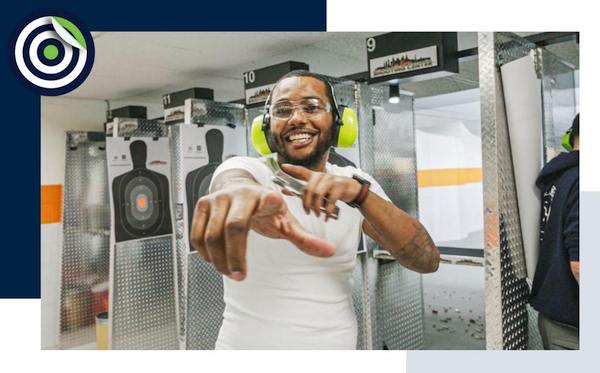
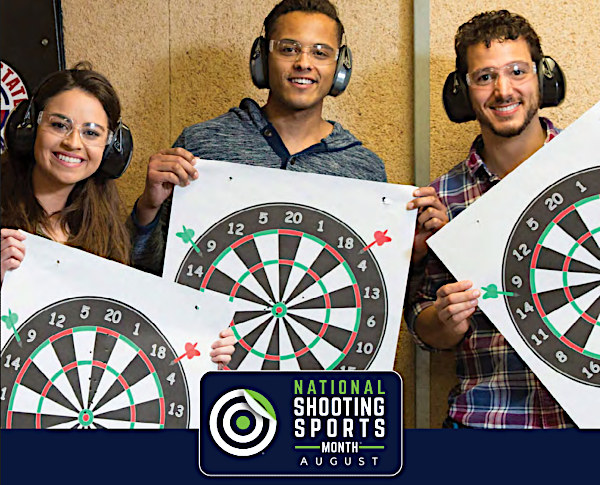
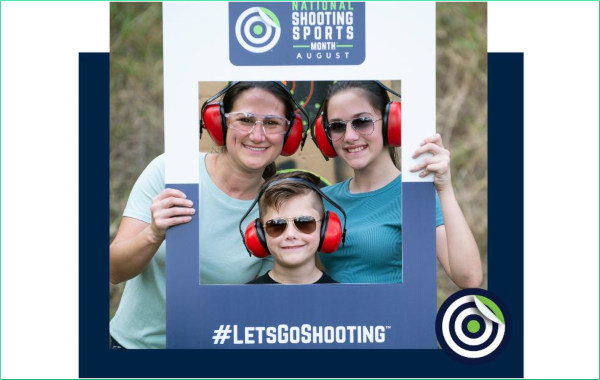
We’re two days into August. And guess what — August is officially National Shooting Sports Month, sponsored by the National Shooting Sports Foundation (NSSF). This month, head to the range, and bring a newbie to introduce him or her to the sport. NSSF’s +ONE Movement encourages experienced shooters to mentor newcomers, so bring a friend to the range, teach firearms safety, and have fun together. More than 63 million adults and youth participate in target shooting sports, so have fun this month!
1. Rediscover Shooting
Haven’t shot in a while? Dust off your shooting gear. Always check to see if firearms are loaded when removing them from storage. And call an old shooting buddy or family member to join you.
2. Try a Drill or Competition
There are many ways to build shooting skills, but two of the most rewarding ways of self-improvement often come from timed drills, accuracy drills or competitions. Find a drill for you or a local pistol, rifle or shotgun competition. There many even be a multi-gun competition.
3. Take Your First Shots
Safety orientation, range rules, range officers… there are things you need to know about if you haven’t tried target shooting before. Learn about range safety and etiquette and consider taking an introductory class like First Shots.
4. Take a Date to the Range
Make it a date! Ask your spouse/partner to go target shooting with you. You’ll have a great time together. Don’t have someone to go with? Call the range and ask about shooting events and training classes.
5. Be a Mentor
The right teacher makes all the difference when learning a new activity. The +ONE initiative inspires experienced shooters and hunters to guide newcomers and novices on how to safely handle firearms and learn marksmanship skills.
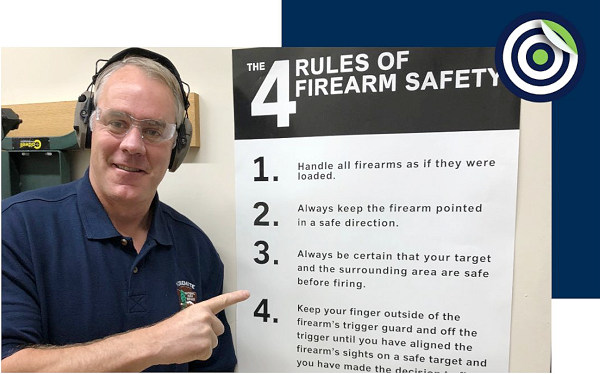
6. Brush Up on Safety
Enroll in a firearm training course or review the rules of firearm safety. Responsible gun owners safely handle their firearms and securely store them when not in use. Check with your local retailer of range for in-person training opportunities.
7. Tune Up for Hunting Season
Hunting is fun and can provide the ability to harvest healthful food. A trip to a firearms retailer or range can help you prepare for hunting season. You can enroll in a hunter education course, find the right gear, and get your rifle sited properly for the fall hunting season.
8. Take Advantage of August Deals
Retailers and ranges will be offering specials during National Shooting Sports Month at thousands of events nationwide. Find a participating business near you to take advantage of these notable offers at ShootingSportsmonth.org.
9. Have A Fun Target Match with Friends
With pistols and rimfire rifles you can have fun shooting indoors, and many ranges are open after work. This is an opportunity to have funs with friends and co-workers. NSSF offers a variety of nice targets you can print out.
10. Share #LetsGoShooting with Friends and Social Media
#LetsGoShooting is the official theme of National Shooting Sports Month. Share your shooting experience on social media networds and encourage other to go to the range for fun, socializing, and training.
Whether you’re new to target shooting, a first-time gun owner or experienced, see what National Shooting Sports Month has to offer at your shooting range or firearm retailer. America’s firearm owners will find National Shooting Sports Month in August a great time to spend a day at the range enjoying their favorite target-shooting sports with friends and family members. It’s also a time for millions of first-time gun owners to check out all that the shooting sports have to offer.
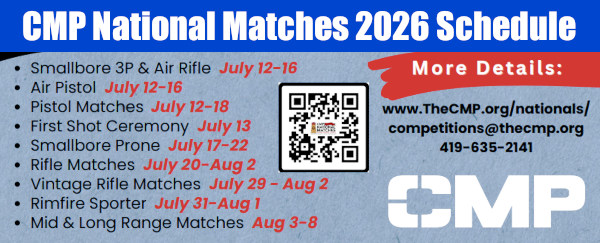
The CMP National Matches at Camp Perry, Ohio commenced July 12, 2026 with Smallbore 3P and Air Rifle events. The Camp Perry matches have been held since 1907 at this location on the shores of Lake Erie. The 2026 First Shot Ceremony took place Saturday, July 13 on the grounds of Camp Perry. Matches have been running for the past three weeks, with the final Mid-Range and Long-Range events scheduled for this coming week August 3-8, 2026. CLICK HERE for National Match INFO and Schedules.
Today, August 1st, the Rimfire Sporter match takes place. This is a hugely popular event that draws hundreds of competitors every year.
Rimfire Sporter Match Today August 1, 2026 Today, August 1st, the Rimfire Sporter match takes place. This is a hugely popular event that draws hundreds of competitors every year.
Saturday at the Movies — National Matches News Reports
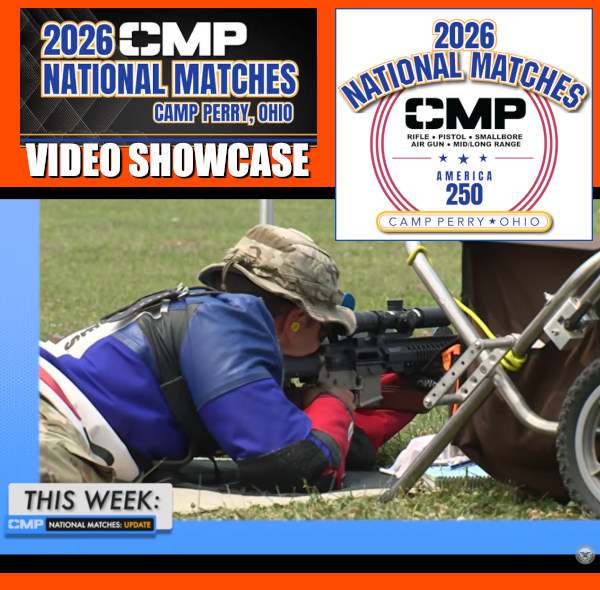
Today’s Daily Bulletin Saturday Video Showcase features the CMP’s official National Matches Video News Reports, produced by ShootingUSA TV and hosted on YouTube. Along with range footage from the matches, each weekly report includes interviews with competitors, plus features on rifles and equipment.
2026 CMP National Matches Week 3 Report
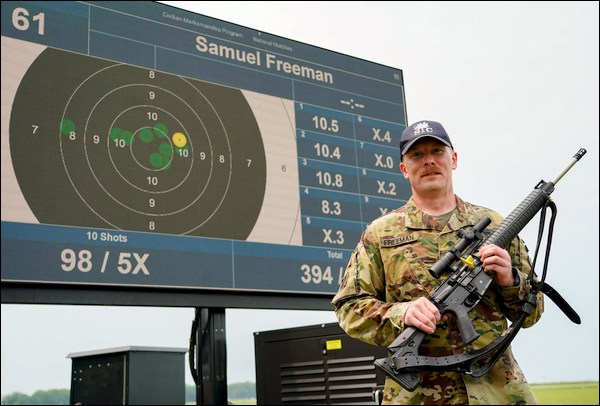
Congratulations to MAJ Samuel Freeman, the 2026 President’s Match winner. This is the second time MAJ Freeman has won the President’s Rifle Trophy.
Week 3 of the CMP National Matches video coverage featured High Power action from the Camp Perry ranges, highlights from the 2026 President’s Rifle Match, a Junior Spotlight on Sabrina Smith — who earned a Top 20 finish in the President’s Match. This video also covers the recent announcement that the CMP will be selling semi-auto converted M14 rifles starting late 2026. Correspondent Serena Juchnowski also interviews sling guru Jack Jones.
Mid-Range and Long-Range Matches Starting August 3, 2026
2026 CMP National Matches Week 2 Report
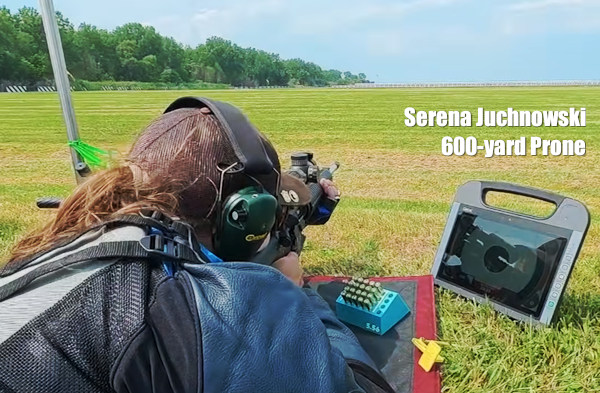
Week 2 of the CMP National Matches at Camp Perry saw a lot of action. From the prestigious National Trophy Pistol Matches, to the Smallbore Matches, and even Air Rifle and Air Pistol, a number of 2026 National Match Champions were announced. This 22-minute video features smallbore matches as well as 600-yard high power shooting. This CMP Week 2 video has a Junior Spotlight, Dominic Baliva, plus a Competitor Spotlight, featuring Serena Juchnowski (photo above).Also included in the Week 2 shot is Scott Rhodes, who discusses woodworking and stock-making.
2026 CMP National Matches Week 1 Report
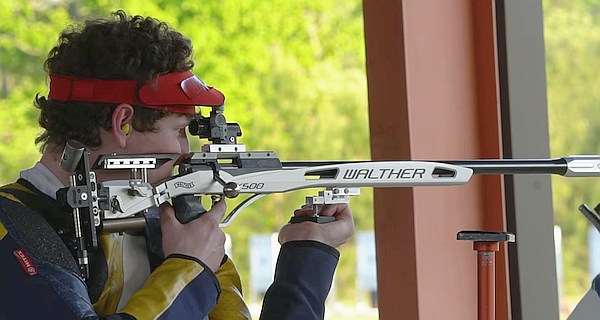
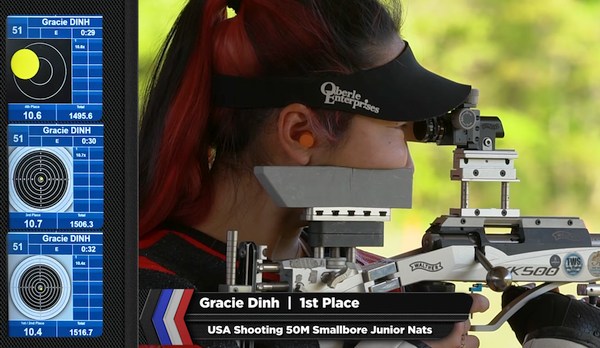
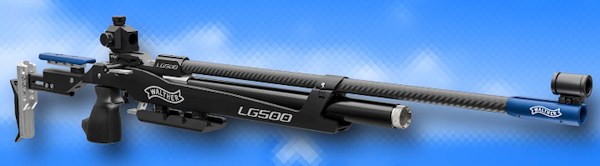
This video covers the initial week of the 2026 CMP National Matches at Camp Perry. Week 1 coverage includes the First Shot Ceremony, Smallbore 3P and Air Rifle matches, along with Bullseye Pistol Matches. In addition, there is a product feature on Walther .22 LR Rimfire Rifles, Air Rifles, and Air Pistols. This video is worth watching start to finish to see the rimfire, air rifle, and air pistol disciplines.
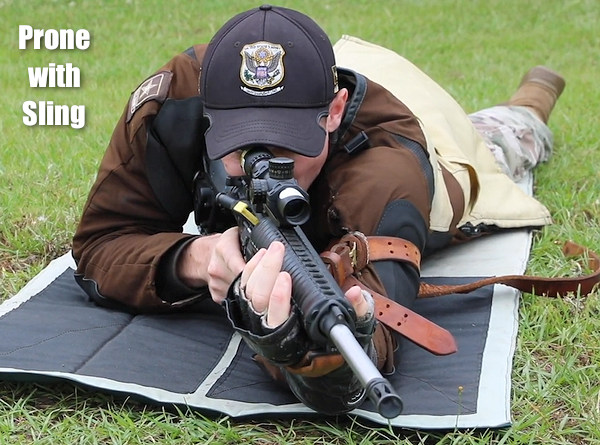
The prone position (with sling) shown by two talented Service Rifle shooters. At top is Brandon Green, a multi-time U.S. National Highpower and Long Range Champion, who has also won the prestigious King’s Prize in the UK. Below is Tony Chow, a gifted match shooter. NOTE: Current Service Rifle rules allow the use of optics up to 4.5X.
Jay Christopherson, 2024 and 2020 Southwest Nationals F-Open Champion, is one of the nation’s best F-Class shooters. When shooting F-Class, Jay uses a SEB Mini front rest and a large rear sandbag to support his big 22-lb F-Open rifle. Though he loves F-Class, Jay has also been interested in Service Rifle competition where no external supports are allowed. When shooting Service Rifle you hold the rifle with your arms and a sling. Some Service Rifle competitions involve three position (Standing, kneeling/sitting, and prone), while others are prone only. Even in the prone position, the sling is a vital accessory. The USAMU video below shows how to rig your sling properly for use in the prone position.
Improving Prone Shooting with Help from Emil Praslick III
Jay dramatically improved his Service Rifle “hard-holding” technique by enlisting the help of Emil Praslick III, former U.S. Army Marksmanship Unit (USAMU) rifle coach. Emil’s guidance and advice resulted in an immediate increase in Jay’s scores on target, as recorded by his ShotMarker electronic target system. Jay noted: “These targets show the difference between hacking it on your own, and spending an hour with someone who knows what they are doing and can tell you that you are doing it wrong.” These targets show Jay’s “before and after” Service Rifle results shooting slung up prone at 600 yards:
Service Rifle, Prone with Sling at 600 Yards
Here is Jay’s target BEFORE training with Emil Praslick — a 194-3X with lots of vertical.
And here is Jay’s improved target AFTER putting Praslick’s advice to work — impressive 199-8X with significantly less vertical.
You can see on this second target much improved vertical. All 20 shots were in a vertical range much smaller than the vertical height of the 10-Ring. Had shot 16 not gone wide left, this would have been a 200. Shot 16 was OUT of the 10-Ring to the left, but note that vertically it has almost perfect elevation.
Jay stated: “I was pretty amazed at not only the difference on the target, but how much difference the changes Emil suggested made to how my hold felt. The entire feel was different and a ton less stress in my neck and arms compared to what I was feeling before. I was actually feeling pretty good about that 194 yesterday, because I hadn’t slung up in two years and that was my highest score (by one point) after doing some load fixing. But having someone explain what you are doing wrong and why makes a world of difference.


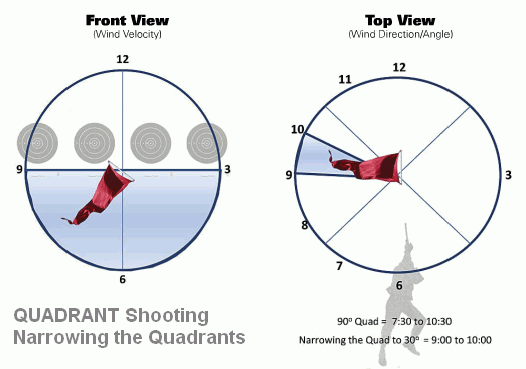
 In the digital archives of Shooting Sports USA, we’ve found some great features that deserve a second look. A few years back, Shooting Sports USA published Sights, Wind and Mirage, an outstanding article that explains how to judge wind speed/direction and adjust your sights accordingly. Authored by highly respected shooter Ernest (Ernie) Vande Zande, this article is a definite “must-read” for all competitive rifle shooters — even those who shoot with a scope rather than irons. Vande Zande’s discussion of mirage alone makes the article well worth reading. Highly recommended.