Last year, the Garand Collectors Association (GCA) and Civilian Marksmanship Program (CMP) launched the Master Marksman Program for CGA members. This program was created to reward participation in CMP matches with As-Issued M1 Garand rifles. To participate, a competitor must be a current member of the GCA. Garand competitors can easily obtain CGA memberships through the GCA website, and a Garand competitor can even join the GCA the day of the match.
Similar to the CMP’s Distinguished Badge Program, the CGA/CMP Master Marksman Program uses an Achievement Award point system, based on performance at CMP events (listed below). Points are awarded with Gold (10 pts), Silver (8 pts) and Bronze (6 pts) levels. Competitors must reach a total of 40 points overall, with one gold and one additional gold or silver required. All other points may be bronze or greater. In 2023, 16 GCA member competitors were awarded the GCA’S Master Marksman Award.
Only As-Issued M1 Garands may be used. Competition Rules for the John C. Garand Match (Course A: 30 rounds) will be followed as defined in the CMP Games Rifle and Pistol Competition Rulebook. Those who fire in re-entry events will only be able to use their highest score as points.
2024 Eastern Games (North Carolina) April 26 – May 5, 2024
2024 Talladega D-Day Matches (Alabama) June 6-9, 2024
2024 National John C. Garand Match (Ohio) August 1-4, 2024
2024 New England Games (Vermont) September 23-29, 2024
2024 Western Games (Arizona) October 7-13, 2024
2024 Talladega 600 (Alabama) November 8-14, 2024
You can find the match programs, event schedule, registration information by visiting the CMP Travel Games website. If you have questions about the CGA/CMP Master Marksman Program, contact CMP’s Christina Roguski at 419-635-2141, ext. 714 or croguski@thecmp.org.
This CMP Video Explains the Process for Ordering an M1 Garand from the CMP:
The GCA is proud of its partnership with the Civilian Marksmanship Program (CMP). The CMP is a federally chartered 510(c)(3) corporation dedicated to leading the nation in marksmanship excellence providing safe, high quality and innovative programs with a focus on youth.
Mark your calendars for the return of the Civilian Marksmanship Program’s Bianchi Cup International Pistol Tournament! The second longest-running pistol championship in the world, the 2024 CMP Bianchi Cup is set to fire May 21-24, 2024 at the Green Valley Rifle & Pistol Club in Hallsville, Missouri.
Registration for the 2024 Bianchi Cup is now open. Learn more about the 2024 CMP Bianchi Cup and register today at TheCMP.org/bianchicup.
The Bianchi Cup is comprised of four events, including:
The Practical Event, where competitors fire at distances from 10 yards to 50 yards under varying time limits from the shooting line.
The Barricade Event, where competitors fire at targets on either side of the barricade at different distances and under varying time limits from within shooting boxes and behind barricades.
The Falling Plate Event, where competitors fire at eight-inch round steel plates arranged in banks of six at distances from 10 to 25 yards under varying time limits.
The Moving Target Event, where competitors fire from within shooting boxes at distances ranging from 10 to 25 yards at a target moving from left to right, with the target exposed for six seconds.
Competitors shoot from both standing and prone positions and are also required to shoot with both strong and weak hands at various stages. There are no makeup shots in the Bianchi Cup, adding to the challenge.
The annual competition is popularly called the Bianchi Cup — from the trophy named for one of the founders, John Bianchi. Since it’s launch over 30 years ago, the match has become the richest handgun tournament in the world.
NEW FOR 2024! A Rimfire Division has been added to the Bianchi Cup to encourage participation from juniors not shooting centerfire pistols as well as adults who want to warm up for the Bianchi Cup in a less expensive manner. The Rimfire Division offers a memorable Bianchi Cup experience at a fraction of the ammo cost. This division will encompass the same basic rules for each of the current setups — Open, Production/Production Optics, Metallic and Revolver.
Bianchi Cup Open Class Pistol — Features in Review
The Bianchi Cup has been called the most prestigious pistol tournament in the world. Due to the high accuracy required in each stage of the Bianchi Cup, the tournament is considered one of the most difficult handgun championships on the planet.
Bianchi Cup — the Richest Handgun Match on the Planet
Over the past 30+ years the Bianchi Cup has become the richest handgun event in the world, with cash and prizes for the best scores on four stages of fire for both revolver and semi-auto pistol divisions.
Bianchi Cup — Classic Course of Fire
The Bianchi Cup is a combination of Speed and Accuracy. Competitors shoot from both standing and prone positions and are also required to shoot with both strong and weak hands at various stages. Stages may combine stationary and moving targets. The Course of Fire consists of four separate matches:: Practical, Barricade, and Moving Target, and Falling Plates. Each of the four events requires 48 shots to complete. 480 points are possible on each event. Three of the four are scored on the NRA tombstone P1 target. You must hit in the 10-ring or inner X-Ring on EVERY shot to shoot a “clean” 1920.
About the Green Valley Rifle & Pistol Club
The Green Valley Rifle & Pistol Club, formerly the Chapman Training Academy, has been the annual host of the Bianchi Cup since its inception. The origin of the club days back to the 1930s and has played a major role in the creation of the practical shooting discipline. The facility holds several ranges, including two movers, a Bianchi barricade, two 50-yard Bianchi practical ranges, a 250-plus yard rifle range and a falling plates range. CLICK HERE for range information.
In this article, three great champions reveal their wind-calling secrets in video interviews. We first published this “Three Champions” story a few years ago. If you are a competitive shooter, and you want to learn more about reading the wind, you should watch all three of these interviews. These guys are among the best shooters to ever shoulder a rifle, and they have much wisdom to share.
At the 2010 SHOT Show, we had the unique opportunity to corner three “superstars” of High Power shooting, and solicit their wind-reading secrets. In the three videos below (in alphabetical order), Carl Bernosky (10-Time Nat’l High Power Champion), David Tubb (11-time Nat’l High Power Champion and 7-time Nat’l Long-Range Champion), and John Whidden (6-Time Nat’l High Power Long-Range Champion) shared some of the wind-doping strategies that have carried them to victory in the nation’s most competitive shooting matches. This is GOLD folks… no matter what your discipline — be it short-range Benchrest or Long-Range High Power — watch these videos for valuable insights that can help you shoot more accurately, and post higher scores, in all wind conditions.
We were very fortunate to have these three extraordinarily gifted champions reveal their “winning ways”. These guys REALLY know their stuff. I thought to myself: “Wow, this is how a baseball fan might feel if he could assemble Babe Ruth, Hank Aaron, and Ted Williams in the same room, and have them each reveal their hitting secrets.” Editor’s Note: These interviews were conducted before all three men won their most recent National Championships so the introductions may list a lower number of titles won. For example, John Whidden won back-to-back LR Championships in 2016 and 2017.
NRA publication Shooting Sports USA (SSUSA) has thousands of articles online, all free for the reading. Many of these stories have been written by top competitors, including National and Olympic Champions. You will find SSUSA articles spotlighted every week on the NRA Competitive Shooting Facebook page. We recommend you bookmark that page as a valuable resource. Here are four notable SSUSA articles that have been featured on Facebook this month. Go to SSUSA.org to see even more current articles, with new content every day.
Here is an insightful, fairly lengthy 1850-word article about the phenomenon we call mirage. The article explains how and why mirage appears, how it can best be monitored, and how mirage can indicate both wind velocity and direction. Top competitors follow the adage “Mirage is your friend”, because mirage can often be the most important indicator of wind variables — sometimes even more important than wind flags. “The mirage is more sensitive than the flags since it has less inertia and momentum”, wrote Desmond T. Burke, in his book, Canadian Bisley Shooting, an Art and a Science.
Well worth reading, this SSUSA article talks about the properties of mirage. Here is a sample:
“Mirage — can make all the difference between a shot landing squarely in the X-ring or being victimized by an undetected downrange breeze. The true power of mirage is found in its ability to betray the subtlest of breezes downrange. Its fluid movement… can not only provide wind direction, but speed as well.
Typically, the ability to detect mirage is maximized on warm, sunny and sultry days. Expect mirage to be most pronounced in mid-morning or early afternoon, although it ignores these rules with regularity[.]
Mirage is extremely powerful at identifying winds of less than 12 mph, particularly those gentle breezes subtle enough to not even bother moving the flags.
When there is no wind, or a gentle head or tail wind, mirage will appear to be ‘bubbling’ directly up from the ground. Many call this ‘boiling’, and it is probably the easiest of all to detect.
As a general rule of thumb, when wind speed increases, overall height of the waves produced by the mirage is reduced. Large peaks and valleys in the waves mean that particular mirage is being driven by a very slight breeze. Conversely, crest size is reduced with wind speed, making it harder and harder to detect, until the mirage disappears entirely at somewhere around 12 miles per hour. In other words, the taller mirage’s waves appear, the slower the breeze.”
Authored by the late Glen Zediker, this article covers barrel break-in procedures. It is particularly useful for dealing with factory barrels. We CAUTION readers — with outstanding, hand-lapped custom barrels from top barrel-makers, you may want to do very little break-in — clean sparingly and keep barrel heat low. Do NOT use abrasives aggressively. On our Krieger and Brux barrels, we simply wet-patched every 2-3 rounds for 20 rounds and the barrels shot superbly from the start with minimal fouling. But for factory barrels, a moderate break-in process may prove beneficial.
Zediker explains: “Lesser, lower-cost barrels are going to have more pronounced … imperfections within the bore[.] These imperfections are largely tool marks resulting from the drilling and rifling processes. And if it’s a semi-automatic, like an AR-15, there might be a burr where the gas port was drilled. The goal of break-in is to knock down these imperfections, thereby smoothing the interior surface.”
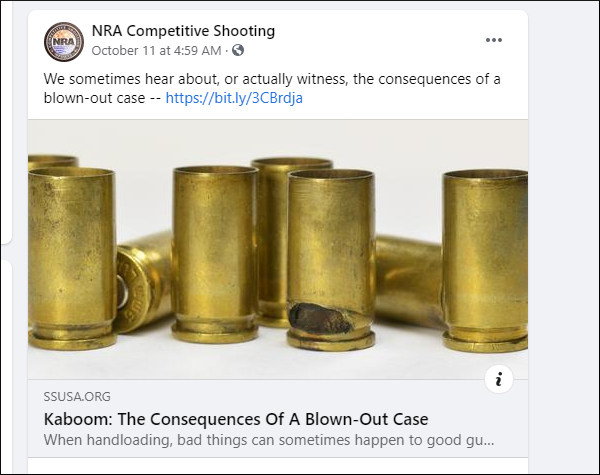
As one who has experienced a cartridge case-head blow-out with a 9mm pistol, this Editor is very conscious of the risks involved and the damage a blow-out can do to the pistol, to the magazine, and (worst of all) to the shooter. Even with new brass, the possibility of a case failure is always present. And even if the case remains intact, we’ve seen primer failures that create a dangerous jet back towards the pistol shooter. That’s why shooters should always employ protective eyewear whenever they shoot.
We love our wheelguns, but there’s no doubt that forcing cone damage can occur, particularly with hot loads and if your cylinder-to-barrel gap is excessive. This article explains how to inspect your revolvers, and how to mitigate the likelihood of forcing cone damage. The article also explains how to clean your revolvers properly. This is very important to avoid build-up of lead and powder residues.
How well can the little 6mm Dasher perform at 1000 yards when the conditions are good, and the shooter is riding a hot streak? Well here’s a shot-by-shot record of Scott Nix’s 4.554″ ten-shot group shot at the Deep Creek Range outside Missoula, Montana at the Northwest 1000-yard Championship a few years back. All 10 shots were centered for a 100-6X score. That’s about as good as it gets. If Scott had stopped after 5 shots, his group would have been under three inches.
Video Demonstrates Amazing 1000-Yard Accuracy
Watch the video. You can see the group form up, shot by shot. It’s pretty amazing. Scott’s first shot (at the 45-second mark of the video) was right in the X-Ring, and four of Scott’s first five shots were Xs. That’s drilling them! This video was recorded from the pits at the 1000-yard line, during record fire.
Deep Creek Range
The Deep Creek Range in Missoula, MT is one of the nicest places to shoot in the Intermountain West region. The range is located in the mountains within a few minutes drive of Missoula, and there is camping on-site. When conditions are good at Deep Creek, records get broken. To learn more about shooting at Deep Creek, contact Jamey Williams at jameydan[at]gmail.com.
Here is an aerial view of the Deep Creek Range (Drone video by David Gosnell):
With over 340 shooting-related videos, the Alabama Arsenal YouTube Channel is a remarkable resource. This video channel provides detailed field tests of tactical-type rifles, ARs, and pistols. The testers have access to some very impressive ranges, and many of the tests are far more thorough than you’ll typically find with most gun magazines and gun-centric YouTube channels. For example, Alabama Arsenal (AA) has a series of 1000+ round pistol test videos. These are well worth watching if you are considering purchase of a defensive handgun.
Today we showcase multiple rifle videos covering two centerfire rifles, and three precision rimfire rigs. After these field test videos, you’ll find an interesting technical video which investigates how suppressors can affect muzzle velocity.
Barrett MRAD .300 PRC at 2200 Yards — Extreme Long Range
Here’s a rugged tactical rifle put to the test at Extreme Long Range. This video, featuring a Barrett MRAD chambered for the .300 PRC cartridges, features accuracy testing out to 2200 yards (1.25 miles). There is some good drone footage covering the long path to the target. The shooter noted that the bullets fired from his .300 PRC “go sub-sonic somewhere between 1800 and 1900 yards”, creating additional ballistics challenges at this yardage.
Savage 110 Elite Precision for PRS Production Class
In this video AA’s team reviews the Savage Elite Precision Rifle with MDT ACC Chassis. Retailing for about $1810.00 in 6mm Creedmoor, this is one of the better production class options for PRS and NRL competition. Starting at the 3:10 time-mark, the video shows how all the adjustments function on the MDC ACC Chassis. Guns America Digest did a full review of this rifle, and was quite impressed.
Rimfire .22 LR Bergara B-14R in WOOX Furiosa Hybrid Chassis
Alabama Arsenal recently tested a .22 LR Bergara B-14R rimfire rifle fitted with the WOOX Furiosa hybrid chassis system, an Italian-made product featuring wood sections over a strong aluminum core chassis. The bolt operation and ergonomics of the B-14R simulate a Remington 700 very closely, making this rifle good for rimfire cross-training. The B14-R model tested was the version with carbon-wrapped barrel.
The WOOX Furiosa is an innovative, unique aftermarket replacement chassis. This high-tech hybrid stock/chassis combines wood sections over a full-length, aerospace-grade aluminum skeleton chassis, giving it the “feel” of a wood stock with the strength and stability of a metal stock. We like the way the stock feels on the trigger hand in particular and the smooth wood cheekpiece is also very nice. Made in Italy, the Furiosa is offered in three versions all with wood sections on the forearm, grip area, and cheekpiece. Choose natural Walnut Brown, Micarta Black, or Midnight Grey. Alabama Arsenal tested a B14-R fitted with the Micarta Black version. Below are photos of a centerfire rifle in a WOOX Furiosa hybrid chassis, with the Brown Walnut elements.
CZ 457 Varmint Precision Trainer and Chassis
In this video, Alabama Arsenal compares two higher-end versions of the popular CZ 457 rimfire rifle, a great choice for the NRL22 and PRS 22 disciplines. The test compares the CZ 457 in a Manners composite stock with a CZ 457 version in a Varmint Precision aluminum chassis. Right now basic CZ 457 rifles start at about $540.00, with the Varmint Precision models running $930 for the metal chassis version and $1130 for the Manners carbon-fiber composite stock model.
Informational Video about Rifle and Pistol Suppressors
Alabama Arsenal regularly tests its firearms with suppressors. Over time, the testing team has leaned much about modern sound moderators, comparing features and learning how to install and maintain quality suppressors. Here is an interesting video that shows how suppressors affect shot velocities.
Field Testing — Do Suppressors Change Bullet Velocity
Want to see more content like this? Here are LINKS…
Alabama Arsenal has nearly 300 videos on its YouTube channel. In addition, you’ll find dozens of firearms photos and other shooting-related content on Alabama Arsenal’s social media pages: Facebook; Instagram; and Twitter. You can support the Arsenal’s gun testing by subscribing to the Alabama Arsenal’s PATREON Page.
“Shoot Like a Champion”. Bryan Litz, author of Applied Ballistics for Long-Range Shooting, says he often sees notes like this tucked in shooter’s gear (or taped to an ammo box) at matches. What “marksmanship mantras” do you use? Do you have a favorite quote that you keep in mind during competition?
On the Applied Ballistics Facebook Page, Bryan invited other shooters to post the motivating words (and little reminders) they use in competition. Here are some of the best responses:
“Shoot 10s and No One Can Catch You…” — James Crofts
“You Can’t Miss Fast Enough to Win.” — G. Smith
“Forget the last shot. Shoot what you see!” — P. Kelley
“Breathe, relax, you’ve got this, just don’t [mess] up.” — S. Wolf
“It ain’t over ’til the fat lady sings.” — J. McEwen
“Keep calm and shoot V-Bull.” — R. Fortier
“Be still and know that I am God[.]” (PS 46:10) — D.J. Meyer
“Work Hard, Stay Humble.” — J. Snyder
“Shoot with your mind.” — K. Skarphedinsson
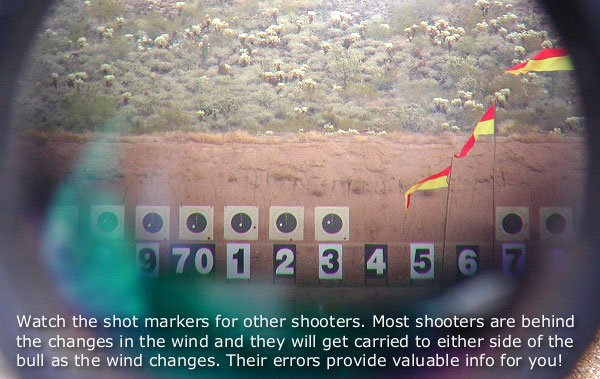
“The flags are lying.” — R. Cumbus
“Relax and Breathe.” — T. Fox
“Zero Excuses.” — M. Johnson
“SLOW DOWN!” — T. Shelton
“Aim Small.” — K. Buster
“Don’t Forget the Ammo!” (Taped on Gun Case) — Anonymous
PARTING SHOT: It’s not really a mantra, but Rick Jensen said his favorite quote was by gunsmith Stick Starks: “Them boys drove a long ways to suck”. Rick adds: “I don’t want to be that guy”, i.e. the subject of that remark.
Former Army Ranger sniper instructor Ryan Cleckner is the author of the best-selling Long Range Shooting Handbook. Cleckner hosts a series of videos that cover shooting techniques appropriate for tactical and PRS-type disciplines. Here are five short videos that cover various aspects of shooting techniques and rifle set-up. We think PRS/NRL competitors (and long-range hunters) can benefit from these videos.
“Consistency is the key to accuracy.
You need to think about a system of how you’re going to shoot that is not only comfortable, but [is] repeatable when you’re shooting.” — Ryan Cleckner
In this first video, Cleckner explains proper scope position. Ryan finds that some shooters place the scope too far forward or too far rearward. If the scope is too far back you may have issues with eye relief and stock reach to shoulder. If it is too far forward, you may have cheek-weld problems or get neck strain.
Cleckner offers a simple method to check your scope position: “To see if your scope is set up properly … close your eyes, lay your head on your gun, get completely comfortable, and only when you are set-up, then open your eyes. If you can’t see clearly through your scope, CHANGE something [such as comb height or scope position]”. “When you open your eyes, if you see some scope shadow [i.e. the black ring around the edge of the scope picture], figure out which way you need to move your head to get rid of that shadow, and then make adjustments to either your position, the rifle, or the scope.”
Cleckner prefers shooting off a bag when in the prone position, when that is practical. The bag provides a more stable support than a small Harris-type bipod, doesn’t require pre-loading the rifle, and there is less bounce or hop on recoil.
Former Army Ranger sniper team leader Ryan Cleckner explains how important it is to keep your rifle straight up and down when long-range precision shooting. Cleckner demonstrates with an AR-10 modern sporting rifle how slight cant to your rifle can cause a miss over long distances.
Here Cleckner covers some of the basic points of trigger control on tactical-style rifles. These basic principles apply to both single-stage and two-stage triggers. NOTE: For benchrest rigs, with ultra-light pull weights, more refined techniques may be appropriate.
In tactical events, when you’re shooting on the clock and loading from a detachable magazine, you should manipulate the bolt smoothly but strongly. Here Cleckner demonstrates how to cycle a tactical-type rifle. He says, “You should be running the bolt on your rifle with authority. Run it like you mean it!” NOTE: Completely different techniques are appropriate for custom benchrest rifles that manually feed.
Long Range Shooting Handbook — A Good Resource
Cleckner’s Long Range Shooting Handbook covers a wide range of topics important for precision marksmanship — both shooting skills and technical matters. You can view Sample Chapters from Ryan’s Book on Amazon.com. Cleckner’s book is designed as an intro to key concepts such as MOA vs. Mils, External Ballistics, and Environmental Effects. Included are personal tips and advice based on Cleckner’s years of experience as a sniper instructor and special operations sniper.
The Long Range Shooting Handbook is divided into three main categories: What It Is/How It Works, Fundamentals, and How to Use It. “What It Is/How It Works” covers equipment, terminology, and basic principles. “Fundamentals” covers the theory of long range shooting. “How to Use It” gives practical advice on implementing what you’ve learned, so you can progress as a skilled, long range shooter. Overall, this is one of the best resources available for tactical shooters and PRS/NRL competitors.
With the growing popularity of tactical shooting competitions, unfortunately more and more young males are now suffering from psychological issues, some of which are quite serious. For this reason, the National Institute of Healthe (NIH) recently published an advisory stating that health professionals should watch for worrisome issues that commonly arise with participants in PRS and NRL competitions:
“Notice: Individuals who compete in PRS/NRL activities may exhibit multiple mental and emotional issues. This is related primarily to competition stress and financial anxiety over excessive costs of PRS/NRL participation. We recommend immediate intervention, particularly if the individual is married.”
These PRS/NRL shooters may exhibit “anger, anxiety, and inability to control emotions” warned the NIH. This typically happens after a poor shooting performance or when the individual contemplates the vast sums of money he has spent on PRS/NRL guns, gear, optics and ammo. The anger and anxiety can be most extreme when a competitor is soundly defeated at the range by other shooters with very inexpensive rifles. This can create anger and even lead to violence or worse, suicidal thoughts.
Compulsive Spending Behavior Among PRS/NRL Participants
In addition, the NIH warned that the initial “rush” and thrill of PRS/NRL competition has lead to compulsive spending behavior, similar to a “gambling addiction”. The individual spends more and more money on gear and equipment when there is no good reason to do so and no performance gain. Analysts explain that the very act of shopping and spending provides an addictive brain reaction which can cause PRS/NRL participants to spend more and more money even after they stop shooting matches. The spending becomes compulsive.
Post Range Shooting Disorder — PRSD
Analyzing the behavior and emotions of precision shooters, psychotherapists have adopted a new terminology for the mix of troublesome issues that PRS/NRL competitors exhibit in great numbers. The disturbed condition has been deemed “PRSD” which stands for Post Range Shooting Disorder (PRSD).
PRSD is most acute with PRS/NRL competitors who spend huge sums of money yet perform poorly at matches. The anxiety is increased with young married men who cannot reveal to their spouses the true costs of their precision shooting hobby. That in turn leads to guilt, conflict, and higher rates of divorce.
Psychotherapists have observed multiple symptoms of PRSD among competitive shooters, particularly those who have spent over $5000 on their shooting gear yet regularly get beaten by others with cheap factory rifles. That leads to anger, frustration, and other negative emotions.
Do you know someone with PRSD? Look for these common symptoms and behavior patterns:
1. Lack of control over purchasing and spending
2. Challenged relationships (esp. Wife issues)
3. Inability to control emotions
4. Lack of focus during working hours
5. Negative self-perception and self-loathing
6. Avoidance of certain places (such as ranges where scores were poor)
7. Sleep disturbances and nightmares
8. Making grumpy posts on social media
9. Boredom in reloading room
10. Increased beer consumption
How to Cope with PRSD
Psychotherapists and counselors have found that PRSD can be significantly lessened with conscious, sustained effort over the course of many weeks. They recommend a five-stage plan:
1. Stop buying new tactical rifles and optics, and maxing out your credit cards.
2. If married, give $3 to your wife for every $1 you spend on your gun hobby.
3. Limit monthly PRS/NRL spending to one-half of your rent/mortgage.
4. Stop keeping score at PRS/NRL matches — chill and relax.
5. Get another hobby.
Over the past month, many of the world’s best long range shooters competed in South Africa. First was the South African Open Championship, held March 9-15, 2024 for “Target Rifles”. This was followed by the 32nd World Long Range Championships for Fullbore/Palma rifles, with individual and team competitions held March 16-23, 2024. The World LR Championships event was for “hard-holders”, shooting iron-sighted rifles prone with sling. There were shooters from at least 12 countries: Australia, Canada, Channel Islands, Germany, Great Britain, Japan, Kenya, Ireland, N. Ireland, New Zealand, South Africa, and the USA.
The World LR Championships and the South African Open Championships were held at the Genl De Wet range West of Bloemfontein in South Africa. Conditions were very challenging — with very hot temperatures on the range and challenging winds.
Individual Top 20 Results 32nd World Long Range Championships
Australian Ash Bidgood won the Individual World Championship with an impressive 739-92V score. Great Britain’s Glyn Barnett was a close second (on V-Count) with 739-86V. In third place was another Brit, J.C. Underwood, who tallied 738-78V.
Two Americans finished in the top 15, Brandon Green (733-82V, 8th place) and Amanda Elsenboss (659-59V, 11th place). Both Brandon and Amanda are past USA National Champions who previously served in the U.S. Army and shot with the USAMU Team.
Other Grand Aggregate Divisional Winners include:
Veterans: B. Carter, New Zealand, 661-60V
Ladies: R.L. Furniss, Great Britain, 662-73V
Veterans Over 70: J. Jeffrey, Australia 548-51V
Under 25-21 Age: M. Baily, Australia, 661-84V
Under 21: T. McGowen, USA, 648-61V
Team Results: 32nd World Long Range Championships
1. Australia Total: 7172.996 | Day 1: 3580.474 Day 2: 3592.522
2. Great Britain Total: 7168.1005 | Day 1: 3578.469 Day 2: 3590.536
3. South Africa Total: 7153.869 | Day 1: 3562.405 Day 2: 3591.464 Click HERE for All Team Scores
4. United States Total: 7140.876
5. New Zealand Total: 7030.703
6. Canada Total: 6946.592
7. Germany Total: 6683.465
Team Australia won the Long Range World Championship with leading scores on both days of competition. The Aussies shot well, earning the Gold medal with a 7172.996 total vs. 7159.1004 for the Brits. Team Australia reported on its Facebook page: “We’d like to summarize how the 2024 Palma in South Africa evolved and highlight just how extraordinary it was. World records were repeatedly smashed and, while Australia defended and retained our world championship title earned in 2019, this was only the 4th time Australia has won the Palma since its inception in 1876.”
All four leading teams smashed the old full match Palma record of 7106.825 set by Great Britain in 2015, with Australia setting the new Palma world record with 7172.995. On Day 2, Australia set a new single-day world Team world record of 3592.521. That’s 37 points higher than the previous team record of 3555.424 set by GB in 2015.
The new individual World Record (during team competition) went to Australia’s Brett McCauley with 450-73V — breaking the world record of 449-55V set by Toby Raincock of GB in 2015. And, on Day 2, Great Britain’s Theo Dodds set a one-day individual world record with 225-40V.
USA’s Brandon Green Wins South African Open Championship
Former USAMU shooter Brandon Green topped the field in the South African Open Championship, which took place before the World Championships. Brandon won the SA Open individual title in a dramatic shoot-off. Congratulations to Brandon Green for an impressive come-from-behind victory to win the South African Nationals. Brandon finished with 924-93V, edging out Great Britain’s M.J. Ensor (923-101V) by a single point. Now that’s close!
Photo credit Chris Wheeden, GB Veterans Team
Shooter’s Report from South Africa by Paula Crenshaw
The first week of competition was the South African National Championships which was (for some) a warm-up to the World Long Range Championships. The U.S. National Rifle Team had five teams there. These were: Palma Team, the Veterans Team (those over 60), Goodwill Team, Junior Under 25, and Junior Under 21 teams. Competitions included team competitions and individual competitions.
I was not happy with my performance but I’m not particularly disappointed either. I know what I need to do. My .223 Rem caliber Palma rifle was also not ideal, and I’m eager to shoot my new .308 Win rifle. My Goodwill Team did take second in the Chairman’s Match.
Photo from last day of individual World Championship. The heat was tough.
The entire experience was amazing. It was also incredibly challenging with the heat wave and the winds. My teammates are outstanding people and I met many wonderful fellow shooters from other countries. Shooting while wildebeests and ostriches roamed the range (see above) was … interesting! Captain Bob’s wild dash to get me my forgotten bolt from the hotel was one for the storybooks … and his comment that he’d do it again despite being banned from the range warmed my heart. To my teammates John, Mark, Seth, and our coach Yvonne: Thank you!
The USA women competitors. Right to left: Trudy Fay, Paula Crenshaw, Yvonne Roberts, Kacie McGowan, Amanda Elsenboss, Jessica Hudson.
Here is a cool overhead photograph of the Genl De Wet shooting range outside Bloemfontein, South Africa.
Photo credit Chris Wheeden, GB Veterans Team
About the Long Range World Championship — Rifles and Course of Fire by Paula Crenshaw
Fullbore and Palma are different courses of fire, but both shot with similar rifles. The 87th South African Open Bisley Championships was a fullbore event held March 9-15, 2024. There were individual and team matches. The 32nd World Long Range Championships was a Palma event held March 16-23, 2024. A Palma match is shot at 800, 900, 1000 yards (or 700, 800, 900 meters) and has 15 shots for record at each distance using a .223 Rem or .308 Win (7.62×51) caliber iron-sighted rifle. A Palma rifle is always shot with a sling and iron sights.
Fullbore competition has 2-3 shooters to the mound (except in the USA where sometimes string fire is allowed at 1000 yards), 10 shots (sometimes 15) and shot at 300, 500, 600, 900, 1000 yards (or the equivalent in meters).
The Palma discipline has evolved into the “The World Long Range Championships, Individual and Palma Team Matches”. It has gone through many changes since 1876 and has developed its own set of rules and requirements for target, rifle, and cartridge. The match is now held at 4-year intervals. Teams consist of 16 firing members and two alternates along with a support group of a team captain, adjutant, five coaches, and a non-firing armorer, with total team size not to exceed 26 members. The match in South Africa was shot at 700, 800, and 900 meters.
The Palma is a match of great distinction. While the long range championships include individual matches and a nation’s other teams such as the Veterans teams, Under 25, Under 21, and USA’s Goodwill team, it is the Palma teams that hold the highest honor. The World Long Range Championships culminate with the Palma teams competing from each country. For an excellent detailed history I recommend A History of the Palma Match by Hap Rocketto, first published in 1996 (CLICK HERE FOR PDF).
Photo Credits: Credit top image, range flags image, and Brandon Green Chair image Great Britain Rifle Team. Other images credit Paula Crenshaw, Team USA, Team Australia, Chris Wheeden.


 Similar to the CMP’s Distinguished Badge Program, the CGA/CMP Master Marksman Program uses an Achievement Award point system, based on performance at CMP events (listed below). Points are awarded with Gold (10 pts), Silver (8 pts) and Bronze (6 pts) levels. Competitors must reach a total of 40 points overall, with one gold and one additional gold or silver required. All other points may be bronze or greater. In 2023, 16 GCA member competitors were awarded the GCA’S Master Marksman Award.





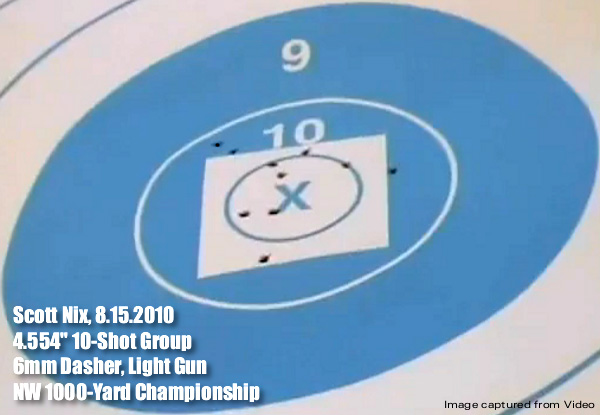
 How well can the little 6mm Dasher perform at 1000 yards when the conditions are good, and the shooter is riding a hot streak? Well here’s a shot-by-shot record of Scott Nix’s 4.554″ ten-shot group shot at the Deep Creek Range outside Missoula, Montana at the Northwest 1000-yard Championship a few years back. All 10 shots were centered for a 100-6X score. That’s about as good as it gets. If Scott had stopped after 5 shots, his group would have been under three inches.


 “Shoot Like a Champion”. Bryan Litz, author of


