Thousands of new products will be on display at SHOT Show 2019, the huge gun industry trade show held each January in Las Vegas. Some of the most highly-anticipated products have not yet been revealed, including new rifles, chassis systems, and state-of-the-art optics and LRFs. However, the SHOT Show Product Planner offers a “sneak peek” at 296 new-for-2019 products. More will come in the weeks ahead. For the time being, however, here are TEN interesting new products. Since most are completely new items, we haven’t been able to test them yet. Accordingly the product descriptions are provided by the manufacturers.
1. MDT Adjustable Core Competition (ACC) Chassis
The MDT ACC (Adjustable Core Competition) Chassis was designed around an integrated, modular weight system that allows shooters to fine tune chassis weight and balance point. A series of weights (up to 9 lbs. of steel) can be added to either the buttstock, interior fore-end or exterior fore-end. With action, barrel, scope and accessories, shooters can configure their rifles upwards of 25-30 lbs. in the ACC. The ACC weight management system allows shooters to rapidly adjust the feel and recoil characteristics of their rifle — at the range or during a competition. Other features include: full 17” ARCA/RRS fore-end, flared mag well, extended barricade stop, widened thumb shelf, and adjustable cheek riser/length of pull.
The new GRS Bifrost stock is made of glass fiber-reinforced composite material with tactile rubber surfaces on the grip and fore-end zones. The SpeedLock 2.0 system has LOP and Cheekpiece adjustment, like the original Speedlock system, but also includes a height-adjustable and cant-adjustable recoil pad. This allows for the perfect stock to shooter fit. Picatinny Rail mounts are located on the bottom and both sides of the fore-end, and the bottom of the buttstock. This allows easy attachment of lights, lasers, monopods, and bipods. Two Picatinny rails are included with the Bifrost stock, which retails for $730.00, as inletted for a variety of popular actions.
3. TargetVision Hawk WiFi Spotting Scope Camera
The Hawk Smart Scope is the next evolution of digiscoping. This TargetVision product turns any regular spotting scope into a smart scope in just minutes. Simply slide the Hawk over the spotting scope’s eyepiece, activate the signal, and open the Targetvision App on a smartphone or tablet. The Hawk camera connects to the mobile device via WiFi. Then you can view the camera feed (from the spotter) and unlock all of the App features. Basically this lets you position your spotting scope remotely and watch it through a digital screen. You’ll find more info (plus “how-to” videos) at TargetVisioncam.com. Price: $225.00 Pre-Order Special (Reg. $299.00)
4. Scope Comparison Platform from Rack’em Rack
This innovative Scope Comparer allows consumers to compare rifle scopes side-by-side. Simply slide the plate laterally to compare rifle scopes. This system ships with three different plates — One Plate for 30mm tube scopes, one for 1″ tube scopes, and a third (with rail) for red dot-type optics. An optional plate for 34mm-tube scopes is also available. All the sliding plates easily remove with the pull of a pin. Made by Rack ‘Em Racks, the novel Scope Comparer retails for $199.00.
5. Swagger Bipod — Telescoping Field Support for Hunters
The new Swagger bipod replaces a conventional bipod as well as shooting sticks. With a huge adjustment range from 6 3/4″ to 29″, the Swagger is ideal for western hunters, spot-and-stalk situations or anywhere long shots from the ground are likely. Notably, you can switch from a rigid attachment to a flexible attachment. And you can angle the legs forward, rearward, or to either side. When needed, remove the rubber footpads to use spiked feet for more “grip”. The Swagger’s telescoping legs fit inside a polymer housing mounted to your rifle’s forearm. Assembled weight is 23.6 oz, complete with Nitride finish springs/spring housing and reinforced bungee.
6. Vaultek Bio-Metric WiFi-Enabled Gun Safe
The WiFi-enabled RS500i is Vaultek’s newest and largest safe. Holding up to 4 four full-size rifles, this high-tech safe features full WiFi connectivity, providing quick access via oversized biometric scanner, Smart Key, backlit keypad, and standard backup keys. With WiFi connectivity you have complete remote management and live push notifications. With the all-new online dashboard or your smartphone you can securely monitor critical safe data from anywhere. A variety of modular accessories allow full customization of the LED-lit safe interior for magazines, handguns, and barrel mounts for rifles. Learn more at Vaulteksafe.com.
7. X Products Ambidextrous Side-Charging AR Upper
Here’s something we haven’t seen before — a side-charging AR upper that can be configured for either side — right port or left port. That’s clever. This exclusive X Products side-charging upper (SCU) boasts dual-side ejection ports with an off-side cover and interchangeable grip and off-hand slide handles, making it completely customizable to right- or left-handed shooter. The proprietary carrier introduces a new charging method that puts the force lower on the axis for smoother, more linear operation. The non-reciprocating charging handle can lock forward to prevent movement during operation. Price: $199.00
8. Breakthrough Carbon Fiber Cleaning Rods
Breakthrough® Clean Technologies’ carbon fiber cleaning rods offer a safe, effective way to clean the inside of your barrel. Featuring an ergonomic handle and two premium ball bearing sets, the rod can smoothly pass through the bore of your barrel without binding up under pressure. The lightweight yet durable carbon fiber construction is long lasting and won’t permanently bend or break under pressure. When kept free of debris, carbon fiber shafts are gentle on your barrel’s rifling. Available in the following sizes, all with standard 8-32 threads:
$29.95 5mm diameter, 12″ length .22 cal thru .50 cal handguns
$45.95 5mm diameter, 39″ length .22 cal thru .50 cal rifles
$49.95 7mm diameter, 45″ length .30 cal rifles thru 12 gauge shotguns
9. Kalispel Caseline Aluminum Gun Cases
Kalispel Caseline aluminum rifle cases are made in the USA from .080 marine-grade aluminum. They feature closed waterproof rivets, military spec hardware and stainless steel locking rod assemblies. These metal cases features Heliarc welds for strength and security, not fused joints like other lesser brands. Each case is hand-inspected for quality control. Kalispel has been making cases for many years, but there are new models for 2019. Powder coating and color options available. Prices range from $160 to $550.
10. RifleKuhl Barrel Cooling Unit from MagnetoSpeed
Tired of waiting for your rifle barrel to cool down? MagnetoSpeed’s new Riflekuhl barrel cooler, is designed to get barrel temperatures down to intended operating levels quickly. The turbocharger-inspired impeller produces great air flow in a small package. Powered by a single CR123A Lithium battery (included), ambient air is forced through the extendable nozzle down the bore of the rifle. This pushes air flow down the barrel where it’s needed to efficiently cool barrels, typically under 7 minutes. RifleKuhl doubles as a chamber flag and features an exclusive built-in air filter to prevent dust and dirt from being blown into your rifle. Price: $59.99
CREDIT EdLongRange for locating the 2019 New Product Showcase website.
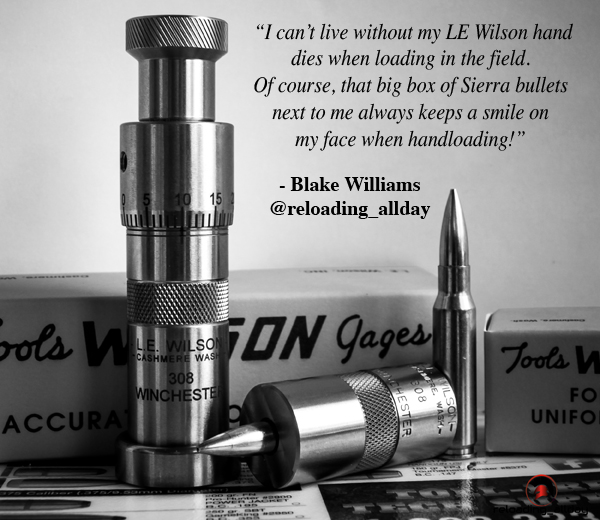
Sierra Bullets asked a few hand-loaders to reveal their favorite reloading tool or accessory: “What is your favorite ‘don’t know how you ever lived without it’ piece of reloading equipment?” Some of the answers are listed below. We were interested to see some high-tech, micro-processor items mentioned, such as the AMP Annealer, and the AutoTrickler powder dispenser. Old standbys, such as the rugged RCBS Rockchucker and Dillon 650, also made the favorites list. You can nominate your own favorite reloading hardware in the comments section of the Sierra Bullets Blog.
Sierra Bullets Ballistic Technician Philip Mahin answered: “A comparator gauge to measure from the base of a case to the ogive of the bullet. This bypasses the tip of the bullet, so I can repeat the same seating depth the next time I visit a specific combination.”
Bill, Editor of Rifleshooter.com, answered: “I have so many favorite reloading tools, it’s hard to pick one. But if I had to, it would be my Forster Co-Ax press. I like the ease [with which] you can change dies and that it doesn’t require traditional shell holders. It’s a great tool to have!”
Sierra Bullets Ballistic Technician Duane Siercks answered: “I don’t know that you would actually call this equipment, but the item that comes to mind would be my reloading room/shoot house. I had always had to squeeze everything into a corner or even an unheated shed. After we bought our current house, I built a garage and placed it so that I had a window looking down a 250-yard range. I built a dedicated room with heat and A/C. It contains my reloading bench and a shooting bench. The shooting bench lets me slide open the window and shoot down the range. It is very handy to not have to load everything up to go to the range. It also makes load development a lot simpler and efficient. I don’t know how I ever got along without it.
I also wonder what I did before I acquired the Lyman 1200 DPS Powder Dispenser. This has made the process so much simpler and much easier. I also have a Lee Precison Universal Decapping Die that I would gladly spend the money on again. This may be a small thing, but it certainly is handy. The Lee would accommodate some very large cases that some of the others were too small for.”
Jon Addis answered: “Putting an A&D FX-120i scale with AutoTrickler and Auto-Throw on the bench has changed the way I reload. It’s kernel accurate in about 15 seconds. Saves time and reduces a variable. And of course, the system is made better by the Area 419 Billet Adjustable base for the trickler and Billet Powder Cup.”
This video shows the AutoTrickler V2 and Auto-Throw Combo:
Sierra Bullets Chief Ballistician Tommy Todd answered: “A brass annealing machine and a RCBS Chargemaster complimented with a Sartorious scale.”
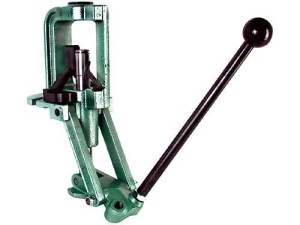
Sierra Bullets Ballistician Gary Prisendorf answered: “RCBS Rock Chucker Press, it’s built like a tank, and it will last me a lifetime.”
Sierra Bullets Production Manager Chris Hatfield also answered: “RCBS Rock Chucker single-stage reloading press.”
Jeremy Kisner answered: “My Giraud trimmer has taken [three operations] and combined them into one easy task. I can now size my brass and then sit down and trim, chamfer, and debur to a 0.001″ tolerance in one motion.”
Dan Blake answered: “My Annealing Made Perfect (AMP) annealer. With consistent neck tension being one of the largest contributions to small Extreme Spread on muzzle velocities, I believe this induction annealer is truly the best on the market.”
This manufacturer-produced video shows how the AMP annealing machine operates:
Trevor Aldinger answered: “Area 419 Master Funnel Kit. In the past I’ve used plastic funnels and even other metal ones. This system fits case necks and flows much better than any others I’ve used, and there is no static since it’s metal. We spend a lot of time and money to get precise charges, I don’t want to lose or miss a kernel because of a cheap funnel.”
Tyler Riley answered: “My RCBS bench primer (priming tool). It has a lot more leverage than a hand primer and still has a good feel to how tight primer pockets are. Makes it much easier on my hands to prime large runs, especially new brass with tight pockets.”
Craig Arnzen answered: “My Annealeez [annealing machine] is one of the best tools in my reloading room. Neck tension is SO important, and annealing every firing really helps with that. This is an inexpensive tool that can anneal a lot of cases at once, and help me produce more consistent ammo.”
Josh Temmen answered: “Time is critical for me so my RCBS Chargemasters are indispensable (pun intended.) They cut down on time at my reloading bench while maintaining the weight tolerances required for long range shooting.”
Josh Bartlett answered: “I have my Dillon 650 set up with Whidden floating tool heads to do decapping and sizing on my match ammo. The case feeder and progressive function of the press save me a TON of time when doing lots of several hundred rounds.”
Ryan Brandt answered: “… A quality set of calipers. My reloading room is full of very nice equipment but little does more to satisfy my perfectionism than a good check with the calipers.”
You’ve probably heard of cut-rifling, but did you know this process was invented in Germany nearly 500 years ago? Read on to learn more about how a cut-rifled barrel is made…
The cut-rifling process, used by leading barrel-makers such as Bartlein, Border, Brux, Krieger, and Obermeyer, can yield a very high-quality barrel with a long useful life. Cut-rifled barrels have been at the top in short- and long-range benchrest competition in recent years, and cut-rifled barrels have long been popular with F-Class and High Power shooters.
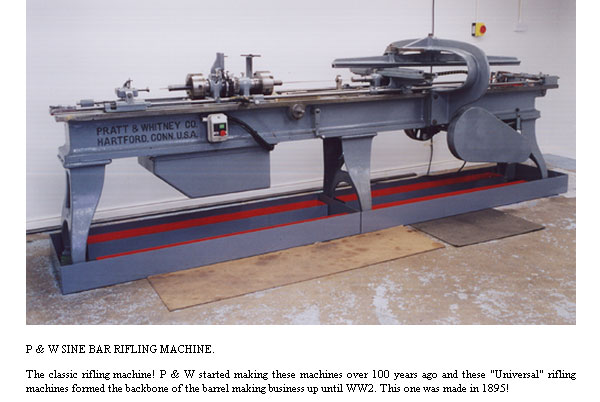
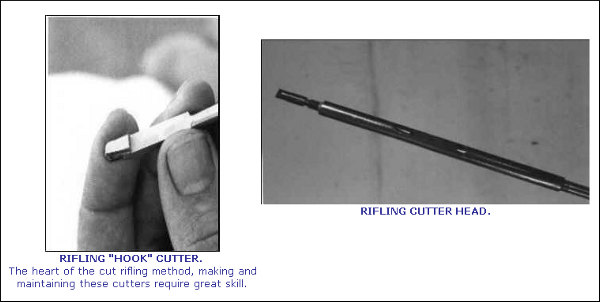
You may be surprised to learn that cut-rifling is probably the oldest method of rifling a barrel. Invented in Nuremberg around 1520, the cut-rifling technique creates spiral grooves in the barrel by removing steel using some form of cutter. In its traditional form, cut rifling may be described as a single-point cutting system using a “hook” cutter. The cutter rests in the cutter box, a hardened steel cylinder made so it will just fit the reamed barrel blank and which also contains the cutter raising mechanism.
Above is a computer animation of an older style, sine-bar cut-rifling machine. Some machine features have been simplified for the purposes of illustration, but the basic operation is correctly shown. No, the cut-rifling machines at Krieger don’t use a hand-crank, but the mechanical process shown in this video is very similar to the way cut-rifling is done with more modern machines.
Read About Cut-Rifling Process at Border-Barrels.com
To learn more about the barrel-making process, and cut-rifling in particular, visit FirearmsID.com. There you’ll find a “must-read” article by Dr. Geoffrey Kolbe: The Making of a Rifled Barrel. This article describes in detail how barrels are crafted, using both cut-rifling and button-rifling methods. Kolbe (past owner of Border Barrels) covers all the important processes: steel selection, hole drilling, hole reaming, and rifling (by various means). You’ll find a very extensive discussion of how rifling machines work. Here’s a short sample:
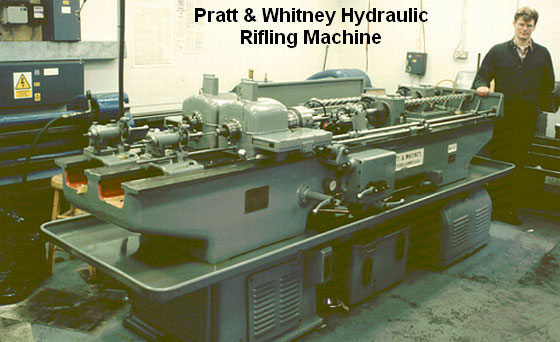
“At the start of World War Two, Pratt & Whitney developed a new, ‘B’ series of hydraulically-powered rifling machines, which were in fact two machines on the same bed. They weighed in at three tons and required the concrete floors now generally seen in workshops by this time. About two thousand were built to satisfy the new demand for rifle barrels, but many were broken up after the war or sold to emerging third world countries building up their own arms industry.
Very few of these hydraulic machines subsequently became available on the surplus market and now it is these machines which are sought after and used by barrel makers like John Krieger and ‘Boots’ Obermeyer. In fact, there are probably less of the ‘B’ series hydraulic riflers around today than of the older ‘Sine Bar’ universal riflers.
The techniques of cut rifling have not stood still since the end of the war though. Largely due to the efforts of Boots Obermeyer the design, manufacture and maintenance of the hook cutter and the cutter box have been refined and developed so that barrels of superb accuracy have come from his shop. Cut rifled barrel makers like John Krieger (Krieger Barrels), Mark Chanlyn (Rocky Mountain Rifle Works) and Cliff Labounty (Labounty Precision Reboring)… learned much of their art from Boots Obermeyer, as did I.” — Geoffrey Kolbe
Video find by Boyd Allen. Archive photos from Border-Barrels.com. In June 2013, Birmingham Gunmakers Ltd. acquired Border Barrels. Dr. Geoffrey Kolbe has set up a new company called BBT Ltd. which produces chamber reamers and other gunsmithing tools and gauges. (Thanks to L. Holland for the Kolbe update).
We have used NO-LEAD Cleaner in rimfire benchrest rifles similar to this modified Suhl 150-1. It helped restore accuracy with minimal brushing.
Made by the same folks that created Wipe-Out™, and Carb-Out™, the NO-LEAD Brushless Lead Remover™ really works. Honest. If you are an active rimfire shooter, or if you shoot cast lead-alloy bullets in centerfire rifles and pistols, you should try this product. We now use NO-LEAD in our rimfire benchrest rifles, and in some centerfire guns that receive a steady diet of soft-alloy cast bullets (90%+ lead). (With rimfire guns, you don’t need to use NO-LEAD very often — maybe every 300-400 rounds unless you have a real fouler of a barrel.)
If you’ve got stubborn lead fouling in a rimfire barrel, or on a pistol’s muzzle brake/compensator, you should definitely give this stuff a try. We don’t know how but it does soften lead deposits. The manufacturer says you don’t need brushes, but we found that a bit of brushing (after NO-LEAD application) can help remove more serious lead build-up.
Frankly we were surprised to find a lead remover that really works. We tried a half-dozen other lead “cleaners” that promised to dissolve lead and most of them, we discovered, are nearly useless. There’s a reason for that, as the lead alloys used in bullets don’t react to typical petrochemical-based solvents. It took the Wipe-Out chemists over five years to perfect a new water-based solution that really does dissolve lead.
NO-LEAD Cleaning Procedure — Read Carefully NO-LEAD Lead Remover is a clear, red gel that is easy to apply. Just swab it in your bore (or on muzzle brakes) with wet patches or bore mop and let it sit for a few minutes. (The manufacturer says you can leave the NO-LEAD for up to 20 minutes, but that long of a dwell time does not seem necessary with our rimfire barrels.) When it contacts lead it will start to foam and you’ll see that the NO-LEAD solvent turns a pastel pink when it dissolves lead. The pink comes from the formation of lead oxide. After the recommended dwell time, simply patch out the dissolved lead deposits (you can also use a nylon brush for stubborn lead build-up).
NOTE: After cleaning, it is very important that you get all the NO-LEAD out of your barrel, and neutralize it. We recommend following the application of NO-Lead with Wipe-out or Patch-Out to neutralize the NO-LEAD, clear the bore, and remove residual carbon and copper fouling. If you don’t have Wipe-Out or Patch-out, flush the barrel thoroughly with Rubbing Alcohol or even a solution of Dawn dish detergent — then re-oil the bore.
Be Sure to Neutralize NO-LEAD After Use
Remember that N0-LEAD is a strong, slightly acidic chemical that needs to be neutralized after use. If you leave it on a nice, blued barrel for too long, it can harm the bluing. NO-LEAD will remove all the surface oils from the barrel bore. For this reason it is recommended that you neutralize NO-LEAD with Wipe-Out, or Patch-Out, which both contain effective corrosion inhibitors. If you don’t have those products, once you’ve flushed the NO-LEAD with something like rubbing alcohol, then follow with a gun oil. Caution: A petroleum-based gun oil will NOT, by itself, neutralize NO-LEAD. You need to neutralize first, then apply the corrosion inhibitor (or do it all in one step with Wipe-Out or Patch-Out).
Where to Buy NO-LEAD Lead Remover
NO-LEAD Lead Remover costs $15.99 for an 8 oz. squeeze bottle with a flip-top spout. This product is sold directly by Sharp Shoot R Precision Products, www.Sharpshootr.com, or you can purchase NO-LEAD through many other online vendors. For more information, send an email via the Sharp Shoot-R Contact Form or or contact Sharp Shoot-R at (785) 883-4444. You can ask for Terry Paul, Sharp Shoot-R’s owner and the master chemist who developed the NO-LEAD formula.
The .224 Valkyrie is the “trendy” cartridge now for AR shooters looking for better long-range performance than the standard .223 Rem (5.56×45) can provide. With the right bullets and load, the .224 Valkyrie offers significantly less drop and drift at long range. The .224 Valkyrie is basically a 6.8 SPC case necked down to .22-caliber. You can use your existing AR15 lower, but you will need a dedicated .224 Valkyrie upper, or at the minimum a new barrel, modified bolt with proper bolt face, and 6.8-compliant mags.
Valkyrie fans say this efficient cartridge offers performance rivaling a 22-250 in a smaller case. The Social Regressive YouTube channel explains: “There are two key reasons why the 224 Valkyrie is unique and desirable. First, it is specifically designed to fit the limitations of the AR-15 platform. It does so even when loaded with gigantic bullets, like the 90-grain SMK that Federal announced. The .22-250 Rem is too long and too fat to work in the AR-15 platform; it needs an AR-10 bolt and magazine.”
Valkyrie Video Fest — Five Informative Videos
Here are five videos featuring the .224 Valkyrie cartridge and rifle options. We think the two applications that make most sense for this new cartridge are: 1) PRS Gas Gun matches (Open Class) — you get 6.5 Creedmoor ballistic performance with much less recoil for faster shot transitions; and 2) Long-Range (400+ yards) varminting — you get performance similar to a 22-250 in a cartridge that works with your existing AR15 lower. That will really help with those long shots on P-dogs.
In this video Gavin Gear test the .224 Valkyrie cartridge in both AR and bolt-action rifles. Using a drone to capture images of shots on target, Gavin produces some impressively small groups at 600 yards. This shows that the .224 Valkyrie has serious accuracy potential when the load is right.
In this 37-minute video on the “IraqVeteran8888″ channel, Chad tests a .224 Valkyrie rifle with various ammo, including 90gr handloads. The test addresses the pros and cons of this new cartridge, explaining the need to have realistic expectations, and a barrel with twist rate suitable for your bullet choices. This is a long video, but worth watching if you are contemplating building or buying a .224 Valkyrie.
This follow-up IraqVet888 video focuses on reloading for the .224 Valkyrie. Chad addresses a multitude of issues including: powder selection, bullet options, brass longevity and primer pocket uniforming. If you own a .224 Valkyrie and hand-load for the rifle, you should watch this video.
Here Gavin Gear tests Starline’s new .224 Valkyrie brass, seeing how well it stands up to repeated firings. Gavin checked for primer pocket stretching and found that 50% of the cases went 8 or more firings before the primer pockets grew too much. However a few cases did need to be retired after four firings. Gavin notes: “Brass longevity is one of the key considerations for loading 224 Valkyrie, so I thought I would put my Starline 224 Valkyrie cases to the test! Be sure to read the full Brass Test article for more insights.
The .224 Valkyrie has been marketed as a low-recoil round that can stay supersonic to 1300 yards and beyond (with 90gr Sierra MatchKings). Here a Sniper’s Hide duo shots an AR-platform .224 Valkyrie at distances out to 1550+ yards. To be honest, the accuracy wasn’t that impressive. However this test confirms that the .224 Valkyrie does launch the long, heavy projectiles at high enough velocities to prove superior to the standard .223 Rem. Frank Galli (aka “Lowlight”) teams up with Brian Whalen of Colorado Precision Rifle at the Blue Steel Ranch in New Mexico.
Harrell’s Precision sells “semi-custom” full-length bushing dies for the PPC and 6BR chamberings. While the Harrell brothers do not cut the die to spec, they carry a large selection of dies made with slightly different internal dimensions. When you send in your fired brass, the Harrells choose a die from inventory with just the right amount of sizing (diameter reduction) at the top and bottom of the case. Given the quality, and precise fit, Harrell’s full-length dies are a good value at $75.00 plus shipping.
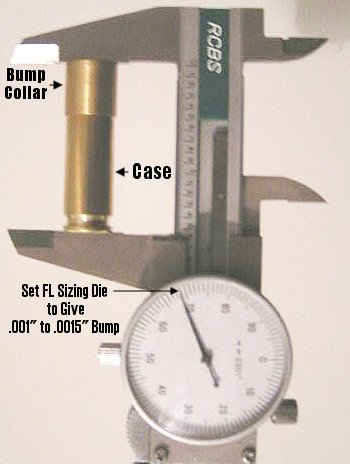
Bump Measuring Collar
The Harrell brothers provide a nice bonus item with each full-length die — a neat, little shoulder bump measuring device as shown in the photo at right. Hornady/Stoney Point sells a stand-alone tool that does the same job, but the Harrell’s bump collar is simpler and faster. To measure your shoulder bump, simply place the Harrell’s bump collar over the front of your deprimed case (before sizing) and measure the OAL with your calipers. Then size the case in your full-length die, replace the collar and repeat the measurement. You want to set your die so the shoulder moves back about .001″ to .0015″ for most applications. (With semi-auto guns you may want more bump.)
Are you looking for a new varmint rifle for next season, or perhaps you’re shopping for a “first rifle” for your son/daughter, or young relative, as a Christmas gift. Then consider the Howa Mini Action. This unique product, with a very compact action, offers excellent value for the money. The actions are smooth, the triggers are good, and the accuracy is typically better than you’ll get from most domestic rifle makers.
We’ve been fans of the Howa Mini Action rifles since they were first introduced. With actions that are nearly an inch shorter than typical “short actions”, these Mini Action rigs work great as a compact “truck gun” or carry-around varminter. Current chamberings are: .204 Ruger, .222 Rem, .223 Rem, 6.5 Grendel, and 7.62×39. There are 20″ lightweight, 20″ heavy contour, and 22″ standard contour barrel options.
6.5 Guy Ed Mobley Tests the 7.62×39 Howa Mini Action Rifle
The Howa Mini Action rifles come with the excellent HACT 2-stage trigger and a 5-round or 10-round, synthetic detachable box mag (depending on caliber). The Mini Action’s bolt is 13% shorter than on regular short actions, providing a shorter, faster bolt throw. Weight is also reduced. This makes for a nice, compact (and very shootable) package.
6.5 Guys Test Howa Mini Actions in 6.5 Grendel and 7.62×39
The 6.5 Guys tested a pair of Howa Mini Actions, one chambered in 6.5 Grendel and the other in 7.62×39 Russian: “After trying out the Howa Mini Action rifles at SHOT Show 2017, we got a couple of loaners in 6.5 Grendel and 7.62×39 courtesy of Legacy Sports. These rifles are known for their smooth cycling and lightweight actions, as well as some unique chamberings for bolt rifles (6.5 Grendel, 7.62×39). Long story short, we really enjoyed them.” In fact Steve liked his 6.5 Grendel enough that he plans to purchase the gun. Get the full scoop in this VIDEO REVIEW:
The folks at Legacy Sports also conducted extensive accuracy tests of commercial ammunition in 6.5 Grendel and 7.62×39. The most accurate 6.5 Grendel ammo, with a stunning 0.29″ group, was Alexander Arms with Lapua 123gr Scenar; second best (0.56″ group) was Hornady with 123gr A-Max bullet. The most accurate 7.62×39 ammo was Hornady 123gr SST with a 0.62″ group in the 20″ Heavy Barrel version. View Howa’s Test Reports with these links:
Ask 10 shooters about barrel cleaning and you’ll get 10 different opinions. This reflects that fact that different fouling problems demand different solutions. For example, solvents that work well for copper may not be the best for hard carbon (and vice-versa). To come up with the right solution, first you must understand the nature of the fouling in your barrel.
John Krieger Interview with AccurateShooter at SHOT Show:
The debate about the proper care of a match barrel is a hot one, spiked with folklore and old wives’ tales, Lohman said. He and his staff set out to set the record straight: “We tried to interject some science into the discussion of cleaning a match barrel,” he explained. In his article, Lohman writes:
Why worry about a little barrel fouling when the throat is subjected to a brutal 5,600° F volcano at 55,000 PSI? To investigate these and other questions about taking care of a match barrel, we spoke with a dozen experts and share their knowledge in this first of a series of articles.
After listening to folks who shoot, build barrels or manufacture cleaning solvents for a living, we concluded that even the experts each have their own unique recommendations on how to care for a match barrel. But they all agree on one thing — the gun will tell you what it likes best. Because the life expectancy of a match barrel is about 1,500 to 2,500 rounds, the objectives of cleaning one should include: preserve accuracy, slow the erosion, and remove fouling — all without damaging the gun. This article doesn’t claim that one cleaning method is better than the next. Rather, we set out to interject a little science into the discussion and to share some lessons learned from experts in the field.
For more Shooting Sports USA articles, visit www.ssusa.org.
Wintertime is here, the season of cold and damp… and RUST. There’s snow on the ground in many parts of the country. If you want your fine firearms to remain pristine and rust-free through the winter months, it’s wise to protect then while they are stored in a safe. You should protect blued surfaces with a rust-blocker. In addition, we recommend storing guns in protective sleeves. Our take on Bore-Store Gun sleeves is simple: They work great, so buy them and use them — for ALL your valuable firearms.
These thick, synthetic-fleece sacks cushion your guns, preventing nicks and scratches. The breathable fabric wicks away moisture, and the fibers are coating with corrosion inhibitors. I personally use Bore-Stores for in-safe storage with all my guns, and I have never had one of my guns rust inside a Bore-Store, even when I lived a stone’s throw from the ocean.
Bore-Stores are offered in a wide range of sizes, so you can find something to fit everything from a Snub-nosed revolver to a 32″-barrelled 50 BMG. Rifle-size Bore Stores can be purchased for $13.00 – $21.00 from Brownells. For long F-Class or tactical rifles, we recommend the 10″x52″ Scoped Shotgun Bag, Brownells item 132-000-003WB. You can also order direct from the Bore-Store manufacturer, Big Spring Enterprises, www.BoreStores.com. Big Spring will also craft custom sizes on request.
Consider Military-Style, Triple-Layer Bags for Long-Term Storage
While we prefer Bore-Stores for regularly-used guns, if you have heirloom firearms that will be kept in storage for very long periods without seeing any use, you may want to grease them up and place them in the thin, but rugged three-layer storage bags sold by Brownells. The bags are made from a three-layer laminate of polyester, aluminum, and polyethylene film, with a shiny silver exterior. Though the laminate is thin, the Brownells storage bags are puncture-resistant, and have a 0% moisture transmission rating so moisture can’t get inside. These bags are also resistant to petroleum-based chemicals and they won’t break down even in contact with soil or moisture.
Here’s one VITAL bit of advice for using these bags. Be absolutely sure, before you seal up the bags, that your guns are DRY and that all metal surfaces have been coated with an effective anti-corrosive, such as BoeShield T9 or Eezox. Brownells’ storage bags are inexpensive. A three-pak of 12″x 60″ rifle sacks (item 083-055-003WB) costs just $22.99 — under eight bucks a gun. That’s cheap insurance for rifles and shotguns that may cost thousands of dollars.
Get Your Guns Out of Foam-lined Cases — They Are Rust Magnets
Just about the worst thing you can do in the winter (short of leaving your rifle outside in the rain) is to store firearms in tight, foam-padded cases. The foam in these cases actually collects and retains moisture from the air, acting as the perfect breeding ground for rust.
Remember, those plastic-shelled cases with foam interiors are for transport, not for long-term storage. Don’t repeat the mistake of a wealthy gun collector I know. He stored four valuable Colt Single Action Army (SAA) revolvers in individual foam-padded cases, and locked these away in his gun safe. A year later, every one of his precious SAAs had rusted, some badly.
The relatively new Ruger Precision Rimfire has generated considerable interest because it is an affordable, chassis-style platform well-suited for tactical/practical cross training. It also offers some cool features including a +30 MOA scope rail and adjustable bolt throw length (from 1.5″ to ~3.0″). The adjustable bolt lets you switch to a longer, centerfire-style bolt “run” for consistent cross-training. That’s clever.
Introduced at the beginning of 2018, the Ruger Precision Rimfire has now been in the hands of multiple reviewers who have tested the little rifle for accuracy, reliability, and functionality. This smallbore chassis rifle has been tested with a variety of ammo and in both bench and “tactical” style sessions. Here are three videos that put the Ruger Precision Rifle though its paces.
VIDEO ONE — Impressive Accuracy Suppressed from Bipod at 130m
In this video, a UK-based shooter tests the Ruger Precision Rimfire with a suppressor. He came away mighty impressed with the rig’s accuracy, stating: “It is a flippin’ laser. Oh my god I’m impressed with that — five minutes in and it’s grouping literally like that [makes small “OK” sign with thumb and index] on the steel at 130m”. (Time-mark 2:40+)
VIDEO TWO — 22 Plinkster Explains Gun Features
In this video, popular YouTube gun tester 22 Plinkster explains the Ruger Precision Rimfire’s features in detail. Then he puts an early production example through its paces. He gets good accuracy from a bench, but also tries some off-hand shooting, demonstrating the rifle’s suitability for tactical cross-training.
With Federal Gold Medal Ultra-Match, 22 Plinkster produced a 5-shot group well under half-inch (with first three overlapped and the last two in same hole) at 50 yards. Note 22 Plinkster’s bench set-up. He uses a second rabbit-eared sandbag in the FRONT. This “field expedient” solution is clever. The front bag’s ears mate well with the rifle’s tubular fore-arm, adding considerable stability. And the front sand-bag helpd absorb vibration, always a good thing. For a varminter who doesn’t want to carry a bulky front rest, this is worth trying. The bag in front functions like a compact version of the large, heavy Bulls Bag.
VIDEO Three — Five Ammo Types and Front Rest
Here is detailed review from Down-Under that was positive. From bench, with Caldwell front rest, five different ammo types were tested: SK Rifle Match, SK Standard Plus, Eley Match, Eley Edge, and CCI High Velocity. The tester reports: “I was able to get 0.9″ 10-shot groups at 50 yards and 1.5″ 10-shot groups at 100 yards using Eley Edge. Overall the rifle is good but I don’t honestly think I achieved any greater accuracy over my standard Ruger American Rimfire Rifle.” We think that’s a fair assessment. This is an accurate rifle, but other affordable bolt actions can probably rival the accuracy, so the buying decision should be based on the rifle’s other features — such as the chassis.
For Ruger Precision Rifle owners, this .22 LR offers ergonomics just like their centerfire rig. This PRS-style .22 LR rig has some very interesting features, including adjustable bolt throw that lets shooters change from a rimfire 1.5″ bolt throw to a short-action centerfire 3″ bolt throw, reducing the chance of short-stroking your bolt in competition. The Ruger Marksman trigger adjusts from 2.25 to 5.0 pounds.
RUGER PRECISION RIMFIRE Important Features:
Quick-Fit Stock with adjustable cheekpiece and adjustable LOP
18″ barrel, pre-threaded for brakes and Silent-SR® suppressor
Barrel can be removed and replaced easily with AR-style tools
Picatinny scope rail with +30 MOA built-in elevation
Front 15″ free-float M-Lok handguard
Adjustable Trigger 2.25 to 5 pounds
Accepts all Ruger 10/22 magazines


 Thousands of new products will be on display at SHOT Show 2019, the huge gun industry trade show held each January in Las Vegas. Some of the most highly-anticipated products have not yet been revealed, including new rifles, chassis systems, and state-of-the-art optics and LRFs. However, the SHOT Show Product Planner offers a “sneak peek” at 296 new-for-2019 products. More will come in the weeks ahead. For the time being, however, here are TEN interesting new products. Since most are completely new items, we haven’t been able to test them yet. Accordingly the product descriptions are provided by the manufacturers.







 Sierra Bullets Ballistician Gary Prisendorf answered: “


 Made by the same folks that created Wipe-Out™, and Carb-Out™, the
  Where to Buy NO-LEAD Lead Remover

 Bump Measuring Collar


 Here’s one VITAL bit of advice for using these bags. Be absolutely sure, before you seal up the bags, that your guns are DRY and that all metal surfaces have been coated with an effective anti-corrosive, such as BoeShield T9 or Eezox. Brownells’ storage bags are inexpensive. A three-pak of 12″x 60″ rifle sacks (item 083-055-003WB) costs just $22.99 — under eight bucks a gun. That’s cheap insurance for rifles and shotguns that may cost thousands of dollars.
 Remember, those plastic-shelled cases with foam interiors are for transport, not for long-term storage. Don’t repeat the mistake of a wealthy gun collector I know. He stored four valuable Colt Single Action Army (SAA) revolvers in individual foam-padded cases, and locked these away in his gun safe. A year later, every one of his precious SAAs had rusted, some badly.


