Thousands of new products will be on display at SHOT Show 2024, the major gun industry trade show held each January in Las Vegas. The official SHOT Show Product Planner offers a “sneak peak” at 255 new-for-2024 products for hunters and shooters. More will come in the weeks ahead. Here are eight interesting new products for gun owners and reloaders. Since these are all recently-released items, we haven’t been able to test them yet. Product profiles are based on descriptions provided by the manufacturers. We will run a separate feature on new pistols and rifles that will debut in 2024.
For the gun owner with multiple firearms, the Sportsman’s Range Box is the gun cleaning kit that has it all — and more. This universal gun cleaning kit provides all the necessary equipment for proper Breech-to-Muzzle® cleaning. It cleans all rifles, pistols, shotguns and inline muzzleloaders. This cleaning kit also features the B.O.N.E.® Tool which makes cleaning the bolt carrier assembly of MSR/AR style rifles a breeze, and Shooter’s Choice chemicals (0.5 oz and 4 oz bottle of FP-10 Lubricant Elite®, plus 10cc grease). Inside the Range Box are over 60 components including support brackets so the box can serve as a gun vise to hold your long guns while cleaning.
The Grippy Universal Cheekrest is a lightweight, adjustable cheekrest system that allows up to four levels of height adjustment from 0.35″ to 1.25″. The Grippy Universal Cheekrest comes with two stackable spacers which fit most scope setups but you can use up to four spacers to get the exact height you need. The product includes two plugs to cover up 2x screw heads on top of Grippy Cheekrest cap. If your stock is 1.45″ wide or less, this should fit your stock. This product is designed to fit many stock types: TITAN22 1022 Stock, Hogue 10-22 Overmolded Stock , Boyd’s Tacticool/Varmint Stocks, Bell & Carlson 10/22 Stock, Savage MkII OEM Stock, Savage B22 Stock, Tikka T3X OEM Stock, Manners CZ455 Stock, Winchester OEM Stocks, HS Precision Rimfire, Remington 870 / 1100 Sporter Stocks and many more.
The idea and SKILI Gear’s new Ghost and Phantom pack designs came from Navy SEAL operators with real world experiences. There was a need to efficiently carry a sniper rifle plus gear in a multi-purpose backpack. Developed through six years of collaboration and multiple design improvements, this system has grown from an effective “bare bones” sniper bag to a completely customizable pack. Hunters and outdoorsmen can used these customizable bags for hunting, fishing, or EDC. Whatever lifestyle you are pursuing, the Ghost or Phantom pack can adapt to your needs.
The Prime Vibe is an electric vibratory bowl primer tube filler. This patent-pending device handles both small and large primers. The system permits you to fill primer tubes faster and more reliably. A controller unit allows you to set the frequency and run time for perfect results with any primer brand. There is a set-and-forget feature with an adjustable auto-shutoff timer. The product includes Small and large primer conversions and tubes included, plus a quick-release Safety Shield. The Prime Vibe machine is compatible with other brand primer tubes. Price: $219.00
Magna Lens eyewear features a patented magnetic connection that secures your eye protection directly to your earmuffs. This eiminates discomfort associated with traditional gear which press eyewear frames against the head. The design also preserves the NRR of your earmuffs by 2 to 10 dB compared to users who wear eyewear under earmuff pads. The high-performance 2.9mm thick lenses provide exceptional optical performance and blast resistance. Magna Lens eyewear can be used with almost any brand of earmuffs. The patented magnetic design literally gives you THE most comfortable way to wear earmuffs with eye protection. This system should prove to be a game-changer for shooters with increase comfort. Price: $150.00
The Live Stream Pro Camera is a new trail cam with variable resolution and live streaming capability. Key camera features are:
•32MP/24MP/16MP/8MP/5MP Image Resolution
•1440P/1080P/720P/WVGA Video
•Fast video triggering<0.6s
•4G LTE High Speed; Live video monitoring/surveillance
•Live stream monitoring
•PIR Detection + Smart motion tracking
•H.264 compressor, greatly reduce the video size
•Cloud Platform with Free APP (Android & iOS)
•2.4″ Color LCD
•SD Card support 2GB-128GB
The GPS shotgun buttstock with patented recoil system was invented by Sai Chiang through years of being a competitive shotgun shooter, and most importantly, listening closely to what shooters want of their shotgun stocks. Through years of development, we created an innovative shotgun stock that can custom fit 99.9% of shooters requirements. Also, the custom hand molded grip design increases the comfort and ergonomic control during target acquisition and firing of the shotgun. This stock offers pneumatic recoil reduction technology, delivering softer and faster recoil reduction without compromising power or performance. The system boasts the world’s largest air chamber, effectively reducing recoil. Six available grip sizes ensure optimal comfort and fit.
Simplify your inventory and reduce costs with the Paradigm Universal Holster by G-Code. Designed using cutting-edge overlay technology, this versatile holster fits almost any weapon and is truly top of its class. The Paradigm holster is durable, ambidextrous, and can be worn in or outside the waistband. Priced at just $29.95 MSRP, it’s a smart, cost-effective choice for concealed or regular carry. The benefit for owners is being able to have a single holster that fits multiple handguns and can be worn in multiple ways.
Make Your Own Length-to-Lands Gauge to Check Bullet Position
Here’s a tip we feature every year or so, because it is something that costs nothing, yet can be very useful in the reloading process. With a simple, easy modification to a fired case, you can determine the length to lands in your rifle barrel. As long as you set the tension right, the measurements should be repeatable, and you’ve just saved yourself $43.93 — the combined cost of a Hornady C-1000 commercial OAL gauge ($37.99) and Modified Case ($5.94).
To achieve best accuracy with a rifle, you must control bullet seating depth very precisely, so all bullets end up in the same place relative to the entrance of the lands, every time. There may be multiple cartridge OALs which prove accurate. However, with each, you first need to determine a “zero” point — a reliable, and repeatable OAL where the bullet is “just touching” the lands.
There are tools, such as the Hornady (formerly Stoney Point) OAL Gauge, that will help you find a seating OAL just touching the lands. However, the tool requires that you use a special modified case for each cartridge you shoot. And, while we find that the Hornady OAL Gauge is repeatable, it does take some practice to get in right.
Make Your Own Length-to-Lands Gauge with a Dremel
Here’s an inexpensive alternative to the Hornady OAL tool — a slotted case. Forum member Andris Silins explais how to create a slotted case to measure length to the lands in your rifle:
“Here’s what I did to find length to lands for seating my bullets. I made four cuts into the neck of fire-formed brass. Then I pressed the bullet in lightly and chambered the entire gauge. As the cartridge chambers, the bullet slides back into the case to give you length to lands. It took less than five minutes to get it cut and working. A little light oil in the barrel just past the chamber helps ensure the bullet does not get stuck in the lands. It works great and is very accurate.
How to Adjust Tension — Length and Number of Neck Cuts
I made the cuts using a Dremel with a cut-off wheel. You can adjust tension two ways. First, you can make the cuts longer or shorter. Longer cuts = less tension. If you used only three cuts instead of four you would get more tension. The trick is to be gentle when you open and close the bolt. If you ram the bolt closed you may wedge the bullet into the lands. When you open the bolt it helps to keep a finger or two near by to guide the case out straight because the ejector wants to push it sideways.”
Rimfire .22 LR pistols are great training guns for both novice and seasoned shooters. The minimal recoil and reduced muzzle rise of .22 LR pistols makes them easy to handle, and fast to get back on target. This allows novices to build their basic pistol skills, and helps seasoned competitors upgrade their performance. Even experienced centerfire handgun shooters can improve their skills by cross-training with .22 LR pistols.
Today’s Saturday Showcase features 7 videos covering a large selection of rimfire pistols. Along with these video reviews, serious shoppers should read some articles on the web. Pew Pew Tactical has a good online article that’s definitely worth reading: 9 Best .22 LR Handguns. As the author notes: “Every gun owner should own at least one .22 LR firearm. The ammo is ubiquitous, and affordable at around 5 cents a round.” And BackFire TV has published another good article covering eight popular .22 LR handguns.
Taurus TX 22 Competition — Optics-Ready
The TaurusTX™ 22 Competition model is built on the same full-size polymer receiver as the Taurus TX 22 but has a newly engineered slide and barrel assembly designed to work with red dot optics. The Taurus TX 22 Competition features a “skeletonized” slide with a cutout between the ejection port to just behind the front sight. The mounting system allows the use of the following (but not limited to) sight models: Trijicon RMR, C-More STS 2, Vortex Venom, Doctor Noblex, Burris Fast Fire, Sightmark Mini, Holosun HS507C, Leupold Delta Point Pro.
Eight Popular .22 LR Pistols Reviewed
When initially shopping for a pistol, it’s wise to try a variety of guns from multiple manufacturers. You’ll want to try polymer vs. metal frame, iron sights vs. optics. And try to test-fire the pistols on the type of targets you’ll be using for competition and/or fun shooting. This helpful review video features eight (8) popular .22 LR pistols. In order of appearance these eight rimfire handguns are:
1. Browning Buck Mark Hunter (0:28)
2. Ruger SR22 (1:30)
3. Sig P322 (2:21)
4. Walther WMP (3:30)
5. Taurus TX22 Compact (4:36)
6. Smith & Wesson SW-22 Victory (5:48)
7. KelTec CP33 (6:56)
8. Ruger Mark IV (7:54)
Smith & Wesson Model 41 .22 LR Pistol Review
The S&W Model 41 is a classic American rimfire target pistol. Beautifully crafted, the Model 41 boasts a superb trigger, comfortable grip, and excellent accuracy. New or used, a Model 41 would be a fine addition to any firearms collection.
Browning Buck Mark Pistol Review
Among the most popular .22 LR pistols are the Browning Buck Mark series. Buck Marks are very accurate and very reliable. This rimfire pistol is available in a variety of models starting at under $350.00. Reliable, accurate, and well-crafted, a good Buck Mark will serve you for a lifetime. The tester for the Sootch00 Channel says the “Browning Buck Mark UDX 22 [is] one of the highest quality production .22 LR pistols on the market.” This in-depth, 19-minute Sootch00 Channel review has been viewed over 560,000 times.
SIG P322 Comp Review by 22Plinkster
If you are looking for a well-crafted, .22 LR pistol for action pistol competitions, the SIG Sauer P322 Comp is an option you should definitely consider. The new .22 LR rimfire P322 Comp offers excellent ergonomics and 20+1 capacity, making it good for cross-training and fun rimfire shooting. Note how fast 22Plinkster can hit multiple targets with this new brake-equipped pistol. He observed: “The trigger is really nice and you just want to run it fast”. No question this rimfire pistol would be fun to shoot on steel targets.
Though it may look like a striker-fired pistol, the SIG P322 is a hammer-fired, single-action-only design (the hammer is enclosed by the rear of the slide). The P322 is blow-back operated with a fixed (non-tilting) 4″ barrel. This helps contribute to excellent accuracy and reliability.
S&W Victory Vs. Ruger Mark IV Pistol Shoot-Off
In this video, popular YouTube host 22Plinkster tests two rimfire pistols — the Smith & Wesson Victory and Ruger Mark IV. He favored the grips on the Ruger while preferring the S&W’s trigger. He felt the Ruger’s iron sights were best for precision work, but he noted that the green dot fiber optic sights on the S&W Victory worked better for speed work.
FN 502 .22 LR Tactical Pistol Review
The FN 502 is a modern, hammer-fired design with an optics-ready slide. The barrel is threaded for a suppressor. In this video, popular YouTube gun reviewer Colion Noir tests a FN 502 with suppressor. He was impressed, stating: “This is the best tactical .22 LR handgun I’ve ever shot.”
Are you looking to get started in PRS and NRL practical precision rifle competition? Or perhaps you’d like to advance your skill set so you can place higher in big matches (and get your hands on those prize table items)? Of course there is no substitute for trigger time in the field, but there ARE some great print resources. These four books can help you select the right equipment, improve your shooting skills, make better wind calls, increase your fitness, and develop a more efficient between-match training program.
1. Precision Rifle Marksmanship: The Fundamentals
Frank Galli, $26.03 Paperback, $15.99 Kindle
Frank Galli (aka “LowLight”) is the founder/head honcho of SnipersHide.com, the most active tactical community on the internet. Galli is also a retired USMC scout-sniper. Practical Precision Rifle shooting is one of the hottest trends in competitive shooting today. PRS and NRL matches draw big turn-outs and boast impressive prize tables. Galli’s Precision Rifle Marksmanship (#ad) book covers the fundamentals of precision marksmanship with easy-to-understand methodology. The book uses the same instruction process that Galli uses in his live marksmanship classes.
As Sniper’s Hide guru Frank Galli explains, there is no voodoo when it comes to precision rifle marksmanship, but there are techniques that, when practiced, make the difference between good marksmanship and great marksmanship. Understanding the reasons that a bullet hits or doesn’t hit its intended target at ultra-long distances is a crucial element to learning. Galli’s explanations of how to understand and compensate for wind speed and direction are excellent — Galli offers great wind-reading advice.
Published in 2020, this 272-page well-illustrated book covers the latest equipment (scopes, LRFs, chassis systems, mags, bags, bipods, tripods) favored by tactical competitors in PRS/NRL type matches.
2. Long Range Shooting Handbook
Ryan Cleckner, $22.46 Paperback, $9.99 Kindle
Ryan Cleckner’s Long Range Shooting Handbook (#ad) is the best-selling modern book on practical rifle skills. A former U.S. Army sniper instructor, Cleckner is knowledgeable, and his text is well-organized and chock full of good information. You can view Sample Chapters on Amazon.com.
Ryan Cleckner’s highly-regarded Long Range Shooting Handbook is designed as an intro to important fundamental concepts such as MOA vs. Mils, External Ballistics, and Environmental Effects. Included are personal tips and advice based on Cleckner’s years of experience as a sniper instructor and special operations sniper.
The Long Range Shooting Handbook is divided into three main categories: What It Is/How It Works, Fundamentals, and How to Use It. “What It Is/How It Works” covers equipment, terminology, and basic principles. “Fundamentals” covers the theory of long range shooting. “How to Use It” gives practical advice on implementing what you’ve learned, so you can progress as a skilled, long range shooter. This book will benefit any long-range shooter, not just PRS/NRL competitors.
3. IMPACT! — Training and Preparing for Precision Rifle Matches
Rodney Maze, $14.99 Paperback, $4.99 Kindle
Impact!, by PRS competitor Rodney Maze, is an entry/intermediate level guide to preparing yourself and your equipment to compete in precision rifle type matches. It will also benefit anyone looking to learn about practical-style long range and precision shooting. We recommend you check it out for yourself — there are 20 Pages of free sample content(#ad) on Amazon. Topics covered include:
— Rifle, optic, and equipment selection
— Setting up your rifle, bags, tripods for PRS/NRL matches
— Understanding ballistics and how to record and use ballistic data
— Techniques for using holdovers for multi-target stages
— Gun skills, rapid fire techniques, clearing malfunctions
— Shooting off of barricades, and specialty stages
— Effects of wind and how to improve your wind calls
— Tips for live fire and dry fire practice
— Preparing yourself and your equipment for a match
— Mental strategies and techniques
Impact! is illustrated with plenty of photographs. Topics are divided logically, and concepts are explained in clear language. Also included is an extensive glossary of terms used in precision shooting and a list of additional resources you can use to further pursue your precision shooting knowledge. This book also includes a handy Appendix with formatted pages for recording data about your rifle, scope, and ammunition. There is also a Wind table for recording your rifle “dope” and wind hold-offs. Lastly, Impact! has a useful table of unit conversions.
4. Practical Shooter’s Guide
Marcus Blanchard, $19.99 Paperback, $9.99 Kindle
Thinking of getting started in the Practical/Tactical shooting game? Looking for ways to be more stable when shooting from unconventional positions? Then you may want to read Marcus Blanchard’s Practical Shooter’s Guide (A How-To Approach for Unconventional Firing Positions and Training) (#ad). Unlike almost every “how to shoot” book on the market, Blanchard’s work focuses on the shooting skills and positions you need to succeed in PRS matches and similar tactical competitions. Blanchard provides clear advice on shooting from barricades, from roof-tops, from steep angles. Blanchard says you need to train for these types of challenges: “I believe the largest factor in the improvement of the average shooter isn’t necessarily the gear; it’s the way the shooter approaches obstacles and how they properly train for them.”
As an Amazon affiliate, this site can earn revenues through sales commissions.
What anti-corrosion products really fight rust effectively? You’ll hear many opinions, but what do actual field tests reveal? One rifle shooter, who posts on YouTube as BlueonGoldZ, wanted to separate myth (and marketing claims) from reality, so he completed his own long-term rust test using metal samples. First he used ordinary tap water spray, and then he did a second, longer-duration test with a salt-spray solution. Nine different products were tested: Break Free CLP, Corrosion-X, Frog Lube, M-Pro 7, Outers, Pro-Shot Zero Friction, Rem Oil, Slip 2000, and Tetra Gun Triple Action CLP.
BlueonGoldZ initially examined each product for its “beading” properties with a normal tap water spray. But the main test involved many multiple weeks of exposure after a “dense” salt-water spray. (No rust formed after two weeks tap water exposure, so the test was accelerated with salt-water exposure).
The clear winners in the test, as shown by the screen shot above, were Corrosion-X (Best), and Frog-Lube (Second Best). The photo shows the test samples two weeks after being sprayed with salt water. The results are pretty dramatic — you can see with your own eyes what happened. We think this is a very useful bit of real-world research.
Results from Similar Long-Term Salt Exposure Test
Unfortunately, BlueonGoldZ’s test did NOT include Eezox, which we have found to be extremely effective (on a par with Corrosion-X). In another long-term test of corrosion preventatives, the two best rust fighters were Eezox and Corrosion-X in that order. Since that test was completed, Corrosion-X, already an excellent product, has been enhanced. CLICK HERE for Long-Term Salt Exposure Test Report.
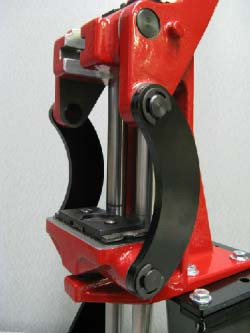
Forum member Erik Cortina has produced a series of YouTube videos about reloading hardware and precision hand-loading. Here we feature Erik’s video review of the Forster Co-Ax® reloading press. The red-framed Co-Ax is unique in both design and operation. It boasts dual guide rods and a central handle. You don’t screw in dies — you slide the die lock ring into a slot. This allows dies to float during operation.
Erik does a good job of demonstrating the Co-Ax’s unique features. At 1:00 he shows how to slide the dies into the press. It’s slick and easy. At the two-minute mark, Erik shows how sliding jaws clasp the case rim (rather than a conventional shell-holder). The jaws close as the ram is raised, then open as it is lowered. This makes it easy to place and remove your cases.
At the 5:20 mark, Erik shows how spent primers run straight down into a capture cup. This smart system helps keep your press and bench area clean of primer debris and residues.
While many Co-Ax users prime their cases by hand, the Co-Ax can prime cases very reliably. The priming station is on top of the press. Erik demonstrates the priming operation starting at 4:20.
Smart Accessories for the Co-Ax from Inline Fabrications
Forum member Kevin Thomas also owns a Co-Ax press, which he has hot-rodded with accessories from Inline Fabrication. Kevin tells us: “Check out the add-ons available from Inline Fabrication for the Co-Ax. I recently picked up a riser mount and a set of linkages for mine and love the results. The linkages are curved. When you replace the original straight links with these, the work area opens up substantially and the the press becomes much easier to feed.” CLICK HERE for Co-Ax Accessories.
Inline Fabrications Forster Co-Ax Accessories
Forster Co-Ax Curved Side Linkage (For Better Access)
The Cartridge Comparison Guide is a remarkably comprehensive 340-page, spiral-bound book. Covering over 250 cartridges, the Second Edition of the Cartridge Comparison Guide is the product of many years of labor by Andrew Chamberlain, a Utah-based hunter. Andrew says his Guide “compares every factory available cartridge from the 17 calibers up to the 50 caliber cartridges”. (Sorry, most wildcat cartridges are not covered.) Chamberlain’s Guide also compiles cartridge data from major ammunition manufacturers such as Barnes, Federal, Hornady, Norma, Nosler, Remington, Sierra, Swift, Weatherby, and Winchester. It shows the optimal velocity achieved for each bullet weight and calculates bullet energy, recoil, and powder efficiency. Large color photos illustrate handgun and rifle cartridges.
The Cartridge Comparison Guide provides data for thousands of cartridge/bullet/velocity combos. Quick reference sheets and ballistics charts cover Trajectory, Velocity, and Energy out to 500 yards. The Cartridge Comparison Guide also offers a firearms lexicon, plus Appendices covering Cartridge Selection for Game Animals, Bullet Selection/Design, Bullet Expansion, and Wound Channel Characteristics.
New Content in Second Edition of Cartridge Comparison Guide
The Cartridge Comparison Guide (Second Edition) costs $39.99 plus shipping and tax. CLICK HERE to visit the Online Store where you can order the 340-page book. Here’s what’s new in the Second Edition:
Addition of Shotgun Ammunition (Both Slug and Shot loads).
Momentum Calculation for all Rifle, Shotgun and Handgun loads.
Integration of Shotgun Slug Ammunition with Center Fire Rifle Data Tables.
Factory Load Summary Added (Shows manufacturers and loads produced).
One factory load and one hand load for every bullet weight available in each cartridge.
Over 90 pages of additional ballistics content (roughly 35% more than in First Edition).
Great Resource for Hunters
One of Chamberlain’s main goals in creating the Cartridge Comparison Guide was to help hunters select the right cartridge for the job: “This started as a personal project to gather information on the more popular cartridges commonly used for hunting. I wanted to find the best all-around performing cartridge and rifle that a guy on a budget could shoot. I began comparing cartridge performance, versatility, bullet selection, powder efficiency, recoil generation vs. energy produced, standing ballistic data for different environments….”
Giant Cartridge Poster for Computer Wallpaper (1665×1080 pixels)
Here’s a great illustration of hundreds of cartridges and shotshell types. For dedicated reloaders, this would work great as desktop “wallpaper” for your computer. CLICK HERE for full-size image.
In June 2020, Hornady introduced the 6mm ARC, a new SAAMI cartridge optimized for AR-platform rifles*. The new 6mm ARC is basically a 6.5 Grendel necked down to 6mm, with the shoulder moved back around .030″. That pushed-back shoulder does reduce case capacity (and velocity), but we assume Hornady did that to create a shorter, proprietary chamber so people could not simply neck-down Lapua 6.5 Grendel brass, as has been done for years with Robert Whitley’s outstanding 6mm AR wildcat.
What Is the 6mm ARC Cartridge? The 6mm ARC cartridge is a new SAAMI-spec cartridge based on the 6.5 Grendel case necked down for 6mm bullets, with the shoulder moved back 0.030. Yes it is designed to run in AR15-platform rifles. You’ll need a new barrel, bolt, and mags. If you already have an AR chambered in 6.5 Grendel, the ONLY thing you need to change is the barrel. Everything else — bolt, magazines, gas system – is compatible with 6mm ARC.
▶ Official SAAMI Cartridge (not wildcat)
▶ Fits standard AR15-platform rifles
▶ Fits Short/Mini action bolt rifles
▶ Efficient short, fat case design
▶ 30-degree case shoulder
What Do I Need To Shoot the 6mm ARC?
Faxon and Ballistic Advantage are already producing barrels, with more manufacturers sure to follow. All the other required components are already on the market for 6.5 Grendel rifles. Aero Precision already offers complete 6mm ARC uppers.
If you’re converting a standard 5.56×45 mm (.223 Rem) AR15 upper to shoot 6mm ARC, you’ll need a 6mm barrel, a Type II 6.5 Grendel bolt carrier group, and new magazines. Some folks have suggested standard AR mags will work, but trust us, you want the magazines that have been designed for 6.5 Grendel. Most of the hardware you need is available at Brownells.
* While 6-6.5 Grendel shooters are known to run stout pressures, the new 6mm ARC cartridge has a relatively moderate Maximum Average Pressure (MAP) rating of 52,000 psi according to the official SAAMI specifications. For a variety of reasons, is wise to keep pressures in a semi-auto rifle moderate. Don’t chase the velocities you might get in a bolt-action gun.
At the request of our readers, we provide select “Deals of the Week”. Every Sunday afternoon or Monday morning we offer our Best Bargain selections. Here are some of the best deals on firearms, hardware, reloading components, optics, and shooting accessories. Be aware that sale prices are subject to change, and once clearance inventory is sold, it’s gone for good. You snooze you lose.
NOTE: All listed products are for sale to persons 18 years of age or older. No products are intended for use by minors.
1. EuroOptic — ZEISS End of Year Sale LRP S3 and S5, 25% Off
⏺ Big 25% savings on awesome optics with superb glass
Right now you can save up to $1000 with the ZEISS Scope Sale at EuroOptic. All LRP S3 and LRP S5 scopes are discounted 25%. These ZEISS scopes offer best-in-class elevation travel, and extremely good glass. This great sale runs through 11:59 pm ET on Sunday, December 31, 2023. So grab your savings before the end of the month!
2. KYGUNCO — 12 Deals of Christmas, Rifles and Pistols
⏺ December Daily Deals on handguns, shotguns, and rifles
Starting 12/1/2023, KYGUNCO has released special deals through its 12 Deals of Christmas promotion. There are pistols, rifles, and shotguns deeply discounted, with the listed sale prices good through December 31, 2023. From the landing page, click each Day to see the available deals. Below are links for all Sale December Sale Days 1 through 12.
⏺ Under $175 for a decent bolt-action .22 LR rimfire rifle
Here’s a fun, super-affordable .22 LR rifle. This rimfire Citadel TRAKR could be a good training rig for NRL22 matches. It comes with iron sights plus scope bases. Three basic colors are available for the low $173.99 price: Flat Dark Earth, OD Green, and Matte Black. For $236.99 ($63 more) you can get the handsome Stars and Stripes American Flag version TRAKR.
4. Creedmoor Sports — $50 Off Shooting Cart, $50 Off Order
⏺ Save $50 on Excellent Range Cart and $50 on Shooting Jacket
Here are two nice bargains for High Power and XTC shooters. Right now you can get $50 off the price of a new Creedmoor Range Cart — absolutely the best product of its kind. And if you need a Competition Shooting Coat, you can save $50 on the price now through 1/11/2024. The discount should be applied when you place your order.
⏺ Nice, compact 9mm complete with integrated laser — great carry gun
Here is a great value in a 9mm carry/defense pistol. The Smith & Wesson SD9VE 9mm features a comfortable grip, high visibility sights, and a built-in laser. The Crimson Trace LG-457 Laserguard is a powerful red laser designed specifically for Smith & Wesson SD/SD VE pistols. Featuring Crimson Trace’s Instinctive Activation system, the laser system can be set to activate instantly when the pistol is gripped, via a button on the grip front. This two-tone pistol has a black polymer frame and stainless slide. Priced at just $329.99 on sale, this S&W handgun is $210 less than a similar-sized Glock 19 without a laser.
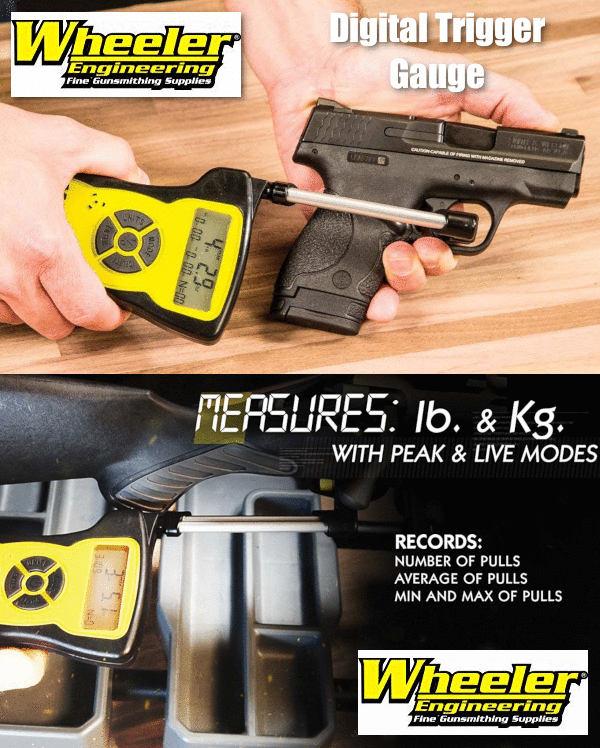
6. Amazon — Wheeler Digital Trigger Pull Gauge, $51.99
⏺ Digital Gauge is repeatable and has strong user reviews
Every serious shooter needs a good trigger gauge. The Wheeler digital trigger gauge (#ad) is precise and repeatable, measuring pull weights up to 12 pounds. The load cell directly contacts the trigger making it extremely accurate with +/- 0.2 ounce precision. There are two modes: “Peak” and “Live.” Peak mode shows max force for each pull and calculates the minimum, maximum and average pull weights. Live mode continuously shows the force on the sensor. It even has a special adapter for Savage-style triggers with bladed inserts. This trigger gauge is now $51.99, 26% off MSRP.
7. Midsouth — Frankford Tumbler Lite + Depriming Tool, $119.99
⏺ Depriming Tool and Tumbler Work Great, save $45 with COMBO
The Frankford Arsenal Depriming Tool and Tumbler Lite are both excellent products. With the hand depriming tool you can knock out primers while watching TV. Spent primers are collected in the removable clear catch tube — so no mess on your press or loading bench. The Tumbler Lite is great for tumbling with liquid media to get your cases bright and shiny. Right now you can save $45 by getting the $119.99 Combo Pack from Midsouth.
⏺ Great price on high quality, reliable 9mm FMJ ammo
The 9mm Luger (9x19mm) is the most popular centerfire pistol cartridge. And now there are some great new 9mm carbines like the cool, folding S&W M&P PRC. So it’s wise to keep good supply of 9mm ammo on hand. Here’s a great deal on quality, major-manufacturer 9mm FMJ pistol ammunition. Get 1000 rounds of Fiocchi 9mm ammo for $219.99. That works out to just $13.50 per 50-count box, or $0.22 per round.
⏺ Great price on versatile, well-designed gun vise
Here’s an excellent gun vise on sale for just $35.99. The versatile MTM GV-30 CaseGard Gun Vise supports rifles and shotguns for cleaning/maintenance. High and low forks allow level or angled gun placement. The rubber-padded rotating stock clamp provides a firm hold. The base has 14 different compartments for tools/solvents, plus 11 slots for jags, brushes, and screwdrivers. On the side are tabs for two cleaning rods. This GV-30 vise is made from rugged, solvent-resistant polypropylene plastic. If this sells out on GunZoneDeals, Midsouth has the GV-30 Vise for $41.58.
⏺ Great price on insulated, polyester fabric blanket
For winter nights, save money by turning the heat down and using this on your bed instead. Spread horizontally, this will cover most of even a king size bed. The Editor bought this for his own home. This versatile sleeping blanket comes in very handy — use it outdoors in summer and indoors in winter. The blanket (we’ll call it a nylon quilt) measures 70″ L x 50″ W. It is machine-washable with a water- and dirt-resistant 190T polyester fabric cover. Inside is excellent TechLoft Silver insulation. This blanket stows neatly into a 13.5″ x 7.5″ roll in the provided carry sack.
Kestrel wind and weather meters are often regarded as the best on the market — for good reason. Here are a series of three videos by F-Class John that show how the Kestrel 5700 with Elite Ballistics works. This article reviews the advanced Kestrel 5700 Elite Wind Meter with sophisticated ballistics capabilities. Our review features three videos by F-Class John that show how the Kestrel 5700 Elite functions with Applied Ballistics APP software and LiNK connection.
This Part I Video starts with a basic Kestrel Anemometer (blue case, 00:00-00:40) wind meter. Then reviewer F-Class John looks at the “smart” Kestrel 5700 with Elite Ballistics. John explains the many features of the Kestrel 5700 and how it holds a powerful ballistics calculator in the convenient, easy-to-tote Kestrel package. With Elite Ballistics, once you enter data about your bullets, velocity, zero, and rifle, the Kestrel can calculate come-ups and wind corrections. If you don’t yet own a Kestrel, we highly recommend you watch this series of videos that explains advanced Kestrel features in detail.
This Part II Video shows the key features of the advanced software APP used by the Kestrel 5700 unit with Elite Ballistics. The Kestrel 5700 can “talk” to a mobile device that runs the Applied Ballistics software APP that contains bullet databases and allows you to enter key information such as muzzle velocity, bullet BC, zero distance, velocity, wind, and environmental factors (altitude, temperature etc.). There are also gun-specific factors such as scope height over bore and barrel twist rate. The video also explains how “range cards” are created and how to view them with your Elite Ballistics-enabled Kestrel. John notes: “The APP is great because you don’t have to fiddle with the Kestrel’s buttons. It’s much easier to enter data and change settings with the APP.”
This Part III video shows how to determine true wind direction by aligning the SIDE of the unit into the wind. You essentially want to set the unit 90 degrees to the wind direction so the impeller runs as slowly as possible. Then, after you set your target distance (See 3:03), the unit can give you precise come-ups for your intended target (10.28 MOA for 559 yards here). The Kestrel then calculates the cross-wind correction as well (See 3:12).
DISCLAIMER: This video and description contains affiliate links, which means that if you click on one of the product links, the video author may receive a small commission. This helps support F-Class John’s YouTube channel and allows him to continue to make videos like this.


 Thousands of new products will be on display at SHOT Show 2024, the major gun industry trade show held each January in Las Vegas. The official SHOT Show Product Planner offers a “sneak peak” at 255 new-for-2024 products for hunters and shooters. More will come in the weeks ahead. Here are eight interesting new products for gun owners and reloaders. Since these are all recently-released items, we haven’t been able to test them yet. Product profiles are based on descriptions provided by the manufacturers. We will run a separate feature on new pistols and rifles that will debut in 2024.




 The
The