At the request of our readers, we provide select “Deals of the Week”. Every Monday morning we offer our Bargain selections. Here are some of the best deals on firearms, hardware, reloading components, and shooting accessories. Be aware that sale prices are subject to change, and once clearance inventory is sold, it’s gone for good. You snooze you lose.
The Ruger Precision Rifle has been one of the hottest-selling long guns in America since its releases. It has pretty much been sold out for months. And Ruger just bumped the price on the new Gen2 edition up to $1599.00 MSRP. The Superstore got hold of some of some Gen 1 production RPRs in .243 Winchester. These rifles are IN STOCK and on sale for $1049.50. That’s a great price. The venerable .243 Win cartridge is a good choice for this rifle — Gavin Gear of UltimateReloder.com has an RPR chambered in .243 Win that has proven very accurate.
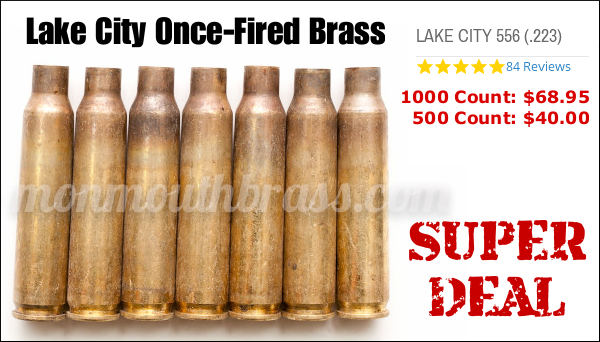
2. Monmouth Reloading — 1000 Lake City 5.56 Cases, $68.95
1000 pieces of Lake City brass for under seventy bucks? Yep, that’s a deal and a half. Monmouth Reloading is selling genuine, once-fired Lake City 5.56x45mm brass, thick-walled and sourced direct from the U.S. Military. Monmouth reports: “Our current stock of Lake City 5.56 looks to be all newer year Lake City head stamp but may contain a small percentage of other NATO headstamps. Lake City is a popular, reliable brass, normally capable of many reloads.” Monmouth includes 1% overage to account for any damaged brass. NOTE: Brass has crimped primers, so the pockets will need to be reamed or swaged prior to reloading.
3. Midsouth Shooters Supply — All Berger Bullets Now 10% Off
Need super-high-quality match, hunting, or varmint bullets? Then visit Midsouth Shooters Supply. Now through June 13, 2016, Midsouth has placed its entire stock of Berger Bullets on sale. You can save 10% off Midsouth’s already competitive prices, even on Berger’s most popular projectiles, such as the 6mm 105gr Match Hybrid, 6.5mm 130g Matcrh AR Hybrid, and the ultra-high BC 7mm 180gr Match Hybrid.
4. CDNN Sports — HK 416 .22LR Rimfire Rifle, $379.99
If you are looking for an AR-type .22 LR rifle for cross-training and rimfire tactical matches, the HK 416 is a fine choice. Made by Walther under license, these HK 416 D145RS rimfire rifles are accurate and reliable. This is a good deal at $379.99! The HK 416 normally sells for $550.00 to $600.00. One purchaser writes: “Great .22. I have had this gun a couple of months and have put about 500 rounds of 5 different brands of ammo through it. Not one FTE. I have shot other brands that can’t get through one 30-round mag without a failure.” CLICK HERE for Product Details.
5. Natchez — Hornady 22-Cal Varmint Bullets, $9.99 Per 100
Headed out for a varmint safari soon? Need inexpensive bullets for your .223 Rem or 22-250? Then check out this deal on Hornady 55-grainers from Natchez. Get 100 Soft Point .224-Caliber FB bullets for just $9.99. At that price, it doesn’t hurt so much when you shoot 1000+ rounds over a weekend. With good expansion, these bullets work great on prarie dogs and other small critters. Note: These sale bullets ship in a bag, not the box as shown.
6. Amazon.com — Howard Leight Electronic Earmuffs $40.97
Every shooter should own a pair of Electronic muffs, even if you prefer shooting with earplugs and/or standard muffs. Electronic muffs are great when you are doing spotting duties or are working near the firing line. They allow you to hear ordinary conversations while still providing vital hearing protection. Right now Amazon.com has the Howard Leight Impact Sport Electronic Muffs on sale for just $40.97. This is good deal — these NRR 22 muffs are currently Amazon’s #1 seller in the category. NOTE: For regular, sustained shooting we recommend muffs and/or earplugs with a higher NRR rating.
7. Natchez — RCBS ChargeMaster Dispenser, $279.99
Here’s a very good deal on the popular RCBS ChargeMaster combo scale/powder dispenser. This unit sells elsewhere for up to $389.00. You may want to act quickly as sale pricing changes frequently. This item is also available on Amazon.com for $296.99 with free shipping for Prime members.
8. Harbor Freight – 8-Drawer Wood Tool Chest
This Wood Tool Chest makes a great addition to your reloading room. The eight (8) drawers can hold the many small tools and accessories used for hand-loading, such as bushings, shims, uniforming tools, mandrels, neck-turners and more. A deeper top compartment (under the lid) holds wrenches and other larger tools. The price is just $79.99. A lockable sliding wood panel fits in place to cover the drawers when not in use. This locking panel also secures the drawers during transport.
9. Bullets.com — Handgun Safe $49.95
This pistol safe keeps your handguns secure while still permitting instant “push-button” access. The three-button lock can be personalized with 3- to 8-digit codes, and there is a key override. This safe will hold two (2) full-sized pistols and can also store passports, cash, or other valuables. The spring-loaded door gives you near-instant response. The all-steel case also includes mounting holes for fixing the safe to floor or shelf.
Barrett Firearms Mfg., famed for its big .50-cal sniper rifles, just introduced a new line of ultra-light hunting rifles. Barrett’s new Fieldcraft rifles feature carbon/Kevlar stocks and light-contour barrels. First unveiled at the NRA Annual Meeting in Louisville this weekend, Barrett’s new Fieldcraft rifles are expected to go on sale in the fall of 2016.
So why is Barrett now building ultralight rifles, the “polar opposite” of a 32-pound Model 82A1? The answer is that many of Barrett’s top execs are avid hunters, and they wanted a rifle that was accurate, yet easy to carry in the field. Company President Chris Barrett explained: “Even though we are known for making the world’s finest military-grade rifles, we love to hunt. Recently we introduced the Barrett Sovereign shotgun line, and now we have created the ultimate hunting rifle.” All the new Fieldcrafts are designed to be as light as possible for each specific caliber. The goal is to allow the rifle to be carried further and longer in the field.
Fieldcraft actions are scaled for each family of chamberings. The high-precision stainless steel barrels are machined to ideal contours and lengths for the specific application and caliber. Initial Fieldcraft rifles will be available in select, popular chamberings and will include left-hand models. In the future, Barrett plans to offer additional calibers and configurations.
Never had a chance to hunt prairie dogs in the American west? Then check out this video. Dan Eigen (aka “Walleye Dan”), host of the We Love It Outdoors Television series, head to South Dakota for some varmint hunting. Dan teams up with Varmint Hunter Association President Jeff Rheborg to patrol some South Dakota Dogtowns where things get serious. In the video, you’ll see p-dog hits at distances from 70 yards to roughly 450 yards. The hunters were shooting from portable, wood-topped swivel rests, using AR-platform rifles on X-type sandbag rest. (Rifle zeroing session is shown at the 5:30+ mark.)
Multiple cameras were employed so you can see both the shooter’s POV and close-ups of the prairie dogs downrange. Watch the shooters having fun with a prairie dog cut-out and some Tannerite at the 9:00-minute mark. This guys are having a grand old time sending critters to Prairie Dog Heaven — we think you’ll enjoy the video.
Prairie Dog Hunting Starts at 2:00 Time-Mark in Video:
NOTE: This video actually covers three sequences: 1) Three-gun training; 2) Prairie Dog Hunting; and 3) Coyote Hunting. We’ve embedded the video so it plays back the Prairie Dog segment from 2:00 to 15:15. If you wish, you can slide the controls forward or back to watch the other segments.
Video found by EdLongrange. We welcome reader submissions.
Will you be heading to the varmint fields this summer? Proper planning is key to a safe, satisfying, and productive varmint holiday. Of course you’ll be busy reloading, but you should make a check-list of all the gear and supplies you need. Bring a variety of rifles if possible — you’ll need to switch off as one barrel gets hot, and the chambering that works best for your close shots may not be ideal for those longer shots out past 400 yards. Here are some tips from our Forum members that can help you shoot more effectively, and avoid problems on your varmint hunt. Here’s one key tip: at your shooting station, put a strip of surveyor’s tape on a tall stake to show the wind direction. Then shoot in the direction the wind blows. This will minimize the effect of cross-winds.
From PatchHound: “The gear you bring will make or break a trip out to Prairie Dog land. A lot has to do with where you going and how far you are from [civilization]. For starters, bring lots of water. It will be hot in Wyoming in a few more weeks but it don’t hurt to bring warm clothes in case it snows. It’s best to wear leather boots unless you’re real good at dodging cactus while walking around. Good sunsceen will save the day too. [What you need to bring] really depends on whether you’re shooting on some friendly ranch or 100 miles in the middle of [a wilderness area]. Good survival gear is a good thing to have for the latter!”
From Stoner25mkiv: “I’d suggest an adjustable bipod if you are going to do any walking. A laser rangefinder is a huge asset. Have a fanny pack or backpack for extra ammo, water, bore-snake, etc. when you go on your walkabouts. We also take a couple pivoting benches, heavy movers’ pad/blanket, sandbags (Uncle Bud’s Bulls Bag) for shooting from near the vehicle. Boonie hat for blocking the sun, sun glasses, sunscreen. High leather boots.
Anyway, on to the rifles…consider bringing a 17 HMR, .223 Ackley bolt gun, .223 Ackley AR, and a 243 WSSM. Some years the 17 HMR isn’t removed from its case. We had a couple windless days and the 17 was lots of fun. I’d walk into the dogtown and then lay down and wait. After five minutes or so I’d have dogs within easy rimfire range, and out to as far as I’d care to stretch the rimfire. 275 yards was about it.”
From CTShooter: “The .204 [Ruger] is a laser beam and good to 400 yards easy. Forget the rimfire! Do you have a portable bench that pivots? Bring bipod, binocs. Bring a LOT of water. I have a milspec sniper shooter’s mat/drag bag with shoulder straps. It is good to carry everything when you want to wander off and shoot prone with bipod. Here’s a view through my 6BR in ND.”
From RJinTexas: “In most of the locations that we’ll be shooting we’ll usually set up a minimum of 200 yards from the edge of a major dog town. We’ll start by working over the close-in dogs and shooting our way out, some of these towns may run in excess of 500/600 yards deep. I believe that a rimfire will put you at a distinct disadvantage. The only rimfire that will somewhat work is the 17 HMR and you can reload for your 204s for close to the cost of HMR ammo and you’ll be less apt to be under-gunned. Your 204 will work well out to 300/400 yards unless the wind is blowing hard. We classify a 10-mph crosswind as a very calm day and what makes it a little more challenging is that it is usually also gusting. I only took my 17 HMR once, I’ve since even quit taking my 17 Mach IV because when the wind blows hard it range is limited to around 200 yards. Gusting wind will play havoc with 25gr pills.”
From Wes (P1ZombieKiller): “[For my first PD trip] there are so many things I was not ready for. The one thing that I did bring (that no one told me about) was a canopy. I’m glad I did. Even though the weather was [near perfect], I know that sun can humble you real fast. With my pop-up canopy, I could shoot all day without getting killed by the sun. You had to tie the canopy down real well or the wind would blow it across the pasture.
We sat on shooting benches that pivot 360°, and are fast and easy to set up. Most all shots were 175-250 yards. I just felt comfortable at that range. It was more fun for me to be able to film the hits, and the camcorder I was using just did not get good video past 350 yards. The digital zoom distorted the image too much. I knew I would only get this one chance to film my first P-dog outing, and I wanted to get it on film for [posterity].” To learn more about P1’s first Prairie Dog Trip, visit his Website.
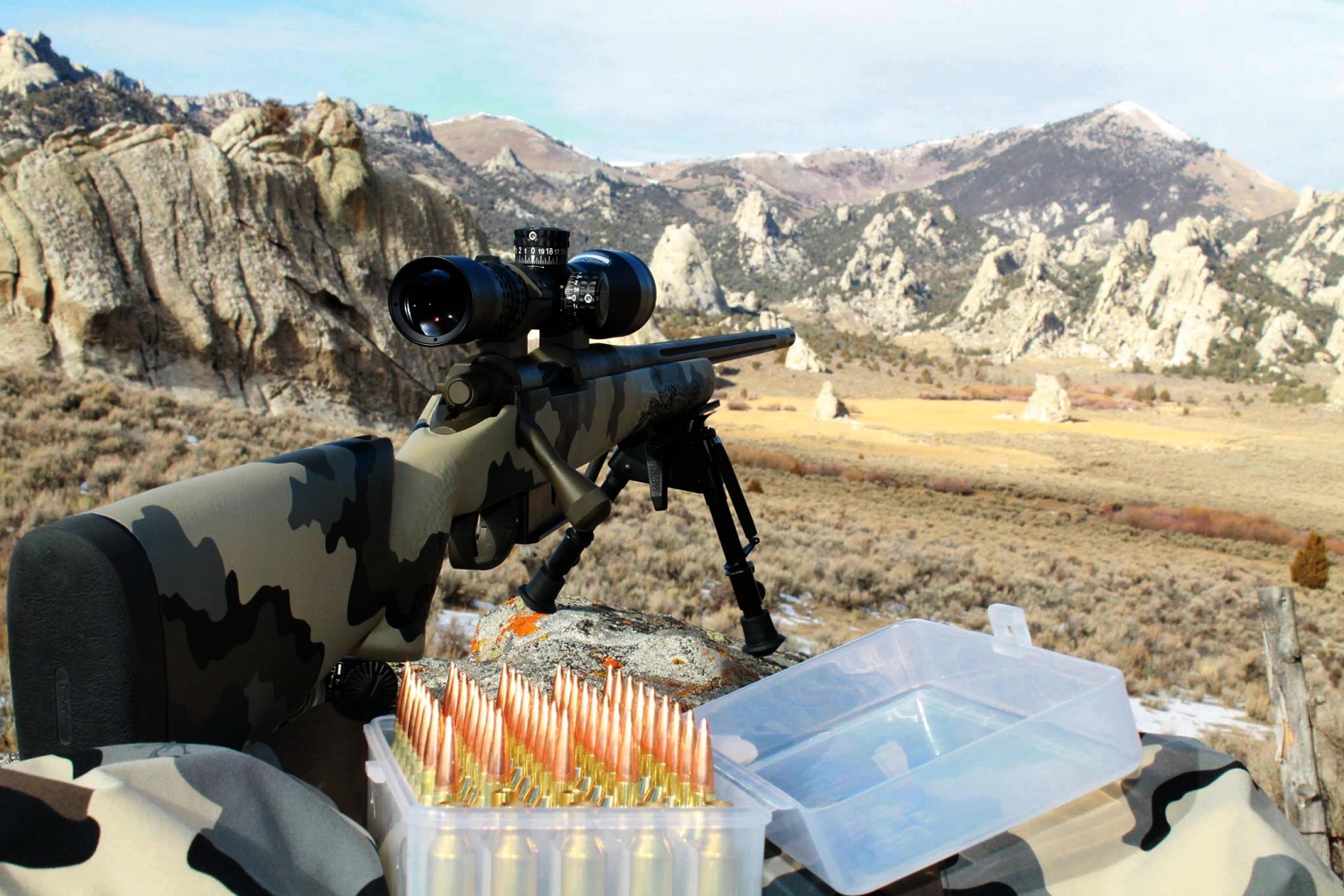
Here are some great rifle-centric landscape images courtesy of Nightforce Optics. Perhaps these “gunscapes” will encourage you to grab your rifle and head out into the woods this weekend. These images are part of an ongoing series of rifle photos posted on the Nightforce Facebook page. Can you identify the optics, and any of the locations? To see a full-screen version of each image, just click on any photo, and a larger version will load.
CLICK Any Image for Larger View
Parting Shot…
This is NOT a Photoshop job — that’s the actual view through a Nightforce scope of a deer. Photographer (and rifle-owner) Brandon F. says: “Ya’ll might enjoy this picture of a Fort Hood white tail… 400m away.”
St. Thomas Groundhog Shoot, Report by Jonathan Trivette
Nestled at the base of a mountain in south-central Pennsylvania is the St. Thomas Sportsmen’s Association. On a cool Saturday morning you’ll find some of the area’s best shooters at the monthly Groundhog Match. The match attracts shooters from Virginia, Maryland, West Virginia, and of course Pennsylvania.
It may not be the longest-yardage match in the area, but it can be the one of the toughest. The range is sloped up the mountain a little so the winds can be very tricky. Often times the three wind flags at 200, 300, and 400 yards will all be blowing in different directions.
A Class for Everyone
St. Thomas’s Groundhog match has five different classes: Heavy (Unlimited) Custom, Light Custom, Heavy Sporter, Light Factory Sporter, and an AR Class. The Heavy Custom is any gun over 17 pounds while Light Custom is any gun up to 17 pounds. The Heavy Sporter is any factory gun that has a heavy/varmint barrel on it. The Sporter class is any factory rifle that has a light profile barrel on it. And the AR class is any AR style rifle. CLICK HERE for Match Rules.
Groundhog Match Format
Signups start at around 7:00 am the day of the match. During sign-up you’ll choose a bench from the 20 available benches. The cost is $15 per gun and you can shoot as many guns as you would like. I’ve shot as many as four different guns but that makes for a busy day. For the Heavy Custom and Light Custom you will shoot 5 shots for score at 200, 300, and 400 yards. In the Heavy Sporter class you will shoot 5 shots for score at 100, 200, and 300 yards. In the Sporter and AR class you will shoot 3 shots for score at 100, 200, and 300 yards.
The Targets feature a groundhog with scoring rings on the left side and 5 practice rings on the right side. Shooters get as many practice shots as they want, subject to a time limit. The three relays run 6 minutes, 6 minutes and 9 minutes respectively.
The match is very well-organized yet has a “laid-back” feel. The first relay starts at 9:00 am and the match is usually over around 1:30 pm. There’s a covered picnic table area for socializing with fellow shooters while waiting on your relay. They have doughnuts and coffee in the morning and usually have some very good chili and hot dogs (for lunch) in the concessions area.
Groundhog Match Results April 16, 2016
On Saturday the weather was perfect and conditions were very good early on. However, by the time the last relay rolled around, mirage made it difficult to see. Ben Brubaker obviously had less trouble than most finishing 1st (143.02) and 2nd (143.02) in the Heavy Custom Class and 1st (144.04) and 3rd (142.04)in the Light Custom class using a 6mm Dasher in both classes. Bob Daron won the Heavy Sporter class with a score of 144.04 followed by Fred Kaminsky with a 142.06. Sporter class proved to be a family affair, with the Bollinger brothers, Glenn (87.01) and Bob (83.02) finishing first and second. We had one junior shooter on Saturday, 7-year-old Lydia Funk. The talented yound lady shot a 68 in Sporter class with her .223 Rem.
You may have missed the first Groundhog Shoot of the year, but there are several other chances for you to get out and test your skills against some of the best shooters in the region. St. Thomas Sportsmen’s Assn. has one shoot a month until October on the second Saturday of each month. Don’t think you have to be a professional shooter to come to these matches. Take it from me as I started shooting these matches about five years ago with a $270 Savage sitting on top of homemade sand bags. The guys here are great to shoot with and are always willing to help out a fellow shooter. They made me feel right at home and always helped me when I have any questions. I started doing this to become a better shooter for deer hunting. I continue to do it because I fell in love with the sport. So if you are looking for something to do on the second Saturday of the month come out and test your shooting skills and enjoy the fellowship of like-minded shooters.
CREDIT: We want to thank Jonathan Trivette for supplying this story and the photos. We welcome reader submissions such as this.
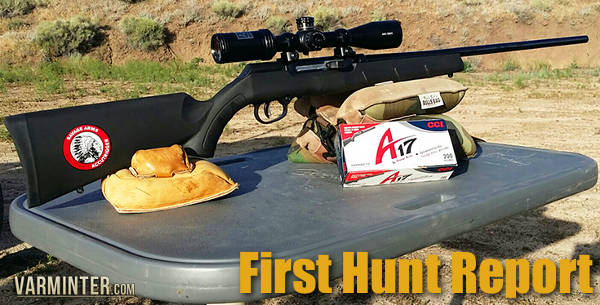
Varminter.com recently released a First Hunt Report on the new Savage A17 rifle. Savage’s new semi-auto .17 HMR has caused quite a stir. Accurate and affordable, the Savage A17 is also the first .17 HMR to feature a delayed blow-back action. We think the A17 may be the most important new rimfire rifle of 2015, so we were pleased to see that Eric Mayer, Editor of Varminter.com, put the new semi-auto Savage through its paces.
Mayer wanted to see how the new Savage would perform, accuracy-wise, and he also wanted to see how the A17 fared in the field. Mayer achieved one-MOA accuracy with the Savage A17 using the latest CCI-brand ammo, and he demonstrated the A17 is wickedly effective on ground squirrels. Below we’ve provided highlights from Varminter.com’s Savage A17 First Hunt Report.
On Saturday, April 16, the American Suppressor Association (ASA), in partnership with Brownells, will host the Iowa Suppressor Rally, a public suppressor shoot at the Big Springs Shooting Complex near Searsboro, Iowa. The event will celebrate the enactment of Iowa House File 2279, which legalized firearm suppressors in Iowa on March 31st. Rally organizers will provide all firearms, ammunition, and, of course, suppressors.
The rally is free and open to the public. All guns and ammo will be provided at the rally; attendees are asked to leave personal firearms at home or in their vehicles. The Rally will allow Iowans to sample firearms equipped with suppressors from Advanced Armament Corporation (AAC), Dakota Silencer, Gemtech, Sig Sauer, Silencerco, and Yankee Hill Machine.
“After three years of hard work alongside the Iowa Firearms Coalition and the NRA, Iowans will finally be able to use suppressors to protect their hearing while enjoying the shooting sports,” said Knox Williams, President and Executive Director of the ASA. “This rally [will] show the people of Iowa why we have all fought so hard to legalize suppressors in The Hawkeye State.”
“Iowans can now enjoy the same freedom as those in many other states and countries,” said Brownells CEO Pete Brownell. “I suffer from hearing loss myself. Being able to dampen the noise associated with firearms will help protect the hearing of all Iowans who shoot, including future generations of Iowa gun owners.”
Suppressors (obtained in accordance with Federal law) are now legal to own in the vast majority of American States. CLICK HERE to learn more about obtaining a suppressor.
McMillan Fiberglass Stocks has unveiled some interesting new Spring offerings. First, McMillan now offers some really cool “Transition” camouflage finishes for hunting and tactical stocks. These Transition Camo Paint Finishes are handsome, distinctive, and very effective in the field. In addition, McMillan is adding three new hunting and sporting stocks to its collection of fiberglass rifle stocks.
Transition Camo Series Paint Finish
The Transition Camo Series, McMillan’s newest paint finish, mimics the spray patterns favored by tactical marksmen and hunters. The highly-durable paint McMillan uses provides an industrial-grade, non-slip pebble finish similar to that found on power tools and industrial equipment. This tough, durable polyurethane paint is suitable for harsh conditions. The Transition Camo Series is currently available in three (3) color combos: Woodland Transition, Desert Transition, and GAP Transition.
McMillan New-for-2016 Hunting and Sporting Stocks
Game Warden / Adjustable Game Warden
The Game Warden stock shares the same streamlined design and A-3 vertical pistol grip as McMillan’s popular Game Scout rifle stock, but the new stock features a larger fore-end which accepts larger contour barrels up to a #8. This is an ambidextrous stock which can be inletted for Remington type and Sako right-hand and left-hand actions. The stock is available with a fixed comb or with either of the optional integral cheekpieces. The Adjustable Game Warden accepts only Remington type actions.
Game Hunter
The Game Hunter stock combines the most popular features of McMillan’s hunting and sporting stocks and fits Remington-type actions. The stock has a high, Monte Carlo-style cheekpiece similar to the McMillan Hunter stock and an A-3 vertical pistol grip from McMillan’s popular Game Scout stock. The Game Hunter’s fore-end accommodates large contour barrels up to #8. The higher cheek comb allows for the use of scopes with larger diameter objectives. Available in right-hand only.
Game Scout X-Bolt
The Game Scout has been McMillan’s #1 selling hunting stock for two years running. McMillan’s new Game Scout X-Bolt is the only aftermarket stock made for the Browning X-Bolt action and its unique floorplate. This X-Bolt Game Scout is available for both short and long actions and can accommodate barrels up to a #5 contour.
About McMillan Fiberglass Stocks
McMillan stocks carry a lifetime warranty and are manufactured in the United States. McMillan Fiberglass Stocks is a leading manufacturer of premium custom fiberglass stocks for hunting, competition, tactical, and OEM markets. McMillan is located in Phoenix, Arizona. For more info, visit www.mcmillanusa.com or call 877-365-6148.
Ever find yourself sitting in an airport, bored out of your gourd? Well here’s how to make good use of your time — listen to a gun-centric Podcast. There are a number of interesting Podcasts for shooters and firearms fans. A Podcast is like an old-fashioned radio show, but delivered over the internet. You can listen “live” or save the Podcast file for later review. That’s great when you’re on an airplane and don’t have a web connection. Download some Podcasts to your smartphone before you get to the airport and then you can play them back during your flight.
Our friends at the NRA Blog have researched Podcasts for fans of the shooting sports. It turns out that Podcasts are more popular than ever: “The Great Podcast Renaissance is upon us! Podcasts have been around for about 10 years now. It’s easier now than ever for anyone and everyone to make their own podcast, which is why the number of podcasts and variety of show topics have greatly increased.”
The Gun Girl Radio Podcast is hosted by our friends Julie Golob and Randi Rogers, both top action shooting competitors. Julie served with the U.S. Army before embarking on her professional shooting career. Randi has been a champion in various shooting disciplines including Cowboy Action and 3-Gun.
2. The Firearms Radio Network
With more than a dozen different podcasts, the Firearms Radio Network (FRN) offers a large range of audio programming. Whether you’re a tactical shooter, or a handgunner, or a hunter, you’ll find something of interest. This network also offers a regular podcast dedicated to hand-loading. Here are some of our favorite FRN podcasts:
3. Tom Gresham’s GunTalk
Tom Gresham’s GunTalk is the only nationally-syndicated radio talk show about firearms, shooting and gun rights. It is available as a live radio broadcast as well as recorded podcasts. Each week Tom host notable guests from the firearms industry and shooting sports.
4. Hunt Talk Radio
Randy Newberg’s Hunt Talk Radio covers hunting politics, access to public lands, and conservation topics. Expert hunters and guides join Randy each week, sharing their field skills and stalking tips.




 Never had a chance to hunt prairie dogs in the American west? Then check out this video. Dan Eigen (aka “Walleye Dan”), host of the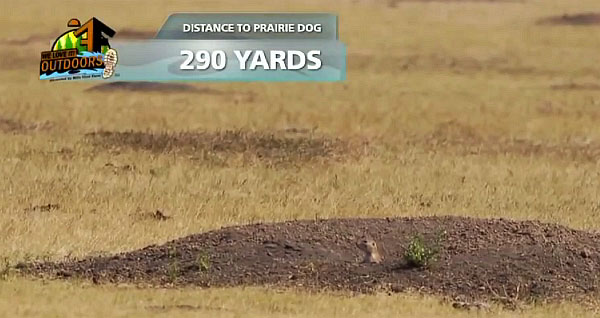


 From Wes (P1ZombieKiller): “[For my first PD trip] there are so many things I was not ready for. The one thing that I did bring (that no one told me about) was a canopy. I’m glad I did. Even though the weather was [near perfect], I know that sun can humble you real fast. With my pop-up canopy, I could shoot all day without getting killed by the sun. You had to tie the canopy down real well or the wind would blow it across the pasture.




 St. Thomas Groundhog Shoot, Report by Jonathan Trivette
 The Targets feature a groundhog with scoring rings on the left side and 5 practice rings on the right side. Shooters get as many practice shots as they want, subject to a time limit. The three relays run 6 minutes, 6 minutes and 9 minutes respectively.