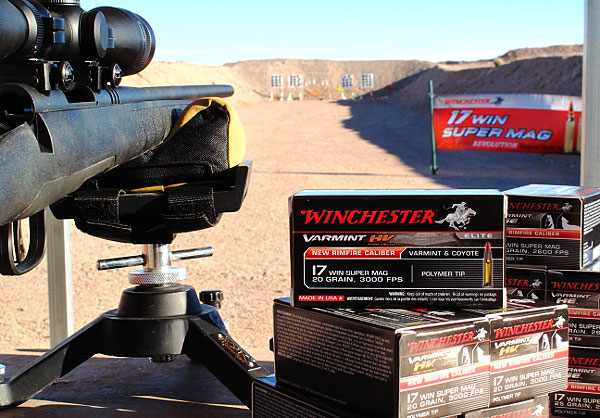
At Media Day we test-fired the new 3000 FPS rimfire ammunition from Winchester. Shooting the new 17 Win Super Mag ammo from a pre-production Savage B.MAG rifle (more on that later) and a Browning m1885 falling block, we were able to shoot sub-minute-of-angle groups with a pretty primitive front rest and lumpy rear bag. So far, then, it appears the ammo is pretty darn accurate for a mass-produced rimfire cartridge. Savage has promised to send us a B.MAG rifle for further testing. Watch the video below for more details on this new cartridge.
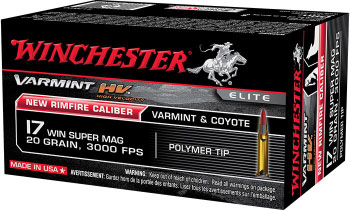
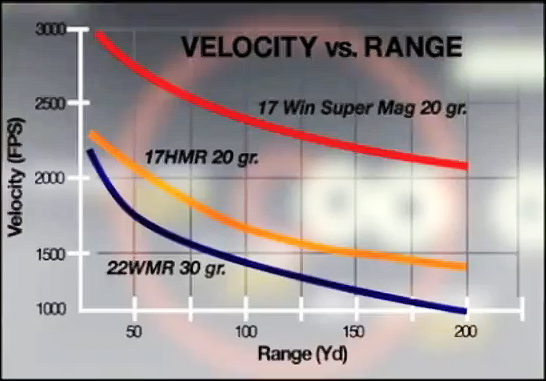
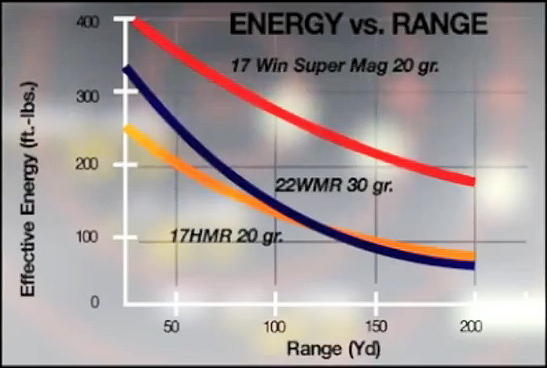
New 3000 FPS Rimfire Round Winchester has announced a new, high-velocity 17-caliber rimfire cartridge, the .17 Winchester Super Magnum (aka .17 Win Super Mag). The .17 Win Super Mag will initially be offered in three bullet types: 20gr plastic tip (Varmint HV), 25gr plastic tip (Varmint HE), and a 20gr JHP (Super-X). The 20-grain varieties boast a 3000 FPS muzzle velocity, earning honors as the fastest Rimfire ammo ever made.
.17 Winchester Super Mag Specifications
Symbol
Sub Brand
Bullet Weight
Muzzle Velocity
S17W20
Varmint HV
20-gr Plastic Tip
3,000 fps
S17W25
Varmint HE
25-gr Plastic Tip
2,600 fps
X17W20
Super-X
20-gr JHP
3,000 fps
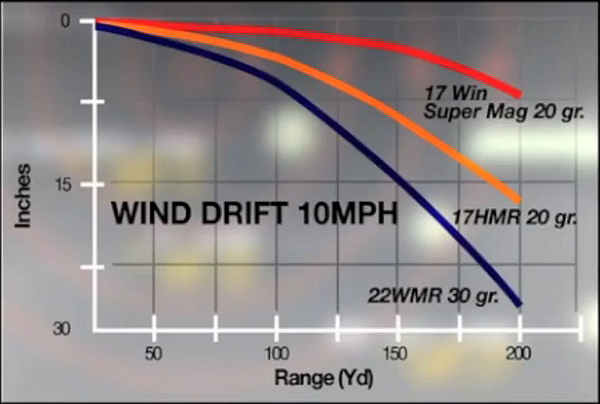
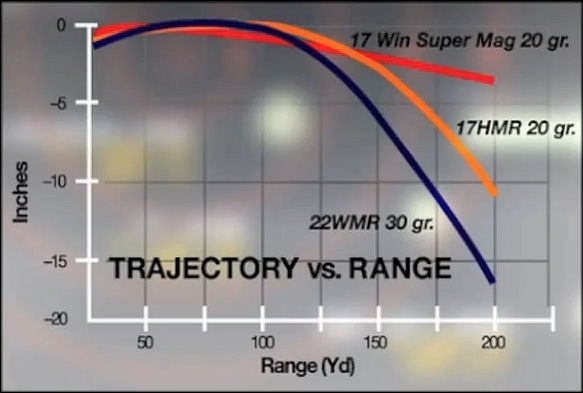
Winchester claims that all .17 Win Super Mag ammo types shoot much flatter than the .22 Win Mag and .17 HMR, while delivering more than 150 percent more energy than both. In addition, the .17 Win Super Mag “bucks the wind” better than any other rimfire ammo — exhibiting significant less horizontal drift at extended ranges. The ammunition should be available at Winchester dealers by April 2013.
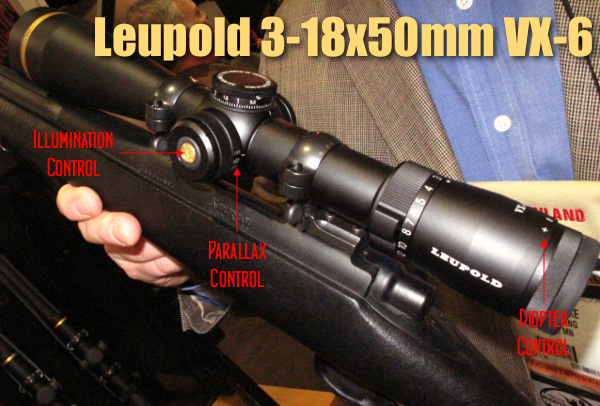
At SHOT Show, Leupold displayed its latest VX-6 scope, a 3-18x50mm. The new 3-18x50mm scope comes in both illuminated and non-illuminated versions. Leupold also confirmed that a 4-24 power VX-6 will be introduced in mid-year 2013. The new 4-24X will have side-parallax, with Varmint Hunters’ and Fine Duplex reticle options. Also new for 2013, Leupold is adding an illuminated version of its 2-12x42mm VX-6.
The new 3-18x50mm VX-6 scope from Leupold comes with all the features you could want. It offers side parallax adjustment, pop-up resettable dials, “diamond-coat” scratch-resistant lenses, a European-style true diopter eyepiece, and illumination control via gold push-button in the center of the left-side turret. There are 11 different illumination settings, so you can adjust the brightness to the conditions. Additionally, when you purchase a 3-18x50mm VX-6 you get one free tuned BDC dial from the Leupold Custom Shop. Reticle choices for 3-18x50mm include: Duplex, Boone & Crockett, Fire-Dot Illuminated Duplex, and illuminated Boone & Crockett.
SHOT Show 2013 has been underway since Monday. This show seems bigger than ever, and the sheer number of noteworthy products on display is mind-boggling. We’ve seen some remarkable new scopes from Nightforce, Kahles, and IOR-Valdada. Dave Kiff at PT&G has some “game-changing” new products. Winchester’s new 17 Win Super Mag rimfire cartridge has generated lots of interest, and Savage showed off its new B.MAG bolt action chambered for the new cartridge.
Here’s a quick sample of some cool or interesting products we saw in action on Media Day or on display inside the Sands Convention Center. We’ll do more complete write-ups/reviews once we “back to the office” and have a change to digest spec sheets and edit video. But please enjoy this photo “sampler” from SHOT Show 2013.
New Kahles 10-50X Competition Scope, with Central (big wheel) Parallax Adjustment
New Savage B.MAG Rifle Chambered in 17 Win Super Mag Rimfire
Prototype “Tinkertoy” Benchrest Rifle from McMillan Built on “Alias” Action
New Datum Dial Ammunition Measurement System from Forster Products
New .338 Lapua Magnum Action and Complete .338 LM Rifles from Kelbly’s
New Savage Bolt from PT&G with User-Adjustable Spring Tension
Futuristic $22K Tracking-Point Rifle System with Automatic Ranging, Ballistic Calculation, and Aiming Solution
New .375 Caliber, 350 grain, ultra-high-BC Match-King Bullet from Sierra
Vectronix Laser Rangefinder Units ($1995.00 – $8510.00)
Air Arms S400 Multi-Purpose Rifles (Regular and Biathlon Models)
Accuracy Int’l PSR Multi-Caliber Rifle System — ‘Takedown Edition’ in .338 LM
After shooting the new Anschutz model 1727 hunter, three simple words came to mind: “I want one”. This slick little rifle was this editor’s favorite new firearm at the 2013 Media Day at the range. At first glance, it’s just a simple hunting rifle with a European-style walnut stock. But a close look reveals something very special. This little sporting rifle, chambered in 17 HMR, features an advanced, straight-pull Fortner action. This is the same action design found on Anschutz’s top of the line $5000+ Biathlon Rifles. This new model 1727 was revealed for the first time in the world at Media Day.
The nickel-plated action is very smooth and easy to operate. You can flick the action open and closed with a quick movement of thumb and fore-finger (or you can use index finger alone). The adjustable trigger is light and smooth — as you would expect on an Anschutz. This trigger is light years ahead of what you’ll find on a typical factory varmint rifle — it’s that good.
While visiting the Anschutz booth at Media Day, we got to meet young Max Anschutz, who represents the sixth generation of rifle makers in the Anschutz family. Max demo’d the new model 1727 for us and then gave a “shout-out” (in both English and German) to fans of his family’s rifles on both sides of the Atlantic. For this editor, it was interesting to meet this young man as I have now interviewed Dieter Anschutz, his son Jochen, and now Dieter’s grandson, Max.
Watch Straight-Pull Anschutz 17HMR Rifle in Video
The new model 1727 should be available in the USA by mid-April. In the video, the Anschutz rep says the rifle would cost “around $2,000.00″. However, it appears he didn’t convert to U.S. currency correctly. Expect the actual price in the USA to be $3800.00 or higher. Initially, the model 1727 will be released in 17 HMR only. However, Anschutz reps stated that, sometime down the road, Anschutz might produce versions of this gun chambered for the 17 Hornet or new 17 Win Super Mag.
Bryan Litz, author of Applied Ballistics for Long-Range Shooting, told us that Kestrel will unveil a new “Shooter’s Weather Meter” this week at SHOT Show. The brand-new Kestrel Shooter’s Weather Meter will feature Bryan’s sophisticated Applied Ballistics software inside. This allows shooters to calculate very accurate trajectories while measuring up to 15 environmental parameters. This is a big step forward, according to Bryan.
When can you get your hands on one? The new Shooter’s Weather Meter will be available for pre-order for spring 2013 production. [Bryan hosted a demonstration at the Kestrel SHOT Show Booth Thursday at 2:00 pm.]
With integrated Applied Ballistics software, Kestrel users are now able to select from either G1 or G7 ballistic coefficients (BC) when calculating a trajectory. The new Ballistics Kestrel also offers the very extensive “Litz”-measured BC library of over 225 bullets. In addition to these features, users can “train” the software to match a specific rifle based on observed impacts at long range with the ballistics calibration feature. With more accurate BC data, shooters are empowered to make more precise trajectory calculations.
Watch Video about Kestrel Shooters’ Weather Meter with Applied Ballistics Software
New Kestrel Can Communicate with Remote Wind Sensors
The new Kestrel Shooter’s Weather Meter can receive data from wind sensor arrays designed and sold by Applied Ballistics. The use of remote sensors allows actual wind data from various distances down-range to be factored into the ballistics solution. Kestrel says that no other handheld weather meter has offered this kid of multi-array “remote sensing” capability before. Like all Kestrels, the Shooter’s Weather Meter is IP67 waterproof and ruggedized to MIL-STD-810F standards.
Kestrel Weather & Environmental Meters are manufactured by Nielsen-Kellerman, which has produced advanced environmental instruments for more than 15 years. Every Kestrel meter is pocket-sized, rugged, accurate, waterproof, easy-to-use, and backed by an industry-leading five-year warranty.
Kruger of Germany produces match targets for the ISSF and major World Championships. Kruger’s quality control is second to none. Now officially-licensed NRA targets are available from Kruger Premium Targets in the USA. With elite competitions being decided by thousandths of an inch in shot placement, shouldn’t your club use the best-quality targets available? Kruger targets are made from premium-grade paper to permit precise, reliable measurements. For example, to ensure that target holes do not have irregular edges, Kruger’s NRA Air Rifle and Air Pistol targets are printed on machine-smoothed 210 gram board made from short-fiber materials. Mike Krei, Director of the NRA’s Competitive Shooting Division, has stated: “It is generally accepted that Kruger has the best heavy pulp target paper in the world and that directly relates to the excellent clean bullet holes which are essential for precise scoring.”
Kruger offers the full array of official NRA air rifle, air pistol, international pistol, and smallbore targets. In addition, Kruger sells photo-realistic Animal Targets, plus a cool series of Fun Targets for plinking and informal practice. Kruger targets can be ordered online through www.Kruger-US-Targets.com or you can call Kruger’s USA distributor, MK Tactical, at (503) 746-6816. MK Tactical is located in Hillsborough, OR.
Carl Zeiss Sports Optics has rolled out its new Conquest HD5 riflescope line. These new HD5 scopes feature five-times (5X) magnification range, 1/4-MOA clicks, lockable turret options, and improved (optional) RAPID-Z® ballistic reticles. Made in Germany, these compact, 1-inch-tube scopes are available in three models: 2-10x42mm, 3-15x42mm, and 5-25x50mm.
Compared to previous Zeiss Conquests, the new HD5 scopes feature more ergonomic turrets, improved magnification rings with finer adjustment, and a lower profile. These scopes all have an adjustable -3 to +2 diopter eyepiece. (We’d like to see all premium scopes offer diopters). All HD5 scopes are covered by the US Lifetime Warranty and 5-Year No-Fault Policy.
Improved, more ergonomic turret design (lockable option).
Enhanced RAPID-Z or Z-Plex ballistic reticles.
Improved rubberized, fine-adjusting power ring.
Conquest HD5 2-10x42mm:
Features: Compact with extremely wide field-of-view in 2-power. The Conquest HD5 2-10×42 is parallax free to 500 yards and is available with either a Z-Plex (#20) reticle (MSRP $889.00) or RAPID-Z 600 (MSRP $972.00) or standard hunting turrets.
Conquest HD5 3-15x42mm:
Features: Trim, low-profile hunting scope with side parallax adjustment. The 3-15×42 weighs just 18.8 ounces, and is 13.8 inches long. Z-Plex reticle is available in either hunting turret or lockable target turret. MSRPs are: $999.00 with Z-Plex hunting turret, $1083.00 with RAPID-Z 600/800, $1,110.0 with Z-Plex and Lockable Target Turret.
Conquest HD5 5-25x50mm:
Features: One of the most compact 5-25X side-parallax scopes on the market. The 5-25×50 is 14 inches long and weighs just 26.6 ounces. Zeiss claims roughly 62 MOA of vertical adjustment and roughly 38 MOA of horizontal travel. Offered with Z-Plex reticle and lockable target turret, RAPID-Z® 800 with hunting turret, Rapid-Z® 1000 with lockable target turret or with a RAPID-Z® Varmint reticle and hunting turret. MSRP is $1111.00 with target turrets, or $1194.00 with RAPID-Z variants.
Mike Jensen, President of Carl Zeiss Sports Optics says the new HD5 scopes offer very high quality at affordable prices: “We are listening to what hunters want and delivering the very best to them at incredibly competitive price points. This new series of 1-inch hunting riflescope will be what all others are measured against.”
Story Tip from EdLongrange. We welcome reader submissions.
By Danny Reever
Shooters’ notebooks (aka “data books” or “log books”) allow the shooter to record critical shot data and general information. To log data, I’ve seen everything used from simple note cards to huge ledger books and everything in between. I’ve tried many of the commercial logbook offerings as well as some of the military-type sniper data books. Invariably they lack some “mission critical” information pages, while being stuffed with pages that aren’t useful at all. One ends up discarding non-useful pages only to be left with a shortage of really functional pages.
Given the shortcomings of most commercial data books, I resorted to making my own logs using simple spiral notebooks. That was until I discovered Impact Data Books, created by Tony Gimmellie, a competitive shooter and USMC vet who served seven years as a Marine Scout Sniper. While in the military, Tony made his data books for himself and for other Marines because commercial offerings lacked important (and even essential) features.
After Tony left the Marines in 2001 he set out to create modular data books with removable, replaceable pages. Some years later, Tony met Tom Challey who brought much-needed design and layout skills to the project. Starting in 2009, Tony and Tom began selling Impact Data Books. Customized Impact Data Books are now used by the U.S. military, federal and state law enforcement agencies, gun manufacturers, and by well-known shooting schools. Standardized, pre-made Impact Data Books are sold by MidwayUSA and other vendors. Two sizes are offered: the standard 9 1/8″ by 6.5″ book or a 5.5″ x 4 1/4″ pocket-sized version.
TAB GEAR Cordura covers for large or small Impact Data Books are $42.00 from Riflesonly.com.
Review of Impact Data Books The first thing that you will notice about an Impact Data Book is the durable Poly-carbonate three ring binder. The tough plastic covers have been scored so that the book lays open flat and won’t accidently close. Covers come in two colors: tan with the Impact Data Book logo in black, or black with logo in red. The standard page material is heavy, 80-weight executive stock, or, for a slight additional charge, you can get “Rite in the Rain” water-resistant stock.
Each Impact Data Book comes with a set of standard pages that include: wind observation, general ballistic tables, range estimation, size of objects reference, yards to meters conversion tables, common conversion formulas, leads for moving targets, angle fire information, mil-value adjustments, and MOA-adjustment values. You then can choose among eight (8) sets of ten double-sided pages to augment the basic reference pages.
Impact Data Books offer many alternative page formats. Drawing from over 250 different page designs, you can optimize a modular book for your individual needs. If you shoot short range benchrest, 600- or 1000-yard benchrest, F-class, NRA Service rifle there are pages for you. Want blank pages, grids, circles, animal silhouettes, drills, special shapes, even Shoot-N-C targets? Impact Data Books offers those pages too. And if you still can’t find what you need, Tony and Tom can customize a page for you or your organization, optimized for your discipline(s).
The complete modular book will have 100 double-sided sheets providing the shooter with 160 data collection pages, 20 pages of reference material, plus 3 round-count pages, 3 note pages, 2 sniper range cards, and two field sketch pages. Over all, you’ll have 200 pages optimized for your needs. In the real world, that’s far more useful than any “off-the-shelf” data book filled with many pages you don’t need or want.
What Do They Cost?
A pre-made Impact Data Book, such as the F-Class book, costs $32.00. You’ll pay $42.00 for a fully-customized 200-page (100 sheets) modular data book. Additional page sets can be added for just $3.99 per set of ten double-sided pages.
Danny’s Custom GroundHog Match Data Book
I shoot a lot of GroundHog/Varmint Matches. For these competitions, I wanted a book that would work at many different club matches yet adapt to each club’s particular yardages and course of fire. I worked with Tony to come up with a GroundHog Match book that contains: one set of index pages with wind charts etc.; 40 double-sided GroundHog Match sheets; one shooters info/rifle info page; 10 load development sheets; 10 round-count sheets; 10 blank end-of-fire data sheets; 5 note pages; and 5 come-up sheets.
I think any shooter involved in groundhog shoots or fun varmint matches can benefit from this GroundHog Match Data book, priced at $32.00. You can order from me, we3reevers [at] embarqmail.com, or order directly from Impact Data Books, P.O. Box 223, King George, VA 22485.
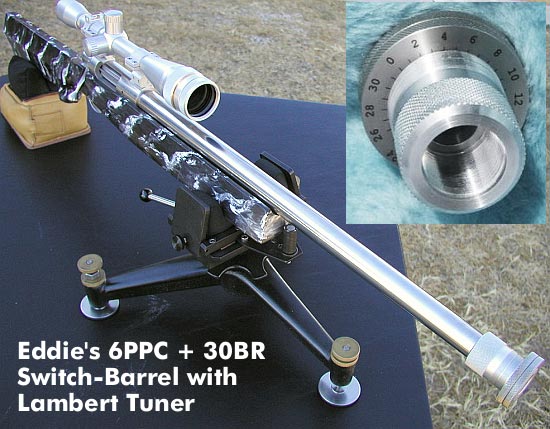
Barrel tuners have been used successfully in rimfire benchrest for many years (see photo below). While there are competing theories as to how and why barrel tuners work on rimfire rifles, there is no question that the accuracy of some rimfire barrels can be improved with the addition of a tuner. By changing the position of weights at the end of the barrel, we’ve seen shooters shrink their average group size as well as adjust the “sweet spot” for different lots of rimfire ammo. On the other hand, tuners can be the source of great frustration; some installations may yield little or no benefit. A shooter may have to experiment with a variety of different tuner designs (and weights) to find the optimal configuration.
Centerfire Tuners–Still a Work in Progress
In centerfire benchrest competition, the vast majority of competitors do not use tuners, though a few short-range shooters such as Gene Bukys and Jackie Schmidt have enjoyed considerable success. Gene has won major championships with tuned rifles. In 2011 Gene won both the Super Shoot and World Benchrest Championship (WBC), and Gene recently set a new NBRSA Sporter Class Grand Agg Record.
Centerfire benchrest guns typically employ shorter barrels with a much fatter contour (larger diameter) than rimfire rifles. Because centerfire rounds produce much higher pressures and velocities that a 22LR, a centerfire barrel also exhibits much different vibration characteristics than a typical rimfire barrel. Nonetheless, there are pioneers working with centerfire tuners who believe that tuning may be the “next leap forward” in centerfire accuracy.
Shown below is a switch-barrel benchrest rifle built by Forum member Eddie W. of Texas. It features a dual-port Hall “M” action with a ShadeTree Engineering Tuner crafted by Butch Lambert. The gun is designed to take both a 6PPC barrel for group shooting and a 30BR barrel for score shooting. The gun was barreled by Wayne Shaw, and Eddie did the stock work himself. Eddie reports: “It is a very accurate rifle.”
Will we see more tuners on centerfire rifles? Only time will tell. Some folks believe that, since one can easily adjust the loads shot by centerfire guns (by tinkering with the powder charge and seating depth), tuners have limited utility. On the other hand, tuner advocates such as Gene Beggs believe tuners can help keep your group sizes small even as conditions (temperature, humidity) change. Gene believes that, with an appropriate tuner, you can spend less time fiddling with the load specs (changing your powder charge) and instead “dial in” your sweet spot using the tuner.
The tool-makers at 21st Century Shooting have come up with a very slick new Precision Hand-Priming Tool. This extremely well-made, benchrest-grade unit raises the bar among single-primer seating tools. Feel is great, changing shell-holders is simple, and nothing else on the market offers better control over primer seating depth. The tool’s precision-adjusting head provides clicks in .0025″ increments for precise seating depth. The tool’s body, internals, and shell-holders are stainless, while the handle is anodized aluminum. Price is $118.00 for the tool itself. Shell-holders (sizes from 17 Remington up to .338 Lapua Magnum) cost $7.99 each.
21st Century Priming Tool Review By Boyd Allen
I have been priming cases, with various hand-priming tools, for about three decades, and in the process have pretty much tried them all, from least to most expensive. When I found out that this new 21st Century tool was adjustable for seating depth, I wondered about that. After all, what do I, who believes in seating by feel, need with adjustable seating depth? Well…..I was wrong. Let me explain.
Why Adjustment for Primer Seating Depth Is Important
Most hand-seating tools do not have an adjustment for how far up the priming punch comes up into the shell holder. As a result, when priming a case with a deep pocket, especially if there has been some wear of the tool’s linkage, the finger/thumb lever may contact the tool’s body before the primer is fully seated. Having a primer seated too high can cause a myriad of problems. Prior to this, the only seater that I had used that had an adjustable linkage was the Sinclair tool, and adjusting its linkage requires disassembly — regular disassembly if you want to keep it perfect. That’s not convenient. The Sinclair is good tool, but a pain in the neck to adjust.
Precision Control Over Seating Depth — With Click Adjustment
The 21st Century Priming Tool offers quick and easy depth adjustment (unlike its rival from Sinclair). The 21st Century unit can be adjusted in precise increments (.0025”) more quickly than you can read this sentence. The knurled head of the tool is threaded onto the body, which has a very sturdy ball and spring detent indexing system that is easy to adjust and precise. Clicks are secure and positive. With this feature, you can set the tool so that the handle is in any position (distance from the tool body) that you find convenient, when the primer is fully seated. Additionally, since leverage increases as the handle approaches the tool body, different stopping points afford differing mechanical advantages (more or less effort required) and sensitivity. By doing a little experimenting, I have found a point of adjustment that give me better feel for when the primer hits the bottom of the pocket, without overshooting the mark, while keeping the force requirement within a range that is comfortable when priming a large number of cases.
Quick and Easy Shell-Holder Changing
Changing shell holders is easily accomplished. No extra hex-wrenches or tools are needed, and there are no tiny set screws to roll of the desk, to be lost forever in the carpet, never to be heard from again until you hear them rattling up the vacuum cleaner hose. To swap shell-holders, simply screw the head off of the body, lift off the one that you one that you are replacing, set the one that you intend to use in place (assuming that it used the same size primer) and screw the head back down to the setting that you want. Changing primer sizes is equally easy. NOTE: The tool requires 21st Century-made shell holders. These may be turned (relative to the handle) so that the loading slot opening faces whatever direction you prefer.
Fit, Finish, and Feel
The body and head of the tool, as well as the internal linkages, are all made from stainless steel. These closely-fitted parts are precisely machined, with an smooth, attractive finish. The handle is black anodized aluminum. Overall, the tool is well-shaped, and built like a stainless/aluminum brick.
Bottom Line: Great Tool That Works Exceptionally Well I can’t imagine anyone, who uses a single-primer tool of this type, not liking this tool. When it comes to hand reloading tools, I can afford to have pretty much whatever I want (within reason). After testing and using this tool, I pulled my Sinclair tool from its case, and replaced it with this one. That should say it all. After using this tool, I will have to give serious consideration to other 21st Century reloading products the next time I need a new tool. One thing is for sure — we have an important new player in the design and manufacture of top end of reloading equipment. 21st Century’s Precision Priming Tool “raises the bar” among single-primer seating tools.
Tool Size Considerations
I wrote the review and then took the pictures, which, upon reflection, make the tool look smaller than it is, because of the size of my hands. I thought about putting a ruler in the pictures, but rejected that as visual clutter, so I will simply tell you that from tip of thumb to that of my little finger, my right hand measures a little over 10 inches, and the palm is 4 inches wide. The size of the tool is just right.


 New 3000 FPS Rimfire Round

 At SHOT Show, Leupold displayed its latest VX-6 scope, a 3-18x50mm. The new 3-18x50mm scope comes in both illuminated and non-illuminated versions. Leupold also confirmed that a 4-24 power VX-6 will be introduced in mid-year 2013. The new 4-24X will have side-parallax, with Varmint Hunters’ and Fine Duplex reticle options. Also new for 2013, Leupold is adding an illuminated version of its 2-12x42mm VX-6.


 After shooting the new Anschutz model 1727 hunter, three simple words came to mind: “I want one”. This slick little rifle was this editor’s favorite new firearm at the 2013 Media Day at the range. At first glance, it’s just a simple hunting rifle with a European-style walnut stock. But a close look reveals something very special. This little sporting rifle, chambered in 17 HMR, features an advanced, straight-pull Fortner action. This is the same action design found on Anschutz’s top of the line $5000+ Biathlon Rifles. This new model 1727 was revealed for the first time in the world at Media Day.
 The nickel-plated action is very smooth and easy to operate. You can flick the action open and closed with a quick movement of thumb and fore-finger (or you can use index finger alone). The adjustable trigger is light and smooth — as you would expect on an Anschutz. This trigger is light years ahead of what you’ll find on a typical factory varmint rifle — it’s that good.
 Bryan Litz, author of Applied Ballistics for Long-Range Shooting, told us that Kestrel will unveil a new “Shooter’s Weather Meter” this week at SHOT Show. The brand-new Kestrel Shooter’s Weather Meter will feature Bryan’s sophisticated Applied Ballistics software inside. This allows shooters to calculate very accurate trajectories while measuring up to 15 environmental parameters. This is a big step forward, according to Bryan.
 Kruger of Germany produces match targets for the ISSF and major World Championships. Kruger’s quality control is second to none. Now officially-licensed NRA targets are available from


 By Danny Reever
 The first thing that you will notice about an Impact Data Book is the durable Poly-carbonate three ring binder. The tough plastic covers have been scored so that the book lays open flat and won’t accidently close. Covers come in two colors: tan with the Impact Data Book logo in black, or black with logo in red. The standard page material is heavy, 80-weight executive stock, or, for a slight additional charge, you can get “Rite in the Rain” water-resistant stock.


 Centerfire Tuners–Still a Work in Progress

 The tool-makers at

 I can’t imagine anyone, who uses a single-primer tool of this type, not liking this tool. When it comes to hand reloading tools, I can afford to have pretty much whatever I want (within reason). After testing and using this tool, I pulled my Sinclair tool from its case, and replaced it with this one. That should say it all. After using this tool, I will have to give serious consideration to other 21st Century reloading products the next time I need a new tool. One thing is for sure — we have an important new player in the design and manufacture of top end of reloading equipment. 21st Century’s Precision Priming Tool “raises the bar” among single-primer seating tools.


