RCBS has a new made-in-USA single-stage reloading press. With its innovative “moving die/static cartridge” design, the new RCBS Summit Press definitely demonstrates “out of the box” thinking. Unlike other presses, the case does not move. Rather, the reloading die comes down to the case. With the press bolted on your reloading bench, all operations of the Summit take place ABOVE the bench-top.
The new Summit Press features a rugged cast-iron frame with all-steel linkages. The press is very strong with minimal flex and slop in use. This allows you to “bump” your case shoulders and seat bullets with great precision and repeatability. The handle can be switched from right to left side (good for southpaws), and the open-front design provides good access, facilitating quick die changes. The 4.5-inch opening allows you to work with tall cases. Beneath the shell-holder is a spent primer catcher.
The new Summit press has a beefy 2-inch diameter ram, with compound linkages for plenty of leverage. A zerk fitting is included for easy lubrication. The press will accept larger bushings for oversize 1-inch dies.
Summit Press for $207.94
The new Summit Press (RCBS item #09290) lists for $269.95. However, Midsouth Shooters Supply offers the Summit Press for $207.94. An optional short handle costs $15.27 at Midsouth ($19.95 MSRP).
RCBS Summit Press Features:
• Bench-top operation
• Massive 2-inch diameter ram
• Ambidextrous handle
• Compound leverage
• 4.50-inch operating window
• Spent primer catcher
• Full frontal access
• Accepts bushings for 1″ die bodies
• Press adapter bushing
• Zerk lubrication fitting
• Made in USA
Product tip by EdLongrange. We welcome reader submissions.
Nightforce Optics has created quite a stir in the tactical shooting community with the announcement of its new 5-25x56mm First Focal Plane scope, which it calls the “B.E.A.S.T.”. The news is in the numbers — this new scope offers a whopping 120 MOA of elevation travel, and you get a full 60 MOA travel with each rotation of the turret. That’s right — 60 MOA with one turn. With many modern cartridges you can get to 1200 yards (and maybe farther*) with a single revolution — that eliminates all sorts of user-error issues when dialing back-and-forth between yardages.
This is a first-focal-plane design, so the reticle stays constant relative to the target, allowing ranging at any magnification. The scope is offered with four (4) click-value choices: 1/4 MOA, 1/2 MOA, 0.1 Mil, and 0.2 Mil. Whether you chose MOA clicks or Mil-based clicks, you can get an appropriate reticle because Nightforce offers both the MOAR ranging reticle and the Mil-R ranging reticle. The three other reticle options are: MD2.0, TReMoR, and H59.
The new B.E.A.S.T. 5-25x56mm Nightforce has a mounting length of 5.92″ and weighs just 39 ounces. If you need illumination for low-light work, you’ll like the new B.E.A.S.T. scope. It offers external-control digital illumination with Unique i4F™ four-function brightness control. Other features are listed below.
Nice Scope with a Beastly Price
Nightforce says that “B.E.A.S.T.” stands for “Best Example of Advance Scope Technology” — some marketing guy’s bright idea we suppose. Perhaps “B.E.A.S.T.” better signifies “BEAST of a price”. This scope, with either MIL-R or MOAR reticles, costs an astounding $3,298.00! You can build a pretty darn good custom rifle, all premium components, for less than that!
*We used JBM Ballistics to plot the trajectory of a .308-caliber 168gr Berger Match Target BT launched with a 2800 fps muzzle velocity (sea level with 59° temp). Starting with a 100-yard zero, JBM calculates 52.5 MOA drop at 1200 yards and 62.6 MOA drop at 1300 yards.
Becigneul Case Turning Motor, by German Salazar
Although there have been a variety of similar devices and ‘case lathes’ offered for sale in the past, they’ve been priced fairly high. Paul’s unit is reasonably priced ($220.00) and built like a tank. The motor turns at about 180 rpm which is just right for neck turning. What’s really nice is that the motor has enough torque to hold its speed throughout the whole operation and a/c power to run all day long!
The unit’s design is fairly straight-forward: a surplus electric motor turns a Forster case-holding collet. Paul makes a nice knurled collar to open and close the collet.Power is controlled by a household type wall switch attached to a long cabe. The whole assembly is mounted on a nice hardwood base.
Video of Paul Becigneul’s Case Turning Motor in Use
In operation, it works very well. The collet has enough clamping power to hold the case after a quick hand-tightening, no wrench is needed (although you can use one if you are so inclined). A quarter turn of the collar opens the collet and a quick turn of the wrist tightens it back up. As with any powered case neck turning device, the case wobbles a bit as it turns. This doesn’t matter a bit as the turning cutter is held in your hand (which is free to move) and the cutter’s arbor is the actual alignment device. The wobble is the same or less than what I had using a power screwdriver with a K&M holder.
For more information, email Paul Becigneul via: pbike4466 [at] directv.net. In 2012, the basic unit cost $220.00 each collet was $10 and shipping is $20 to most U.S. locations.
Editor’s Comment: In the video, Paul uniforms case flash-holes with a Lyman tool (from the inside) and then uniforms primer pockets (from the outside) with a K&M tool. While we do believe that flash-holes should be inspected to ensure there are no obstructions or flakes blocking the hole, we have not found that flash-hole or primer-pocket uniforming produced measurable improvements in accuracy with Lapua 6mmBR brass. In fact, in our tests using a manual K&M flash-hole uniformer, ES/SD actually got worse after the flash-holes were “uniformed”.
Keep in mind also that many deburring tools for 0.059 (PPC-size) flash-holes actually over-cut substantially, reaming the holes to as wide as 0.068″. The Lapua PPC/BR flash hole is spec’d at 1.5mm, which works out to 0.059055″. Most of the PPC/BR flash-hole uniforming tools on the market use a 1/16″ bit which is nominally 0.0625″, but these often run oversize — up to 0.067″. If you like to uniform your primer pockets, be our guest (this can be useful with lesser-quality brass). But before pocket-uniforming dozens of cases, you might do a comparison test (by shooting uniformed vs. un-uniformed ammo) to see whether this operation actually improves accuracy with the brass you are using.
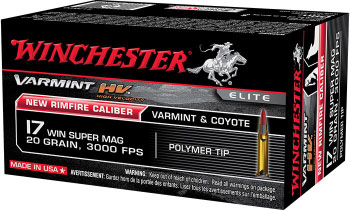
New 3000 FPS Rimfire Round Winchester has announced a new, high-velocity 17-caliber rimfire cartridge, the .17 Winchester Super Magnum (aka .17 Win Super Mag). The .17 Win Super Mag will initially be offered in three bullet types: 20gr plastic tip (Varmint HV), 25gr plastic tip (Varmint HE), and a 20gr JHP (Super-X). The 20-grain varieties boast a 3000 FPS muzzle velocity, earning honors as the fastest Rimfire ammo ever made.
.17 Winchester Super Mag Specifications
Symbol
Sub Brand
Bullet Weight
Muzzle Velocity
S17W20
Varmint HV
20-gr Plastic Tip
3,000 fps
S17W25
Varmint HE
25-gr Plastic Tip
2,600 fps
X17W20
Super-X
20-gr JHP
3,000 fps
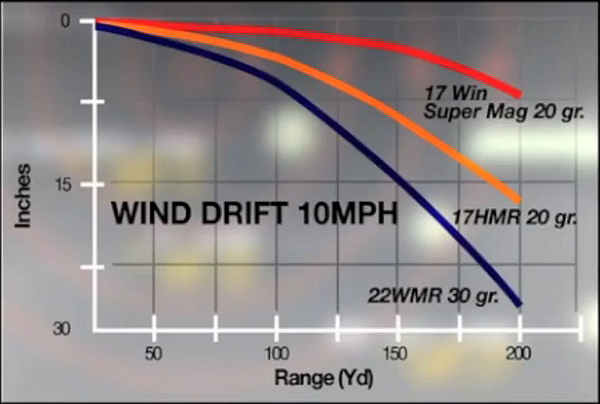
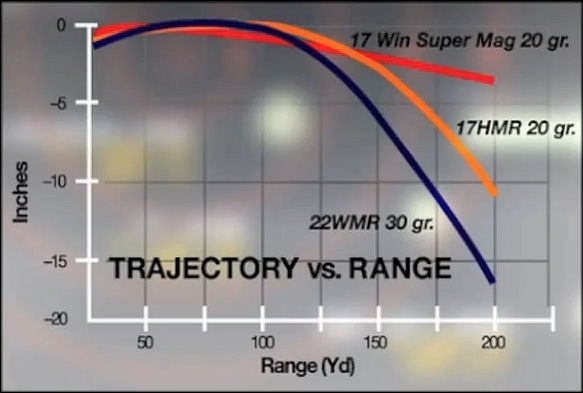
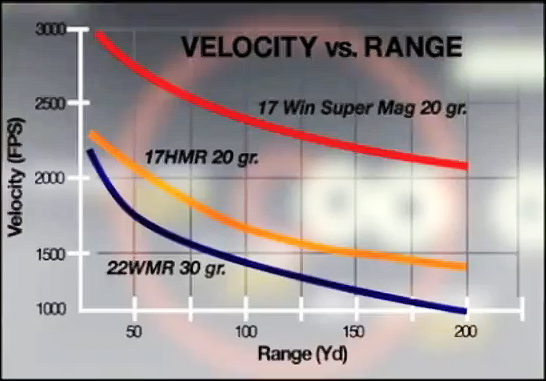
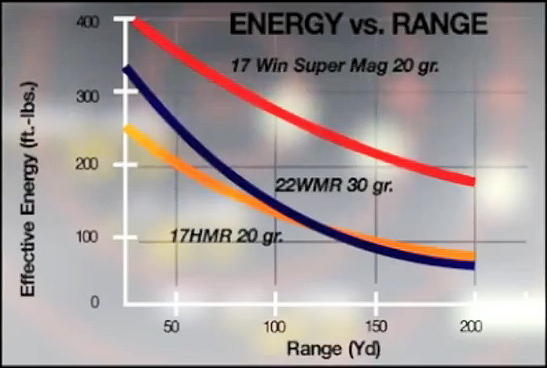
Winchester claims that all .17 Win Super Mag ammo types shoot much flatter than the .22 Win Mag and .17 HMR, while delivering more than 150 percent more energy than both. In addition, the .17 Win Super Mag “bucks the wind” better than any other rimfire ammo — exhibiting significant less horizontal drift at extended ranges. The ammunition should be available at Winchester dealers by April 2013.
Savage Will Release a .17 Win Super Mag Rifle
According to Outdoor Life’s John Snow, Savage will be the first gun-maker to produce rifles chambered in .17 Win Super Mag. Snow says Savage “hopes to have rifles shipping by mid-April”. Winchester states that, later in 2013, two other manufacturers will introduce .17 Win Super Mag rifles.
Ron Spooner writes: “For perspective, contrast the 17 Win Super Mag (no relation to the WSM centerfire cartridges) against the former rimfire velocity champ, the popular .17 Hornady Magnum Rimfire. While the 17 HMR shoots delightfully flat, the 17 Win Super Mag shoots two times flatter and drifts only half as far in the wind. Its 20-grain bullets retain more than twice as much downrange energy, and its 25-grain projectiles nearly triple the energy of the 17-grain V-Max in the HMR load”. Read Ron Spooner Review.
Watch Video Trailer for .17 Win Super Mag Rimfire Ammo
The .17 Win Super Mag offers higher velocities and more downrange energy than ever before. “Our engineers have been developing the top-secret .17 Win Super Mag [cartridge] for more than three years,” said Brett Flaugher, Winchester Ammunition vice president of sales, marketing and strategy. “At 3,000 feet per second it’s the fastest modern rimfire cartridge on the planet. The downrange energy deposited by the .17 Win Super Mag will be a game-changer for varmint and predator hunters everywhere. Now hunters will get the downrange performance of a centerfire cartridge at the more affordable price point of traditional rimfire ammunition. It’s the best of both worlds[.]”
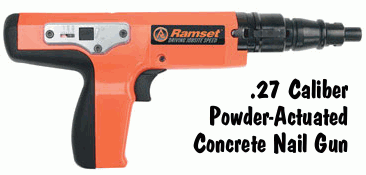
Spawn of a .27-Caliber Nail-Gun
Believe it or not, Winchester’s new .17 Win Super Mag evolved from a “parent case” originally developed for .27-caliber powder-actuated concrete nail guns. Winchester has produced millions of nail gun blanks in .22, .25, and .27 calibers. This new .17 Win Super Mag is derived from Winchester’s .27-cal nail gun blank, necked down to .17-caliber and strengthened with a thicker head and stronger case-walls. With case-walls that are 50% thicker than those on 17 HMR cartridges, the .17 Win Super Mag can operate at 33,000 psi. By contrast, the 17 HMR maxes out at 26,000 psi.
Comment: Will the .17 Win Super Mag Rimfire Round Be a Hit or a Miss?
Initial tests of the .17 Win Super Mag show good ballistic performance compared to the 17 HMR. On the other hand, early accuracy reports have been mediocre, but keep in mind that the gun magazine tests were performed with prototype rifles, on make-shift, wobbly rests (that’s typical). It will be interesting to see how the round can really perform in a good barrel when shot from a stable rest by a skilled trigger-puller.
Economics may dictate whether the .17 Win Super Mag catches on. We’re told this new cartridge will sell for $17.99 per 50-round box. That works out to $0.36 per round, making it about 40-50% more costly than the popular 17 HMR which now sells for $11.50 to $14.00 per 50-round box. At $0.36 per round, the .17 Win Super Mag may exceed the cost of 17-cal centerfire reloads, but then you have the convenience of pre-made ammo. We think that, if the cartridge proves accurate, varmint hunters will pay the extra money (over the 17 HMR) for the added performance, which is pretty significant at 150 yards and beyond. For a squirrel shooter or prairie dog hunter, the .17 Win Super Mag is still much less expensive than the cheapest US-made .223 Rem ammo, which sold for about $10 – $12 per 20-round box (i.e. $0.50 – $0.60 per round) before the current buying frenzy.
Story tip by EdLongRange. We welcome reader submissions.
Nightforce Optics has just announced an all-new, side-focus 15-55x52mm Competition™ Scope. It looks very impressive. The ED (low-dispersion) glass in the new 15-55X provides high contrast, low chromatic aberration, and 92% light transmission. And this scope is a LOT lighter than the current 12-42x56mm — that will help guys make weight. We’re pleased to see the new scope offers a fast-focus, European-style eyepiece. Two reticles will be offered initially: the CTR-1 and DDR (shown below). The big question is “how much will it cost?”. A Nightforce dealer told us that Minimum Advertised Price (MAP) will be $2231.00. We’ll run a full report on this scope when we get our hands on it at SHOT Show.
The big news is that, with a weight of just 27.8 ounces, the new 15-55X Nightforce Competition Scope is 24% lighter than the NF 12-42×56 Benchrest model, and 20% lighter than the NF 12-42×56 NXS. Like the NXS series, the new Competition scope offers side parallax adjustment; and, it will focus from 25 yards to infinity, making it suitable for rimfire and airgun shooting as well as centerfire competition. The turrets provide positive and repeatable .125 MOA (eighth-minute-of-angle) clicks. Each rotation provides 5 MOA of adjustment. And we’re pleased to see that the Competition Scope offers a full 60 MOA of travel — for both windage and elevation. That’s impressive. CLICK HERE for more information.
Remington will introduce a new bolt-action rifle at SHOT Show, the Model 783. Remington positions the new model 783 as a mid-level offering between the Model 770 and Model 700 SPS, according to John Fink, Freedom Group Rifle Product Manager. This new rifle was first revealed in an American Rifleman article by Richard Mann, who tested an early production version in September 2012. Mann reports: “The ‘7’ in the model designation comes from the 700 line of rifles, the ‘8’ is kind of a throwback to the affordable but reliable model 788, which was discontinued 20 years ago, and the ‘3’ is for the three in 2013. The suggested retail price is $451, but you can expect street prices to be closer to $400.”
Remington is claiming sub-MOA accuracy for the Model 783, as demonstrated by the “teaser” photo sent out to Remington customers earlier this week:
Adjustable Trigger with Insert
The rifle features a polymer stock, cylindrical action, and an adjustable trigger with a control insert (as used on the Savage AccuTrigger and Marlin Pro-Fire trigger). Remington’s “CrossFire Trigger System” is pre-set at 3.5 lbs pull weight. According to the reviewer, Remington’s CrossFire Trigger is “similar in appearance to the Savage AccuTrigger and the Marlin Pro-Fire Trigger; it has a center lever that locks the trigger until it is fully depressed.” (We think selecting “CrossFire” as a product title was a dumb move by Rem’s marketing guys.)
Model 783 Has Barrel Nut System
Remington has borrowed a trick from Savage, employing a barrel nut system for fitting barrels to model 783 actions. The model 783’s two-lug bolt features a Sako-style sliding-plate extractor — this is a departure from the system on a Rem 700. Scopes can be mounted with two Model 700-spec front scope bases. However, Remington plans to offer integral scope mounts in the near future.
Designed for game hunters, the model 783 will initially be offered in four chamberings: .308 Winchester (short action), .270 Winchester, .30-06 Springfield, and 7mm Rem. Magnum. Remington says it will roll out more chamberings by the middle of 2013. In addition a compact-stock version with a shorter length of pull will be offered. Barrels are 22″ or 24″ with a “magnum contour”. Model 783 rifles will be produced in the Freedom Group’s Mayfield, Kentucky manufacturing plant.
SHOT Show 2013 kicks off in two weeks in Las Vegas. One of our top priorities is to talk with the bullet makers from Berger, Hornady, Lapua, and Nosler.
At SHOT Show 2012 we chatted with Berger Ballistician Bryan Litz about Berger’s popular line of Hybrid bullets. Berger now offers a wide range of Hybrids in multiple calibers and weights. In fact, for .30-Caliber shooters, Berger now offers six different Hybrid match bullets, with weights from 155 grains up to 230 grains. New .338 Cal Tactical Hybrids were released in 2012 and big .375 Cal, and .408 Cal Hybrids are in the works (read more below).
Bryan tells us: “The hybrid design is Berger’s solution to the age old problem of precision vs. ease of use. This design is making life easier for handloaders as well as providing opportunities for commercial ammo loaders who need to offer a high performance round that also shoots precisely in many rifles with various chamber/throat configurations.”
For those not familiar with Hybrid bullets, the Hybrid design blends two common bullet nose shapes on the front section of the bullet (from the tip to the start of the bearing surface). Most of the curved section of the bullet has a Secant (VLD-style) ogive for low drag. This then blends in a Tangent-style ogive curve further back, where the bullet first contacts the rifling. The Tangent section makes seating depth less critical to accuracy, so the Hybrid bullet can shoot well through a range of seating depths, even though it has a very high Ballistic Coefficient (BC).
In the video we asked Bryan for recommended seating depths for 7mm and .30-Caliber Hybrid bullets. Bryan advises that, as a starting point, Hybrid bullets be seated .015″ (fifteen thousandths) off the lands in most barrels. Watch the video for more tips how to optimize your loads with Hybrid bullets.
Berger is Developing New Large-Caliber and Hunting Hybrids
In related news, Berger announced that it will be offering a series of .338-caliber Hybrids. First Berger is reintroducing the Gen 1 .338 Cal, 300gr Hybrid bullet in Berger’s Hunting line. Berger will also be making a 250gr Hybrid Hunting bullet using the same type of jacket as the original Gen 1 300gr Hybrid bullet. In addition, Berger has released a .338 Cal 250gr Match Hybrid OTM Tactical bullet, along with a 300gr Match Hybrid OTM Tactical projectile.
More big bullets are on the drawing board. Our source says “.375 Caliber and then .408 Caliber are the next new calibers to be made at Berger”. These are in the design phase, and Berger needs to build a new machine, so the .375s and .408s will not be available until 2013 at the earliest.
In the 1980s, Glen Eberle was an Olympic Biathlete with Team USA. Recognizing the benefits of a lighter, more durable rifle stock, Glen invented a radical new biathlon stock that literally “changed the game”. Glen’s lighter stock allowed biathletes to ski faster. His stock was also more rugged than conventional designs, so it could better survive the inevitable tumbles that occur in competition.
Since retiring from Biathlon competition, Eberle has built a successful Idaho-based company that supplies tough field packs and accessories for hunters and the military. But Glen never lost interest in stock design, and over the past few years he has developed an innovative new tactical chassis that is quite different than anything on the market today.
Eberlestock Model 11 Stealth Rifle Chassis system Fits Rem 700s
The Eberlestock Model 11 Stealth Rifle Chassis system is compact, light-weight and strong. Designed to fit Remington 700 actions, the Eberlestock model 11 chassis offers a drop-in, no-gunsmithing solution for tactical shooters. For the Rem 700 and Rem-clone actions, the Model 11 Chassis employs Accuracy Int’l Classic detachable box magazines (DBMs). The folding-stock version of the new Eberle chassis is very compact. Eberle claims it is “the shortest [folding-stock] sniper system in the world”.
The Model 11 Stealth Chassis is in Production Now
The basic Model 11 Stealth Rifle Chassis weighs 4 pounds and costs $1895.00. First availability will be for the Remington Model 700 short action. Next offerings will be for Rem Model 700 long actions, followed by stocks to fit models from other manufacturers. A variety of configuration options are offered, including folding butt-stock and a fore-stock with mounting rails. For more info, visit www.Eberlestock.com, or call Eberlestock USA in Idaho at 877-866-3047 or 208-424-5081.
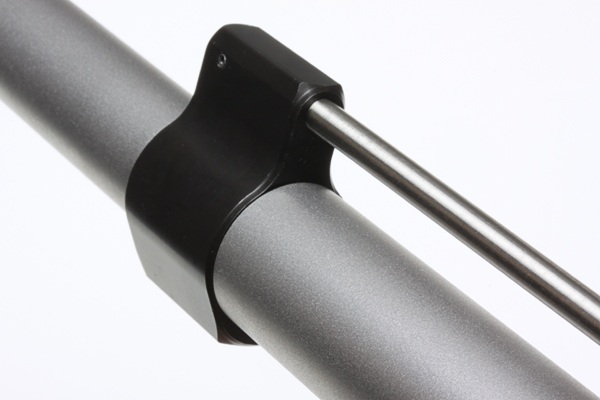
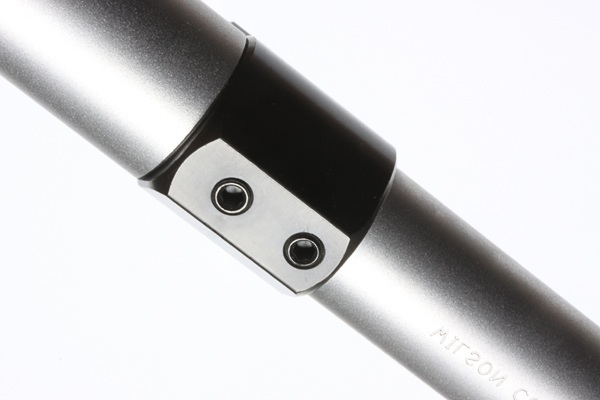
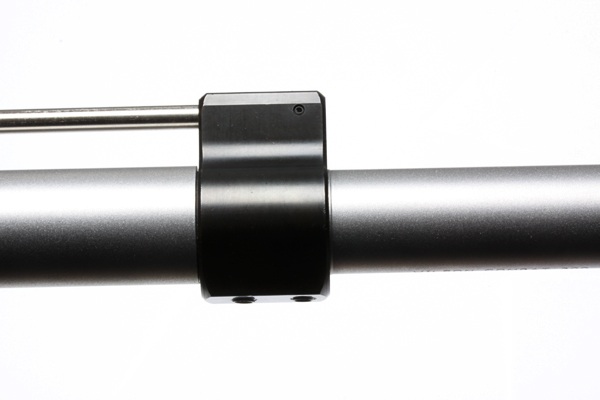
Wilson Combat now offers an Adjustable Lo-Profile AR Gas Block for direct gas impingement AR-type rifles. Wilson Combat’s new adjustable gas block replaces a standard AR gas block and allows you to tune your AR’s gas system for smoother cycling and enhanced reliability. Wilson Combat explains: “Adjusting your rifle’s gas port will lower or increase your bolt’s cyclic rate. This tailors your rifle’s performance to your unique needs.”
A simple adjustment of the hex screw at the front of the block modulates the gas volume allowing you to tune your rifle’s function to your favorite loads. This is very handy when shooting non-standard AR calibers, unusual hand-loads, or suppressed rifles. Adjustable Gas Block systems are sold as complete kits starting at $74.95. Wilson Combat offers two diameters (.750″, .937″) and three lengths (Carbine Length, Mid-Length, & Rifle Length), so you can select the right dimensions for your rifle configuration and barrel diameter. The blocks are Chromoly steel with a Melonited finish.
Package Includes:
Adjustable Gas Block (Melonite Finish)
Adjustment Set Screw (Installed)
Straight Gas Tube (Installed, Gas Tube Pin Installed)
Gun owners who live or do business in California should strongly consider purchasing this 320-page book. California gun laws are complex and confusing. There are over 800 California state statutes regulating the manufacture, distribution, sale, possession, and use of firearms. There are thousands of overlapping federal laws regulating firearms that apply in California. And there are hundreds of administrative regulations, local ordinances, and California Department Justice Firearms Bureau written and unwritten policies that also apply.
On top of the already byzantine regulatory scheme, on January 1, 2012 California firearm laws were completely reorganized and re-numbered. Because of the complexity of the laws, and the recent statute number changes, inadvertent gun law violations by well-intentioned citizens are increasingly common. In the politicized legal environment of California “gun-control” laws, the consequences of even an inadvertent violation can be severe.
With all the overlapping regulations, it’s no wonder that confusion runs rampant among California gun owners, as well as among police, prosecutors, and judges. To protect yourself, you need to know the law. This book will help. California Gun Laws tells you how to legally buy, own, transport and possess firearms, and explains how you get your firearms or firearm rights back if they are taken away. The book warns about common legal “traps” that may ensnare California firearm owners.
Author Profile:C.D. (Chuck) Michel is an attorney with 20 years of experience representing the National Rifle Association (NRA) and California Rifle & Pistol Association (CRPA), as well as firearm manufacturers, wholesalers, retailers, and gun owners, Michel has been litigating civil and criminal firearm cases since 1991, many of which were high profile and attracted state and national media attention.


 RCBS has a new made-in-USA single-stage reloading press. With its innovative “moving die/static cartridge” design, the new RCBS Summit Press definitely demonstrates “out of the box” thinking. Unlike other presses, the case does not move. Rather, the reloading die comes down to the case. With the press bolted on your reloading bench, all operations of the Summit take place ABOVE the bench-top.
  RCBS Summit Press Features:


 New 3000 FPS Rimfire Round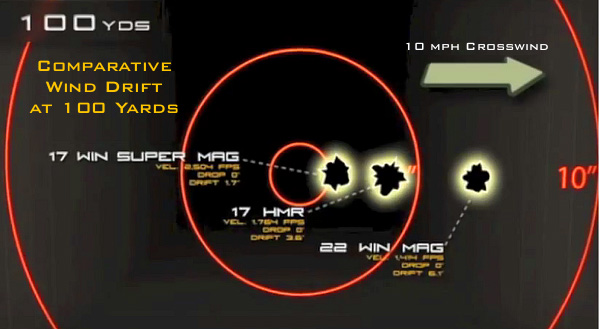

 Spawn of a .27-Caliber Nail-Gun


 Adjustable Trigger with Insert

 In the 1980s,



 Author Profile: C.D. (Chuck) Michel is an attorney with 20 years of experience representing the National Rifle Association (NRA) and California Rifle & Pistol Association (CRPA), as well as firearm manufacturers, wholesalers, retailers, and gun owners, Michel has been litigating civil and criminal firearm cases since 1991, many of which were high profile and attracted state and national media attention.


