|
|
September 2nd, 2009
Phoenix Precision, based in Elk River, MN, crafts precision target sights for long range target shooters. Known for their outstanding reliability and repeatability, Phoenix rear sights are gaining popularity among competitors in prone, Palma, and High Power disciplines. Some of the top “sling and irons” shooters in the country have switched to Phoenix sights.
Gary LaValley, owner of Phoenix Precision, crafts his rear sights using advanced CNC machinery. The sight housings are anodized, aircraft-grade aluminum. For precise repeatability, the sights feature stainless guide pins and lead screws, plus oil-impregnated bronze guide and thread bushings. The sights offer 70 MOA of elevation, 60 MOA of windage, with 1/4-MOA clicks. Knob rotations for elevation and windage are either NRA match rifle (Counter-CW) or service rifle (CW). Quarter-minute clicks are standard, but on request for the Palma shooters, 1/2-MOA windage detent plates are available at no extra charge. Phoenix sights accept both Anschutz and Gehmann accessories.
 |
 |
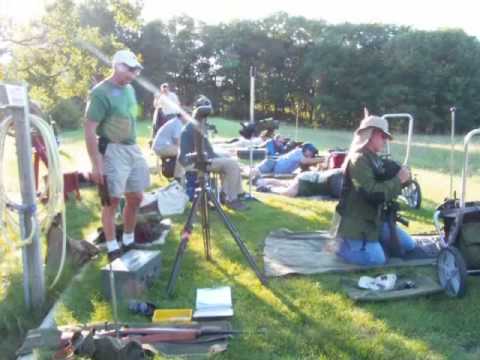
Phoenix Precision micrometer rear sights are offered in two basic models: top mount ($380.00), and side mount ($355.00). Both types are available in either right- or left-hand configuration (no extra charge for lefties). Top mount models are designed for use on rail-equipped AR flattops, tube guns, Tubb 2000s, and Gary Eliseo stocks. Side mount models are most commonly used on bolt action rifles, but they also work on Picatinny or Weaver-style rails with the use of an adaptor. So, if you have both an older-style Palma rifle and a new, rail-topped tube-gun, you can use the sight on both rigs. Many shooters do use the same Phoenix rear sight on multiple rifles, as shown in the video below. In the video, when real competitors talk about their Phoenix sights, you hear two things time and again: “quality” and “repeatability”.
For more information about Phoenix Target Sights and Scope Rails, visit www.PhoenixPrec.com, or call Gary LaValley at (763) 263-3327.
August 30th, 2009
 Do you have a nice scope mounted to a “safe queen” rifle that never gets used? Or maybe you have a set of premium binoculars you bought for that Alaskan hunting trip you never got to take? Do you have a nice scope mounted to a “safe queen” rifle that never gets used? Or maybe you have a set of premium binoculars you bought for that Alaskan hunting trip you never got to take?
Now you can convert those valuable optics into cash with the SWFA Trade-In Program. You can either sell your gear outright to SWFA, or trade your items in on new products. (Wouldn’t it be nice to swap some old glass for a new Schmidt & Bender?) Just fill out an online appraisal form, upload a photo, and SWFA will evaluate your submitted product. You can designate whether you want to sell your item outright, or trade it in on new gear.
Trade Your Pre-Owned Optics or Firearms
While SWFA specializes in optics, you can also trade-in firearms, or even barter hunting holidays. SWFA says: “We gladly accept trades on just about anything of value (firearms of any type, scopes, binoculars, spotting scopes, hunts). You never know unless you ask!!! Please direct all trade inquiries using our appraisal form.”
Note, you must submit an Online Appraisal Form for all items submitted for trade-in. In addition, SWFA needs a digital JPEG photo of each item, 400 pixels wide and 300 pixels high.
August 24th, 2009
If you’re a bargain hunter, check out the Sample List maintained by SWFA.com. Here you’ll find scores of optics items and accessories at below wholesale prices. Many of these products are new (never been sold) items, that were used in trade shows or as demos.

SWFA has recently revamped its website, making the Sample List easier to navigate. Now with one click you can find the Latest 25 Additions. Here are some of the recent bargain offerings:
Leupold 8.5-25×50 Vari-X III, Stock #10767
Matte finish, target dot reticle, 30mm tube, long range, side focus, light ring marks. $699.95 (Regularly $987.00).
Leupold 25×40 FX-3 Silhouette Scope (Fixed Power), Stock #10413
100% new 2009 demo model, used for current SWFA.com web pictures. Matte finish, Leupold Dot reticle, 1″ tube, adjustable objective (50 yards-infinity), target knobs. $539.95 (Regularly $810.00).
Leica 10×42 Geovid HD (LRF/Binocular), Stock #10611
Black rubber armored, center focus, roof prism, scan mode, built in 1400-yard range finder. Certified Pre-Owned, close to new condition. $1999.95 (Regularly$2,875.00 new.)
Swarovski 8×30 Laser Guide Rangefinder, Stock #s 1368-1371 (multiple units)
Green rubber armored finish, measures yards and meters, great optical quality, close to new condition. $799.95 (Normal ‘street price’ is $999.00).
Zeiss 85mm Diascope T* Flourite Body, Stock #10425
Top-of-the-line Zeiss spotting scope. Green body only (no eyepiece), angled view, Flourite (HD) lenses, LotuTec Coatings, retractable sun shade, standard focus wheel and fine focus wheel, lifetime transferable warranty. $1,499.95 (Regularly $2,185.00).

August 20th, 2009
There is an “arms race” going on now among the top optics-makers trying to grab market share at the high end of the spotting scope field. Prices have climbed into the stratosphere as companies provide ever-bigger objectives with ultra-premium glass. The latest 80+ mm “super-spotters” are running $3000 to $4000 with zoom eyepieces. Last year, Kowa released its superb flourite-lensed TSN-883/4 Prominar at $2905.00 (88mm body with 20-60 zoom eyepiece). Leica followed suit with its Televid 82 APO spotting scope priced at $3995 (82mm body with 20-50 Vario eyepiece, $3195.00 body only). Yep, that’s four grand for a spotting scope — we could buy a nice used truck for that.
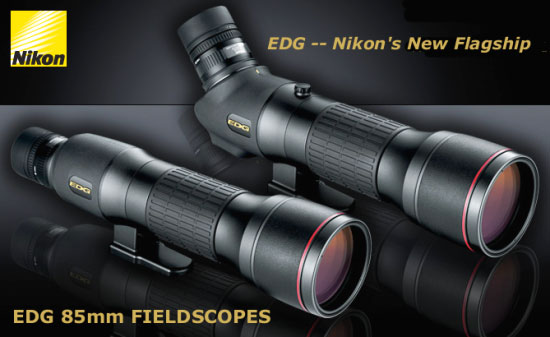
New Nikon EDG 65mm and 85mm Spotting Scopes
Now Nikon has joined the “big-buck-glass” game with its new line of EDG spotting scopes in 65mm and 85mm objective lens sizes. With a 20-60X zoom eyepiece, the larger 85mm Fieldscope retails for $3299.00, a new high for Nikon. But the new Nikon looks impressive. The new EDG Fieldscopes offer the same exclusive ED glass lenses and premium prisms as Nikon’s highly praised EDG binoculars. Nikon says the new ED lenses deliver superior sharpness and color correction (without chromatic distortion), and ultra high contrast. The 85mm objective also provides a wider field of view than most spotting scopes. For enhanced low-light performance, the straight (non-angled) EDG scopes feature what Nikon calls “Dielectric High-Reflective Multilayer Prism Coating”. Hmm… “Dialetric Prisms” — that sounds like something Scotty would use on the Starship Enterprise.

Will the new Nikon EDGs run with the top-of-the-line Kowa, Leica, Swarovski, and Zeiss spotters? We’ll have to wait until comparison testing can be done. But we can say that the new Nikons EDGs are a big step up from past Nikon Fieldscopes. The EDG body is more compact and the unit is better balanced. We like the large focus ring, but would prefer a dual-focus system. The mounting bracket looks very solid, which should reduce wobbles when mounted on a tripod. Early reviewers say that the EDGs are very bright, with outstanding eyepieces.
New, Improved ED Eyepieces
Nikon has also released a whole set of new eyepieces for the EDG scopes. For long-range use, there is a new fixed-power eyepiece that delivers 75X magnification on the 85mm Fieldscope. We’ve used up to 82X magnification on other spotting scopes and we can assure you, 75X is NOT too much when viewing conditions are good. The 75X eyepiece would be a great choice if you’re trying to resolve bullet holes at 600 yards and beyond.

High Power and iron sights shooters will like the new 20X/25X LER (long eye relief) eyepiece. This provides enough power to see target spotters, while offering easy viewing (and a wide field of view), when you are in shooting position and want to take a quick look through the glass. This eyepiece features ED glass, and provides 20X magnification with the smaller 65mm Fieldscope and 25X magnification with its 85mm big brother. All the new EDG eyepieces feature fuully multi-coated lenses, and many offer twist-out eyecups, which are handy for eye-glass wearers.
July 27th, 2009
Surgeon Rifles has engineered new, heavy-duty scope rings with unique features. First, the rear ring comes with a bubble level integrated into the top half. This smart invention eliminates one other pricey accessory you’d otherwise need to add separately. The new Surgeon rings are made of high-grade 7075 T6 Aluminum so they are strong yet light. The “wide-body” design offers a full 0.950″ of clamping surface (front to back), secured by three vertical hex-head fasteners per side. The rings will be offered in a variety of heights, from .875″ to 1.125″, in both 30mm and 34 diameters. A 0.625″-wide steel version is planned for later release. Ring sets will cost $199.00 and that includes the bubble level.

Surgeon uses 9-axis machining to ensure exact alignment of ring center with ring base. Preston Pritchett, Surgeon’s owner, explains: “The bottom of the ring is machined at the same time as the bore for the scope on a 9 axis machine. This is done in one operation to ensure that the bore is parallel with the bottom of the ring. We checked another brand and found that they were off .0025″ in .625 inch. We checked ours and found it to be within .0003 in .950.” These rings are very carefully designed and crafted to align square on the rail. Many Weaver-style rings have a sloppy fit on the rail so they can clamp slightly differently from one installation to the next. Surgeon uses alignment pins to ensure its rings clamp properly: “The silver pins you see are 1/8 dowel pins that keep the clamp square to the ring and at the right height.”

For more info on these rings, or to place an order, visit SurgeonRifles.com, or call Preston Pritchett at (405) 567-0183. Surgeon plans to be shipping ring sets in various sizes within three weeks.

July 14th, 2009
Bushnell has released a new Legend 1200 ARC laser rangefinder (LRF) with a claimed 1,200-yard capability on highly reflective objects. Bushnell claims the Legend 1200 will range a tree out to 850 yards, or a deer-sized animal out to 475 yards.

A compact 4.3″ x 2.9″ x 1.7″ size, the Legend 1200 weighs just 7.4 ounces. This is small and light enough to carry in a shirt pocket. The Legend 1200 features a multi-coated 6X optic and all external lens surfaces are coated with RainGuard HD. With a $349.00 MSRP, the Legend 1200 is available in black or Realtree® AP™ camouflage.
 Built-In Angle Compensation Built-In Angle Compensation
The Legend 1200 has a built-in inclinometer so it can give you true horizontal yardage for up-angle and down-angle shots. That is very important for hunters and tactical shooters who must rapidly adjust for shot angle to ensure a hit. In Rifle Mode the Legend 1200 calculates the angle and indicates the holdover required in either inches or MOA (user selectable output). The range of angle measurement is -90 to +90 degrees.
A new feature in the Legend 1200 is Variable Sight-In Distance capability or VSI™. In Rifle Mode, users can select between 100, 150, 200 or 300 yard sight-in distances to accommodate their shooting styles and preferences. Other standard features include SCAN, Bulls Eye and Brush Modes for better targeting and accuracy. The Legend 1200 ARC is rubber armored and fully waterproof. It comes with a carrying case, lanyard and 3-volt CR2 battery.
July 5th, 2009
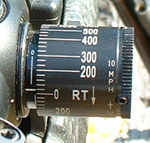 Here’s something that can save you lots of time and aggravation on a varminting trip. This little $90 gizmo is great for varmint hunters and any one who needs to make a quick shot in shifty wind conditions. Instead of the traditional 1/4-MOA hash marks, the Kenton windage turret features markers corresponding to the wind drift your rifle will encounter at various distances. Here’s something that can save you lots of time and aggravation on a varminting trip. This little $90 gizmo is great for varmint hunters and any one who needs to make a quick shot in shifty wind conditions. Instead of the traditional 1/4-MOA hash marks, the Kenton windage turret features markers corresponding to the wind drift your rifle will encounter at various distances.
Custom-Calibrated Windage Knobs
Kenton Industries’ Tuned Windage Compensator (TWC) has built-in windage marks for 10 mph cross-winds at 100-1000 yards. How do they do that? Well the knobs are calibrated either for specific calibers/loads, or they can make custom knobs using your observed field data. The knobs can compensate for various wind speeds (2-20 mph) and angles (15°- 90°), by applying some simple conversion ratios. As a general rule, with a “full-value”, i.e. 90°, crosswind, the wind drift will go up or down in direct proportion to the change in windspeed. That means, for example, a 10 mph crosswind will push the bullet twice as much sideways as a 5 mph crosswind.
Two versions of Kenton’s TWC knobs are offered. The $89.95 TWC #1 features calculated ballistics for standardized factory ammo for the caliber and barrel length you specify. The $89.95 TWC #2 feature customized windage settings based on bullet BC, environmental conditions, elevation, and ballistic information you provide.
Custom Elevation Knobs
Kenton also makes an $79.95 elevation-compensating TTC knob, that can be customized to your rifle. With this elevation turret, yardages are marked in 50-yard increments, and you can literally just “dial in your distance”. However, to work effectively the TTC knob must be tailored to a particular load (velocity and bullet). Moreover, actual bullet drop will differ with changes in altitude, temperature, and shooting angle — so it’s not as simple as it sounds, and you may need multiple knobs if you shoot a variety of loads. Kenton offers it TTC #1 model calibrated for standardized factory ammo. The TTC #2 is calibrated out to the maximum effective range of your cartridge based on bullet type, muzzle velocity, altitude, and temperature. Select the type of yardage format to be used. The #2 is recommended for wildcatters or for those who want to adjust to specific conditions. Lastly, a TTC #3 elevation knob is offered that relies on the purchaser’s actual recorded drop data from the field. The TTC #3 elevation knob will be calibrated based on the click-value or MOA you provide for each 50-yard increment.
June 28th, 2009
Experienced marksmen know they should keep their rifles level when shooting. But they may not understand exactly what happens if they allow their rifle to be canted (tilted left or right), even a few degrees. While the physics are complicated to explain, here’s what you need to know: if you cant your rifle to the left, your shots will impact to the left, and lower, than your point of aim. Likewise, if you cant your rifle to the right, your bullets will impact low and right.
Effects of Rifle Canting
The effects of rifle canting are explained in great detail on the Long Shot Products Ltd. website. There, you’ll find a technical discussion of the Physics of Rifle Canting, plus a page with Sample Targets shot with canted rifles.

Referring to the above illustration, the Long Shot Products article explains: “Notice how the trajectory of the vertical hold stays within the vertical plane, so when the projectile drops, it drops into the line of sight and down to the center of the target. The trajectory of the cant hold does not achieve the same height as the trajectory of the vertical hold and the projectile diverges from the line of sight, thereby missing the target.”
The Long-Shot article makes two other important points. First, cant error increases with distance, and second, cant-induced windage errors are worsened by mounting your scope high above the bore axis:
“This component of cant error becomes more significant at more distant targets due to the increased original included angle between the line of sight axis and the bore axis (more elevation compensation) at the vertical hold.”
“Use of large-diameter objective scopes, mounted high off the barrel, exacerbates the cant error problem. To keep the scope elevation knobs centered for maximum adjustment, precision shooters sometimes use elevation-compensated scope mounting rings or bases. Although this solves the adjustment problem, it greatly exaggerates cant error because the distance between the bore axis and the line of sight axis increases and the included angle between the sight axis and the bore is larger, producing more windage error when canting.”
Test Targets Reveal Cant Errors
The Long Shot Products Ltd. website also displays actual Test Targets showing the effects of canting error. These targets were shot with air rifles and rimfire rifles, but the same effects can and will occur with centerfire rifles. Shown below is a target shot at 50 yards with a Feinwerkbau .22LR match rifle using RWS Match ammo (1012 fps MV). As you can see, canting the rifle 20 degrees to the left produced a huge movement of the point of impact. The shots from the canted rifle impacted 1.81″ Left, and 0.6″ below the point of aim.

CLICK HERE to view more Canted Rifle TARGETS.
June 16th, 2009
The majority of competitive shooters in many disciplines are over 40, with a high percentage over 50 years old. That’s a lot of old eyes which may have trouble reading small print. Shooters who are far-sighted, and older shooters with presbyopia, may have difficulty focusing on close objects. At the range, this may make it difficult to read range cards, printed come-up tables, or even the “fine print” found in manuals for chronographs and other shooting accessories.

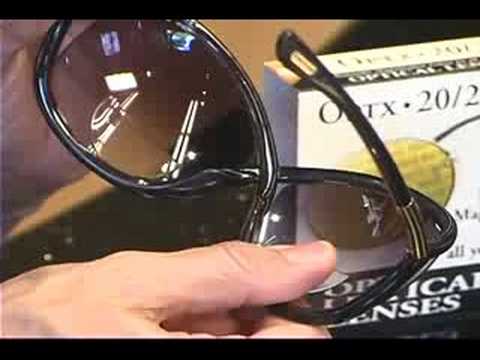
Here’s a solution for shooters who need better close-up vision. For just $10.50 per pair, Amazon.com sells stick-on inserts that mount to any glass or plastic lenses, including polycarbonate shooting glasses. Water is the adhesive–the surface tension effect of H20 is enough to keep the lens inserts in place. But this also lets you easily move the magnifying lenses from one set of glasses to another. ReadingGlasses.com offers the Optx 20/20 stick-on lenses for $18.00 (or $29.00 for two pair). Magellan’s, a popular travel accessory store, sells the same Optx 20/20 Lenses, Item #BA726, for $24.85 per pair. Magellan’s notes: “Flexible Optx 20/20 lenses hold fast by their own molecular attraction (no adhesive needed) and can be peeled off and reattached many times”. The video below shows how the stick-on lenses work.
June 14th, 2009
The Hensoldt line of optics represents the premium military/tactical series of riflescopes and spotting scopes produced by Germany’s Carl Zeiss Optronics GmbH. Hendsolt products are expensive, to be sure, but they offer many features found in no other tactical optics. Thanks to importer HDC, LLC, Zeiss Hensoldt products are now available in the American marketplace, through a network of dealers, including G.A. Precision, McMillan Firearms, SWFA, Superior Shooting Systems (David Tubb), and Tac Pro Shooting Center. You can review the specs and features of Zeiss Hensoldt scopes on the HDC website, www.hudisco.com.

HDC, LLC was selected by Carl Zeiss Optronics GmbH, a subsidiary of the Carl Zeiss group, to become the distribution partner in the USA for the Hensoldt line of Zeiss optics. This allows HDC to bring to the American market the latest and most advanced optical products from the Zeiss factories. The Hensoldt line offers unrivaled glass quality and state-of-the-art technology in both telescopic and reflex sights.

Below is a video of the remarkable 6-24x72mm SAM scope. This optic integrates superb, ultra-bright apochromatic fluorite glass with a calculator module that provides ballistic info and weather data to the shooter. SAM stands for “Sniper Auxiliary Module”. An integrated ballistics calculator can be programmed for up to four different types of ammo. Sensors in the integrated ring mount measure weather parameters. These values, as well as scope data, are then directly projected into the visual field of the eyepiece. This provides selectable displays of elevation clicks, windage clicks, angle of fire, cant angle, temperature, and air pressure.
Please enable Javascript and Flash to view this VideoPress video.
|


