When we first ran this story a while back, it generated great interest among readers. By popular request, we’re reprinting this story, in case you missed it the first time around. — Editor
Precision shooters favor premium brass from Lapua, Norma, or RWS. (Lake City also makes quality brass in military calibers.) Premium brass delivers better accuracy, more consistent velocities, and longer life. Shooters understand the importance of good brass, but many of us have no idea how cartridge cases are actually made. Here’s how it’s done.
The process starts with a brass disk stamped from strips of metal. Then, through a series of stages, the brass is extruded or drawn into a cylindrical shape. In the extrusion process the brass is squeezed through a die under tremendous pressure. This is repeated two or three times typically. In the more traditional “draw” process, the case is progressively stretched longer, in 3 to 5 stages, using a series of high-pressure rams forcing the brass into a form die. While extrusion may be more common today, RWS, which makes some of the most uniform brass in the world, still uses the draw process: “It starts with cup drawing after the bands have been punched out. RWS cases are drawn in three ‘stages’ and after each draw they are annealed, pickled, rinsed and subjected to further quality improvement measures. This achieves specific hardening of the brass cases and increases their resistance to extraordinary stresses.” FYI, Lapua also uses a traditional draw process to manufacture most of its cartridge brass (although Lapua employs some proprietary steps that are different from RWS’s methods).
After the cases are extruded or drawn to max length, the cases are trimmed and the neck/shoulder are formed. Then the extractor groove (on rimless cases) is formed or machined, and the primer pocket is created in the base. One way to form the primer pocket is to use a hardened steel plug called a “bunter”. In the photos below you see the stages for forming a 20mm cannon case (courtesy OldAmmo.com), along with bunters used for Lake City rifle brass. This illustrates the draw process (as opposed to extrusion). The process of draw-forming rifle brass is that same as for this 20mm shell, just on a smaller scale.
River Valley Ordnance explains: “When a case is being made, it is drawn to its final draw length, with the diameter being slightly smaller than needed. At this point in its life, the head of the draw is slightly rounded, and there are no provisions for a primer. So the final drawn cases are trimmed to length, then run into the head bunter. A punch, ground to the intended contours for the inside of the case, pushes the draw into a cylindrical die and holds it in place while another punch rams into the case from the other end, mashing the bottom flat. That secondary ram holds the headstamp bunter punch.
The headstamp bunter punch has a protrusion on the end to make the primer pocket, and has raised lettering around the face to form the headstamp writing. This is, of course, all a mirror image of the finished case head. Small cases, such as 5.56×45, can be headed with a single strike. Larger cases, like 7.62×51 and 50 BMG, need to be struck once to form a dent for the primer pocket, then a second strike to finish the pocket, flatten the head, and imprint the writing. This second strike works the brass to harden it so it will support the pressure of firing.”
Thanks to Guy Hildebrand, of the Cartridge Collectors’ Exchange, OldAmmo.com, for providing this 20mm Draw Set photo. Bunter photo from River Valley Ordnance.
If you’re shopping for a heavy-duty, single-stage reloading press, there’s a new option you should consider. MEC, noted for its shotshell reloading machines, has just introduced an all-new, cast-iron press, the MEC Marksman press. This new single-stage press has features we really like. First, the beefy, cast-iron frame is strong enough for the toughest reloading jobs. Second, the MEC Marksman features an OPEN front — that smart design makes it easier to insert and remove cartridge cases during the reloading process. It also makes it much easier to place your bullets during the seating stage. This open-front design makes good sense — note that Hornady’s new LNL single-stage press also has an open-front layout for important reasons. Lastly the MEC Marksman has an innovative, self-centering shell-holder. This patent-pending design should help hand-loaders reload more efficiently.
MEC MARKSMAN
Manufacturer’s Product Description
The MEC Marksman is made from ductile cast iron for superior quality and durability. Our patent-pending self-centering shell holder provides greater accuracy and consistency to every reload. The MEC Marksman is compatible with all 7/8-14 thread dies to change calibers quickly. Reload .22 Hornet to .416 Rigby all with one convenient machine. The MEC Marksman single-stage metallic reloader and accessory products are made in the USA in Mayville, Wisconsin.
In addition to the MEC Marksman, MEC’s new Metallic line of products will include reloading accessories. Powder measure, powder trickler, scale, and calipers will be offered. An additional base is available for easy installation and is compatible with the MEC Jig Fixture mounting system. Case prep tools and components are also available.
We are sad to report that long-time Forum member Frank S. (aka fdShuster) passed away last year. Frank was a very knowledgeable shooter who was always willing to help others. Here is one of Frank’s smart inventions. He devised a way to measure the length of a rifle’s chamber using a fired cartridge case. This lets you find your MAX trim-to-length for any chamber. Frank’s system works by cutting a “collar” from part of the case neck. This then slips over a bullet seated in a case loaded without powder or primer. As you chamber the dummy round, the collar will move back to indicate the full length of the chamber. (Make sure the bullet is seated well off the lands so the dummy round can chamber fully.)
The pictured gauge can be home made (for free) with components you already have on hand. Frank explained: “I used a Dremel cut-off wheel to cut the front half of the case neck off. A jewelers needle file to de-burr both rough-cut edges. The cut-off surface does not need to be perfectly square, because you are using the original straight mouth to make contact at the front of the chamber. Seat any old bullet to the approximate normal seating length. Next apply a tiny drop of oil on the ogive of the bullet, and slide the ‘collar’ over the bullet. Then chamber the dummy round and close the bolt. Extract the round slowly and carefully and take the measurement with calipers (see top photo).”
Frank’s DIY chamber length gauge works well. In a related Forum thread, Frank posted: “I’ve compared length dimensions doing it this way and with the chamber length shown on my chambering reamer drawings, and the Sinclair gauge, and they are all within .001″ or so.”
Commercial Chamber Length Gauges May Not Work with Custom Chambers
Frank did use Sinclair chamber-length gauges for some applications. These bullet-shaped gauges slip into a cartridge, but “it’s inconvenient to order that little gauge only… without spending $6 shipping for a $7 item.” Moreover, the Sinclair gauges may not fit a custom chamber with a tighter neck dimension because the diameter of the ring at the end is too large.
As an alternative to commercial gauges, the collar-type, homemade gauge will function properly in a custom chamber. The homemade gauge will work with smaller-than-standard chamber neck dimensions, as long as you use a piece of appropriately-turned fired brass that fits your chamber.
At the request of our readers, we provide select “Deals of the Week”. Every Monday morning we offer our Bargain selections. Here are some of the best deals on firearms, hardware, reloading components, and shooting accessories. Be aware that sale prices are subject to change, and once clearance inventory is sold, it’s gone for good. You snooze you lose.
Could you use a secondary safe for your reloading room, workshop, or bedroom? This Stack-on 16-Gun Safe fills the bill, and it’s now available from Walmart with great “Roll-Back” Pricing. Rated for 16 long guns, this smaller safe can realistically hold 8 or so scoped rifles comfortably. But it can also hold your handguns, rangefinders, cameras, jewelry and other valuables. Let’s face it, your primary gun safe is probably full so you could use a second safe to hold smaller items. This Stack-On safe features a reliable, rotary combination dial lock. Walmart’s current price is just $359.00, a $190.00 savings. And right now the home delivery charge is a mere $9.99.
2. Cabela’s — Rock Chucker Reloading Kit, $225.00 After Rebate
Everything you see above can be yours for just $225.00, after manufacturer’s rebate. Right now, Cabela’s is selling the Rock Chucker Supreme Master Reloading Kit for $300.00. That’s a good deal as this Reloading Kit sells elsewhere for up to $360.00. But he’s the real incentive — if you spend $300.00 on RCBS products in 2016, RCBS will send you a $75.00 rebate. That reduces your net cost to just $225.00 for the entire Kit.
3. Creedmoor Sports Rifle Cases 25% OFF — SALE Ends Today!
Creedmoor Sports is running a Halloween special on its popular rifle cases. Right now you can get a 52″, packable rifle case for just $50.00, $25% off the regular $66.95 price. The built-in shoulder straps allow you to wear this cleverly-designed case like a back-pack. That frees both hands to carry your other gear. Along with these big, 52″ rifle cases, Creedmoor Sports has a variety of other rifle cases on sale. In addition, you can get a FREE mesh cartridge bag with any order over $50.00. In addition, you can get FREE Ground Shipping on all orders of $150.00 or more. NOTE: These Halloween weekend prices expire at 11:59 PM CST on Monday, October 31, 2016.
Here’s a “killer deal” if you need a high-quality scope for hunting and mid-range tactical games. This Vortex Viper PST 2.5-10x44mm scope features an illuminated reticle with Mil-based hash marks. The 2.5X low-end magnification gives hunters a wide field of view. The tactical-style turrets have 0.1 Mil clicks with zero-stop. The scope, which features a rugged, 30mm one-piece main tube, carries Vortex’s full warranty. Note this is a Second Focal Plane (SFP) scope. You can save hundreds with this deal — this optic sells elsewhere for up to $599.00.
5. Walther — New 9mm CREED Pistol, $399.00 MSRP
Walther’s compact pistols have class-leading ergonomics and smooth trigger pulls that beat the competition. And now you don’t have to pay a premium for Walther quality. Walther’s new Creed 9mm pistol has an MSRP of just $399.00, and expect “street price” to be even lower. That makes the new Creed way more affordable than a Glock or HK. The Creed has a slide similar to Walther’s flagship PPQ with the pre-cocked hammer-fired action of the PPX. Like the PPX and PPQ, the Creed is a mid-size, double-stack service pistol chambered for 9mm Luger. Reviewers at GunsAmerica like this pistol: “[The Creed] marries Walther’s pre-set hammer-fired action with the good looks and curved surfaces of the company’s higher-end products.”
The Hornady Lock-N-Load AutoCharge Electronic Scale/Dispenser is now on sale for just $169.99 at Natchez Shooters Supply. That’s the lowest price we’ve seen on this product in a long time, making this a real bargain. If you are looking for an affordable combination digital scale and powder dispenser, this is very attractive pricing. By comparison, the RCBS ChargeMaster now sells for $369.99 at Grafs.com. That means you can save $200.00 by buying RED instead of GREEN.
7. Amazon — Neiko Digital Calipers, $16.45
Even if you have a good set of calipers, you may want to get one of these Neiko 01407A Digital Calipers. The #1 best-selling digital caliper on Amazon.com, this Neiko tool features a large LCD Screen and measures up to 6.0 inches. With over 2300 customer reviews, this product has earned an overall rating of 4.4 out of 5 stars. It’s hard to go wrong for $16.45, even if you just use these as a spare set for measuring group sizes and case trim lengths. You can get free shipping if you combine with other Amazon purchases that exceed $49.00 in total.
8. Sportsman’s Guide — Frankford Arsenal Case Tumbler Kit
For just $69.99, this Frankford Arsenal Kit provides everything you need to clean brass: Vibratory Tumbler, Rotary Media Separator, Bucket, Corn Cob Media (3 lbs.), and Brass Polish. The Case Tumbler holds up to 600 9mm cases or 350 .223 Rem cases. The separator system is generous, with a 3.5-gallon bucket. NOTE: Sportsman’s Guide Buyers Club members can purchase this kit for $62.99.
9. Gander Mtn. — American Eagle .22 LR Ammo, $2.49 for 40 Rds
We couldn’t run a Deals of the Week feature without a great ammo deal. Here’s a great price on .22 LR rimfire ammo for fun-shooting, plinking, and tactical cross-training. Right now Gander Mountain is selling forty (40) rounds of Federal American Eagle .22 LR copper-top rimfire ammo for just $2.49. Grab it while you can. There is a limit of 5 boxes per order at this price. Note — this is a 40-round box, not the normal 50-round box.
One of our Forum members asked us the question: “Does anybody make a good range box with cradles for cleaning at the bench?” The answer is yes — the MTM model RBMC Range Box offers slide-in plastic cradles that provide a reasonably sturdy platform for a quick clean when you’re done shooting. The RBMC box also offers plenty of storage for jags, brushes, solvents, ammo boxes and other miscellaneous gear you need for the range.
Among the many range boxes available, the MTM model RBMC Range Box leads the pack in terms of versatility. It is rugged, it has plenty of storage space, and it doubles as a handy cleaning station. This Editor has used the MTM Range Box to clean rifles and as a “range expedient” rifle holder when adjusting scopes and tensioning action screws. It’s a good product that does the job and stands up to rough handling.
Fitted Cleaning Cradles
The key feature setting MTM’s RBMC apart from most range boxes is the rubber-coated cradle system. Wide enough to fit a 3″-wide fore-arm, the cradles slide into vertical slots on either end of the box. This allows your range box to serve as a maintenance station. The RBMC is really pretty stable in this role, and the cradles won’t mark your stock. The cradles even feature slots on each side to hold your cleaning rods. The MTM Range Box is secure enough to stay in place when you’re brushing the barrel. However, if you’re working on a carpeted bench top, keep one hand on the box when running a cleaning rod through the bore, just to ensure the box doesn’t slide.
Versatile Upper Tray with Dividers
The MTM Range Box has two major components — the box base (with cradles), and a large upper tray with hinged top and carry handle. This large upper tray clamps securely to the bottom unit for transport. The top tray has a long section that holds cleaning rod guides, long brushes, grease syringes and the like. There are two, clear-plastic fitted divider trays. These will hold your patches and jags, plus comparators, ring wrenches, and other small tools.
What Might Be Improved
Though we really like the MTM Range Box, it’s not perfect. First, we wish the box was a bit deeper, to have added carrying capacity. The dimensions of the MTM Range Box are: 25″ long x 11.5″ wide x 8.75″ high. We’d like to see it 12″ high/deep to allow larger solvent bottles to stand upright and to provide more space to carry tools and shooting muffs. However, it is deep enough to hold the large 100-round MTM cartridge boxes that are popular with many shooters (see photo at right).
While we like the twin clear plastic dividers that fit into the removable top-tray, but we wish the dividers had individual hinged tops. This would keep small items more secure.
The MTM Shooting Range Box RBMC-11 (green version) is on sale now for $39.03 at Amazon.com, with FREE shipping. MTM also offers a black “tactical” version of this product for a bit more money ($43.93 at Amazon). This Tactical Range Box includes a special bracket that supports AR-type rifles through the magazine well.
Wouldn’t it be great if a power screwdriver could also serve as a two-station case prep machine? Well now that’s possible with Hornady’s new Case Prep Duo. This rechargeable unit has a battery-powered motor that drives a dual spindle head. The back half of the unit rotates and tilts so you can use the tool in pistol grip mode or with a straight (inline) body. NOTE: The photo above shows the SAME tool in both modes — angled grip mode and inline mode.
Hornady says that “this cordless, rechargeable multi-function tool accommodates case neck brushes, primer pocket cleaners, and chamfer/deburr accessories. With the easy-to-swivel body and integrated rubber feet, use it in the straight configuration on your bench top, or rotate it … for an ergonomic, handheld power tool. Use with the 8-32 spindle head for various reloading functions or remove the spindle head and use as a powered screwdriver with standard 1/4-inch hex bits (not included).” The Case Prep Duo comes complete with deburr and chamfer heads, plus plug-in charger. The unit is affordable — MSRP is just $64.59 and we expect “street price” to be around $55.00.
IMPORTANT: The Case Prep Duo has a removable dual-drive (twin spindle) head. You can remove that head and use the Case Prep Duo as a standard, powered screwdriver. WATCH the VIDEO (at 00:20) to see how this works.
Do you have some old, tired brass that needs a thorough cleaning — inside and out? Consider using an ultrasonic cleaning machine. When used with the proper solution, a good ultrasonic cleaning machine can quickly remove remove dust, carbon, oil, and powder residue from your cartridge brass. The ultrasonic process will clean the inside of the cases, and even the primer pockets. Tumbling works well too, but for really dirty brass, ultrasonic cleaning may be a wise choice.
Our friend Gavin Gear recently put an RCBS Ultrasonic cleaning machine through its paces using RCBS Ultrasonic Case Cleaning Solution (RCBS #87058). To provide a real challenge, Gavin used some very dull and greasy milsurp brass: “I bought a huge lot of military once-fired 7.52x51mm brass (fired in a machine gun) that I’ve been slowly prepping for my DPMS LR-308B AR-10 style rifle. Some of this brass was fully prepped (sized/de-primed, trimmed, case mouths chamfered, primer pockets reamed) but it was gunked up with lube and looking dingy.”
UltimateReloader.com Case Cleaning Video (7.5 minutes):
Gavin describes the cleaning exercise step-by-step on UltimateReloader.com. Read Gavin’s Cartridge Cleaning Article to learn how he mixed the solution, activated the heater, and cycled the machine for 30 minutes. As you can see in the video above, the results were impressive. If you have never cleaned brass with ultrasound before, you should definitely watch Gavin’s 7.5-minute video — it provides many useful tips and shows the cleaning operation in progress from start to finish.
Ultra Dry Necks After Ultrasonic Cleaning — Some Suggestions
The Ultrasonic cleaning process gets cartridge brass so “squeaky clean” that increased force may be required to seat your bullets, or they may “grab” as they go in the necks. To reduce bullet-seating effort, you may benefit from adding a little dry case lube inside the case-neck before loading (use a nylon brush). Another trick is adding a teaspoon of Ballistol lube to the cleaning solution. That provides a trace lubricant inside the necks, but does not interfere with powder ignition in any way.
The RCBS ultrasonic cleaning machine features a large 3-liter capacity, 60 watt transducer, and 100 watt ceramic heater. The RCBS ultrasonic machine can be found under $140.00, and this unit qualifies for RCBS Rebates ($10 off $50 purchase or $50 off $300.00 purchase). RCBS also sells 32 oz. bottles of cleaning concentrate that will make up to 10 gallons of Ultrasonic Solution.
We asked a few Sierra Bullets bulletsmiths “What is your favorite ‘don’t know how you ever lived without it’ piece of reloading equipment?” Along with the not-so-surprising “reloading press” responses, there are some interesting answers, including a reloading room, an annealing machine, a comparator, and a home-made tool for detecting incipient case head separation. Check out all the answers below. We would love to hear from you too, please share your response in the comments below.
What Is Your Favorite Piece of Reloading Equipment?
Ballistic Technician Carroll Pilant answered: “Dillon 550 and 650 presses.”
Ballistic Technician Rich Machholz answered: “My universal decapping die is as handy as a pocket on a shirt.”
Ballistic Technician Philip Mahin answered: “A comparator gauge to measure from the base of a case to the ogive of the bullet. This bypasses the tip of the bullet, so I can repeat the same seating depth the next time I visit a specific combination.”
Ballistic Technician Duane Siercks answered: “I don’t know that you would actually call this equipment, but the item that comes to mind would be my reloading room. I had always had to squeeze everything into a corner or even an unheated shed. After we bought our current house, I built a garage and placed it so that I had a window looking down a 250-yard range. I built a dedicated room with heat and A/C. It contains my reloading bench and a shooting bench. The shooting bench lets me slide open the window and shoot down the range. It is very handy to not have to load everything up to go to the range. It also makes load development a lot simpler and efficient. I don’t know how I ever got along without it.”
Ballistic Technician Paul Box answered: “The Lee hand priming tool.”
Former Ballistic Technician Robert Treece answered “My homemade dental pick. I use it to check incipient case-head separations. We all see the ‘bright ring’ down close to the case head, that’s natural, but after several firings could be starting to split apart. You could start by just straightening out a paper clip; flattening one end; sharpening and turning it 90 degrees, then bend if about 1/8″ long will even fit all the way down into .204″ cases. On the other end, bend about 3/4″ to 90 degrees also, in the same direction as the pick. That will give you a handle and also ‘points’” in the direction of the pick as you scrape along the side wall from down inside at the bottom upward along the side wall. If the pick hooks into a crevice — DON’T TRY TO SIZE THE CASE. It will pull apart in your die.”
Dan Blake answered: “My Annealing Made Perfect (AMP) annealer. With consistent neck tension being one of the largest contributions to small Extreme Spread on muzzle velocities, I believe this induction annealer is truly the best on the market.”
This manufacturer-produced video shows how the AMP annealing machine operates:
Production Toolsetter Brad Vansell answered: “Redding Ultramag single-stage reloading press for my rifle and my Dillon 650 for my pistol loading.”
Process Engineer David Palm answered: “Homemade case lube.”
Plant Engineer Darren Leskiw answered: “Beyond the normal equipment, I’d say my electronic scale. Using the beam balance for the past 9 years was ok, but nowhere as easy as using an electronic scale.”
There were many votes for the classic RCBS Rock Chucker single-stage press:
Ballistician Gary Prisendorf answered “RCBS Rockchucker Press, it’s built like a tank, and it will last me a lifetime.”
Production Manager Chris Hatfield answered: “RCBS single stage reloading press.”
Maintenance & Machine Shop Lead Craig Westermier answered: “RCBS Rock Chucker.”
Production Resource Manager Dan Mahnken answered “RCBS Rock Chucker! Buy one and it lasts a lifetime.”
Hodgdon and IMR powders, including H4198, Varget, H4350, and IMR 4451, are some of the most successful propellants used by competitive shooters. If you want to find solid, reliable load data for these and other Hodgdon and IMR powders, we recommend you go right to the source — visit the Hodgdon/IMR Reloading Data Center, at www.HodgdonReloading.com. There you’ll find the latest, updated load recipes for pistol, rifle, and shotgun reloaders.
In the Data Center, you’ll find thousands of load recipes for pistol, rifle, and shotgun. Rifle shooters will find dozens of loads for their favorite Hodgdon, IMR, and Winchester powders such as H4198, Varget, H4350, and IMR 8208 XBR. And Hodgdon’s Reloading Center is now faster and easier to use. Navigation is simplified and the whole interface is more user-friendly.
Precise Search Results for your Cartridge and Favorite Powders
The online Reloading Data Center allows you to get precise search results for any listed cartridge. You can select your preferred powders and bullets. After choosing a cartridge, you can pre-select specific bullet weights and powder types. That quickly delivers just the information you want and need. You won’t have to scroll through scores of entries for bullets or powders you don’t use.
Data Center Works Well with Mobile Devices
Mobile users will notice Reloading Center is very “user-friendly” for smart-phone and tablet users. Controls have been optimized for touch-screens, and buttons are large and easy to use. Likewise the results are displayed in a large, easy-to read format.
Hodgdon tip from EdLongrange. We welcome reader submissions.
Forum member Danny Reever and this Editor recently discussed how novice reloaders can struggle with the fine points of reloading, making errors in seating depth, bushing choice, or sizing their cases. We agreed that a good resource covering more than “Reloading Basics” is sorely needed. Danny reminded me that Glen Zediker’s excellent Handloading for Competition book has been available since 2002. Danny says this may still be the best guide in print for those getting started in precision reloading, though the book is not without flaws.
Danny observed: “I consider this still the best book out there on the subject. I’ve bought a lot of other books only to be sorely disappointed after spending $30-$40 of my hard-earned cash. This book is not one of those! I’ve read and re-read Zediker’s treatise at least four times and refer to it often for advice while reloading. My number one suggestion for those who buy the book is to sit down with a highlighter and read it cover to cover. It’s well-written with a bit of humor and it is not boring.”
Extremely comprehensive, Zediker’s book covers nearly all of the key factors involved in accurate reloading: case sorting, brass prep, load development, neck-sizing, full-length sizing, bushing selection/use, tool selection, priming, powder measurement, and bullet seating. The book also explains how to test and evaluate your ammo, and how to monitor and interpret pressure signs.
There are many “must-read” sections in Zediker’s book, according to Danny: “The section beginning on page 161 dealing with concentricity (and how to achieve it) is excellent. Likewise the Load Limits section discussing pressures offers very valuable advice and info. You should also read Zediker’s commentaries about load testing, powders (burn characterics etc.), and the effects of temperature.”
Zediker has conveniently provided a detailed summary of his book on the web, complete with table of contents, sample pages (PDF format), and dozens of illustrations. Shown above is just one small section that covers ejectors.
Overall, we recommend Glen Zediker’s Handloading for Competition, though the book definitely could use some updating. Danny says: “Plunk down the [money] and buy this book, you won’t be sorry.” Zediker’s book is available from Amazon.com ($30.25), Sinclair Int’l ($28.99), and Zediker Publishing ($34.95).


 Precision shooters favor premium brass from Lapua, Norma, or RWS. (Lake City also makes quality brass in military calibers.) Premium brass delivers better accuracy, more consistent velocities, and longer life. Shooters understand the importance of good brass, but many of us have no idea how cartridge cases are actually made. Here’s how it’s done.


 MEC MARKSMAN


 Commercial Chamber Length Gauges May Not Work with Custom Chambers





 What Might Be Improved


 Plant Engineer Darren Leskiw answered: “Beyond the normal equipment, I’d say my electronic scale. Using the beam balance for the past 9 years was ok, but nowhere as easy as using an electronic scale.”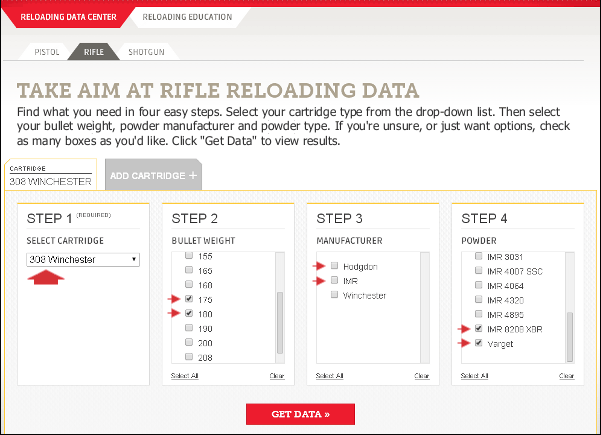


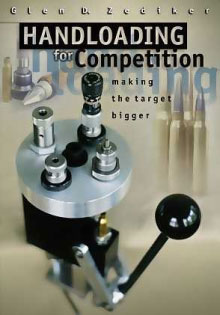 Forum member Danny Reever and this Editor recently discussed how novice reloaders can struggle with the fine points of reloading, making errors in seating depth, bushing choice, or sizing their cases. We agreed that a good resource covering more than “Reloading Basics” is sorely needed. Danny reminded me that Glen Zediker’s excellent


