Tempilaq is a temp-sensitive “paint-on” liquid coating which can be used to gauge case temperatures during the annealing process. Tempilaq is offered in 43 different temperature ratings from 175°F to 1900°F (79°C to 1038°C).
Tempilaq quickly dries, forming a dull, opaque film. Then, when heat is applied to that surface and the rated temperature is reached, the film liquefies, letting you know that you’ve reached the target annealing temp. Because you can ruin brass by over-annealing, we recommend using Tempilaq when annealing, at least when you are setting up your torch position and calculating the amount of time your cases should be exposed to the flame. To prevent premature “burn-off” you can apply the Tempilaq to the inside of the necks.
Thinner for Tempilaq
One of our Forum members from Australia was concerned about some 700° F Tempilaq he had recently obtained. He explained that it was thick and glue-like, making it hard to apply. He wondered if there was a thinner he could use with the 700° Tempilaq.
Yes there is such a product: Green Label Thinner from Tempil (the manufacturer of Tempilaq). Forum member Gary M. (aka gmorganal) tells us: “You can buy Temiplaq thinner from McMaster Carr, and they will have it on your doorstep about the time you hang up the phone. I just ordered from them this week, and [the thinner] was delivered the next day. The thinner is about half the price of the [Tempilaq] paints — roughly $5.00 or so per bottle.” Tempil explains: “Use Green Label Thinner to dilute Tempilaq G® or to replace evaporated solvent. For use only with Tempilaq G® temperature indicating liquid.”
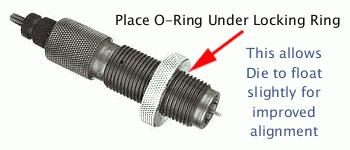
Here’s an inexpensive procedure that can help you load straighter ammo, with slightly better measured concentricity (i.e. less run-out) on the case necks and bullets. Simply use a rubber O-Ring on the underside of the die locking ring. This allows the die to self-align itself (slightly) to the case that is being sized. Without the O-Ring, if the flat surface on the top of your press is not perfectly square with the thread axis, your die can end up slightly off-angle. This happens when the bottom of the locking ring butts up tight against the top of the press. The O-Ring allows the die to float slightly, and that may, in turn, reduce the amount of run-out induced during case sizing.
Top prone shooter GSArizona has tried this trick and he says it works: “Go to your local hardware store and get a #17 O-Ring (that’s the designation at Ace Hardware, don’t know if its universal). Slip the O-Ring on the die and re-adjust the lock ring so that the O-Ring is slightly compressed when the die is at the correct height. Size and measure a few more cases. You will probably see a slight improvement in neck concentricity as the die can now float a bit as the case enters and leaves it. This isn’t going to be a dramatic improvement, but it’s a positive one.” We want to stress that adding O-Rings to sizing dies may help some reloaders, but we don’t offer this as a panacea. Try it — if using the O-Ring reduces measured runout that’s great. If it doesn’t, you’ve only spent a few pennies to experiment.
Lee Precision makes die lock rings with built-in O-Rings. Lee’s distinctive lock ring design allows the same kind of self-alignment, which is good. However, Lee lock rings don’t clamp in place on the die threads, so they can move when you insert or remove the dies — and that can throw off your die setting slightly. By using an O-Ring under a conventional die lock ring (that can be locked in place), you get the advantages of the Lee design, without the risk of the lock ring moving.
In this latest update, two new calibers have been added: .221 Remington Fireball and .300 AAC Blackout. (Lapua now makes .221 Fireball brass.) In addition, there is updated data for the popular .260 Remington cartridge. That’s good news as we know that many of our readers are looking for load data for the .260 Rem. Vihtavuori makes a variety of powders well-suited for both hunting and match loads in the .260 Rem.
The Vihtavuori Reloading Guide covers more than 20 different types of VV reloading powders. It was most recently updated in June, 2014. The online reloading info database at Vihtavuori.com has also been updated.
Data Tip from EdLongrange. We welcome reader submissions.
A while back, Sinclair International’s Reloading Press Blog featured a “round-table” discussion of reloading techniques. Sinclair’s team of tech staffers were asked: “What do you feel is the one-most crucial step in precision reloading?”
Here are their responses (along with comments from our Editors):
Phil Hoham: “I feel that when working up a load do not go too high or too low in your powder charge. Stay away from “suggested loads” you hear at the range, or on the internet. Always be sure to use a published reloading manual that presents not only minimums and maximums, but also pressure, velocity, and a proper range of powders used. Do not get distracted in the reloading process, and remain focused at all times during each step involved.”
AccurateShooter.com: Some loads presented on the Internet are OK as a starting point, but it is absolutely critical to understand that pressure maximums will vary considerably from one rifle to another (of the same chambering). For example, one 6mmBR rifle shooting 105gr bullets can max out with 30.0 grains of Varget powder, while another rifle, with the same chamber dimensions, but a different barrel, could tolerate (and perform better) with half a grain more powder. You need to adjust recommended loads to your particular rifle and barrel.
Pete Petros: “This could be a very broad topic, but if I were to pick one, it would be making sure to pay close attention, and weigh each and every powder charge to ensure that each load is exact and consistent. This is important not only for accuracy, but also for safety reasons.”
AccurateShooter.com: If you’re shooting beyond 200 yards, it is critical to weigh your loads with an accurate scale. Loads that are uniform (within a few kernels) will exhibit lower Extreme Spread and Standard Deviation. And remember, even if you stick with the same powder, when you get a new powder lot, you may have to adjust your load quite a bit. For example, .308 Palma shooters have learned they may need to adjust Varget loads by up to a full grain from one lot of Varget to the next.
Ron Dague: “I feel that the most important step(s) in reloading for accuracy are in the initial case prep. Uniforming the primer pocket to the same depth to ensure consistency in primer seating is a crucial step. Additionally de-burring the flash holes, each in the same way to clean up and chamfer the inside is important. It ensures that the ignition from the primer is uniform and flows out in the same consistent pattern. Doing so will create uniform powder ignition and tighten up your velocity Extreme Spread.”
AccurateShooter.com: With some brands of brass, primer pocket uniforming and flash-hole deburring is useful. However, with the best Lapua, Norma, and RWS brass it may be unnecessary, or worse, counter-productive. So long as your Lapua brass flash-holes are not obstructed or smaller than spec, it may be best to leave them alone. This is particularly true with the small flash holes in 220 Russian, 6BR, and 6.5×47 cases. MOST of the flash-hole reaming tools on the market have cutting bits that vary in size because of manufacturing tolerances. We’ve found tools with an advertised diameter of .0625″ (1/16″) that actually cut an 0.068″ hole. In addition, we are wary of flash-hole deburring tools that cut an aggressive inside chamfer on the flash-holes. The reason is that it is very difficult to control the amount of chamfer precisely, even with tools that have a depth stop.
Rod Green: “I feel that bullet seating is the most important step. If you had focused on making sure all prior steps (case prep, powder charge, etc.) of the process have been carefully taken to ensure uniformity, bullet seating is the last step, and can mean all the difference in the world in terms of consistency. Making sure that the bullet is seated to the same depth each time, and time is taken to ensure that true aligned seating can make the load.”
Bob Blaine: “I agree with Rod. I strongly feel that consistent bullet seating depth is the most important step in creating the most accurate hand loads. I have seen the results in both my bench and long range rifles. Taking the time to ensure exactness in the seating process is by far, the number one most important step in my book.”
AccurateShooter.com: Agreed. When loading match ammo, after bullet seating, we check every loaded round for base of case to ogive length. If it varies by more than 3 thousandths, that round is segregated or we attempt to re-seat the bullet. We measure base of case to bullet ogive with a comparator mounted on one jaw of our calipers. You may have to pre-sort your bullets to hold the case-base to ogive measurement (of loaded rounds) within .003″.
Sinclair International has a good article on Case Lubrication which shows the various products and application methods available. Part of Sinclair’s Step-By-Step Reloading series, the article shows how to apply Spray Lube, Die Wax, or conventional lube from a Pad. The story also explains how to use dry lube to slick up the inside of your case necks.
Spray Lubes
High-volume reloaders often turn to spray-on lubricants such as the RCBS Case Slick (#749-001-341) or the Hornady One Shot (#749-001-065) to quickly lubricate large numbers of cases at once. An indispensable piece of gear that helps make spray lubing easy is a lube rack (#749-011-550) – a polymer block that holds cases upright and arranged to maximize their exposure to the spray.
Editor’s Note: Ballistol Aerosol is other good spray product for regular full-length sizing (not heavy case forming). It goes on clear (no chalky residue), it is ultra-slippery, and it will remove the carbon from your case necks as you apply Ballistol with a patch. This is my primary spray lube — but many folks hate the distinctive Ballistol smell. Try before you buy.
Sizing Die Wax
Over the years, many benchrest shooters have come to trust Imperial Sizing Die Wax (#749-001-052) for their case lube needs. It offers high lubricity and easily wipes off with a paper towel. In fact, its lubricity makes it a popular choice for case forming, for those wildcat folks who need to form their own unique or obsolete cartridges. Unlike lube pads or spray lubes, sizing wax is applied more naturally. You just put a little on your fingers and transfer it to the cases by handling them. As simple and easy as Imperial Sizing Die Wax is to use, it’s probably best for low-volume applications.
Dry Lubricant
Redding’s Imperial Application Media (#749-001-166) is a dry neck lube used to lube the inside of the neck, whether you’re full-length sizing or neck-sizing only. It consists of ceramic spheres coated with a fine graphite-based powder. You simply dip the neck into the container for a second to pick up the right amount of lube. This lube enables the expander ball to work smoothly throughout the case neck –instead of “grabbing” or “chattering” — to minimize case neck stretching.
Editor’s Note: Dry Lube is also very useful if you ultrasonically clean your cases. After the ultrasound process, the inside of the case neck can be so “squeaky clean” that bullets don’t seat smoothly. A quick application of dry lube will help bullets slide into the neck easier and the neck “grip” on the bullets should be more consistent from round-to-round. Consistent neck tension is key to accuracy and uniform velocities.
Story Tip from EdLongrange. We welcome reader submissions.
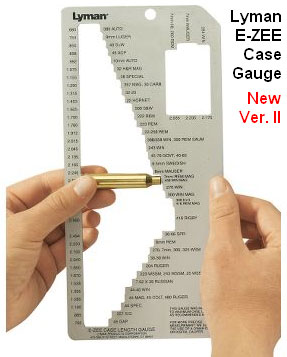
Lyman’s popular E-Zee Case Length Gauge is now bigger and better. The new version II of Lyman’s Case Gauge is much larger than the original version. The Case Gauge II now measures more than 70 cartridge types — way more than before. This tool is a metal template with SAAMI-max-length slots for various cartridge types, including relatively new cartridges such as the .204 Ruger and Winchester Short Magnums. This tool allows you to quickly sort brass or check the dimensions. If you have a bucketful of mixed pistol brass this can save you hours of tedious work with calipers. You can also quickly check case lengths to see if it’s time to trim your fired brass.
If you load a wide variety of calibers, or do a lot of pistol shooting, we think you should pick up one of these Lyman Case Gauge templates. They are available for under twenty bucks at Sinclair Int’l and Amazon.com. The folks at Sinclair say the E-Zee Case Gauge II has a been a hot seller.
Case Gauge Should Last a Lifetime
Easily measure the case length of over 70 popular rifle and pistol cases with Lyman’s new E-Zee Case Length Gauge II.
This rugged, precisely-made metal gauge makes sorting or identifying cases fast and accurate. The template is machined with SAAMI max recommended case lengths. Made from metal, with no moving parts, the E-Zee Case Gauge II should last a lifetime.
Sinclair International has a very impressive new series of stainless bullet seating dies for use with arbor presses. We first saw this product at SHOT Show in January. Now these click-adjustable seaters are in stock for 15 popular cartridge types. Beautifully made by L.E. Wilson, these stainless dies have precise half-thousandth adjustments with clicks you can feel as rotate the top to increase or decrease seating depth. But quality isn’t cheap — these new dies cost $199.00 each.
The folks at Sinclair told us: “We gathered our customers ideas and reloading experience with hand dies, and partnered with the hand die experts, L.E. Wilson.” Thes new dies allow precise control over seating depth with a simple turn of the indexed top section. Sinclair/L.E. Wilson Micro-Adjust Bullet Seaters are detent-bearing driven with positive click increments of .0005”:
Each seater stem is custom fitted to the seater body ensuring close tolerance fit.
Precision-cut threads allow bullet seating depth adjustment in .0005″ increments
Wide range of adjustment for use with a variety of bullets and seating depths.
Micro-Adjust “clicks” via stainless springs and stainless ball bearings.
Constructed of 416 Stainless Steel with precise, laser-etched adjustment scale.
Made in the USA by L.E. Wilson (85 years of inline die experience).
New handloaders often ask us for advice on reloading techniques and equipment selection. It’s always best for novice reloaders to work under the guidance of an experienced mentor. Nothing beats “learning the ropes” with an experienced reloader at ones side. In addition, new handloaders should acquire one or more good reloading manuals, such as the Hornady Reloading Handbook (9th Ed.). We recommend reading the introductory chapters of a reloading manual to get a good understanding of the basic principles involved.
Along with print manuals, instructional DVDs are available. RCBS sells a 32-minute, step-by-step Precisioneered Handloading DVD, narrated by Shooting USA’s Jim Scoutten. This $9.19 DVD covers the basics of metallic cartridge reloading and shotshell reloading.
For those who have already mastered the basics, Redding offers a 45-minute instructional DVD, appropriately named Advanced Handloading: Beyond The Basics ($17.52 at Amazon.com). The Redding DVD, produced with help from Sierra Bullets, is narrated by John Barsness, field editor of Rifle and Handloader magazines. The Redding DVD does go “Beyond the Basics” but it really is more an intermediate resource — it doesn’t reveal some of the most sophisticated methods of case prep and load tuning used by competitive benchrest shooters. Nonetheless it is a good resource for those getting started with rifle cartridge reloading.
For a few years now, Lyman has offered the Case Prep Xpress, an all-in-one case prep center that chamfers necks (inside and out), cleans and uniforms primer pockets, brushes the inside of case-necks, and uniforms flash holes. The unit can also ream out the crimps on military brass. However, the Lyman Case Prep Xpress does NOT trim cases.
The Lyman Case Press Xpress comes with all the necessary tools and attachments (listed below), so you don’t have to purchase extra accessories. The 5 gear-driven heads on the unit are powered by a high torque, low-speed motor ideal for case prep operations. Lyman’s Case Prep Xpress features handy storage areas for accessories, a removable brass shavings dump pan, and a handy clean-up brush.
Lyman Case Prep Xpress Includes:
Inside Deburr (VLD) Tool
Outside Deburr Tool
Flash Hole Uniformer
Primer Pocket Uniformer (Large & Small)
Primer Pocket Reamer (Large & Small)
Primer Pocket Cleaner (Large & Small)
Case Neck Brushes (25, 30, 38 & 45 Cal)
Case Neck Lube (Mica)
Removable Brass Shavings Dump Pan
Clean-up Brush
In the two years that this product has been on the market it has been a hot seller. We’ve used the Case Prep Xpress. If you’re prepping hundreds of cases, this unit will save considerable time and reduce hand/finger fatigue. While the Case Prep Express is not as sturdy as the metal-bodied Hornady prep center, the Lyman unit offers a lot of functionality for the price ($108-$125 at various vendors).
Video clearly illustrates all case prep functions. Worth watching.
You can find Lyman’s Case Prep Xpress for under $120.00, making it much less expensive than the larger Hornady Case Prep Center, which runs about $400.00. The Hornady unit is beefier, and will trim cases. However, we think the compact Lyman unit makes sense for guys who already have a good case trimmer, such as a Forster or Wilson. The Lyman Case Prep Xpress is hundreds of dollars less than the Hornady prep center. The money you save will buy lots of bullets and brass.
Case Prep Xpress $108.08 at Midsouth
The Lyman Case Prep Xpress is sold by most of the big vendors. The best current price we found was at Midsouth Shooters Supply, which sells the Lyman unit for $108.08.
Lake City vs. Lapua — which brass is harder? And how about Remington vs. Winchester? Is the widely-held belief that Win brass is harder than Rem brass really true? To help settle these burning questions (raised in a Forum thread), Forum member Catshooter recently sampled the base hardness of four brands of .223/5.56 brass. He employed a very impressive tool for the task — a $2,500 Ames Hardness Gauge. Catshooter explained that his Ames Guage “is FAA certified and approved for testing aircraft engine parts — it does NOT get any better than that!”
Catshooter measured four cases picked at random from batches of Lake City (LC) 2008 (5.56x45mm), Lapua .223 Rem Match, Winchester .223 Rem, and Remington R-P .223 Rem.
Lake City
Lapua Match
Winchester
Remington
Photo Shows Ames Gauge Base Hardness Measurement on Lake City Brass
Photo Show Ames Gauge Base Hardness Measurement on Winchester Brass
TEST RESULTS
Using Rockwell hardness standards (.062″x100kg, Rockwell “B”), the brass measured as follows:
LC 2008 = 96
Lapua 223 Match = 86
Winchester 223 = 69
Remington “R-P” = 49
Summary of Test Results
Catshooter writes: “For all you guys that have believed that Winchester cases were tougher than Remington — you are vindicated, they are a lot tougher! However, Lake City and Lapua are ‘the pick of the litter'”. Catshooter notes that both Lake City and Lapua are significantly harder than either Winchester and Remington .223 brass. That’s something that we’ve observed empirically (Lapua and LC stand up better to stout loads), but now we have some hard numbers to back that up. Hats off to Catshooter for settling the hardness debate with his Ames Hardness Gauge.


 Tempilaq is a temp-sensitive “paint-on” liquid coating which can be used to gauge case temperatures during the annealing process. Tempilaq is offered in 43 different temperature ratings from 175°F to 1900°F (79°C to 1038°C).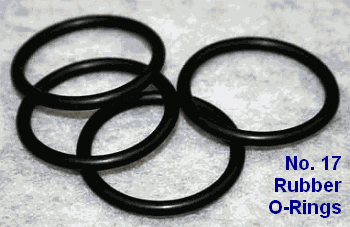


 A while back, Sinclair International’s


 Lyman’s popular E-Zee Case Length Gauge is now bigger and better. The new version II of Lyman’s Case Gauge is much larger than the original version. The Case Gauge II now measures more than 70 cartridge types — way more than before. This tool is a metal template with SAAMI-max-length slots for various cartridge types, including relatively new cartridges such as the .204 Ruger and Winchester Short Magnums. This tool allows you to quickly sort brass or check the dimensions. If you have a bucketful of mixed pistol brass this can save you hours of tedious work with calipers. You can also quickly check case lengths to see if it’s time to trim your fired brass.



 You can find Lyman’s Case Prep Xpress for under $120.00, making it much less expensive than the larger


 TEST RESULTS


