Top to bottom: Remington firing pin assembly with ISS, Tubb SpeedLock alloy-composite system without ISS (current versions have dual, opposite-wound springs), and Remington short action firing pin assembly without ISS.
The U.S. Army Marksmanship Unit regularly publishes technical articles on the USAMU Facebook page. One informative USAMU article covered mechanical issues and related ignition irregularities that can cause vertical fliers even with good ammunition in an otherwise excellent rifle. We highly recommend you read this article, which offers some important tech tips.
Vertical Dispersion: Mechanical/Ignition Issues?
Poor or inconsistent ignition has long been known to be one of the “usual suspects” when one encounters vertical fliers that just shouldn’t be there. By having a sense of some of the basic principles involved, and a few basic areas to check, the shooter may avoid colsiderable frustration, not to mention time, expensive loading components and barrel wear.
Is your well-built rifle of high-quality components plagued with vertical fliers across more than 1-3 handload combinations? Consider the bedding, crown and scope/sight mounts. Are they correct? If so, then you might check for ignition issues before boldly undertaking an extensive, expensive, and quite possibly fruitless quest for the “magic handload”.
SEEING IS BELIEVING: While the author had been aware for many years that poor ignition should be considered and ruled out when dealing with vertical fliers in an otherwise-excellent rifle, actually seeing the problem and its almost instantaneous cure really drove the lesson home.
He was working with a “dot” rifle – a .22 LR match rifle that really stacked bullets into little piles at 50 yards and beyond. With one lot of ELEY Tenex, it produced consistent “bughole” groups at 50, but with another, selected lot of Tenex, similar groups were regularly ruined by single, vertical fliers that did not appear in other rifles. Rather than spending days burning up expensive, select ammunition looking for “magic lots”, he contacted a well-respected rimfire gunsmith and explained the situation.
Without so much as batting an eye, the highly-experienced ‘smith tore into the rifle’s action, and quickly found the cause(s) of the problem. He discovered a demonstrably weak firing pin spring, plus a chip out of the face of the firing pin where it contacted the cartridge rim.
After replacing and tuning the offending parts, the rifle immediately began shooting tiny, bughole groups with the previously “unacceptable” lot of Tenex. Centerfire rifles can also benefit from ensuring positive, consistent ignition. A wise riflesmith is literally worth his weight in gold!
So, what are some issues we as shooters can inspect in our rifles to help determine if ignition woes could be part of our problem? At the club level, ask yourself if that “experienced” Remington, Winchester 70, or even Springfield-based match bolt gun you’re using is still running its’ original 40-80 year-old factory striker spring? If so, a new replacement is cheap insurance against current or future problems. (And BTW, it might be best to stick to the normal, factory-spec spring weight. A super-powerful spring can cause vertical, just as a weak one one can.) Along with that, a routine check for proper firing-pin protrusion is a quick preventive measure that can rule out potential issues.
Other areas to consider are the centering and consistency of the firing pin’s operation in the bolt. Admittedly, with the increasing use of precision-machined custom actions, this is becoming less an issue every day. Below is the firing pin assembly from a custom BAT action:
However, particularly with factory actions, a very quick and easy check is to remove the bolt, let the firing pin go forward, and look at the firing pin tip through the firing pin hole. Is the tip off-center in the hole, and possibly striking it as it moves forward? Is the hole out-of-round or burred from being struck repeatedly? If so, a trip to the riflesmith is likely in order.
Similarly, machining issues in the bolt/firing pin system can lead to rough and erratic firing pin movement, in which the firing pin drags against an internal surface of the bolt. In high-quality rifles these issues are relatively rare, but not unheard-of, and it takes mere minutes to rule them out. It may be worthwhile to remove the cocking piece/firing pin/spring assembly and look for any unusual gouges, dings, peening, burrs or signs of abnormal wear.
This task is especially easy with Winchester 70s, Springfields, and the similar Mauser 98s, involving little more than the push of a button and unscrewing the cocking piece assembly. This is just one of the many reasons these tried-and-true actions have earned such a loyal following in the field, among hunters who must maintain their rifles away from a shop.
Particularly with older rifles, watch for and remove excess grease (or even Cosmoline!) from both the firing pin assembly and inside the bolt. This can help improve firing pin speed and consistency. Other bolt-action designs may need a take-down tool or other measures.
As part of this inspection, AFTER ENSURING THE RIFLE IS UNLOADED, slowly cock the rifle, dry-fire, and repeat several times. Listen carefully near the action for inconsistency in the sounds it generates. Does the striker falling make the same sound each time? Do you hear or feel grinding upon operation? If so, where?
Be sure to check the operation of the cocking piece (bolt shroud), firing pin within the bolt shroud, the cocking piece cam and the rear of the bolt body where the cocking piece cam operates. As with our examination for abnormal wear marks discussed above, look for marks indicating roughness or a possible need for light polishing. Then, clean and lightly grease the bearing surfaces while you’re at it.
Remington 700 bolt shroud and cocking cam
These are relatively easy checks that shooters can undertake to perform a preliminary inspection on their own. Other mechanical issues can also cause ignition issues, chiefly centered around the action of the trigger, sear and sear spring. If these are suspected, a trip to an experienced, qualified riflesmith for diagnosis is recommended. We hope you find this information helpful! Join us again next week, and in the meantime, enjoy the shooting sports safely!
At the request of our readers, we provide select “Deals of the Week”. Every Sunday afternoon or Monday morning we offer our Best Bargain selections. Here are some of the best deals on firearms, hardware, reloading components, optics, and shooting accessories. Be aware that sale prices are subject to change, and once clearance inventory is sold, it’s gone for good. You snooze you lose.
NOTE: All listed products are for sale to persons 18 years of age or older. No products are intended for use by minors.
Natchez — SIG Sauer Optics Sale
⏺️ » Big discounts through 12/19/2025 — Optics and more
Riflescopes from SIG Sauer Optics offer great value for the price. SIG optics have high-quality glass, a wide variety of reticles, and many zoom options. On sale now at Natchez, SIG optics are known for their optical clarity, durability, and great value for the price. With these discounts, this is a great opportunity to buy.
EuroOptic — Outdoor Apparel & Gear Sale
⏺️ » Great deals on jackets, boots, bibs, vests, gloves, packs and more
If you need quality outdoor clothing and gear, check out EuroOptic’s Outdoor Apparel and Gear Sale. There are excellent jackets, vests, gloves, boots, bibs, winter hats and other clothing on sale with major discounts up to 80%. In addition, hunter backpacks and carry packs are on sale. With top brands like Sitka and Stone Glacier you’ll find rugged, comfortable, quality gear at some of the lowest prices of the season.
As an Amazon affiliate, this site can earn revenues through sales commissions.
If you want to compete in top handgun competitions such as the CMP matches at Camp Perry, you’ll need good ammo that has low ES, consistent powder charge, uniform cartridge OAL, and consistent crimp. Every with action pistol matches you’ll want ammo that is very uniform. One miss on steel can mean losing a match. The following USAMU article provides rock-solid pistol reloading advice, explaining how to load accurate, reliable handgun ammo.
The U.S. Army Marksmanship Unit (USAMU) fields pistol teams as well as rifle and shotgun competition squads. Consequently the USAMU’s Reloading Shop loads tens of thousands of pistol rounds every year. In this article, the USAMU’s handgun experts talk about reloading for handguns — with smart tips on how to achieve superior accuracy with 100% reliability. This article, which offers important insights on COAL, primers, crimps and more.
Precision Pistol Reloading — Recommended Methods
Optimize the Taper Crimp
One often-overlooked aspect of handloading highly-accurate pistol ammunition is the amount of crimp and its effect on accuracy. Different amounts of taper crimp are used with various handloads to obtain best accuracy. The amount is based on bullet weight, powder burn rate and charge, plus other factors. It is not unusual for our Shop to vary a load’s crimp in degrees of 0.001″ and re-test for finest accuracy.
Use Consistent Brass
Brass is also important to pistol accuracy. While accurate ammunition can be loaded using brass of mixed parentage, that is not conducive to finest results, particularly at 50 yards. It is important for the serious competitor/handloader to use brass of the same headstamp and ideally one lot number, to maximize uniformity. Given the volumes of ammunition consumed by active pistol competitors, using inexpensive, mixed surplus brass for practice, particularly at the “short line” (25 yards), is understandable. However, for the “long line” (50 yards), purchasing and segregating a lot of high-quality brass to be used strictly for slow-fire is a wise idea.
Importance of Uniform COAL
Uniformity of the Case Overall Length (COAL) as it comes from the factory is also important to achieving utmost accuracy. More uniform case lengths (best measured after sizing) contribute to greater consistency of crimp, neck tension, ignition/burn of powder charge, and so on. Cartridge case-length consistency varies from lot to lot, as well as by maker. Some manufacturers are more consistent in this dimension than others. [Editor’s note: It is easy to trim pistol brass to uniform length. Doing this will make your taper crimps much more consistent.]
Primers and Powders — Comparison Test for Accuracy
Pay attention to primer brands, powder types and charges. Evaluating accuracy with a Ransom or other machine rest at 50 yards can quickly reveal the effect of changes made to handload recipes.
Bullet Selection — FMJ vs. JHP
Bullets are another vital issue. First, there is the question of FMJ vs. JHP. A friend of this writer spent decades making and accuracy-testing rifle and pistol bullets during QC for a major bullet manufacturer. In his experience, making highly-accurate FMJ bullets is much more difficult than making highly-accurate JHPs, in large part due to the way the jackets are formed. Small die changes could affect accuracy of FMJ lots dramatically.
The CMP now allows “safe, jacketed ammunition” in Excellence-in-Competition (EIC) Service Pistol matches, although wadcutter ammunition is prohibited. Thus, the option to use very accurate JHP designs simplifies the life of CMP Service Pistol shooters in pursuit of the Distinguished Pistol Shot badge.
Hopefully, these tips will be helpful to any pistol shooters interested in accurate handloads, not just “Bullseye” shooters. Small tweaks to one’s normal routine can pay big dividends in improved accuracy and make practice and competition more rewarding. Stay safe, and good shooting!
Christmas is just 8 days away, so today we’re featuring a hand-picked collection of sixteen “stocking stuffers” for precision shooters. Some of these are recent inventions. All are handy items that you’ll use over and over again at the range, on your vehicle, and/or at your loading bench (so you’re allowed to buy them for yourself, even after Christmas).
B&T Industries BT62 Determinator — $7.95 ✔
The acrylic BT62 Determinator measures groups with laser-cut concentric measuring rings. Check group size quick and easy — simply place the Determinator over shot group. Adjust until one of the circles crosses the center of the two outer-most holes. That gives you the center to center group measurement (1.5″ maximum). Alternatively, you can measure edge to edge (of the farthest shots) and then subtract the bullet diameter. Cool tool for gun guys. The supplied lanyard also glows in the dark.
MAXUS Reloading Scale Kit — $17.99 ✔
Here is a VERY affordable compact scale for use at home or at the range (with battery power). Though it costs under $20, the MAXUS Digital Milligram Scale (#ad) has earned good reviews and should be precise and repeatable. This high-precision digital milligram scale set comes with calibration weight and other reloading accessories. And numbers are easy to read with its large backlit LCD display. NOTE: This MAXUS Scale has dual power functionality — it can run with batteries or USB cable. It can read grains, ounces, grams, and other weight types.
Wheeler Manual Trigger Pull Scale — $21.58 ✔
While we prefer a sensitive digital trigger pull gauge, it’s nice to have a manual back-up. And the Wheeler gauge is plenty accurate for pistols and most hunting rifles. The Wheeler trigger pull scale accurately measures trigger pull weight from 8 ounces to 8 pounds. It features an ergonomic handle for consistent direction of pull. The sliding indicator stays reliably on the maximum weight registered and high contrast pull weight increment marks are very easy to read. This spring-type trigger scale measures in 2-ounce increments and is accurate to +/- 2 ounces — plenty good for pistols and hunting rifles. Priced at just $21.58 on Amazon, this gauge has earned 91% four- or five-star owner reviews.
Lyman Powder Scale Pan and Case Funnel — $6.99 ✔
The Lyman Powder Pan/Funnel saves reloaders time by combining the powder-receiving pan and funnel into one unit. With this combo tool reloaders can pour powder directly into the case without having to fumble with a separate funnel. That’s smart and efficient and just $6.99 on Amazon (#ad). RCBS makes a similar powder pan/funnel ($8.99 at Precision Reloading) with a slightly different case-neck section. You may want to try both to determine which works best for your cartridge brass.
Surveyor’s Flagging Tape (for Wind Indicators) — $1.99 per Roll ✔
Allen Camouflage/Black Neoprene Scope Cover — $12.07 ✔
Here’s a great gift item for a hunter. This reversible Camo-pattern Neoprene Scope Cover fits scopes up to 15″ long and 56mm lens diameter. The cover cushions your scope and protects against moisture and scratches. Along with the $12.07 large version, Allen makes a 12″ medium camo scope cover, and a 10″ small version. NOTE: These covers are reversible with Mossy Oak Break-Up Country camo on one side (as show), and black on the other side.
MagnetoSpeed RifleKuhl Barrel Cooling Fan — $69.00 ✔
Cooling your barrel with a compact fan can extend barrel life. This bright red RifleKuhl from Magnetospeed (#ad) is quite effective. The battery-powered impeller pushes cooling air down the barrel. It has a chamber seal for increased cooling efficiency while a neodymium magnet helps secure the device to your action. The RifleKuhl includes a belt/pocket clip and there is a Replaceable built-in 50 Micron air filter. The RifleKuhl costs $69.00 on Amazon.
Ludex Case Prep Multi-Tool with Internal Storage — $15.99 ✔
This handy Ludex Case Prep Multi-Tool can perform multiple tasks. On one end is an inside neck chamferer, with the outside chamferer/deburrer on the opposite end. Stored inside the tool are four (4) uniforming attachments for large and small primer pockets. This tool with all the attachments is $15.99 on Amazon.
Digital Display Timer with Big Buttons — $16.95 ✔
If you shoot in a discipline with time limits, or you time your firing strings during practice, having a reliable and easy-to-read timer is critical. We like this very affordable Digital Display Timer with both count-up and count-down functions. Just $16.95 on Amazon, this unit boasts an easy-to-read display and LARGE buttons making it perfect for F-Class, Palma, and other matches. This timer comes with both a built-in stand AND a strong magnet so you can position the timer conveniently.
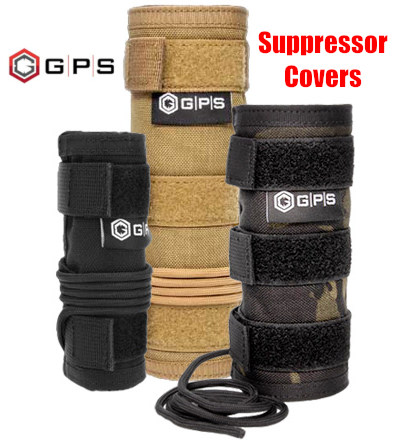
GPS Tactical Suppressor Cover — $34.99 ✔
With the growing popularity of PRS/NRL competition and hunting with suppressors, it’s great to see a product that can protect your pricey “can” AND reduce heat coming off the suppressor. Crafted by GPS Bags, these Tactical Suppressor Covers ($34.99 at Midsouth) help reduce visual “mirage” caused by heat radiating off a rifle’s suppressor. These feature 1000D Nylon with a heat-resistant fiberglass/silicon lining. The Tether Line prevents the suppressor cover from sliding forward during strings of fire.
Hoppes Pistol Cleaning Kit — $9.97 ✔
Right now, for just $9.97, you can get a nice Hoppes Pistol Cleaning Kit complete with solvents, cleaning rod with swivel handle, jags, patch holder, bore brush, and 50 patches. The fluids include 2 oz. of Hoppe’s No. 9 Cleaning Solvent, plus 2.25 ounces of Hoppe’s Lubricating Oil.
Peregrine MAGnet Gun Caddy — $5.50 ✔
Here’s a handy item that can hold your rifle vertically alongside any steel surface. This works great on gun safes (outside or inside), and the MAGnet Gun Caddy can be used on vehicles too (see photo). The patented design makes it possible to secure and remove your gun from the holder with just one hand. The MAGnet Gun Caddy, just $5.50 at Grafs.com is modular so you can arrange multiple units at whatever height works best.
Sack-Ups 13.5″ Pistol Storage Sock — $8.49 ✔
Here’s an actual fabric sock that you can roll up and put in your Christmas stocking. Sack-Up knitted storage sacks are made from silicone-treated 100% natural cotton. The cotton’s wicking ability draws moisture off the gun, inhibiting corrosion. This $8.49 13.5″ Sack-Ups sock is a great choice for revolvers and metal-framed pistols. Midsouth also carries larger 36″, 42″, and 52″ Sack-Ups for shotguns and rifles.
Rimfire disciplines are getting more popular, with the increasing cost of centerfire brass, bullets, and powder. While .22 LR rimfire rifles require less cleaning compared to centerfire rifles, you still need to maintain those rimfire barrels. We like Bore Tech’s Rimfire Blend Bore Cleaner, now $17.95 at Creedmoor Sports. This specially-formulated, ammonia-free bore cleaner can simultaneously cut through the layers of lead, wax, and carbon fouling. NOTE: After use you may have to shoot quite a few rounds before best accuracy returns.
Is the temp and humidity OK inside your gunsafe? With Hornady’s Govee Bluetooth Wireless Hygrometer Thermometer, you can check that easily. The unit measures temperature and humidity inside your safe, and then displays temp/humidity readings on your smartphone via a Bluetooth App. The unit has a good range in open rooms but you may have to get close to the safe to get a signal with the safe door closed. The sophisticated Govee Wireless Hygrometer Thermometer is now just $14.99 on Amazon (#ad).
BONUS — TACTICAL XMAS STOCKINGS, $14.99-$16.99 ✔
Don’t have a stocking to hold your small gift items? Then check out these cool, heavy-duty stockings. These Willbond Tactical Stockings are sold as a two-pack for just $14.99 – $16.99 on Amazon (#ad). Choose a pair in three different types: Classic Style (Camo and Black, $14.99); Dark Style (Bronze and Black, $15.99), and Bright Style (Bronze and Green, $16.99). These Willbond Tactical Stockings feature Hanging hook, MOLLE straps, carry handle, outside draw pocket, side zipper, and Velcro USA Flag Patch. These stockings are sure to bring smiles to your tacticool family members and friends.
As an Amazon affiliate, this site can earn revenues through sales commissions.
Sinclair International has created a series of instructional videos illustrating the basics of metallic cartridge reloading. The 8-Part series starts with reloading basics and provides step-by-step, how-to instructions that will help new reloaders get started. Detailed, animated illustrations show you what happens inside the chamber when shooting, and inside the dies during each step of reloading. The videos can be viewed on Sinclair International’s YouTube channel. Shown below is the first video in the series:
Each of the Sinclair videos is hosted by then Sinclair Int’l President Bill Gravatt (now with Creedmoor Sports). Bill doesn’t just show you “how”, he tells you “why”. The how-to segments cover case inspection, proper die set up, case sizing, primer installation, powder measuring, bullet seating, crimping, and even goes into the record keeping needed for the handloader. “We wanted to give shooters who haven’t reloaded a look at all the advantages of creating your own ammo and how easy it is to get started,” said Gravatt, “without telling them they had to have any certain brand or type of equipment to do the job.”
The Eight Video Topics Are:
Part 1 — Intro to Video Series
Part 2 — Intro to Reloading Safety
Part 3 — Metallic Cartridge Components
Part 4 — The Firing Sequence
Part 5 — Tools for Reloading
Part 6 — Loading Bottle-Neck Cartridges (2 videos)
Part 7 — Loading Straight Wall Cartridges
Part 8 — Reloading Series Conclusion
Reloading Tools
Shown below is Part 5 of the video series, covering the tools used for precision reloading.
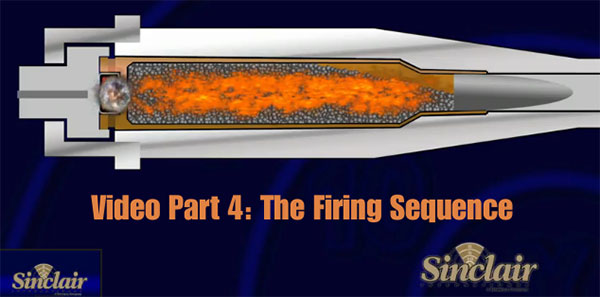
We also strongly recommend the Part 4 Video to readers who are getting started in reloading. This “How Things Work” segment covers the sequence of events inside the chamber (and barrel) when the cartridge is fired. The video includes helpful graphics that show what happens to the primer, powder, cartridge, and bullet when the round is fired. The video also illustrates “headspace” and explains how this can change after firing. We think this video answers many common questions and will help reloaders understand the forces at work on their brass during the firing process.
Product innovation is all about “building a better mousetrap”, or in this case, building a better bore-cleaning patch. A real smart guy, Shane Smith, has invented a triangular patch that earned a patent. The U.S. Patent Office has awarded a utility patent for BoreSmith’s Triangle Patch™. This unique cleaning patch was designed by Shane Smith, a mathematician/physicist who employed his scientific and firearms knowledge to create innovative bore-cleaning products.
BoreSmith’s Triangle Patch™ (aka Pyramid Patch) presents more cleaning surface area to the bore wall than does a conventional square or round patch (of equivalent size). At the same time, the unique geometry makes Triangle Patches much less likely to jam in the barrel. This is because the notches in the sides of the triangle allow the patch to sit more uniformly on the jag (without bunching up). Also the Pyramid patch is much less likely to jam due to pleating. One reason conventional patches get stuck is unwanted 5-layer pleating. The special notches in the Pyramid patch remove all or most 5-layer pleating. As a result the patch does not bunch up and this also reduces rod bowing.
Triangle Patch Function and Geometry Explained (See 1:18 time-mark):
NOTE: Despite what you may see in this video, you should ALWAYS insert brushes and patches from the chamber end first, using a fitted cleaning rod bore guide. With bolt-action rifles, NEVER insert a cleaning rod (with brush or jag) in through the muzzle. This may damage the delicate crown of your barrel.
The Triangle Patches work great with Boresmith’s patented dual-diameter bore brushes:
Clearance Check — Remove the seating stem and drop a bullet into it. The farther down the ogive or nose-cone the step recess grips the bullet, the better. If it’s only pressing down against the bullet tip, a crooked seat is assured, along with inconsistent seating depth. — Glen Zediker
Some folks acquire a new seating die and then are surprised to find their hand-loads show crooked bullets and/or inconsistent seating depth. The problem could be a mis-match between the bullet and the die’s seating stem. In some case, particularly with long, streamlined bullets, the bullet tip can actually touch the bottom inside of the stem. This can cause a variety of problems, as Glen Zediker explains…
Invest in a Good Seating Die Reloading Tip by Glen Zediker
The bullet seating operation is the “last thing” that happens and it’s also the one thing that can corrupt the care and treatment given to the quality of the loaded round prior. A sleeve-style seater, well-machined, goes a whopping long ways toward preserving alignment, and, therefore, concentricity. Also make sure that the stem in yours comes to rest well down onto the bullet ogive, and, above all else, is not contacting the bullet tip! That will wreck a round.
If you have this problem, you should contact the die maker — some will offer a different seating stem expressly designed for longer, pointier bullets. This “long bullet stem” will normally drop right into your existing die. If you plan to run long, VLD-style bullets you should request the special seating stem right from the get-go.
NOTE: Glen Zediker passed away in October 2020. He will be missed — his books were important additions to the gun world’s knowledge base. This tip comes from Glen’s book, Top-Grade Ammo, now out of print.
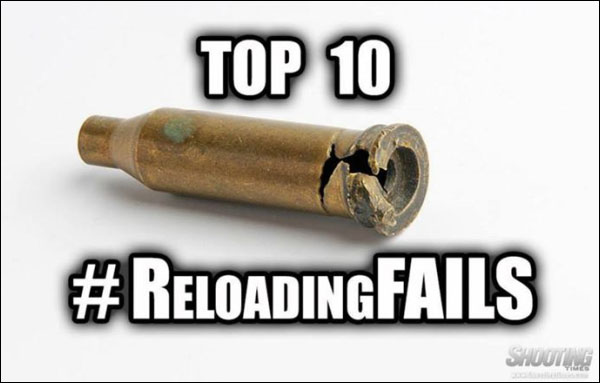
A while back, Shooting Times released an article entitled “Ten Most Common Reloading Mistakes”. Listed below are the Top Ten mistakes hand-loaders can make, at least according to Shooting Times. What do you think of this list — does it overlook some important items?
Top Ten Reloading Mistakes According to Shooting Times:
1. Cracked Cases — Reloaders need to inspect brass and cull cases with cracks.
2. Dented Cases — Dents or divets can be caused by excess case lube.
3. Excessive Powder Charge — Overcharges (even with the correct powder) can be very dangerous.
4. Primers Not Seated Deep Enough — “High” primers can cause functioning issues.
5. Crushed Primers — Some priming devices can deform primers when seating.
6. Excess Brass Length — Over time, cases stretch. Cases need to be trimmed and sized.
7. Bullets Seated Too Far Out — If the bullet is seated too long you may not even be able to chamber the round. Also, with hunting rounds, bullets should not engage the rifling.
8. Burrs on Case Mouths — Ragged edges on case mouths can actually shave bullet jackets.
9. Excess Crimp — This is a common problem with pistol rounds loaded on progressives. If case lengths are not uniform some cases will get too much crimp, others too little.
10. Inadequate Crimp — This can be an issue with magnum pistol cartridges in revolvers.
Do you agree with this list? We think some important things are missing, such as not adjusting full-length sizing dies properly. This can cause the shoulder to be pushed back too far (or not far enough). Another common mistake is using brass that is worn out, i.e. stretched in the case-head area from multiple cycles of hot loads. We also think the #1 error a reloader can make is using the wrong powder altogether. That can be a fatal mistake. See what happens when you load pistol powder in a rifle.
Here’s a tip we feature every year or so, because it is something that costs nothing, yet can be very useful in the reloading process.
With a simple, easy modification to a fired case, you can determine the length to lands in your rifle barrel. As long as you set the tension right, the measurements should be repeatable, and you’ve just saved yourself $47.40 — the combined cost of a Hornady commercial OAL gauge ($41.41) and Modified Case ($5.99).
To achieve best accuracy with a rifle, you must control bullet seating depth very precisely, so all bullets end up in the same place relative to the entrance of the lands, every time. There may be multiple cartridge OALs which prove accurate. However, with each, you first need to determine a “zero” point — a reliable, and repeatable OAL where the bullet is “just touching” the lands.
There are tools, such as the Hornady (formerly Stoney Point) OAL Gauge, that will help you find a seating OAL just touching the lands. However, the tool requires that you use a special modified case for each cartridge you shoot. And, while we find that the Hornady OAL Gauge is repeatable, it does take some practice to get in right.
Make Your Own Length-to-Lands Gauge with a Dremel
Here’s an inexpensive alternative to the Hornady OAL tool — a slotted case. Forum member Andris Silins explains how to create a slotted case to measure length to the lands in your rifle:
“Here’s what I did to find length to lands for seating my bullets. I made four cuts into the neck of fire-formed brass. Then I pressed the bullet in lightly and chambered the entire gauge. As the cartridge chambers, the bullet slides back into the case to give you length to lands. It took less than five minutes to get it cut and working. A little light oil in the barrel just past the chamber helps ensure the bullet does not get stuck in the lands. It works great and is very accurate.
How to Adjust Tension — Length and Number of Neck Cuts
I made the cuts using a Dremel with a cut-off wheel. You can adjust tension two ways. First, you can make the cuts longer or shorter. Longer cuts = less tension. If you used only three cuts instead of four you would get more tension. The trick is to be gentle when you open and close the bolt. If you ram the bolt closed you may wedge the bullet into the lands. When you open the bolt it helps to keep a finger or two near by to guide the case out straight because the ejector wants to push it sideways.”
Here is a great winter project for readers with some wood-working skills. This is a wood rack that can hold a huge collection of sizing and seating dies. This was created by our old friend John Adams, one of our Forum’s very first members. Sadly, John passed away a decade ago. But we know he’d be pleased to see folks create a die rack like this.
John, a founder of IHMSA and a former owner of SAECO Tool Company, had a vast collection of dies and reloading tools. He had rifles of many different calibers so he needed a large selection of dies. While visiting John’s workshop, we were impressed with the wooden die rack he has constructed above his main reloading bench. This would be a great do-it-yourself project for your reloading room.
John’s Loading Die Rack is a simple flat plank of wood, about 3/4″ thick. It is mounted with wood side brackets to stand at eye-level above a tool chest. The Rack is set at about a 45° angle from vertical. This holds the dies securely, but they are still easy to move in and out of the rack. At the top rear is a flat section with a single row of dies mounted upright.
You can see that all the dies for a particular cartridge are arranged in a column, one above the other. The die sets’ respective cartridge types (e.g. 6 PPC, 6×47 Lapua, and 6XC) are marked with highly visible labels made with a label-printing machine. John also placed labels on many of the dies themselves.
Vintage RCBS Die Rack
Below is an older, metal die rack. These were once manufactured by RCBS, but they are no longer sold. John Adams managed to snag a couple from RCBS years ago. The design is handy, but you can achieve the same results with a home-made wood block (perhaps that’s why RCBS discontinued its metal rack).
Quick Access vs. the Rust Factor
WARNING: While it is handy to keep your dies in a rack, this leaves them exposed to the elements. If you reload in a basement or garage where it gets cold and damp, your dies will rust much more quickly out in the air than if they are kept enclosed in their original boxes, with a small desiccant pack. Always keep a thin layer of oil or corrosion blocker on your dies. We recommend Eezox or Corrosion-X for that task.



 Is your well-built rifle of high-quality components plagued with vertical fliers across more than 1-3 handload combinations? Consider the bedding, crown and scope/sight mounts. Are they correct? If so, then you might check for ignition issues before boldly undertaking an extensive, expensive, and quite possibly fruitless quest for the “magic handload”.












 Use Consistent Brass