Whidden Gunworks makes great sizing and seating dies. The Whidden full-length sizing die with neck bushing is very popular because it allows you to “tune” the neck tension by using different bushings, with larger or smaller inside diameters. In this video, John Whidden explains how to choose a the right bushing size for use with your neck-sizing and full-length sizing bushing dies.
For most applications, John suggest starting with the caliper-measured outside diameter of a loaded cartridge (with your choice of bullet), and then SUBTRACT about three thousandths. For example, if your loaded round mics at .333, then you would want to start with a 0.330 neck bushing. John notes, however, that you may want to experiment with bushings, going down a thousandth and up a thousandth. With thin In addition, as your brass ages and the necks harden, you may want to change your bushing size.
Quick Tip: Try Flipping Your Bushings
You may also want to experiment with “flipping” your neck bushings to alternate the side that first contacts the neck of the case. (One side of the bushing is usually marked with the size, while the other side is unmarked.) So try “number side up” as well as “number side down”.
Some folks believe that one side of the bushing may allow a smoother entry, and that this can enhance concentricity. Other people think they can get very slightly more or less neck tension depending on how the bushing is oriented. This is a subtle effect, but it costs nothing to experiment.
If one bushing orientation proves better you can mark the “up” side with nail polish so that you can always orient the bushing optimally. NOTE: We have confirmed that some bushings are actually made with a slight taper. In addition, bushings may get distorted slightly when the brand name and size is stamped. Therefore there IS a reason to try both orientations.
Gavin Gear of UltimateReloader.com recently tested the impressive Henderson Gen 3 (V3) Trimmer. There is a full write-up on Gavin’s website, and you can watch Gavin’s 18.7-minute video review below.
Gavin states: “I met Todd Henderson at SHOT Show and it’s clear that quality control and customer experience are extremely important to him. The Henderson Gen 3 case trimmer is built on an adjustable tri-trim 3-way cutter with different pilots to accommodate different case necks. Three way cutters trim to length and chamfer the inside and outside all at once. This trimmer has a 1700 RPM spindle and a custom DC motor made in the USA. It is made of billet aluminum and has a taper-lock cutting head and is consistent to 0.002″” at least with the same brand of brass. The collets are Brown & Sharpe style collets and are interchangeable with Forster case trimmer collets. Henderson currently offers four collets, and one is supplied with each machine.”
Gavin explains the trimming process: “I had some 6mm Dasher brass I’ve fired a few times and wanted to take down 5-10 thousandths. The Henderson trimmer works much like a milling machine. You do not need much torque because of the way the taper works.”
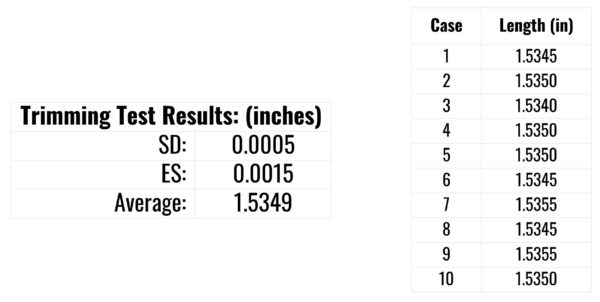
The Henderson Gen 3 trimmer delivered outstanding cartridge length consistency after trimming: “I was careful to ensure my trimming process was as consistent as possible. I measured the first ten cases I ever trimmed on the unit and found a standard deviation of 0.00047. The extreme spread is actually less than advertised. This trimmer is fast and easy to use and most importantly, returns consistent results.”
F-Class John Review of Henderson Gen 3 Trimmer
Our Editor F-Class John has also reviewed the Henderson Trimmer. He liked the product so much he purchased one, and he uses it regularly now to trim his .284 Win cases for F-Open competition.
John liked the precision of the Henderson trimmer and the overall design of the machine, which offers good ergonomics and very precise alignment of the cases. Cycling is smooth and positive, as you can see from the videos. Fit over the pilot was fine for John’s .284 Win brass, but he notes that other users may need to expand their case necks appropriately to fit their pilot.
Watch the video to see the Henderson trimmer in action. The dual, parallel horizontal support shafts provide precise alignment of the case as it moves inward toward the cutter blade. The Taper-Lock cutter provides a 14-degree inside chamfer and 30-degree outside chamfer. The trimming process is very consistent case after case, and the Henderson’s design captures brass shavings effectively.
The new 17th Edition of the Cartridges of the World was just released on June 21, 2022. This resource belongs in every serious gun guy’s library. This massive 704-page reference contains illustrations and load data for over 1500 cartridge types. If you shoot a wide variety of cartridges, or are a cartridge collector, this book is a “must-have” resource. The latest 17th Edition includes 30+ new cartridge types and 1500+ photos. The print version costs $32.50 at Amazon.com plus $3.99 shipping. Or you can get the print book from Amazon 3rd party sellers for $31.33 delivered. The Kindle eBook version costs $17.88.
Updated 17th Edition with Feature Articles
The 17th Edition of Cartridges of the World includes cartridge specs, plus tech articles on Cartridge identification, SAAMI guidelines, wildcatting, and new cartridge design trends. Cartridges of the World, the most complete cartridge reference guide in print, includes a full-color section with feature articles such Cartridges of the AR-15, Creedmoor Cartridge Family, .404 Jeffrey, .30 Carbine, plus “Cartridges and Cans” (suppressors).
View Free Book Sample Content
FREE STUFF for You: If you want to see what you are getting, there is a very large sample section of the previous 16th Edition available online with over 100 pages of content and dozens of photos and illustrations. To access all this FREE INFO, CLICK HERE, then click on the cover photo where it says “Look Inside”.
NOTE: This is content from the 16th Edition, but most is the same in the 17th Edition.
Cartridges of the World 17th Ed. CHAPTERS:
Chapter 1: Current American Sporting Cartridges
Chapter 2: Obsolete American Rifle Cartridges
Chapter 3: Wildcat Cartridges
Chapter 4: Proprietary Cartridges
Chapter 5: Handgun Cartridges of the World
Chapter 6: Military Rifle Cartridges of the World
Chapter 7: British Sporting Rifle Cartridges
Chapter 8: European Sporting Rifle Cartridges
Chapter 9: American Rimfire Cartridges
Chapter 10: Shotgun Shells
Chapter 11: U.S. Military Ammunition
Chapter 12: Cartridge ID by Measurement
Cartridges of the World by author Frank C. Barnes was first published in 1965. The 17th Edition is edited by W. Todd Woodard, Editor of Gun Tests magazine and author of several firearms reference books. Frank Barnes (1918-1992) began collecting information on handgun cartridges at the early age of 12, thanks to his father, a police officer. Frank Barnes was an innovative cartridge designer, who invented the original 308 x 1.5″ Barnes, predecessor of the 30BR case.
Before Frank began a law enforcement career, he was a college professor. Frank was also a pilot, and a race-car driver. Learn more about Cartridges of the World (17th Ed.) at GunDigestStore.com.
At the request of our readers, we provide select “Deals of the Week”. Every Sunday afternoon or Monday morning we offer our Best Bargain selections. Here are some of the best deals on firearms, hardware, reloading components, optics, and shooting accessories. Be aware that sale prices are subject to change, and once clearance inventory is sold, it’s gone for good. You snooze you lose.
1. Midsouth — Powders in Stock: Hodgdon, Accurate, VV and More
⏺ Save $200 on highly-rated Sightron Scopes now through June 30, 2022
Good news for handloaders — we are starting to see more powders available at gunstores and online retailers. Right now Midsouth has 70+ powder types IN STOCK and ready to ship. Choose among Hodgdon, Accurate, Vihtavuori, Ramshot and other brands. Sorry no Varget or H4350, but there are some very good alternatives. We also recommend you check regularly with Powder Valley, which had some Varget and Alliant 15.5 TS recently. These powders (along with H4350) do sell out almost immediately.
2. Bruno’s — Open Box Nightforce Scope Sale, Save $200+
⏺ Save big bucks on high-magnification Nightforce competition scopes
Save $200+ on your next long-range competition scope. Bruno’s has slashed prices on Open Box Nightforce scopes. Get a 12-55x52mm Nightforce Competition for $2195.00. That’s $205 less than the $2400.00 price at other vendors. Or get a 12-42x56mm Nightforce for just $1325.00 — hundreds less than the original MSRP. NOTE: These are NEW scopes, but deeply discounted as “Open Box” items. These still have the full Nightforce lifetime warranty to the purchaser.
3. Midsouth — RCBS Explorer Reloading Kit, $299.99
⏺ RCBS Kit includes all vital tools — good for new hand-loaders
Good news — Midsouth has RCBS Explorer Press Tool Kits on sale for $299.99. That’s $65 off the regular price. Great for folks getting started in reloading, this kit includes the single-stage press, powder measure, priming tool, trickler, digital scale, load manual, and various accessories. Get the RCBS Explorer Kit 2 for $299.99. If you want a bigger press, Midsouth also has the Rebel Master Reloading Kit for $359.99, marked down from $489.99. This includes everything in the Explorer kit, but with the beefier Rebel press and a few more tools.
4. Palmetto SA — S&W M&P 15-22 Rifle Package, $429.99
⏺ Good, reliable rimfire AR clone for NRL22 and cross-training
This Smith & Wesson AR-style M&P15-22 provides the fun of an AR15 with the low cost of rimfire ammo. This can work well for cross-training or NRL22 matches. The S&W M&P 15-22 SPORT features a slim M-LOK handguard that easily accepts a variety of accessories without removing the handguard. The M&P15-22 SPORT comes standard with removable Magpul MBUS front and rear folding sights. This $449.99 package includes 3 magazines and a nice gun case.
⏺ Great price on versatile, well-designed gun vise
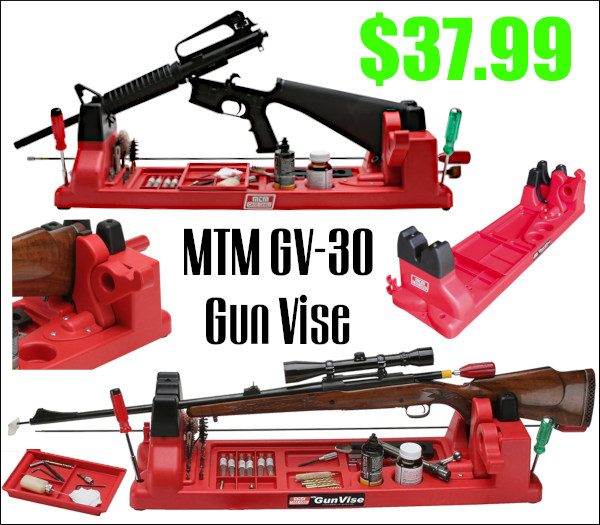
Here’s an excellent gun vise on sale for just $37.99. The versatile MTM GV-30 CaseGard Gun Vise supports rifles and shotguns for cleaning/maintenance. High and low forks allow level or angled gun placement. The rubber-padded rotating stock clamp provides a firm hold. The base has 14 different compartments for tools/solvents, plus 11 slots for jags, brushes, and screwdrivers. On the side are tabs for two cleaning rods. This GV-20 vise is made from rugged, solvent-resistant polypropylene plastic. If this sells out on GunZoneDeals, Midsouth has the GV-30 Vise for $40.38.
6. Creedmoor Sports — Sightron Scope Sale, Save $200
⏺ Save $200 on highly-rated Sightron Scopes now through June 30, 2022
If you’re looking for a great deal on a solid, competition-worthy optic, check out the Sightron Sale at Creedmoor Sports. They have a large selection of the most popular scopes in the Sightron lineup all at prices you can’t pass up. You can save $200 on the SIII 8-32x56mm and save $200 on the SIII 10-50x56mm model. Both are great choices for benchrest or F-Class Competition. Varminters should consider the S-TAC 4-20x560mm, now discounted from $529.99 to $449.99.
7. Palmetto SA — .22 LR Rimfire Ammo, $3.99-$5.99/50rd Box
⏺ Really good deals on accurate and reliable rimfire ammo
Need reliable .22 LR ammo at a great price? Palmetto State Armory has great rimfire ammo deals going right now. Leading off is Norma Tac-22 for just $3.99/box. Despite the super-low price, this is very good ammo that has shown excellent accuracy. Next, at $4.99/box, Federal Champion 40gr ammo is also an excellent deal. And for a buck per box more ($5.99/box), consider the CCI Quiet-22 45gr ammo. This 835 fps Quiet-22 cuts the volume of standard 22 LR rounds dramatically, while still cycling through semi-auto rifles and handguns. These and other .22 LR ammo types are in stock now at PSA.
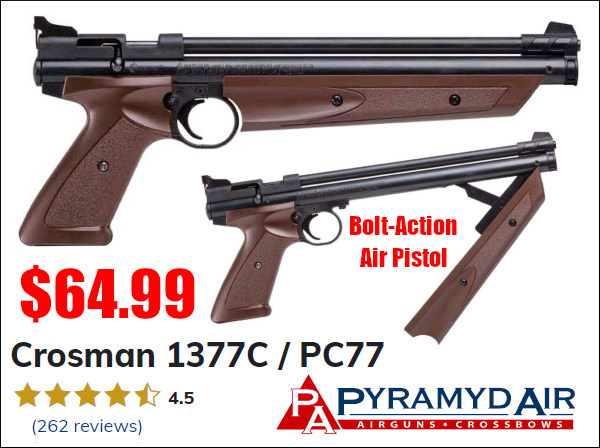
8. Pyramyd Air — Crosman 1377C/PC77 Air Pistol, $64.99
⏺ Excellent, budget air pistol for training and fun shooting
Here’s a classic American air pistol for just $64.99. The Crosman 1377C/PC77 pneumatic pistol has been enjoyed by countless American shooters for decades. 10 pumps sets the pressure. This pistol is suitable for plinking, paper targets, and reactive targets. Trigger is about 4 lbs., and accuracy is very good, as you can see in the test video below:
This pistol comes with a 10.25″ barrel, blade front sight and adjustable rear sight. You can mount a pistol scope with the Crosman 459MT intermount (sold separately). This is a very ergonomic pistol, with great reliability and impressive accuracy.
9. Amazon — Universal Gun Cleaning Kit, $39.99
⏺ Great value for cleaning kit for pistols, rifles, and shotguns
This Universal Gun Cleaning Kit has just about everything you need to clean any firearm, all packed in a handy transport case. The kit includes jags, brushes, bore mops, slotted tips, and lots more. The fitted jags and slotted tips are made from solid brass and marked by caliber. The cleaning rods and accessory adapters are also made from brass. Included in this easy-to-carry kit are: 6 gun rods, 13 gun jags, 4 slotted tips, 9 gun mops, 14 bore brushes, 3 muzzle guards, 3 utility brushes, 3 accessory adapters, 4 polishing cloths, 100 cleaning patches, 2 oil bottles (empty), and even a gun cleaning mat. NOTE: For competition rifles, we recommend using high-quality ONE-PIECE cleaning rods.
10. Amazon — Large Digital Display Timer, $12.95
⏺ Use in Matches — Count-Down or Count-UP, handy big buttons
If you shoot in a discipline with time limits, or you time your firing strings during practice, having a reliable and easy-to-read timer is critical. One of our favorite timers is this very affordable Digital Display Timer with both count-up and count-down functions. It boasts an easy-to-read display and LARGE buttons making it perfect for F-Class, Palma, and other matches. This timer comes with both a built-in stand AND a strong magnet so you can position the timer conveniently.
Today, June 19, 2022, is Father’s Day. To mark this special day, we’ve included some great Father’s Day sales, as well as some cool products that would make a great gift for any father who enjoys hunting and the shooting sports.
At the request of our readers, we provide select “Deals of the Week”. Every Sunday afternoon or Monday morning we offer our Best Bargain selections. Here are some of the best deals on firearms, hardware, reloading components, optics, and shooting accessories. Be aware that sale prices are subject to change, and once clearance inventory is sold, it’s gone for good. You snooze you lose.
1. Creedmoor Sports — Sightron Scope Sale, Save $200
⏺ Save $200 on highly-rated Sightron Scopes now through June 30, 2022
If you’re looking for a great deal on a solid, competition-worthy optic, check out the Sightron Sale at Creedmoor Sports. They have a large selection of the most popular scopes in the Sightron lineup all at prices you can’t pass up. You can save $200 on the SIII 8-32x56mm and save $200 on the SIII 10-50x56mm model. Both are great choices for benchrest or F-Class Competition. Varminters should consider the S-TAC 4-20x560mm, now discounted from $529.99 to $449.99.
2. Optics Planet — 8% Off Store-wide Father’s Day Sale
⏺ Save 8% on optics, camping gear, hunting gear, and even Ammo
Through Monday, June 20 at 11:59 pm, you can save a full 8% off the vast majority of the products on the Optics Planet website (with $50 minimum purchase). On a $2000.00 scope, that discount works out to $160.00! FYI, Optics Planet sells a wide variety of products — not just scopes, rangefinders, and binoculars. You can also save on bipods, stocks, camping gear, apparel, and even ammo. Use Coupon CODE 8DAD.
3. Palmetto SA — Leupold Laser Rangefinder, Binoculars, and Carry Harness Kit, $279.99
⏺ Father’s Day bundle with laser RF, binoculars, and handy carry harness
Here’s a great Father’s Day combo package for every Dad who loves to hunt. Serious hunters need a rangefinder, binoculars, and a way to transport them securely. A great option is this Leupold Bundle featuring the RX-1400I TBR/W Rangefinder, BX-1 Timberline 10X42 Binoculars, and Go Afield Harness. The combo Father’s Day Sale price, just $279.99, is a great value.
4. Amazon — Caldwell E-MAX Shadow PRO EarPlugs, $127.46
⏺ High-tech electronic plugs with package, now 39% OFF
Are you tired of bulky ear muffs and want to hear range commands? Then consider these Caldwell E-MAX Shadows Pro Electronic Plugs. The $127.46 price is $82+ off the regular cost — a 39% discount. The plugs come with multiple diameter tips to allow a comfortable “custom fit”. The included storage case functions as a charger with battery level indicators for each ear piece and the case itself.
⏺ GREAT Deal on rimfire silhouette steel target 20-Pack
There are few things as fun as plinking with a .22 LR Rimfire rig at steel targets. It’s fun for kids and adults alike and right now you can grab a 20-ct pack of RIMFIRE animal targets in assorted sizes and shapes. They are 1/5 size and made from A36 steel plate. IMPORTANT: These small steel targets work great for rimfire shooting, but should NEVER be used with centerfire rifle cartridges.
6. Amazon — Hornady Powder Measure, $88.99
⏺ High-quality, smooth-operating powder measure on SALE
Are you looking for a universal powder measure that will work both on or off a press? One of our favorites is the Hornady Lock-N-Load Powder Measure. This L-N-L Powder Measure offers flexible operation and can handle powder charges of 0.5 grains to 265 grains with the appropriate insert and rotor. Metering inserts can be changed with the push of a button, giving handloaders the ability to load everything from small pistol cartridges to large magnums. This unit ships with a rifle rotor and metering insert.
7. Amazon — Vanguard Porta Aim Front Gun Rest, $44.99
The Vanguard Porta Aim Gun Rest is good for varmint work, sighting-in hunting rifles, and AR practice/load development. The top pad is contoured to fit round AR fore-arms perfectly. The top of the rest rotates 360 degrees, allowing quick sighting adjustments in the field. Weighing just 1.7 lbs., this Vanguard rest is easy to carry in the field. At just $44.99 this is a handy and affordable back-up front rest.
8. Harbor Freight — Apache Hard Cases, $37.99 and Up
Looking for a durable, secure hard case for pistols, rifles, or other gear but don’t want to spend a fortune? Harbor Freight Apache Cases represent an affordable alternative to the big-name brands. These airline-approved cases feature a strong exterior, durable locking options, and a customizable interior. A variety of case configurations are offered now at Harbor Freight, many discounted 16%. Along with the gun cases there’s a nice weatherproof Hard-shell Carry-on for $99.99, half the price of a similar Pelican 1510 case.
Here’s a great 12-gauge pump defensive shotgun with all the bells and whistles — modern pistol-grip stock with adjustable comb, front/rear sights, Picatinnny scope rail, muzzle brake, and barrel guard. This impressive 18″-barrel Winchester SXP Extreme Defender has a 5+1 capacity with a handsome Flat Dark Earth protective finish. Price is $449.99 on sale.
⏺ Good prices on 52″, 48″, 44″ and 40″ rifle cases
Do you need a good soft case for a hunting or match rifle? MidwayUSA-brand rifle cases are now on sale at big discounts. Featuring sturdy padding and a handy storage pocket, these durable cases offer good value for the money. Price varies with color and size. For example: Black 52″, $27.99; Charcoal 48″, $24.99; and Coyote 44″, $24.99. NOTE: After choosing a case length, select among the four available colors to get the best price (not every variant is discounted).
11. CDNN Sports — HK 416 .22 LR AR with Laser, $449.99
⏺ Great option for AR cross-training or rimfire gun games, save $134
If you own an AR for Service Rifle competition or 3-Gun matches, here’s a great option for inexpensive rimfire cross-training. An AR-type .22 LR rifle can also be effective in NRL22 matches. Right now you can save $134 on the HK 416 .22 LR rifle complete with Walther XGL532 Red Laser. This rifle boasts a 16.1″ barrel, retractable stock, M-LOK rail, and adjustable flip-up sights. The included Red Laser with remote on/off switch allows fast target acquisition.
12. Amazon — Twist-Top 1 Oz. Squeeze Bottles, $12.49
⏺ Great product for gun cleaning solvents and lubricants
Cleaning supplies often come in glass bottles that are fragile, awkward, and hard to transport. For cleaning/lubricating at the range or after a match, we can recommend these Twist-Top 1 oz. Bottles. These are airtight, easy to squeeze. With a tight “no-leak” lid, these are secure/convenient to transport, even when traveling to distant matches via air.
If you are considering purchasing a progressive reloading press — you’ve struck gold. Today’s Saturday at the Movies article showcases the most comprehensive video ever created about progressive presses. Hosted by Gavin Gear of UltimateReloader.com, this remarkable 79-minute video covers a dozen presses from six leading manufacturers: Dillon, Frankford Arsenal, Hornady, Lee, Mark 7 (Lyman), and RCBS.
Set aside plenty of time, because there is a wealth of information — the “mother lode” of progressive press coverage. Along with the big comparison video, Gavin has prepared a detailed, 17-page online article which covers all of the presses in the shootout. This 17-page article also includes many product-specific videos. We link to five of these videos below.
12 Progressive Presses are compared in this comprehensive video:
Here it is! Ultimate Reloader’s long-awaited Progressive Press Shootout. This online article and accompanying video represent the most exhaustive and most in-depth look at progressive press reloading equipment. The Ultimate Reloader Progressive Shootout covers a dozen different progressives from Dillon, Frankford Arsenal, Hornady, Mark 7 (Lyman), and RCBS. Reviewer Gavin Gear demonstrates how each press works and provides data on costs, output rates, capabilities, and accessories so that potential buyers can make informed purchasing decisions.
MORE INFO — Progressive Press Shootout Online Article
To accompany the remarkable 79-minute Progressive Press Shootout Video, Gavin Gear has posted a ton of information on his UltimateReloader.com website. A lengthy online article provides detailed information on the particular presses, press mounts, and lighting, as well as general details such as cost of ownership. We provide links to particular topics below. This is a GREAT RESOURCE — it’s like getting an entire chapter of a technical book all for FREE!
Below we provide links to each product-specific online page, along with the corresponding time-link to the related segment of the 79-minute Progressive Shootout video.
NOTE: Along with the presses featured in these six videos, the Ultimate Reloader Progressive Press Comparison video covers six other presses (12 total), in a comprehensive 1 hour 19 minute video linked at the top of this article.
Keith Glasscock is an outstanding competitive shooter, who has finished second at the F-Class National Championships (F-Open) multiple times. Keith is also a skilled wind coach who runs the popular Winning in the Wind YouTube Channel. Along with his interest in mid-range and long-range F-Class competition, Keith also enjoys game hunting and varmint adventures.
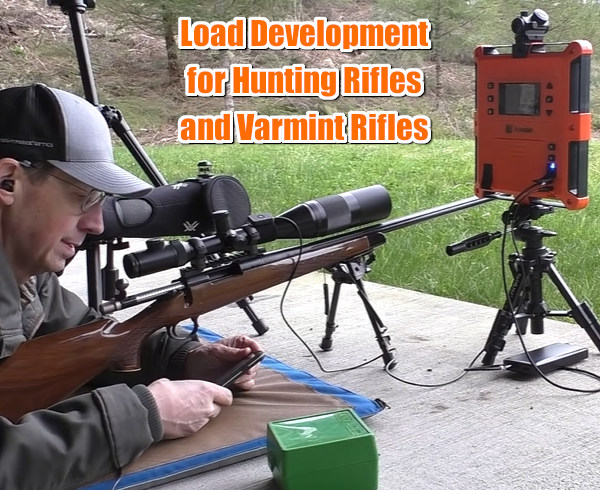
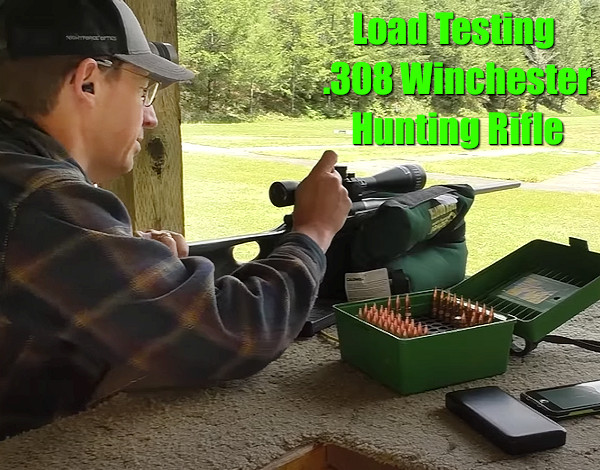
Developing accurate hand-loaded ammo for hunting and varmint rifles involves procedures that may be a bit different than load testing for a match rifle. You want to be efficient, and use the types of brass and bullets you’ll be using on the hunts. In two recent videos, Keith shows how he developed good, accurate loads for a .223 Rem varmint rifle and a .308 Win hunting rifle.
.223 Rem Load Development — Powder Charge and Seating Depth
In the first video, Keith covers the load development process for a Remington 700 bolt-action varmint rifle chambered in .223 Remington. Keith starts by full-length sizing the brass. Then he experimented with powder charge weights, and came up with a promising load of 24.7 grains of Alliant AR Comp with Hornady 50gr A-Max bullets.
Next Keith experimented with seating depths (see 5:30-6:100) and found that accuracy improved as he changed OAL length in .005 increments. Keith ended up with 2.270″ with a 3-shot group in the twos! This video shows the importance of testing your bullet choice at various seating depths. Keith shoots this rig prone off bipod, which is similar to the bipod shooting he does in the varmint fields. Keith explains key factors to consider when optimizing the .223 Rem cartridge in a varmint rig. Velocity readings are made with a LabRadar unit.
Load Development for .308 Win Hunting Rifle
In a second video, Keith shows the process for load development with a .308 Winchester hunting rifle. Here Keith uses a large X-type sandbag for a front support. Again, he was shooting a Remington 700 bolt-action rifle, this time with Barnes TSX solid copper bullets, PPU Brass, Federal 210m primers, and AR Comp powder. Keith said the Barnes bullets were excellent — he commented that these bullets were “match quality in terms of precision”. Keith achieved some very small three-shot groups with AR Comp and the TSX projectiles. Keith did note that point-of-impact shifted up significantly with increases in charge weight (see 6:20-7:10). With thinner-contour hunting barrels, this is not unexpected. But POI change should be observed carefully during load development, as you may need to adjust your zero after completing testing.
When your cases become hard to extract, or you feel a stiff bolt lift when removing a cartridge, it’s probably time to full-length size your cases, and “bump” the shoulder back. Short-range benchrest shooters, running high pressures, typically full-length size every load cycle, bumping the shoulder .001-.002″. The vast majority of mid-range and long-range F-Class shooters also full-length size every time. High Power shooters with gas guns should definitely full-length size every time, and may need to bump the shoulders .003″ or more to ensure reliable feeding and extraction.
Use Shims for Precise Control of Shoulder Bump
Some shooters like to set the “default” position for their full-length die to have an “ample” .003″ or .004″ shoulder bump. When they need less bump, a simple way to reduce the amount of shoulder movement is to use precision shims in .001″ (one-thousandth) increments. Sinclair Int’l offers a set of seven (7) shims for your standard 7/8-14 FL sizing dies for $14.99.
Sinclair explains: “Each shim is notched for easy size identification. Just set your die using one of the middle thickness shims. Adjustments can be made easily by changing shims to increase or decrease die depth without changing the stem setting. This is a great upgrade for non-micrometer adjustable dies.”
Here are reports from Forum members who use the shims:
“Great product. I have my die lock ring(s) adjusted for the shortest headspace length on my multiple chambers 6BRs and 6PPCs. When needing a longer headspace, I just refer to my notes and add the appropriate shim under the lock ring. Keep it simple.” — F.D. Shuster
Mats Johansson writes: “I’ve been using [shims] since Skip Otto (of BR fame) came out with them. I set up my dies with the .006″ shim, giving me the option of bumping the shoulder a bit more when the brass gets old and hardens while still having room to adjust up for zero headspace, should I have missed the original setup by a thou or two. Hunting rounds can easily be bumped an extra .002-.003″ for positive, no-crush feeding. Being a safety-oriented cheapskate, I couldn’t live without them — they let me reload my cases a gazillion times without dangerous web-stretching. Shims are a must-have, as simple as that.” — Mats Johansson
Brownells offers the seven-piece set of Sizing Die Shims that let you adjust the height of your die (and thereby the amount of bump and sizing) in precise .001″ increments. Sinclair explains: “Some handloaders will set their die up to achieve maximum sizing and then progressively use Sinclair Die Shims between the lock ring and the press head to move the die away from the shellholder. Doing this allows you to leave the lock ring in the same position. These shims are usually available in increments of .001″ and work very well.”
Seven Shims from .003″ to .010″
For use with 7/8-14 threaded dies, Sinclair’s $14.99 Die Shim Kit (Sinclair item 22400 or Brownells Code 749-001-325WB) includes seven shims in thicknesses of .003, .004, .005, .006, .007, .008, and .010. For ease of use, shim thickness is indicated by the number of notches cut in the outer edge of each shim. Even without looking you can “count” the notches by feel.
NOTE: These shim sets can also be use to adjust bullet seating depth for dies that lack micrometer adjustment. Use the same 7/8-14 shims with your non-micrometer seating dies.
Shims for Arbor Dies
Do you seat with an Arbor Press? No problem…
Brownells offers a $14.99 10-shim Arbor Die set for use with L.E. Wilson seating dies employed with arbor presses. Frankly we prefer micrometer-top Wilson dies, but if you have the standard Arbor dies, these shims come in handy. Order either Brownells Code 749-001-370WB (.22 to .243 caliber) or Brownells Code 749-001-326WB (.25 to .30 caliber).
At the request of our readers, we provide select “Deals of the Week”. Every Sunday afternoon or Monday morning we offer our Best Bargain selections. Here are some of the best deals on firearms, hardware, reloading components, optics, and shooting accessories. Be aware that sale prices are subject to change, and once clearance inventory is sold, it’s gone for good. You snooze you lose.
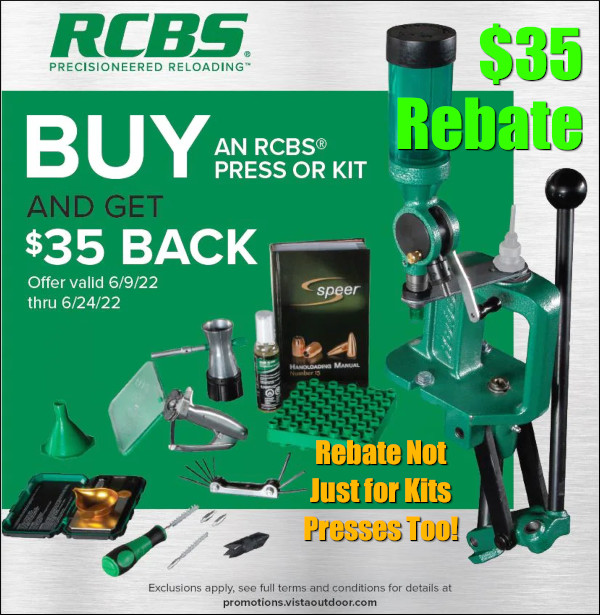
1. RCBS — $35 Factory Rebate on RCBS Press or Press Kit
⏺ $35 Rebate on RCBS Presses and Press Combo Kits
Here’s a great Father’s Day promotion, good through June 24, 2022. If you buy any qualifying RCBS Reloading Press or multi-product Press Kit, RCBS will give you a $35 Rebate. That $35 rebate represents a significant savings on a press. For example, a Rock Chucker Supreme Press is now $132.26 on Amazon. With the RCBS rebate, your net cost is just $97.26 for a Rock Chucker! Submit your Rebate Request ONLINE or with Mail-In Form. Here are the products that qualify for the RCBS Rebate:
2. Sportsman’s WH — Savage Precision Rifle & Vortex Sale
⏺ Save $250 on Savage Precision Rifles and Vortex scopes
Right now Sportsman’s Warehouse is running a big combo sale on Savage Precision Rifles and Vortex Optics. Some of the rifles and optics are discounted by as much as $250.00. This is a great opportunity if you want to get started in PRS/NRL factory class. You can see the deals together, or just Savage Deals or Vortex bargains. On sale for $799.99 ($200 off), the Vortex Razor HD Spotting Scope is a great value.
3. Urban Rifleman — Sierra .224/.308 MatchKing & BlitzKing SALE
⏺ Truly great prices on .22 Cal and .308 Cal Sierra bullets
Site sponsor UrbanRifleman.com is running a great close-out sale on Sierra MatchKing and Tipped MatchKing bullets. These prices are the best we’ve seen in a long time. Get .224 caliber 69gr MatchKings or 55gr BlitzKings for just $19.95 per 100ct box. Or, Palma and F-TR shooters can grab .308 caliber 168gr MatchKings or 168gr Tipped MatchKings for just $32.49 per hundred.
⏺ Save $250 on high-tech rimfire rifle with carbon-wrapped barrel
Save big with a $250.00 rebate on a very high-quality .22 LR rimfire rifle. The Christensen Arms Ranger 22 features an aluminum receiver, carbon fiber tension-wrapped barrel, carbon fiber composite rimfire stock, and a match grade Rem 700-style trigger. The Ranger 22 is backed by a Sub-MOA at 50 Yards guarantee. You can purchase from KYGUNCO for $570.37 after Rebate, or $599.99 (after rebate) direct from Christensen Arms.
5. Cabela’s — 15-45x65mm Spotting Scope, $349.97
⏺ Save $350 (50%) on good HD glass spotter, angled or straight
Here is a very good spotting scope with HD glass at a huge discount. Right now, as part of Cabela’s Father’s Day Sale, you can save $350 (50%) on the CX Pro HD 15-45X Spotting Scope with 65mm objective. Get the angled-body version (shown above) for $349.97 or the straight version for just $249.97! The CX Pro HD Spotter is also offered in a 20-60X version with 86mm objective for $549.88 (Straight) or $699.97 (Angled). We prefer the smaller 65mm version, which still has ample power and weighs 12 oz. less.
⏺ Get $100 Off on ultra-compact 9mm Beretta carry pistol
Here’s a great choice for concealed carry, at a very attractive price. The Beretta APX A1 Carry pistol retails for $399.00, and a $100 Factory Rebate lowers your net cost to just $299.00. The 9mm Luger APX A1 Carry has 4 frame color options: Black, Gray, Brown (FDE), and OD Green. This is an extremely compact pistol. OAL is just 5.63″, and it weighs a mere 19.8 oz. unloaded. The $100 Rebate is good through 8/15/2022. REBATE INFO HERE.
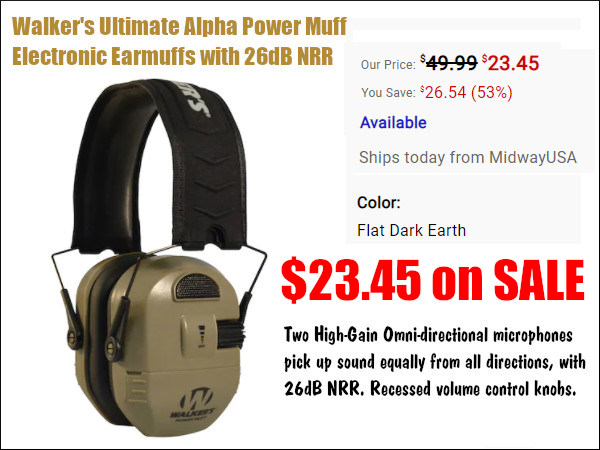
⏺ Save 53% on Good Quality Electronic Muffs 26dB NRR
We like Electronic Muffs when you need to hear range commands or get info from a team coach or your spotter. The Walker’s Ultimate Alpha Power Electronic Earmuffs are comfortable with good 26dB NRR. The two Hi-Gain omni-directional microphones pick up sound from all directions. These Walker’s Alpha Muffs are on sale now at MidwayUSA for $23.45 a 53% savings off normal retail. You could easily pay three times as much for other electronic muffs of comparable quality.
8. CDNN Sports — Savage Rascal .22 LR Patriotic Rifle, $199.99
⏺ Great patriotic choice as First Rifle for young shooter
July 4th is coming up soon. Here’s a patriotic rifle that’s a very good choice for a young family member’s first rifle. We like the patriotic American flag pattern red, white, and blue synthetic stock. And Savage calls this .22 LR Rascal rifle “the industry’s safest micro rimfire”. Shooters cock the rifle by lifting the bolt and unload without pulling the trigger. This eye-catching rimfire rifle features adjustable peep sights and user-adjustable AccuTrigger.
9. MidwayUSA — Tipton Best Gun Vise + Wheeler Gunsmithing Screwdriver Set, both for $79.99
⏺ Outstanding gun vise PLUS a 43-piece gunsmithing driver set
This is a great combo kit for working on rifles and shotguns. And right now you can save $60! The Tipton Best Gun Vise is stable, and offers plenty of storage for solvents, patches, small tools and parts. The vise can adapt to hold a variety of long guns, including ARs. Along with the Best Vise, you get a full 43-piece Wheeler screwdriver kit that has 40 bit options: standard (flat) (21), Phillips (4), Allen (10), and Torx (5). The adjustable driver handle is nicely designed and comfortable.
⏺ Versatile eye protection — 4 colors of lenses plus adjustable frame
Walker’s Adjustable Sport Glasses feature FOUR interchangeable lenses made of high-grade polycarbonate that exceeds ANSI 287.1-2003 High Impact Requirements. The interchangeable lenses come in four colors (Smoke Gray, Amber, Yellow, and Clear). The frames adjust for length and angle. These safety glasses ship with a soft carrying pouch that holds the extra lenses.
I absolutely love using this press stand. I use it with my Forster Co-Ax as well as my Dillon 550. The stand mounts those presses at the right height to minimize fatigue and maximize torque. Some products I merely review and return but this one is a keeper and won’t be leaving my bench anytime soon. — F-Class John
Lyman Universal Press Stand REVIEW
Product Review by F-Class John
Positioning your press at the optimal height is one of the oldest problems in reloading. Most presses sit low off the edge leading to uncomfortable arm strain or inconsistent pressure being applied while using. Lyman has set out to fix that problem with a reasonably-priced ($69.46 at Midsouth) press riser that works with the vast majority of reloading presses. This unit will raise just about any press up off your bench securely, allowing you to working more comfortably from a standing position. This also frees up vital bench space UNDER the press. Unfortunately this press stand is so popular it is back-ordered at most vendors.
I have used a variety of presses over the years. At times I’ve run into issues mounting a press at a level that doesn’t promote arm or hand strain during normal operations. In the past I’ve used blocks of wood or even tried other brands’ proprietary stands. But I had very limited success with those options. Accordingly, I was very excited to give the Lyman Universal Press Stand a chance.
Lyman’s Universal Press Stand comes complete with side plates, two different top plates, and a large collection of mounting hardware. The two top plates are pre-drilled for numerous popular Single Stage or Progressive presses. Helpful diagrams and instructions show which side of the top plate you need to use. The pre-drilled holes accommodate a variety of presses from RCBS, Dillon, Lyman, Redding, and Hornady. But surprisingly, the plates are not pre-configured for the Forster Co-Ax Press.
CLICK to WATCH VIDEO Showing Lyman Universal Press Stand
Setting up the stand was very simple. The two sides bolt to the lower shelf unit at which point you attach the top plate. All the supplied bolts made this a breeze and once everything was snugged down, I was able to place it on my bench where I wanted it and mark the drill holes to mount it. After securing the stand to my bench it was time to mount my press.
Lyman Universal Press Stand with Dillon 550 Press
Adapting Lyman Universal Press Stand for Forster Co-Ax
At the time of testing I was primarily using a Forster Co-Ax press. With no pre-drilled Co-Ax configuration for either Lyman top plate, I decided to customize the blank side of one of the top plates. I opted to position the mounting holes so that the press could sit 100% on top of the mounting plate and not just off one edge. I found this process simple to execute. Mark your drill holes, then drill the plate. This can easily be done with regular drill bits although using a step-bit worked faster and cleaner to help enlarge the holes just a little when I needed some extra clearance.
Lyman Universal Press Stand Is Stable and Strong
Once set-up, I found the stand to be incredibly stable. The design allows for full force to be applied to the press no matter what the operation. Having used this Lyman Press stand regularly over the past few months with both my Co-Ax and a Dillon 550c, I still find myself loving it. The height is perfect and allows me to load as much as I like without straining my arm or getting fatigued. With an attractive price point (under $55.00 street price) and a simple design, I feel this is a great system for those looking for a secure and raised platform for their reloading presses.
The Universal Press Stand comes with two plates. If you have different presses that fit each plate you could easily swap presses just by changing plates while leaving the presses attached. It’s less functional if you have two presses that share one plate and would require removing one press before installing the next one.
Lyman Press Stand Unboxing and Set-Up (KFW Video Review):


 Quick Tip: Try Flipping Your Bushings








 Shims for Arbor Dies