At the request of our readers, we provide select “Deals of the Week”. Every Sunday afternoon or Monday morning we offer our Best Bargain selections. Here are some of the best deals on firearms, hardware, reloading components, optics, and shooting accessories. Be aware that sale prices are subject to change, and once clearance inventory is sold, it’s gone for good. You snooze you lose.
1. Palmetto State Armory — Ruger American Camo Rifles, $599.99
⏺ Excellent deer rifle with brake — save $100 with this deal
Hunting season is here. If you need a reliable deer rifle at a good price check out the Ruger American Rifle GO Wild edition. This popular Ruger rifle boasts a great “GO Wild” camo finish and the barreled action is coated for durability. The 22″ barrel is fitted with a factory muzzle brake for reduced recoil. The 3-lug bolt with 70° throw provides good scope clearance and dual cocking cams aid smooth cycling. This rifle is on sale now in 6.5 Creedmoor for $599.99 or 7mm-08 Rem for $599.99. That’s $100 off the regular price. Or get the 450 Bushmaster version for $549.99. Ruger offers this camo-stocked Ruger American in many other chamberings including .243 Win, 6.5 PRC, .25-06, .308 Win, .30-06 Sprg, and .300 Win Mag.
2. MidwayUSA — RCBS MatchMaster, $649 net w/ $250 Gift Cert.
⏺ Buy advanced RCBS MatchMaster, get $250 Midway Gift Certificate
Want to upgrade to a more advanced, sophisticated powder scale/dispenser? Here’s a great deal from MidwayUSA. If you purchase a RCBS MatchMaster for $899, MidwayUSA kicks in a $250 gift certificate. Spend that $250 on dies, tools, ammo, optics — anything MidwayUSA sells. With the certificate providing an effective $250 price reduction, this is the best deal we’ve seen on the MatchMaster, which offers twin dispensing tubes and multiple modes.
3. Amazon — Kestrel 5700 Weather Meter with LiNK, $399.00
⏺ Kestrel with LiNK is “must have” for serious long range shooters
The excellent Kestrel 5700 Ballistics Weather Meter with LiNK offers wind measuring PLUS ballistics calculation. The Kestrel 5700 Ballistics Weather Meter measures wind, altitude, and all critical weather and ballistic variables to calculate an accurate aim point for long-range shooting. No more DOPE cards, re-zeroing or guessing at the wind. This compact tool combines onsite environmental measurements with a powerful G1/G7 ballistics calculator to deliver precise elevation and windage solutions.
4. Bruno Shooters Supply — Sierra MatchKing Bullet Sale
⏺ Excellent prices on hard-to-find .224, 7mm, and .30-Cal match bullets
Sierra MatchKing Bullets have won many championships and set records. Right now Bruno’s is offering big savings on popular .224, .284 (7mm), and .308 caliber Sierra Matchkings. Hot deals include 100ct box of 7mm 197gr Matchkings for just $47.65, 500ct box of 7mm 180gr MatchKings for $201.80, 100ct box of .308 175gr MatchKings for $38.95, and 500ct box of .224 77gr MatchKings for $135.00. Competition Tip — These 7mm bullets have worked great for F-Open shooters and the .30-Cal SMKs are excellent for M1 Garands and 1903 Springfields. Tipped MatchKings are also on sale at great prices.
5. Midsouth — Meopta Scope Sale
⏺ Meopta scopes offer excellent value for the money
When you think of quality scopes do you think of Meopta? If you don’t you should because they make great scopes that fit a number of price ranges. Check out the Meopta Scope Sale over at Midsouth where you can find scopes for just about any use at some great prices.
6. Amazon — Caldwell E-Max Shadows, $69.99
⏺ Compact NRR23 electronic plugs protect without interfering with cheek weld
Electronic earmuffs are effective, but they are bulky and can be awkward to use with some rifles. Conventional ear plugs provide great sound blocking, but you will have trouble hearing range commands and/or spotter’s shot calls. Get good protection and convenience with Caldwell E-Max Shadows Electronic Hearing Protection devices. These slick earbud-style units feature NRR23 noise reduction, quality stereo sound, illuminated on/off indicator, 4-hour auto-shutoff, and multiple foam insert tips for custom fit.
7. Amazon — Frankford Arsenal Wet/Dry Media Separator, $42.99
⏺ Durable, high-capacity media separator at bargain price
Whether you tumble wet or tumble dry, separating your brass from the tumbling media is critical. For separation duties, the Frankford Arsenal Platinum Series Wet/Dry Media Separator kit works great. This kit, now just $42.99 at Amazon, includes everything you need to easily remove all types of media from your brass. The kit even has a built-in strainer to catch stainless media before it ends up on the floor or sink.
⏺ Protect gun collection in your safe with advanced dehumidifier
Gun owners need to control the humidity levels in their gun safes and storage vaults. One efficient, modern tool for this task is the Hornady Rechargeable Dehumidifier, on sale now for $27.92 on Amazon. This electrical unit helps control humidity to help prevent rust and mildew. Simply charge the unit and place in your safe to draw unwanted moisture away from your valuables. When the moisture-control crystals change color, then recharge the unit with a 110v outlet.
⏺ Monitor Barrel temps precisely with adhesive strips
As you shoot, your barrel gets hot and that’s not good for barrel life or accuracy. One of the best ways to monitor barrel heat is with Digi-Sense Reversible 7-Point Horizontal Temperature Labels which attach directly to your barrel(s). These will display a range of 86 to 140 degrees F. That covers the majority of barrel heat ranges you’ll encounter. To measure higher temperatures, there is also a high-range Digi-Sense Temp strip that covers 140 to 194 degrees F.
10. Midsouth — Tula .223 Rem 55gr 1000rd Case, $469.99
⏺ Great value for reliable 55gr .223 Rem Tula ammunition
Ammo prices are finally starting to come back down. For someone looking for affordable basic .223 Remington ammunition, here is the best deal we’ve found in recent weeks. Midsouth Shooters is selling a 1000rd Case of Tula .223 Rem ammo for just $469.99. That’s just 47 cents per round for reliable 55gr FMJ ammo. NOTE: This is steel-cased, NON-reloadable ammo.
The fall Hunting Season is here. Do you plan to use factory ammo in your hunting rifles? Perhaps you buy bulk centerfire ammo for your AR15 or varmint rifle. Then this book can definitely benefit you.
If you ever shoot factory ammo, you should consider getting Ammo & Ballistics 6. This resource lists over 2,600 different loads for 200+ cartridge types from .17 Mach 2 up to .700 Nitro Express, including the most popular centerfire and rimfire cartridges (both rifle and handgun). In this updated-for-2020 Sixth Edition, there are over 3,000 tables covering virtually every caliber and every load for all commercially-loaded hunting ammunition sold in the USA. Tables include velocity, energy, wind drift, bullet drop, and ballistic coefficients up to 1,000 yards.
Ammo & Ballistics 6 helps you select ammo for a hunt — quickly compare the velocity and knock-down power of various commercial ammo. This book can also help you choose a caliber/chambering for your next hunting rig.
Verified Book Purchaser Reviews
“Outstanding reference guide for shooters and ballistic enthusiasts alike. Has data on velocity, energy delivered, Taylor KO index, windage and elevation on numerous loadings for hundreds of [cartridge types]. Each cartridge has all dimensions labeled (i.e rim, case length, neck, etc.), and has an informative description of the cartridges history/relevance.” — S. Step, 2017
“Great heaps of data! This volume has pages and pages of new data for .22LR like the hot Velocitor, and also on the .22 WMR from 30 grains up into the 50s. Most importantly there is lots of range data, drop, windage, kinetic energy, etc. — Terrific reference guide….” — E. Svanoe
Ammo & Ballistics 6 contains data and illustrations on virtually every sporting cartridge sold in the USA. This 2020 Edition covers 200-plus cartridge types from .17 Mach 2 up to .700 Nitro Express.
Ace tactical shooter and gunsmith Jim See of Elite Accuracy LLC recently tested a Frankford Arsenal rotary brass tumbler. Like the older Thumbler’s Tumblers, this can tumble your cases in a liquid solution. The wet-tumbling process worked very well Jim reports. Posting on Facebook, Jim noted: “I was super impressed with the Frankford Arsenal rotary tumbler and cleaning packs they sent me. I ran 350 pieces of brass for one hour. They now look great.” Jim appreciated not having to deal with dry tumbling media, such as crushed walnut shells. Dry media produces dust and can leave residues or clog flash-holes.
Interestingly, Jim recommends you try wet-tumbling WITHOUT using stainless media. At least give it a try. Tumbling without media simplifies the process and you don’t have to worry about pins stuck in flash-holes or case-necks*. Jim reports: “Stainless steel pins come with the Frankford kit, but mine hit the trash right out of the box. There is no need to clean the inside of your cases 100% and that’s all the pins add to the equation. The brass bumping brass with hot water and Frankford’s liquid cleaner works great all by itself.” One wag stated: “That’s great to hear. Stainless steel pins are a PITA.”
Other Facebook posters concurred with Jim’s evaluation of the Frankford Arsenal Rotary Tumbler:
“I’ve had one for a couple years, and it works well. I usually run about 250-300 Dasher cases at once in it. But I use the pins because I’m OCD about clean brass.” — David W.
“I’ve had one for a year and a half and it definitely works with or without pins.” — Luke C.
“I got one about six months ago and have yet to use any SS media. I just use some dawn, distilled water, and Lemi Shine®. Turns nasty 5.56 range brass bright and shiny.” — Brian D.
“I don’t use the pins either and use a combination of Dawn soap and Lemi Shine.” — Jon N.G.
This video shows how to assemble and operate the Frankford rotary tumbler. But note, Jim See does NOT feel that it is necessary to use stainless media.
How to Dry Your Brass — Hair Dryer Vs. Machine
The downside of wet tumbling is that you end up with a pile of wet brass at the end of the cleaning cycle. There are many ways to dry brass, from drying in the sun to using a kitchen oven (be careful not to “overcook” your brass). One Facebook poster asked Jim: “What is your drying method for wet brass, and how long does it take?”
Jim See replied: “To start I just drain off the dirty water, and rinse the brass with clean hot water. Then I roll the brass on a towel for 30 seconds and put the brass in a one-gallon bucket. Next I insert a hair dryer in the bucket (with the brass) and let it run for about 5 minutes. With this procedure, the drying process for me is done in less than 10 minutes.”
Jack Lanhart has another method: “I use a food dehydrator. It takes 30 to 45 minutes.”
For those who don’t want to mess with towels and hair dryers, Frankford Arsenal offers a matching Platinum Series Case Dryer that simplifies the process of drying brass. Lyman also makes an excellent Cyclone Case Dryer. These drying machines each cost about $65.00 and both have multiple levels so you can separate different types of cartridge brass. Lyman states that “The forced heated air circulation of the Cyclone will dry your brass inside and out within an hour or two, with no unsightly water spots.” The Lyman dryer can also be used for ultrasonically-cleaned gun parts.
*The Frankford Rotary tumbler does include media separators if you choose to use the provided pins or other media. CLICK HERE for diagram showing how to use media separators.
At the request of our readers, we provide select “Deals of the Week”. Every Sunday afternoon or Monday morning we offer our Best Bargain selections. Here are some of the best deals on firearms, hardware, reloading components, optics, and shooting accessories. Be aware that sale prices are subject to change, and once clearance inventory is sold, it’s gone for good. You snooze you lose.
1. K&M Precision Shooting Products — 21% Off Labor Day Sale
⏺ Save 21% on high-quality K&M tools with Discount Code KMLBRDAY21
K&M Precision Shooting Products makes outstanding tools for handloaders. Right now, you can save a whopping 21% on purchases $50 or more. To get the 21% discount, use Code KMLBRDAY21 during checkout. But don’t delay — this special 21% discount expires at 11:59 pm on Tuesday September 7, 2021. NOTE: A few items, such as Benchtop Machines and Mitutoyo tools, are excluded.
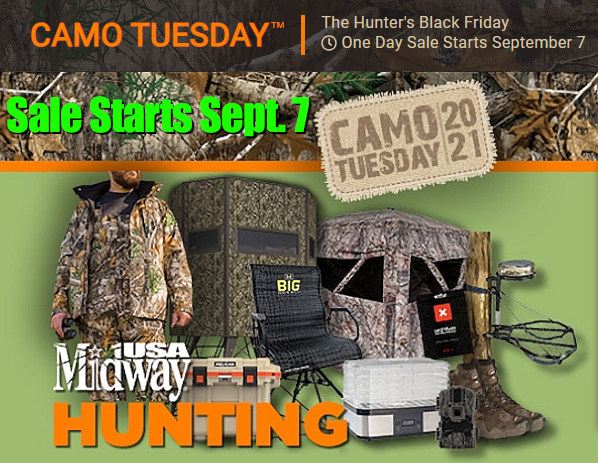
2. MidwayUSA — Camo Tuesday Sale — HUGE Savings 9/7/2021
⏺ Great deals on hunting gear — Right in time for hunting season
MidwayUSA’s Camo Tuesday is a huge hunting SALE marking the start of the fall hunting season. You’ll find killer deals on optics, camo gear, rangefinders, GPS units, hunting boots, ammunition, and more. But don’t hesitate. Camo Tuesday only happens once a year. Many of the best deals will expire at 11:59 PM Eastern time on the evening of 8/7/2021. Along with the discounts, MidwayUSA is offering a Camo Tuesday sweepstakes package worth $4998.82.
3. Savage — $50 Factory Rebate Through 9/8/2021
⏺ Save $50 on versatile, affordable Savage hunting rifles
Hunting season is commencing soon. If you need a good affordable deer rifle, consider a Savage. There are many models under $400. Cabela’s has a Savage Axis XP with camo stock and 3-9x40mm Weaver scope for just $309.97. Plus, right now, you can get a $50 Factory REBATE with the purchase of any Savage Axis, Trophy, Apex, or Engage Hunter. Rifle must be purchased between 8/15/2021 through 9/8/2021.
⏺ Fast, programmable, accurate dispenser at great price
The Frankford Arsenal Intellidropper is a high-quality powder scale dispenser. It’s accurate to +/- one-tenth of a grain, dispenses in seconds, and can be controlled by a handy mobile App that can store various charges weights for different cartridges. This unit has a 7000-grain capacity with both Auto and manual trickle capability. IMPORTANT: Act quickly to secure the Intellidropper for $199.95 on Sale.
5. Brownells — Leupold 3-9x40mm VX-Freedom CDS with FREE onX Hunting APP and one-piece mount, $349.99
⏺ Scope can take Custom Knobs from Leupold, FREE onX hunting App
Here’s a good basic 3-9x40mm Leupold scope for hunting. Plus, with the CDS option, Leupold can provide custom turrets* for your cartridge’s ballistics. This scope also comes with a one-piece AR IMS mount. BONUS: When you buy any Leupold riflescope you get a FREE 3-month subscription to onX Hunt App. The #1 hunting GPS App, onX tracks your route and adds property boundaries and way-points to GPS/Satellite maps. OnX is a important tool for hunters, helping them find game more efficiently.
If you want a solid, reliable, American-made defensive shotgun, look no further. Locked & Loaded Ltd. has the 12ga Winchester SXP Defender FDE (flat dark earth color) scattergun on sale now for just $279.99. NOTE: you must add the Winchester SXP shotgun to the online cart to see the $279.99 fully-discounted price (see right).
⏺ Sophisticated, sturdy, versatile gun vise great for many tasks
Having a stable rifle vise is critical for doing any kind of work, especially mounting optics. One of our favorites is the Tipton Ultra Vise . It features different modules that can be quickly moved, rearranged or removed anywhere along the rail. Leveling feet are situated on all corners making leveling easier, and dual clamp technology rigidly holds any gun shape into place. NOTE: This package includes a FREE Wheeler Scope Leveling System.
The Tipton Ultra Gun Vise’s modular, interchangeable design can hold nearly any type of long gun. Ball and socket articulating clamp pads adapt to any surface. The front and rear clamps are both height and length adjustable with fast-turn knobs for quick clamping.
8. Amazon — Frankford Arsenal Hand Deprimer Tool, $29.79
⏺ Deprime fired cartridge brass anywhere — no press needed
Decapping brass can be a tedious, time-consuming, and messy chore. Simplify the task (and avoid messing up your reloading area) with the Frankford Arsenal Platinum Series Hand Deprimer Tool. This device lets you remove spent primers anywhere — no press needed and all the mess (cups/anvils/residue) stays in the capture chamber. You can deprime cases while watching TV. This tool features a Universal Collet that works with all case types. With good leverage, this tool is easy on the hands too.
9. Amazon — Jialitte Scope Bubble Level, $9.99
⏺ Effective and affordable — works for both 30mm and 1″ tubes
All serious rifle shooters need a scope level. This nicely-designed Jialitte Scope Bubble Level features a 30mm milled inside diameter, plus an inner insert ring so it will also fit 1″-diameter main tubes. That dual-diameter versatility is great. We also like the way the unit is nicely radiused, and has a low profile in the middle. Price is just $9.99 with free shipping. User reviews have been very positive. You could easily pay $30.00 or more for a 30mm scope level.
10. Amazon — Motion-Sensor LED Interior Light, $12.99
⏺ Activates when door opens, Rechargeable, 3 LED Light Levels
Here’s a great accessory for your Gun Safe or closet. This rechargeable LED Lamp turns itself on when you open the door, and then turns itself off when you close the door. With the supplied 3M adhesive magnetic strip you can easily attach the light to the inner walls of your gun safe. The unit can be quickly charged with a standard USB cord (no batteries to replace!). It works, it’s handy, and it’s inexpensive — just $12.99 on Amazon. These motion-sensor LED lamps can also be used in stairwells.
* To order a customized Leupold VX-Freedom 3-9x40mm CDS riflescope, provide the company with the specific ballistics you want in your turrets. The company will then create a custom turret system that works with your rifle system. Simply range your target, dial for the distance, and nail it in one perfect shot.
The Lee Hand Press Kit comes complete with: Breech Lock Hand Press, Ram Primer fittings, Powder Funnel, Case Lube, and one Breech Lock Quick Change Bushing.
The Lee Breech Lock Hand Press is a useful addition to any reloader’s tool collection. This Hand Press allows you to resize brass or seat bullets while at the range or away from your loading room. No it won’t replace your Co-Ax or Rockchucker, but this is a handy piece of gear. And it’s very affordable. Midsouth sells the Lee Breech Lock Hand Press Kit, with everything shown above, for $64.52. Or you can buy just the Hand Press by itself for $49.91 at Amazon. That’s a great deal.
Lee Hand Press Quick-Change Die Functionality
This Lee Press includes the Breech Lock Quick-Change Die Feature, so you can instantly change dies with just a twist of the wrist. One Breech Lock Quick Change Bushing is included. The Breech Lock Hand Press is light and compact. It tips the scale at a mere 1 3/4 pounds and overall product length is 11.5″. Note: the maximum overall length cartridge the Lee Hand Press can accept is 3.650 inches.
While we don’t recommend the Hand Press for major full-length sizing chores, it does a good job seating bullets. This makes it a handy “field expedient” tool when doing load development at the range. For example you can experiment with seating depth by loading a batch of cartridges at home with the bullets deliberately seated long. Then, at the range, you can re-seat the bullets progressively shorter (in a series of rounds), until you find the optimal Cartridge OAL.
Lee’s Hand Press is also great for decapping operations. One verified buyer reports: “I mostly use it for decapping while watching TV, with a universal decapper die. Of course it is also useful for other operations. I wouldn’t love sizing large rifle cases with it, but if you’ve prepped your cases on a bigger press you could comfortably take it to the range for load development, one round at a time, working right there at the line instead of making a bunch of loads at home that you’ll have to disassemble later. It’s smaller and more lightweight than it looks[.]”
Using Hand Press to Load at the Range
To learn more about using the Lee Hand Press in the field with a compact scale, read Reloading Without a Bench on GunsAmerica.com. Author Christopher Mace explains: “whether you want a better way to do load development, the capability to reload out of your ‘bugout bag’, or you’re short of space but wanting to get into reloading, the Lee Loaders and the Lee Hand Press offer you some options.”
Can you form a wildcat cartridge such as the 6 Dasher without expending primer, powders, and bullets? Absolutely. Using the hydro-forming method you can form improved cases in your workshop with no firing whatsoever, so there is no wear on your precious barrel. Watch this video to see how it’s done:
6 Dasher Case Hydro-Forming Demonstration:
Forum member Wes J. (aka P1ZombieKiller) has produced a helpful video showing how to form Dasher cases use the Hornady Hydraulic forming die kit. This includes a two-part die (body and piston), and a special shell holder. To form the case, you insert a primer in your virgin brass, top the case off with with a fluid (water or alcohol), then run the case up into the Hydro-forming die. A few stout whacks with a hammer and your case is 95% formed.
This same procedure can be accomplished with a Whidden Gunworks 6mm Dasher hydraulic form die. We like the Whidden hydro-forming die for its production quality and consistent results. This Whidden system works great according to our Forum members.
Hydro-Forming Procedure Step-by-Step:
1. Insert spent primer in new 6mmBR brass case.
2. Fill with water or alcohol (Wes prefers alcohol).
3. Wipe excess fluid off case.
4. Place case in special Hornady shell-holder (no primer hole).
5. Run case up into Hydraulic forming die.
6. Smack top piston of forming die 3-4 times with rubber mallet or dead-blow hammer.
7. Inspect case, re-fill and repeat if necessary.
8. Drain alcohol (or water) into container.
9. Remove primer (and save for re-use).
10. Blow-dry formed case. Inspect and measure formed case.
Wes achieves very uniform cartridge OALs with this method. He measured ten (10) hydro-formed 6 Dasher cases and got these results: two @ 1.536″; 2 @ 1.537″; and 6 @ 1.538″.
Three or Four Whacks Produces a 95%-Formed Case
With a Whidden or Hornady hydro-forming die, hydraulic pressure does the job of blowing out the shoulders of your improved case. The process is relatively simple. Place a spent primer in the bottom of a new piece of brass. Fill the case with water, and then slip it into a special Hornady shell-holder with no hole in the middle. Then you run the case up into the forming die. Now comes the fun part. You gently insert a plunger (hydraulic ram) from the top, and give it three or four stiff whacks with a mallet (or better yet, a dead-blow hammer). Remove the plunger and you have a 95% formed case, ready to load.
Special Shell-Holder
Hornady supplies a shell holder made specifically for the hydro die; there’s no hole in the bottom of it. Just insert a spent primer into the primer pocket and you’re ready to go. The spent primer, combined with the solid shell holder, keeps the water from seeping out of the primer pocket. The primer pushes out a little bit during this process, but it’s impossible for it to come out because of the way the shell holder is designed. The shell holder has a grove which allows the case to slide out of the shell holder even when the primer protrudes a bit.
At the request of our readers, we provide select “Deals of the Week”. Every Sunday afternoon or Monday morning we offer our Best Bargain selections. Here are some of the best deals on firearms, hardware, reloading components, optics, and shooting accessories. Be aware that sale prices are subject to change, and once clearance inventory is sold, it’s gone for good. You snooze you lose.
1. Sportsman’s Warehouse — FREE Shotgun with AR15
⏺ Get FREE 12ga shotgun with purchase of F1 Firearms AR-15
Get two guns for the price of one. Buy a F1 Firearms FDR AR-15 for $899.99 at Sportsman’s Warehouse and get a FREE Citadel Boss Hog 12ga Shotgun. That’s right — you get the Shotgun for FREE! The FDR AR-15 is chambered for the .223 Wylde chambering favored by match shooters (you can still shoot .223 Rem in the Wylde chamber). It has a M-LOK free-float handguard over 16″ barrel with fitted A2 flash hider.
2. Bruno Shooters Supply — Bartlein Match Barrels in Stock
⏺ Top-quality barrels, many calibers, avoid months of waiting
You’ll typically wait months to get a quality custom barrel from a top barrel-maker such as Bartlein. However, Bruno’s now has a good selection of Bartlein barrels in stock. You’ll find a variety of calibers, lengths, and contours. But act soon — we expect these to sell out fast.
3. Creedmoor Sports — Trieble Reloading Dies
⏺ Very high quality precision dies from Germany
If you’re looking to produce more precise handloads, then consider upgrading your dies. New to the market are Triebel dies that feature incredible tolerances, are available for a wide variety of cartridges, and are machined from the highest-grade materials.
4. KYGUNCO — Remington .223 Rem Ammo, $569.99/1000
⏺ Exceptional deal — just $0.57/round or $11.40/20 rounds
If you want American-made, name-brand .223 Rem ammo, you can’t beat this deal. Get 1000 .223 Rem rounds for $569.99 with this Remington bulk pack with 55gr FMJ bullets. That works out to just $0.57 per round — HALF what you might pay for other .223 Rem ammo.
5. MidwayUSA — Lee App Deluxe Press, $74.06
⏺ Unique Lee APP vertical feed press good for repetitive processes
Need a dedicated press for repetitive processes such as decapping (spent primer removal) or primer pocket swaging, but don’t want another heavy (and expensive) cast-iron press? Then consider the innovative Lee Deluxe APP (Automatic Processing Press) Reloading Press. With the ability to mount your dies either on the top or bottom, this press offers unique versatility. On sale at MidwayUSA for $74.06, the LEE Deluxe APP also offers a vertical feed function for cases or bullets. This is a great little workhorse for the $74.06 price. NOTE: Press does NOT include raised mount.
6. EuroOptic — SIG Sauer Optics on Sale
⏺ Quality scopes, Red Dots on Sale — Save up to $160
Currently EuroOptic is running a SIG Sauer Optics Sale . You’ll find Tango4 and Whiskey3 scopes on sale along with a variety of Red Dot (reflex) sight systems, including the Romeo5/Juliet3 combo red dot plus magnifier that is great for tactical rifles.
7. Amazon — Double Rifle Case with Shoulder Straps, $56.99
⏺ Versatile, 2-rifle case with comfortable shoulder straps
Here’s a good, affordable case for transporting ARs or tactical rifles. This case hauls two rifles in separate, well-padded compartments. Strong shoulder straps support the weight. For less than $70 you can choose either the 38″ or 42″ Double Rifle Soft Cases in one of several colors. This is a great way to protect two rifles during transport while carrying extra gear in the three outside pockets.
8. Midsouth — Tac-Pod Carbon Pro Bipod, $54.99
⏺ Nice light-weight bipod with versions for Picatinny and M-LOK Rails
If you’re looking for a new lightweight but strong bipod, check out the TruGlo Tac-Pod Carbon Pro Bipod series. These are versatile, with 6-9″ and 9-13″ leg size choices. Choose the Tac-Pod model with your preferred mounting option(s) — Swivel Stud, Picatinny Rail, and M-LOK/KMOD. Right now save $15 with this sale.
9. Amazon — KRATE AR500 Steel Targets, $17.99 and Up
⏺ Tough AR500 steel gongs, excellent user reviews, lifetime warranty
KRATE offers quality, durable AR500 steel targets, starting at just $17.99 for a 4″ Gong. KRATE AR500 targets have a lifetime warranty, and have earned good user reviews. These Tactical AR500 Steel Gongs are 3/8″ thick and come in various sizes set up for hanging chains (sold separately). And get this, right now if you spend at least $25, your Gongs ship for FREE! Along with Gong targets, KRATE also sells AR500 steel silhouette targets through Amazon.
10. Palmetto State Armory — CCI 40gr .22 LR 500 Rds, $54.99
⏺ Excellent price on quality ammo — just $5.50 for 50 rounds
Here’s good, USA-made .22 LR rimfire ammo good for plinking and rimfire tactical games. On sale this week at PSA, this CCI .22 LR Std. Velocity 40gr ammo is just $54.99 for 500 rounds. That works out to just 11 cents per round. That’s hard to beat these days for big-brand .22 LR ammo.
Want to improve your understanding of Ballistics, Bullet Design, Bullet Pointing, and other shooting-related tech topics? Well here’s a treasure trove of gun expertise. Applied Ballistics offers dozens of FREE tech articles on its website. Curious about Coriolis? — You’ll find answers. Want to understand the difference between G1 and G7 BC? — There’s an article about that.
“Doc” Beech, technical support specialist at Applied Ballistics says these articles can help shooters working with ballistics programs: “One of the biggest issues I have seen is the misunderstanding… about a bullet’s ballistic coefficient (BC) and what it really means. Several papers on ballistic coefficient are available for shooters to review on the website.”
Credit Shooting Sports USA Editor John Parker for finding this great resource. John writes: “Our friends at Applied Ballistics have a real gold mine of articles on the science of accurate shooting on their website. This is a fantastic source for precision shooting information[.] Topics presented are wide-ranging — from ballistic coefficients to bullet analysis.”
Here are six (6) of our favorite Applied Ballistics articles, available for FREE to read online. There are dozens more, all available on the Applied Ballistics Education Webpage. After Clicking link, select Plus (+) Symbol for “White Papers”, then find the article(s) you want in the list. For each selection, then click “Download” in the right column. This will send a PDF version to your device.
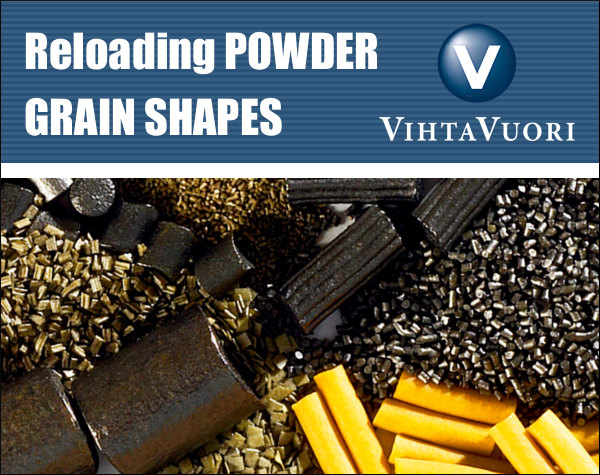
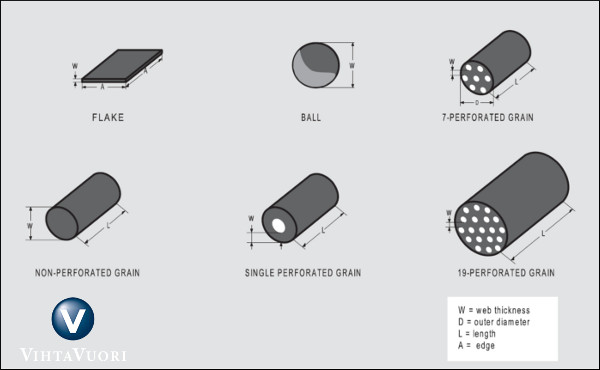
The shape of powder grains has a profound effect on the performance of the powder charge, as it concerns both pressure and velocity. There are multiple powder shapes including flake, ball, and extruded or “stick” (both solid and perforated).
So how does powder grain shape affect pressure and muzzle velocity?
In general, it can be said that powder that burns progressively achieves a desired muzzle velocity at lower maximum pressure than a powder that burns neutrally, not to mention a degressive powder. As grain size increases, the maximum pressure moves towards the muzzle, also increasing muzzle blast. Muzzle velocity and pressure can be adjusted by means of the amount of powder or loading density, i.e. the relationship between the powder mass and the volume available to it. As the loading density increases, maximum pressure grows.
All Vihtavuori reloading powders are of the cylindrical, single-perforated extruded stick type. The differences in burning rate between the powders depend on the size of the grain, the wall thickness of the cylinder, the surface coating and the composition. Cylindrical extruded powders can also have multi-perforated grains. The most common types are the 7- and 19-perforated varieties. A multi-perforated powder grain is naturally of a much larger size than one with a single perforation, and is typically used for large caliber ammunition.
Other types of powder grain shapes include sphere or ball, and flake. The ball grains are typically used in automatic firearms but also in rifles and handguns. The ball grain is less costly to produce, as it is not pressed into shape like cylindrical grains. Flake shaped grains are typically used in shotgun loadings.
Web thickness in gunpowder terminology means the minimum distance that the combustion zones can travel within the powder grain without encountering each other. In spherical powders, this distance is the diameter of the “ball”; in flake powder it is the thickness of the flake; and in multi-perforated extruded powders it is the minimum distance (i.e. wall thickness) between the perforations.
The burning rate of powder composed of grains without any perforations or surface treatment is related to the surface area of the grain available for burning at any given pressure level. The change in the surface area that is burning during combustion is described by a so-called form function. If the surface area increases, the form function does likewise and its behavior is termed progressive. If the form function decreases, its behavior is said to be degressive. If the flame area remains constant throughout the combustion process, we describe it as “neutral” behavior.
The cylindrical, perforated powders are progressive; the burning rate increases as the surface area increases, and the pressure builds up slower, increasing until it reaches its peak and then collapses. Flake and ball grains are degressive; the total powder surface area and pressure are at their peak at ignition, decreasing as the combustion progresses.
With shortages of factory ammunition, many more gun owners are reloading their own ammo these days. Redding offers handy, printable files for load data records and box labels.
Redding Reloading offers a handy Handloader’s Data Sheet in printable PDF format. This FREE form allows hand-loaders to document their tool settings, bushing size, powder charge, load specs (COAL etc.), and case prep status. In addition, the form allows you to enter your load testing information, complete with chronograph data, group size, zero range, and wind/temp conditions. With this single, handy form you can document all the vital information for your particular cartridges and loads. We suggest you print these out, 3-hole-punch them, and then keep them in a three-ring binder.
We’ve seen various reloading log templates, but this Redding form (shown below) is better than most because it combines both reloading data AND range-test data in one place. You can see all key details of the reloading process (tool settings etc.) plus the end results — how the load actually performed over the chronograph and on paper. This form allows the user to capture a large amount of information for later use, while accurately track load development. Go to Download Page.
FREE Ammunition Box Label Template Redding Reloading has also developed a printable template for your ammo boxes (see photo at top of article). This lets you put all vital load info on your ammo boxes. There are fields for: Date, Cartridge, Powder, Grains, Bullet, Weight, Primer, Case type. Designed for Avery 5260 (or similar) label sheets, this label template allows you to print 30 labels at one time. You can purchase the Avery 5260 peel-off printable label sheets at office supply stores.




 Lee Hand Press Quick-Change Die Functionality


 Hydro-Forming Procedure Step-by-Step:
 Special Shell-Holder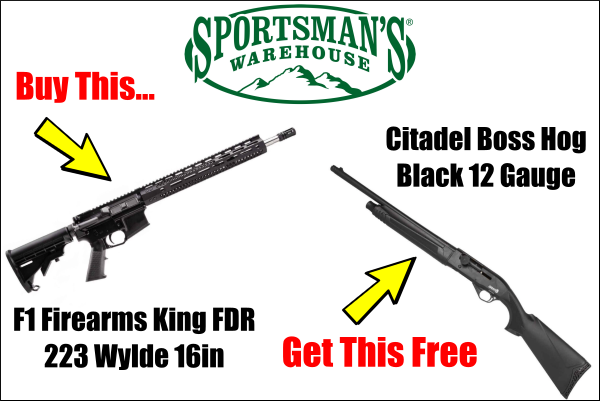




 Redding Reloading has also developed a


