Want to learn long-range benchrest skills from the best in the business? Then head to Williamsport, PA this June. The registration period for the 2018 PA 1000 Yard Benchrest School is now open. This year’s session will be held Saturday and Sunday, June 16-17, 2018, with a “Meet and Greet” on Friday Night. Classes, taught by top 1K shooters, are held at the Original Pennsylvania 1000-Yard Benchrest Club Range, one of the best 1000-yard ranges in the country. The school will be limited to 25-30 students with one instructor for every two students.
Praise from a 1K Benchrest School Grad
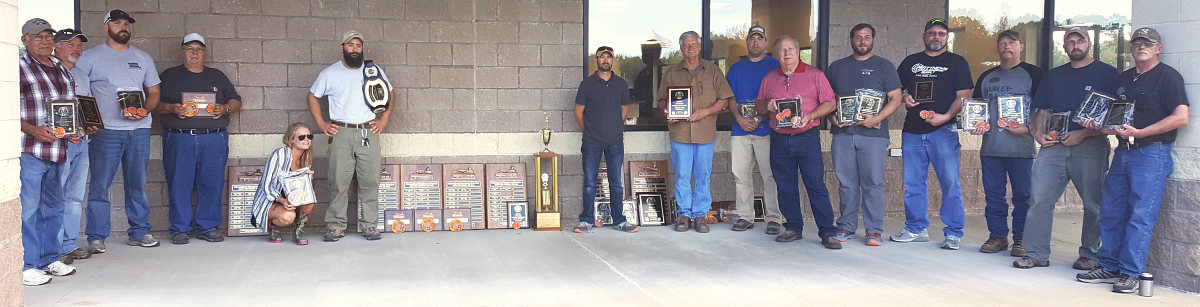
Here’s a testimonial from a recent graduate: “I can attest to the knowledge that you gain. I went last year and loved it. Have renewed my membership in the Club and would love to go this year. I would love to take the course again. In the photo above I am in the back row, fourth from the right — sunglasses and blue shirt.” — Bob, Class of 2016
Participants will learn all aspects of long-range benchrest shooting from some of the most skilled marksmen in the country. Much time is spent at the loading bench and on the firing line. Classes cover load development, precision reloading, bench skills, and target analysis. You don’t even need guns and ammo — all equipment and ammunition will be provided.
School instructors tell us: “This year’s benchrest school will be a 2-day weekend event. (There is also an optional ‘Meet and Greet’ gathering Friday evening). The school is a beginner class designed to teach the fundamental skills needed to be competitive at at 600 and 1000 yards. Saturday will be spent in class covering a range of topics including reloading ‘dos and don’ts’, load development and equipment handling. Sunday we will shoot an actual match to see what you’ve learned.”
Cost for the class is $425.00 including lunches on Sat/Sun and dinner on Saturday. Act soon if you want to attend the 2018 school — the school fills quickly. NOTE: To secure your placement, payment must be made in full prior to May 25th, 2018.
Watch Williamsport Benchrest School Slideshow: Please enable Javascript and Flash to view this VideoPress video.
This slideshow was produced by Sebastian Reist an alumnus of the 2009 Williamsport 1000-yard BR school. SEE: www.sreistphotography.com.
Shooting ranges have gone upscale with the development of the “Guntry Club”. This new kind of recreational/social facility combines a shooting range with Country Club style amenities. Imagine a high-tech indoor range with “Pro Shop”, restaurant, and maybe outdoor shooting facilities as well. In the past five years, more and more of these deluxe “Guntry Clubs” have opened nationwide.
This week GunVenture TV takes a look at some of the country’s finest gun clubs. First, join Tom Gresham and RECOIL Magazine’s Iain Harrison at one of the original “Guntry Clubs” — the Scottsdale Gun Club. You’ll tour the exclusive Titanium lounge before heading to the range for some full-auto fun with Sig Sauer’s John Hollister. Then, Tom visits a very high-end facility in Centennial, Colorado. The upscale Centennial Gun Club features a retail store, range, training center, and lounge.
Finally, GunVenture visits the Talladega Super-Speedway, where Ryan Gresham takes a lap on the famous track before visiting at the CMP’s impressive new Talladega Marksmanship Park, which boasts state-of-the-art electronic targets.
Here’s a CBS News report on upscale “Guntry Clubs”, luxurious facilities that target younger, more affluent patrons. Chip Reid reports on a high-end gun club in Manassas, Virginia: “This is not your Grandfather’s shooting range. Elite Shooting Sports is 65000 Square feet of bright lights, polished wood, flat-screen TVs, and state of the art equipment”.
We first ran this story in 2014, when Angelina was just ten years old. A Forum member recently asked if she was still shooting benchrest, and we can say the answer is yes — under the guidance of her grandfather Lou Murdica. So we are repeating the story today, to inspire all the other granddads who might encourage a little lady to take up the sport…
You have to love this story, supplied by our friend Lou Murdica. It seems that a petite little 10-year-old school girl finished fourth in a 100-Yard Benchrest match in Phoenix, beating some of the best in the business, including many Benchrest Hall of Famers. That’s right, shooting a remarkable 0.1612 Aggregate, little Angelina G. put a whupping on some very big names in the Benchrest game, including Lou Murdica himself. Angelina finished just .008 behind Hall of Famer Gary Ocock, beating other Benchrest superstars such as Bob Brackney, Lester Bruno, and Tom Libby. Angelina also beat legendary bullet-maker Walt Berger, but we’ll cut Walt some slack. Now in his 80s, Walt deserves praise for doing so well at the opposite end of the age spectrum.
Congratulations to Angelina on some great shooting in the Unlimited Class. Her five groups measured: 0.186, 0.172, 0.173, 0.121, 0.155. That’s impressive consistency. You go girl!
Point to ponder: If Angelina was shooting a Rail Gun, her rifle probably weighed more than she did.
Check out the big names who finished behind little Angelina.
There are three notable articles in the latest January 2018 Digital Edition of Shooting Sports USA Magazine. F-Class competitors will definitely want to read the report on the 2017 World Championships. And hand-loaders will appreciate the insightful article on the AMP induction annealing machine. The third recommended article provides tips and techniques for sighting in hunting, tactical, and benchrest rifles. Access the entire SSUSA 54-page January 2018 eZine by clicking THIS LINK.
F-Class 2017 World Championships in Canada Story by Larry Bartholome
Fifteen years ago, the very first F-Class World Championships were held in Canada. In 2017, the Championships returned to Canada for the fifth edition of the match. This year there were triple the number of entries, representing the growing popularity of F-Class competition. Notably, this year’s event was preceded by the Canadian F-Class National Championships. This issue contains a full report on the event, written by Larry Bartolome, a past National F-Open Champion. Shown at right above is the new F-TR World Champion, our friend Derek Rodgers from New Mexico.
AMP Annealing Machine — Annealing .30-06 Brass for Vintage Military Rifles Story by Art Merrill
Produced in New Zealand, the AMP (Annealing Made Perfect) unit is a sophisticated, microprocessor-controlled annealing machine that achieves ultra-consistent results using an electrical INDUCTION process. By contrast, with butane torch systems you may have to adjust the system when the ambient temperature changes, or even if your butane fuel is slightly different. In this month’s issue of Shooting Sports USA, Field Editor Art Merrill uses the AMP to anneal .30-06 brass for vintage military rifles. The review shows how to use the AMP and explains the advantages of the Induction Annealing vs. flame-based annealing.
Sighting In Your Rifle — Tips for All Shooters Story by Jim Shults
This month’s “Rifle Issue” of Shooting Sports USA focuses on rifle shooting in various forms. Author Jim Shults has written an lengthy article offering tips and techniques for sighting-in your rifle. Shults says “The trick in effective sighting-in (zeroing) is shot-to-shot consistency”. To achieve that consistency, you must first eliminate driver error. You need a stable set-up. Good ammo is also essential and Shults offers an important tip: “Keep your ammo cool and out of direct sun at the range”. Shults also explains there is a big difference between load testing and zeroing. You want to finalize your zero AFTER you have developed your match or hunting load.
Ruger is working to get new people involved in shooting sports through a new 10-part video series. Ruger’s American New Shooter Academy focuses on firearms safety and handgun skills training. There are ten, 5-9 minute episodes, all available now on GetZone.com and YouTube.
Watch Episode One of New Shooter Academy:
In the New Shooter Academy series, Firearms trainer Daniel Shaw starts from “square one” with four participants with little-to-no handgun firearms experience. Shaw works with the students to build good fundamentals and follow recommended safety procedures. “Recruiting new shooters and making sure they are properly trained is critical to the future success of shooting sports” said Jeff Siegel, CEO of Media Lodge, the company that produces the videos for Ruger.
CLICK HERE to watch Ruger’s American New Shooter Academy Series (All Episodes)
During their training sessions, participants used the Ruger American Pistol compact model chambered in 9mm Luger, with a manual safety. Additional products for the series were provided by CrossBreed Holsters®, TMG Target Systems, and Hornady.
NOTE: Audio may auto-start when you click this graphic — turn down speakers at work
You should tune in to Kelly McMillan’s Taking Stock Internet Radio Show today, Friday, December 15, 2017. Two very smart and talented guys are featured on the show. Kelly’s first guest, Erik Cortina, is Captain of Team Lapua-Brux-Borden and one of American’s Top F-Class competitors. The second guest, Dan Dowling, is a respected name in the field of bolt-action rifle work, with his main focus being benchrest rifles and similar high-accuracy rifles. Today’s live show, and recorded archives, are hosted on the VoiceAmerica Sports Channel.
We have followed Erik’s career as he has risen to be one of the best F-Class and long-range shooters in the world. Texas State LR Champion (3 years in a row), Erik has placed Top 10 in the Berger SW Nationals, won a Bronze medal in World Championship with Rutland team (Team USA Red), placed 3rd in F-Class Nationals. Erik also has produced very informative shooting/reloading videos on his YouTube Channel. Erik tells us: “I am honored to be on Taking Stock with Kelly McMillan. As you all know, I enjoy passing on what I know so that other shooters can benefit from my experience. I received a lot of help from others, epecially Mike Downey and Mark Pharr, starting out, so I’m paying it forward. I also believe it’s a good way to grow the shooting sports.”
On today’s radio show, Erik added: “We will also discuss the importance of using quality equipment as it is the most reliable and gives me the best chance at winning. Another topic we will discuss is learning to win. I believe learning how to shoot is fairly easy, especially with all the info out there these days, but learning how to win, is the difference between a great shooter and a Champion.”
Erik Cortina shows one of his handsome F-Open Rifles at Berger SW Nationals.
You can also access previous episodes. Recent guests have included F-TR World Champion and King of 2 Miles Derek Rodgers, Multi-Time National High Power Champion Carl Bernosky, USA F-TR Team Captain Ray Gross, and GA Precision’s George Gardner.
About McMillan Fiberglass Stocks
Kelly McMillan is the president of McMillan Fiberglass Stocks (MFS). This company began in 1973 when Gale McMillan starting crafting benchrest stocks at home in his carport/garage. In 1975 MFS hired its first employee, Kelly McMillan. By 1979 Kelly was made a partner, and by 1984 Kelly was in charge of running the stock shop. Since that time MFS has continued to grow with innovation and design. Today McMillan Fiberglass Stocks has a 15,000 sq/ft facility and 65 employees.
Christmas is coming soon. Books have always been popular holiday gifts. If you haven’t completed your holiday shopping, here are some recommended titles that should please the serious shooters and firearms enthusiasts on your shopping list. For shooting clubs, books also make great end-of-season member awards. Most of us would rather have a useful book than one more piece of wood to toss in a box in the closet.
Here Are TEN BOOKS Recommended for Serious Shooters:
Glen Zediker’s latest book, Top-Grade Ammo, is a great resource for all hand-loaders — beginners through advanced. This 314-page guide covers every aspect of the reloading process — component sorting, priming, sizing, bullet seating and more. With 430 photos, Top-Grade Ammo is a richly-illustrated, step-by-step guide to producing high-quality handloads. Unlike many reloading books, Top-Grade Ammo is current and up-to-date, so it covers modern practices and the latest precision reloading tools. While Zediker focuses on producing match-grade ammo for competition, this book will also help novice reloaders on a budget. This book features a special “lay-flat” binding so it’s easy to use as a benchtop reference. To view Chapter List and sample pages visit ZedikerPublishing.com.
If you’re a serious long-range shooter, consider adding this book to your library. Relying on extensive ballistics testing, Modern Advancements contains some fascinating research results, including the effects of twist rate on muzzle velocity, BC, and precision. Other sections detail the evolution of modern rifle, bullet, and optics designs. And there is an important comparison test of chronographs. Laser rangefinders and wind measurement devices are explained in detail by contributing author Nick Vitalbo. This book is a valuable resource for anyone who wants to understand the current “state of the art” in today’s shooting world. There is a ton of “hard science” in this book — not just opinions.
Thinking of getting started in the Practical/Tactical shooting game? Looking for ways to be more stable when shooting from unconventional positions? Then you may want to read Marcus Blanchard’s Practical Shooter’s Guide (A How-To Approach for Unconventional Firing Positions and Training). Unlike almost every “how to shoot” book on the market, Blanchard’s work focuses on the shooting skills and positions you need to succeed in PRS matches and similar tactical competitions. Blanchard provides clear advice on shooting from barricades, from roof-tops, from steep angles. Blanchard says you need to train for these types of challenges: “I believe the largest factor in the improvement of the average shooter isn’t necessarily the gear; it’s the way the shooter approaches obstacles and how they properly train for them.”
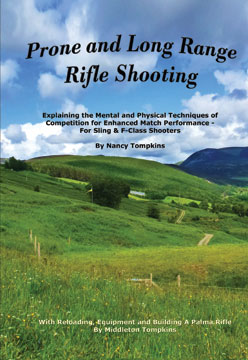
Nancy Tompkins is one of the greatest long-range shooters in American history. She has won five National Long-range Championships. Tompkins’ treatise is a must-read for serious Palma, F-Class, and High Power shooters. The revised Second edition includes F-Class equipment and techniques, and newly updated information. Color pictures. Topics include Mental & Physical training, Reading Wind & Mirage Shooting Fundamentals, International Competition, and Loading for Long Range. Nancy Tompkins is a 4-time winner of the National Long Range Championships, and has won countless other major events. Nancy has been on six Palma Teams (as both a shooter and a coach).
Ryan Cleckner is noted for his ability to explain complex topics in an easy-to-comprehend manner. Now Cleckner has authored a book, the Long Range Shooting Handbook, which expands on the topics covered in Cleckner’s popular NSSF video series. The Long Range Shooting Handbook is divided into three main categories: What It Is/How It Works, Fundamentals, and How to Use It. “What It Is/How It Works” covers equipment, terminology, and basic principles. “Fundamentals” covers the theory of long range shooting. “How to Use It” gives practical advice on implementing what you’ve learned, so you can progress as a skilled, long range shooter. You can view Sample Chapters from Ryan’s Book on Amazon.com.
Tony Boyer, the most successful shooter in the history of short-range benchrest competition, shares many of his match-winning tips in this 323-page book. The book covers all aspect of the benchrest discipline: loading, windflags, rest set-up, addressing the rifle, and match strategies. This is a high-quality publication, filled with valuable insights. Every serious benchrest shooter should read Tony’s book. Boyer has dominated registered benchrest in a fashion that will never be duplicated, having amassed 142 U.S. Benchrest Hall of Fame points. The next closest shooter, Allie Euber, has 47 Hall of Fame points. This handsome, full-color book is 323 pages long, with color photos or color illustrations on nearly every page.
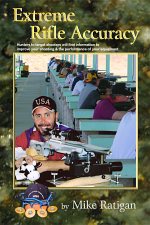
This book should be on the shelf of every short-range benchrest shooter. (Shooters in other disciplines will find the book helpful as well.) Butch Lambert says Mike’s book is “far and away the best Benchrest book written. Very comprehensive, it touches on every aspect of our game.” Mike’s 368-page book is dedicated to getting the most from modern rifle accuracy equipment with an emphasis on shooting 100-200-300 yard group benchrest tournaments. This book covers the most popular hardware plus new equipment offerings are covered, including external mount scopes, actions, triggers, stocks, wind flags, and more. Also covered are rifle handling techniques, note taking, tuning, bullet selection, goals, and match strategies. Mike provides many tips that will help active competitors update their own competitive program.
This book by 11-time National High Power Champion David Tubb focuses on position shooting and High Power disciplines. Section One covers fundamentals: position points, natural point of aim, breathing, triggering mechanics and follow-through, sling selection and use, getting started, getting better, avoiding obstacles. Section Two covers mechanics of offhand, sitting, and prone positions. Section Three covers shooting skills, including wind reading and mental preparation. Section Four covers the technical side of shooting, with extensive disuctions of rifle design, load development, reloading barrel maintenance, and rifle fitting. We consider this book a “must-read” for any sling shooter, and there is plenty of good advice for F-Class shooters too.
Bullseye Mind (Mental Toughness for Sport Shooting) by Dr. Raymond Prior, $14.00 (Softcover).
Having a Bullseye Mind means thinking in ways that create confidence and consistency, even under pressure. A “must-read” for competitive shooters, Bullseye Mind is a mental training book written specifically for the shooting sports. The book is well-organized, with handy highlighted lists and key “talking points”. Each chapter concludes with examples from a world-class shooters such as: Matt Emmons, 2004 Olympic Gold Medalist; Vincent Hancock, 2-time Olympic Gold Medalist; Jamie Corkish, 2012 Olympic Gold Medalist; Petra Zublasing, 2014 World Champion/ISSF Shooter of the Year; and Nicco Campriani, 2012 Olympic Gold Medalist, 2010 World Champion. This book has earned rave reviews from competitive shooters who found it really helped their “Mental Game”. One recent purchaser states: “This book is as though you had a coach in your back pocket…”
Cartridges of the World (15th Edition, 2016), belongs in every serious gun guy’s library. This massive 680-page reference contains illustrations and basic load data for over 1500 cartridges. If you load for a wide variety of cartridges, or are a cartridge collector, this book is a “must-have” resource. The latest edition includes 50 new cartridges and boasts 1500+ photos. The 15th Edition of Cartridges of the World includes cartridge specs, plus tech articles on Cartridge identification, SAAMI guidelines, wildcatting, and new cartridge design trends. In scope and level of detail, Cartridges of the World is the most complete cartridge reference guide in print. Cartridges of the World now includes a 64-page full-color section with feature articles.
You can spend thousands on a fancy new rifle, but all that expensive hardware won’t perform at its best if you have poor trigger technique. One key element of precision shooting is trigger control. Our friend Kirsten Joy Weiss has produced a good video that shows how to refine your trigger technique for better accuracy. In this video, Kirsten talks about the actual placement of a shooter’s index finger on the trigger. It is important to have the finger positioned optimally. Otherwise you can pull the shot slightly left or slightly right.
Kirsten tells us: “Finger placement on the trigger might not seem like a big deal, but it actually is. The reason for this is because, depending on where your index finger is placed on the trigger, [this] translates to different muscle interactions with the gun.” Watch this video to see Kirsten demonstrate proper finger placement (and explain problems caused by improper finger positioning).
When you pull the trigger, you only want to engage the last section of your finger, in order to avoid unwanted muscle engagement and to achieve a smooth shot. Remember there is a “sweet spot” between the crease (first joint) and the tip of the finger. If you position the trigger in that “sweet spot”, you should see an increase in your accuracy. Don’t make the mistake of putting the trigger in the crease of your finger, as shown below.
Effects of Incorrect Finger Placements
You want to place the trigger shoe between the end of your finger and the first joint. If you place the trigger on the very tip of you finger you’ll tend to push the rear of the rifle to the left when engaging the trigger, causing shots to go right (for a right-handed shooter). On the other hand, if you put the trigger in the crease (first joint), you’ll tend to bring the rear of the rifle to the right, causing shots to fall left. This is illustrated below for a right-handed shooter.
Precision rifle shooters don’t have to hit a big-league fastball, or launch a top-fuel dragster in the blink of an eye. Nonetheless, reaction times are important in our sport — both for competitive shooters and hunters. Want to catch that prairie dog before he slips down his hole? You’ll need to be quick. Want to win at short-range benchrest? Then you’ll need to watch your windflags and respond quickly to a change. Miss a major wind-shift and you could ruin your whole weekend.
Here’s a fun test of reaction times from HumanBenchmark.com. The way it works is that, after clicking “Start”, you wait until the background color changes from red to green. The instant you see green, immediately click your mouse. The average (median) reaction time is 215 milliseconds. Hint: If you keep your finger “preloaded” in contact with your mouse button you can shave some milliseconds — but don’t “jump the gun”.
Tips for Faster Times
Here are three tips to speed up your reaction times:
1) Respond to the color change (by itself), rather than wait to read the word “CLICK!” after the box shifts to green.
2) Try focusing at the corner of the box, rather than the center. This may help you react “without thinking”.
3) Have your index finger “poised and ready” over the left button–you can shave milliseconds by very slightly depressing the button before you actually click.
Report by Boyd Allen, IBS Executive VP
The 2017 IBS 600-Yard Nationals were held October 20-21 at the Memphis Sport Shooting Association (MSSA) Range. There was a good turn-out for the event, with 80 shooters. Conditions were challenging Saturday afternoon — strong winds that put some shooters right off the target. But those who mastered the conditions earned glory. The “Top Gun” at this year’s Nationals, earning the title of IBS 600-yard National Champion, was Andy Ferguson. In winning the Two-Gun Overall, Andy turned in a truly dominant performance, recording First Place Score in both Light Gun and Heavy Gun classes, along with second in HG group and fourth in LG Group. Finishing second Overall was Gaylan Breyans, while Jim Bauer was third.
Top Shooters (L to R): Steve Wilson, Scotty Powell, Seth Wooten, Gene Ford, Lindsey Talley, Andy ”Who” Ferguson, Gaylon Breans, Jim Bauer, Justin Dale, Darrell Jones, James Lederer, Robby Miles, Jeff Godfrey, Jason Wolfe, Mike Hanes. NOTE: CLICK PHOTO for large image of top shooters.
Today’s 600-yard benchrest rigs are capable of remarkable accuracy. Even with tough conditions in the afternoons, there was some pretty impressive shooting. Out of 640 targets that were shot by 80 competitors there were 27 scores of 50, 56 groups of 2” or less, 14 of 1.50” or less, 3 groups of 1.25″ or less, and one of 1” or less. See the FULL Results for more details.
Demonstration of Winning Form — Smooth and Fast
How do you win a 600-Yard National Benchrest Championship? Here’s a video answer to that question. To see how a top shooter handles his rifle on the bench, watch the short clip below of Two-Gun Winner Andy Ferguson shooting one of his targets with his 6BR Light Gun. Andy demonstrates smooth “table manners”. He keeps his head down, running off five shots in under 15 seconds. Note how well the gun tracks, returning to Point of Aim.
Match Winner Andy Ferguson Drills Five Shots in Under 15 seconds with his Light Gun
Notably, Andy won the match shooting the “plain vanilla” 6mmBR Norma — not a Dasher, not a 6 BRX, not a 6 BR Ackley. The parent 6mmBR cartridge can still do the job, particularly in the hands of a smooth shooter like Andy Ferguson. At the Memphis range, the usual strategy is to shoot on the sighter gong just before the switch to the record and then fire all shots on the record target as rapidly as possible to stay in the same wind condition.
600-Yard Benchrest Competition — The Basics
Two Classes — Light Gun and Heavy Gun
For those that are not familiar with this 600-yard Benchrest competition, the equipment rules are the same as for 1,000-yard Benchrest. There are two classes of rifles. The Light Gun (LG) rifles are limited to 17 pounds with no stock width or buttstock angle restrictions. The front and rear of these rifles must rest on sand bags. The rear bag may not have any provision for aiming the rifle.
Heavy Gun (HG) rifles have no weight limit. Like the LGs their stocks are not limited as to width or butt stock shape. HG rear sand bags may be supported by “mechanical” rests. Return to battery rests are not allowed for either class. Both HG and LG classes may use muzzle brakes.
Match Procedures at Memphis
In 600-yard IBS Benchrest competition, targets are measured for group size and there is also a score value based on shot placement in the target rings. Prizes are awarded for group, score, and combined. Before the first record target of an Aggregate, the sighter period is six minutes. For subsequent targets in that Agg, it is reduced to two minutes. At the end of sighter period, upon command, shooters have 10 minutes to complete their record target. Aggregates consist of eight targets. Shots that do not print on the target result in that target being disqualified (DQ), as well as the applicable Aggregate.
At this year’s Nationals, shooters rotated four benches to the right after every pair of targets was shot, continuing that rotation through both days. LG was shot on Friday, HG on Saturday. Thanks to an efficient target crew and recorded match commands, shooting was over by 2:25 pm both days.
Equipment List for Top Ten Shooters
The Top Ten Shooters all ran 6mm cartridges (6BRs and Dashers) loaded with similar components. All of the Top Ten who listed their components ran Varget powder and CCI 450 primers in Lapua brass. BAT Actions were predominant, and both Nightforce and Sightron scopes were popular. The top projectiles were Vapor Trail 103s and Berger 105s.
Top Ten Equipment List CLICK HERE for longer Equipment List.
A Well-Run Match
According to all reports the entire event ran like a well-oiled machine. The target crew was quick and skilled and all of the other details were handled efficiently. Prizes and trophies were in abundance. There was even some originality. Much to everyone’s amusement, instead of the usual (boring) plaque or trophy for the Two-Gun winner, a professional wrestling-style Prize Belt was awarded. Great idea! Showing off the Champ’s Belt is Two-Gun winner Andy Ferguson (Right) with past Shooter-of-the-Year Richard Schatz.
Wicked Winds Challenge Shooters on Saturday
The conditions were variously described as “horrible”, the “worst for any match on this range this year”, and so on. Conditions were worse on Saturday than Friday, blowing like stink by the end of the day. Friday morning it was cool, humid and breezy, with a wind speed of a little over 3 mph. By mid-afternoon, when the match finished, it was 20 degrees warmer and the wind had increased significantly to about 9 mph. Saturday morning was warmer, less humid, and the wind speed was about the same as Friday afternoon. But by mid-afternoon, at the end of the match, the wind was blowing 15 mph having peaked an hour earlier at 17 mph!
Doing a little research on the Berger Bullets website, with a 105gr VLD running 2950 fps, and a 15 mph wind coming from 5 O’Clock, the bullet deflection at 600 yards would be over 17.5 inches. There were a fair number of shooters with good records that missed targets.
Good Deed by Match Director Mike Moses
Match Director Mike Moses “paid it forward” this year in Memphis. Mike learned that his friend, bullet-maker Bart Sauter, had invited a young barrel-maker, James Lederer, to the Nationals. As this would be Lederer’s first 600-yard experience, Bart was going to lend Lederer one of Bart’s rifles. But it had another maker’s barrel installed. Mike decided Lederer should, fittingly, use a barrel Lederer made himself. So Mike then chambered up one of two Lederer barrels Mike had recently purchased, and fitted it to one of his own rifles. Mike then fire-formed cases, worked up a load, and assembled ammo for the match.
Mike prepared three complete rifles (and ammo) for the match — one for himself, one for his daughter (Lindsey Talley, ace photographer), and one for James Lederer. It’s hard enough to prepare a Nationals rig for one shooter. Mike did it for three people, PLUS he ran the match.
How did it work out? James Lederer finished mid-pack on Friday, and put what he had learned to good use on Saturday, taking a solid fourth place in Heavy Gun.
Both Bart and Mike have been impressed with the quality of Lederer barrels. James has several years’ experience working for a well-known barrel-maker before designing his own computer-controlled cut-rifling machine, and opening his own one-man shop.
Bauer Power — Jim and Sally Bauer at IBS 600-Yard Nationals
Jim Bauer sends 5 record rounds down range with his “Eagle” HG in Maxi-Tracker stock.
Sally Bauer shoots sighter rounds with her Stars & Stripes HG Maxi-Tracker.
The Bauers have a great transport set-up, with custom, slide-out rifle carriers fitted to their van. You can see the two Heavy Guns featured in the videos in the lower drawer.
The Memphis Sport Shooting Association Facility
The Memphis Sport Shooting Association operates an impressive facility with ranges for rifle, pistol, and shotgun. The 600-yard benchrest range, with covered firing line, is nicely sited, with thick stands of trees left and right. There are 24 very solid concrete-top benches. Plentiful rain and sunshine provide ideal conditions for trees and grass. For those of us in the arid West, the Memphis range seems green and lush. The trees on either side offer some (but obviously not complete) protection from wind.
The range was built on land that had been an across-the-course High Power range, and the raised berms for intermediate firing lines are still present. That makes the wind bit more “interesting” when head- or tail-wind angles prevail. There are no pits. For each bench, at 600 yards, two record targets are posted one above the other with a 20” square steel sighter gong directly below. The sighter plates are repainted throughout the day during target changes. CLICK HERE for a 360-degree video view of the range from the covered firing line.
To the IBS Membership — Thanks for Helping with Match Reports
Putting together these match reports for the IBS page on Accurateshooter.com is challenging and enjoyable work. The hard part is coming up with pictures and videos. This time I have been lucky and I am thankful for that. The best part is that I get to talk to some very fine people. Thank you all for taking the time to make my work possible. I appreciate it. — Boyd Allen
Credit Randy Dawson (Birdog) for most of the images and videos used here.


 Want to learn long-range benchrest skills from the best in the business? Then head to Williamsport, PA this June. The registration period for the 2018 PA 1000 Yard Benchrest School is now open. This year’s session will be held Saturday and Sunday, June 16-17, 2018, with a “Meet and Greet” on Friday Night. Classes, taught by top 1K shooters, are held at the Original Pennsylvania 1000-Yard Benchrest Club Range, one of the best 1000-yard ranges in the country. The school will be limited to 25-30 students with one instructor for every two students.


 You have to love this story, supplied by our friend Lou Murdica. It seems that a petite little 10-year-old school girl finished fourth in a 100-Yard Benchrest match in Phoenix, beating some of the best in the business, including many Benchrest Hall of Famers. That’s right, shooting a remarkable 0.1612 Aggregate, little Angelina G. put a whupping on some very big names in the Benchrest game, including Lou Murdica himself. Angelina finished just .008 behind Hall of Famer Gary Ocock, beating other Benchrest superstars such as Bob Brackney, Lester Bruno, and Tom Libby. Angelina also beat legendary bullet-maker Walt Berger, but we’ll cut Walt some slack. Now in his 80s, Walt deserves praise for doing so well at the opposite end of the age spectrum.