Bet you’ve never seen anything like this before — a “double-decker” indoor shooting range. Lotus Gunworks of Jensen Beach, Florida, operates a super-sized twin-level indoor shooting range featuring a two-story-high steel funnel bullet trap. Nicknamed the Lotus 8/11 for the number of steel panels used to create it (eight panels on the bottom slope and 11 panels on the top slope), this version of Action Target’s Total Containment Trap is the first of its kind. “No one has ever seen a range like this before” noted Lotus Gunworks’ Robbie Abell.
Abell came up with the two-story concept when it became clear that the new Lotus building in Jensen Beach was not wide enough for two side-by-side ranges AND a gun store. Necessity was the mother of invention… Lotus wanted at least two ranges, so the only option was to make a double-decker range where both levels shot into the same bullet trap.
Indoor ranges require ventilation to remove potentially hazardous dust and lead particles. The sheer size of the double-decker range presented a unique challenge, but Carey’s Small Arms Range Ventilation installed a system that can completely replace all the range air every 80 seconds.
Other Multi-Level Shooting Ranges
While the Lotus Range may have the first two-story bullet trap, it’s not really the first-ever double-decker indoor shooting range. Other multi-level ranges exist, they just don’t have the giant bullet trap. In fact, some of the multi-level ranges in Europe are bigger and even more sophisticated.
Brünig Indoor facility — Multi-Level Range Underground
Switzerland boats a popular shooting facility built completely underground. The large, deluxe Brünig Indoor facility includes a 300m underground range with multi-level shooting stations.
This video shows centerfire rifle practice on the upper level of one of Brünig Indoor’s shooting tunnels:
Dutch Double-Decker Range
Here’s a Dutch Double-Decker Range. Check out Schietsportvereniging (SSV) Katwijk, a great twin-level range in Holland featuring electronic targets with displays at each shooting station (on both levels):
33XC — Popular ELR Cartridge
Paul Phillips is a past King of 2 Miles (K02M) winner. The founder of the Global Precision Group, Paul is one of the top ELR marksmen on the planet. He has also been a team-mate of past K02M winners.
In 2019, Paul had this rifle built for the 25-lb max, .338 caliber-or-under ELR Class. This is chambered for the 33XC, an efficient cartridge devised by 11-time National HP Champion David Tubb. With promising initial testing at 500 yards, it looks like Paul’s 33XC project is a success. The rifle’s first match was the NRA Extreme Long Range Championship held in 2019 at Camp Atterbury, Indiana.
Paul reports: “The 33XC is ready… I have tested loads from 3100-3450 FPS and and will settle on a load around 3250 FPS [which is] my most accurate load so far. The Peterson Cartridge brass is really working well.”
Paul states he would like to look for a higher node from 3300-3400 GPS: “Next stop is with the Applied Ballistics LLC mobile labratory and radar testing with a PDM.” Paul cautions: “I encourage everyone to start low and work up. Every chamber, barrel, and components are a little different.”
During initial testing, Paul’s 33XC put three shots in 0.27″ at 100. Then, at 500 yards, the rifle produced a 3-shot group around 1/3-MOA with just 1.22 inches of vertical. That’s pretty impressive for early testing. Paul will also be trying some Berger bullets soon. When he determines the most accurate load, Phillips will stretch the rifle’s legs, shooting out to 2500 yards and beyond.
Quote: “The Cutting Edge Bullets are not the highest BC but they are very stable and consistent at ELR (sub-sonic) ranges and that’s the most important factor in finding the best ELR bullet. I actually test all my bullets at sub-sonic speeds to make sure they are consistent and stable. Finding a good load at 500 yards is just the first part. The real test is shooting them at sub-sonic speeds and see how consistently they group. This is what gives you the highest percentage to impact at 2 miles and beyond.”
This rifle features a BAT action mated to a 34″ Bartlein barrel chambered for David Tubb’s new 33XC cartridge. Paul Phillips is currently running Cutting Edge 275gr Lazer solid bullets. Paul notes: “I also have a .338 Lapua Magnum barrel and 300gr Berger bullets for the restricted class in France.” Paul gave special thanks to Alex Wheeler for doing the metal work and Alex Sitman for doing the bedding.
Rifle Component List
Action: BAT Machine CTH dual-port action
Trigger: Bullet Central Bix’N Andy
Barrel: Bartlein 1:8″-twist barrel (34″)
Chambering: 33XC for Peterson brass
Stock: McMillan A6 Super Mag, Bedding Alex Sitman
Scope: Nightforce Optics 7-35x56mm F1 ATACR.
Bipod: Duplin Rifles
Paul Phillips notes: “Alex Sitman has been bedding rifles stocks for most of his life. I believe that [bedding] is a very important … to keep consistent accuracy and repeatable zeros after traveling all over the globe.”
Even with the TacomHQ Charlie Tarac scope prism in place, the rifle makes the 25-pound weight limit with Duplin Rifles bipod. Paul says: “I love it when a plan comes together!! I’m under by 2 ounces!”
About the 33XC (eXtra Capacity) Cartridge
David Tubb invented the 33XC cartridge because he thought the CheyTac cases were too much trouble — requiring a larger action, oversize presses, and ultra-expensive dies. The 33XC was designed to fit .338 Lapua Magnum-size actions and use normal reloading presses.
The 33XC (eXtra Capacity) has 137.5 grains of H2O capacity with over 125 grains of usable powder capacity while leaving the 0.393″ neck unfilled for bullet seating.
The 33XC has a .338 Lapua Magnum lineage. Think of it as a better, 35°-shoulder .338 LM. David explains: “The 33XC uses standard reloading dies along with a 7/8″ x 14 TPI reloading press. There is no fire-forming — all case ‘improving’ has already been done with a production case that has 20 grains more powder capacity, 35-degree shoulder, and longer neck compared to a .338 Lapua Magnum. This puts the various .338 Lapua wildcats and the Rem Ultra Mag Improved into the ‘also ran’ category. They simply can’t compete with the velocities attainable with the 33XC.”
The 33XC is based off of a .580″ bolt head. Tubb states that “A fired case will extract with little effort when using a properly-polished chamber with a maximum powder charge after resizing with the Superior Shooting Systems FL sizing die.” Tubb’s 33XC die reaches the case head which is important for accuracy. Peterson Cartridge produces the 33XC brass for Superior Shooting Systems. This high-quality brass costs $260 for 100 cases (i.e. $2.60 per case), and can be purchased directly from Superior Shooting Systems.
Bonus Video — Global Precision Group Team Makes 4-Mile Hit
With a .416 Barrett rifle, Team GPG makes a 4-mile impact that is captured on video during team practice. James Devoglaer was shooting his GPG spec .416 Barrett with Team Captain Paul Phillips doing the ballistics and wind. Spotters were David Parrish and Derek Rodgers. Forward Observers were John Droelle and Mauro Del Mastro. Approximately 60 shots were taken before impact. There were four 3-shot groups that measured under 2 MOA at 4 miles. The .416 Barrett cartridges were loaded with 550gr Cutting Edge bullets and Vihtavuori powder.
Hickok45 Carves Pumpkin Faces with Handguns
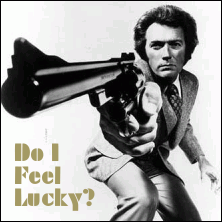
To celebrate Halloween, here’s an example of master wheelgun marksmanship. Popular YouTube host Hickok45 skillfully creates a smiling face on a pumpkin using a S&W Model 29 .44 Magnum revolver. This is the classic blued, double-action revolver popularized by Clint Eastwood as Dirty Harry. This has become a tradition for Hickok 45 — every year he puts a face on a pumpkin using a different firearm, typically a pistol, but he’s used a couple rifles as well. A 2022 pumpkin-carving effort was done with a suppressor-equipped 9mm Mini Uzi. SEE PUMPKIN Shooting Playlist for all Hickok45’s annual pumpkin blasts. The lead video shows a pumpkin face-making session with a .44 Magnum.
Want to see more? Hickok45 has also carved pumpkins with a dozen firearms. Here is a pumpkin carved with a genuine, WWI-era Colt 1911 carried by an American soldier in the Pacific theater.
And here is a rather grim-looking face applied using the .40 SW Glock 23.
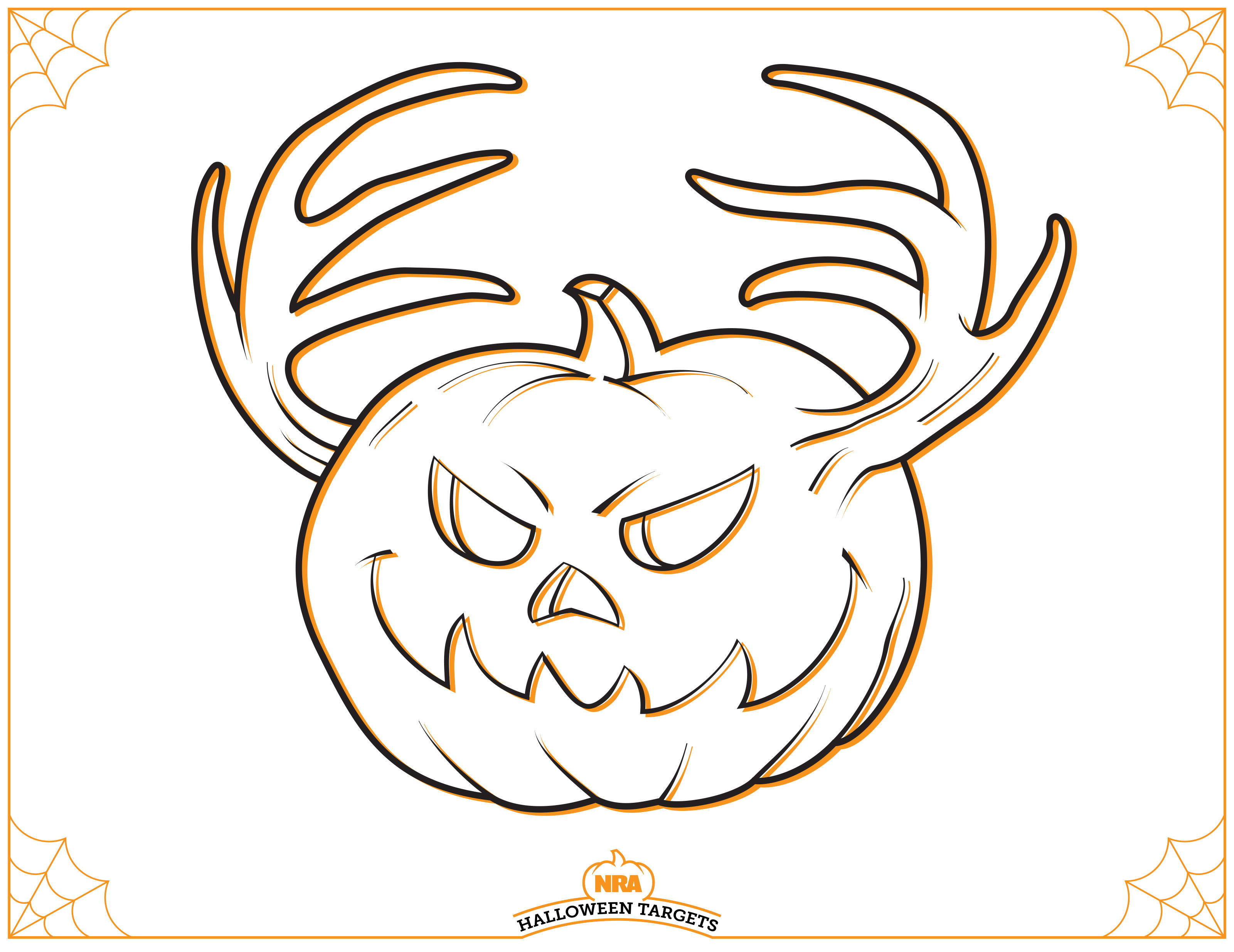
Halloween (aka “All Hallows Eve”) will be celebrated tomorrow, the 31st of October. Around the country pumpkins and Halloween decorations are on display in neighborhoods. Why not head to the range and shoot some Halloween-themed targets this week amidst the fall foliage. The folks at the NRA Blog have created a series of “spook-tastic” Halloween targets. Writer Kyle Jillson says, “In addition to stocking up on candy and finding great costumes, we thought you might like to have some fun at the range, so we created these spooky targets for you to use.”
Just click an image to launch its full-size version. You can then download the target and print it out on regular 8.5″x11″ paper. Now you have fun Halloween-themed targets to bring to the range this week.
We’ve all encountered those boastful guys at the range — you know, the ones who say their factory rifle will shoot “dime-sized groups all day long.” Well maybe they were actually telling the truth — it all depends on the size of the ten-cent piece. With the huge dime shown above, we think we could shoot “dime-sized groups all day long” — even with a pistol. After seeing this, one reader commented: “That’s great. So this means my groups are only around Quarter-sized!”
Credit Forum member DKhunt14 who started a thread with this humorous image in our Shooters’ Forum. Other Forum members gave examples of similar accuracy claims they’ve heard:
I ran into a local tactical guru a few years ago that topped any story I’ve ever heard yet. He claimed he could shoot a quarter-inch group every time at 300 yards — like no problem whatsoever. — IMMike
I had a guy tell me he dropped a doe at 420 yards with a M1 carbine, open sights. Never took a step. I’ll bet he also shot those dime-sized groups!– DJ Porter
Seems like we could substitute 1000-yard prairie dog (other small varmint) hits for dime-sized groups. They both happen “all day long”. — Dsandfort
Many folks come into my shop… and feel compelled to regale me with their life history with firearms. Head-shooting squirrels at 100 yards with a .22 short and iron sights, deer dropped at 500 yards with a .35 Rem, ground hogs taken with one shot across vast distances, etc. — and it would appear that every former SEAL, Marine or SF sniper lives in the general area. My Dad used to tell me that sometimes you just have to smile and nod a lot. Not always, but a lot.
I’m not a huge fan of Bass Pro Shop, but I DO appreciate Bass Pro’s motto: “Welcome hunters, fishermen and other liars.” Human nature can be so entertaining. — JLT
GET Your Own Giant DIME
By the way, if you want your own jumbo dime, Amazon offers 3″-diameter Roosevelt dimes for $9.34. These would be good for range accuracy challenges. You could tell a buddy you can “put five shots on a dime at 200 yards”. Then whip out this slightly oversize 3-incher and see his face.
These could also serve as “gag prizes” at club shooting matches — giveaways for folks who want to say they shot a group at 200 or 300 yards that could be “covered with a dime” … a 3″ dime that is!
Pumpkin Blast event graphic from P2K Sports Range in El Cajon, CA.
Halloween (originally “All Hallows Eve”) is celebrated every year on October 31st — this upcoming Monday. That means it’s pumpkin time. Just how much fun can you have with pumpkins? Watch these six videos and find out. In the first video, the RatedRR team sends a few orange gourds to pumpkin heaven using Det Cord, C4, and binary explosives. The sequence starting at the 2:00 minute mark in the first video is truly amazing. WARNING: DO NOT TRY THIS AT HOME!
Oh, and as a bonus for you guys who like ladies who can shoot, we included a fun video with the enthusiastic YouTuber and gun enthusiast Babee Blue. She posted: “Had a leftover Halloween pumpkin and wanted to blow it up using a Ruger .270 Win rifle. Add some Tannerite and it made for quite the fun explosion. Doesn’t everybody blow up their leftover Halloween pumpkins?”
NOTE: For all the videos, if you don’t hear sound, then click the speaker icon.
Watch Pumpkin Blasting with Explosives
In this lead video, the RatedRR team blasts a collection of pumpkins using Det Cord, C4, and binary explosives. The sequence starting at the 2:00 minute mark is jaw-dropping — truly top-tier Hollywood-style colored explosions. WARNING: DO NOT TRY THIS AT HOME!
Pumpkin Face Carved in 5.5 seconds with Handgun
In two days, on October 31st, we celebrate Halloween (which was originally called All Hallows’ Eve). That means the neighborhood kids will be ringing doorbells as soon as it gets dark. No doubt some of you procrastinators will wait ’til the last minute to set out your Halloween decorations and Jack-O-Lanterns. Don’t worry, in the video below, our friend, 3-Gun ace Taran Butler, shows how to carve a pumpkin in just about 5.5 seconds, give or take a tenth. Taran performed this feat of speed-carving with his trusty Infinity handgun, chambered in 9mm Major.
Kirsten Carves Pumpkin Face with .22 LR Volquartsen
In this video, the lovely and talented Kirsten Joy Weiss shows off her impressive trick-shot skills. To help celebrate the gouls/goblins holiday, Kirsten “carved” a pumpkin using her semi-auto Volquartsen .22 LR rifle. Kirsten had to send a lot of rimfire rounds into her orange friend.
It turns out that Mr. Pumpkin’s posterior side was better than his front. On inspection, Kirsten saw that the most impressive Jack ‘O Lantern face appeared on the reverse side of her pumpkin. It turns out the little .22-caliber bullets worked better on exit than entry. Those “exit wounds” made a very successful Halloween face.
Babee Blue Blows Up Pumpkins with .270 Win and Tannerite
In this video, the popular Babee Blue uses a rifle to drill pumpkins that were filled with some Tannerite. The result is an impressive blast when Babee puts a .270 Win round into a pumpkin downrange. This is a fun video to watch, and Babee Blue is an enthusiastic pumpkin blaster.
Which Cartridge Best Destroys a Pumpkin
This video is more about pumpkin blasting than pumpkin carving. Hosted on the Garand Thumb YouTube Channel, this engaging video has been watched over 1.3 MILLION times. The shooters try a variety of cartridge types to determine which firearm destroys pumpkins the best? The host explains: “In this very spooky special we will be putting lead to gourd in the most kinetic way possible. Which gun will do the best? Only science can tell us.”
Carving Pumpkin with Smith & Wesson .44 Magnum Revolver
Hickok45 Carves Pumpkins with Handguns
To celebrate Halloween, here’s an example of master wheelgun marksmanship. Popular YouTube host Hickok45 skillfully creates a smiling face on a pumpkin using a S&W Model 29 .44 Magnum revolver. Hickok45 is using the classic blued, double-action revolver popularized by Clint Eastwood as Dirty Harry. To form the eyes he uses multiple shots then uses a string of shots to form the mouth, reloading his Model 29 along the way. Carving pumpkins with bullets has become a tradition for Hickok45 — every year he puts a face on a pumpkin using a different firearm, typically a pistol, but he’s used other handguns and a couple rifles as well. SEE PUMPKIN Shooting Playlist. Happy Halloween!
In the next video, a pumpkin carved as a Death Star serves as the target for a .50 caliber rifle (looks like a Barrett M82 .50 BMG). As you may guess, the pumpkin Death Star suffers the same fate as the Hollywood version in Star Wars. NOTE: At the 0:42 mark in the video, a graphic displays “30,000 FPS”. That’s the high-speed camera’s frame-per-second rate, NOT the projectile velocity in feet-per-second.
Warning: These demonstrations were carried out on closed ranges by experienced professionals certified to use explosives. Possession of C4 and Det Cord may be a violation of various Federal, State, and local laws. Detonating cord and C4 are classified as high explosives and are regulated by the BATFE. Don’t even think about trying to repeat these stunts on your own.
Rio 2016 World Cup Photo Courtesy ISSF and Team USA.
Would you like to try position shooting? Here are some tips from one of the best 3P shooters on the planet, Olympian Matt Emmons.
Matt Emmons is one of the USA’s top smallbore rifle competitors in recent decades. Emmons has competed on the U.S. National Team since 1997 and he has represented the USA in various rifle events at four Olympics Games — 2004, 2008, 2012 and 2016. Matt earned multiple Olympic medals: Gold in 2004 in Men’s 50m Prone*; Silver in 2008 in Men’s 50m Prone; and Bronze in 2012 in Men’s 50m 3X40. Although his specialty is Men’s 3-Position rifle, Emmons’ World Championship and Olympic Gold are in Men’s 50m Prone. He usually shoots an Anschütz or Bleiker .22LR rifle, with Eley Tenex ammo.
Here are shooting tips from Matt, courtesy Anschütz. Click image below to launch a large PDF file. Right-click the image and “save as” to download the poster-sized PDF.
Here Matt Shows the Kneeling Position. The other two positions are Standing and Prone.
CLICK Photo to Load Large PDF File
Three Sets of Hardware for Three Positions
You may be surprised to find that Matt often totes three complete sets of rifle parts to important matches — three buttplates, three cheekpieces, and three Centra sights with adjustable irises. Matt told Shooting Sports USA that he travels with “three sets for three positions. Our final is so fast that I need three sets of everything to allow a fast change-over between positions.” Matt carries his gear in an an Anschütz sport bag: “It’s similar to the big Ogio duffels with wheels, but lighter. I’ve worked with AHG/Anschütz for many years and I like their bag because all of my junk fits in it.”
*Emmons’s gold medal at the 2004 Summer Olympics in the prone position came while using a borrowed rifle. In April 2004, just prior to the Olympic Team Trials, Emmons discovered his rifle had been severely sabotaged in the supposedly secure locker room at the United States Olympic Training Center. The precisely tuned barrel and action were heavily damaged by what appeared to be a screwdriver. “I unpacked my gun and I noticed that something wasn’t right,” Emmons said. “Sure enough, somebody had done something to it. I shot it and I couldn’t get the shell out. I said, ‘Something’s wrong here’.” Emmons said it could not have been an accident: “Oh no, no,” Emmons said. “Somebody took a screwdriver and went in.” Emmons went on to the 2004 Summer Olympics, and his gold medal in the prone position event, using his former University of Alaska Fairbanks teammate, Amber Darland’s .22 rifle. He never found out who the saboteur was, but said “I’d like to know so I could shake their hand and say thanks.”
Wind effects are complex. In trying to access wind speeds and angles, you’ll want to watch multiple indicators — mirage, dust, wind-flags, grass movement, and more. You’ll also need to be concerned about wind cycles. In the video below, Bryan Litz talks about variable wind speed along a bullet’s flight path. A respected ballistics guru, Bryan is the founder of Applied Ballistics and a designer of Berger’s Hybrid Match projectiles. He is also a past F-TR National Champion and a High Master Palma ace.
In this video, Bryan discusses how wind effects can vary in intensity at different points along the bullet’s flight path to the target. Sometimes the firing line is sheltered, and the strongest winds come into effect in the middle of the trajectory. Bryan concludes: “Wind matters everywhere … but the best thing you can do is try to get a handle on the wind [velocity and angle] where you are. That may or may not represent the wind down-range — that’s when you have to look downrange and make a judgment[.]”
Litz Competition Tip: Select your wind shooting strategy carefully. For beginners and veterans, most points are typically lost to wind. Successful shooters put a lot of thought into their approach to wind shooting. Sometimes it’s best to shoot fast and minimize the changes you’ll have to navigate. Other times it’s best to wait out a condition which may take several minutes. Develop a comfortable rest position so you have an easier time waiting when you should be waiting.
More Wind Tips from Wind Wizard Emil Praslick
In these two short videos, Emil Praslick III, former coach of the USAMU and USA National long range teams, explains how to find the wind direction and how to confirm your no-wind zero. Praslick is widely considered to be one of the best wind coaches in the USA.
When Winds Are EXTREME — Near Gale Force at Ben Avery
This video shows INSANE winds at NBRSA 100/200 Benchrest Nationals. This was filmed at the Ben Avery Range in Phoenix, AZ during the recent NBRSA 100/200 yard National Championships. Extreme to say the least. Based on what we’re seeing here, there are 20-25 mph crosswinds, with gusts to 35 mph — near Gale Force. Video by Hall-of-Fame Benchrest competitor Gene Bukys, whom we sadly lost to COVID last year. RIP Gene.
Texas gunsmith Mike Bryant reports: “This video shows the Unlimited Class 200 at the Nationals in Phoenix. I had three 10-shot groups in the low 2″ range with a 2.228″ being my big group and was glad they weren’t bigger. Thursday and Friday were the worst of the windy days. Unfortunately those were the days for the UL 200 and it was about as windy through most all of the Sporter 200.”
Excellent Wind Reading Resource
The Wind Book for Rifle Shooters covers techniques and tactics used by expert wind-readers. The authors provide a wind-reading “toolbox” for calculating wind speed, direction, deflection and drift. They explain how to read flags and mirage, record and interpret your observations, and time your shots to compensate for wind. Here are two reviews:
This is a must-have book if you are a long-range sport shooter. I compete in F-Class Open and when read it from cover to cover, it helped me understand wind reading and making accurate scope corrections. Buy this book, read it, put into practice what it tells you, you will not be disappointed. — P. Janzso
If you have one book for wind reading, this should be it. It covers how to get wind speed/direction from flags, mirage, and natural phenomenon. This is the best book for learning to read wind speed and direction. — Muddler
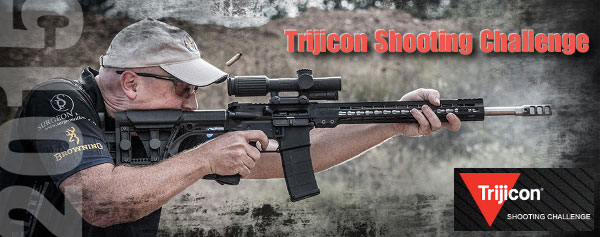
In October 2015, the legendary Jerry Miculek won the Trijicon Shooting Challenge at the Rockcastle Shooting Center. That impressive victory earned Jerry big bucks — a $50,000 grand prize. By any measure, that’s some serious cash — mucho dinero.
To celebrate his October Trijicon Challenge victory back in 2015, Jerry Miculek decided to do some pumpkin carving — with a .50 BMG Barrett rifle.
Shooting the 30-lb rifle off-hand, Jerry blasted some serious holes in Mr. Pumpkin. Needless to say, the results were dramatic, if somewhat messy. Advancing the science of terminal ballistics, Jerry (not surprisingly) confirmed that “the 663-grain bullet did manage to penetrate the pumpkin all the way.”
Jerry Miculek earned $50,000 as the winner of the 2015 Trijicon Challenge.
For hunters in a tree stand, SFC McPhail recommends a position with your weakside leg pulled up and firmly braced on the front rail of the treestand. You can then rest your support arm on your leg. This provides a rock-solid position when shooting from a stand.
Past Team USA Olympian and ISSF World Cup Winner SFC Michael McPhail is one of the world’s best smallbore rifle shooters. He is also an avid hunter, who enjoys harvesting game with centerfire rifles. In a USAMU video, McPhail shows how competition shooting positions can be adapted for hunters. McPhail shows how well-established positions can provide a more stable platform for hunters in the field. That can help ensure a successful hunt. McPhail demonstrates three positions: kneeling, supported prone, and sitting in a tree-stand.
Watch SFC McPhail Demonstrate Positions for Hunters (Good Video):
McPhail first demonstrates the kneeling position. Michael notes: “I like kneeling. It’s a little bit of an under-utilized position, but it’s almost as stable as prone. It allows you get up off the ground a little bit higher to [compensate for] vegetation. For kneeling start by taking your non-dominant foot and put that towards the target, while at the same time dropping down to a knee on the dominant leg. At the same time … wrap the sling around wrist and fore-arm, lean slightly into the target and take the shot.”
McPhail shows a nice “field expedient” use of your backpack. He shows how the basic prone position can be adapted, using the pack as a front rifle support. McPhail recommends pulling your dominant (strongside) leg forward, bent at the knee. According to Michael, this takes pressure off the abdomen, helps minimizes heart beat effects, and helps with breathing.


 33XC — Popular ELR Cartridge


 Hickok45 Carves Pumpkin Faces with Handguns


 In two days, on October 31st, we celebrate Halloween (which was originally called All Hallows’ Eve). That means the neighborhood kids will be ringing doorbells as soon as it gets dark. No doubt some of you procrastinators will wait ’til the last minute to set out your Halloween decorations and Jack-O-Lanterns. Don’t worry, in the video below, our friend, 3-Gun ace


 Matt Emmons is one of the USA’s top smallbore rifle competitors in recent decades. Emmons has competed on the U.S. National Team since 1997 and he has represented the USA in various rifle events at four Olympics Games — 2004, 2008, 2012 and 2016. Matt earned multiple Olympic medals: Gold in 2004 in Men’s 50m Prone*; Silver in 2008 in Men’s 50m Prone; and Bronze in 2012 in Men’s 50m 3X40. Although his specialty is Men’s 3-Position rifle, Emmons’ World Championship and Olympic Gold are in Men’s 50m Prone. He usually shoots an Anschütz or Bleiker .22LR rifle, with Eley Tenex ammo.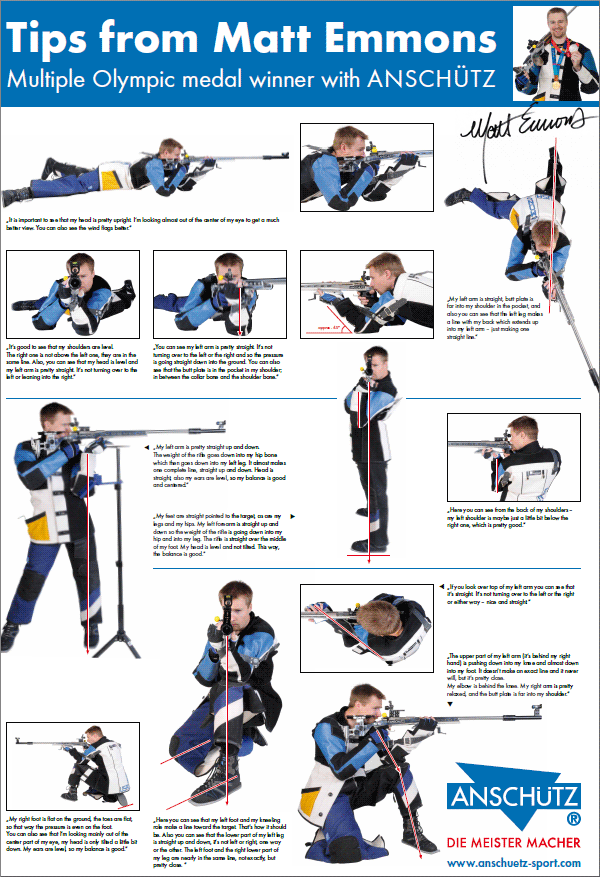



 Team USA Olympian and


