|
|
December 7th, 2013
 Gunsafes can be fitted with either an electronic keypad-style lock, or a conventional dial lock. In our Gunsafe Buyer’s Guide, we explain the important features of both dial and electronic lock systems. Many safe-makers will tell you that consumers prefer electronic locks for convenience. On the other hand, most of the locksmiths we’ve polled believe that the “old-fashioned” dial locks, such as the Sargent & Greenleaf model 6730, will be more reliable in the long run. Gunsafes can be fitted with either an electronic keypad-style lock, or a conventional dial lock. In our Gunsafe Buyer’s Guide, we explain the important features of both dial and electronic lock systems. Many safe-makers will tell you that consumers prefer electronic locks for convenience. On the other hand, most of the locksmiths we’ve polled believe that the “old-fashioned” dial locks, such as the Sargent & Greenleaf model 6730, will be more reliable in the long run.
Here is the opinion of RFB from Michigan. He is a professional locksmith with over two decades of experience servicing locks and safes of all brands and types:
What a Professional Locksmith Says:
For the convenience of quick opening, the electronic locks can’t be beat. However, for endurance and years of trouble-free use, the electronics can’t compare with the dial lock.
I’ve earned my living, the past 22 years, servicing locks of all types. This includes opening safes that can’t otherwise be opened. I do warranty work for several safe manufacturers (including Liberty). What I’ve learned in all those years is that manual dial locks have very few problems. The most common is a loose dial ring which can shift either left or right, which will result in the index point being in the wrong place for proper tumbler alignment. This is simple to fix.
Electronic locks, however, can have all kinds of issues, and none (except bad key-pad) are easy to fix, and when one goes bad, it must be drilled into to open it. IMO, it’s not a matter of ‘if’ an electronic lock will ultimately fail, but a matter of ‘when’ it will fail. Over the past 10 years or so, since electronics have become more and more prevalent, I’ve had to drill open bad electronic locks vs. bad manual dial locks on a ratio of about 20-1.
My professional opinion is to get the manual dial lock, unless you’ve got a good friend who is a locksmith/safecracker.
How Secure is Your Lock?
RFB tells us that both dial and electronic locks offer good security, provided it’s a good quality lock made by LaGard, Sargent & Greenleaf, Amsec, or Kaba/Ilco. However, RFB warns that “Some of the ‘cheaper’ locks (both manual and electronic) however, are very simple to bypass.
An electronic lock that’s glued or ‘stuck’ to the door with double-sided tape, and has its ‘brain’ on the outside of the lock in the same housing as the keypad, and merely sends power to an inner solenoid via a pair of wires through the door, is a thief’s best friend. The good ones have the brain inside the safe, inaccessible from the outside.
No amateur can ‘manipulate’ either a good manual or electronic lock. Both give you a theoretical one million possible combinations. I say ‘theoretical’ because there are many combinations that cannot, or should not, be used. You wouldn’t set your combo on a dial lock to 01-01-01 etc., nor would you set an electronic to 1-1-1-1-1-1, or 1-2-3-4-5-6.”
 Tips for Dial Locks Tips for Dial Locks
RFB notes that “The speed, and ease of use, of a manual dial lock can be improved upon, simply by having your combo reset using certain guidelines. Avoid high numbers above 50. Having a 1st number in the 40s, 2nd number anywhere from 0-25, and 3rd number between 25 and 35 will cut dialing time in half, without compromisuing security. (For mechanical reasons I won’t get into here, the 3rd number of a good manual dial lock cannot — or should not — be set to any number between 95 & 20).”
Tips for Electronic Locks
Electronic locks can have the combination changed by the user much more easily than dial locks. But, RFB explains: “That can be a double-edged sword. More than a few times I’ve had to drill open a safe with an electronic lock that has had the combo changed incorrectly by the user, resulting in an unknown number that nobody can determine. Also, don’t forget that electronic locks have a ‘wrong-number lock-out’. I would NOT rely on the normal quickness of an electronic 6-number combo in an emergency situation. If for any reason (panic etc.) you punch in the wrong number several times, the lock will shut down for a 5-minute ‘penalty’.
 LaGard electronic locks all come from the assembly line set to 1-2-3-4-5-6. Most safe companies (Granite-Winchester is one) leave it at that, and either the retailer or the end user must reset it. My local Walmart store had those same Winchester safes on display, and one day I was in the sporting goods section near the safe display, and another customer asked the Walmart employee if she could open the safe so he could look inside. She said “no, sorry, I don’t have the combination handy”. I walked over, never said a word… just punched in 1-2-3-4-5-6, turned the handle opening the door, and walked away… again not saying a word. They both just looked at me… dumbfounded that I could open it like that. LaGard electronic locks all come from the assembly line set to 1-2-3-4-5-6. Most safe companies (Granite-Winchester is one) leave it at that, and either the retailer or the end user must reset it. My local Walmart store had those same Winchester safes on display, and one day I was in the sporting goods section near the safe display, and another customer asked the Walmart employee if she could open the safe so he could look inside. She said “no, sorry, I don’t have the combination handy”. I walked over, never said a word… just punched in 1-2-3-4-5-6, turned the handle opening the door, and walked away… again not saying a word. They both just looked at me… dumbfounded that I could open it like that.
To get the most life out of that LaGard [or other electronic lock], you should change the battery at least once a year, whether it needs it or not. Low voltage won’t necessarily shut down the lock, but using it in a low voltage situation is bad for the electronics, and eventually will cause lock failure. C’mon, how much does a 9-volt Duracell cost? A few bucks is a good investment.”
IMPORTANT: If you do nothing else to maintain your digital-lock safe, replace the battery every year. And get a fresh battery (with a release date) from the store — don’t just pull a battery out of a storage bin, even if it’s never been used. Old batteries can degrade, even when in storage.
Safe Warranties — What is NOT Covered
RFB cautions that “With most gunsafes the ‘free repair/replacement’ warranty covers the lock only… not the door of the safe, which will have some holes drilled through it to remove that bad lock. The only proper way to repair those holes is to weld them. I don’t know about you, but most of my customers don’t like welding done inside their home, and the safe must be moved outside. Warranties typically won’t cover that moving cost if your safe is in a difficult to move outside location. Trust me, I’ve been there, done that.”
December 7th, 2013
If you are considering purchasing a sound moderator (aka “suppressor” or “can”) for one or more of your rifles, a video from Surefire explains the many benefits of modern suppressors. Sound moderators not only reduce the audible sound coming from a firearm, but they also reduce flash signature, dust signature, and recoil.

In the video below, Surefire highlights the features and benefits of its line of quick-attach suppressors. These are crafted from special alloys that are “stronger at 1000° F than stainless steel is cold.” While the video focuses on the use of suppressors by military and police personnel, these devices are also beneficial for hunters and competitive tactical shooters.

Noise Reduction
A shot from a .308 Win rifle can be as loud as 167 db to the shooter. Notably, the noise level can be just as great to someone positioned one meter away (Source: 1999 Finish Suppressor Trials). What’s worse is that popular muzzle brakes can INCREASE shooters’ noise exposure by 5 to 10 db. The noise level at which hearing damage can occur is about 140 db. A quality modern suppressor can reduce .308 Win rifle shot noise levels to 130 db or less.

 Flash Signature Reduction Flash Signature Reduction
For a varminter, a quality suppressor can reduce the visible muzzle flash from a rifle by 90% or more. That’s important when hunting at night. The bright flash can both spook game and temporarily degrade the hunters’ night vision. Using a suppressor can help the shooter maintain his night-adapted vision.
Recoil Reduction
Recoil reduction is a real benefit. In 1992, Finland’s National Board of Labor Protection tested a variety of suppressors on both bolt-action hunting rifles and select-fire military rifles. The study concluded that recoil reduction was significant: “Suppressors reduced recoil energy by 20 to 30 percent, or about as must as muzzle brakes, making powerful bolt-action hunting rifles considerably less painful to shoot (especially repeated shots in training).”
Dust Signature
When firing prone, a rifle with a muzzle brake kicks up a large cloud of dust. (Watch video at 3:00). In a military situation, this dust signature can reveal the shooter’s position — with potentially disastrous consequences. For a tactical competitor, the dust may prevent recognition of a hit while impeding a rapid second-shot. For the varminter, the dust cloud is a nuisance that may prevent him from seeing his hits, while sending critters scurrying back into cover.
Message to Politicians — Suppressors Will Save Tax Dollars
Here is an interesting finding from the 1992 Finland Suppressor Project: “The unit price of a mass-produced suppressor may be reduced to $50 to $70 (1992 prices). [This low cost] will make cost-effectiveness of the suppressor far better than that of any shooting range [sound-proofing]… and, actually, also better than the cost-effectiveness of hearing protection, especially when several persons are present while just one of them is shooting at a time.” Too bad most politicians can’t seem to understand these points. They still view suppressors as evil tools employed by gangsters, rather than proven safety devices that will reduce noise pollution.
Is the “price of noise” something we really need to consider from a public policy standpoint? Absolutely. In 2004 the Veterans Administration paid out $633.8 million in compensation to 378,982 vets whose main disability is hearing loss. Only a small fraction of those vets saw combat; most damaged their hearing during weapons training activities.
Resources:
Finnish Suppressor Trials 1999 Chart
Finnish Suppressor Trials 1999 (.308 Sound Measurements)
Finnish Suppressor Project 1992 (English Summary)
Finnish Suppressor Project 1992 Procedures
December 6th, 2013
Report based on story by Ashley Brugnone, for The First Shot CMP Online Magazine
After a month of business, the CMP Custom Shop is already stacked to the ceiling with rifles needing customization and repair. With nearly 200 rifles already shipped to the Shop, the gunsmiths running the operation only anticipate more to come in the future. “Things are going great,” said John McLean, CMP Custom Shop manager. “We’re learning how to do everything we need to do in order to get things done as quickly for customers as we can, as well as do a good job.”

The Custom Shop opened its doors on October 1, 2013, offering upgrades, customization, refinishing, and other types of repair for U.S. Military-type rifles. The shop specializes in such rifles as the M1 Garand, M1 Carbine, 1903 and 1903A3 Springfield, the 1917 Enfield and the Krag. CMP will NOT be working on shotguns, pistols, revolvers, M14/M1A, AR15-style rifles or other commercially-produced modern rifles.
A M1917 U.S. Enfield was the first gun to pass through the doors of the custom shop. It was sent to be refinished by a contractor, spending nearly a month being restored. The rifle was then repaired by McLean and his crew and is just about ready to be returned to its owner. McClean explains: “The amount of time we work on pieces varies very widely. It could be five minutes worth of work to a couple days worth of work, depending on what the customer wants.”
John McLean works on a M1917 U.S. Enfield — the first of many rifles to arrive at the shop for repair.
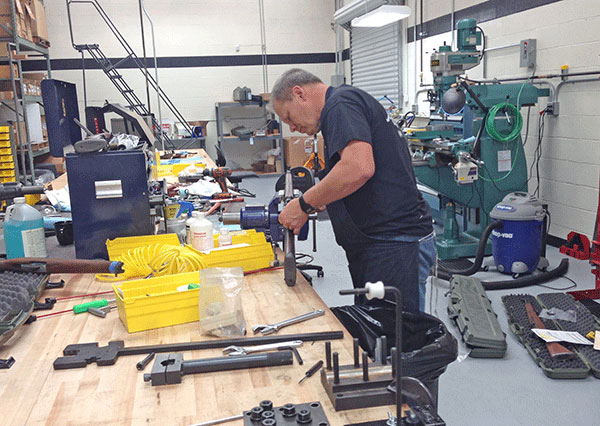
Rifles needing repair can be shipped to the CMP Shop in Anniston, Alabama from anywhere in the country. Then, once repaired, these rifles are shipped back out to the owners. Shelves of rifles to be serviced are presently stacked to the ceiling of the Custom Shop, representing about 90 days’ worth of scheduled work for the CMP gunsmiths.

CMP Custom Shop Also Offers Training Classes
The space where the rifles are repaired, though meant as a machine shop, was also designed as a classroom. Benches facing a projection screen hanging on the wall to display slides and other instructional materials seat a class of about 20 people. Recently, the shop held its first CMP Advanced Maintenance Class (AMC), which involved both hands-on training. Students raved about this class: “Fantastic course. Can’t say enough good about it. Instructors were phenomenal”; “This was by far the very best firearms class I have ever taken.” The CMP Custom Shop will hold six more classes in 2014, However, registration is already full for all sessions.

For a list of services the shop provides, visit the CMP Custom Shop web page. For detailed CMP Custom Shop information, or specific questions, please contact John or Chris at customshop@thecmp.org or call (256) 835-8455, ext. 1113.
December 6th, 2013
 In response to questions from a fellow F-Class shooter, G. Salazar offered some expert advice in an article entitled: Basics: A Few Wind Reading Tips. Here are highlights from that essay. You can read the entire article on Salazar’s Rifleman’s Journal Website. Salazar cautions that: “I certainly am not attempting to make this short item into a comprehensive lesson in wind reading, but there may be a nugget or two in here for the newer shooter. There is, however, no substitute for range time and coaching.” In response to questions from a fellow F-Class shooter, G. Salazar offered some expert advice in an article entitled: Basics: A Few Wind Reading Tips. Here are highlights from that essay. You can read the entire article on Salazar’s Rifleman’s Journal Website. Salazar cautions that: “I certainly am not attempting to make this short item into a comprehensive lesson in wind reading, but there may be a nugget or two in here for the newer shooter. There is, however, no substitute for range time and coaching.”
Preliminary Matters — Holding Off vs. Knob-Turning
Let’s begin by eliminating one topic altogether — I realize that the predominant method of wind correction in F-Class is holding-off with the crosshairs of your scope rather than adjusting the windage knob. I am a firm believer in aiming at the center and turning the knob as needed, but we’ll leave that for another time and focus on seeing what the wind is doing.
The Wave — Wind Cycles and Shot Timing
I find that most shooters begin to shoot immediately when the time commences rather than waiting for an appropriate moment in the cycle, this often leads to lost points early on. If you’ve been scoring prior to shooting, hopefully you’ve observing the flags and your shooter’s shot placement. It’s a very useful way of gaining some insight into the day’s wind patterns before shooting.
 My technique is based on the understanding of wind as a cyclical wave motion. That statement alone should give you plenty to think about[.] Imagine for a moment, a surfer. He waits for a gentle swell, gets moving on it and rides it through it’s growth and ultimately its crescendo and hopefully avoids being swallowed in its crash. Wind typically behaves in the same fashion as that wave and a smart shooter behaves as does the surfer — get on early in the wave, ride through the major change and get off at the right moment. Knowing when to stop shooting is every bit as important as shooting quickly through the predictable portion of the wave; getting back on to the next wave is a matter of delicate judgment and timing. My technique is based on the understanding of wind as a cyclical wave motion. That statement alone should give you plenty to think about[.] Imagine for a moment, a surfer. He waits for a gentle swell, gets moving on it and rides it through it’s growth and ultimately its crescendo and hopefully avoids being swallowed in its crash. Wind typically behaves in the same fashion as that wave and a smart shooter behaves as does the surfer — get on early in the wave, ride through the major change and get off at the right moment. Knowing when to stop shooting is every bit as important as shooting quickly through the predictable portion of the wave; getting back on to the next wave is a matter of delicate judgment and timing.
When you are on that rising (or falling) wave, the idea is to shoot very quickly to minimize the amount of change between shots and to make a small adjustment on each shot. Too many shooters waste time trying to analyze the exact amount of the change, by which time it has changed even more! Get on with it, click or hold over a set amount and fire the next shot quickly. This is the foundation of how I shoot and it is very effective as long as you know when to start, when to stop and you have a good man working the target – a slow marker is the death of this method.
Watch Shots from Other Shooters
We all watch the wind flags, of course, and the trees if your range is so blessed (ours are fairly barren), and many other small wind indicators. Watching the shots of your fellow shooter can also be a very useful tool and should be observed whenever possible. When a good shooter next to you comes up with a poor shot, it should signal you to stop and reassess conditions as they may not be what they appear.
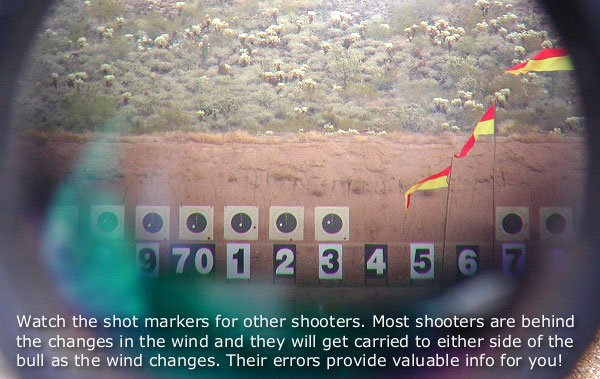
While scoring for another shooter, take a moment to scan the line of targets. You’ll be surprised at how most of the shot markers move in unison to one side and then the other. The sad truth is that most shooters are behind the changes in the wind and they will get carried to either side of the bull as the wind changes. You’ll see this in the targets as they come up, and once learned, you’ll find that the line of targets is as useful as another row of flags.

December 6th, 2013
 Norma USA has released the new Norma Reloading Manual Expanded Edition. To mark Norma’s 110 years in the ammunition industry, Norma is publishing its second reloading handbook (the first was released in 2004). The Norma Reloading Manual has been updated with new cartridges, components, and recipes. This hard-back book now covers hundreds of cartridges for hunters and target shooters. Load data (using Norma bullets and powders) is presented for most American cartridges and many European cartridges. In addition, you’ll find an extensive discussion of the history and science of smokeless powders. The new Norma Reloading Manual is designed for all handloaders — from novice to advanced. Inside the book you’ll find solid reloading advice, plus a history of Norma, one of the world’s leading producers of brass, bullets, and loaded ammunition. If you employ Norma brass or bullets or use Norma powders, this new Reloading Manual can be the “go-to” reference book on your loading bench. Priced at $34.99, the Norma Reloading Manual is available from Norma-USA’s authorized dealers. It is not yet listed on Amazon.com, but we to see it there within a few months. Norma USA has released the new Norma Reloading Manual Expanded Edition. To mark Norma’s 110 years in the ammunition industry, Norma is publishing its second reloading handbook (the first was released in 2004). The Norma Reloading Manual has been updated with new cartridges, components, and recipes. This hard-back book now covers hundreds of cartridges for hunters and target shooters. Load data (using Norma bullets and powders) is presented for most American cartridges and many European cartridges. In addition, you’ll find an extensive discussion of the history and science of smokeless powders. The new Norma Reloading Manual is designed for all handloaders — from novice to advanced. Inside the book you’ll find solid reloading advice, plus a history of Norma, one of the world’s leading producers of brass, bullets, and loaded ammunition. If you employ Norma brass or bullets or use Norma powders, this new Reloading Manual can be the “go-to” reference book on your loading bench. Priced at $34.99, the Norma Reloading Manual is available from Norma-USA’s authorized dealers. It is not yet listed on Amazon.com, but we to see it there within a few months.

December 5th, 2013
Nesika is back. Now part of the Freedom Group, Nesika has introduced new ‘custom shop’ Sporter, Long Range, and Tactical rifles. All three rifles feature composite stocks (with aluminum bedding blocks), Douglas barrels, and Timney triggers. Nesika provides a 5-shot, One MOA accuracy guarantee for all three rifles. These are all fairly expensive for factory rifles but Nesika claims they are built “one at a time, by hand” in the Nesika Custom Shop. The Sporter runs $3499.00, the Long Range is $3999.00, and the Tactical is a daunting $4499.00. You can buy a very nice true custom for that money.


The green Tactical model has an adjustable cheekpiece and spacer-adjustable buttplate. The Tactical comes with a matte black CeraKote finish, a built-in +15 MOA scope rail, and an AAC Blackout muzzle brake/suppressor adapter on the barrel. The Nesika Tactical is offered in .300 Win Mag (26″ barrel) and .338 Lapua Magnum (28″ barrel), with a 5-round DBM provided.


The Long Range Rifle has Nesika’s stainless, open-top Hunter action, with a CeraKote-finished chrome-moly bolt. The Timney trigger breaks at three pounds. Leupold QRW bases come standard, as does a SS
Oberndorf-style hinged floor plate.


The Sporter features a Nesika stainless tactical action. A wide variety of regular and magnum chamberings are offered, and barrels are 24″ or 26″ depending on chambering. Like the Long Range Rifle, the Sporter offers Leupold QRW bases. The rifle weighs eight pounds without optics — a reasonable weight for a hunting rifle. It looks nicely built, but will it harvest white-tails any better than a $450.00 Savage? Maybe not.
December 5th, 2013
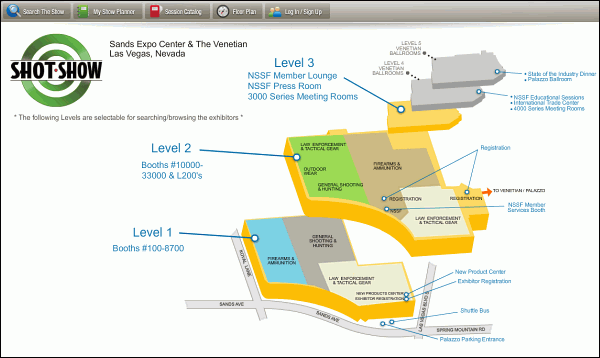
 Believe it or not, NSSF’s 2014 SHOT Show is only a month and a half away. As the entire industry prepares, enthusiasm is already building for the January 14-17 event in Las Vegas, Nevada. Believe it or not, NSSF’s 2014 SHOT Show is only a month and a half away. As the entire industry prepares, enthusiasm is already building for the January 14-17 event in Las Vegas, Nevada.
If you haven’t already done so, register today at ShotShow.org. At the same time you can also sign up for special sessions, such as retailer and law enforcement seminars, SHOT Show University, evening events, and more. Stay up to date on show news through the SHOT Show Blog and connect with the show via Facebook and Twitter.
CLICK HERE to Search Exhibitors, View Floor Plans, or Access the SHOT Show Planner.
December 4th, 2013
The “Top Guns” of the tactical shooting world will be heading to the PRS Finale this upcoming weekend. This event, the culmination of the 2013 Precision Rifle Series, runs December 6-8, 2013 at the K&M Precision Rifle Training facility in Florida. The PRS Finale is a unique championship-style match for the nation’s best tactical shooters, competing with bolt-guns in four divisions: Pro, Semi-pro, Military, and Law Enforcement. To learn more about the PRS, visit PrecisionRifleSeries.com. You’ll find a good article on the ModernServiceWeapons.com (MSW) website, that outlines PRS rules, spotlights PRS match venues, and lists recommended gear. READ MSW PRS Article.

Below is a great video covering the 2012 PRS Finale from start to finish. Held at the Rifles Only range in Texas last December, the 2012 event drew 55 of the nation’s top tactical shooters, who competed for glory… and thousands of dollars worth of cash and prizes. If you like the tactical game, you’ll love this professionally-edited video. Because this video is over 29 minutes long, we’ve provided a timeline so you can quickly find the highlights:
Watch PRS 2012 Championship (Click arrows icon to view full-screen version.)
|
AUDIO: Click Button to hear Rich Emmons Talk about the Precision Rifle Series. |
Video TimeLine:
Registration:1:56
Chrono Work: 2:25
Night Briefing: 3:10
Day One: 4:00+
Running Wire: 5:15
Prone Mover: 6:48
Tower Challenge: 7:12
Net Challenge: 8:43 |
Tri-Level Barricade: 11:28
1/4-Miler Berzerker: 11:52
Mound Shot: 12:57
Platform: 13:14
Platform Mover: 13:42
5-Target Speed Dot: 14:26
The Rat Trap: 15:00
End of Day One Brief: 16:42 |
Day Two Start: 17:22
Ace Challenge: 17:30
Know Your Limits: 18:54
Non-Supported Engage: 19:25
Culverts Only: 20:25
Awards Ceremony: 23:15
Sponsor Credits: 26:50
Interviews with Competitors: 27:24 |


How did the PRS get started? Rich Emmons, PRS President, explains that the concept was to “accumulate ten or so matches and create a point series” that would determine “who was the best [tactical] rifle shooter in the country”. Rich says that: “It’s a points race, but it’s also a big Finale that brings the ‘best of the best’ all together in one ‘monster’ match.” The winner of the 2012 PRS Series was Wade Stuteville, who also took first in the 2012 Finale. Runner-up in the 2012 Series (with a third-place Finale finish) was Team GAP’s Chase Stroud. Jeff Badley of Team GAP finished third in the PRS 2012 Series (and second in the Finale). SEE 2012 PRS Pro Shooters Equipment List.
 How to Get Started in Tactical Matches How to Get Started in Tactical Matches
If this fun and challenging tactical discipline appeals to you, head out to the range and get involved. Begin with local matches and develop your skill set. You don’t have to invest in $6000.00+ worth of rifle and optics. GAP’s George Gardner says you don’t need ultra-expensive gear: “The most important piece of gear is yourself. A one-minute rifle [can] win these matches every time… so you’ve got to bring it. You don’t get good overnight, so for someone trying to get into this, just shoot — you’ve got to get out there and shoot. My advice would be to get out and shoot one of these matches. It doesn’t matter how you place — just do it. You have to have a starting point. If you don’t start, you’ll never finish.”

December 4th, 2013
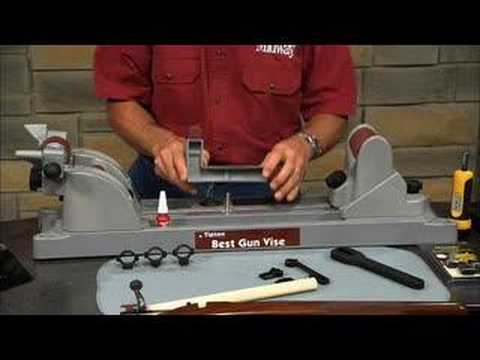
 Every shooter needs a gun vise to hold a rifle securely during cleaning, scope-fitting, and other operations. Ideally the vise should adapt to a variety of firearms and have storage for patches, jags, and solvents. The Tipton Best Gun Vise fits the bill, and right now you can get this versatile vise for just $49.99 at Cabelas.com. The Tipton Best Gun Vise is an highly-adaptable unit that can be configured in many ways. Every shooter needs a gun vise to hold a rifle securely during cleaning, scope-fitting, and other operations. Ideally the vise should adapt to a variety of firearms and have storage for patches, jags, and solvents. The Tipton Best Gun Vise fits the bill, and right now you can get this versatile vise for just $49.99 at Cabelas.com. The Tipton Best Gun Vise is an highly-adaptable unit that can be configured in many ways.
This is a very good deal — you may want to jump on it. Consider this — the lowest price we found elsewhere was $81.57 at Amazon.com. Cabela’s normally sells this unit for $99.99, so the $49.99 Sale Price is a steal.

Best Gun Vise Offers Great Adjustability
 On the “Best” Vise, the front support, center support, and rear support all slide back and forth AND adjust for height. That makes the Best Vise incredibly versatile. It has a convertible central support that works well for AR rifles, and even some handguns. One Tipton Best Vise owner explains: “I am a gunsmith and am always putting guns in awkward positions to work on them. The versatility from the adjustable parts of this vise makes those once awkward positions stable and solid. I have yet to find a position the vise would not hold my gun in. This product was very well thought out and is well worth the money.” On the “Best” Vise, the front support, center support, and rear support all slide back and forth AND adjust for height. That makes the Best Vise incredibly versatile. It has a convertible central support that works well for AR rifles, and even some handguns. One Tipton Best Vise owner explains: “I am a gunsmith and am always putting guns in awkward positions to work on them. The versatility from the adjustable parts of this vise makes those once awkward positions stable and solid. I have yet to find a position the vise would not hold my gun in. This product was very well thought out and is well worth the money.”
Another verified owner of the Tipton Best Gun Vise says: “The center post is reversible with long and short towers which makes it great for break-open guns like single shots, over/under, and my favorite, my AR. The clamps can be pre-adjusted so that you just place the buttstock between the protective clamp pads and squeeze the cam-locks on each side and you’re ready to clean, work on, or even [do a bore-sighting]. The vise has a nice assortment of different shaped storage slots (some round, some rectangular) to hold solvent, patches, brushes or other tools. It is very sturdy… and made to last.”

To really understand how the Tipton Best Gun Vise can adapt to just about any rifle, you have to see it in action. In the video below, MidwayUSA President Larry Potterfield puts a Best Gun Vise through its paces, and shows hows to adjust the various supports.
 Sale Find by EdLongrange. We welcome reader submissions.
December 4th, 2013
 In the spirit of the season, German Salazar offers this gift to our readers: free books. In his Rifleman’s Journal blog, German notes: “I can think of no better gift than knowledge, in this case knowledge of the early days of ballistic science, organized competitive shooting, the NRA and much more.” In the spirit of the season, German Salazar offers this gift to our readers: free books. In his Rifleman’s Journal blog, German notes: “I can think of no better gift than knowledge, in this case knowledge of the early days of ballistic science, organized competitive shooting, the NRA and much more.”
Google, a company we all know for its internet search service, has undertaken a massive project known as Google Books under which they are scanning and making available millions of out-of-print books with uncertain copyright ownership.
Below you will find a list of books, each with a clickable title link and brief description. The title link will take you to the Google Books page for each book. You can read the entire book online, or you can download it to your computer as a PDF file and save it (or print it). You can also create your own Google Library and save the books there for access from any computer. Most of these books are hundreds of pages long, so consider your paper and toner supply before printing!
The Bullet’s Flight From Powder to Target, Franklin W. Mann, 1909, 384 pages.
This is the original and still widely read and highly regarded book on internal and external ballistics. Dr. Mann was a tireless experimenter and had the resources to pursue his interest with the best equipment available. A close friend of Harry Pope as well as other notable experimenters in the early days of smokeless powder, Mann’s work is thorough and well documented. If you’re interested in ballistics, this is the foundation that you must know in order to understand the ensuing century of work in that field.
Irish Riflemen in America, Sir Arthur Blennerhassett Leech, 1875, 216 pages.
This book chronicles the Irish rifle team’s trip to America in 1874 to compete against the best of America’s riflemen as organized by the Amateur Rifle Club of New York when the fledgling NRA ignored the Irish challenge. The book also includes a great deal of history of Irish target shooting and an account of a hunting trip in the American West by members of the party. Well worth reading.

The American Rifle, Townsend Whelen, 1918, 637 Pages.
Townsend Whelen was — and remains for many of us — the dean of American firearms writers. Here is a man who truly did it all and wrote about it with the authority of experience and the modesty of a true gentleman. Despite his roots in Philadelphia society, Whelen sought outdoor adventure and hard living and he found it; we are all richer for his ability to document it so well. This book, written immediately after (and during) the Great War gives a great insight into the period from a rifleman’s perspective: equipment, reloading, shooting — it’s all here. A long book and worth every page.
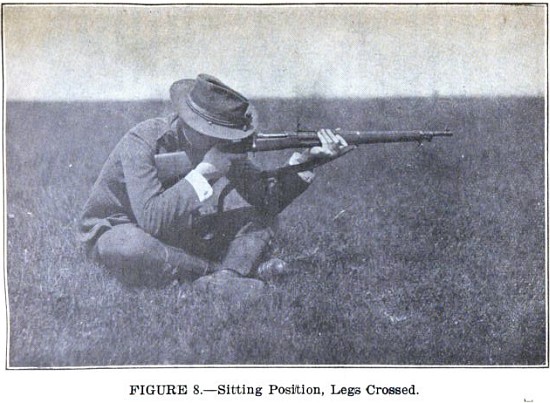
Suggestions to Military Riflemen, Townsend Whelen, 1909, 243 pages.
Townsend Whelen’s pre-war book on marksmanship which brought him to national prominence in the military establishment. Whelen, who coached the national championship winning Army rifle team at Sea Girt in 1906, covers all aspects of shooting the Model 1903 rifle, including long-range shooting. There is also an appendix covering the Krag-Jorgensen as it was still used by various state guard units at the time. Positions, sights, zeroing, windage, score books, slow-fire, rapid-fire, long-range, ammunition, vision; it’s all here. Every topic you see covered in a modern book on marksmanship was covered by Whelen in this book. You can’t know where you’re going if you don’t know where you’ve been — this is a “must read” for the serious marksman and student of history.
Modern Rifle Shooting From the American Standpoint, W. G. Hudson, 1903, 155 pp.
Dr. Hudson was one of the leading lights of the early smokeless era (as well as the Schuetzen era), a contemporary and friend of Mann and Pope, Hudson was a tireless investigator of all things related to accuracy. This very hard to find book is an introduction to target shooting with a detailed overview of equipment and practices and is well illustrated with many plates of top level equipment of the day; a real gem.
Manual for Rifle Practice: Including Suggestions for Practice at Long Range, George Wood Wingate, 1879, 303 pages.
Wingate was the central figure in the founding of the National Rifle Association of America. Like Whelen’s manual 30 years later, Wingate’s book was adopted as the training manual by many military organizations. An authoritative view of marksmanship instruction in the day of the Trapdoor Springfield, Sharps, Remington Rolling Block, and Peabody military rifles. Includes diagrams and instructions for their care.

How I Became a Crack Shot — With Hints to Beginners, W. Milton Farrow, 1882, 204 pp.
Milton Farrow was one of the top shots of his time. Well-bred and highly educated, modesty was not among Farrow’s virtues. This makes for entertaining reading as he describes his travels and his many shooting accomplishments. The Hints for Beginners section has advice that remains sound even these many years later.
The Gun and its Development, William Wellington Greener, 1907 (8th Ed.) 786 pages.
Originally published in 1881, Greener’s book covers all aspects of the firearms world at that time and this 8th edition has many updates. While much of the text focuses on shotguns, there is a great deal of other material in this massive tome, including coverage of gunpowder and explosived, pistols, rifles, target shooting, rifle clubs and much more of interest to the modern rifleman. Many great period advertisements at the end will make you wish for a time machine!

Description and Rules for the Management of the United States Rifle, Caliber .30, Model of 1903, United States Army Ordnance Dept., 1904 (5th rev. 1914), 72 pages.
Here is the original US Army manual for the new Springfield Model 1903. A must-have for the Springfield 1903 buff or student of history.
Cartridge Manufacture, Douglas Thomas Hamilton, 1916, 167 pages.
This book is a well-written, technical presentation of small arms cartridge manufacturing during the Great War. An inside look at all processes at the Frankford Arsenal including case manufacture, bullet manufacture, loading and packaging. A useful historical treatise on the topic.
CLICK HERE for more FREE, downloadable Classic Shooting Titles.
|


