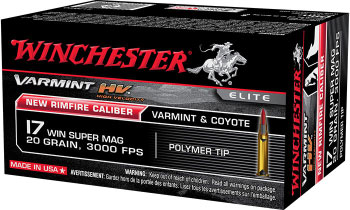
New 3000 FPS Rimfire Round Winchester has announced a new, high-velocity 17-caliber rimfire cartridge, the .17 Winchester Super Magnum (aka .17 Win Super Mag). The .17 Win Super Mag will initially be offered in three bullet types: 20gr plastic tip (Varmint HV), 25gr plastic tip (Varmint HE), and a 20gr JHP (Super-X). The 20-grain varieties boast a 3000 FPS muzzle velocity, earning honors as the fastest Rimfire ammo ever made.
.17 Winchester Super Mag Specifications
Symbol
Sub Brand
Bullet Weight
Muzzle Velocity
S17W20
Varmint HV
20-gr Plastic Tip
3,000 fps
S17W25
Varmint HE
25-gr Plastic Tip
2,600 fps
X17W20
Super-X
20-gr JHP
3,000 fps
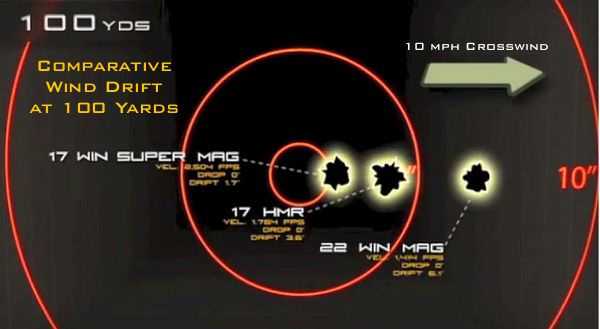
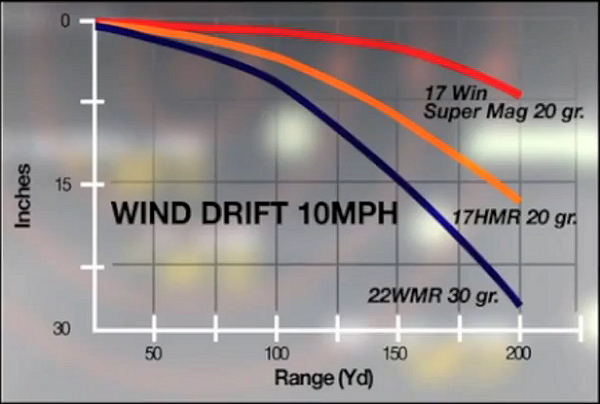
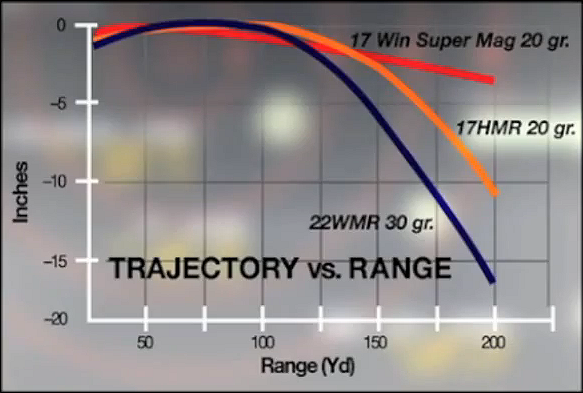
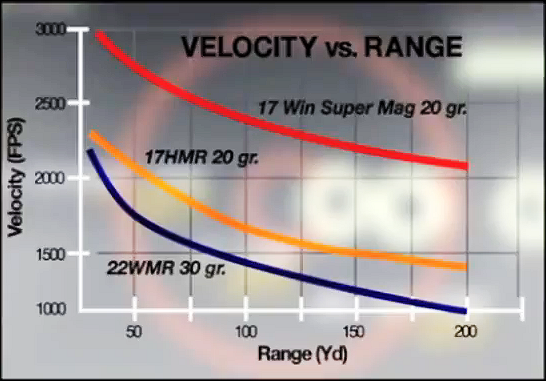
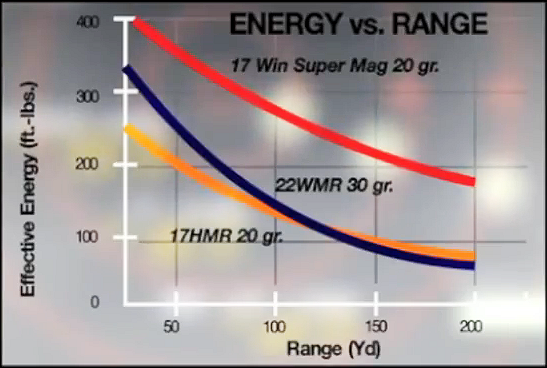
Winchester claims that all .17 Win Super Mag ammo types shoot much flatter than the .22 Win Mag and .17 HMR, while delivering more than 150 percent more energy than both. In addition, the .17 Win Super Mag “bucks the wind” better than any other rimfire ammo — exhibiting significant less horizontal drift at extended ranges. The ammunition should be available at Winchester dealers by April 2013.
Savage Will Release a .17 Win Super Mag Rifle
According to Outdoor Life’s John Snow, Savage will be the first gun-maker to produce rifles chambered in .17 Win Super Mag. Snow says Savage “hopes to have rifles shipping by mid-April”. Winchester states that, later in 2013, two other manufacturers will introduce .17 Win Super Mag rifles.
Ron Spooner writes: “For perspective, contrast the 17 Win Super Mag (no relation to the WSM centerfire cartridges) against the former rimfire velocity champ, the popular .17 Hornady Magnum Rimfire. While the 17 HMR shoots delightfully flat, the 17 Win Super Mag shoots two times flatter and drifts only half as far in the wind. Its 20-grain bullets retain more than twice as much downrange energy, and its 25-grain projectiles nearly triple the energy of the 17-grain V-Max in the HMR load”. Read Ron Spooner Review.
Watch Video Trailer for .17 Win Super Mag Rimfire Ammo
The .17 Win Super Mag offers higher velocities and more downrange energy than ever before. “Our engineers have been developing the top-secret .17 Win Super Mag [cartridge] for more than three years,” said Brett Flaugher, Winchester Ammunition vice president of sales, marketing and strategy. “At 3,000 feet per second it’s the fastest modern rimfire cartridge on the planet. The downrange energy deposited by the .17 Win Super Mag will be a game-changer for varmint and predator hunters everywhere. Now hunters will get the downrange performance of a centerfire cartridge at the more affordable price point of traditional rimfire ammunition. It’s the best of both worlds[.]”
Spawn of a .27-Caliber Nail-Gun
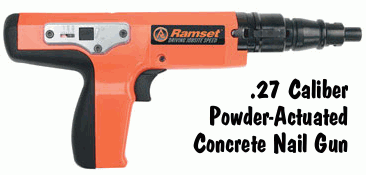
Believe it or not, Winchester’s new .17 Win Super Mag evolved from a “parent case” originally developed for .27-caliber powder-actuated concrete nail guns. Winchester has produced millions of nail gun blanks in .22, .25, and .27 calibers. This new .17 Win Super Mag is derived from Winchester’s .27-cal nail gun blank, necked down to .17-caliber and strengthened with a thicker head and stronger case-walls. With case-walls that are 50% thicker than those on 17 HMR cartridges, the .17 Win Super Mag can operate at 33,000 psi. By contrast, the 17 HMR maxes out at 26,000 psi.
Comment: Will the .17 Win Super Mag Rimfire Round Be a Hit or a Miss?
Initial tests of the .17 Win Super Mag show good ballistic performance compared to the 17 HMR. On the other hand, early accuracy reports have been mediocre, but keep in mind that the gun magazine tests were performed with prototype rifles, on make-shift, wobbly rests (that’s typical). It will be interesting to see how the round can really perform in a good barrel when shot from a stable rest by a skilled trigger-puller.
Economics may dictate whether the .17 Win Super Mag catches on. We’re told this new cartridge will sell for $17.99 per 50-round box. That works out to $0.36 per round, making it about 40-50% more costly than the popular 17 HMR which now sells for $11.50 to $14.00 per 50-round box. At $0.36 per round, the .17 Win Super Mag may exceed the cost of 17-cal centerfire reloads, but then you have the convenience of pre-made ammo. We think that, if the cartridge proves accurate, varmint hunters will pay the extra money (over the 17 HMR) for the added performance, which is pretty significant at 150 yards and beyond. For a squirrel shooter or prairie dog hunter, the .17 Win Super Mag is still much less expensive than the cheapest US-made .223 Rem ammo, which sold for about $10 – $12 per 20-round box (i.e. $0.50 – $0.60 per round) before the current buying frenzy.
Story tip by EdLongRange. We welcome reader submissions.
Do you have an older Anschütz model 54-actioned match rifle with a press-in barrel? Perhaps you want to re-barrel your Anschütz to get a few more years of precision shooting out of the old warhorse? Or maybe you want to adapt the Anschütz to a modern stock design for Silhouette, Rimfire Benchrest, or Prone shooting. If you’ve got an older Anschütz m54 that needs re-barreling, you need to send it to a gunsmith who has a proven track record with the model 54s, a smith who can remove the original barrel properly and then install either a new press-in barrel, or a screw-in barrel (after threading the action).
Mark Penrod — Recommended Anschütz Smith
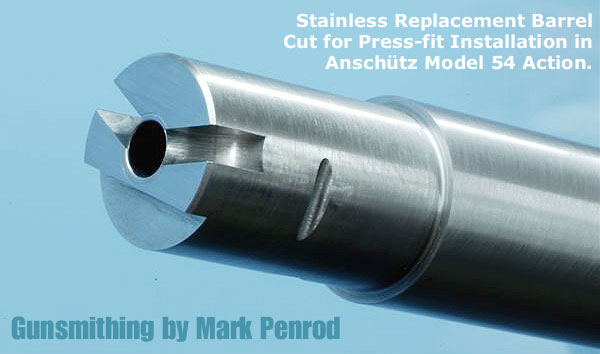
Forum member Edward (aka EAL22) suggests sending Anschütz rimfire projects to Mark Penrod in North Manchester, Indiana. Writing in our Shooters’ Forum, Edward states:
“Penrod can fix you up. He can either press fit [a new barrel] or thread your action [for a screw-in barrel]. He has built guns both ways. Here are some photos of his work. It’s not a bench gun but a nice Anschütz in a System Gemini stock.”
Forum member Bill B. concurs: “I second the suggestion that you send it to Mark Penrod. I’ve just got done working with him on a Hall rimfire action to which he fitted two barrels, a Benchmark and a Lilja. I am building a prone position rifle. He was easy to work with providing good communication, and he’ll do whatever is needed to make your rifle shoot its best.”
Other Recommended Smiths — Bruce Hongista and MT Guns
Another recommended rimfire smith is Bruce Hongisto. Forum member Steve W., a benchrest shooter, says: “My suggestion is to email Butch Hongisto at Hongisto [at] fidnet.com. Butch does amazing work and has made two rimfires for Lapua to use in their factory accuracy evaluations in Finland. Write Butch and ask him which way you should go. He knows his stuff.”
In California, Chesebro Rifles (the successor to Mac Tilton’s MT Guns) has a vast selection of older Anschütz match rifles. Gunsmith Mark Chesebro can rebarrel an older model 54 as well as adapt older Anschütz rifles to modern stocks. Mark even is working on converting single-shot model 54s to repeaters fitted with sturdy, inexpensive CZ detachable magazines. I’ve held the prototype repeater conversion with a 24″ barrel, and it is very cool. I predict the rimfire tactical guys will be lining up to buy these single-shot-to-repeater conversions. Availability is still a few months away. For more info, visit ChesebroRifles.com.
Nightforce Optics has just announced an all-new, side-focus 15-55x52mm Competition™ Scope. It looks very impressive. The ED (low-dispersion) glass in the new 15-55X provides high contrast, low chromatic aberration, and 92% light transmission. And this scope is a LOT lighter than the current 12-42x56mm — that will help guys make weight. We’re pleased to see the new scope offers a fast-focus, European-style eyepiece. Two reticles will be offered initially: the CTR-1 and DDR (shown below). The big question is “how much will it cost?”. A Nightforce dealer told us that Minimum Advertised Price (MAP) will be $2231.00. We’ll run a full report on this scope when we get our hands on it at SHOT Show.
The big news is that, with a weight of just 27.8 ounces, the new 15-55X Nightforce Competition Scope is 24% lighter than the NF 12-42×56 Benchrest model, and 20% lighter than the NF 12-42×56 NXS. Like the NXS series, the new Competition scope offers side parallax adjustment; and, it will focus from 25 yards to infinity, making it suitable for rimfire and airgun shooting as well as centerfire competition. The turrets provide positive and repeatable .125 MOA (eighth-minute-of-angle) clicks. Each rotation provides 5 MOA of adjustment. And we’re pleased to see that the Competition Scope offers a full 60 MOA of travel — for both windage and elevation. That’s impressive. CLICK HERE for more information.
Review by James D. Mock
Around the first of November, I received a call from Boyd Allen. During one our conversations about all things Benchrest, he mentioned that Barnes made conventional match bullets. This I did not know. Most hunters are familiar with the excellent Barnes premium hunting bullets, but many like me did not know that they make match bullets also, marketed as “Match Burners”.
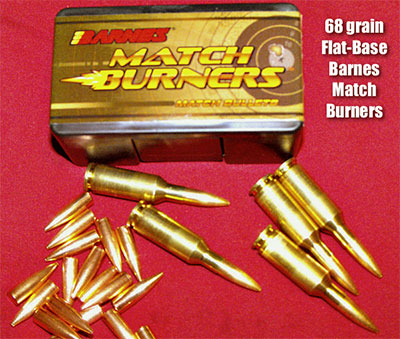
After contacting the good folks Barnes to request some Match Burners for a review in Precision Shooting Magazine, I received a box of 6mm 68gr match bullets and a box of 6mm 105gr VLDs. By the time I got these, I learned that Precision Shooting would no longer print a magazine.
These bullets sat around the house for quite some time, but I finally got around to testing them. First of all I weighed many of the bullets and found that the nominal 68gr bullets averaged 68.07 grains and the 105s averaged 105.08 grain. The 68gr bullets were .845 inches long and measured .2432 on the body and .2435 on the pressure ring of these flat-base bullets. The VLDs measured 1.192 inches long with a diameter of .2433 at the largest point and the boat tail measured .180 long with a diameter at the base of .210.
Flat-Base 68gr Match Burners Prove Very Accurate
Although I shot the 68gr bullets in some fairly “strong” conditions, they performed well as you can see below. I loaded the rounds with 28.4 grains of the new Accurate LT-32 powder (from Western Powders).
Above is a target with three 3-shot groups shot with the 68-grainers. I chose the following seating depths: (from left to right) .020 off jam*; .010 off jam; and .005 off jam. Since then I have shot a few more groups, and have been pleasantly surprised.
Barnes Match Burner 105gr VLDs Perform Well
For the 105 VLDs I chose my Dasher with a 26.5″ Bartlein gain twist (1:8.25″ to 1:7.75″). Like the 68gr bullets, these VLDs were a pleasant surprise. I plan to shoot these bullets again as soon as the weather improves.
*Editor’s Note: The term “Jam” (or “Jam Length”) is used to describe a maximum practical bullet seating dimension, typically measured from base to bullet ogive. As James uses the term, “Jam” means the maximum functional length to which he can seat a bullet in his brass, with his selected neck tension, before the bullet starts to move backwards in the case (in the direction of casehead) when he closes the bolt. Thus, if James specifies a load that is “.010 off Jam”, this means that James has seated the bullet ten-thousandths shorter than maximum functional length in his gun. His bullets are still engaged in the rifling at “.010 off Jam”, and probably still touching the rifling at “.020 off Jam”. The “Jam” length is specific to James’ barrel and brass. In different barrels, “Jam Length” can vary according to numerous factors — bore dimensions, land configuration, neck tension, bullet geometry et cetera.
In 2012’s final week, the Port Malabar Rifle & Pistol Club of Palm Bay, Florida held the Fifth Annual Snowbird X-Miss Midrange Prone and F-Class Match. This NRA Registered Tournament drew almost 60 competitors from around the country plus Fritz Braun from Brazil. For the first time ever, the Snowbird had a 300/500/600 event the first day with 600-yard match the second two days. Competitors saw various kinds of weather varying from chilly to 74 degrees. There were some drizzles on the last day of the individual matches but the rain held off long enough for all to complete the event
Kent Reeve took the High Overall 3-Day aggregate for the Mid-Range Prone with a score of 1797-132X. Second overall went to Sam Yarosh with a score of 1793-109X. Third overall to Wayne Forshee with 1788-91X. In F-Open, reigning FL State F-Open Champion Mark Finizio won the 3-day event with a score of 1790-100X. Second was Ken Adams, 1780-77X and third place overall went to Tom Goodman, 1778-68X. Complete results are listed on www.pmrpcrifle.com.
Many Record-Setting Performances at the X-Miss Match
Numerous NRA National Records were set at the 2012 Snowbird X-Miss event. Kent Reeve shot an incredible 200-22X at 600 yards. LeeAnn Finizio set F-Open Ladies’ records at two yardages: 300 yards, (197-[?X]); 600 yards ( 200-14X). Sam Yarosh shot a new record of 197-12X in the 500-yard any sight police category.
Team Event on Sunday
On Sunday, December 30, 2012, there was a team match. The F-Class Open Division saw a tight race among Miami’s Signal 20 F-Class Team, the S&S Precision Rifle Team, and the BNX F-Class team. Team BNX ended up in first place ahead of runner-up S&S Precision Team, shown below.
The Snowbird X-Miss Match was conceived to let folks shoot in the dead of winter when they can’t compete at home. At the Snowbird X-Miss Match NRA classifications are used AND rifles are classed by type: Palma, Iron Sight, Service Rifle, and Scoped Rifle. And the usual F-Open and F-TR divisions are recognized. Awards are given to all these types. Thus a shooter with a 6.5-2284 scoped rifle is not competing against someone with an iron-sighted AR15 Service Rifle. The Snowbird will be held again next season at the end of 2013.
Major sponsors this year included Sinclair International, S & S Precision Rifles, D & B Supply, Bartlein Barrels, Krieger Barrels, Berger, and Sierra. Others included Creedmoor Sports, PMA, K & M, Lee Precision, Forester Products, Redding, Dewey, Precision Reloading, and Jim Owens.
Remington will introduce a new bolt-action rifle at SHOT Show, the Model 783. Remington positions the new model 783 as a mid-level offering between the Model 770 and Model 700 SPS, according to John Fink, Freedom Group Rifle Product Manager. This new rifle was first revealed in an American Rifleman article by Richard Mann, who tested an early production version in September 2012. Mann reports: “The ‘7’ in the model designation comes from the 700 line of rifles, the ‘8’ is kind of a throwback to the affordable but reliable model 788, which was discontinued 20 years ago, and the ‘3’ is for the three in 2013. The suggested retail price is $451, but you can expect street prices to be closer to $400.”
Remington is claiming sub-MOA accuracy for the Model 783, as demonstrated by the “teaser” photo sent out to Remington customers earlier this week:
Adjustable Trigger with Insert
The rifle features a polymer stock, cylindrical action, and an adjustable trigger with a control insert (as used on the Savage AccuTrigger and Marlin Pro-Fire trigger). Remington’s “CrossFire Trigger System” is pre-set at 3.5 lbs pull weight. According to the reviewer, Remington’s CrossFire Trigger is “similar in appearance to the Savage AccuTrigger and the Marlin Pro-Fire Trigger; it has a center lever that locks the trigger until it is fully depressed.” (We think selecting “CrossFire” as a product title was a dumb move by Rem’s marketing guys.)
Model 783 Has Barrel Nut System
Remington has borrowed a trick from Savage, employing a barrel nut system for fitting barrels to model 783 actions. The model 783’s two-lug bolt features a Sako-style sliding-plate extractor — this is a departure from the system on a Rem 700. Scopes can be mounted with two Model 700-spec front scope bases. However, Remington plans to offer integral scope mounts in the near future.
Designed for game hunters, the model 783 will initially be offered in four chamberings: .308 Winchester (short action), .270 Winchester, .30-06 Springfield, and 7mm Rem. Magnum. Remington says it will roll out more chamberings by the middle of 2013. In addition a compact-stock version with a shorter length of pull will be offered. Barrels are 22″ or 24″ with a “magnum contour”. Model 783 rifles will be produced in the Freedom Group’s Mayfield, Kentucky manufacturing plant.
In our Shooters’ Forum a reader recently asked: “How much neck tension should I use?” This prompted a Forum discussion in which other Forum members recommended a specific number based on their experience, such as .001″, .002″, or .003″. These numbers, as commonly used, correspond to the difference between case-neck OD after sizing and the neck OD of a loaded round, with bullet in place. In other words, the numbers refer to the nominal amount of interference fit (after sizing).
While these commonly-used “tension numbers” (of .001″, .002″ etc.) can be useful as starting points, neck tension is actually a fairly complex subject. The actual amount of “grip” on the bullet is a function of many factors, of which neck-OD reduction during sizing is just one. Understanding these many factors will help you maintain consistent neck tension as your brass “evolves” over the course of multiple reloadings.
Neck Tension (i.e. Grip on Bullets) Is a Complex Phenomenon
While we certainly have considerable control over neck tension by using tighter or looser bushings (with smaller or bigger Inside Diameters), bushing size is only one factor at work. It’s important to understand the multiple factors that can increase or decrease the resistance to bullet release. Think in terms of overall brass-on-bullet “grip” instead of just bushing size.
One needs to understand that bushing size isn’t the beginning and end of neck tension questions, because, even if bushing size is held constant, the amount of bullet “grip” can change dramatically as the condition of your brass changes. Bullet “grip” can also change if you alter your seating depth significantly, and it can even change if you ultrasonically clean your cases.
Bullet grip is affected by many things, such as:
1. Neck-wall thickness.
2. Amount of bearing surface (shank) in the neck.
3. Surface condition inside of neck (residual carbon can act as a lubricant; ultrasonic cleaning makes necks “grabby”).
4. Length of neck (e.g. 6BR neck vs. 6BRX).
5. Whether or not the bullets have an anti-friction coating.
6. The springiness of the brass (which is related to degree of work-hardening; number of firings etc.)
7. The bullet jacket material.
8. The outside diameter of the bullet and whether it has a pressure ridge.
9. The time duration between bullet seating and actual firing (necks can stiffen with time).
10. How often the brass is annealed
— and there are others…
Seating Depth Changes Can Increase or Decrease Grip on Bullet
You can do this simple experiment. Seat a boat-tail bullet in your sized neck with .150″ of bearing surface (shank) in the neck. Now remove the bullet with an impact hammer. Next, take another identical bullet and seat it with .300″ of bearing surface in another sized case (same bushing size/same nominal tension). You’ll find the deeper-seated bullet is gripped much harder.
Neck-Wall Thickness is Important Too
I have also found that thinner necks, particularly the very thin necks used by many PPC shooters, require more sizing to give equivalent “grip”. Again, do your own experiment. Seat a bullet in a case turned to .008″ neckwall thickness and sized down .003″. Now compare that to a case with .014″ neckwall thickness and sized down .0015″. You may find that the bullet in the thin necks actually pulls out easier, though it supposedly has more “neck tension”, if one were to consider bushing size alone.
In practical terms, because thick necks are less elastic than very thin necks, when you turn necks you may need to run tighter bushings to maintain the same amount of actual grip on the bullets (as compared to no-turn brass). Consequently, I suspect the guys using .0015″ “tension” on no-turn brass may be a lot closer to the guys using .003″ “tension” on turned necks than either group may realize.
Toward a Better Definition of Neck Tension
As a convenient short-cut, we tend to describe neck tension by bushing size alone. When a guy says, “I run .002 neck tension”, that normally means he is using a die/bushing that sizes the necks .002″ smaller than a loaded round. Well we know something about his post-sizing neck OD, but do we really have a reliable idea about how much force is required to release his bullets? Maybe not… This use of the term “neck tension” when we are really only describing the amount of neck diameter reduction with a die/bushing is really kind of incomplete.
My point here is that it is overly simplistic to ask, “should I load with .001 tension or .003?” In reality, an .001″ reduction (after springback) on a thick neck might provide MORE “grip” on a deep-seated bullet than an .003″ reduction on a very thin-walled neck holding a bullet with minimal bearing surface in the neck. Bushing ID is something we can easily measure and verify. We use bushing size as a descriptor of neck tension because it is convenient and because the other important factors are hard to quantify. But those factors shouldn’t be ignored if you want to maintain consistent neck tension for optimal accuracy.
Consistency and accuracy — that’s really what this all about isn’t it? We want to find the best neck tension for accuracy, and then maintain that amount of grip-on-bullet over time. To do that you need to look not only at your bushing size, but also at how your brass has changed (work-hardened) with time, and whether other variables (such as the amount of carbon in the neck) have changed. Ultimately, optimal neck tension must be ascertained experimentally. You have to go out and test empirically to see what works, in YOUR rifle, with YOUR bullets and YOUR brass. And you may have to change the nominal tension setting (i.e. bushing size) as your brass work-hardens or IF YOU CHANGE SEATING DEPTHS.
Remember that bushing size alone does not tell us all we need to know about the neck’s true “holding power” on a bullet, or the energy required for bullet release. True bullet grip is a more complicated phenomenon, one that is affected by numerous factors, some of which are very hard to quantify.
Here’s a good deal for fans of the “Terrific Twenties” — .204-caliber, low-recoil cartridges. Midsouth Shooters Supply now has Barnes 26gr “Varmint Grenade” bullets on sale. Midsouth has marked down 250-count boxes of these 26-grainers from $36.74 (reg. price) to $31.99 (sale price). The promo price works out to just $12.79 per hundred bullets. If you have a .204-Cal rifle, and are planning a prairie dog safari or ground squirrel hunt in the months ahead, you may want to grab these bullets while they’re on sale. These 26-grainers will work with 20-Cal cartridges from the .204 Ruger all the way down to the diminutive .20 Vartarg.
SHOT Show 2013 kicks off in two weeks in Las Vegas. One of our top priorities is to talk with the bullet makers from Berger, Hornady, Lapua, and Nosler.
At SHOT Show 2012 we chatted with Berger Ballistician Bryan Litz about Berger’s popular line of Hybrid bullets. Berger now offers a wide range of Hybrids in multiple calibers and weights. In fact, for .30-Caliber shooters, Berger now offers six different Hybrid match bullets, with weights from 155 grains up to 230 grains. New .338 Cal Tactical Hybrids were released in 2012 and big .375 Cal, and .408 Cal Hybrids are in the works (read more below).
Bryan tells us: “The hybrid design is Berger’s solution to the age old problem of precision vs. ease of use. This design is making life easier for handloaders as well as providing opportunities for commercial ammo loaders who need to offer a high performance round that also shoots precisely in many rifles with various chamber/throat configurations.”
For those not familiar with Hybrid bullets, the Hybrid design blends two common bullet nose shapes on the front section of the bullet (from the tip to the start of the bearing surface). Most of the curved section of the bullet has a Secant (VLD-style) ogive for low drag. This then blends in a Tangent-style ogive curve further back, where the bullet first contacts the rifling. The Tangent section makes seating depth less critical to accuracy, so the Hybrid bullet can shoot well through a range of seating depths, even though it has a very high Ballistic Coefficient (BC).
In the video we asked Bryan for recommended seating depths for 7mm and .30-Caliber Hybrid bullets. Bryan advises that, as a starting point, Hybrid bullets be seated .015″ (fifteen thousandths) off the lands in most barrels. Watch the video for more tips how to optimize your loads with Hybrid bullets.
Berger is Developing New Large-Caliber and Hunting Hybrids
In related news, Berger announced that it will be offering a series of .338-caliber Hybrids. First Berger is reintroducing the Gen 1 .338 Cal, 300gr Hybrid bullet in Berger’s Hunting line. Berger will also be making a 250gr Hybrid Hunting bullet using the same type of jacket as the original Gen 1 300gr Hybrid bullet. In addition, Berger has released a .338 Cal 250gr Match Hybrid OTM Tactical bullet, along with a 300gr Match Hybrid OTM Tactical projectile.
More big bullets are on the drawing board. Our source says “.375 Caliber and then .408 Caliber are the next new calibers to be made at Berger”. These are in the design phase, and Berger needs to build a new machine, so the .375s and .408s will not be available until 2013 at the earliest.
By Michael Bussard, edited by John B. Allen, David Kosowski, Charles F. Priore, Jr.
If you’re a serious shooter, the latest 4th Edition of the Ammo Encyclopedia (released in August, 2012), belongs in your library. This 972-page book is probably the most comprehensive and up-to-date book in print covering current and obsolete cartridges and shotshells. Bussard’s Ammo Encyclopedia is a massive resource work. The 4th Edition now boasts over 100 chapters.
One of the best features is a 12-page color section depicting actual size drawings of 265 current rimfire/centerfire cartridges and shotshells. You won’t find that many “life-size” cartridge drawings in one place even on the internet. Cartridge profiles and ballistic charts have been expanded to include all new factory cartridges. The authors have even included air rifle pellets and historical images and charts. Softcover, 972 pages.
Comments from guys who bought the book:
“This book contains a vast array of information on many modern and even obsolete ammunition. Definately recommend for any modern reloader novice or experienced.” – Duggaboy460
“It’s a great reference book for individuals who reload their own ammunition. There is a lot more info in this Edition. Everyone who likes this information should have it in their library.” – Reloader
“I like the general and technical comments that are available for each and every cartridge. Information that predicts if a cartridge will stay in production for many more years or rapidly become obsolete.” – RSL1


 New 3000 FPS Rimfire Round

 Spawn of a .27-Caliber Nail-Gun
 Mark Penrod — Recommended Anschütz Smith



 After contacting the good folks Barnes to request some Match Burners for a review in Precision Shooting Magazine, I received a box of 6mm 68gr match bullets and a box of 6mm 105gr VLDs. By the time I got these, I learned that Precision Shooting would no longer print a magazine.


 Adjustable Trigger with Insert
 In our
 Neck-Wall Thickness is Important Too


 By Michael Bussard, edited by John B. Allen, David Kosowski, Charles F. Priore, Jr.


