|
|
April 2nd, 2007
 Credit Joe Friedrich for this simple yet effective accessory for your benchrest rifle. Joe shoots a .22LR with a tuner. When he added weights to his tuner, he found his rifle no longer balanced well. He wanted to add a substantial amount of weight in the rear without drilling holes in the stock. He also wanted the weight to be removable, and easily placed on another rifle in his stable.
At a local sporting goods shop Joe found a 1.5-lb ankle weight that comes in a padded, tubular elastic cover. It’s like a 1.5-lb sausage in a soft, stretchy nylon cover. (Imagine a really fat, heavy bungee cord). Joe simply attached a plastic zip tie at the end to make a loop that fits perfectly over his buttstock. To “tune” the rifle’s balance, Joe just slides the ankle weight fore and aft on the stock. Yesterday we tried it on a variety of different BR stocks (including a McMillan Edge) and it worked perfectly. This is a great invention, and would work with sporter rifles and ARs just as well. Click HERE for big photo.

April 1st, 2007
The “star” of the recent IWA Euro Shot Show was the impressive new ZT (Zero Twist) ‘Valkyrie’ Heavy Gun from Deutsche Waffenwerkes. Innovative in the extreme, the Valkyrie fires a fin-stabilized 400gr .338-caliber projectile through a smoothbore barrel. Chief Designer Paul Ührleggen explained: “we saw the benefits Mr. Tooley has achieved with assymetric stocks in reducing rifle torque. We concluded that, with fin-stabilization, we could run the bullet through a Zero-Twist barrel. With no rifling to spin the bullet, there is no torque at all. Another problem solved by German engineering.” Accuracy remains elusive however: “Sub-MOA performance is hard to achieve with such a radical rifle. There are many bugs to work out. But we plan to offer the Valkyrie with an iron-clad .338 MOA one-shot group guarantee”. At present, with a weight of 40 kilos, the Valkyrie can only compete in Heavy Gun class. However, Waffenwerkes has teamed with Glock to build an all-plastic 4-kilo sporter version of the Valkyrie–but more fine-tuning is needed. According to Mr. Ührleggen, “there have been some minor barrel melting issues.”

We asked Mr. Ührleggen how Waffenwerkes selected the name Valkyrie for the new gun. “Here at Waffenwerkes we are all fans of your American cinema, and especially the movie Apocalypse Now — you know the scene with the helicopters and the Wagner music–Dum da da dum dum, Dum da da DUM dum. That’s Die Walküre–the Ride of the Valkyries. (Play MUSIC). It seemed apropos. Plus we enjoy playing that music really loud when we shoot this rifle.”
One very high-tech component didn’t make it into production. Ührleggen explained: “We engineered a voice-activated trigger, but we found that this was affected by ambient noise. To our surprise, field testing revealed loud noises to be a problem at shooting matches. Also, our engineers could not agree on the voice-activation command. I personally favored ‘She Bangs’, but my colleagues are not pop music afficionados.”
 The Valkyrie’s most remarkable feature is its optical guidance system. Optics engineer Horst Nichtfarze explains: “We learned from your American gun forums about problems with benchrest scopes not holding zero, so we concluded ‘why use a scope at all’? Borrowing smart-bomb technology, we have placed a tiny camera inside the ceramic nose of our bullets. This feeds to a rifle-mounted LCD screen so the shooter can literally see the bullet fly into the target. Since the projectile is fin-stabilized, we don’t have spin issues.” The fins are controlled by a joystick on the buttstock, so theoretically, one can steer the bullet to the target. Nichtfarze admitted, however, “we do have a little response time issue at short range”. The cost of the in-bullet camera was prohibitive until Nichtfarze stumbled on a solution: “My girlfriend had this old cell phone that was kaput. We salvaged the phone’s camera very easily. In Germany everyone throws away their phone after a year, so there is no shortage of teeny weeny video cameras to put in the bullets.”
Waffenwerkes’ Valkyrie .338 ZT is an engineering tour de force, setting new standards for innovation. But this level of technology doesn’t come cheap. The rifle retails for 8,000 Euros, about $10,647 US Dollars. Mr. Ührleggen conceded, “Sure it’s expensive, but I have to pay for my Porsche somehow.” In the months ahead, Deutsche Waffenwerkes also plans to release a “Tactical” version of the Valkyrie. Mr. Ührleggen noted, “we are very anxious to get the Tactical rifle to market. Priced at 14,000 Euros ($18,632 US), it will be called the RT (“Rambo Tactical”) edition and feature 15 linear feet of Picatinny rails, a 3″-diameter depleted uranium bolt knob, Digital Flecktarn Camo paint scheme, and an X-Box compatible LCD screen. Our marketing director, Tella Liezig, feels this will be the real money-maker.”
March 31st, 2007
MidwayUSA has the Tipton Gun Vise (item 607786) on sale for $34.99 now through April 30, 2007. This is built from gray molded plastic, with rubberized pads front, center, and rear. The base features a molded tray for tools and circular cut-outs for solvent bottles. This editor has owned and used one of these Tipton gun vises for over four years. It has performed admirably and has been impervious to every brand of solvent I’ve tried. The front bracket is wide enough for 3″ fore-arms, and the rear bracket clamps securely with a quick-release cam. Weighing about 8 lbs., the unit is light enough to pick up one-handed. This makes it easy to move around your loading room. This is a solid product that will give you years of service. More user reviews.

March 31st, 2007
Zeiss has introduced a new series of holdover reticles for its Conquest and Victory scopes. Because Rapid-Z reticles are in the second focal plane, they remain the same size at all magnifications. By selecting a particular zoom power, the holdover can be precisely tailored to your load. In addition to holdover reference points, the reticles have horizontal hold points for windage (5mph and 10mph). Five different Rapid-Z reticles are offered: 600, 800, 1000, 1200, and Varmint. We think the Rapid-Z Varmint, in the 6.5-20 Conquest scope, is a great choice for varminters. All Rapid-Z reticles can also estimate range through the use of a simple ranging bracket feature. (The shooter will need to know the size of the target in relation to the brackets.) On SWFA.com’s Optics Talk Forum, you can see (and read about) all five Rapid-Z reticles. Click HERE for an interactive Flash demonstration showing how the Rapid-Z reticles function.

March 30th, 2007
There has been much interest in Ultrasonic case cleaning. Here are two tips to achieve the best results:
De-gas the Solvent Before Adding Brass
One of our readers, Eddy M. in Glasgow, Scotland writes: “I have read a couple of articles recently about ultrasonic cleaning of cases and not one has mentioned de-gassing the cleaning liquid before starting to clean items. As an engineer who travelled around for ten years servicing ultrasonic tanks I would like to point out that the cleaning liquid when first put into the tank has invisible disolved air bubbles in it which will absorb ultrasonic energy until the liquid de-gasses. (10 minutes in a powerful industrial tank–longer in a small hobby tank). You must let the tank run on its own for 20 minutes on the first use of the liquid to allow this to happen. Only after the new liquid or re-introduced liquid has been de-gassed will the tank give good results.”
Apply Dry-Lube Inside Case Necks
Jason Baney has found that Ultrasonic cleaning leaves the inside of the case-necks so “squeaky clean” that there is excess friction when seating bullets. On a fired case that has been cleaned conventionally (no ultra-sound), a thin layer of carbon remains to lubricate the bullet entry and exit. To restore that lubricity in cases cleaned with ultrasound, Jason applies a dry lube to the inside of his case necks. Jason prefers the $10.95 moly dry lube kit from Neconos.com. With this kit, small carbon steel balls transfer moly to the neck when you place your brass nose-down in the container.

March 30th, 2007
There have been some questions on our Forum regarding the recommended procedure for flash-hole uniforming on Lapua 220 Russian (PPC parent), PPC and 6BR cases. The factory spec on these cases is 1.5 mm (.059″) for the flash hole. In the past, we found it was normally not necessary to touch the flash holes on Lapua PPC/BR cases. However, with recent lots, a few cases per box will have a little sliver of brass that may obstruct part of the flash hole. It is advisable to remove this–but you don’t want to enlarge the rest of the flash hole in the process. There are a lot of tools on the market to do this job, but we’ve found that some will actually enlarge the flash hole to as much as .067″ which is not good.
The problem with the Lapua brass is a little “quarter-moon” of brass that forms on one side of the flash hole. The objective is to knock that out without increasing the diameter of the flash hole. A simple way to do this is to simply punch out the hole using a #53 or 19/32 pin drill bit in a Pin-Vise (below, about $5). The #53 bit measures .0595″ while a 19/32 is .059375″. You can find pin vises and bits at hobby stores or eHobbyTools.com.

Sinclair Int’l has two flash-hole tools, one that works from the outside (DB 07-3000) and one that works from the inside (DB-2000). The DB-2000 is spec’d to ream a .060″ hole. Depth of cut is set with a conical collar that indexes on the case mouth. Note, this tool can also cut a chamfer or funnel on the top edge of the flash hole. We recommend you set the depth stop so you only clean up the flash hole and do NOT cut a funnel. We also recommend you actually measure the cutter tip to ensure it is the correct diameter–some examples have been oversized–the same problem we found with other brands.

Both Forster and Redding supply dies with a .057.-058″ decapping pin for use with BR and PPC cases. However, the “normal” small decapping pin on some other dies is .0625 (1/16″). Sinclair makes a second tool, DB 07-3000, that cuts to this diameter (.0625″), going in from the bottom side.

Sinclair explains: “This tool was designed specifically to ream small flash holes (.060″) to exactly .0625″. It enlarges the holes just enough for the die maker’s decapping pins to go through without getting stuck… This 3-piece tool has a stainless steel guide that centers the reamer in the primer pocket from the outside.”
Which tool should you use? We prefer to keep the flash-hole as close to factory spec as possible. However, plenty of BR matches have been won with cases reamed to .0625″. The important thing is to remove whatever obstruction may exist in the brass, and make sure all the cases are uniform, whatever hole size you prefer.
March 29th, 2007
Butch Lambert has been developing his ShadeTree Engineering Co-Axial rest top over the past couple of years. He’s made a variety of enhancements, making the unit smoother in its motion. Joystick “feel” can be adjusted according to personal choice and weight of rifle. He also now offers a longer joy-stick option for prone and F-Class shooters. The current unit fits most popular quality front rest bases including those from Bald Eagle, Hart, and Sinclair (all 3/4″ center post). Butch can also adapt the rest to a MidwayUSA Caldwell BR base with a 1″ diameter center post. Butch sent us these photos recently, showing his top fitted to a Bald Eagle slingshot base. The ShadeTree Coaxial Rest top costs $375.00 (sandbag extra). Call Butch at (972) 524-2247 for current costs to adapt his top for use with the green Caldwell 1000-yard bases, which are available separately from MidwayUSA for $70.99 (item 532194).


March 29th, 2007
 Precision Shooting magazine’s February ’07 issue featured an excellent write-up about Bartlein Barrels, an up and coming barrel-maker that is producing outstanding match barrels. Click HERE to read the story, by Robert Whitley. We were sufficiently impressed with reports about Bartlein barrels from top smiths such as Alan Warner and Richard Franklin, that we chose Bartlein to produce two barrels for AccurateShooter.com’s 6×47/6.5×47 Lapua test gun now in the works.
The two founders of Bartlein are Tracy Bartlein and Frank Green. Both men worked at Krieger Barrels for many years. Bartlein employs advanced CNC machining techniques to produce barrels that are super-straight and dimensionally uniform. Alan Warner says the Bartlein barrel he installed on his wife’s 6.5-284 F-Classer shoots close to 1/4 MOA at 600 yards and cleans up easily. Richard Franklin told us the Bartleins he’s received have been outstanding. Robert Whitley has ordered eight Bartlein barrels, and he reports they are “great on the outside [and] when bore scoped, looked perfect on the inside as well”.
March 28th, 2007
Southern Californian Joe Friedrich achieved the “Holy Grail” of ARA 50 rimfire shooting, a perfect 2500 score, and set a pending new 4-target Aggregate Record this past weekend. By most accounts, only a half-dozen or so perfect 2500s have been shot in ARA competition, but Joe’s Agg (2450, 2500, 2450, 2450, total 9850, average 2462.5) may be even more impressive. Top rimfire shooters agree this “will be the benchmark to beat for quite some time”. Joe, who is also the 2006 ARA Aggregate Champion, was shooting a custom rifle smithed by Bill Myers of Winchester, Virginia.
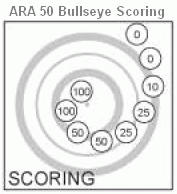 ARA 50 targets have 25 bulls with a center 100-Ring. “Worst edge” scoring is used, meaning a “100” must fall completely within the center ring plus the line separating it from the 50-Ring. See ARA Rules. You can’t just clip the 100-Ring from one side. Click HERE for official ARA target. The Aggregate is the total combined points of the day’s four targets divided by four.
March 28th, 2007
Many reloaders like the K&M neck-chamfering tool, because it cuts a very gentle entry angle compared to the typical 45° inside chamferer. The K&M tool is well-made and the cutting flutes are very sharp. However, previous versions tended to rock a little if you weren’t careful, and the cutter was a bit big for the small cases (17s and 20s). K&M has now introduced two new neck chamferers, a small 3-flute tool for 17 Cal to 6mm, and a large 6-flute unit for 6mm to .338 Cal. Both chamferers now feature a center shaft that goes through the flash hole to keep the case in alignment and eliminate cutter wobble. That’s a smart improvement–an example of a toolmaker taking a good product and making it even better. With either tool, the three “fingers” serve as an index stop on the case mouth. You can move the cutter shaft inwards and outwards to adjust the amount of reaming, and then lock the cutter in place with the black knob. This tool is available from Russ Haydon’s Shooters Supply and PrecisionReloading.com for about $24.00. Note: you may have to turn down the tip of the centering shaft to fit unreamed BR and PPC flash-holes.

|


