More and more folks are using Burris Signature Rings these days. These unique rings feature polymer inserts. That allows you to pre-load some elevation in your scope set-up, or you can center-up the windage. Additionally, the polymer inserts hold your scope securely without leaving marks on the tube. And many folks believe Signature rings may offer advantages for benchrest competition. Rodney Wagner shot the then-smallest 600-yard group in history using Burris Signature Zee Rings (“Zee” denotes the Weaver-rail model). James O’Hara set multiple IBS 1000-yard records using Burris Signature Zee Rings. James will tell you he thinks “all his guns seem to shoot best with these rings”.
Records Have Been Set with Signature Zee Rings
Are Signature Zees good enough for competition? Absolutely. Some folks scoff at these Burris rings, given their low price ($36.40 for 1″ Sig Zees at Midsouth). But consider this, in 2013 Rodney Wagner shot a world record 0.336″ 5-shot group using Signature Zee Rings on his IBS Light Gun. That still stands as an IBS Light Gun 600-yard record, though in 2018 Bart Sauter nailed a 0.311″ Heavy Gun group at 600. Here’s a photo of Rodney showing the record-setting rifle, outfitted with Signature Zee 30mm rings.
Vendors Have Burris Signature Rings in Stock Now
Various models of Burris Signature Rings are available currently from many vendors. NOTE: You may have to check with more than one seller to get the exact size, height, and model you prefer. But right now these vendors have pretty good selections of Signature Zees, including the popular 30mm High and Extra High models. If you check all three sellers, you’ll probably find what you need.
Midsouth has a good inventory of Burris Signature Zee Rings in stock now:
One side of this gauge is the “go” side which quickly tells you the depth of a primer pocket, whether any crimp is properly removed, and whether the primer pocket is loose. If it feels loose on the “go” side, use the other end of the tool, the “no go” side, to test to see if the primer pocket is too loose to hold a primer. If the no-go slides into the pocket, then you know to junk that brass.
Primer Pocket Growth and Useful Case Life
Repeated firings at stout pressures can cause primer pockets to grow in diameter. This can create an unsafe condition if your primers are not seating properly. Are your primer pockets “good to go”, or have they been pushed to the point of no return? Do you really know? Many guys try to gauge primer pocket tightness by “feel”, as they seat the primer. But that method isn’t precise. Now there’s a better way…
The folks at Ballistictools.com have created a handy set of precision-machined gauges that let you quickly and accurately check your primer pockets. These gauges (aka “gages”) are offered in two sizes — for large and small primer pockets. A two-piece set of both large and small gauges costs just $22.99. These gauges let you quickly measure the depth of a primer pocket, and check if the crimp has been removed properly. Most importantly, the gauge tells you if the primer pocket has opened up too much. One side of the gauge has an enlarged diameter plug. If that “No-Go” side fits in the primer pocket, you should ditch the case — it’s toast.
Precision ground from O-1 tool steel, The Ballistic Tools primer pocket gauges serve multiple functions. The inventor of these tools explains: “I created the prototype of this tool for my own use in brass processing. I needed a way to quickly and easily measure primer pockets that was reliable and did not require wasting a primer. This tool has been indispensable for me and I would never go back to the old method of uncertainty and guessing.”
Product tip from Boyd Allen. We welcome reader submissions.
“On that day, let us solemnly remember the sacrifices of all those who fought so valiantly, on the seas, in the air, and on foreign shores, to preserve our heritage of freedom, and let us reconsecrate ourselves to the task of promoting and enduring peace so that their efforts shall not have been in vain.”
– 1954, President Dwight D. Eisenhower, Veterans Day proclamation.
103 Years Later…
On the 11th hour, of the 11th day, of the 11th month of 1918, bugle calls signaled the ‘cease fire’ ending the First World War. (The official Armistice was signed earlier that morning.) To those who endured it, WWI was the “Great War”, “the War to End All Wars.” Tragically, an even greater conflict consumed the world just two decades later.
Today, 103 years after the end of WWI, Americans mark the anniversary of the WWI Armistice as “Veterans Day”. In Canada it is known as Remembrance Day. On this solemn occasion we honor all those who have served in the military in times of war and peace.
While more WWII veterans pass away each year, there are still over 20.4 million veterans in the United States. Take time today to honor those soldiers, sailors, and airmen who have served their nation with pride. Today we remember that… “All gave some, and some gave all.” History of Veterans Day.
Former Secretary of Veterans Affairs Dr. James Peake asked Americans to recognize the nation’s 20.4 million living veterans and the generations before them who fought to protect freedom and democracy: “While our foremost thoughts are with those in distant war zones today, Veterans Day is an opportunity for Americans to pay their respects to all who answered the nation’s call to military service.”
On Veterans Day we especially need to remember the seriously wounded combat veterans. These men and women summon great courage every day to overcome the lasting injuries they suffered in battle. Some of these soldiers have lost limbs, yet volunteered to return to combat duty. That is dedication beyond measure — true patriotism.
National Veterans Day Ceremony
The Veterans Day National Ceremony is held each year on November 11th at Arlington National Cemetery. The ceremony commences precisely at 11:00 a.m. with a wreath laying at the Tomb of the Unknowns and continues inside the Memorial Amphitheater with a parade of colors by veterans’ organizations. The ceremony is intended to honor and thank all who served in the U.S. Armed Forces. Major regional ceremonies and events are also held throughout the country.
Do you enjoy plinking with rimfire rifles and shooting reactive targets with handguns? Champion has developed a series of fun targets that tilt, spin, hop, or roll when hit. Made from a “self-healing” rubber-like polymer, Champion’s DuraSeal Targets can be hit dozens of times before they need to be replaced. (If you shoot only rimfire, they might last 200 rounds or more.) Along with the varmint spinners, we like Champion’s weighted wobble targets. These are offered in both a bowling pin shape and a sphere on a post (photo right). When you hit these targets they rock back and forth and side to side. Weights in the round bottom then bring the target back to an upright position.
Weighing 80% less than metal targets. DuraSeal spinning targets are extremely reactive so you can see every time your shot impacts the target. DuraSeal self-sealing, hole-closing material lets bullets pass through with little damage to the target prolonging the life of the target. DuraSeal is constructed to absorb hundreds of rounds from rifles and handguns.
Champion also offers “bouncing balls” and a 3D Star targets that hop and roll when shot. These make good long-range tactical rifle targets. The lifespan is not that great with large heavy bullets, but one of the ball or star targets should survive many dozens of hits with a .223 Rem or 6mmBR. We do recommend sticking to .22 LR rimfire rounds for best target longevity.
One of the biggest combined vintage military, service rifle, High Power, and pistol matches of the year, the CMP’s Talladega 600 takes place next week at the Talladega Marksmanship Park in Alabama. The event has been designed to appeal to rifle and pistol enthusiasts alike, providing a wide variety of marksmanship opportunities for competitors from around the country. Informational clinics, including the GSM Master Instructor Course and a Rifle Marksmanship 101 (with M16 EIC Match), offer an educational experience for both new and advanced marksmen.
The Talladega 600 will include a wide variety of popular CMP Matches:
BENCHREST GARAND MATCH
RIFLE MARKSMANSHIP 101/M16 MATCH
PISTOL MARKSMANSHIP 101/M9 MATCH
GARAND/SPRINGFIELD/VINTAGE/MODMIL MATCH
CONGRESSIONAL 30
RIFLE EIC MATCH
4-MAN TEAM MATCH
CARBINE MATCH
RIMFIRE SPORTER BENCHREST MATCH
HIGH POWER DIXIE DOUBLE MATCH
VINTAGE SNIPER TEAM MATCH
RIMFIRE SPORTER MATCH
M1A MATCH
CMP MATCH PISTOL 2700
CMP AS-ISSUED 1911 PISTOL MATCH
MILITARY & POLICE PISTOL MATCH
CMP .22 RIMFIRE PISTOL EIC MATCH
EIC PISTOL MATCH
Additional events include versions of prestigious National Trophy Matches, such as the Congressional 30 (with the same Course of Fire as the President’s 100 Match) and the Dixie Double Highpower Match (mirrored off of the Hearst Doubles Match).
This video has interesting aerial drone footage of the Talladega Marksmanship Park
Two Benchrest matches will be held during the Talladega 600 — a Benchrest Garand Match and a new Rimfire Sporter Benchrest Match.
Pistol Matches Are Always Popular
Many participants enjoy the Talladega 600 because they can compete with pistols between rifle matches. More Guns = More Fun. The Talladega 600 includes .22 Rimfire EIC and Service Pistol EIC matches, along with As-Issued 1911 and Military & Police pistol matches.
Advanced Electronic Target Systems — So No Pit Duty Required
Kongsberg target systems are used at the Talladega Marksmanship Park. Each firing point of the 500-acre facility is equipped with a state-of-the-art KTS electronic target and scoring monitor. This speeds up relays and eliminates the need for competitors to do pit duty to pull and mark targets. Located beside the shooter on the firing line, each monitor allows the competitor to see his/her shot location and score immediately.
Remington Firearms (RemArms), America’s oldest firearms manufacturer, will locate its global headquarters and open a new advanced manufacturing operation as well as a world-class research and development center in LaGrange, Georgia. Through these projects, RemArms will invest $100 million and create 856 jobs over a five-year period in Troup County, Georgia. In making the move, Remington will leave New York for good. RemArms is turning its back on the state of New York, with its governmental bias against the firearms industry, high taxes, and executive incompetence.
Report from Georgia Governor Brian Kemp:
“Georgia’s firearms industry is responsible for thousands of jobs and millions of dollars of investment in our communities,” said Governor Kemp. “I am a proud owner of some of Remington’s first-class product, and now, I am excited to welcome them to their new home in the Peach State. As yet another big manufacturing win for our state, I look forward to seeing the oldest firearms manufacturer in America thrive in Georgia’s pro-business environment.”
Founded in 1816, Remington Firearms is one of the United States’ largest domestic producers of shotguns and rifles. Several of the company’s strategic products will be manufactured in Georgia. The new headquarters will also become home to an innovative research and development center.
“We are very excited to come to Georgia, a state that not only welcomes business but enthusiastically supports and welcomes companies in the firearms industry,” said Ken D’Arcy, RemArms CEO. “… Everyone involved in this process has shown how important business is to the state and how welcoming they are to all business, including the firearms industry.”
The company will be hiring for positions in production, operations, engineering, and management, as well as careers in HR, finance, and administration in Remington’s onsite executive offices. For more information, please visit www.Remarms.com.
“For more than two centuries, Remington Arms has been a part of the fabric of our country, and for many of us who grew up with a strong connection to the outdoors and a love of outdoor sports, a trusted brand like Remington has been interwoven into our lives,” said Georgia Department of Economic Development Commissioner Pat Wilson.
“I am thrilled to welcome Remington Firearms to the growing list of manufacturers who call LaGrange home,” added Mayor of LaGrange Jim Thornton. “The Remington name has long been associated with great products, and I know they will continue that tradition and be very successful here.”
Remington Has a Storied History
Founded in 1816 by Eliphalet Remington in New York, Remington is the oldest continuously-operating gun manufacturer in the United States. Prior to the re-organization, Remington sold more sporting rifles and shotguns than any other American company. Remington has developed more cartridges than any other U.S. company. And for decades Remington was the only American company that sells firearms AND ammunition under its own name. Now Remington ammo is produced in Arkansas, as a separate business. Remington’s ammunition business was acquired by Vista Outdoor, parent of CCI, Federal, RCBS and other major shooting/outdoor industry brands.
Brownells will donate a percentage of sales during Veterans Day week to Special Operations Wounded Warriors (SOWW), a 501(c)3 charity dedicated to helping Purple Heart recipients of the Special Operations community. Donations to the SOWW organization will be generated by virtually all purchases this week from Brownells, including Current Sale Items.
Starting Monday, November 8, and lasting through Sunday, November 14 (11:59 pm CST), Brownells will track purchases made at www.Brownells.com and give 4% of those sales to the veterans’ charity, up to a total donation amount of $175,000.
How SOWW Benefits Wounded Veterans and Active Duty Personnel
SOWW’s main mission is to provide therapeutic outdoor experiences to wounded veterans from the various Special Operations forces of the United States military. SOWW also offers other services and counseling to both Special Operations veterans and their families. SOWW is a not-for-profit group that provides outdoor experiences and therapeutic retreats, as well as assistance with medical, physical, and mental therapies for both veterans and active-duty members of the U.S. Special Operations Forces who have been wounded in action. SOWW is funded by donations and is run and operated by unpaid volunteers. Its low operating costs mean over 93% of all donations directly support the veterans and active duty personnel SOWW serves.
“SOWW does great work to help people who have put everything on the line for us and our country,” said Vice President of Marketing Ryan Repp. “Brownells has supported SOWW for a long time, and we are proud to keep finding ways to help them help our Special Operations veterans.”
To learn more, and see short video interviews with veterans who have benefited from SOWW’s efforts, visit the Brownells SOWW page.
About Special Operations Wounded Warriors (SOWW)
SOWW (Special Operations Wounded Warriors), a 501(c)(3) charity, was formed in August of 2012 for the distinct purpose of providing outdoor experiences to a select group of both active duty and veteran U.S. Military Special Operations Forces, that have received wounds in battle, and have received our country’s prestigious Purple Heart Medal. To donate or to get more information, visit www.sowwcharity.org.
SOWW President Jud Kuhn Talks about His Organization:
High-Quality Portable Base for LabRadar Chronograph
If you currently own a LabRadar, or plan to buy one soon, there’s a smart new accessory you should consider buying. Matt Owens of ArkcoMachine.com offers a great, compact Quad Base for the LabRadar that works better than the flat, orange baseplate offered by the manufacturer.
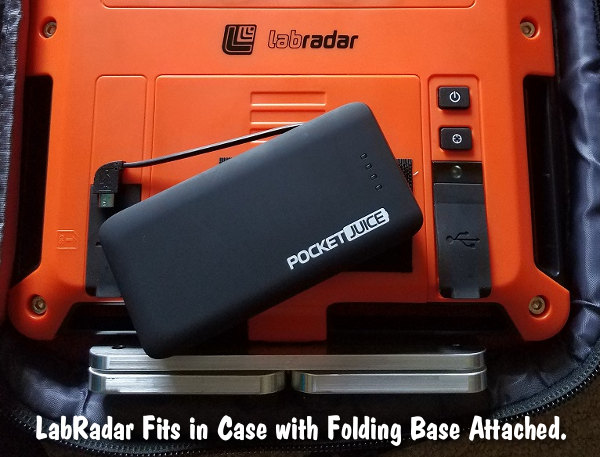
Matt, aka “Arkcomatt”, explains: “These are machined from aluminum and put together with stainless steel screws. The rubber feet are held on with screws also. No more coming off. The legs have nylon washers between them and the base for smooth operation. The screws are torqued and thread locker applied. One of the best things is, with the standard attachment, it will fit in the case with the unit. No more having to take apart! Just fold the legs. It takes up less room on the bench and allows you to get it closer to the rifle. It is very stable and holds up very well in high winds.” ORDER BASE HERE.
Arkco Machine’s folding Quad Base costs $89.95. The base offers better stability than the LabRadar factory mount, and is also easier to transport because it folds. This makes your LabRadar easier to deploy on a bench or when shooting prone.
Arkco Machine now offers handy swivel (ball) mounts for mounting your LabRadar to Arkco’s Quad Base. Choose either the Quick-Release Heavy-Duty Swivel Mount ($24.95, see photo at right) or the basic Light-Duty Ball Mount, just $10 (shown below). We like the Heavy-Duty unit because it can also be used for spotting scopes.
Arkco Machine also offers stainless spike feet for use when prone shooting. The spikes (shown below) screw in the same holes as the rubber feet.
Forum Member Praise Arkco Machine’s LabRadar Folding Base:
You can read user reviews of the LabRadar Quad Base in this Forum Thread.
Bullet-maker Bart Sauter has one of these bases now and he endorses it: “These bases are great for the LabRadar. Stable and compact — completely grab and go!”
Forum member Peterson1 agrees: “This is more stable than the Labradar base for my use–off a concrete BR bench, yet takes up less space. Also easier/quicker to set unit up and aimed at target. Never take the unit off for transport in LabRadar case. Only negative — you can’t trade in the factory LabRadar base toward purchase of this base. So buy smart the first time!”
Forum Member SkiUtah02 uses the base with optional spiked feet: “Met up with Matt at the Sierra Cup and bought my base with … spikes for the feet to put into the ground. Just had a chance to test it today and it worked great. I removed the rubber feet, and screwed in the four spiked feet, added a threaded-rod-coupling nut onto the bolt so that I could mount an old photography lighting stand swivel head to the base! Worked perfectly. Thanks Matt!”
Our take on Bore-Store Gun sleeves is simple: They work great, so buy them and use them — for ALL your valuable firearms.
Winter’s right around the corner, so many readers will be putting their guns in the safe for the season. For winter storage, we recommend Bore-Stores. These thick, synthetic-fleece sacks cushion your guns, preventing nicks and scratches. The breathable fabric wicks away moisture, and the fibers are coating with corrosion inhibitors. I personally use Bore-Stores for in-safe storage with all my guns, and I have never had one of my guns rust inside a Bore-Store, even when I lived a stone’s throw from the ocean.
Bore-Stores are offered in a range of sizes to fit everything from a snub-nosed revolver to a 33″-barrelled Black Powder Rifle. Bore-Stores can be purchased for $9.97 – $28.97 from Borestores.com. For most scoped rifles, we recommend the 10″x46″ SCR-1 case ($25.97). The Bore-Store manufacturer, Big Spring Enterprises will also craft custom sizes on request. For a long-barreled F-Class or ELR rig you may need a custom length. Or you can remove the scope and use the 7″x60″ MUS-1 Musket Bore-Store ($28.97).
Triple-Layer Sealed Bags — Affordable and Effective
Consider Military-Style, Triple-Layer Bags for Long-Term Storage
While we prefer Bore-Stores for regularly-used guns, if you have heirloom firearms that will be kept in storage for very long periods without seeing any use, you may want to grease them up and place them in the thin, but rugged three-layer storage bags sold by Brownells. The bags are made from a three-layer laminate of polyester, aluminum, and polyethylene film, with a shiny silver exterior. Though the laminate is thin, the Brownells storage bags are puncture-resistant, and have a 0% moisture transmission rating so moisture can’t get inside. These bags are also resistant to petroleum-based chemicals and they won’t break down even in contact with soil or moisture.
Here’s one VITAL bit of advice for using these bags. Be absolutely sure, before you seal up the bags, that your guns are DRY and that all metal surfaces have been coated with an effective anti-corrosive, such as BoeShield T9 or Eezox. Brownells’ storage bags are inexpensive. A three-pak of 12″x 60″ rifle sacks (item 083-055-003WB) costs just $19.99 — under seven bucks a gun. That’s cheap insurance for rifles and shotguns that may cost thousands of dollars.
Get Your Guns Out of Foam-lined Cases — They Are Rust Magnets
Just about the worst thing you can do for long-term storage (short of leaving your rifle outside in the rain) is to store firearms in tight, foam-padded cases. The foam in these cases actually collects and retains moisture from the air, acting as the perfect breeding ground for rust. Even in warm summer months, humid air can leave moisture in the foam.
Remember, those plastic-shelled cases with foam interiors are for transport, not for long-term storage. Don’t repeat the mistake of a wealthy gun collector I know. He stored four valuable Colt Single Action Army (SAA) revolvers in individual foam-padded cases, and locked these away in his gun safe. A year later, every one of his precious SAAs had rusted, some badly.
At the request of our readers, we provide select “Deals of the Week”. Every Sunday afternoon or Monday morning we offer our Best Bargain selections. Here are some of the best deals on firearms, hardware, reloading components, optics, and shooting accessories. Be aware that sale prices are subject to change, and once clearance inventory is sold, it’s gone for good. You snooze you lose.
1. SIGHTRON — Holiday Instant Savings, $250 or $800 Off
⏺ Major savings on very high-quality scopes, proven in competition
Sightron is offering “instant holiday savings” on the SIII Precision Long Range (PLR) models as well as the SVIII ED FFP tactical scope. These are high-end optics, ready for competition. Save $250 on SIII PLR scopes and a whopping $800 on the SVIII ED. It’s rare to see these kind of discounts on high-end optics. Sightron’s 2021 holiday sales event runs through December 31, 2021. Visit an authorized Sightron retailer or online vendor such as Creedmoor Sports to take advantage of these big discounts. For more information visit: Sightron.com/collections/holiday-instant-savings.
2. Bullet Central — Lapua Brass in Stock, Many Types
⏺ Superb Lapua brass in stock for many popular case types
If you have a new rifle (or a barrel with a new chambering) you’ll need brass. Or perhaps your current brass is worn out. If you need brass, head over to Bullet Central. You’ll find that nearly every type of premium Lapua brass is in stock and ready to ship. From 6mm BR to .300 PRC, you’ll find what you need, with prices lower than most other vendors are charging now.
⏺ High-quality .22 LR with full-size AR ergonomics
Looking for an AR-clone .22 LR rimfire rifle for cross-training, NRL22 matches, and fun shooting? This .22 LR Walther Hammerli Tac R1 offers full-size AR ergonomics with good accuracy, and nice build quality. It features a 5-position adjustable stock, 10-rd magazine, aluminum upper and lower receiver, flip-up sights, and a matte black finish.
4. Tipton — Sitewide Sale Up to 45% OFF
⏺ Major savings on Gun Vises, Tools, Jag Kits, Bore Guides and more
Tipton gun cleaning products are some of the best out there. From gun vises to bore guides, Tipton has just about everything you need to get the job done. If you need cleaning/maintenance tools or supplies, then check out the Tipton sitewide sale. Everything on Tipton’s website is now on sale with discounts up to 45%. This is a once-a-year sale so grab what you need now before it’s all gone.
5. Amazon — Lyman 8-Station Turret Press, $219.99
⏺ Quality Turret press with 8 stations and handy priming system
If you need a new press to load multiple pistol and rifle cartridge types, consider a turret. With their ability to hold multiple dies, turret presses offer great flexibility and efficiency. One of the best, reasonably-priced turrets on the market is the Lyman All American 8 Turret Press. Boasting EIGHT stations, this press hold up to four 2-die sets or eight individual dies. The press features a heavy-duty, cast-iron frame, plus a straight-line primer feed system with large and small primer tubes.
6. Brownells — iGaging Digital Micrometer, $65.99
⏺ Save 39% on precision digital micrometer with data output
For precision reloading, a micrometer is important. A micrometer offers greater resolution than calipers and is ideal for measuring certain cartridge and brass dimensions. If you’ve been wanting to get a precision micrometer without breaking the bank, check out the iGaging SpeedMic Quick Action Micrometer from Brownells. This high-quality micrometer is now 39% off, making it an affordable addition to your tool kit. Equipped with a data-output module, this SpeedMic micrometer enables precision measurements to be ported instantly to any computer.
7. Midsouth — Hornady RFID Rapid Access Gun Safe Sale
⏺ Rapid Access handgun safes, vehicle lock boxes, gunlockers on sale
Gun safety is everyone’s responsibility and that starts with the gun owner. If you need an effective way to lock up your guns either at home or in your vehicle, check out the Hornady gun safe sale. For a limited time, you’ll find rapid access safes for the home, vehicle, or office at very good prices. NOTE, along with the handgun safes, Midsouth offers Hornady’s Rapid Access RFID AR GunLocker, which is great for home defense long guns. The wireless RFID technology allows you to instantly unlock the safe with a card or token you carry.
8. Amazon — Frankford Arsenal Hand Deprimer Tool, $39.99
⏺ Deprime fired cartridge brass anywhere — no press needed
Decapping brass can be a tedious, time-consuming, and messy chore. Simplify the task (and avoid messing up your reloading area) with the Frankford Arsenal Platinum Series Hand Deprimer Tool. This device lets you remove spent primers anywhere — no press needed and all the mess (cups/anvils/residue) stays in the capture chamber. You can deprime cases while watching TV. This tool features a Universal collet that works with all case types. With good leverage, this tool is easy on the hands too.
9. Palmetto State Armory — Taurus G3 Pistol, $279.99
⏺ Great price on reliable compact 9mm carry gun with comfortable grip
Palmetto State Armory is running a great special on the Taurus G3 9mm pistol. Priced at just $279.99, this Taurus G3 costs less than HALF what most dealers charge for a compact Glock 9mm. The grip ergonomics are (in our opinion) much superior to the Glock (for most people), and the Taurus G3’s 6-lb. trigger is better than that of many compact 9mm pistols. The Taurus G3 is a dual-stack 9mm with 17+1 capacity. With a strong warranty, the Taurus G3 offers great value for the price.
10. Amazon — Allen Window and Fence Gun Rest Bag, $10.99
⏺ Handy accessory for hunters and varminters
Sometimes you want to take a shot at a critter, but don’t have time to set up a shooting bench, a tripod, or a mat with bipod. With this simple bag you can make that varmint shot from the window of a vehicle. This cleverly-designed bag can also be used on a fence rail. The Allen Filled Window Mount Gun Rest is a great value at just $10.99. With its unique design you can easily flop it over just about anything to stabilize yourself or just lay it down flat on the floor. It features a textured top surface and non-slip bottom. It comes pre-filled with inert polyester beads.


 More and more folks are using Burris Signature Rings these days. These unique rings feature polymer inserts. That allows you to pre-load some elevation in your scope set-up, or you can center-up the windage. Additionally, the polymer inserts hold your scope securely without leaving marks on the tube. And many folks believe Signature rings may offer advantages for benchrest competition. Rodney Wagner shot the then-smallest 600-yard group in history using Burris Signature Zee Rings (“Zee” denotes the Weaver-rail model). James O’Hara set multiple IBS 1000-yard records using Burris Signature Zee Rings. James will tell you he thinks “all his guns seem to shoot best with these rings”.

 The folks at




 Do you enjoy plinking with rimfire rifles and shooting reactive targets with handguns? Champion has developed a series of fun targets that tilt, spin, hop, or roll when hit. Made from a “self-healing” rubber-like polymer,




 Arkco Machine’s


 Here’s one VITAL bit of advice for using these bags. Be absolutely sure, before you seal up the bags, that your guns are DRY and that all metal surfaces have been coated with an effective anti-corrosive, such as BoeShield T9 or Eezox. Brownells’ storage bags are inexpensive. A
  Remember, those plastic-shelled cases with foam interiors are for transport, not for long-term storage. Don’t repeat the mistake of a wealthy gun collector I know. He stored four valuable Colt Single Action Army (SAA) revolvers in individual foam-padded cases, and locked these away in his gun safe. A year later, every one of his precious SAAs had rusted, some badly.


