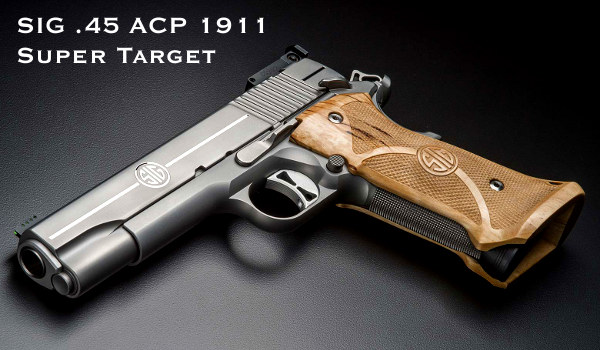
In her first match back as a member of Team Taurus, Jessie Harrison secured her 18th Ladies title at the World Speed Shooting Championships. Jessie, the winningest shooter in Steel Challenge history, continues to cement her legacy as one of the all-time greats, shooting a 96.53 time using her Taurus 1911 racegun.
But this wasn’t just Jessie’s first match back as a member of Team Taurus, it was also her first match as a new mother. Jessie took on Steel Challenge just 3 months after giving birth, and delivered a dominant performance in her usual style.
“I’m thrilled to bring home yet another Ladies Open World Championship title to Taurus, marking my 18th victory in this category! This match was particularly special as it was my first since becoming a mother, presenting a completely new set of challenges. However, by returning to the basics and relying on years of training, along with my trusted 1911 that has accompanied me through numerous championships, I overcame those hurdles and achieved another victory”, said Jessie after the match.
Jessie Harrison’s triumphant return to Taurus USA and Steel Challenge marks the continuation of a legacy of excellence with Taurus, where she has accumulated countless National and World titles.
The U.S. Supreme Court has issued a unanimous 9-0 decision holding that the Protection of Lawful Commerce in Arms Act (PCLAA) bars Mexico’s claims that firearm manufacturers “aided and abetted” illegal firearms trafficking to narco-terrorist drug cartels in Mexico. In the case of Smith & Wesson Brands, Inc. v. Estados Unidos Mexicanos, Mexico sought $10 billion in damages against several U.S. firearm manufacturers and distributors.
In its unanimous decision the Supreme Court stated: “Recall that Congress enacted the [PCLAA] statute to halt a flurry of lawsuits attempting to make gun manufacturers pay for the downstream harms resulting from misuse of their products. In a ‘findings’ and ‘purposes’ section, Congress explained that PLCAA was meant to stop those suits — to prevent manufacturers (and sellers) from being held ‘liable for the harm caused by those who criminally or unlawfully misuse firearm[s].’ Mexico’s suit closely resembles the ones Congress had in mind: It seeks to recover from American firearms manufacturers for the downstream damage Mexican cartel members wreak with their guns.”
Smith & Wesson Pres./CEO Mark Smith posted: “Today’s unanimous Supreme Court decision… represents not only a big win for Smith & Wesson, but our industry, American sovereignty and, most importantly, every American who wishes to exercise his or her Second Amendment rights. This suit, brought by Mexico in collaboration with U.S.-based anti-Second Amendment activist groups, was an affront to our nation’s sovereignty and a direct attack on the Constitutional rights of law-abiding Americans. It [was] a blatant abuse of our legal system to advance their anti-Constitutional agenda.”
NSSF filed an amicus brief supporting Smith & Wesson in its petition to dismiss Mexico’s claim for $10 billion in damages. NSSF’s Lawrence G. Keane, Senior V.P. and General Counsel stated: “This is a tremendous victory for the firearm industry and the rule of law. For too long, gun control activists have attempted to twist basic tort law to malign the highly-regulated U.S. firearm industry with the criminal actions of violent organized crime, both here in the United States and abroad. The firearm industry is sympathetic to plight of those in Mexico who are victims of rampant and uncontrolled violence at the hands of narco-terrorist drug cartels. The firearm industry works closely with the Bureau of Alcohol, Tobacco, Firearms and Explosives (ATF) to prevent the illegal straw purchasing of firearms and the illegal transnational smuggling of firearms. This unequivocal decision by the Supreme Court that PLCAA applies and there is no evidence whatsoever that U.S. manufacturers are in any way responsible is verification of commitment to responsible firearm ownership.”
The NRA also filed an amicus brief urging the Court to take the case and then filed a subsequent brief arguing for the outcome decided by the Court. Doug Hamlin, NRA Executive V.P. and CEO, stated: “The U.S. Supreme Court correctly renounced the tactics Mexico and its American collaborators used to try to extort and impoverish America’s firearms industry. The Protection of Lawful Commerce in Arms Act is clear – firearm manufacturers are not liable for the criminal misuse of their products, and this doesn’t change just because gun control activists disapprove of their lawful business practices and products. PLCAA is the law of the land today due to the work of NRA-ILA and NRA members in the early 2000s.”
Mexico filed its claim in a U.S. District Court in Boston in 2021, which was dismissed by that district court based on the bipartisan PLCAA that prohibits frivolous lawsuits against the firearm industry for the criminal misuse by remote third parties.
Mexico appealed to the U.S. Court of Appeals for the First Circuit, which revived the lawsuit holding that Mexico’s “aiding and abetting” theory fit within one of the PLCAA’s narrow exceptions. Smith & Wesson Brands, Inc., et al., successfully petitioned the Supreme Court last year. The case was argued before the Supreme Court in March of this year.
An Important Anniversary Eighty-one years ago today, Allied forces crossed the English Channel and began the assault of Europe that meant the end of Nazi occupation and the end of WWII in the European Theatre. There are few of those assaulters left today, but we all owe them a debt of gratitude. They’re part of that “Greatest Generation” that preserved freedom in its time of greatest peril. And we thank them all. — The Shooting Wire
Back in 2014, Forum member Robert Chombart posted this message from his home in Normandy, France: “On the occasion of the 70th anniversary of D-Day, I … salute the memory of the thousands of American soldiers who sacrificed their youth to liberate France, with … particular [respect] for those who rest in Normandy ground.” Today, 80 years after that historic invasion day, it is important we never forget the sacrifice of those who gave their lives on the beaches of Normandy.
Today we should remember those who crossed the Channel to begin the liberation of Europe. Thousands of soldiers, sailors, and aviators gave their lives on June 6, 1944. Their sacrifice on “The Longest Day”, allowed people throughout Europe to enjoy freedom. We should remember those brave warriors, and never forget that freedom is not free — it requires continuing vigilance and sacrifice.
Over the years, the U.S. Army Marksmanship Unit (USAMU) published a series of reloading articles on its Facebook Page. In this article, the second in a 3-part series, the USAMU covers the process of loading competition pistol ammunition. The authors focus on two key elements — the taper crimp and the quality/uniformity of the original brass. If you shoot pistol competitively, or just want to maximize the accuracy of your handguns, read this article. The taper crimp tips are very important.
Loading Accurate Competition Pistol Ammunition — Part 2 of 3
One often-overlooked aspect of handloading highly-accurate pistol ammunition is the amount of taper crimp used, and its effect on accuracy. (NOTE: this article pertains to loading for semi-autos — revolver crimp techniques involve some quite different issues.) Briefly, different amounts of taper crimp are used with various handloads to obtain best accuracy. The amount is based on bullet weight, powder burn rate and charge, plus other factors such as case neck tension. During machine-rest testing of experimental Service Pistol ammunition, many variables are examined. Among these, our Shop often varies a load’s crimp in degrees of 0.001″ when re-testing for finest accuracy.
How to Measure Taper Crimp on Pistol Cartridges
One question that often arises is, “How do I measure the taper crimp I’m putting on my cartridges?” Using the narrow part of one’s dial caliper jaws, carefully measure the case diameter at the exact edge of the case mouth on a loaded cartridge. It’s important to take several measurements to ensure consistency. Also, be sure to measure at several places around the case mouth, as case wall thickness can vary. After measuring 2-3 cartridges with a given crimp setting, one can be confident of the true dimension and that it can be repeated later, if needed.
However, for good results, one must use brass from one maker due to variances in case wall thickness. For example, the same degree of crimp that imparts a measurement of 0.471″ with Brand X brass may result in 0.469″ with Brand Y. Thus, for best accuracy, using brass from the same manufacturer is important — particularly for 50-yard Slow Fire. In a perfect world, it is better still to use brass from one lot number if possible. With the popularity of progressive presses using interchangeable tool heads, keeping separate tool heads adjusted for each load helps maximize uniformity between ammunition lots.
Brass Uniformity and Accuracy
Brass is important to pistol accuracy. While accurate ammunition can be loaded using brass of mixed parentage, that is not conducive to finest results, particularly at 50 yards. It is important for the serious competitor to pay attention to his brass – even if only for the 50-yard “Slow Fire” portions of “Bullseye” matches and practice. By segregating brass as described above, and additionally keeping track of the number of times a given batch of cases has been fired, one can ensure case neck tension and case length are at their most uniform.
Given the large volumes of ammunition consumed by active pistol competitors, using inexpensive, mixed surplus brass for practice, particularly at the “short line” (25 yards), is understandable. In NRA Outdoor Pistol (“Bullseye”), the 10-ring is relatively generous — especially for a well-trained shooter with an accurate pistol and load. However, for the “long line” (50 yards), purchasing and segregating a lot of high-quality brass to be used strictly for slow-fire is a wise idea. To keep track of your brass on the line, use a unique headstamp marking with 1 or 2 colors of marking pen ink.
Uniform Cartridge Overall Length is Important
Cartridge case Overall Length (OAL) uniformity as it comes from the factory is important to achieving utmost accuracy. More uniform case lengths (best measured after sizing) contribute to greater consistency of crimp, neck tension, ignition/burn of powder charge, headspace (rimless cartridges), etc. Cartridge case-length consistency varies noticeably by maker and, with lesser manufacturers, also from lot to lot. Some manufacturers are more consistent in their dimensions than others, and also in the hardness/ductility of their brass. Similarly, pay attention to primer brands, powder lot numbers, etc.
Consider Using a Lock-Out Die with Progressive Presses
When reloading pistol ammo with a Progressive press, we strongly recommend the use of a lock-out die, or other system that can detect double charges or low charges. If your progressive is manually advanced, the possibility of a double charge is very real — and that can have disastrous consequences.
On UltimateReloader.com website you’ll find an excellent two-part series on the function and set-up of the RCBS Lock-Out Die. This die prevents loading if a high or low powder charge is detected. The video below shows setup of the RCBS Lock-Out Die on the Dillon XL-650 progressive press.
.17 HMR and .22 WMR Options Enhance Ruger Precision Rimfire for Varmint Work
Many readers may not know this, but the Ruger Precision Rimfire rifle is available in three rimfire chamberings: .22 LR, .17 HMR, and .22 WMR. While .22 LR ammo is considerably cheaper, .17 HMR and .22 WMR shoot flatter and deliver MUCH more energy. These .17 HMR and .22 WMR chamberings are way more suitable for varminting. In fact we think this .17 HMR transforms the Ruger Precision Rimfire into a very good “carry-around” varmint rifle. We really like the .17 HMR — it’s our favorite rimfire cartridge for small varmints out to 160 yards.
Both cartridge types, .17 HMR and .22 WMR, also offer higher velocities, less wind drift, and flatter trajectory than the .22 LR. This is a benefit when cross-training. You can shoot at more distant targets with considerably less elevation dialed in your scope. And the windage corrections will be less extreme.
Ruger says: “Faster, flatter and with high-performing bullets, .17 HMR and .22 WMR cartridges expand the capabilities of the Ruger Precision Rimfire platform. Like its .22 LR predecessor, these new magnum offerings maintain the same ergonomics, trigger and manual of arms as the larger centerfire Ruger Precision Rifle.”
Here’s an excellent video review of the .17 HMR Ruger Precision Rimfire rifle by YouTuber 22 Plinkster. The reviewer was impressed with the rifle’s accuracy with 17gr ammo.
Both Ruger Precision Rimfire rifles feature 18″ hammer-forged barrels threaded for muzzle devices, including the Ruger® Silent-SR®. The 15″ free-float handguard with Magpul M-LOK slots provides generous scope clearance and easy mounting of M-LOK-compatible rails and accessories.
Like its .22 LR version, the magnum Ruger Precision Rimfire models featured an adjustable bolt throw (that can emulate a centerfire action if desired), along with trigger that adjusts from 2.25 to 5 pounds. The .17 HMR and .22 WMR models ship with a 0 MOA Picatinny rail and one, 15-round BX-15 Magnum magazine or one, 9-round JMX-1 rotary magazine. The BX-15 Magnum mag works very well with the .17 HMR and .22 WMR chamberings.
The standard finish for the .17 HMR and .22 WMR Ruger Precision Rimfire rifles is Black hard-coat anodized. But there is also a Burnt Bronze Cerakote Special Edition available through Iron Valley Distributor.
Story based on report by Ashley Dugan, CMP Staff Writer
After years of testing, the Civilian Marksmanship Program (CMP), has announced “full use” of eTargets at the 2025 National Rifle Matches at Camp Perry, which run July 20 through August 9, 2025. The advanced Kongsberg eTargets will be used at all Highpower rifle matches, National Trophy Rifle competitions, and Rifle Games events. In addition the eTargets will be used for the Rimfire Sporter Match on July 20 and the National Mid/Long Range Matches in August. The use of eTargets eliminates the need for pit duty, drastically cutting down the duration of each match. “Shooting on eTargets is just a better experience for all competitors” notes Brian Williams, CMP Highpower manager.
The CMP’s Kongsberg Target System (KTS) registers shots with extreme precision. The system includes monitors at each firing point so competitors can instantly see the location and score for their shots — they don’t have to wait for a target to be pulled and marked. The use of the targets also eliminates the need for pit duty, drastically cutting down the duration of each match. The 2025 National Matches will be held on the historic ranges at the Camp Perry National Guard Training Facility in Port Clinton, Ohio. Learn more at Thecmp.org/cmp-national-matches.
Brian Williams, CMP Highpower manager stated: “We have utilized this system for years, and during that time, we have made countless upgrades and improvements. We believe that we now offer the most accurate, easiest to use eTarget system available [giving] competitors the very best system interface. Competitors have been asking for this for years, and we have spent a great deal of time and energy getting the system ready to be used on the biggest stage in competitive shooting”.
The KTS system has been permanently installed at CMP’s Talladega Marksmanship Park as well as on Camp Perry’s Petrarca Range in Ohio. The mobile version of the KTS system, featured at CMP Travel Games events, will be the eTarget types used at most of the 2025 National Matches.
“With an increasing number of affiliate local clubs converting to eTarget systems, there is a growing expectation that the National Matches should be conducted this way,” Williams addedd. As another advantage, the eTarget system at the National Matches will include the KTS Shooter’s Journal, which keeps a log of each individual’s shots/scores on the firing line.
Nearly 400 competitors descended on Grand Island, Nebraska, May 30th – June 1st, 2025, to battle the “undead” during the 2025 annual Zombies in the Heartland 3-Gun shooting match hosted by Hornady and the Heartland Public Shooting Park. “Make Zombies Dead Again” was the theme for this year’s competition. There were ten stages with targets for rifles, shotguns, and pistols. For complete results, visit: practiscore.com/results/new/289649.
2025 Zombies in the Heartland 3-Gun Match Highlights
Ten competitive stages mimicking post-apocalyptic situations were featured. Professional and amateur shooters from across the country enjoyed specially developed reactive zombie targets. The Heartland Zombies match is a veritable theme park for shootists, with many fun stages and innovative targets. Many unique, reactive zombie targets have been developed specifically for this match. The use of paper targets has been minimized — so it’s mostly “bang and clang”. Rifles, pistols, and shotguns are used on most stages. There were also fun side-matches. Watch the video above to see this year’s action.
See Stage with Jerry Miculek
Jerry Miculek with Steve Hornady
Top Shooters in Each Class
Open: Dillen Easley
Tactical: Daniel Jirasek
PCC: Aaron Hayes
Ladies: Dianna Muller
Junior: Dylan Mertens
Senior: Terry Lauwers
Super Senior: Jerry Miculek
LE: Alex Cady
Military: Michael Shuluk
“The 2025 Zombie match is in the books, and I have to say, this is one of the best matches we’ve ever run”, said Jeremy Millard, Hornady Engineer and Match Director. “I cannot thank the park staff, [Range Officers], volunteers, and workers enough for their efforts. Hosting a match of this magnitude is a monumental task, and we couldn’t do it without their efforts. Congratulations to all the competitors for a fun, challenging, and safe match”, he added.
For event photos and updates on next year’s match, visit the Zombies in the Heartland Facebook page: Facebook.com/ZombiesInTheHeartland.
This week, June 1-7, is Gun Storage Check Week. Be sure you store your firearms safely and securely. This article provides information on the two primary types of gun safe locking systems — keypad and rotary lock. If you are considering buying a safe you will want to think carefully about your lock choice. Some safes actually offer both systems, but you’ll want to test that dual system before ordering it. For speed of opening, electronic systems are definitely faster. But high-quality mechanical locks can last for a century or more, with no battery changes required.
Electronic (Keypad) Lock vs. Manual (Rotary) Lock
Smart gun owners know they need a good, solid gun safe. But when choosing a gun safe, what kind of lock should you select — electronic or mechanical? Both types have their advantages and disadvantages. This article will help you make the right choice for your needs and also get the most reliable performance from either type.
Gunsafes can be fitted with either an electronic keypad-style lock, or a conventional dial lock. In our Gunsafe Buyer’s Guide, we explain the important features of both dial and electronic lock systems. Many safe-makers will tell you that consumers prefer electronic locks for convenience. On the other hand, most of the locksmiths we’ve polled believe that the “old-fashioned” dial locks, such as the Sargent & Greenleaf model 6730, will be more reliable in the long run. CLICK HERE to learn more about the Pros and Cons of Mechanical (dial) Lock vs. Electronic (keypad) safe locking systems.
One safe supplier, The Safe Keeper, notes that mechanical (dial) locks tend to be more reliable over long periods: “When it comes to reliability, a mechanical lock is the way to go. Anything electronic is designed to fail sooner or later. For every 20 broken electronic locks we will get one mechanical. Bottom line is, it’s not that complicated to input a combination on a mechanical lock. Those extra 7 seconds just might save you from being locked out and having your safe drilled opened.”
This Liberty Safe video compares Mechanical (dial or key) vs. Electronic (keypad) safe locking systems.
Here is the opinion of RFB from Michigan. He is a professional locksmith with over two decades of experience servicing locks and safes of all brands and types:
What a Professional Locksmith Says:
For the convenience of quick opening, the electronic locks can’t be beat. However, for endurance and years of trouble-free use, the electronics can’t compare with the dial lock.
I’ve earned my living, the past 22 years, servicing locks of all types. This includes opening safes that can’t otherwise be opened. I do warranty work for several safe manufacturers (including Liberty). What I’ve learned in all those years is that manual dial locks have very few problems. The most common is a loose dial ring which can shift either left or right, which will result in the index point being in the wrong place for proper tumbler alignment. This is simple to fix.
Electronic locks, however, can have all kinds of issues, and none (except bad key-pad) are easy to fix, and when one goes bad, it must be drilled into to open it. IMO, it’s not a matter of ‘if’ an electronic lock will ultimately fail, but a matter of ‘when’ it will fail. Over the past 10 years or so, since electronics have become more and more prevalent, I’ve had to drill open bad electronic locks vs. bad manual dial locks on a ratio of about 20-1.
My professional opinion is to get the manual dial lock, unless you’ve got a good friend who is a locksmith/safecracker.
How Secure is Your Lock?
RFB tells us that both dial and electronic locks offer good security, provided it’s a good quality lock made by LaGard, Sargent & Greenleaf, Amsec, or Kaba/Ilco. However, RFB warns that “Some of the ‘cheaper’ locks (both manual and electronic) however, are very simple to bypass.
An electronic lock that’s glued or ‘stuck’ to the door with double-sided tape, and has its ‘brain’ on the outside of the lock in the same housing as the keypad, and merely sends power to an inner solenoid via a pair of wires through the door, is a thief’s best friend. The good ones have the brain inside the safe, inaccessible from the outside.
No amateur can ‘manipulate’ either a good manual or electronic lock. Both give you a theoretical one million possible combinations. I say ‘theoretical’ because there are many combinations that cannot, or should not, be used. You wouldn’t set your combo on a dial lock to 01-01-01 etc., nor would you set an electronic to 1-1-1-1-1-1, or 1-2-3-4-5-6.”
Tips for Dial Locks
RFB notes that “The speed, and ease of use, of a manual dial lock can be improved upon, simply by having your combo reset using certain guidelines. Avoid high numbers above 50. Having a 1st number in the 40s, 2nd number anywhere from 0-25, and 3rd number between 25 and 35 will cut dialing time in half, without compromising security. (For mechanical reasons I won’t get into here, the 3rd number of a good manual dial lock cannot — or should not — be set to any number between 95 & 20).”
Tips for Electronic Locks
Electronic locks can have the combination changed by the user much more easily than dial locks. That should be a good thing. However, RFB explains: “That can be a double-edged sword. More than a few times I’ve had to drill open a safe with an electronic lock that has had the combo changed incorrectly by the user, resulting in an unknown number that nobody can determine. Also, don’t forget that electronic locks have a ‘wrong-number lock-out’. I would NOT rely on the normal quickness of an electronic 6-number combo in an emergency situation. If for any reason (panic etc.) you punch in the wrong number several times, the lock will shut down for a 5-minute ‘penalty’.
Replace Electronic Lock Batteries Every Year
To get the most life out of any electronic (keypad Lock), you should always change the battery at least once a year, whether it needs it or not. With some systems you should replace every 6 months! Low voltage won’t necessarily shut down the lock, but using it in a low voltage situation is bad for the electronics, and eventually will cause lock failure. So, If you do nothing else to maintain your digital-lock safe, replace the battery every year.
And get a fresh battery (with a release date) from the store — don’t just pull a battery out of a storage bin, even if it’s never been used. Old batteries can lose “juice” and physically degrade, even when in storage.
This article is Copyright 2025 AccurateShooter.com. No reproduction on any other website is authorized without payment of licensing fees or liquidated damages.
Summer is almost here (Summer Solstice is June 20, 2025). That means many of our readers will be on the road traveling to matches or holiday destinations. LawShield, America’s largest provider of Legal Defense for Self Defense® coverage, offers a National Travel Guide for Gun Owners and state-specific Travel Guides for Gun Owners. These guides feature practical information for people traveling through nearly every state in the USA.
State-Specific Travel Guides — Access for FREE
State-specific Travel Guides and a National Travel Guide for Gun Owners can be accessed for FREE on the the U.S. LawShield website. For planning future travel, bookmark Resources.uslawshield.com/travel-guide.
According to Kirk Evans, President of U.S. LawShield, “Because there are so many details for people to understand before they leave home, we developed state-specific guides to help folks stay on the right side of the law. Take the time to learn the laws before hitting the road because they are not the same everywhere. Don’t wait until after the fact to plan for your guns when preparing for your trip.”
Travel Guide for Gun Owners Topics:
Permits/licenses recognized by specific states
State laws you should know, including vehicle carry, duty to notify law enforcement, and open and concealed carry laws
Where you can legally carry your gun
Federal laws you should know
Carrying in National Parks
Transfer of firearms
Traveling from state to state and the Safe Passage provision
Flying with a firearm, including TSA requirement warnings and how to pack ammunition
Driving with a firearm
Two Knowledgeable Attorneys Explain State Law Issues When Traveling
In this video U.S. LawShield Independent Program Attorneys Richard Hayes and Emily Taylor provide essential information for traveling with firearms. Discussion includes essential information needed to stay safe and responsible while traveling with firearms.
Know the Laws of Every State You Travel Through
“There is no standardization of gun laws within the 50 individual states, so even if a state recognizes your handgun license or permit, they may have additional restrictions on certain types of firearms, magazines, or ammunition,” said Evans. “In some states, it’s illegal for a non-resident to possess a firearm in the passenger compartment of their vehicle. And, because you are subject to a state’s laws when you are in that state, if you break their laws, you could be committing a crime — whether you think you intentionally broke the law or not,” he added.
“Remember, not knowing the law is not a valid defense,” stated Evans. “Use our Travel Guide for Gun Owners for whatever state you’re traveling through, and learn which states honor your carry license or permit before you go.”
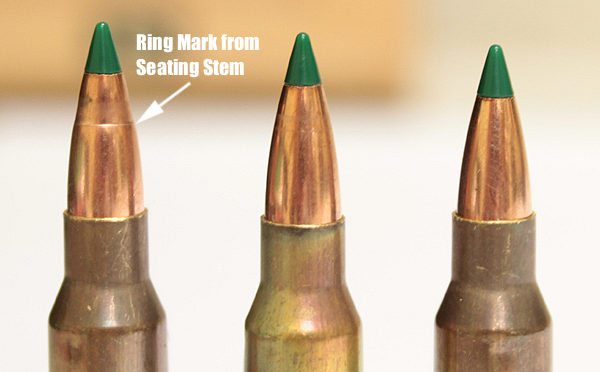
Here’s a simple task you can do that will give your seater die a more perfect fit to your match bullets. You can lap the inside of the seater stem so that it matches the exact profile of the bullet. This spreads out the seating force over a larger area of the bullet jacket. That allows smoother, more consistent seating, without putting dents, creases, or sharp rings in your bullets.
This process is demonstrated here by our friend Erik Cortina of Team Lapua-Brux-Borden. Erik, one of the nation’s top F-Class shooters and a skilled machinist, explains: “Here I’m lapping my new seater die stem with lapping compound. I chuck up a bullet in the lathe and lap the inside of the seating stem. I put lapping compound on the bullet and also in the stem. You can do the same with a hand drill and bore paste. You can see in the piture below how much contact area the stem has on the bullet after being lapped. This bullet is a Berger 7mm 180-grain Hybrid. ”
It can be helpful but it’s not necessary to make your seating stem an exact match to a bullet, particularly if you’re loading hunting or varmint rounds. But it is helpful to do some mild internal stem polishing. This should eliminate any ring (or dent) that forms on the bullet jacket during seating.
Sharp edges on a seating stem can cause a ring to be pressed into the bullet jacket — especially with compressed loads that resist downward bullet movement.
Q2: Is there any down-side to the process?
Not really. However, if you shoot many different bullet types for a particular cartridge, you may not want to conform the stem aggressively to one particular bullet design. Lightly lap the inside of the stem to remove burrs/sharp edges but leave it at that. A light lap will prevent a ring forming when seating bullets.





 .17 HMR and .22 WMR Options Enhance


 Gunsafes can be fitted with either an electronic keypad-style lock, or a conventional dial lock. In our
  Tips for Dial Locks
 Replace Electronic Lock Batteries Every Year