|
|
November 16th, 2014
Most of us assume that if we weigh our powder carefully (down to the tenth of a grain or less) we can achieve a uniform powder fill from case to case in our handloads. Weighing does ensure that the weight of the propellant in each case is the same, but is the column of powder the same by volume each time? “Not necessarily” is the answer. An interesting experiment by our friend Boyd Allen demonstrates that the manner in which you place kernels in the case can make a significant difference in the height of the powder column within the brass case.
Using a Gempro 250 scale, Boyd measured exactly 30.6 grains of Vihtavuori N-133 powder. He then inserted this powder in the same cartridge case multiple times. (The case has a fired primer in place.) But here is the key — Boyd used various filling techniques. He did a slow fill, and a fast fill, and he also experimented with tapping and drop tubes. What Boyd discovered was that you can start with the exact same weight of powder (in fact the very same set of kernels), yet end up with vary different fill heights, depending on how you drop the kernels into the case. Look at the photos. Despite variations in lighting, the photos show the same 30.6 grains of powder, placed in the same cartridge, with four different methods.
Boyd Explains the Procedure Used for his Experiment.
EDITOR’s NOTE: So there is no misunderstanding, Boyd started with a weighed 30.6 grain charge. This identical charge was used for ALL four fills. After a fill the powder was dumped from the case into a pan which was then used for the next fill technique to be tried. So, the powder weight was constant. Indeed the exact same kernels (of constant weight and number) were used for each fill.
Boyd writes: “I used the same powder for all fills, 30.6 gr. on a GemPro 250 checked more than once. All fills employed the same RCBS green transparent plastic funnel. The fast drop with the funnel only overflowed when it was removed from the case neck, and 15 granules of powder fell on the white paper that the case was sitting on. The fast-funnel-only drop with tapping, was done with the funnel in place and the case and funnel in one hand, while tapping the case body with the index finger hard, many times (about 20 fast double taps). My idea here was to “max out” the potential of this tapping technique.
The slow drop with the funnel and 10″-long .22 cal. Harrell’s Precision drop tube, was done by holding the scale pan over the funnel and tapping the spout of the pan repeatedly on the inside of the funnel about 1/3 down from the top, with the scale pan tilted just enough so that the powder will just flow. Many taps were involved, again, to max out the technique.
Again, to be clear, after each case filling, the powder was poured from the case back into the scale pan carefully. You may notice the similarity between the fast drop with the drop tube, and the funnel only with tapping. Although I did not photograph it, fast tube drop and tapping (combined) improved on tapping alone, but only to about half as far down the neck as the slow with drop tube. Due to the endless possible permutations, I picked four and left it at that.
I believe that I can make the rough judgment that the scale pan funnel and drop tube technique, which involved a longer drop period, and probably less velocity at the top of the tube, left more room in the top of the case neck than the slow drop from the measure with the same drop tube. You have both pictures, so you can make the comparison.” — Boyd
Does Powder Column Height Variance Make a Difference?
Boyd’s experiment proves pretty conclusively that the method of dropping a given weight of powder can affect the height of the powder column in the case and the degree of powder compression (when a bullet is seated). He showed this to be true even when the exact same set of kernels (of constant weight) was used in repetitive loadings. This raises some interesting questions:
1. Will subsequent cartridge transport and handling cause the powder to settle so the variances in powder column height are diminished?
2. If significant inconsistencies in powder column height remain at time of firing, will the difference in fill level hurt accuracy, or result in a higher extreme spread in velocity?
3. Is there any advantage (beyond increased effective case capacity) for a tight (low level) fill vs. a loose (high level) fill?
We don’t know the answer to these follow up questions. This Editor guesses that, if we tested low-fill-height rounds vs. high-fill-height rounds (all with same true fill quantity by weight), we might see meaningful differences in average velocity. I would also guess that if you fired 10 rounds that exhibited quite a difference in powder column heights, you might see a higher ES/SD than if you shot 10 rounds loaded with a very consistent powder column height (either high or low). But further testing is needed to determine if these predictions are true.
November 16th, 2014
Eley sponsors many of the world’s top rimfire shooters, who have shared their Tips from the Top for 2014. Five ace smallbore shooters provide advice on how to shoot better, how to train more effectively, and how to stay motivated even when “the going gets tough”. If you’re a competitive shooter (in any discipline) you can benefit from reading these words of wisdom from world-class shooters.

Henri Junghaenel, current world #1 ranked, 50M prone rifle shooter.
Focus on Fundamentals: Good performance requires a solid technical foundation. One can hunt after personal bests or one can try to work on the technical basics. The latter will probably lead to better results sooner.
Stay Motivated Over Time: Be persistent and don’t lose your motivation on your way to success. Shooting, like every other sport, requires a learning process which takes a lot of time.
Don’t Yield to Outside Pressures: Don’t let the expectations from others impact yourself. If some people try to put pressure on you (consciously or unconsciously), don’t let them!
Bill Collaros, 2013 Australian WRABF World Cup (Benchrest) and RBA team captain.
Don’t Skimp on Hardware: Ensure your equipment is a good as you can buy. This includes: rests, bags, rifle, scope, and ammunition.
Tune to Your Ammo: Ensure that the ammunition you have is tested and your rifle is tuned to it, to get the smallest possible group.
Train in All Conditions: Train in all sorts of wind and conditions so you know how your rifle and ammunition react in all circumstances.
Stine Nielsen, 2012 Olympic finalist for 3-Position Smallbore Rifle.

No Excuses: When I train, I train by my motto: “A loser has excuses. A winner has a plan.” And when I shoot in competitions I think about that mantra.
Stay Focused: When I stand at a shooting range, I have a good focus on my shooting and myself. I also have a good will to want to shoot 110%.
Zorana Arunovic, current world #2 ranked, 25M women’s pistol shooter.
Never give up: No matter how hard it is you should always find something that will inspire you to keep going further. I find my inspiration in the success of other athletes. They inspire me to work more and harder. I would say to any young athletes, never give up, no matter how hard it is.
João Costa, current world #2 ranked, 50m pistol shooter.
Breathing is Key: In shooting as in life, breathing is of paramount importance. So, when shooting try to be calm and quiet. On the bench in front of me I have my pistol, the scope, the magazine and my choice ammo then I count:
1… Eley – breathe
2… Eley – breathe
3… Eley – breathe
4… Eley – breathe
5… Eley – breathe
Story find by EdLongrange. We welcome reader submissions.
November 15th, 2014
How much can you save reloading your own ammo? Well that depends on the cost of components and how much you have invested in your reloading gear. UltimateReloader.com has created a handy online Reloading Costs Calculator that lets you quickly compare the cost of reloaded ammo vs. factory ammo. Just enter the costs of powder, primers, bullets, and brass, and the Calculator will tell you the cost per round, per 20-rd box, per 50-rd box, and cost per thousand. Note — when setting the price of the brass you need to divide the initial cost by the number of predicted reloads. For example if you have 500 pieces of brass that cost $40/100 to buy ($200 total), but you get 8 reloads per case, then you put $25.00 in the Calculator ($200 total brass cost divided by 8).

True Reloading Cost Should Include Amortized Tool Expenses
Ah… but there is a catch. To understand the true cost of reloading, you also need to consider the costs of your tools and accessories, amortized over the tools’ loading lifespan. Let’s say you have $1000.00 invested in presses, dies, tumblers, measuring tools and other accessories, with a residual value of $500.00 (upon resale). If you load 5,000 rounds with those tools over their lifespan, you need to add $0.10 per round for tooling costs (your investment minus residual value, divided by the number of rounds loaded). The UltimateReloader.com Calculator does not include amortized tooling costs, but that’s something you can easily figure out on your own.
Excellent Resource for Reloading Videos
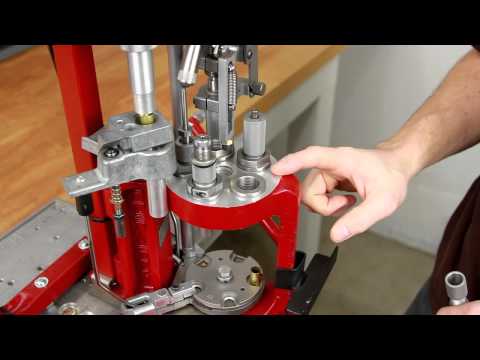
After you’ve tried out the Reloading Costs Calculator, check out the other content on UltimateReloader.com. This site features some of the best gun-related “how-to” videos on the internet. With sharp video and clear audio, the production quality is very high. If you use a progressive press (Dillon, Hornady, RCBS), you should definitely watch UltimateReloader.com’s videos — you’ll probably learn a new trick or two. In the sample video below, you can see how Hornady’s new Bullet Feeder works with its Lock-N-Load Progressive press.
November 15th, 2014
 On “Black Friday”, the day after Thanksgiving, stores nationwide offer big discounts on merchandise. There are some amazing deals to be had in retail outlets — if you’re willing to fight hordes of crazed consumers.
Thankfully, many smart merchants now offer Black Friday deals online, so you can avoid the mobs. Traditionally, electronics, video games, clothing, toys, and home furnishings are discounted deeply on Black Friday. But there are also many money-saving opportunities on guns, shooting accessories, hunting gear, and reloading supplies.
To aid your Black Friday deal hunting, SlickGuns.com has assembled a list of gun- and shooting-related Black Friday bargains and special promotions. On the SlickGuns’ Black Friday 2014 Deal Page you’ll find a long list of Black Friday sale items including air guns, handguns, ammunition, reloading gear, gun safes, hunting gear and much more. SlickGuns.com also has scans of the Black Friday print flyers so you can see deals that may not be listed on websites.
CLICK HERE for Gun-Related Black Friday Deals

Outdoor gear vendors offering Black Friday Sales/Promotions include Bass Pro Shops, Big 5, Brownells, Cabela’s, Dick’s Sporting Goods, Gander Mountain, Sports Authority, Sportsman’s Warehouse, Walmart (and more). On the SlickGuns.com website, you can access all Black Friday Specials with one click, and then narrow your search by vendor, product category, or price.
November 14th, 2014
Gear Review by GS Arizona
This article originally appeared in the Rifleman’s Journal website.
Many of you have doubtlessly read Bryan Litz’s articles in our Daily Bulletin and on his Applied Ballistics website about various current long-range bullets. Bryan’s work carries a great deal of weight in the world of ballistics, so his comments (and mathematical proofs) regarding the benefits of bullet pointing certainly caught my attention. Bullet pointing, like meplat trimming, is an effort to reduce the ballistic inconsistency created by the somewhat jagged tip of the jacket where the bullet forming dies bring it to a point in the manufacturing process. Of course, we could eliminate this problem altogether by shooting closed-tip, open-base bullets like the Lapua D46, but that merely shifts the jacket problem to the other end of the bullet.

In any event, hollow point bullets rule the accuracy world today, so John Whidden, multi-time National Long Range Champion at Camp Perry and a talented gunsmith and designer to boot, came up with a very handy tool to let us make those hollow points pointier. Let’s have a look at John’s tool and see how it works.

The Whidden Bullet Pointing Die System uses a Forster bullet seating die body as its basic structure and that’s a good choice given the quality machining Forster does on these. The real heart of the tool comes in two parts: the caliber sleeve and the pointing die that fits inside the sleeve. In fact, to point up different caliber bullets, you only need to change the caliber sleeve, everything else remains the same. The last item is the bullet base that slips into a standard .308 shellholder and supports the bullet as it goes into the die body.
 It took me less than five minutes to get everything set up, including changing the caliber sleeve from 6mm to .30 caliber. John’s instruction sheets are well illustrated and clearly written; you should have no problem getting up and running.
Pointing the bullets is as easy as sizing a piece of brass. You can see in the top photo the difference between a few pointed bullets and a few un-pointed ones. The innermost pointed bullet in the picture was my first attempt and I adjusted the die a little after that, you can see that the others are closed a little more. John even includes a couple of sample bullets so that you can see one done right and one done wrong. That is a nice addition that can help you achieve the desired results.
I think Bryan’s work supports the validity of this concept and John’s tool puts it into practice in a simple-to-use manner that makes it just about impossible to do any damage to the bullet. I have shot pointed bullets in various calibers at many matches now. Pointing is not a “miracle cure”, but I believe that pointing bullet tips can produce long-range accuracy gains, through reduced vertical dispersion, for many popular types of match bullets. The Whidden Bullet Pointing Die System retails for $220.00 (with one insert). Additional die inserts are $42.00 each. Extra caliber sleeves are also $42.00. You can purchase directly from Whidden Gunworks, or from Sinclair International.

November 14th, 2014
Got Bipod? If you’re in need of an adjustable two-legged friend for the front of your favorite rifle(s), Midsouth has you covered. Right now Midsouth Shooters Supply has a wide selection of Harris Bipods in stock at attractive prices. For example, the Harris 6″-9″ BR model with leg notch is just $69.68. That’s ten bucks cheaper than we’ve found elsewhere. From small to tall, Midsouth carries Harris bipods for your intended applications. Midsouth also sells a variety of authentic Harris mounting adapters, including rail adapters, and flat fore-end adapters.


November 14th, 2014
There’s a big sale going on at Natchez Shooters Supplies this weekend. Lots of name-brand products are on sale, including Nikon scopes, Hornady reloading hardware, and EOTech Red Dot sights. Here’s a special Discount Code that can save you as much as $35.00 on your purchases. Use Promo Code DO1411BB during checkout. [Note: if “D” followed by Capital letter “O” (Oscar) doesn’t work, try “D” followed by the number zero then 1411BB.]

Sale tip from EdLongrange. We Welcome reader submissions.
November 13th, 2014
Avid Design sells a unique multi-tool designed expressly for rifles and shotguns. The $24.99 Gun Tool combines 18 of the most commonly used long gun tools in a compact package. The Gun Tool boasts three Torx wrenches (T20; T15; T10), two Allen hex drives (3/32″; 5/32″), and four screwdriver blades (1/8″ flat; 3/16″ flat; Phillips 1 & 2). In addition, there is a magnetic 3/16″ driver, a pin punch, and a stainless claw blade useful for opening shipping boxes or trimming target backers.

The most unique feature of the Gun Tool is a stepped, multi-size choke-tube wrench that fits six shotgun bores from .410 all the way up to 10 gauge (see photo below right). For active shotgunners, that provides great versatility in a small package.

Praise from Respected Reviewers
In 2012, the NRA’s American Hunter magazine awarded The Gun Tool their Golden Bullseye award in the “Gear of the Year” category. The Gun Tool has also been awarded an outstanding 100% approval rating and a full endorsement by the North American Hunting Club.
Noted gun journalist Jim Shepard wrote: “I’ve been playing with ‘The Gun Tool’… and I’ve found it to be a pretty promising device that really should find a place in lots of range bags. If you’re a long gun shooter, it has something you’ll eventually need in the way of a tightening/loosening/adjusting tool.” Jim cautions that the claw blade does not lock into place.
November 13th, 2014
If you’ve ever visited the Sierra Bullets booth at the NRA convention or SHOT Show, you’ve probably encountered Carroll Pilant, a very knowledgeable fellow who serves as Sierra’s Media Relations Manager. Carroll loves what he does, and he’s a true firearms enthusiast. Recently Carroll had the opportunity to hunt Aoudad and a variety of other exotic game species in Texas. Joining Carroll on this Aoudad adventure was his son Hunter Pilant.

Carroll has authored an account of his Texas hunt for the Sierra Blog. Here’s a sample, with some photos. The full story also covers Javelina hunting. CLICK HERE to read to full story.
Aoudad Hunting in Texas by Carroll Pilant
Aoudad, also known as Barbary sheep, have been a passion of mine for the last few years. I saw my first wild Aoudad back in 1973 or 1974 while I was working on the U Ranch. The U Ranch was part of the King Ranch in Balmorhea, Texas. The ranch headquarters sets at the base of the Barrilla Mountains — rugged territory. Aoudad had been stocked in some of the high fence areas for hunting purposes along with many other exotic game animals such as Nilgi, Ibex, Blackbuck. Many escaped from the game ranches and thrived in the arid Texas and New Mexico country that is very similar to the areas they originated from. Texas classes them as exotic or non-game animals and they can be hunted year-round. For $48 you can purchase a 5-day nonresident special hunting permit good for all the exotics.
Two years ago, a good friend of mine in Fort Stockton, Texas arranged for me to hunt in the Glass Mountains on a nearly 400-square-mile ranch. I harvested my first Aoudad and that really whetted my desire to take a larger one.
My son, Hunter Pilant at Starline Brass, had already volunteered to go with me…. That would give us a little father / son time together. We were both busy and it put us scrambling at the last minute trying to get ammo loaded, rifles zeroed … and the vehicle packed. The rifle I chose to take was my Remington 700 in 7mm Magnum with the #1940 175 grain SBT bullet. Hunter was using a Savage in .300 RSAUM with the #2160 180 grain SBT. Aoudad are tough animals and can soak up a lot of lead, so you need to use a tough bullet.
We were lucky the first day hunting in that we had Aoudad right off the bat. We watched about 20 Aoudad (with three rams) feeding right under a cliff at about 1200 yards. About an hour of driving through really rough terrain finally put us in an area where we could come in from above. Guesstimating at where they were below us, Hunter went several hundred yards to my left and I just worked my way to the edge of the ledge above the cliff.

A quick plan was devised. Hunter would slip up to the edge of the cliff and hopefully they would be feeding below him. When he shot, we hoped they would come past me heading to the higher elevation. We were watching Hunter as he slipped up to the edge and I kept checking to my right, when I noticed a ram come over a ridge and start working his way down into a canyon out of my sight. I was afraid to shoot because it would spook the group Hunter was looking for. Since I had already taken animals the last two years, I wanted Hunter to get a chance. The ram I was watching disappeared into the canyon. I waited for him to come out but was afraid he had went down it rather than coming back up on my side. All of a sudden, he popped up over a point out in front of me at about 200 yards.
Photo of Hunter Pilant, the author’s son and hunting partner on this trip.

I got my rifle ready and decided to wait until I just had to shoot, hoping that Hunter would find the main group and get a shot. Hunter spotted a ram and shot. The ram I was watching whirled and started to run back the way he had came. I had a foot-wide gap in the cedar that I could shoot through and at the shot, I heard the bullet thump and he disappeared over the edge. CLICK to Read Full Story

November 13th, 2014
Winter storms are raging in many areas of the country right now, and we know that many of our readers are holed up inside. To help delay the onset of “cabin fever”, we’re offering some nice outdoor photos from Forum member Paul Fakenbridge (aka “Boltfluter”) up in Idaho.

One of Fakenbridge’s favorite rifles is a suppressed 22BR varminter with a 22″ barrel. All-up weight is 12 lbs. including bipod and suppressor. He uses this compact rifle on varmint excursions up in Idaho. Paul’s 22BR features a Rem short action in an H&S Precision PSS stock. The scope is a Leupold 12x40mm FX-3 (fixed power) in Warne Q/R rings. Paul notes: “In my .22BR the 75gr A-Maxes travel right at 3000 fps (with a 22″ barrel). My ‘go-to’ powder is IMR 8208 XBR with CCI 450 primers.” For those considering a build with a similar cartridge, Paul adds: “I think you will be pleasantly surprised.”

When he’s not hunting varmints, Boltfluter operates Pro-Precision Rifles, LLC which offers bolt fluting, bolt finishing, and barrel fluting (including AR15 barrels). Boltfluter also sells and installs bolt knobs and muzzle brakes. Shown below are two helical-fluted bolts with custom-machined bolt knobs. Very nice work by one of our Forum members…

|


